
COACHELLA 2026: A FESTIVAL ON THE FAULT LINES
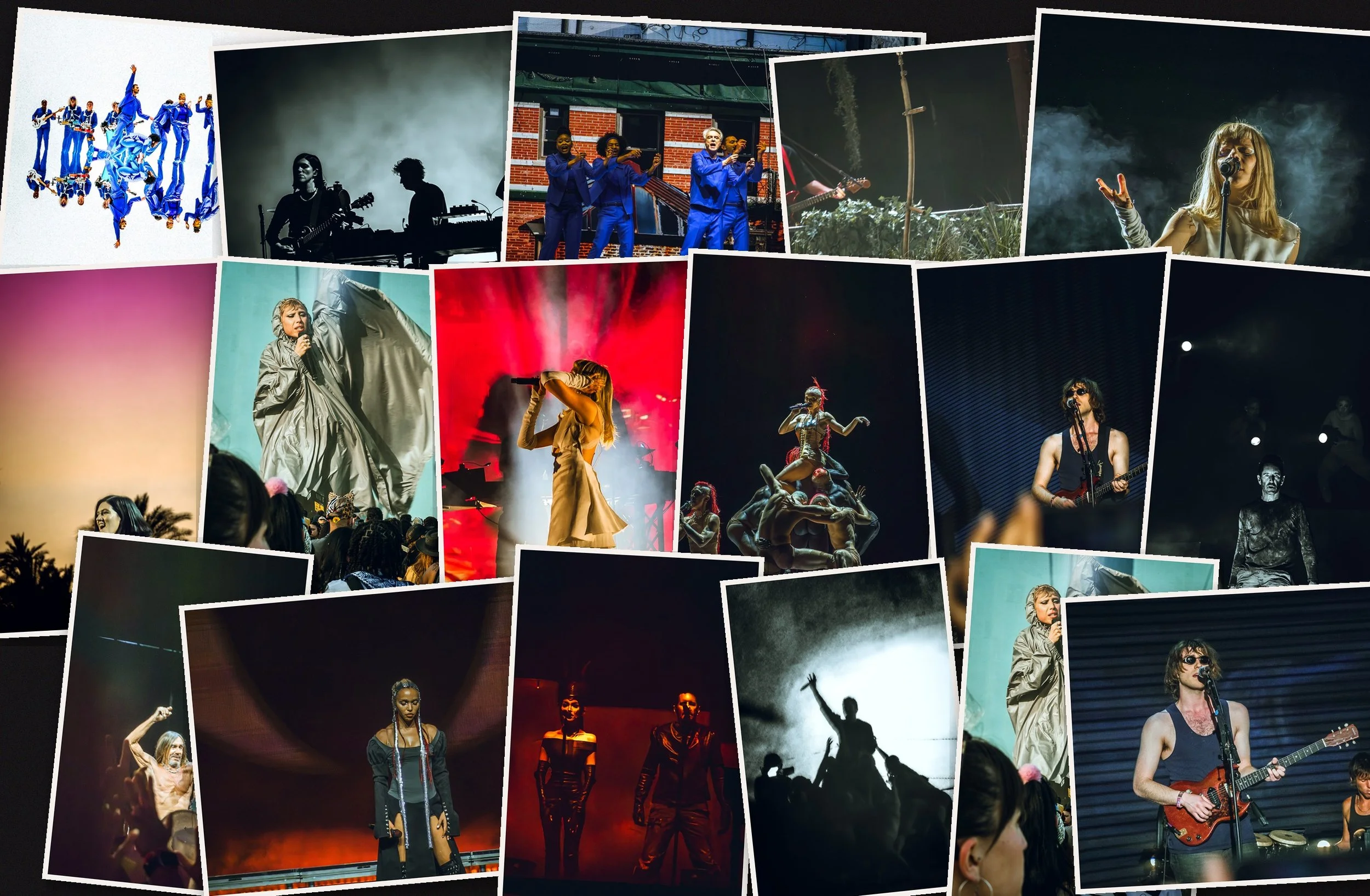
On May 7, 2009, PBS aired episode 141 of California's Gold. Huell Howser — Tennessee transplant, short-sleeved button-downs, a man with the apparent capacity to be genuinely awestruck by anything placed within six feet of him — wandered the Empire Polo Club fields in Indio. He talks to Paul Tollett, the festival's co-founder. He learns about the festival's water-bottle recycling program. He stops in front of an installation art piece and stares at it, sincerely, for what feels like longer than a producer would want. California's Gold spent two decades cataloging the things that make California feel like itself — the cotton fields, the Salton Sea, Salvation Mountain, John Muir's cabin, and the In-N-Out menu. To Howser, Coachella belonged on the list: an only-California event that nowhere else can replicate.
Huell, as always, was right, and the proof is in the festival's origin. Coachella exists because of a labor dispute. In 1993, Pearl Jam was boycotting Ticketmaster over service fees the band believed were monopolistic, and refused to play any Southern California venue Ticketmaster controlled. A small concert promoter named Paul Tollett, working under the Goldenvoice banner, found them an alternative: the Empire Polo Club in Indio, where 25,000 fans showed up on November 5 to watch them play in a field. Six years later, Tollett held the first Coachella on the same grounds. The festival's foundational gesture, in other words, was an anti-monopoly protest concert. (As I write this, in April 2026, a federal jury has just ruled — last week — that Live Nation, which owns Ticketmaster, operated an illegal monopoly, which just goes to show you that some battles really are just one after another.) That is the founding ethic Coachella was born out of. Some artists who play there inherit it; some don't.
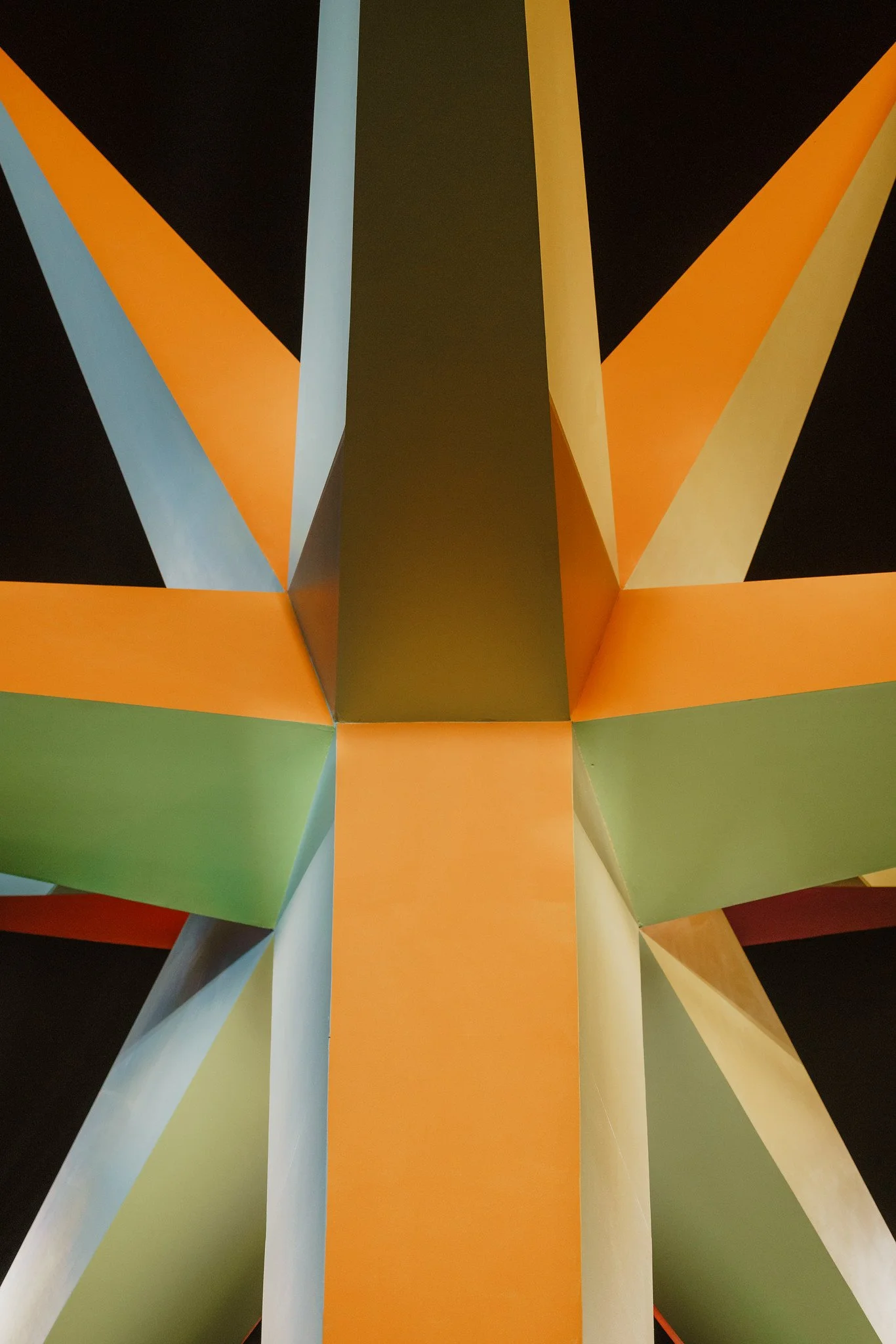

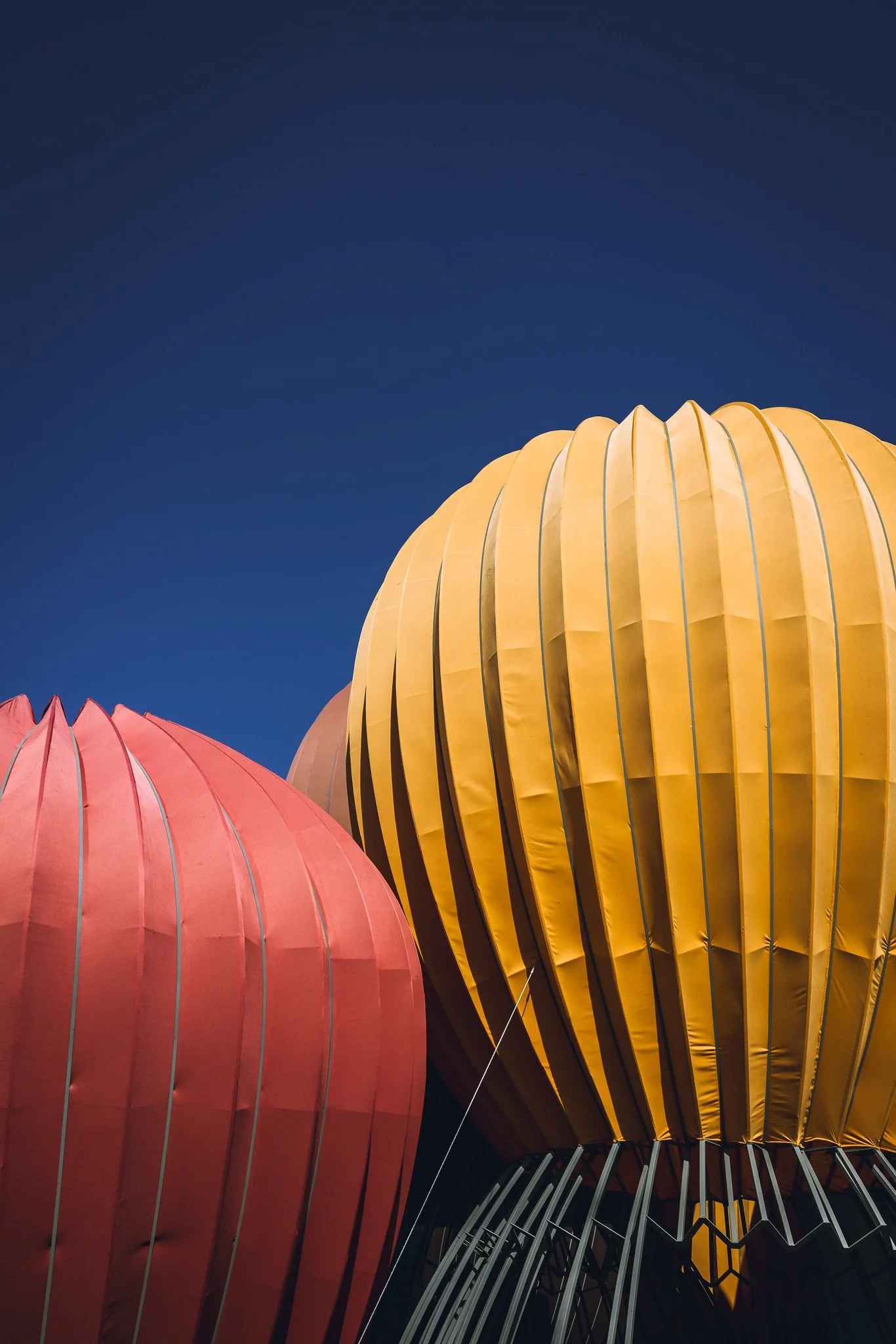
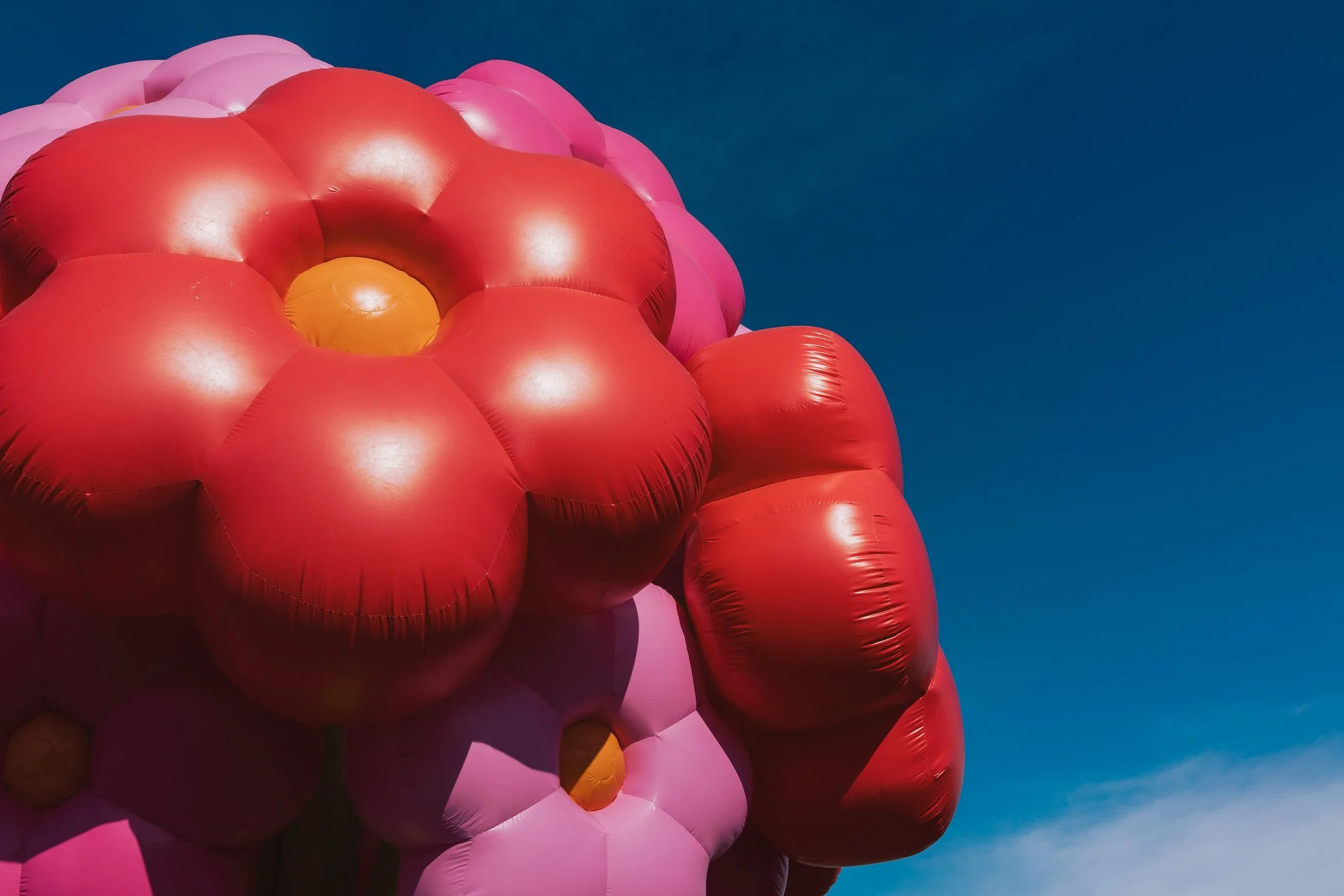
That founding ethic is nowhere to be found in the popular criticism of the festival, which by now is a single, tired Mad Lib regurgitated across social media feeds and the annual cycle of think pieces written by people who have never set foot on the polo grounds: the $800 Nobu dinner I've never once seen in nineteen years of going, the Outstanding in the Field tasting menus, the rainbow cylinder photo-op, the influencers groveling for likes by debasing themselves in front of it. Coachella, in this imagining, is a Salò-grade tableau of the greedy degrading themselves and one another for sport — the $30 burger from Camphor sitting on the menu like a sacrament made of human excrement massaged out of the loins of prom-queen virgins.
The cherry on top is AEG's ownership chain, which points to Philip Anschutz, a top-tier Republican megadonor with a charity portfolio not unlike a how-to guide for making the SPLC's hate-group list. None of that is in dispute. The implicit charge underneath all of it, though, is that Coachella is somehow cultureless — a brand activation in the desert, an opportunity for a junior go-to-market lead to show their quality by greenlighting a collab between a weighted-blanket startup and a mukbang challenge. Which is the read you arrive at when you mistake the surface for the place.
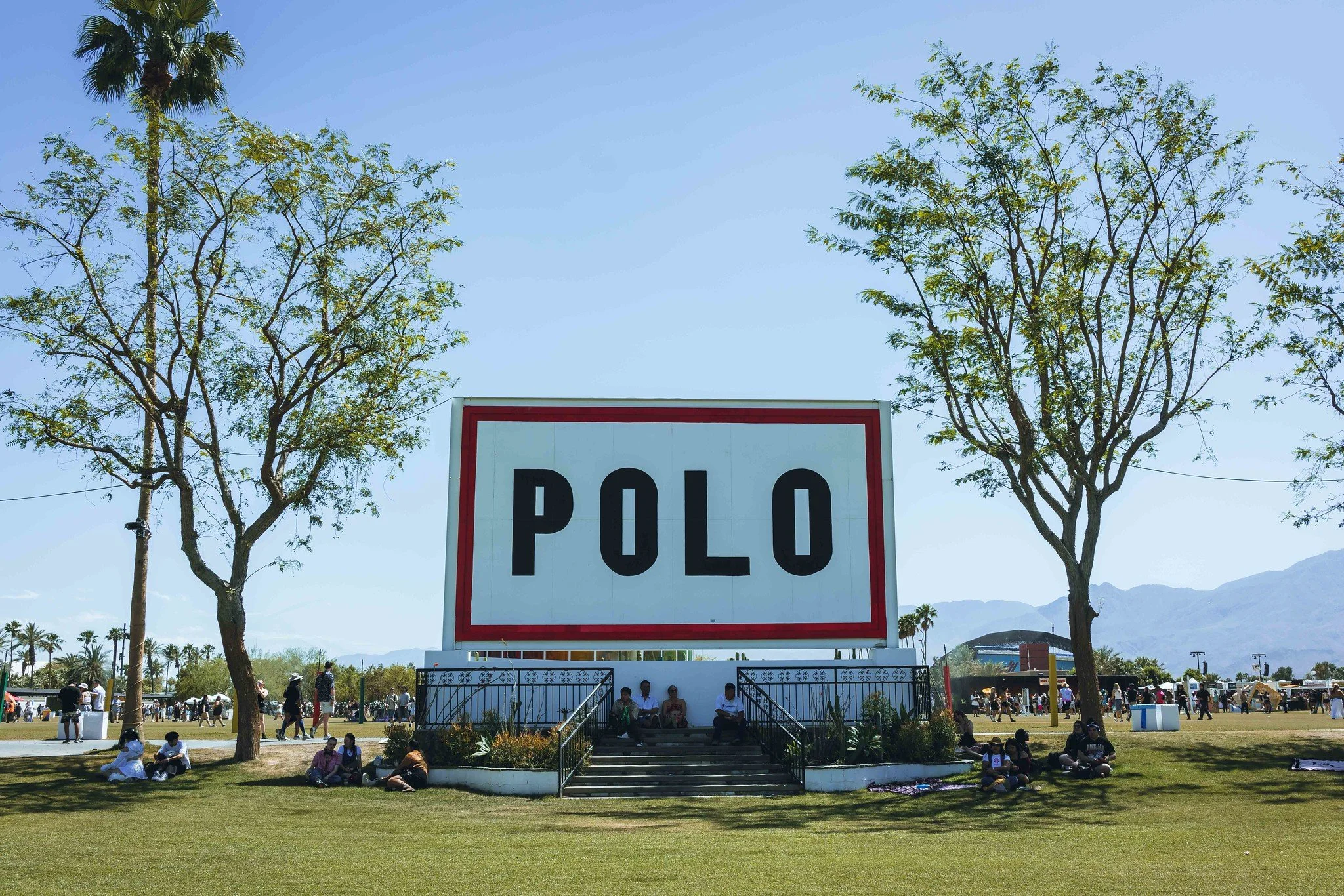
Jonathan Gold — the only food critic ever to win a Pulitzer, the writer who taught LA how to read itself — opens City of Gold with the line: "If you live in L.A., you're used to having people explain your city to you." He's talking about tourists, about the critics from elsewhere who think they've cracked the code after a weekend in Santa Monica. The city, Gold explains, didn't develop from a central business district outward. It developed from multiple scattered, unique centers that over time bled toward one another, leaving odd bits of space in between where almost anything could develop. "The fault lines between them," he said, "are sometimes where you find the most beautiful things." Or, in the more direct formulation Kendrick Lamar offered on GNX: "Don't say you hate L.A. when you don't travel past the 10."
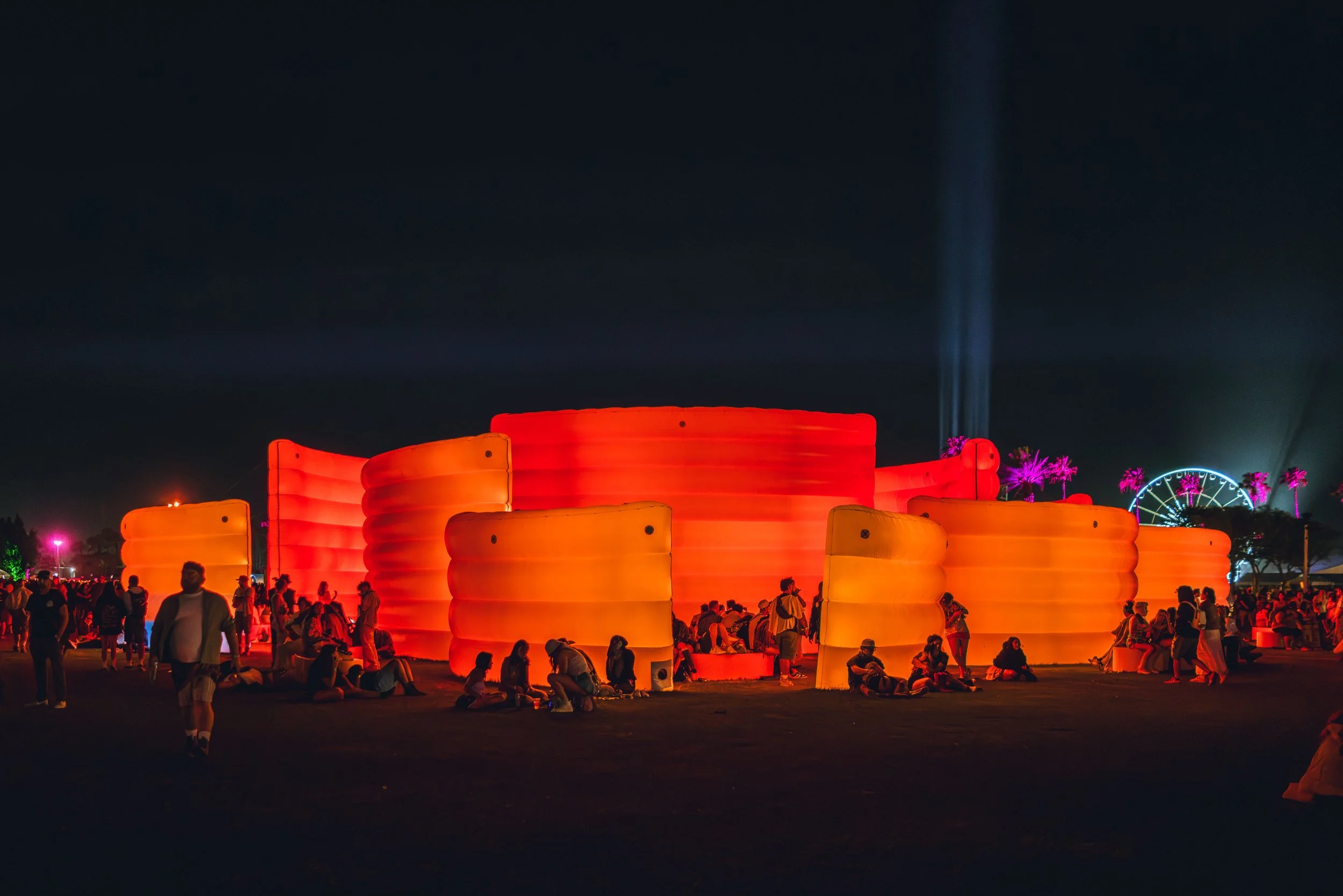
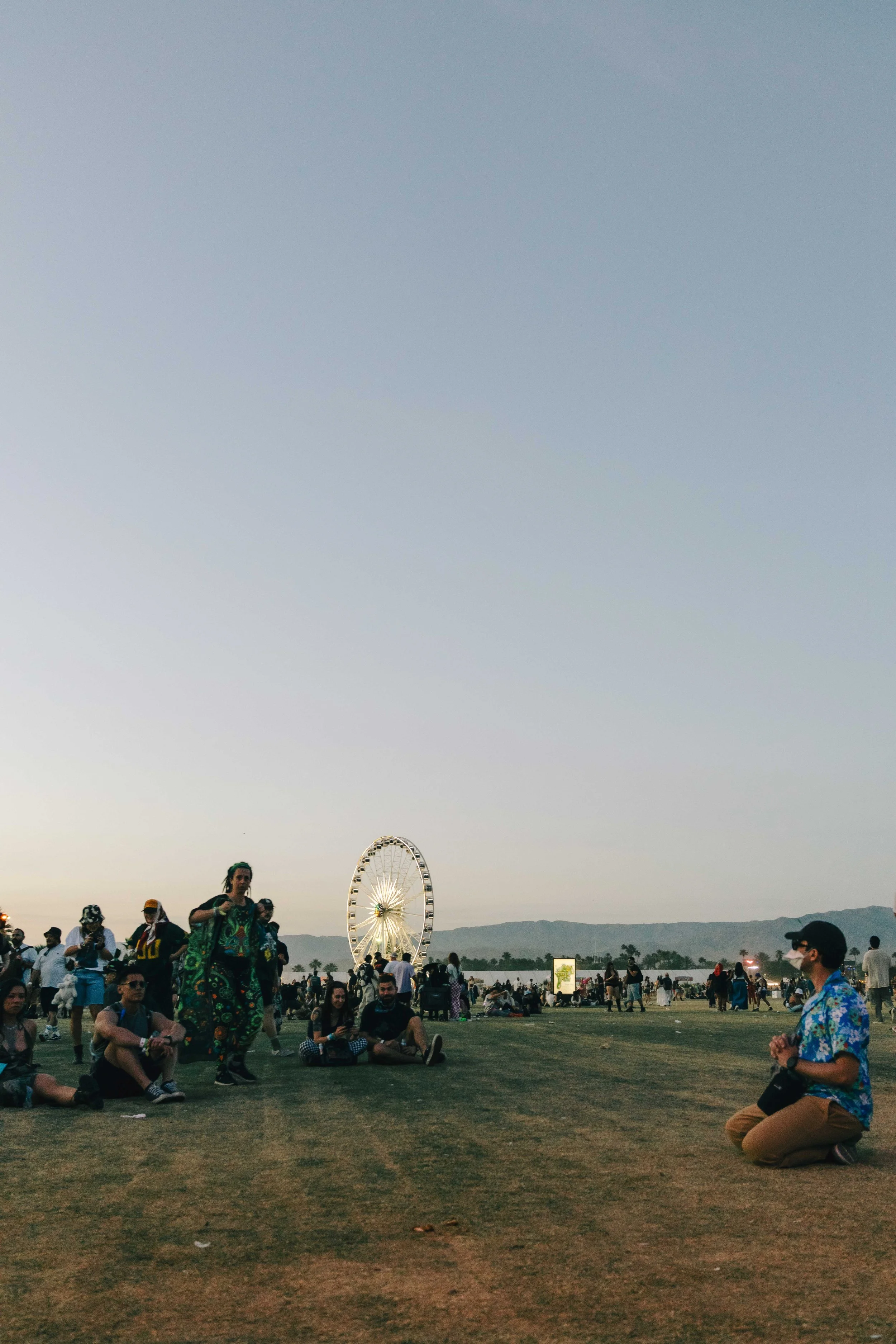
The polo grounds work the same way. Coachella is closer in spirit to the Rose Bowl Flea Market than a stadium tour: a flat field where dozens of unrelated things are happening at once, and you are the one who has to decide what's worth picking up — a mariachi band playing to a crowd of eighty, a marionette puppeteer who has gone slightly off-script, a German techno producer doing a two-hour set for three hundred people in the wee hours. None of which is featured on a finely tuned algorithm begging for you to "smash that like" out of a twisted disdain.
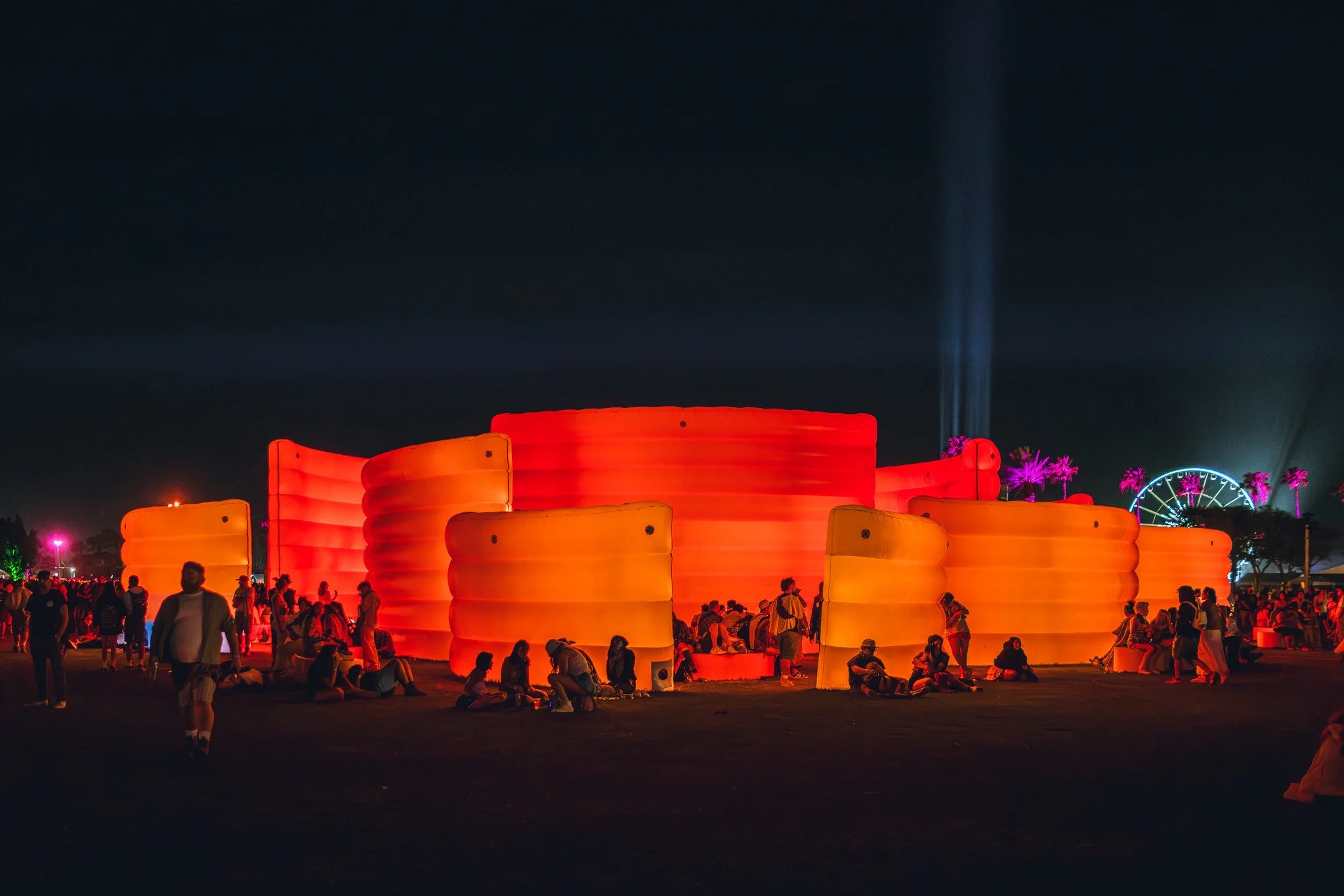
Twenty years into a culture mediated by said algorithm, this is rarer and more important than it sounds. Most of what we call culture is now delivered to us pre-sorted, neatly packaged by a machine that has already calculated which neurotransmitter to fire and when. Coachella has sustained as a physical space in American life where culture refuses to come pre-sorted — where you have to be physically present, open to being surprised, and lucky enough to walk into the wrong tent and find out it was the right one. It is, in the sociological sense, a third place— the in-person communal arena that the algorithm has been steadily eroding for fifteen years. Long before Gen Z used aura to mean how much rizz you can stack after sleepmaxxing into oblivion, a dead German named Walter Benjamin used the same word for the unrepeatable charge of being physically in front of a real thing. Coachella is what happens when you put aura back in front of an audience that has spent fifteen years learning to consume art without it — and watch them try to remember what it feels like to be in the presence of something larger than themselves.
I learned all of this the slow way. My first Coachella was 2007 — with headliners Björk, RHCP, and Rage Against the Machine (reuniting for the first time in seven years). I was twenty-one, ill-prepared in roughly every way a person can be ill-prepared for the desert, and arrived with what was less a tent than a strong rumor of one. None of which would have mattered if I'd actually gone to see anything. Instead, while Amy Winehouse was playing her first and only Coachella set on the Gobi stage with the Dap-Kings — the kind of set that makes its way into a documentary fifteen years later, after the artist is gone — I was thirty minutes east in an air-conditioned Palm Desert multiplex, watching Shia LaBeouf spy on his neighbors in Disturbia to escape the heat.
That weekend's Sahara tent was the entire next decade of dance music delivered to one address: LCD Soundsystem, The Rapture, Justice, Soulwax, all in one weekend, every one of them about to become a band I'd structure entire calendar years around. I caught approximately none of it. I have seen LCD Soundsystem somewhere north of fifty times in the nineteen years since, and not one of those nights has fully metabolized the one I missed because I needed a nap. The version of Coachella I went home with that year is the version most of its loudest critics have, when they have any version at all: lukewarm headliner crowd, sunburn, no map, no community, and the conviction that what I'd seen was all there was to see. The mistakes are also, it turns out, how you learn a festival. You have to fail at one once to find out what was available four hundred feet to your left.
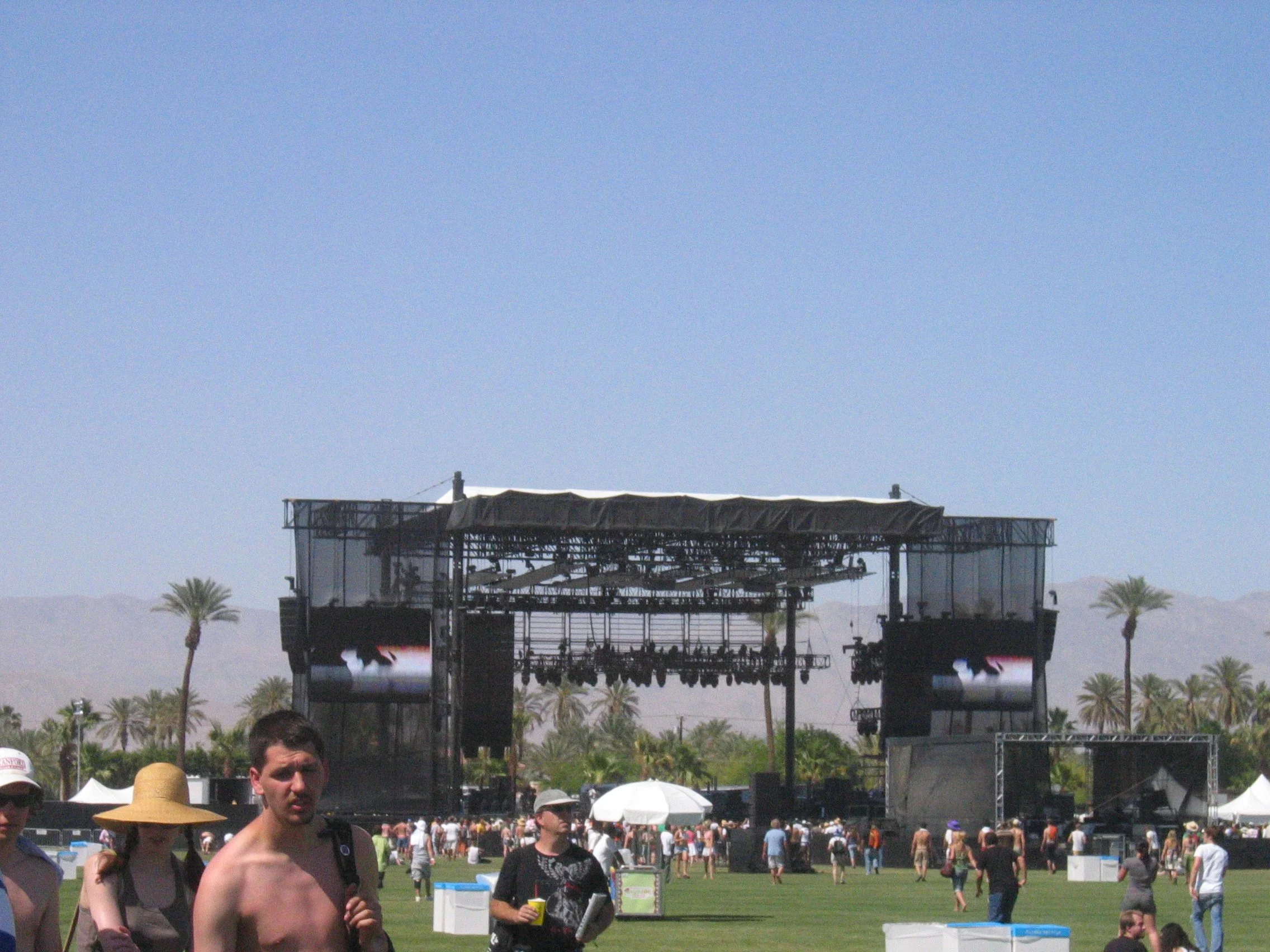
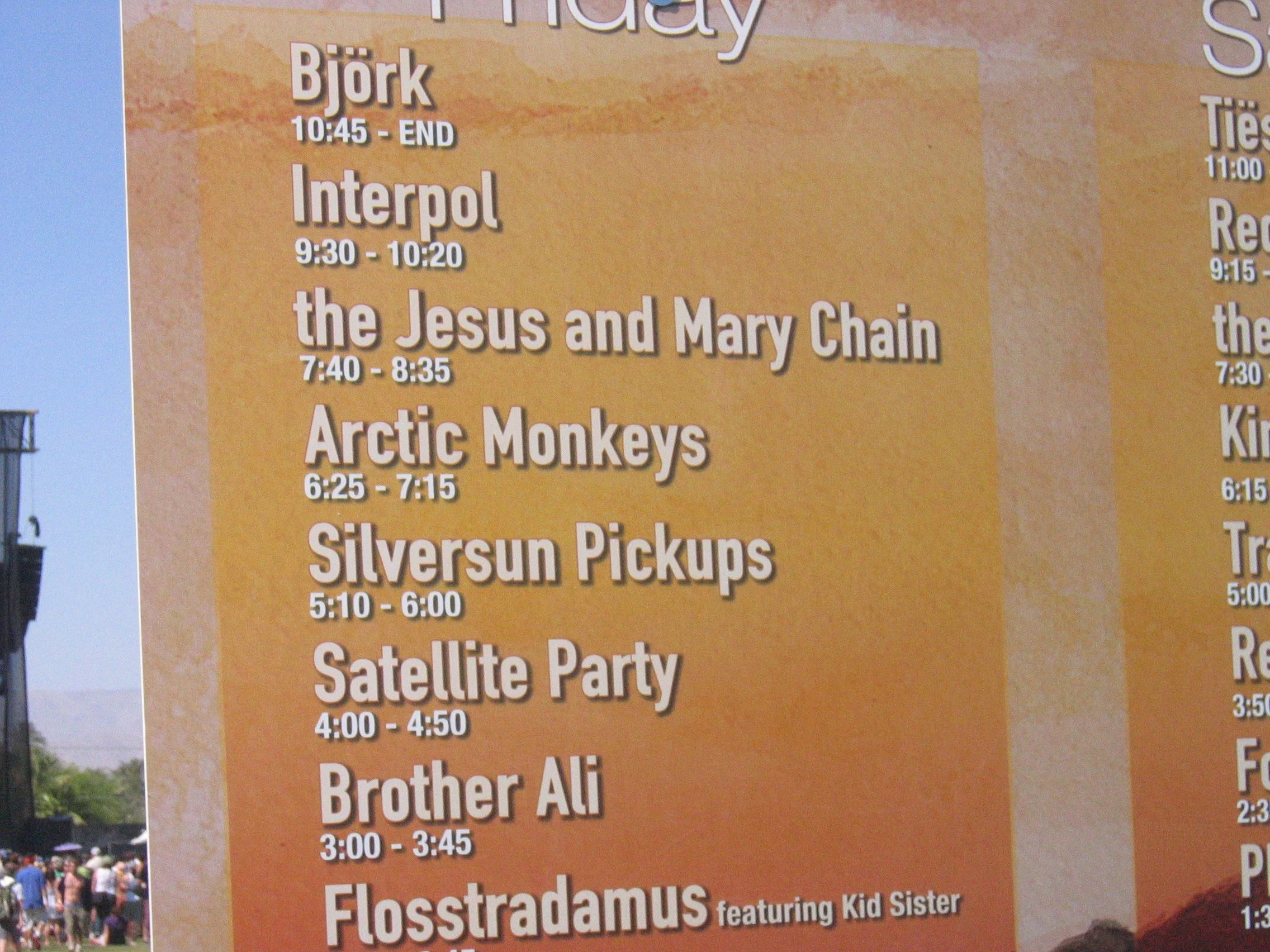
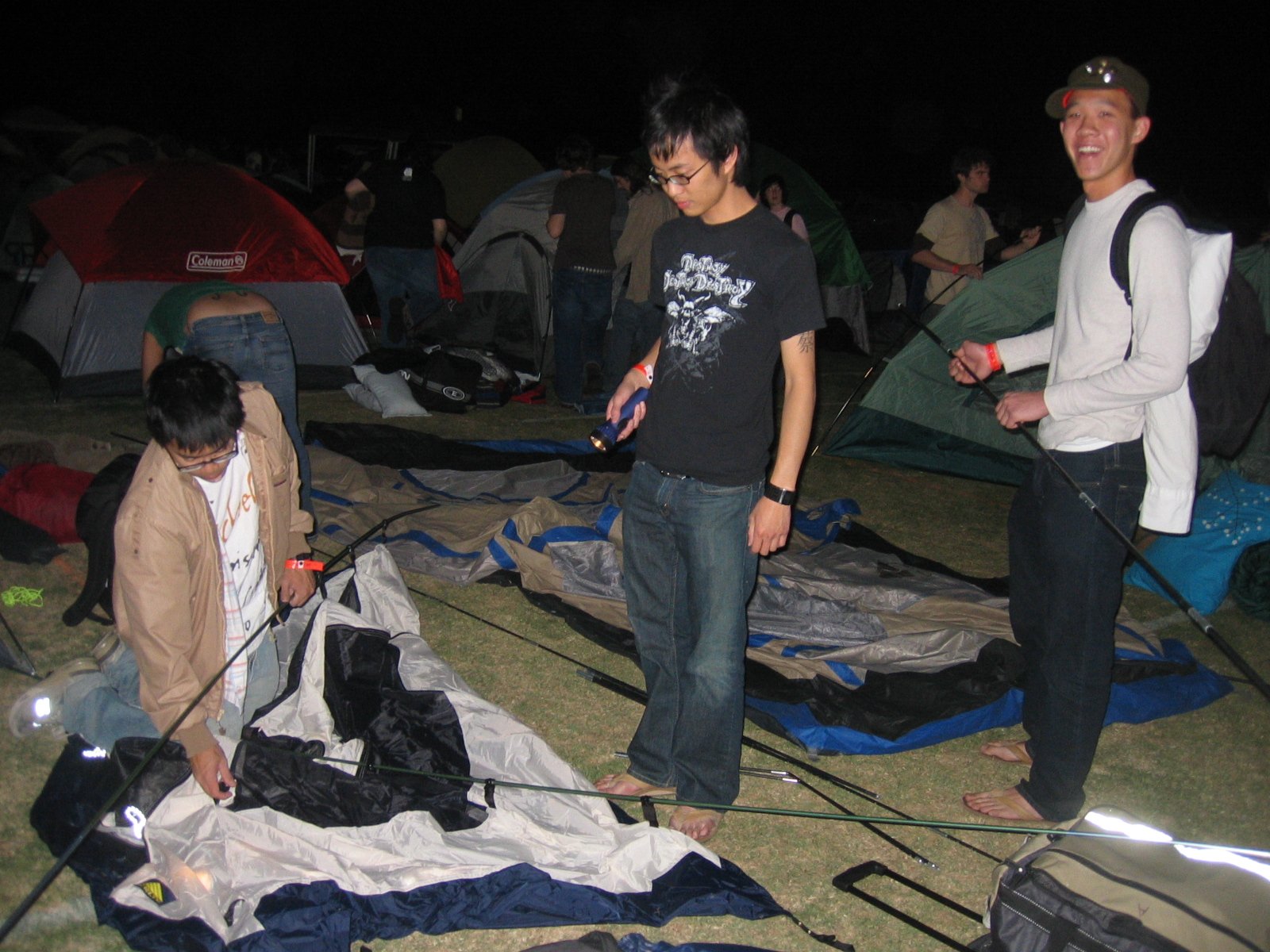
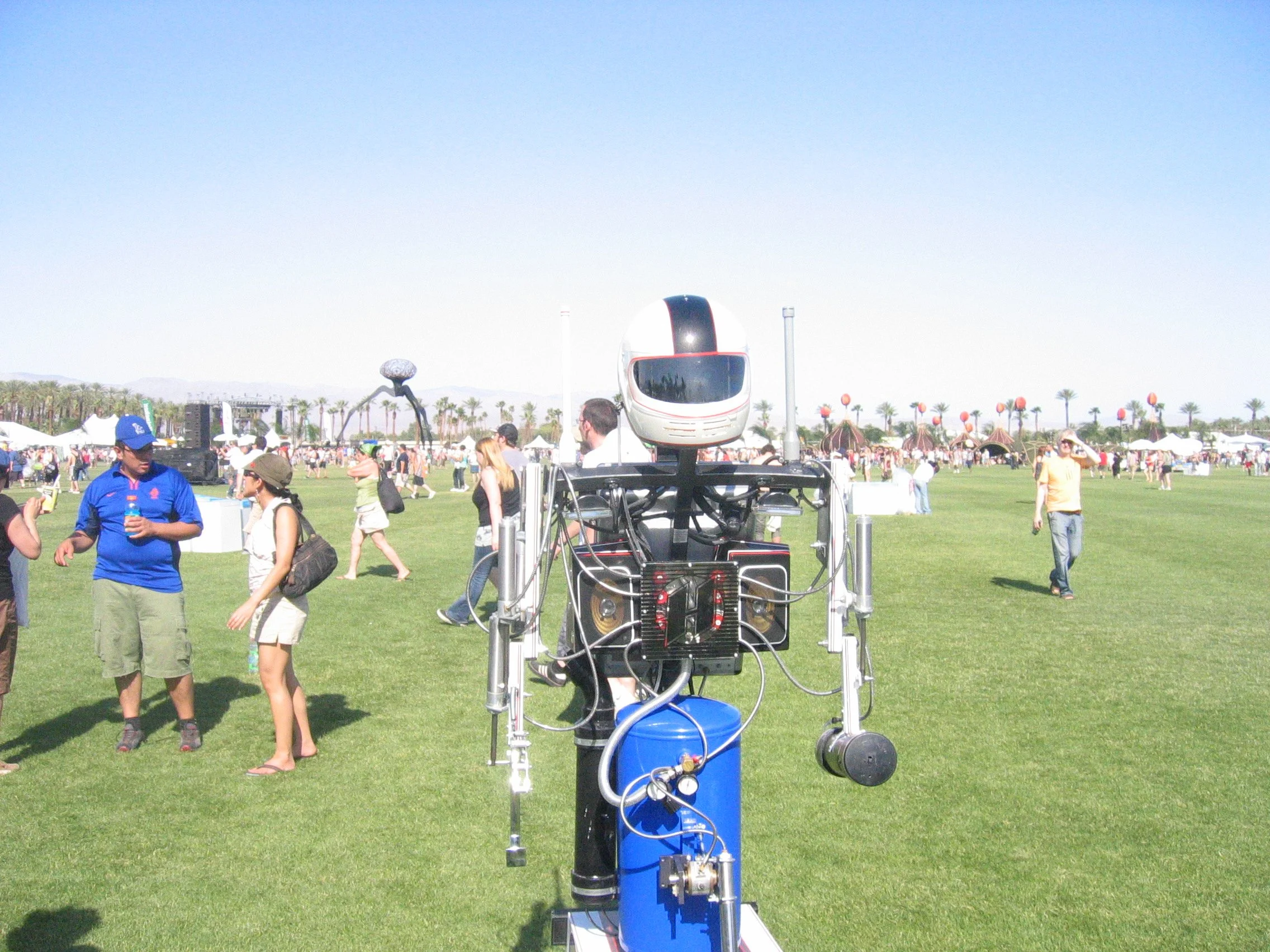
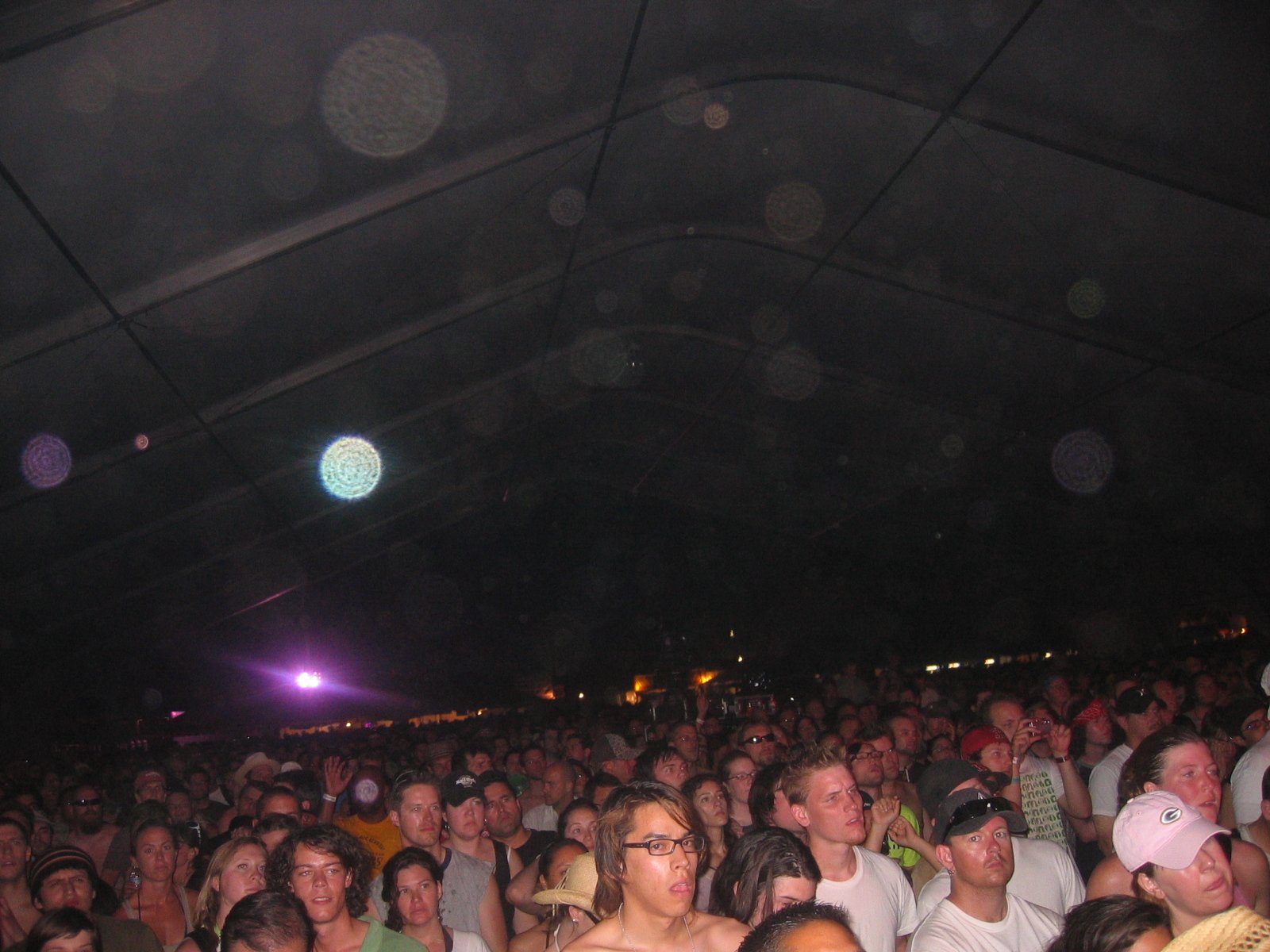
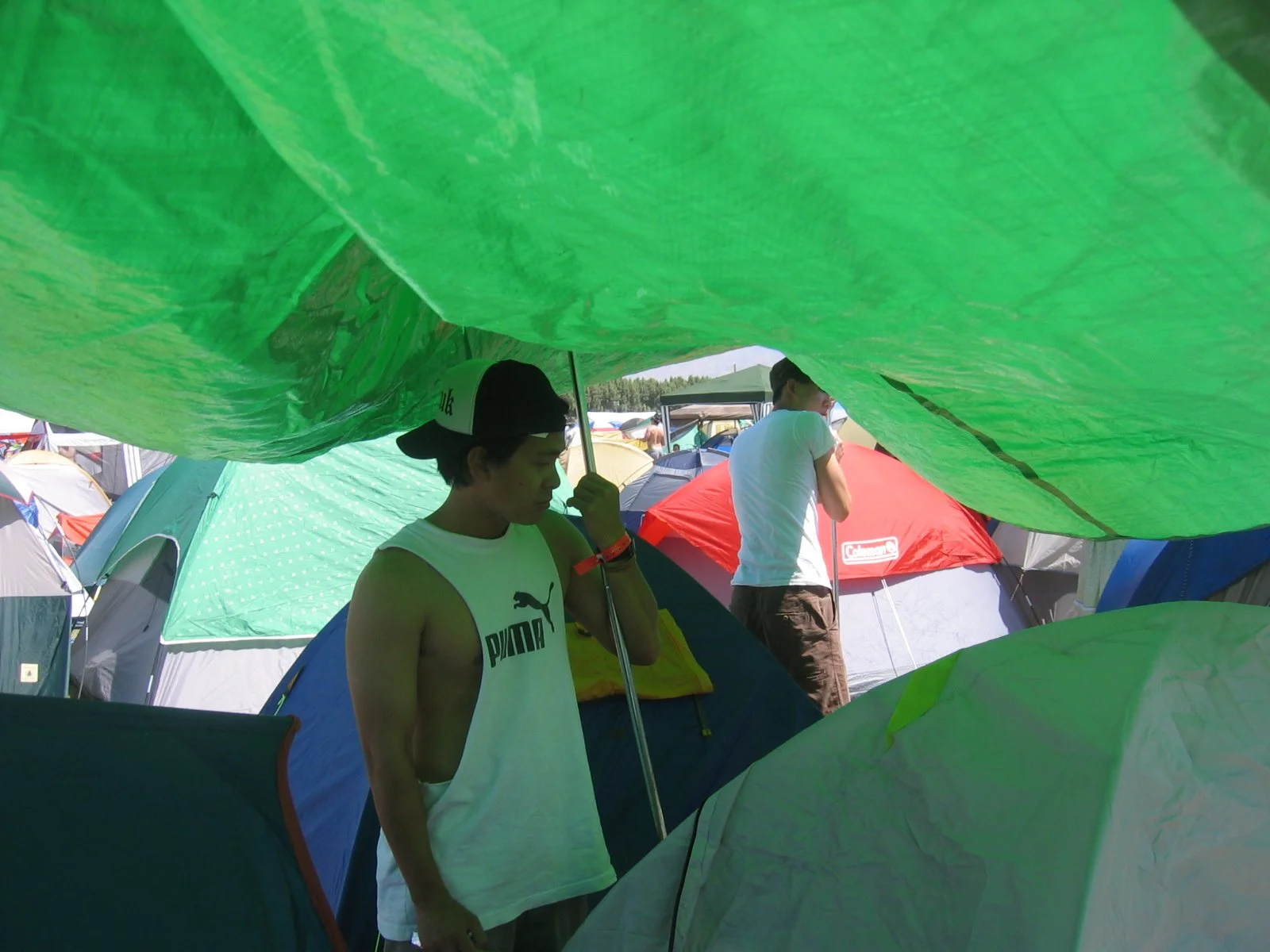
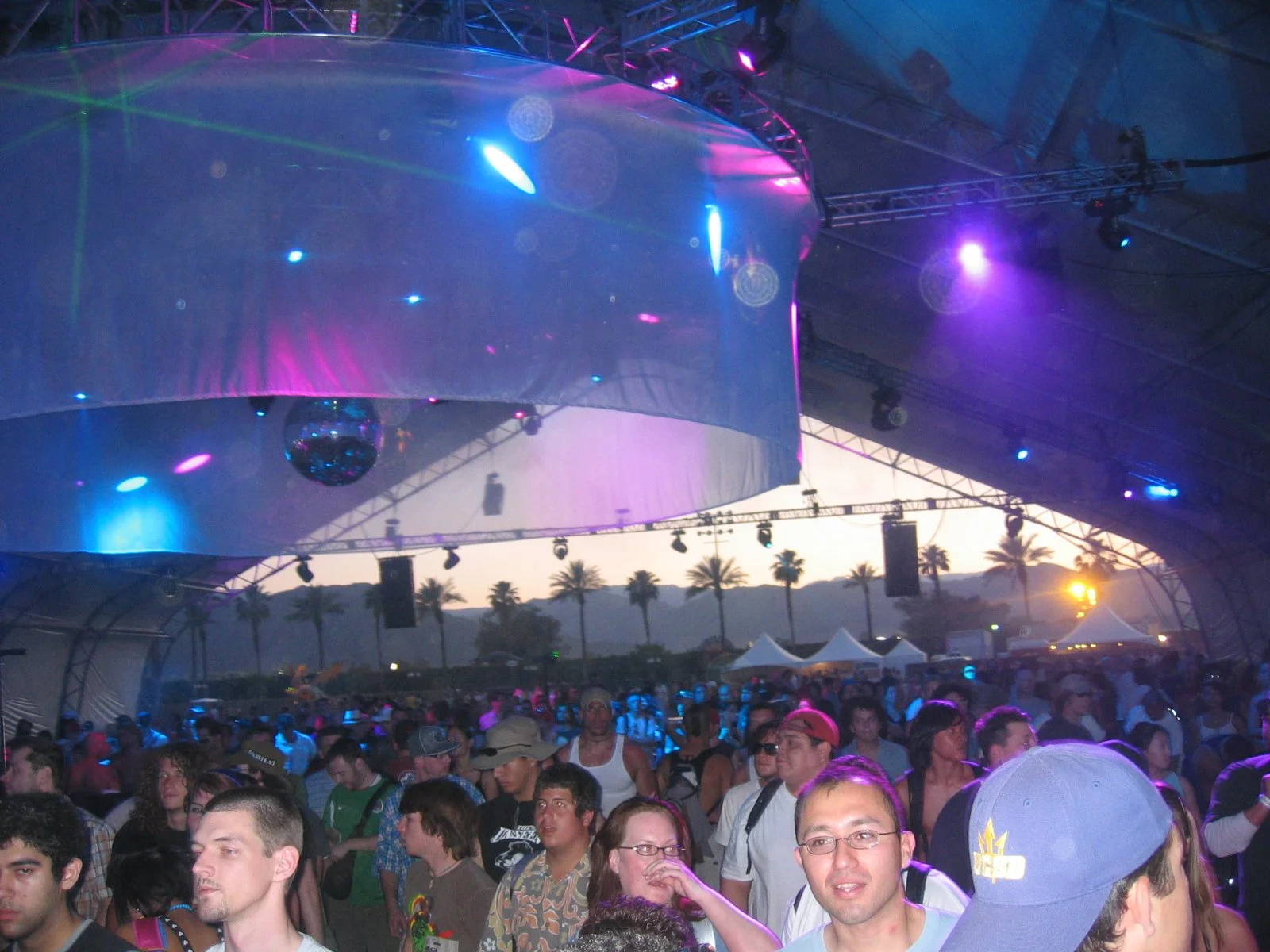
What has been more obvious in my elder years is who you build the trip with. Some version of the same group has been showing up since 2007 — the same people who were in the tent next to mine when I was skipping Amy Winehouse, plus my partner, plus the partners of the people I've known longer than my partner, plus a slow accumulation of new arrivals each of whom shows up with a different slice of the lineup pre-selected in their meticulously mapped clashfinder (shoutout to mikey1313).
The best moments are the ones you can't engineer for and have to be in the room to receive: a friend stopping short halfway through a Soulwax set with the realization that part of the weekend truly does not die; the Born Slippy motif breaking over the polo grounds at golden hour, while one of my oldest friends turns to me mid-build and says nothing at all because his face is already saying it for him; the small comic horror on the face of someone in their early thirties being told that the first Nine Inch Nails album came out in 1989; and the moment the veil drops on the Beyoncé set — the staging revealing itself as a votive to the battleborne backbone America built its scaffolding on, and still denies exploiting.
Stand in the place where the bass from the Mojave tent meets the bass from the Outdoor Theatre, with the right people, for long enough, and a specific feeling shows up — one other festivals don't quite produce, and that people who've been doing this for two decades know while the uninitiated don't. The feeling of fading into your friends like a Mazzy Star. The satisfaction of a well-earned ending — a catharsis you didn't quite know was coming until the credits run. For an instant, all of it sees itself: the desert at last light catching the dust like Hockney decided to dabble in candy flipping, the dirt settling into your nose because you forgot your bandana in your tent, and your soul coming back to where you were before you spent three nights in a Lynchian waking dream.
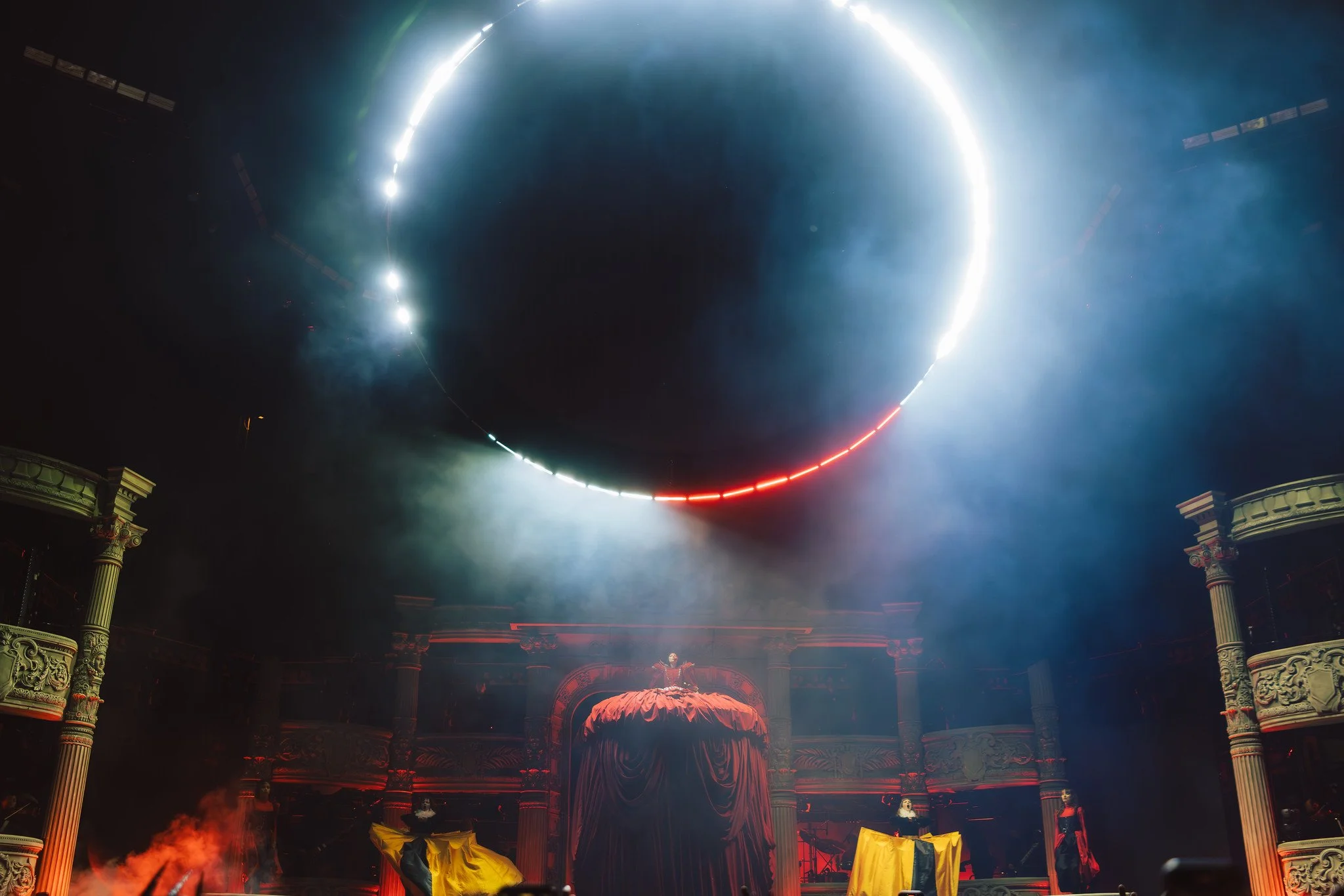
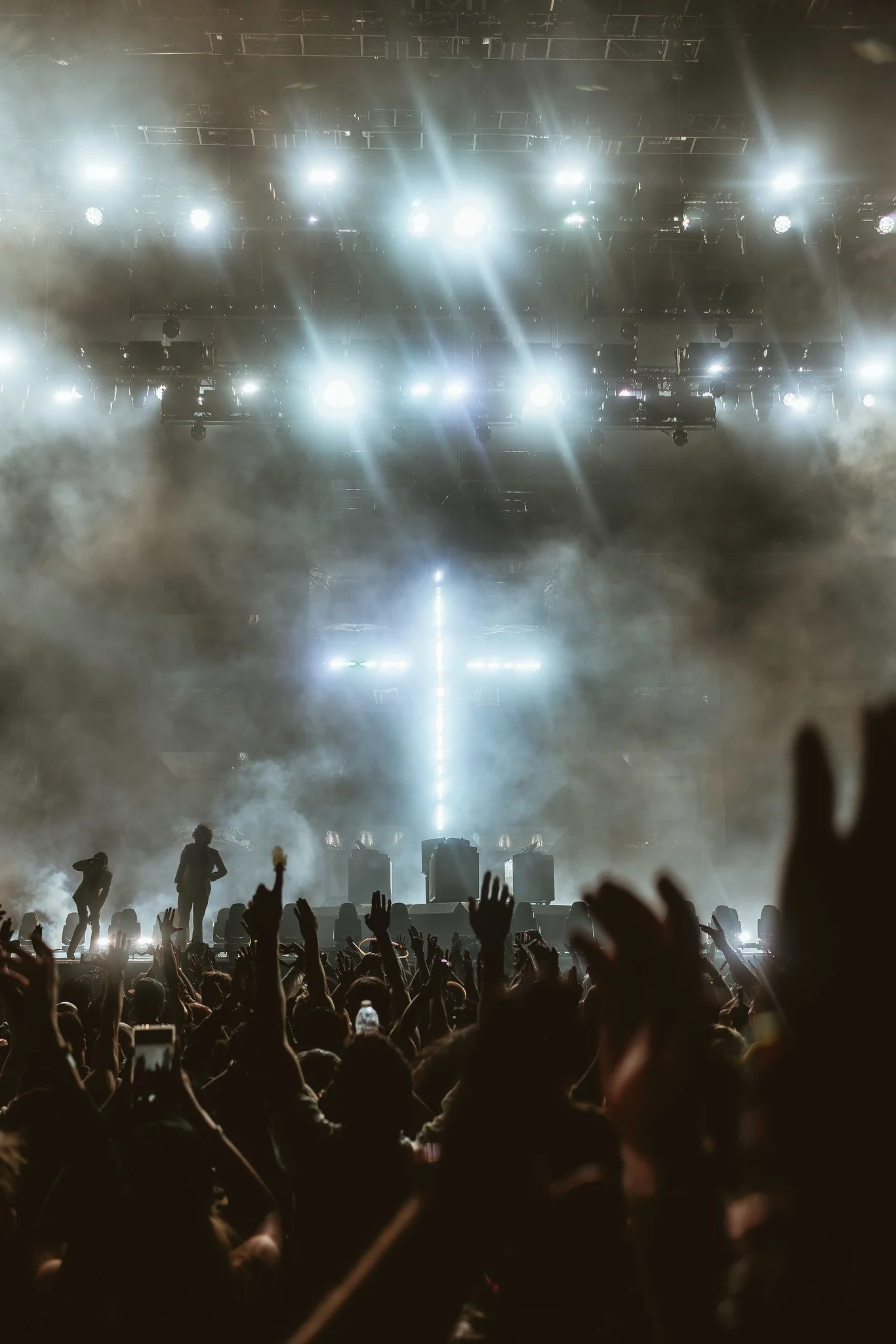
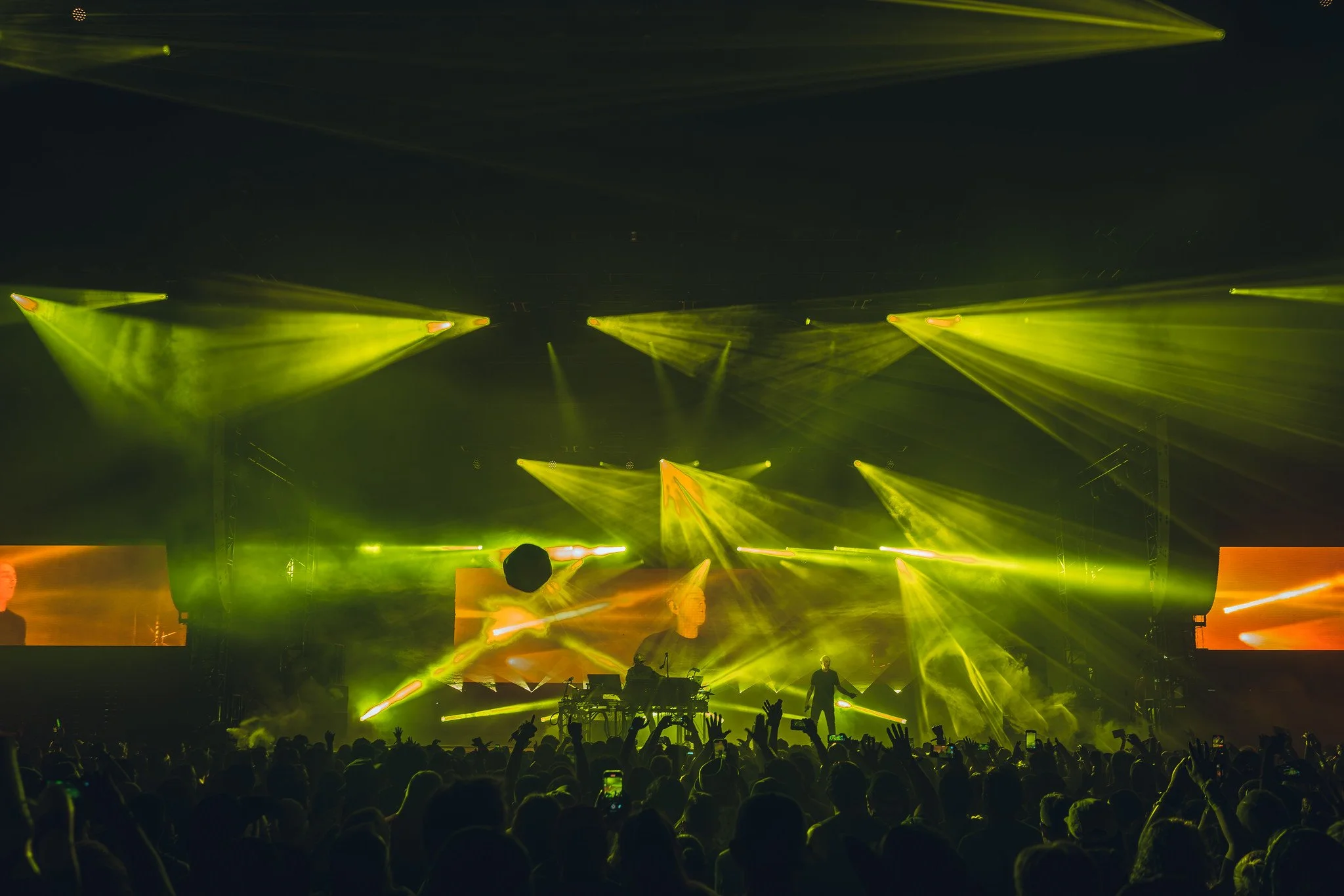
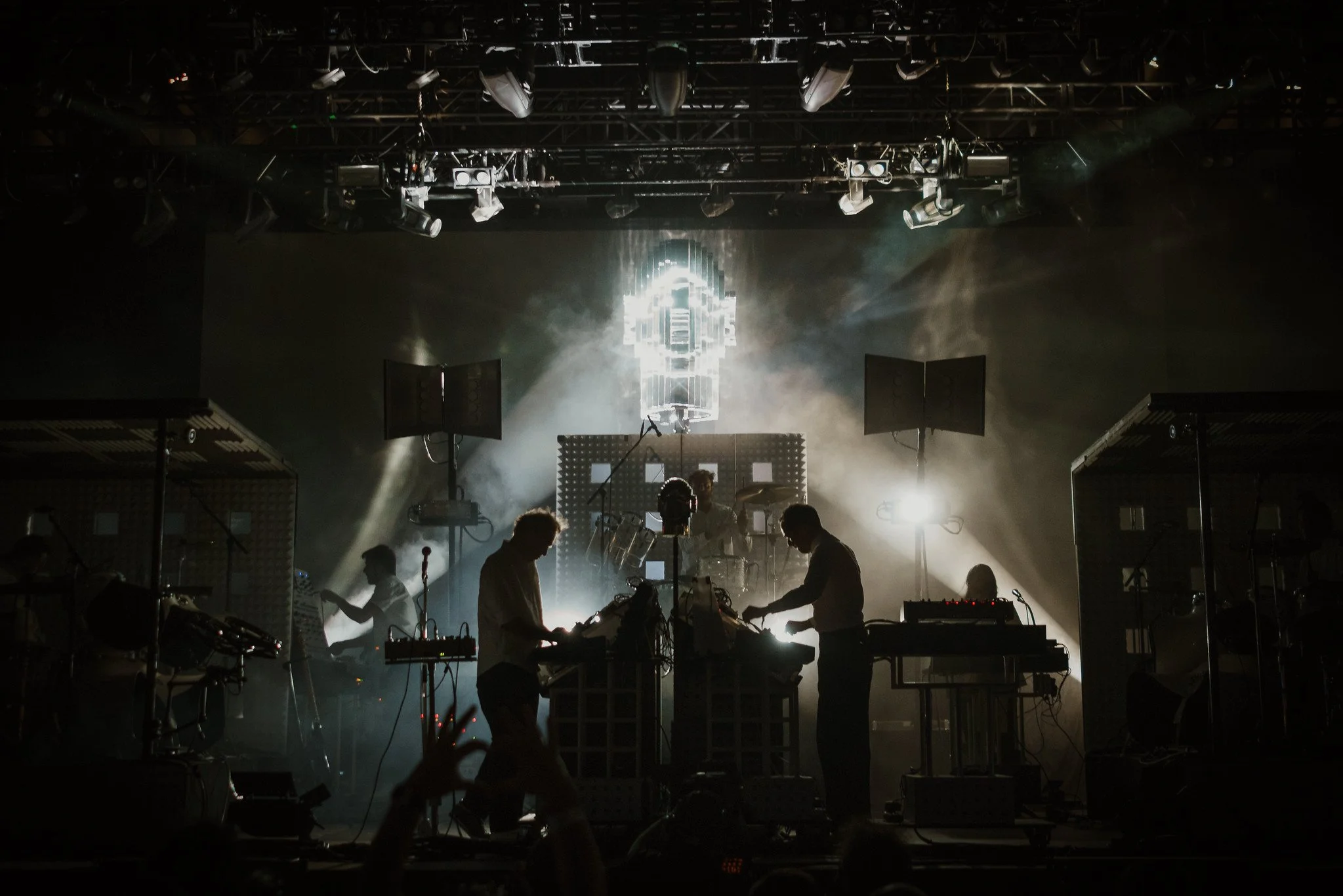
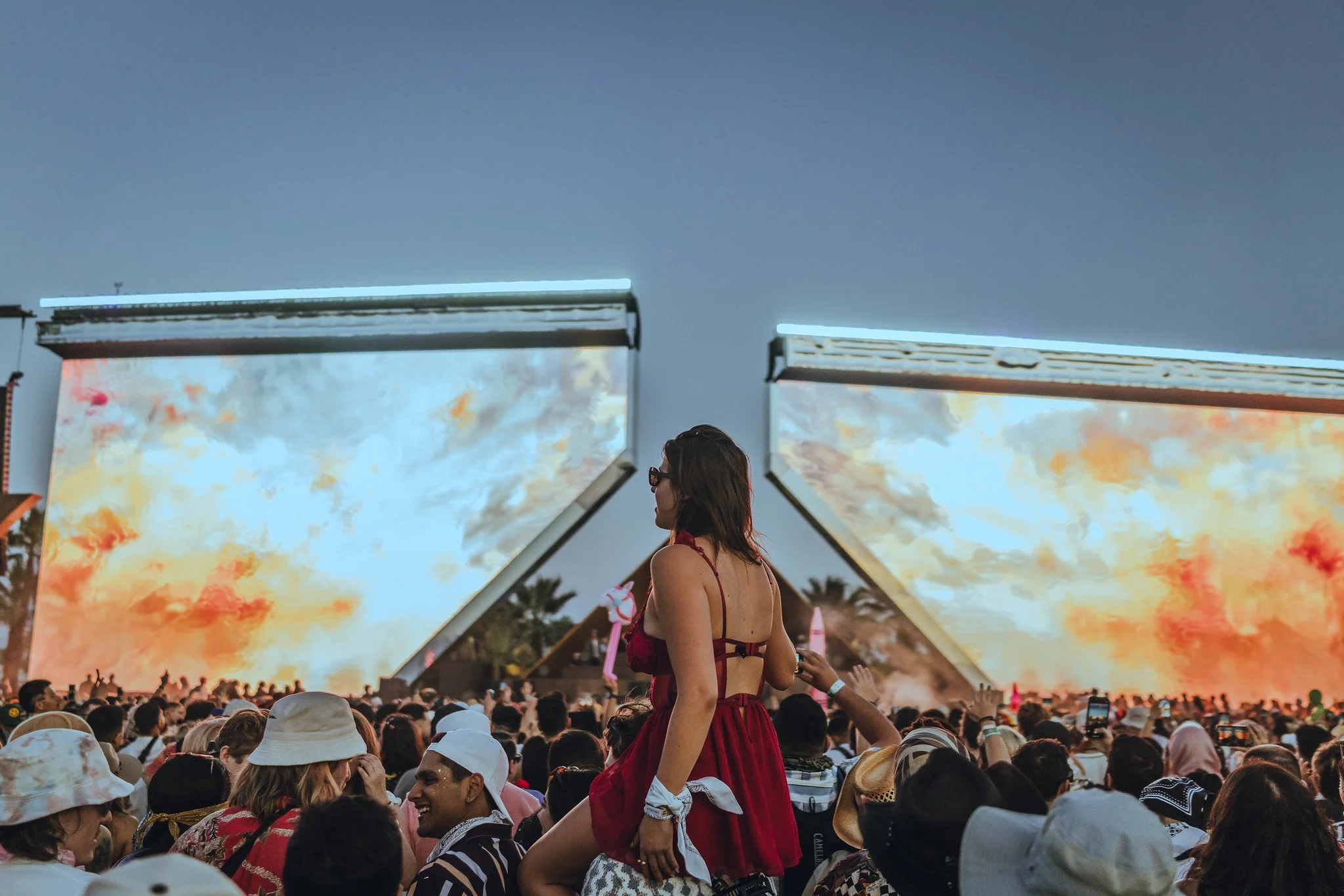
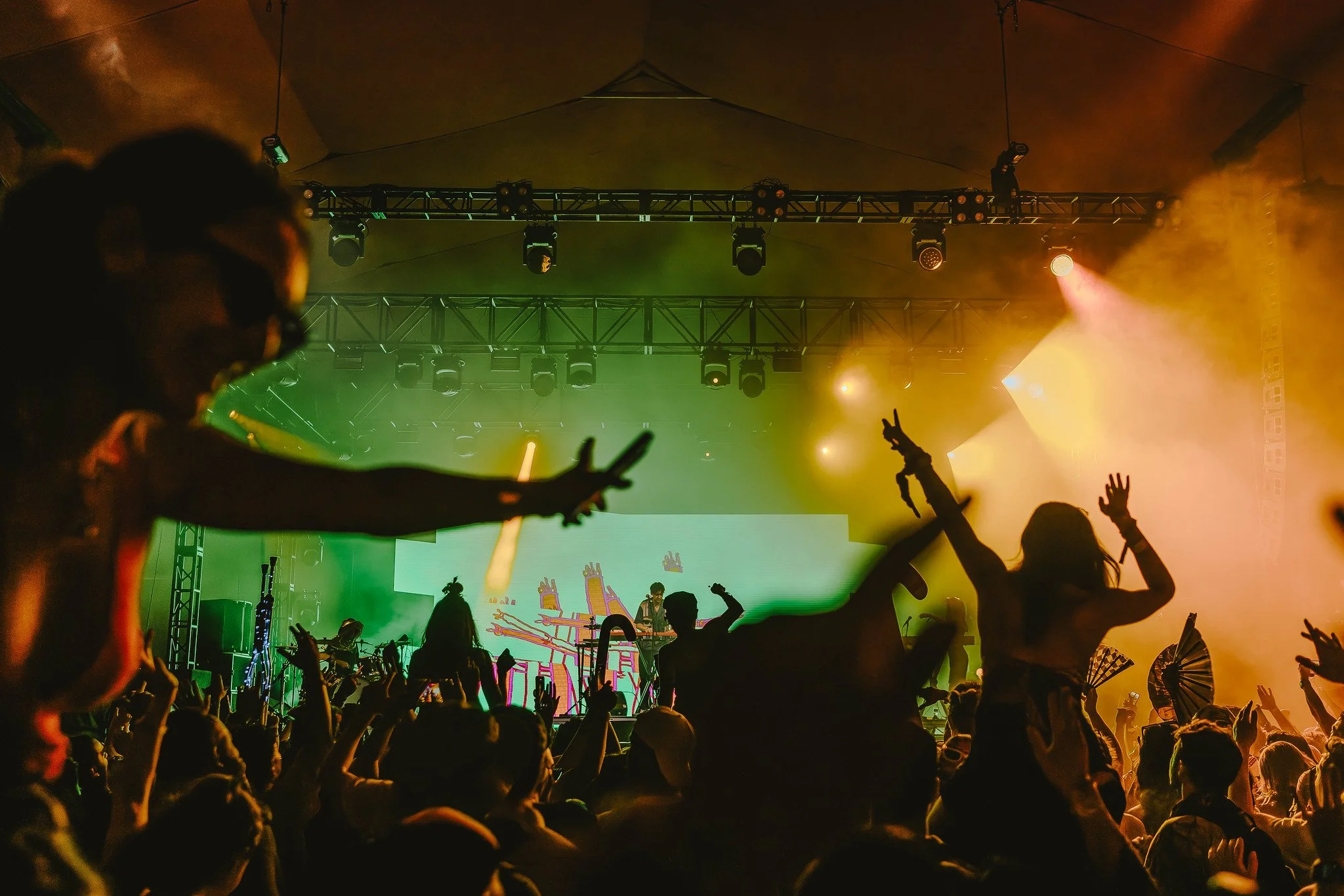
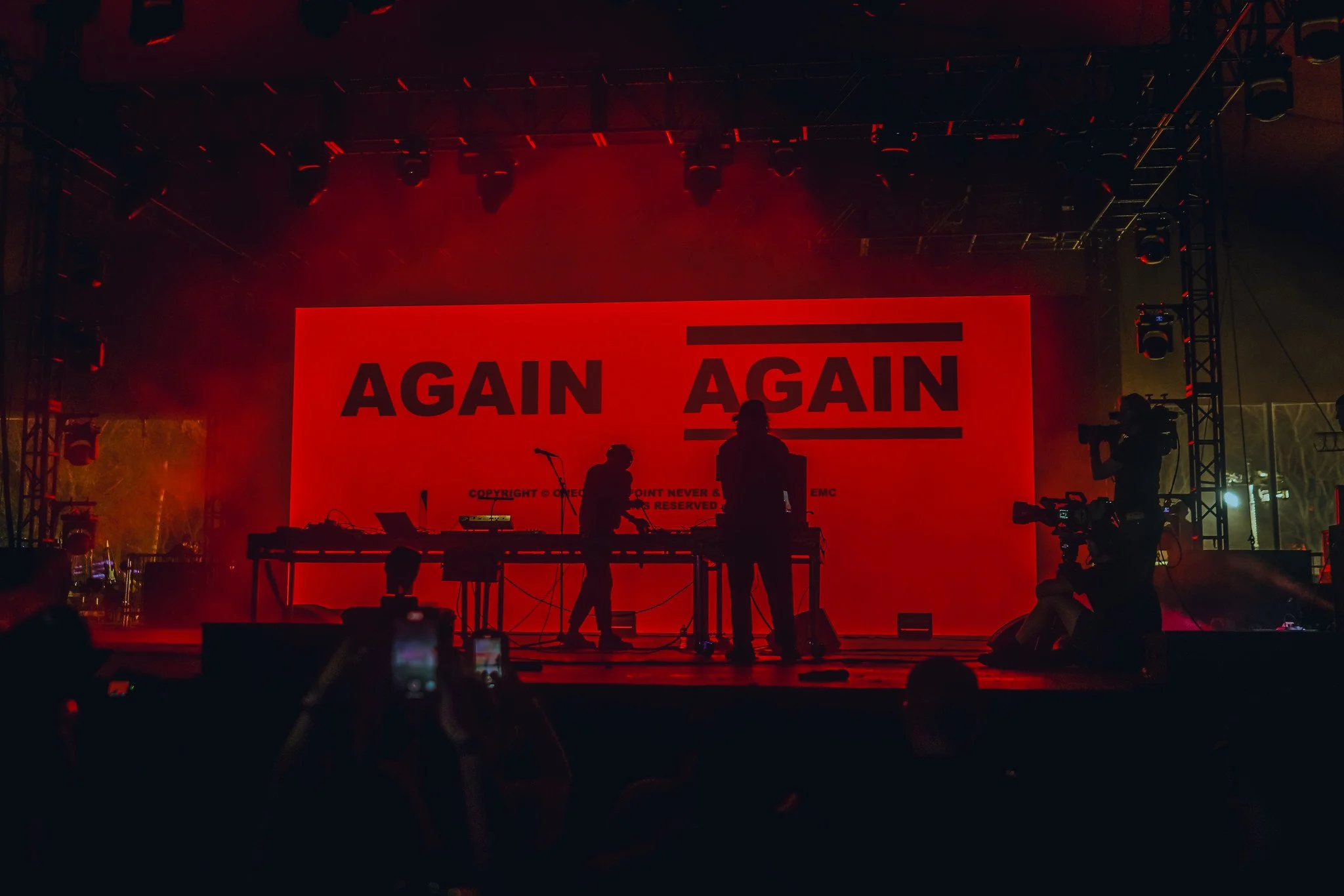
An average Coachella set lasts an hour, sometimes two hours for headliners. It happens exactly once, in front of an audience that will not be assembled in that combination again. The artists who understand this — who inherit any of the founding ethic the festival was built on — bring proportionate care: respect for the room in front of them rather than the camera framing them. The production doesn't have to be enormous. Some of the most memorable sets in this festival's history have been small bands on small stages treating the moment with the gravity it deserved. The gap between an interesting sketch of an idea and a fully realized artistic production is many distances traveled. The artists who close it are the reason any of this matters.
Here are the five sets, in order, that earned the trip this year. (Plus a longer list, in shorter form, of everyone else who deserved the room.)
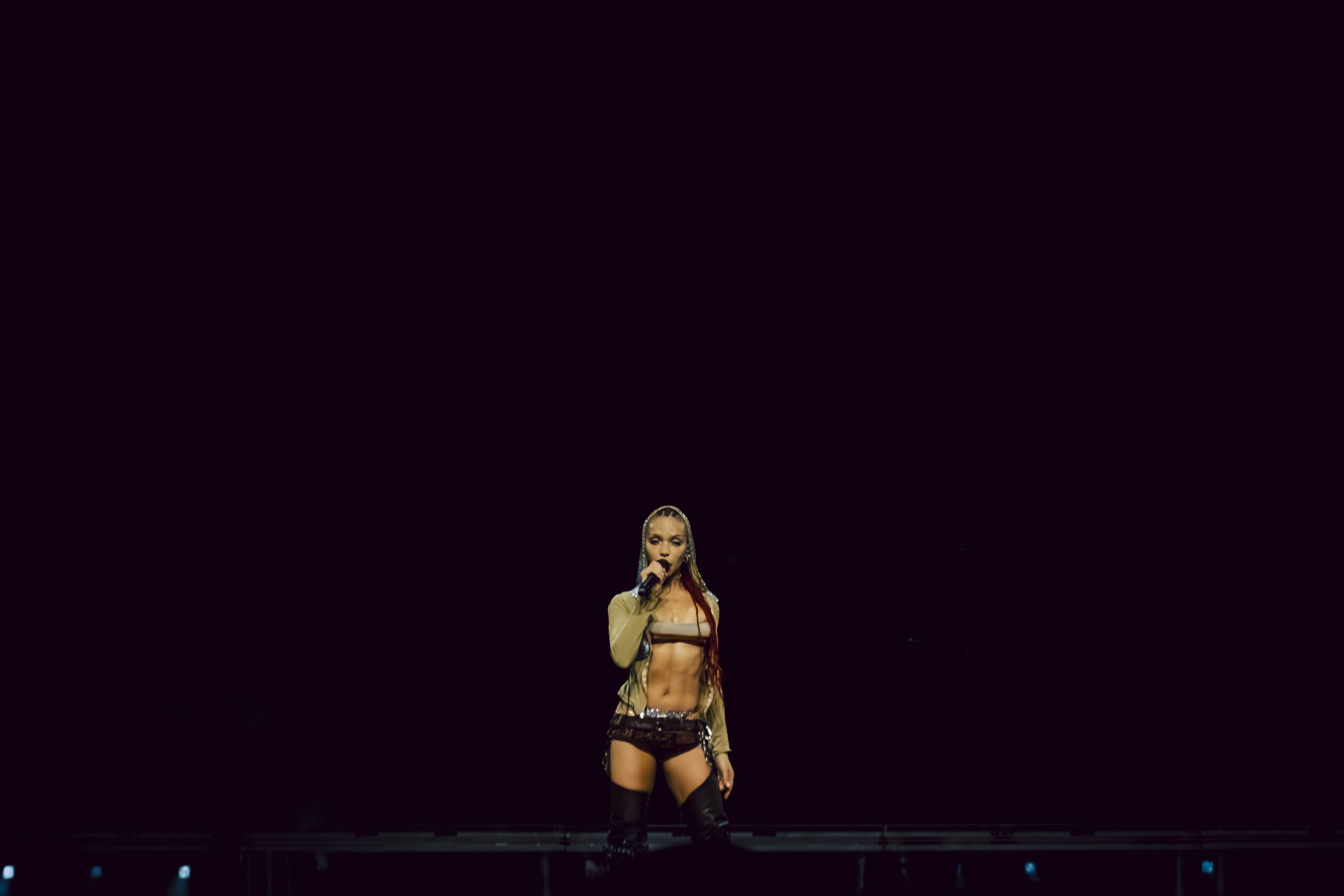
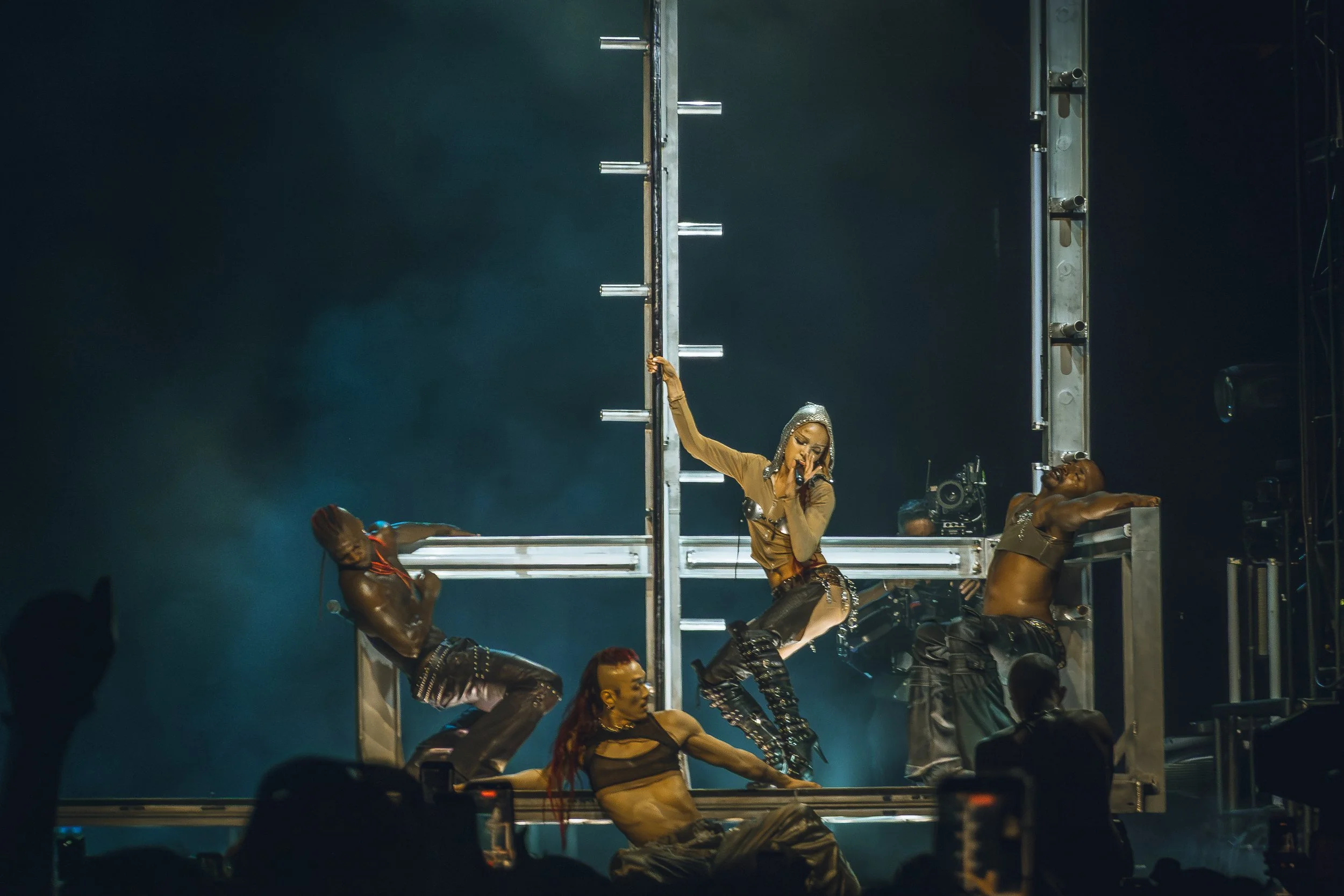
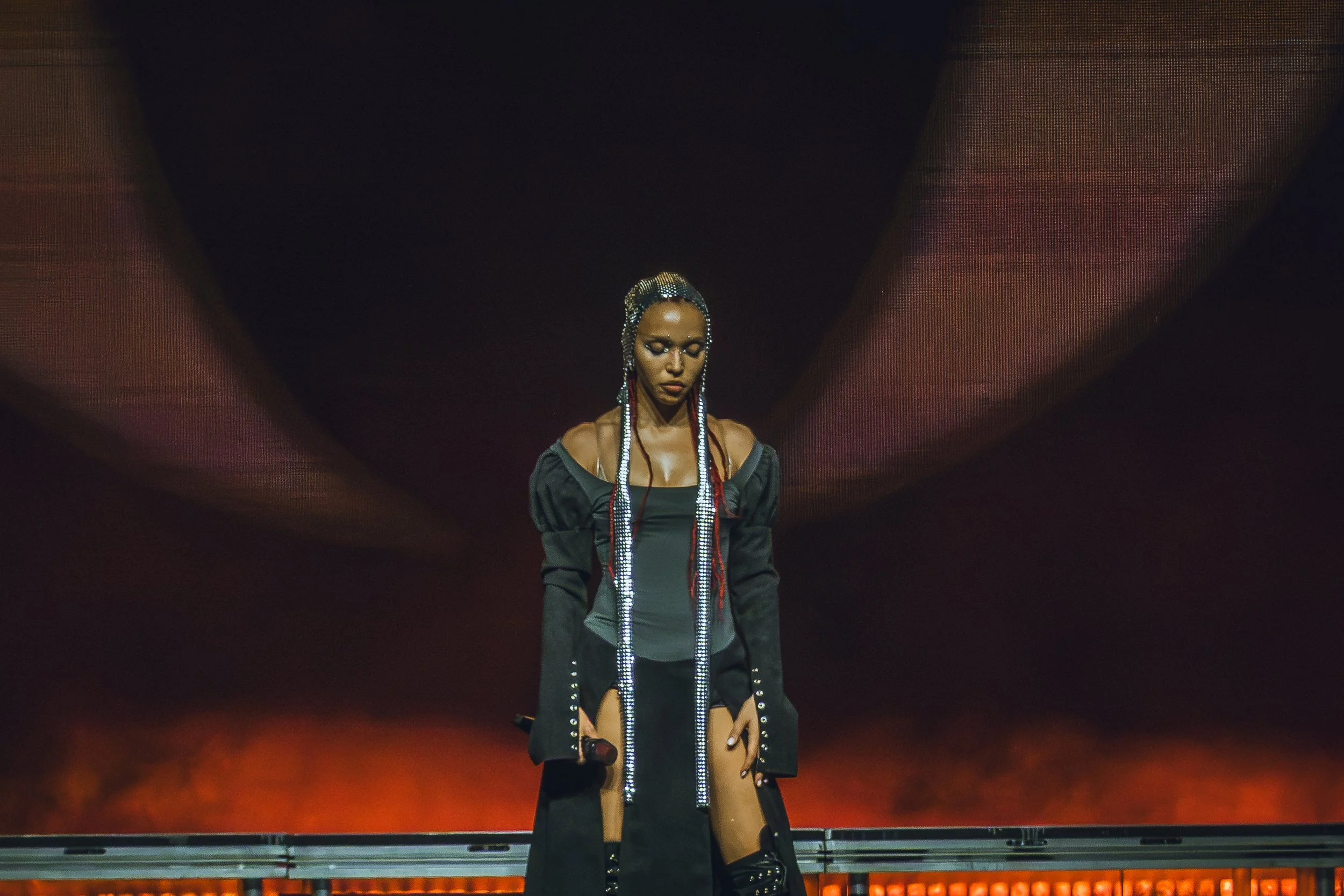
FKA TWIGS
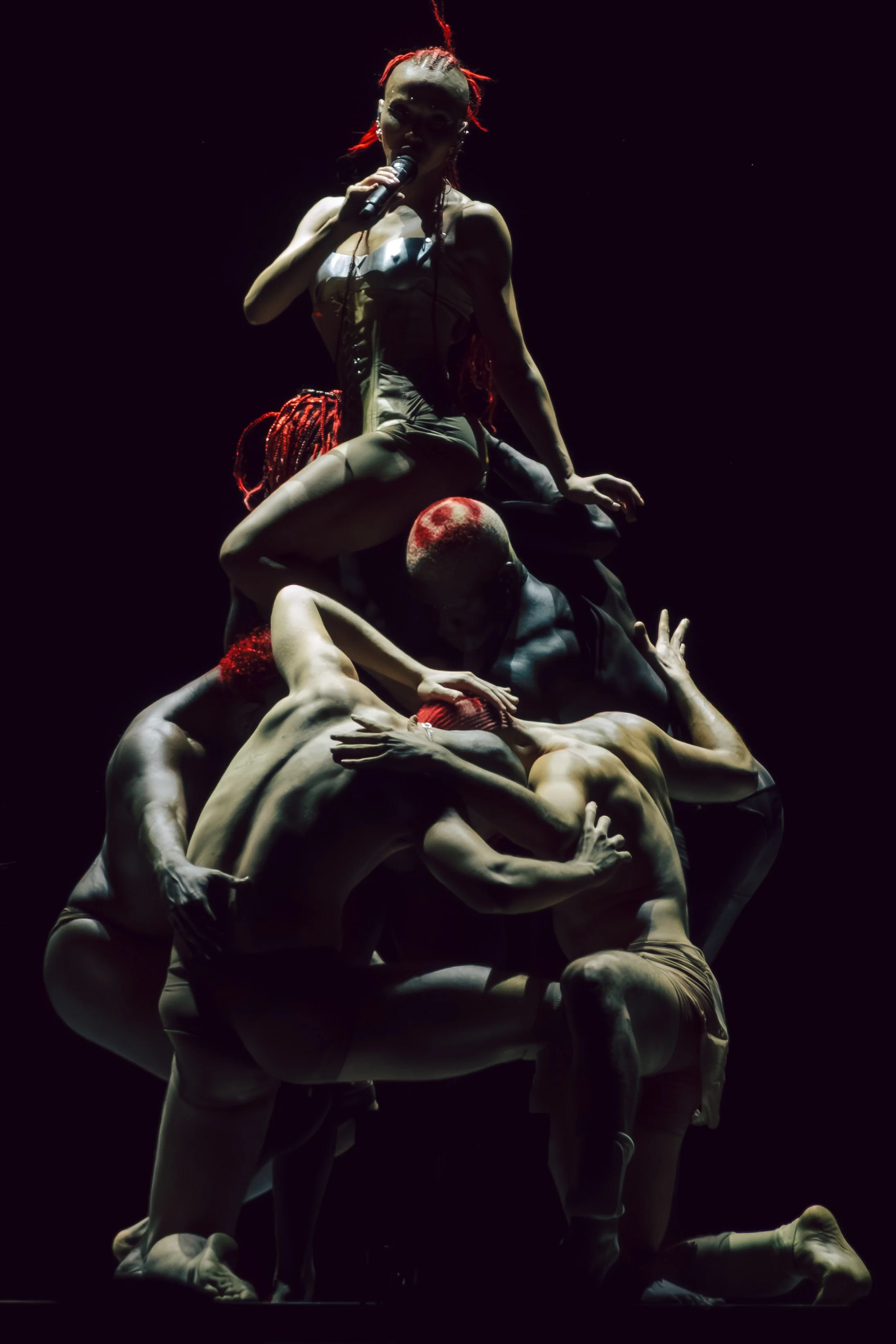
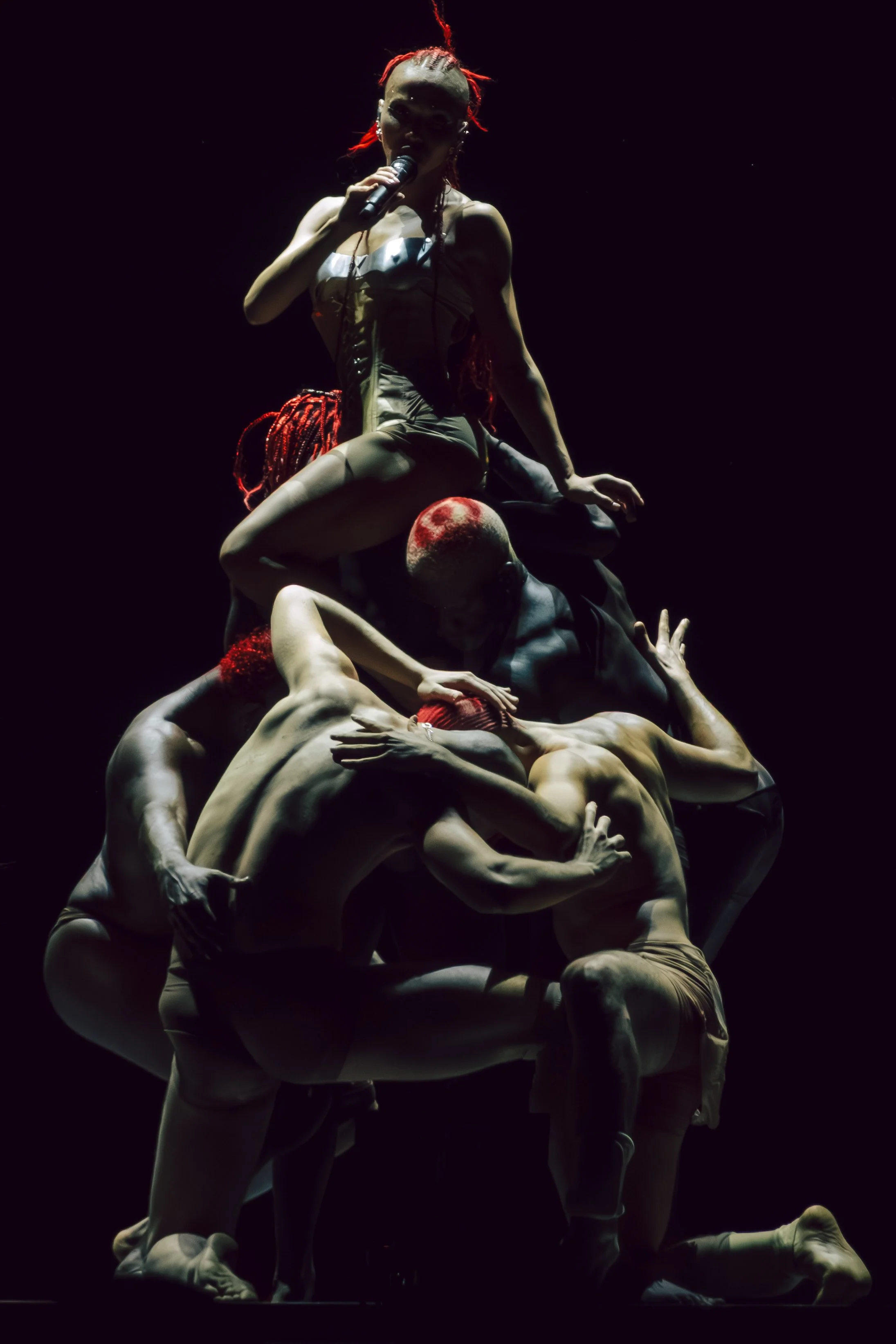
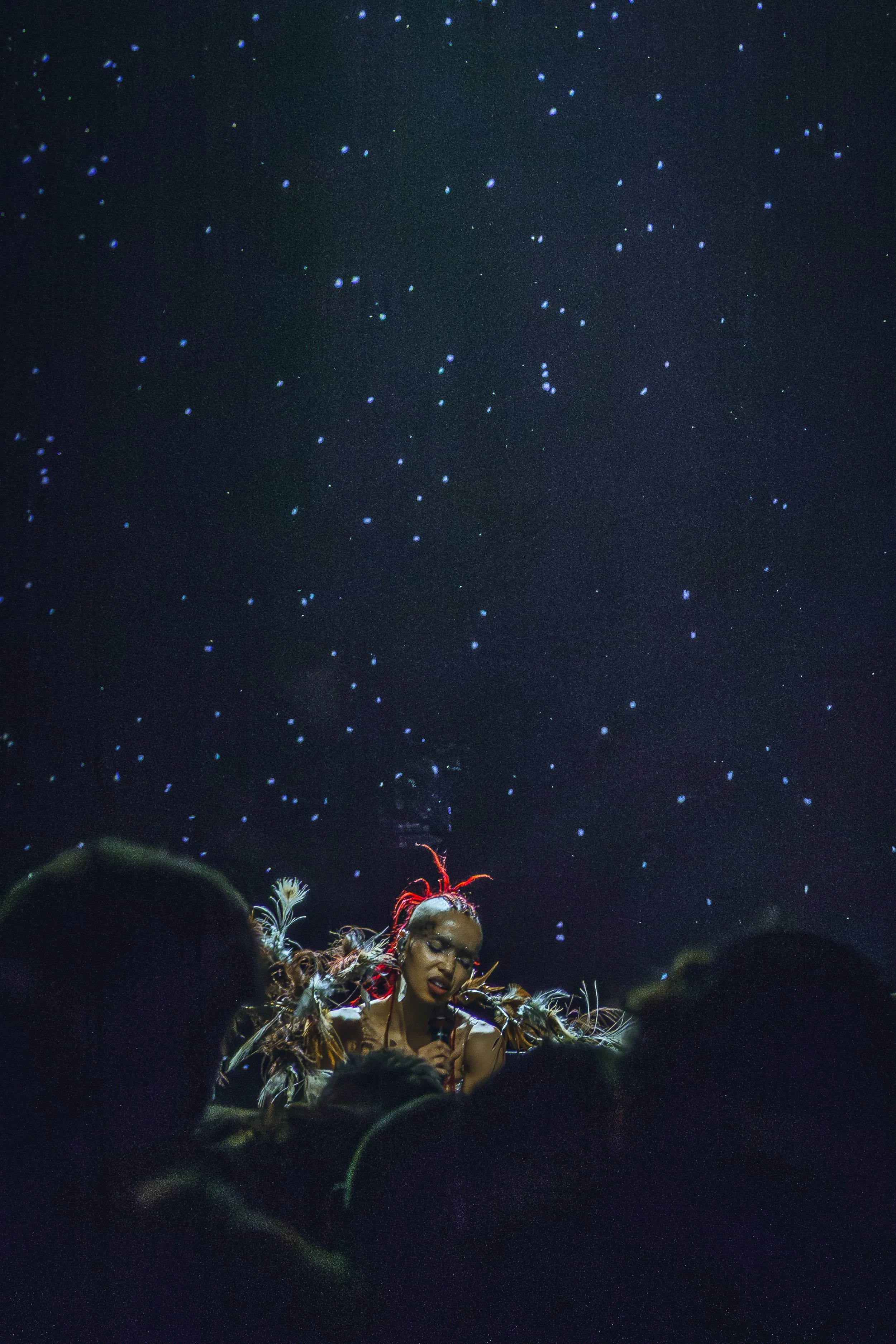
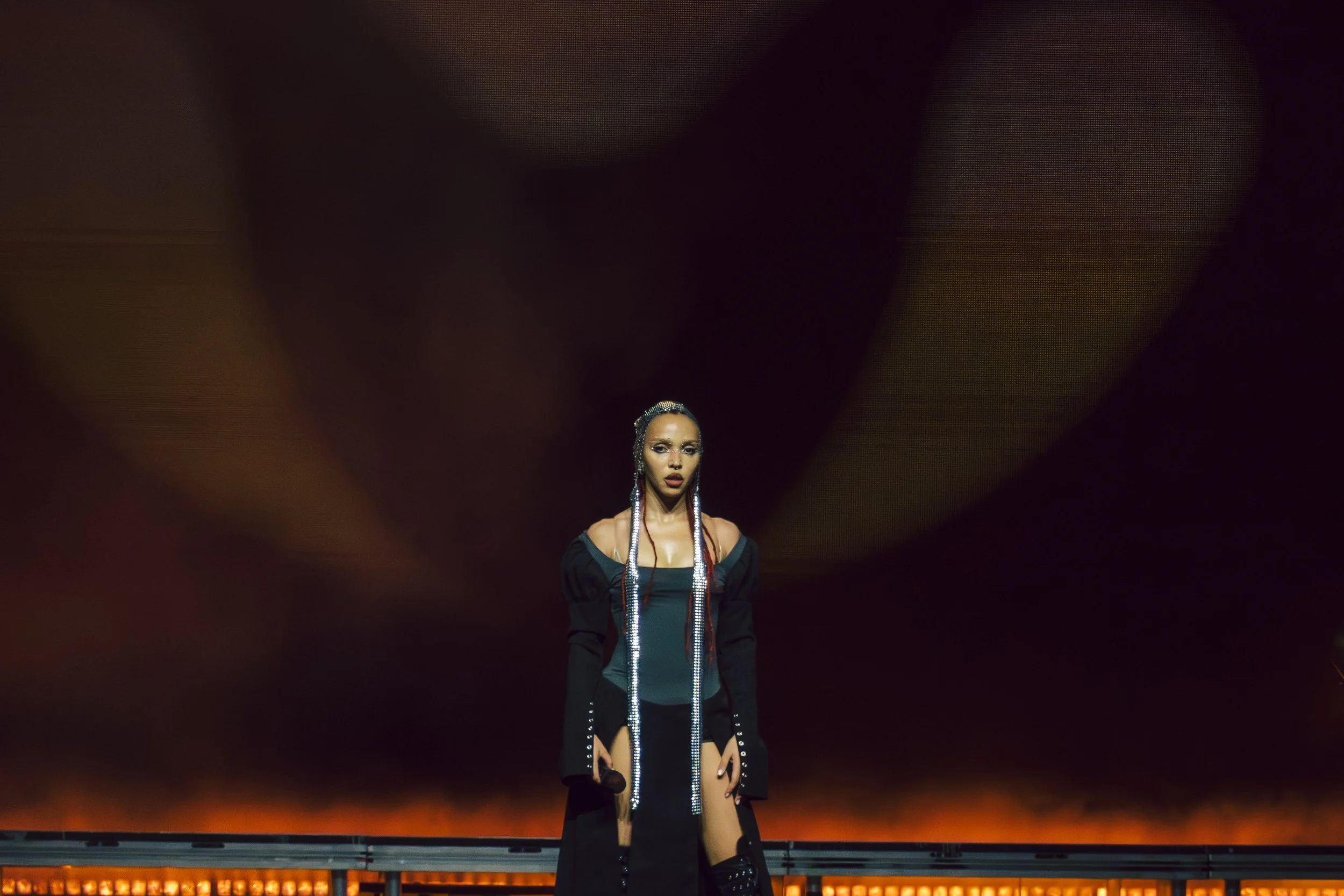
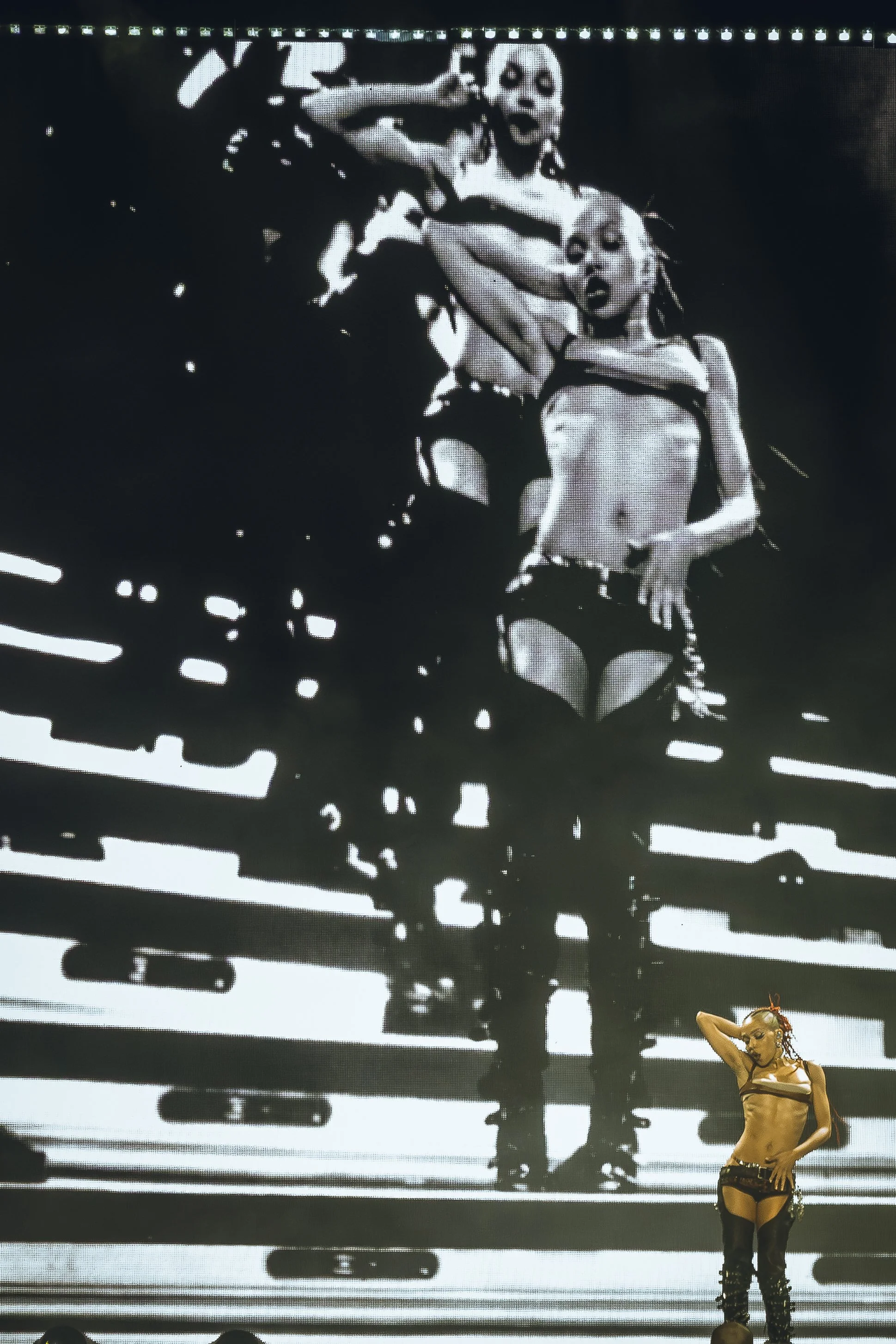
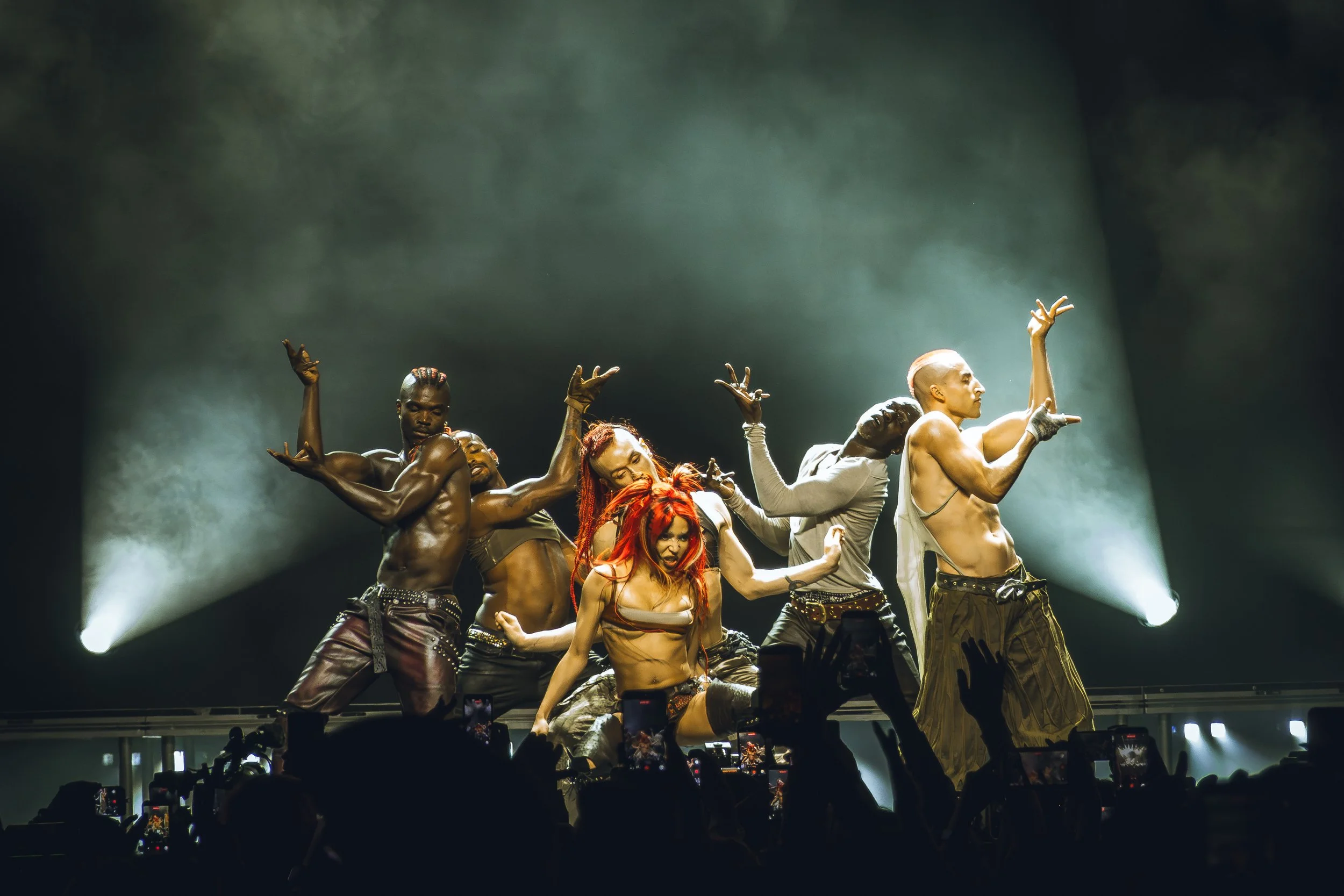
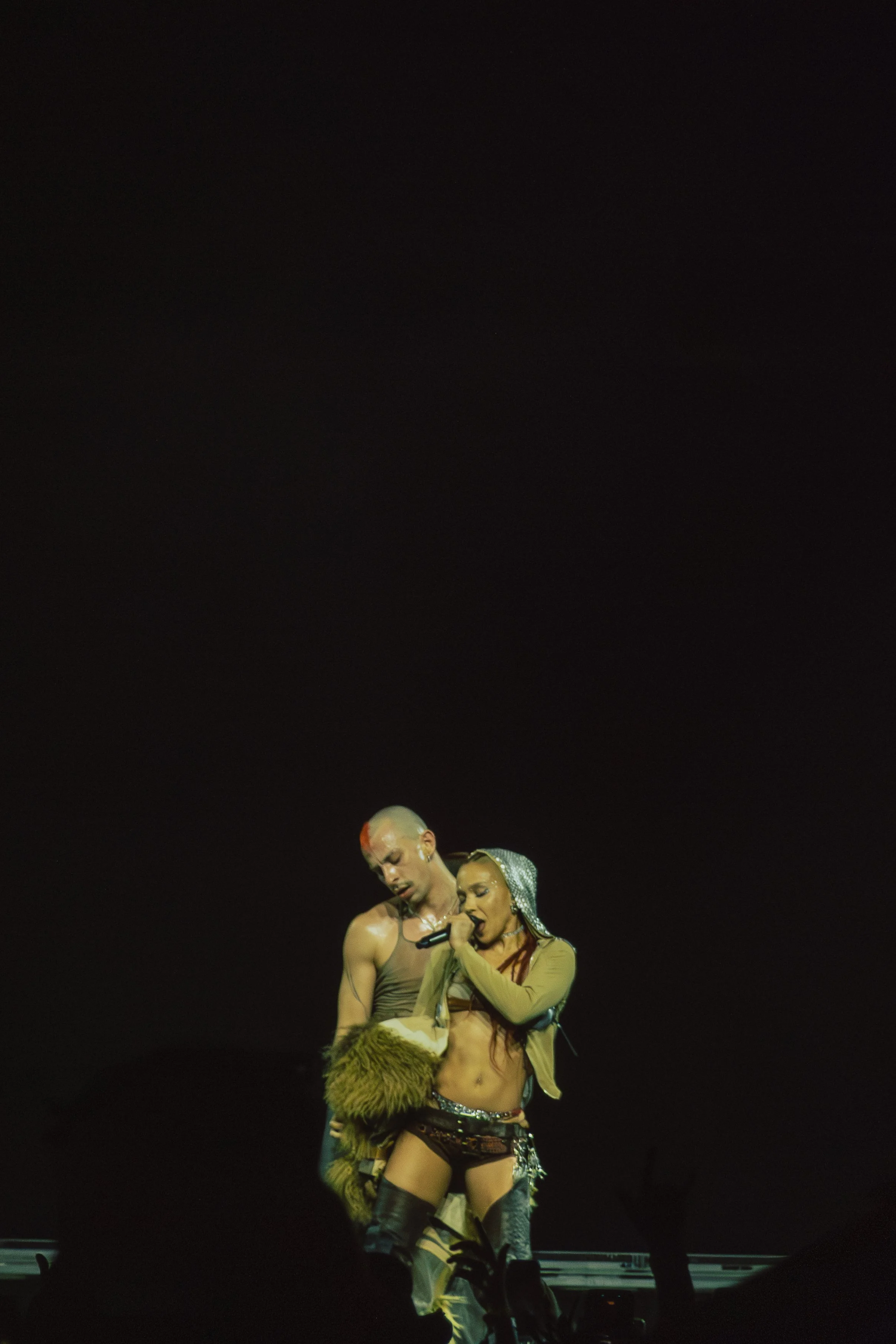
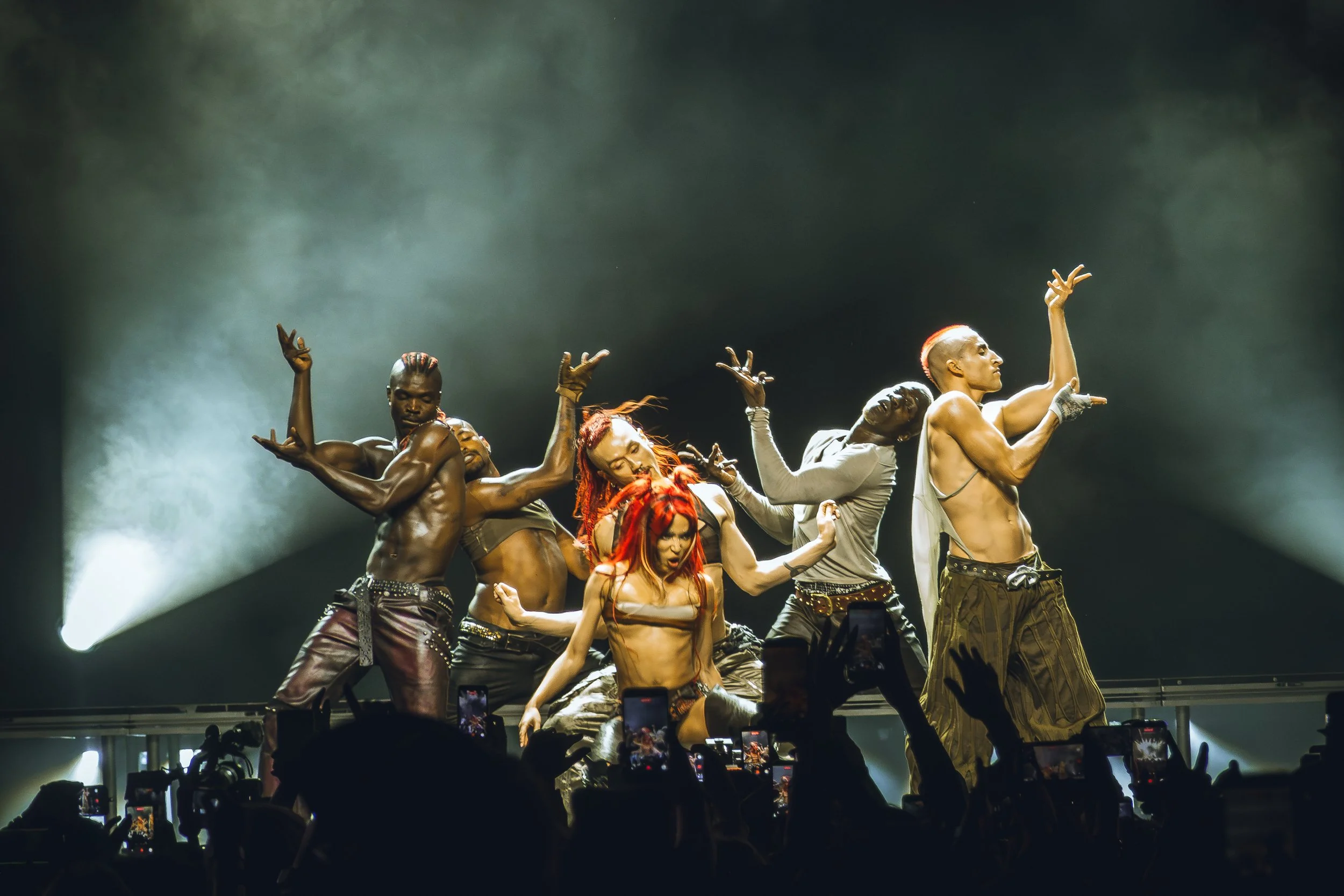
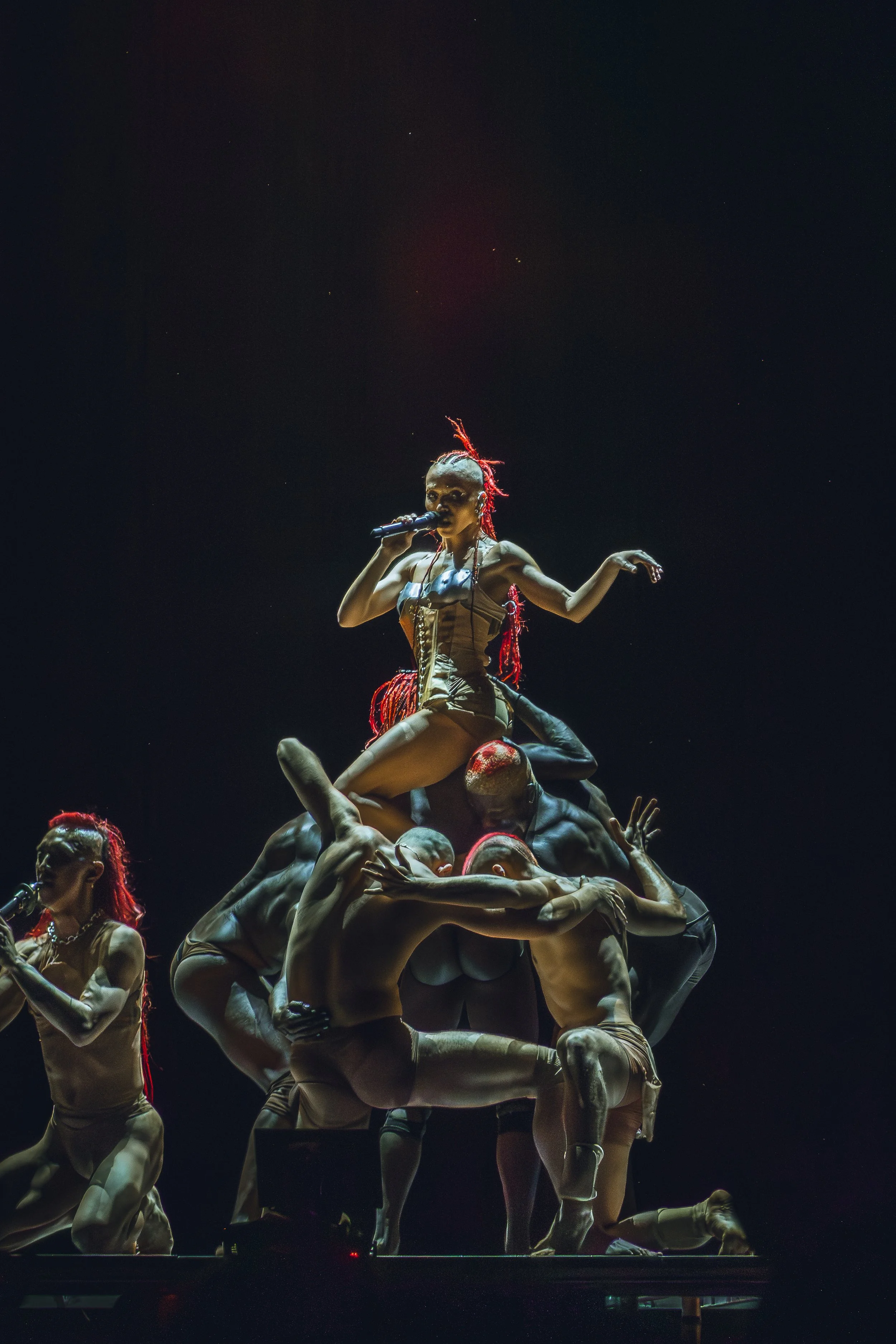
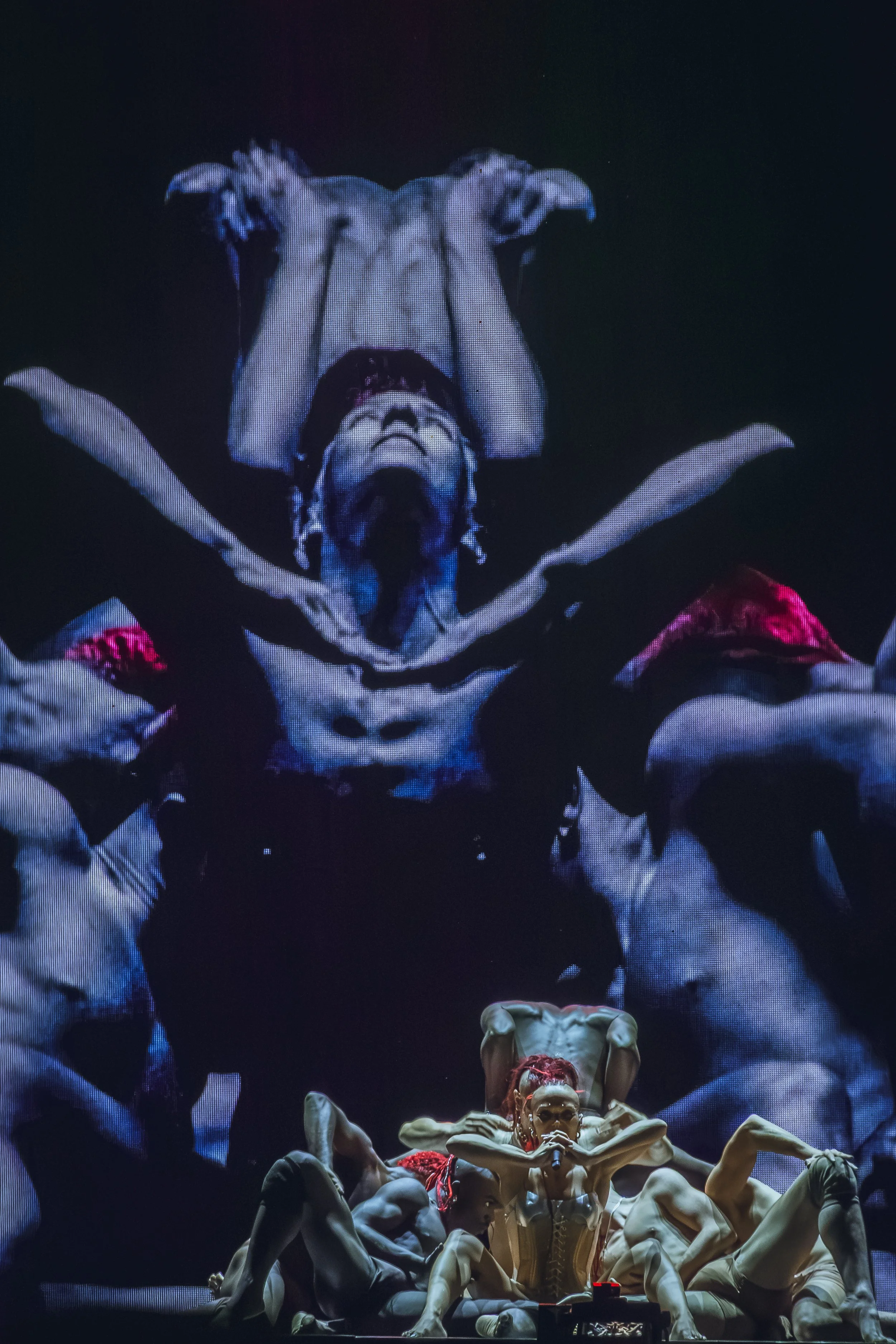
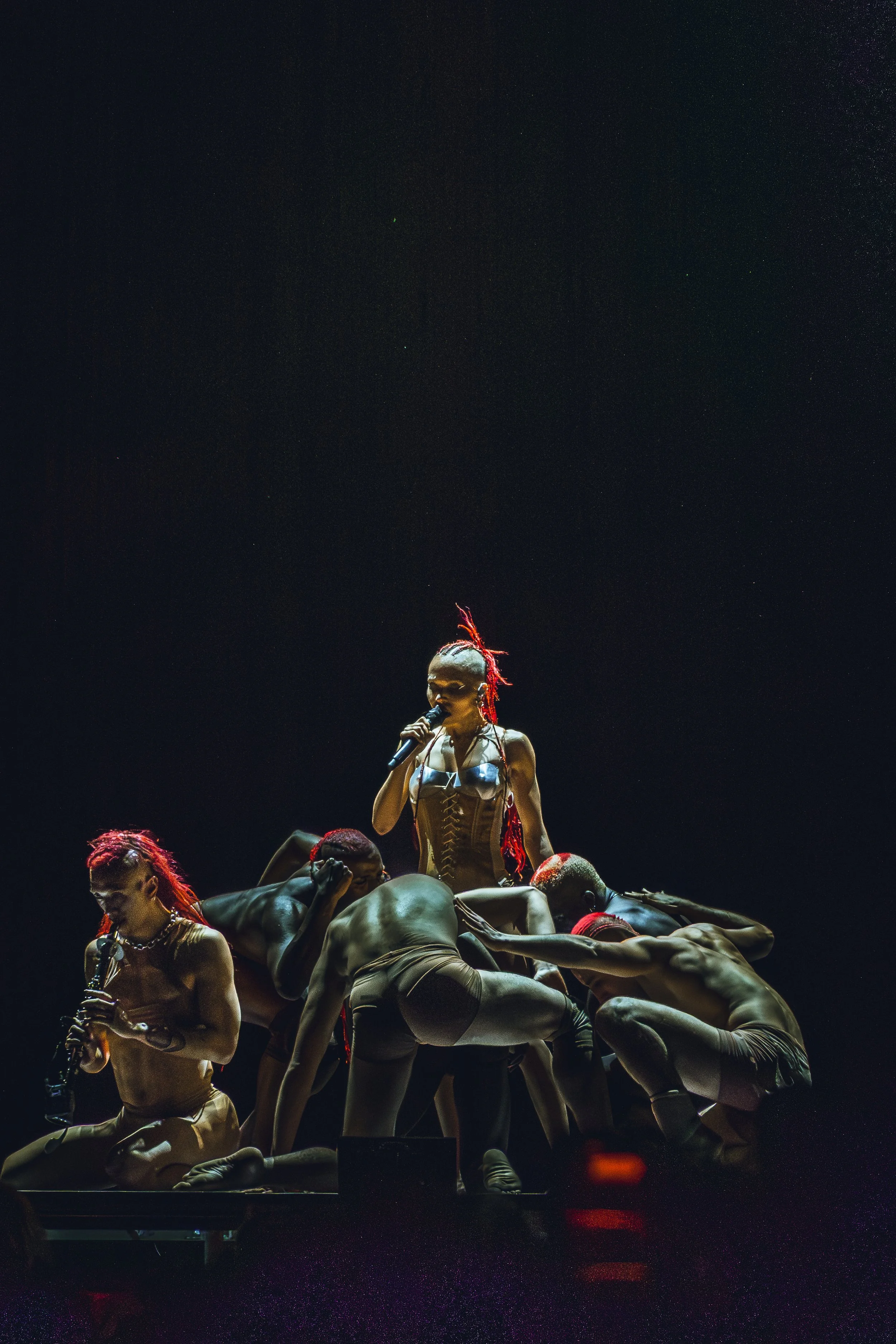
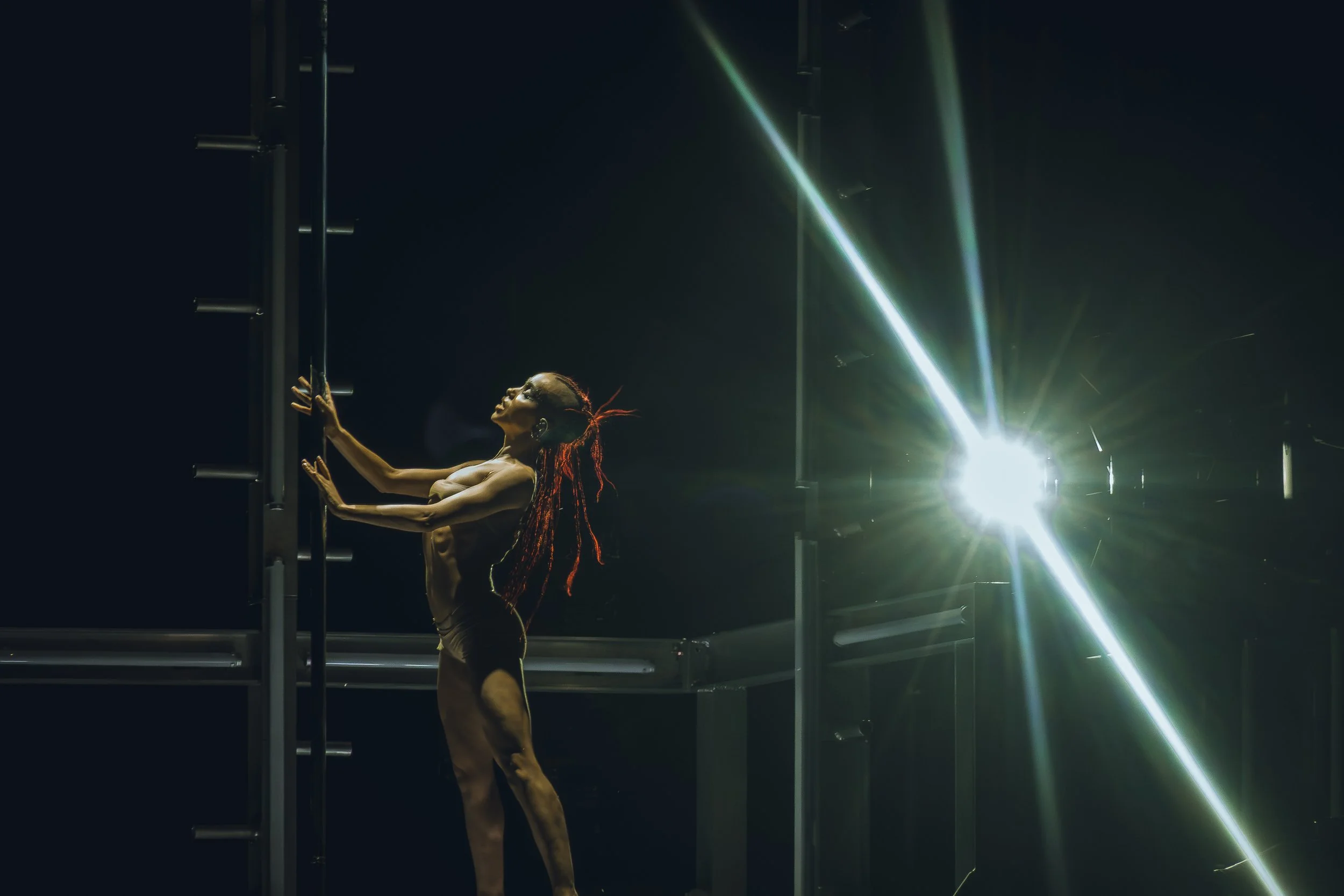
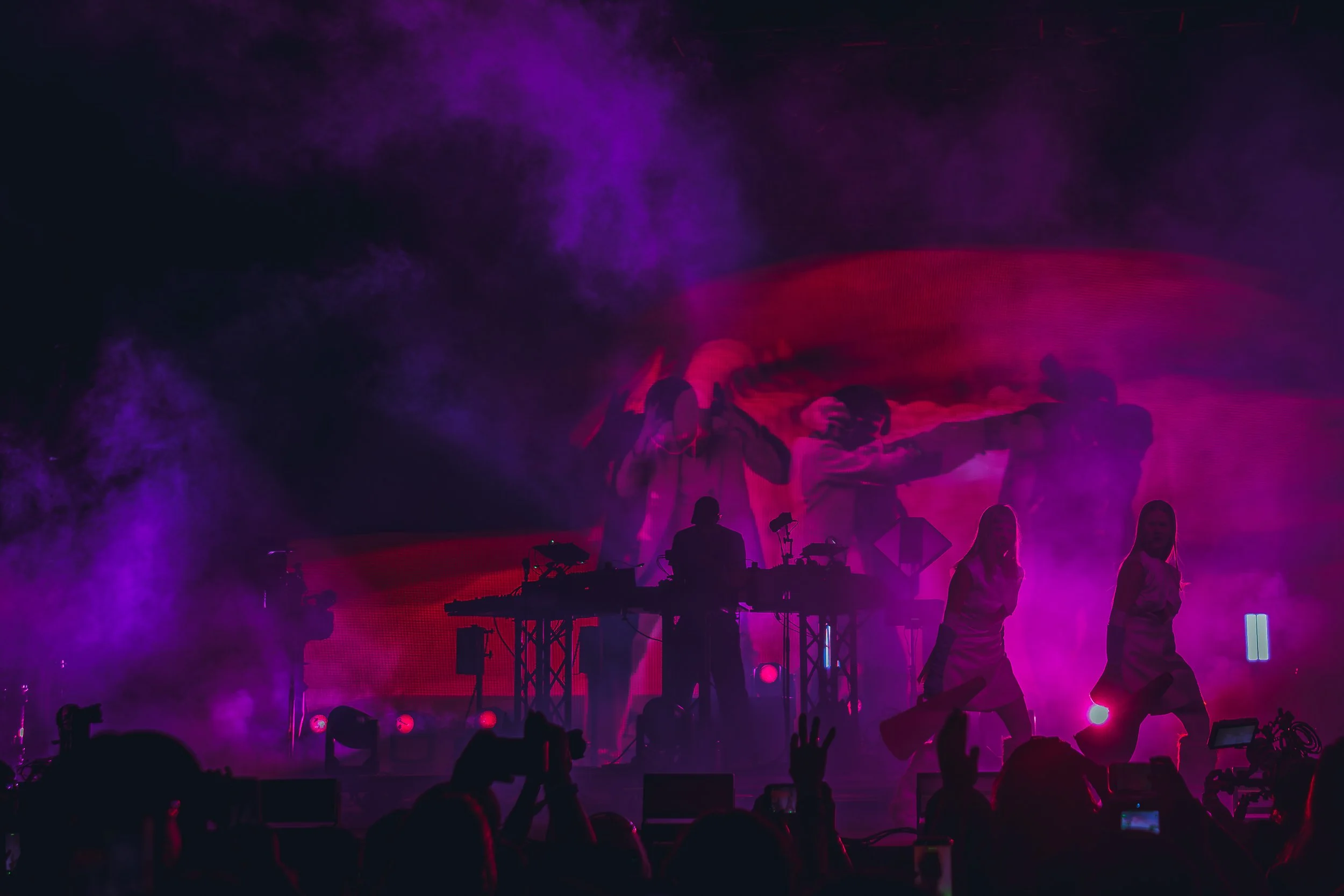
FKA Twigs's whole project is built around the suspended moment immediately before release — not the climax itself but the deep breath before the plunge. The thing she understands, that almost nobody at her tier of pop seems to, is that the most erotic gesture available to a contemporary artist is obfuscation: the withheld is always more alluring than the explicit — Eusexua is built on that insight, and her Sunday night Mojave set was the same argument turned out into the desert and stretched to seventy-five minutes.
The fact that the set existed at all in 2026 was structurally on theme. Visa issues canceled both her 2025 weekends, and the Eusexua tour that was supposed to introduce the record to North America never happened on this side of the Atlantic. Twelve extra months of expectation accumulated in the polo grounds the way humidity accumulates in a Southern summer. By Sunday night, the room had been holding its breath for two album cycles instead of one, and you could smell it in the air.
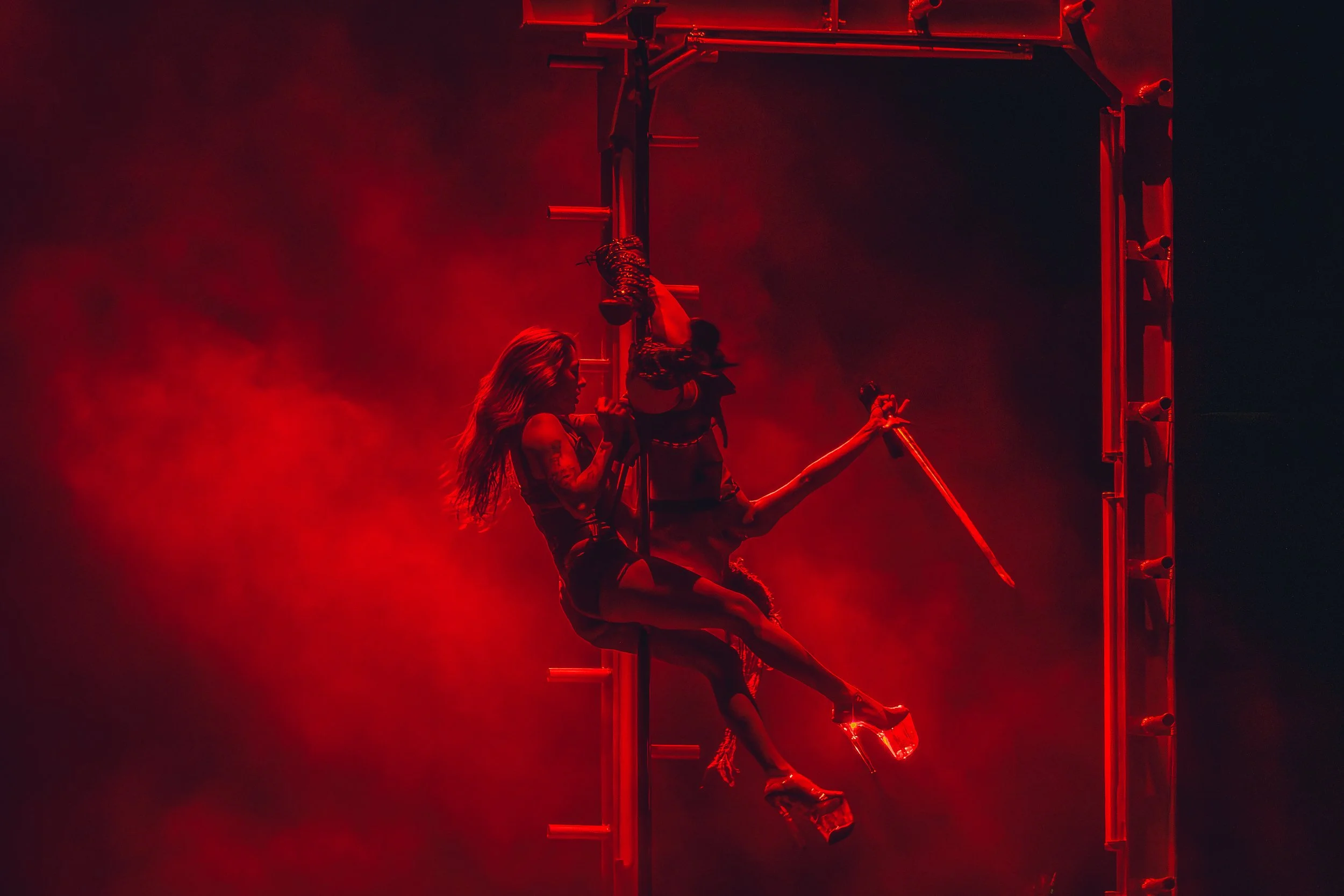
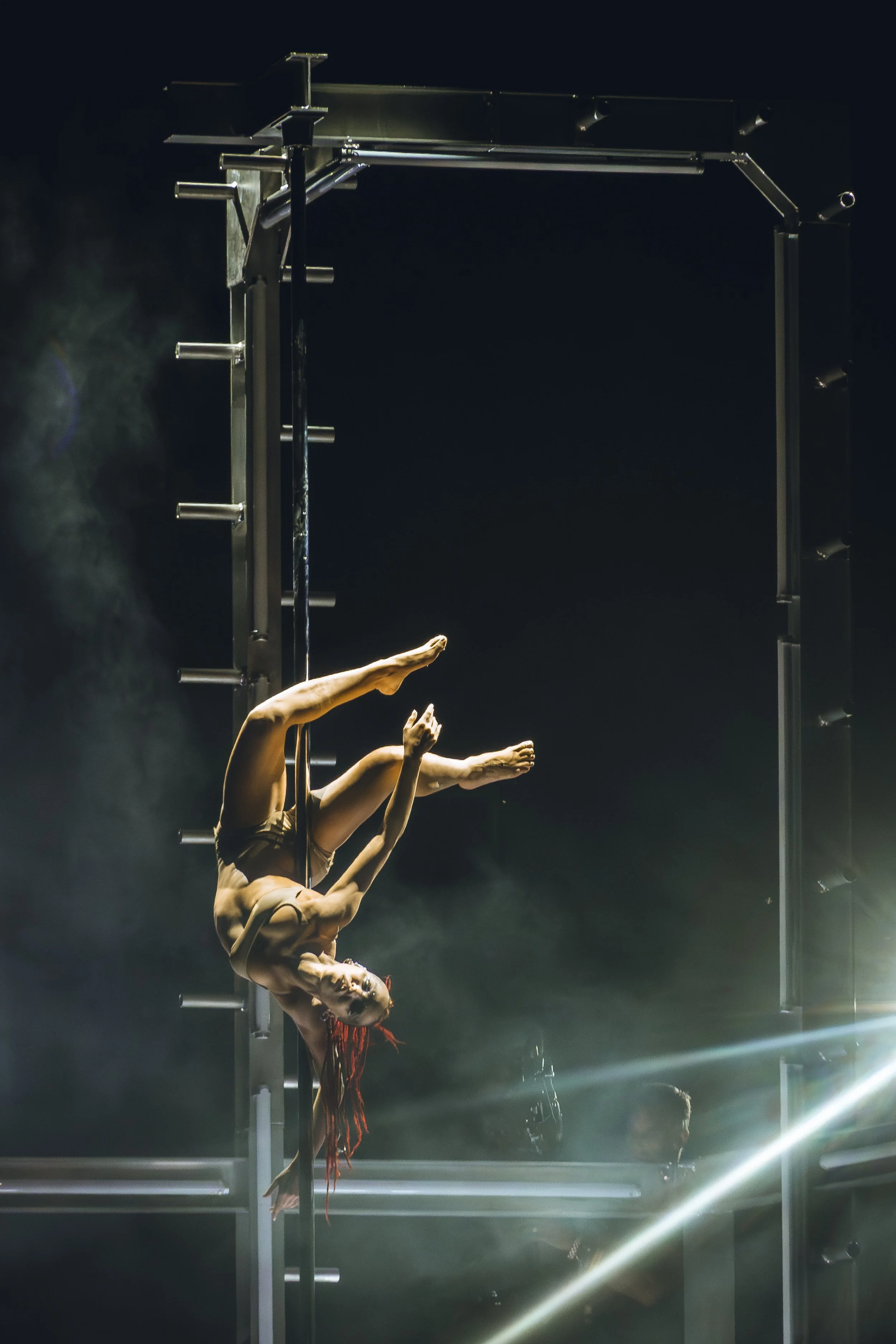
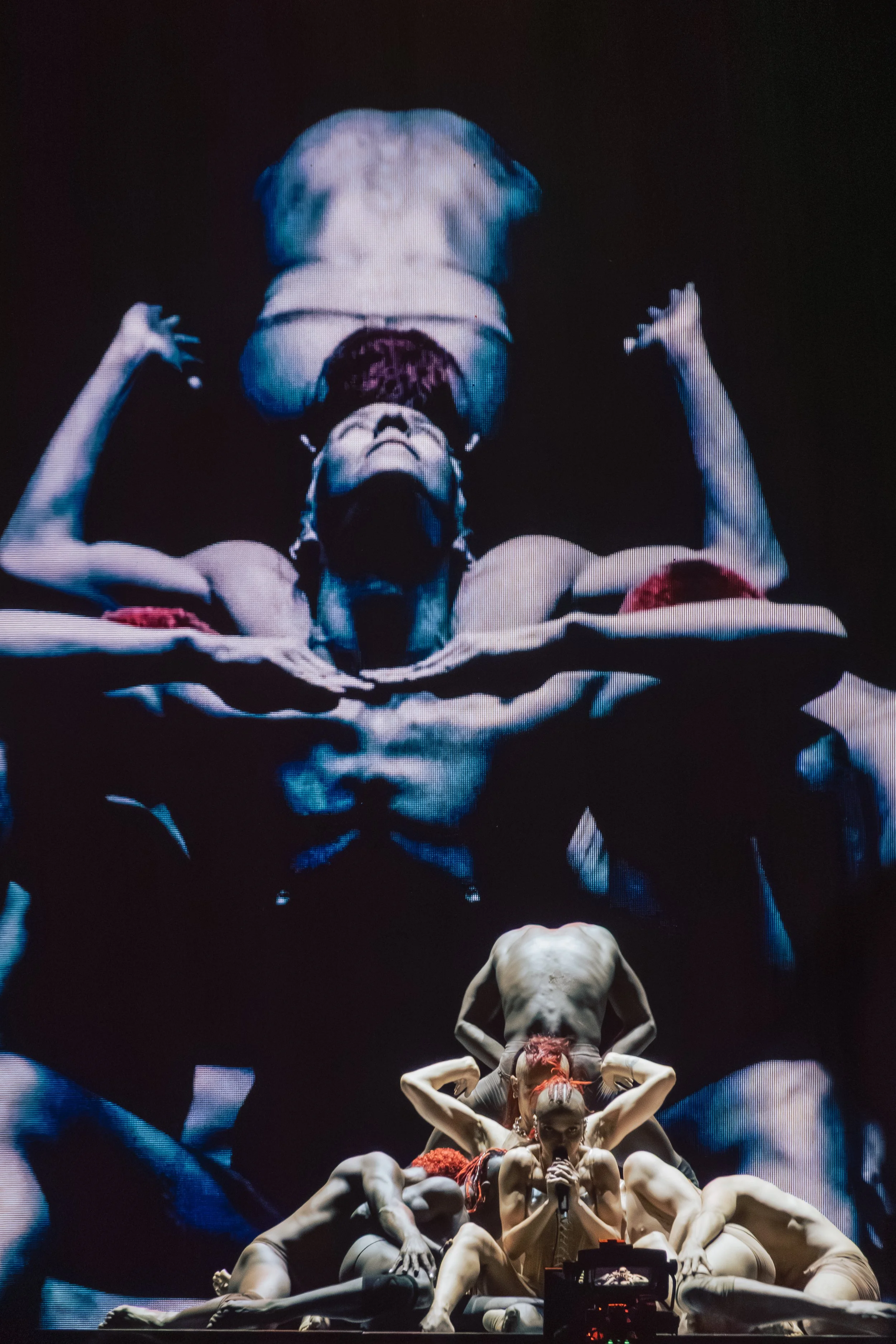
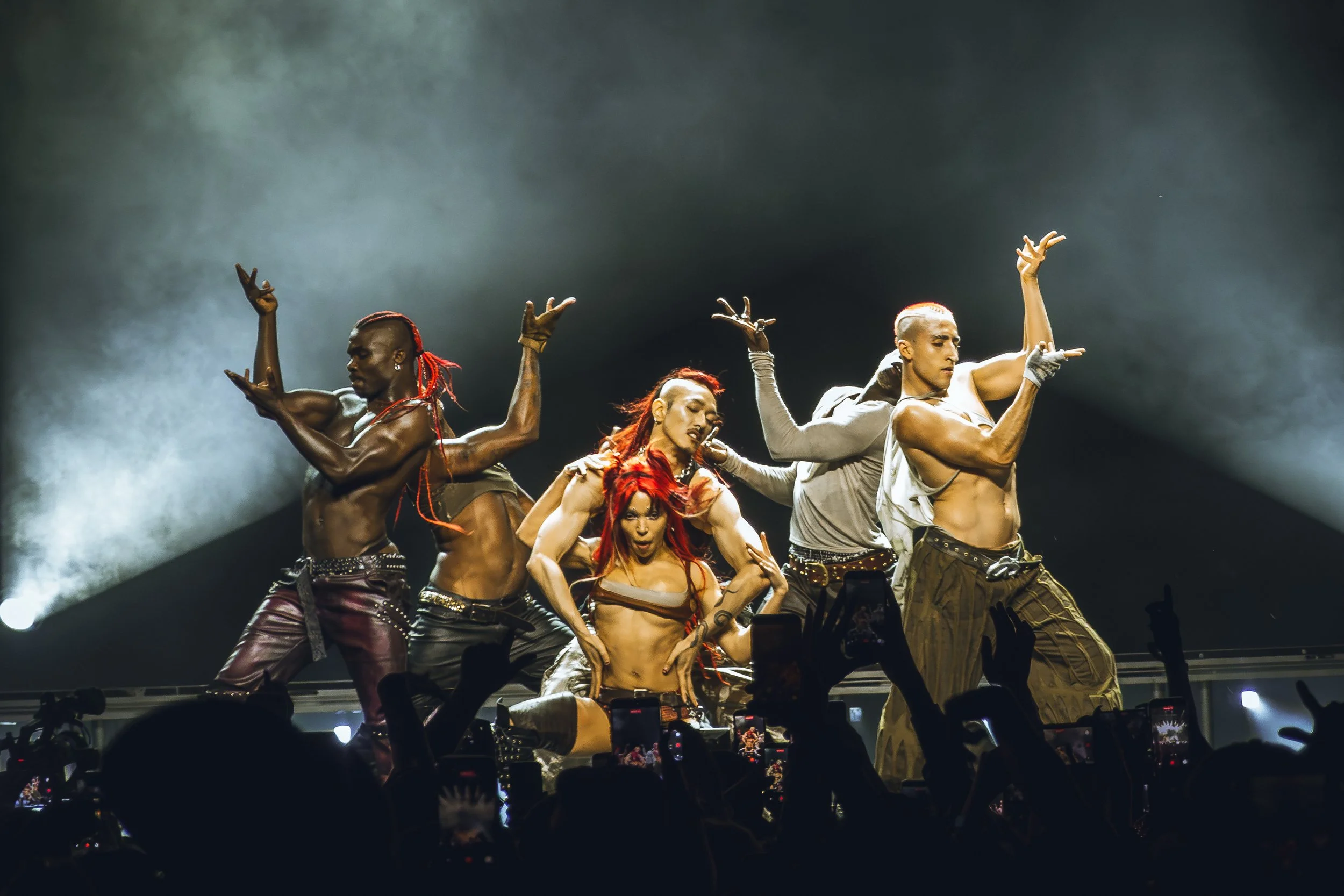
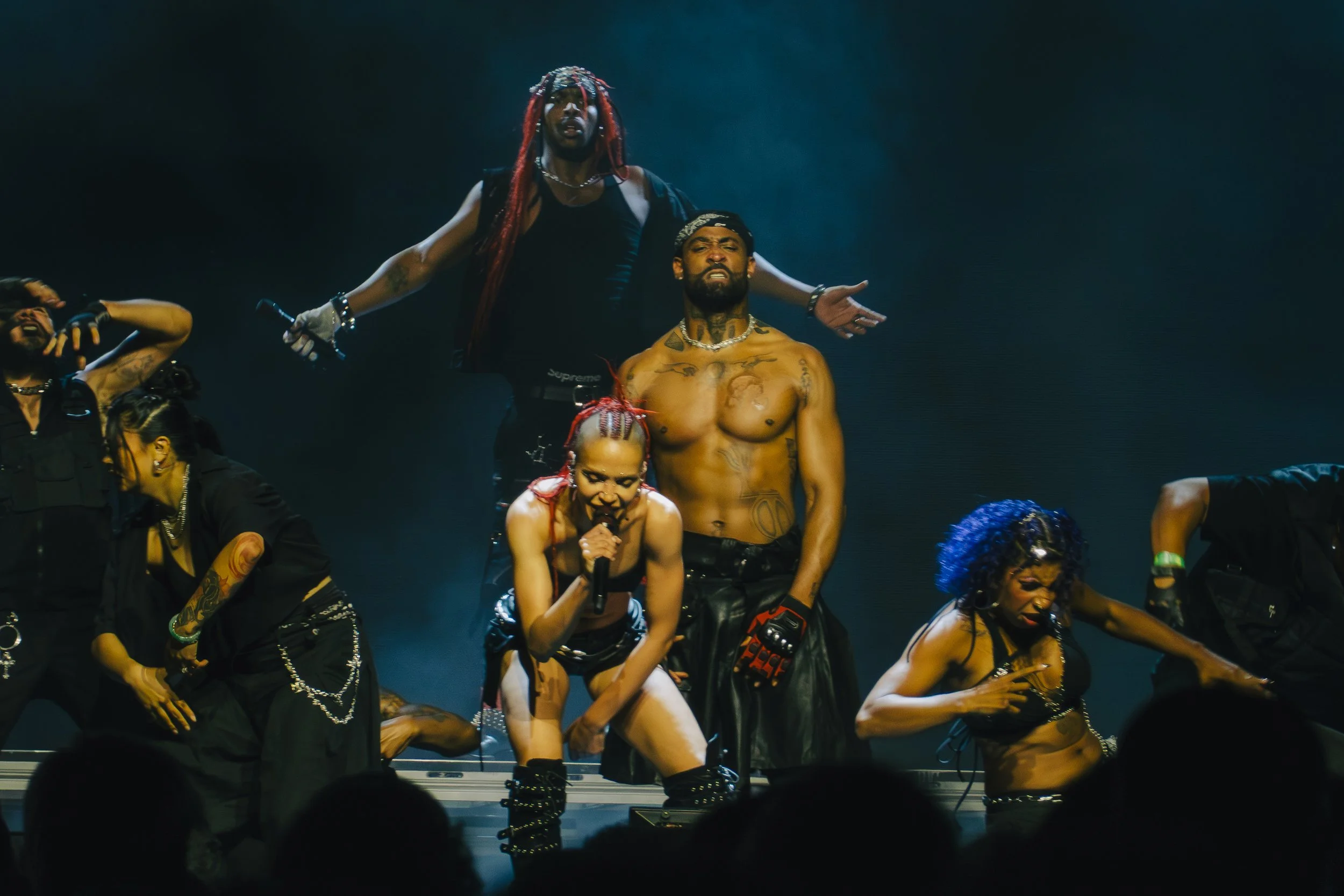
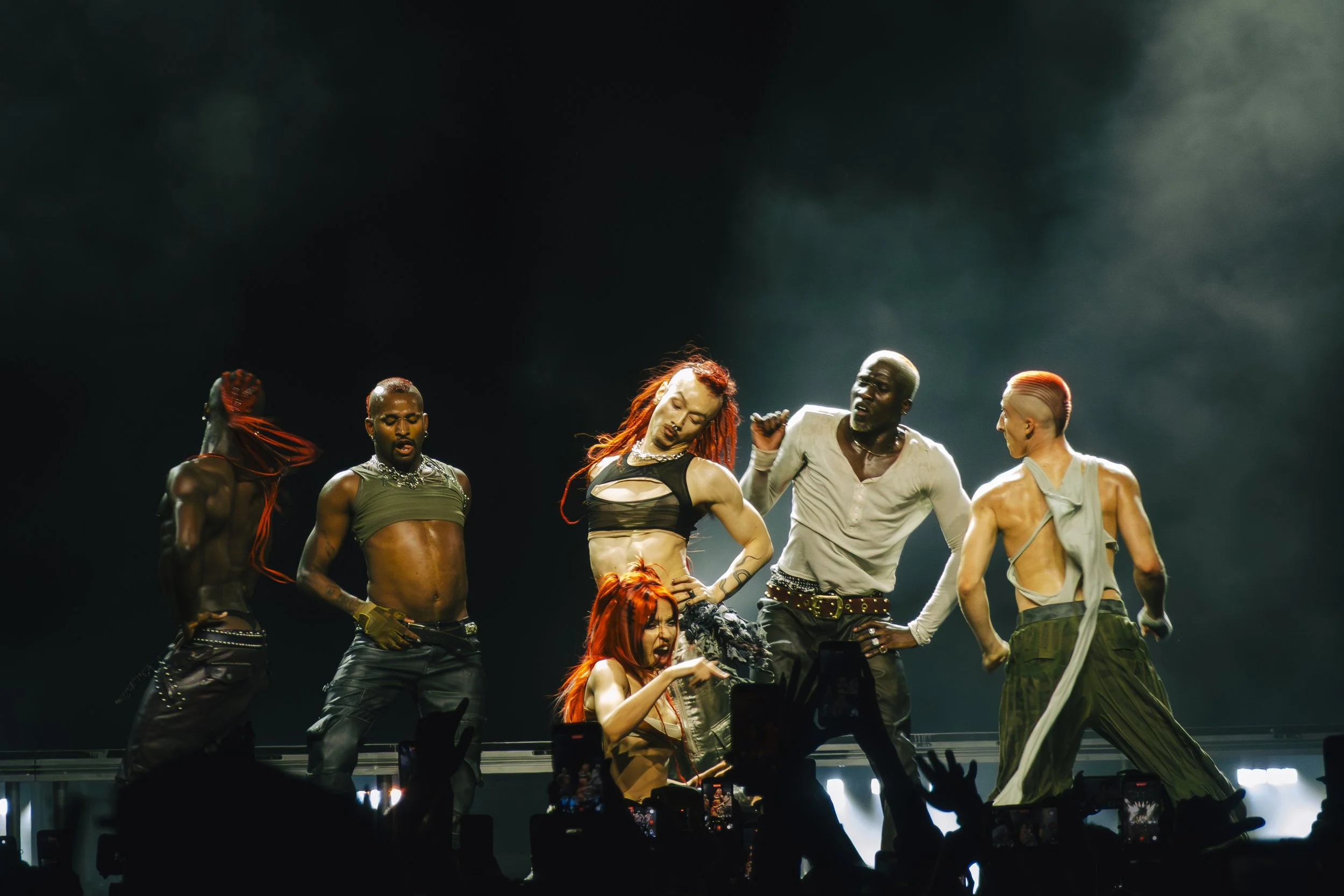
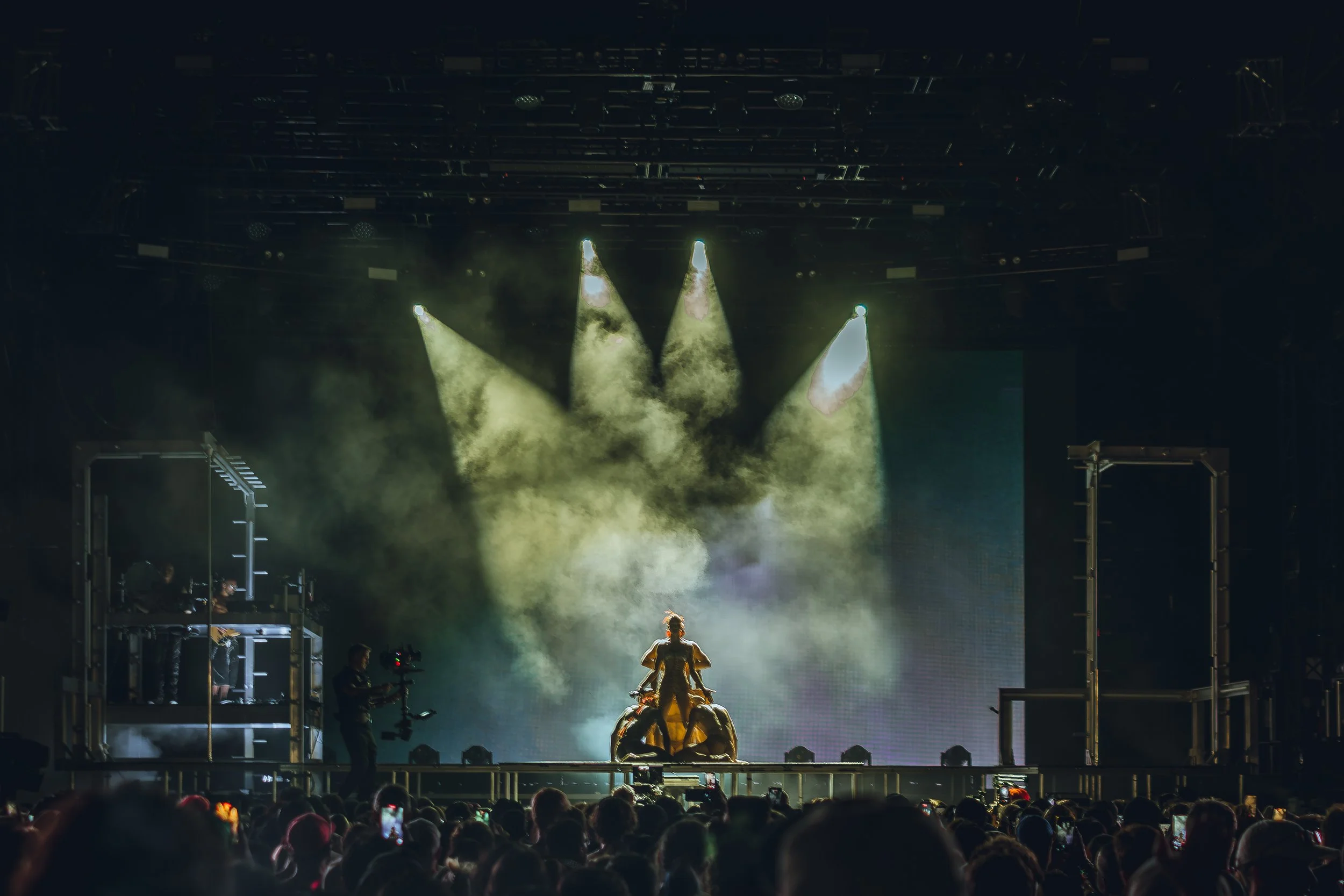
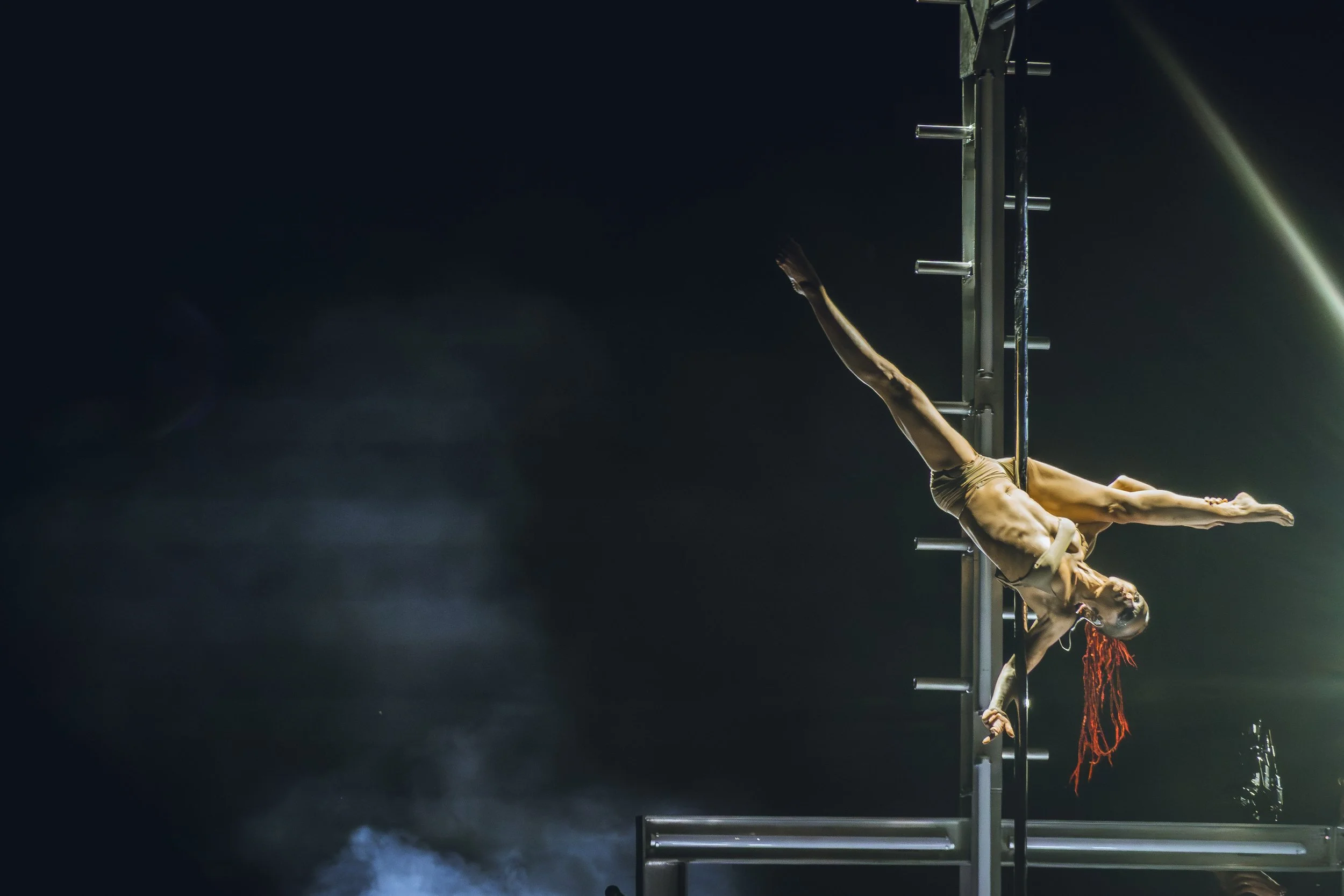
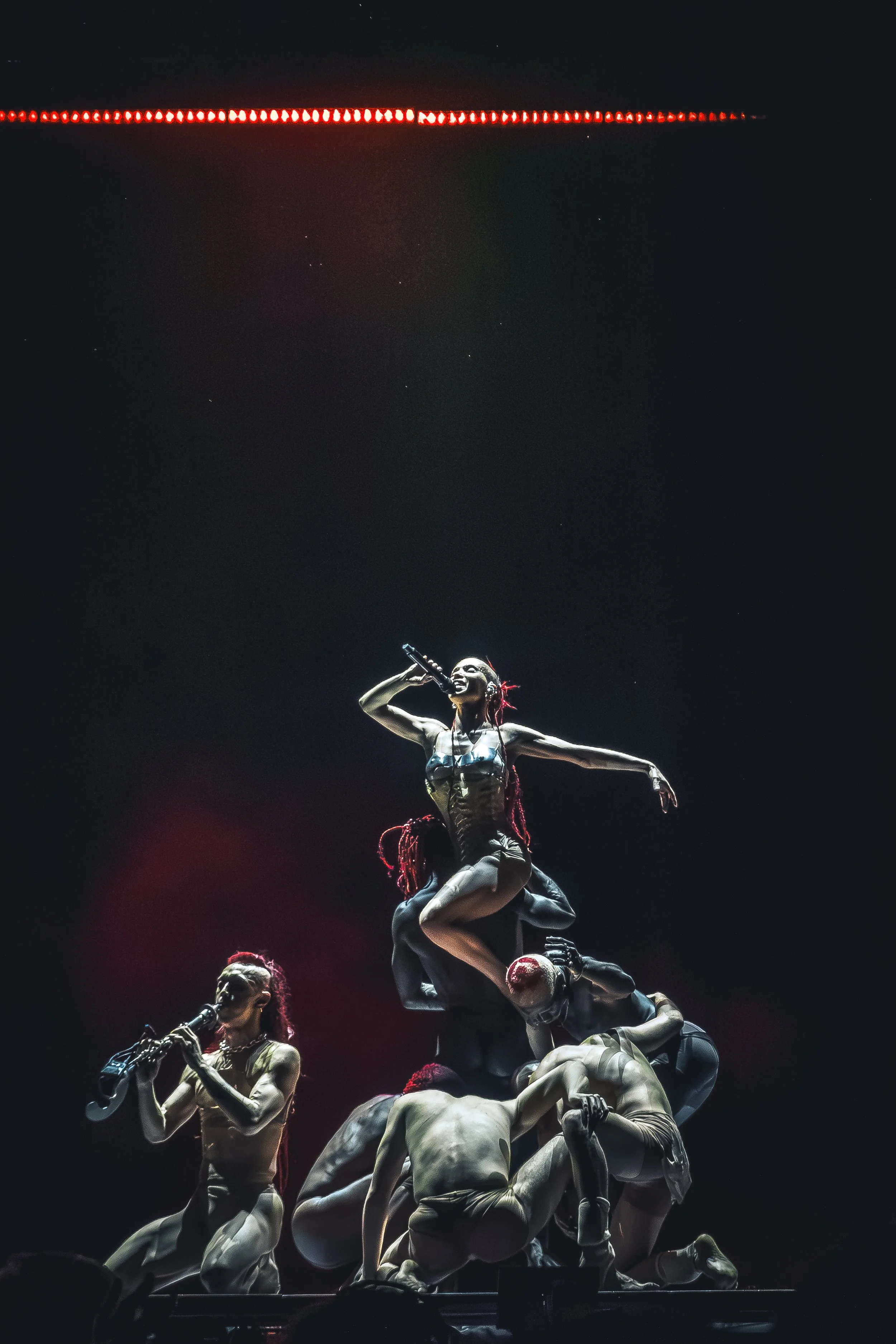
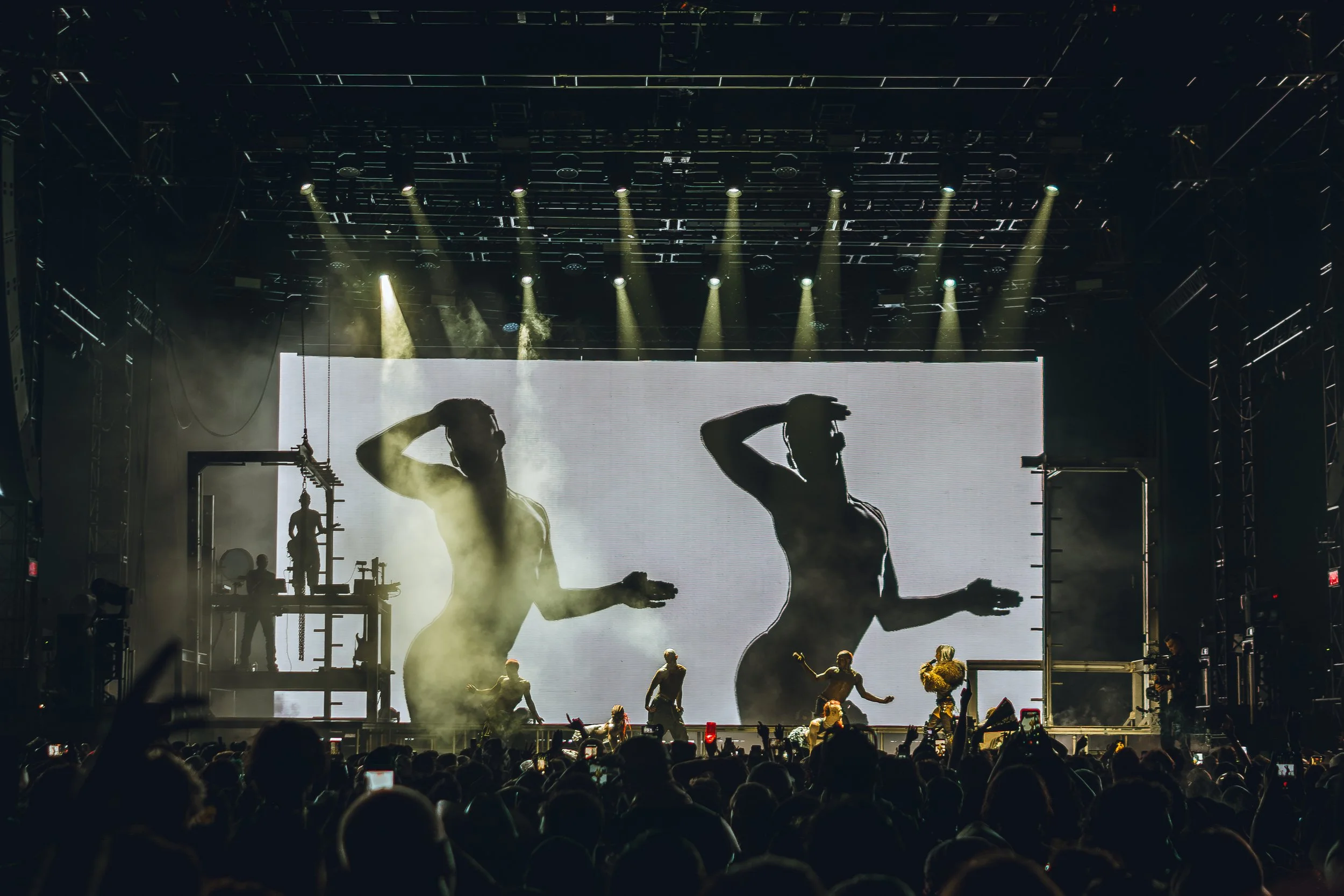
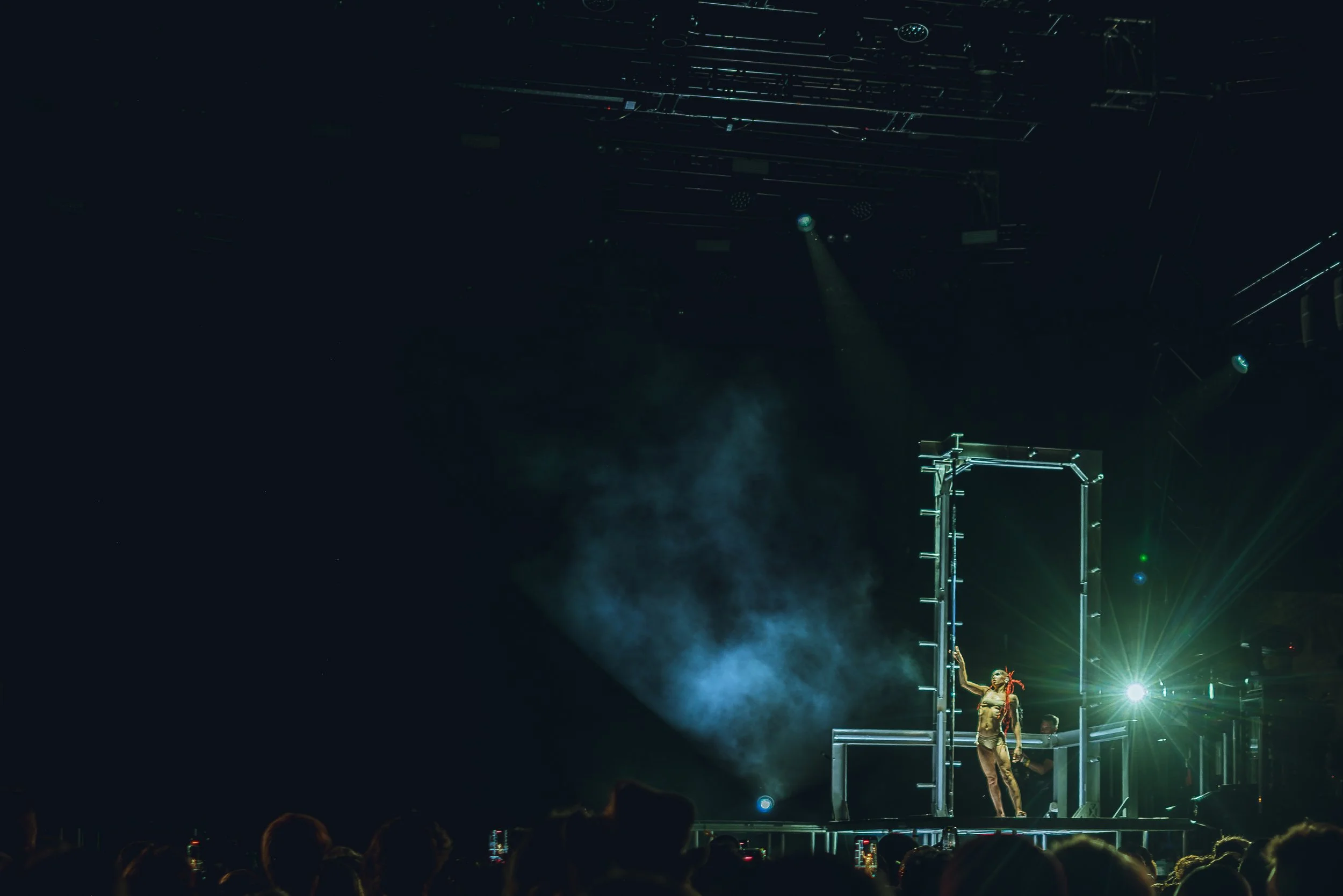
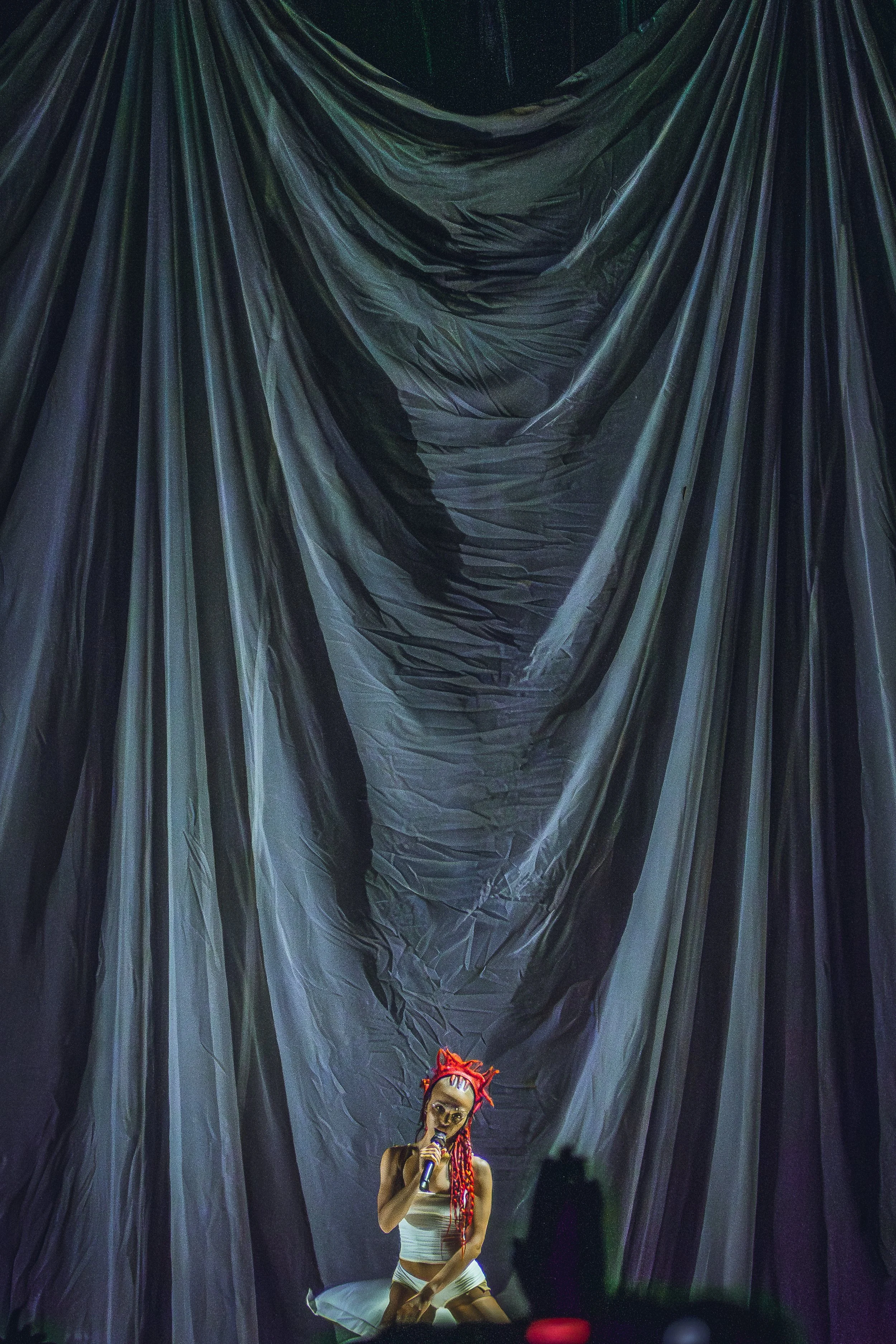
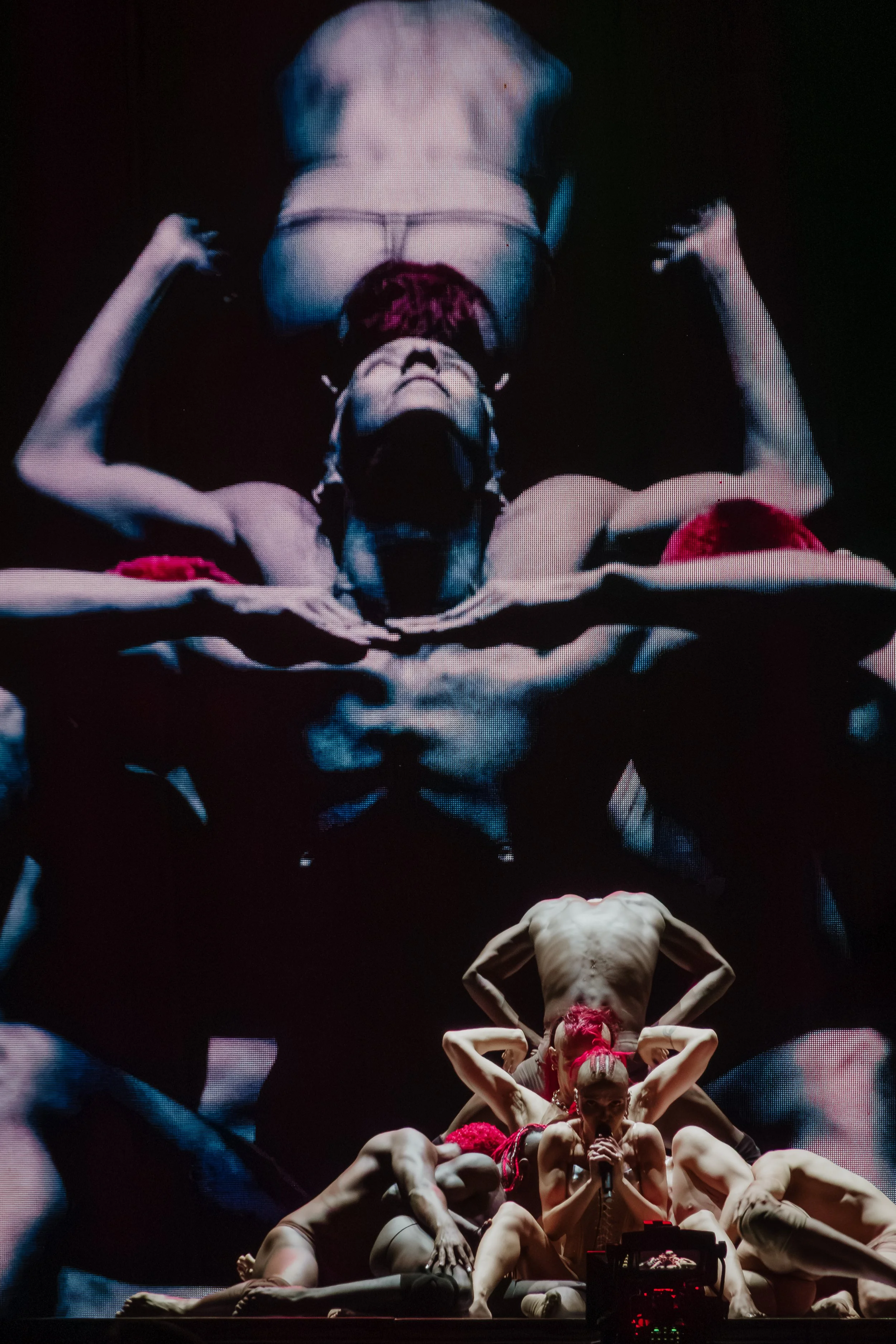
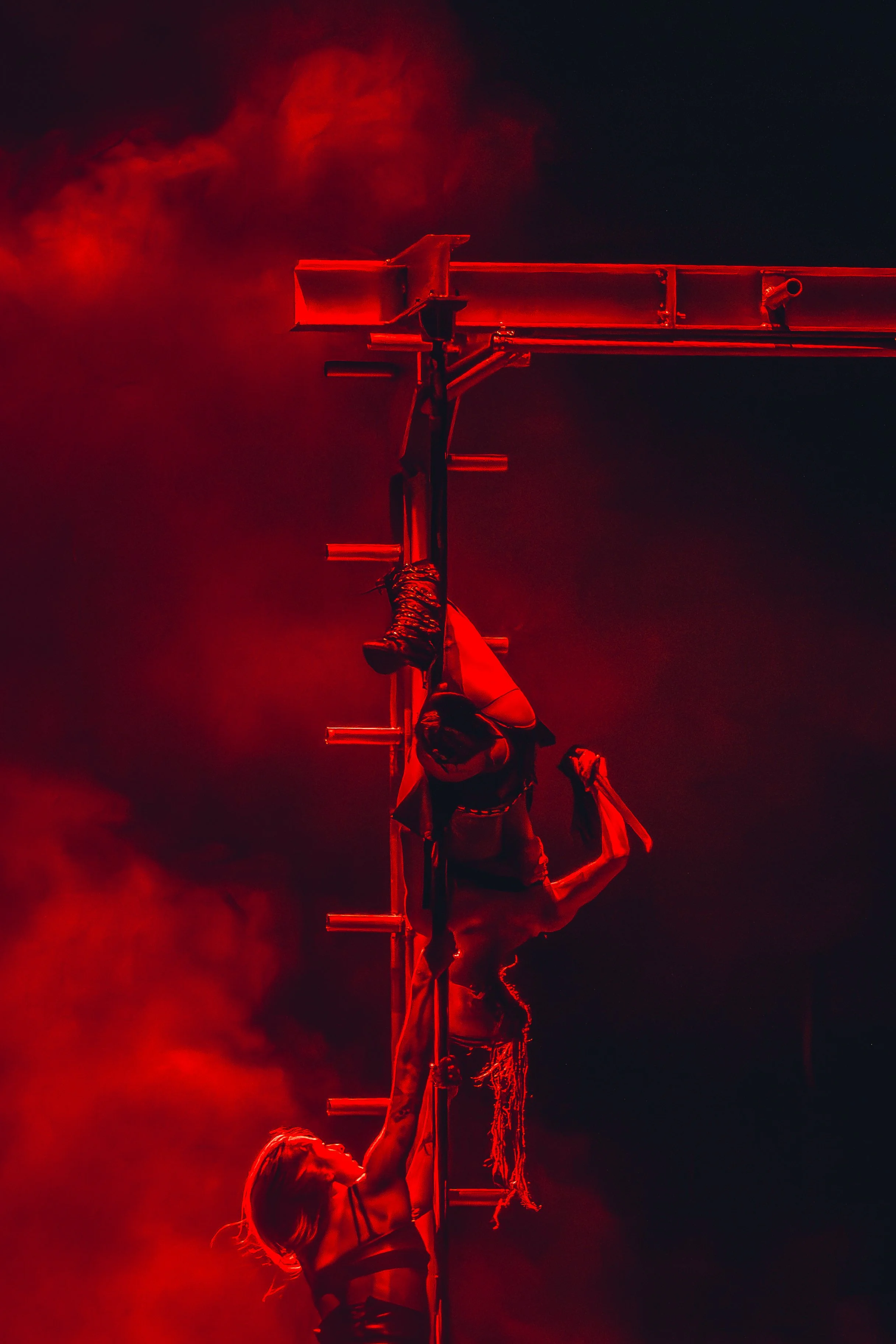
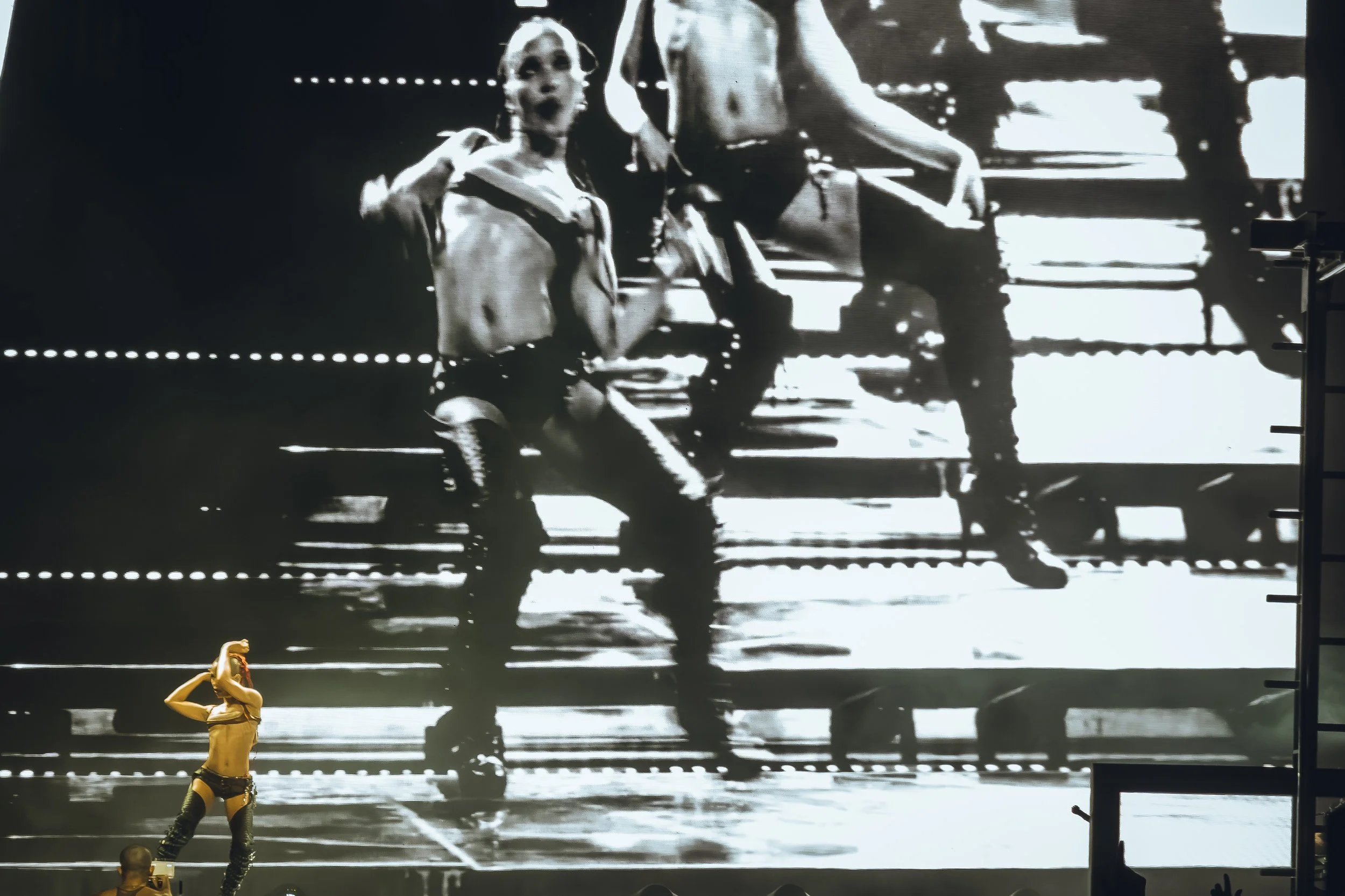
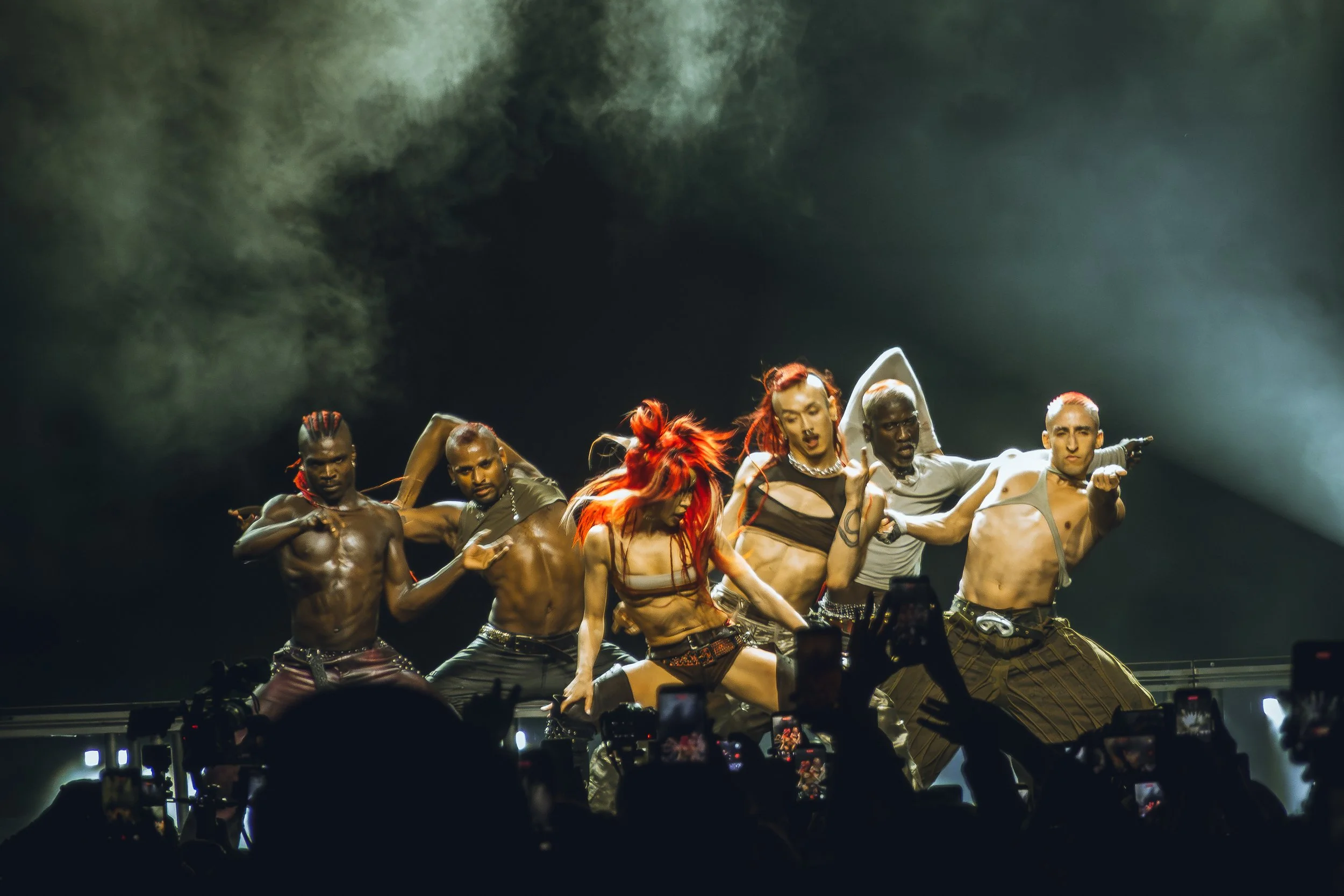
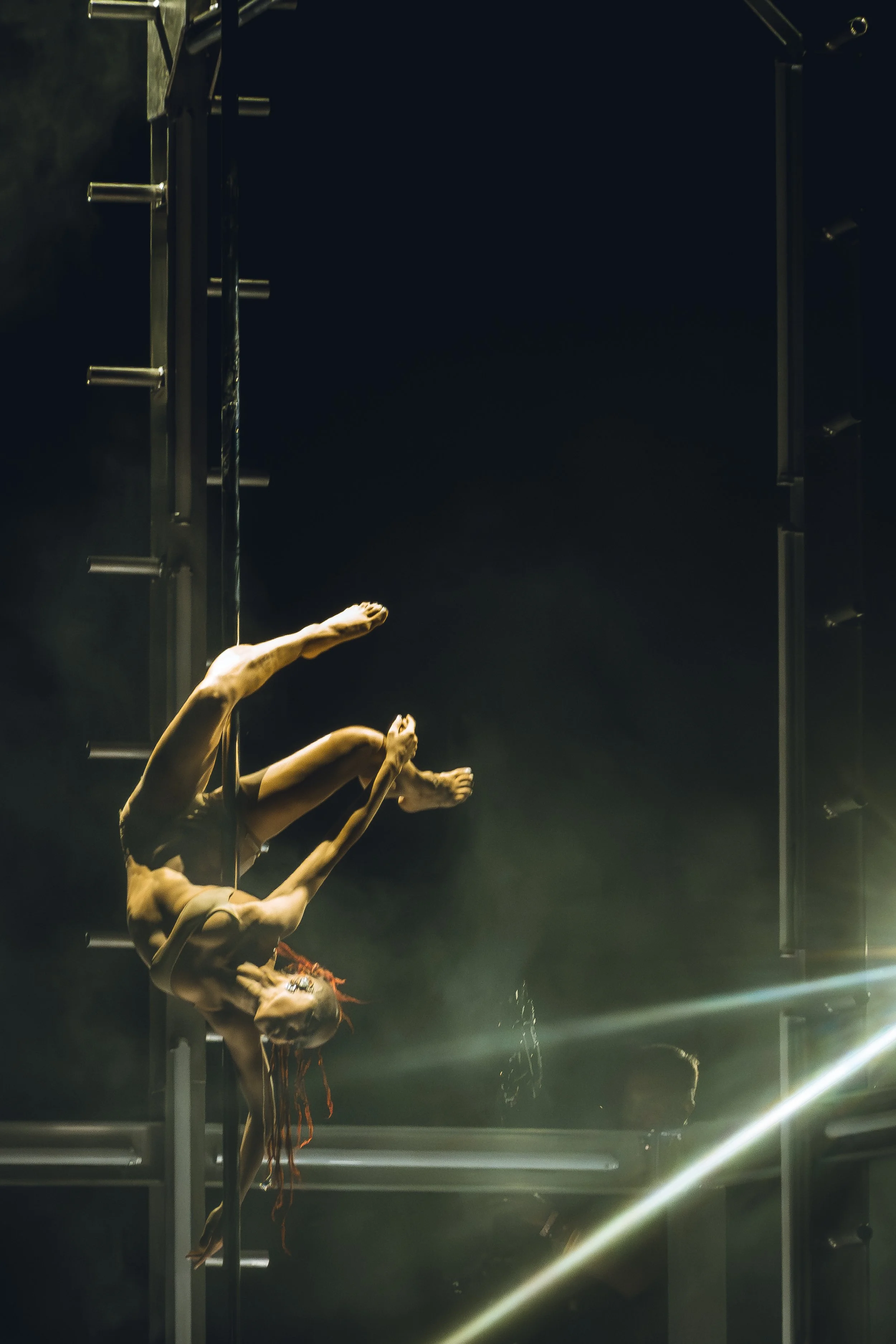
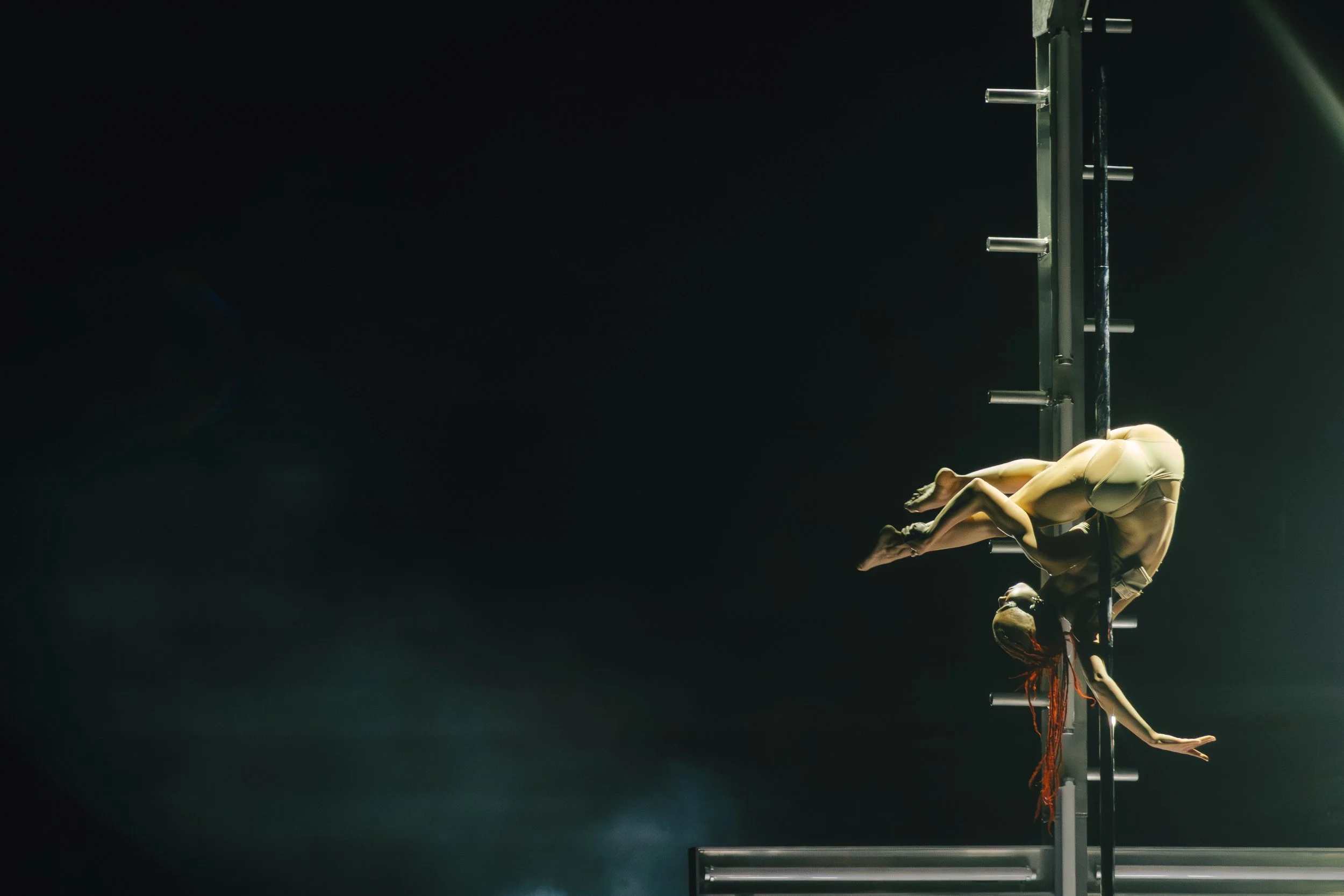
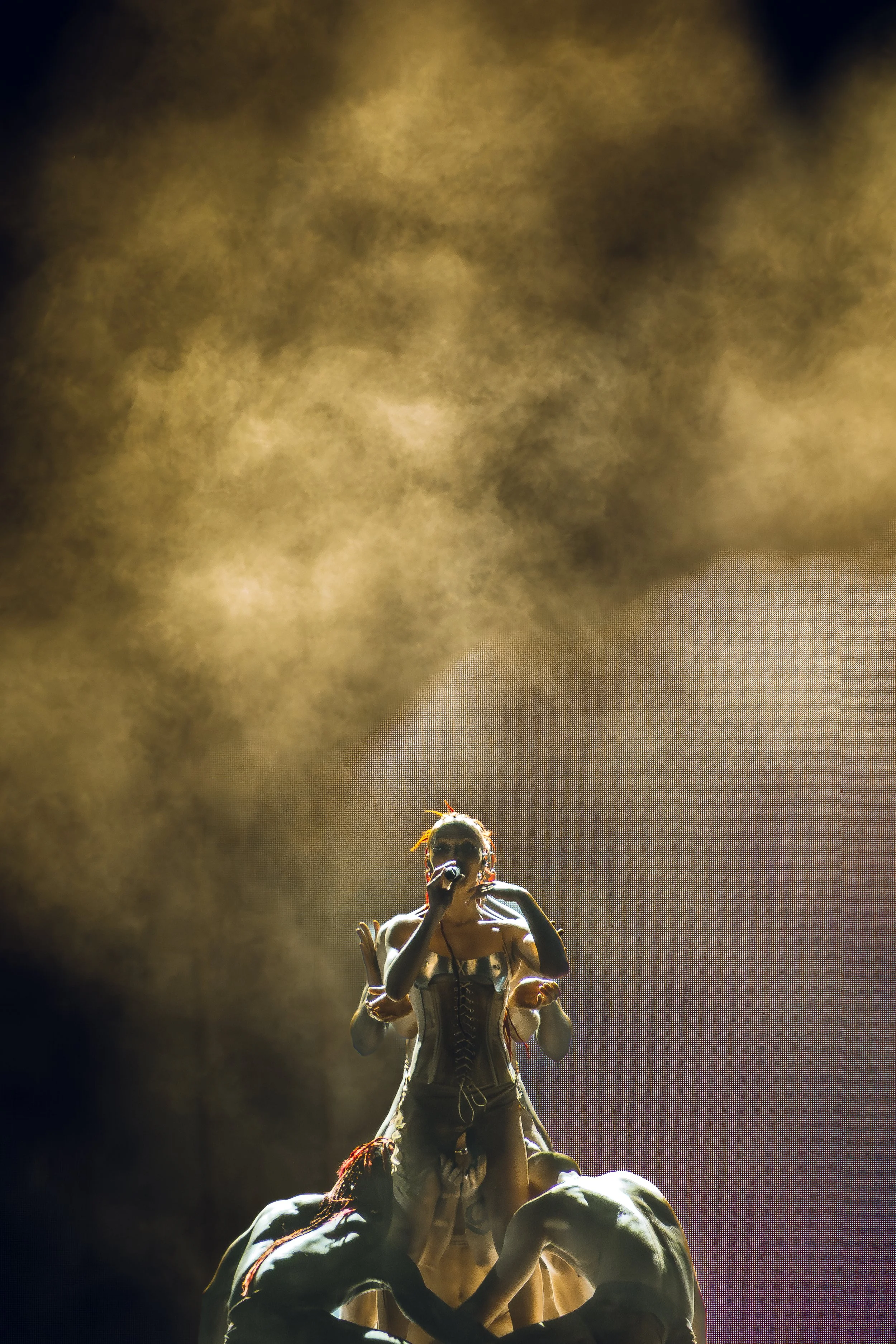
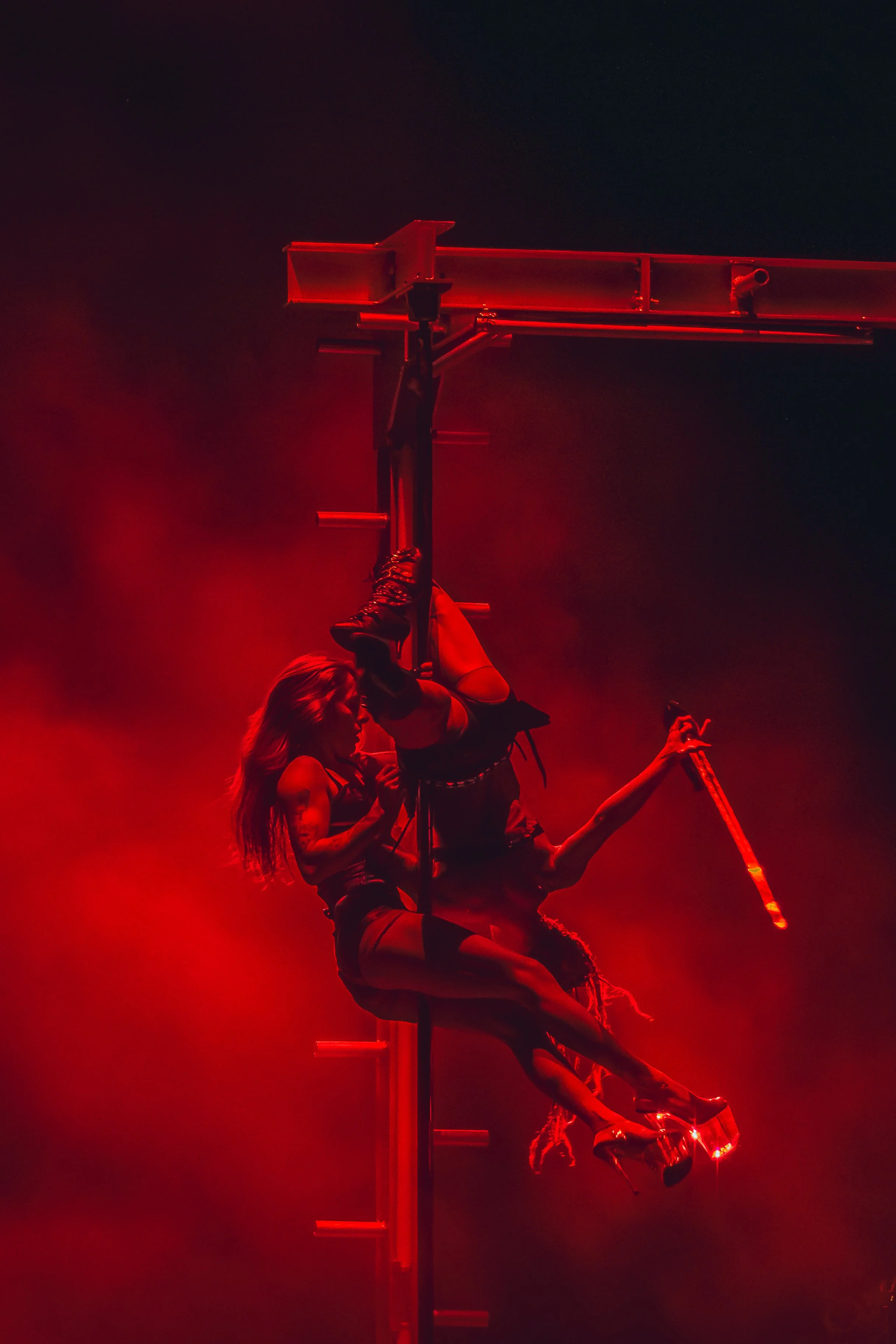
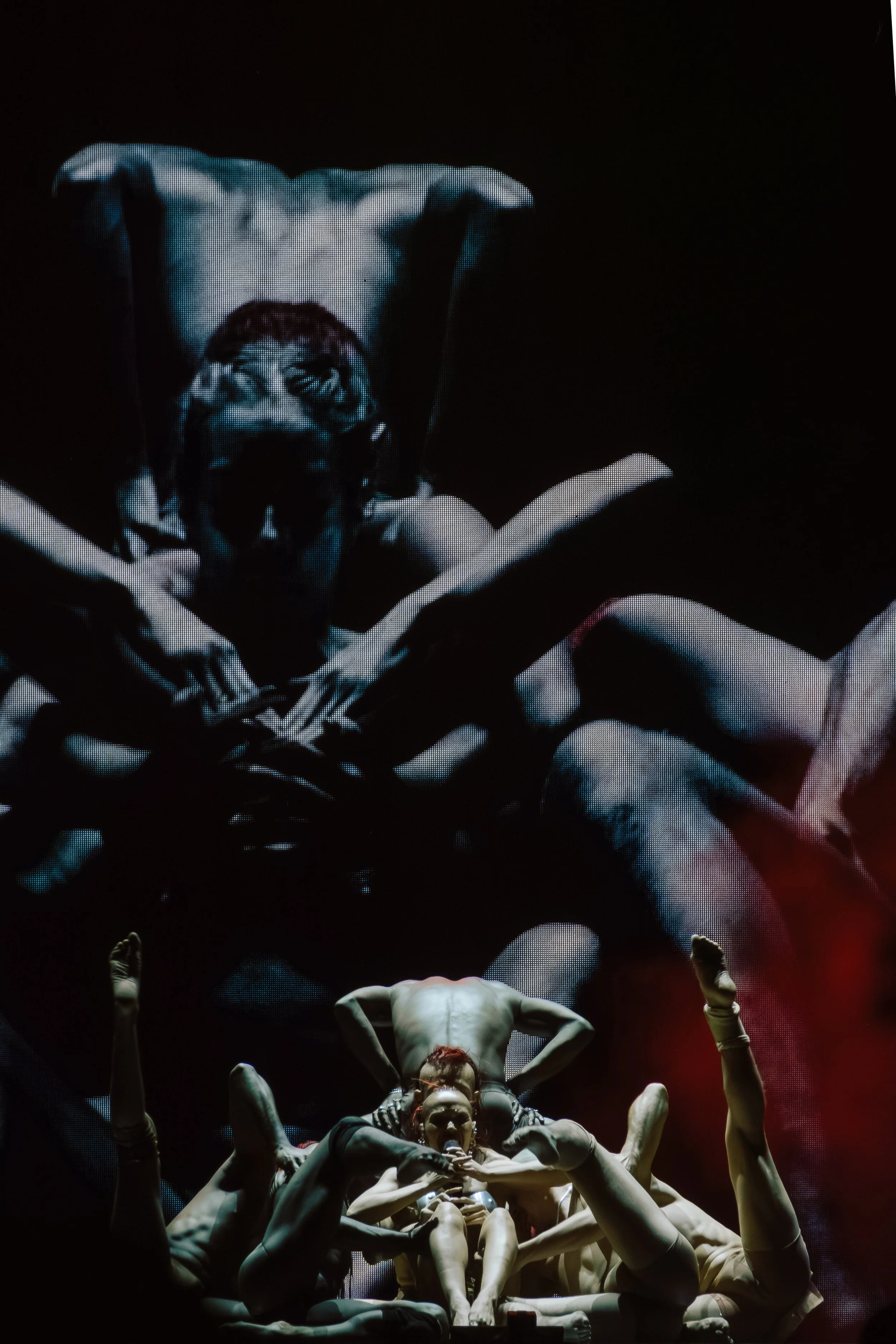
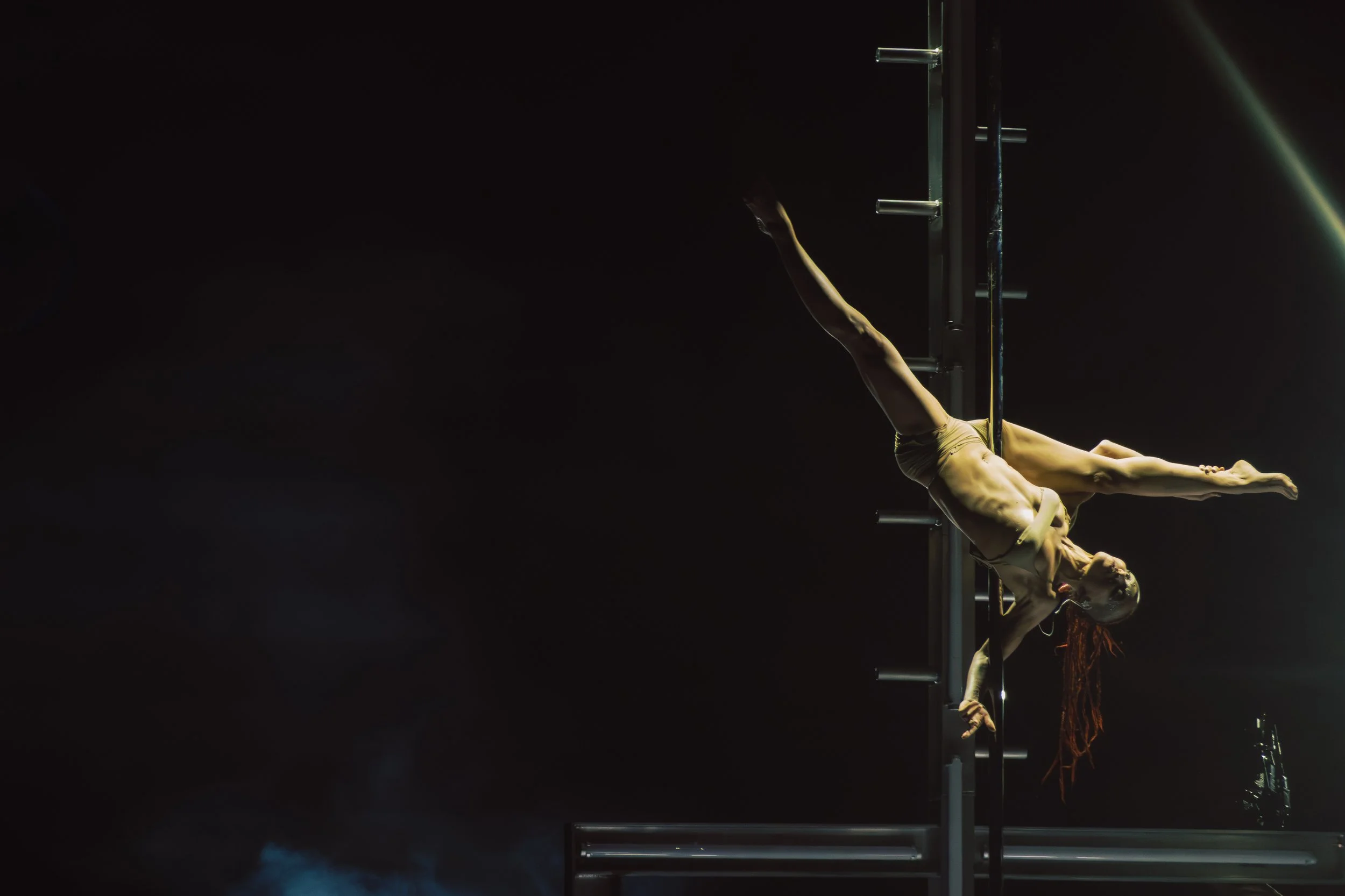
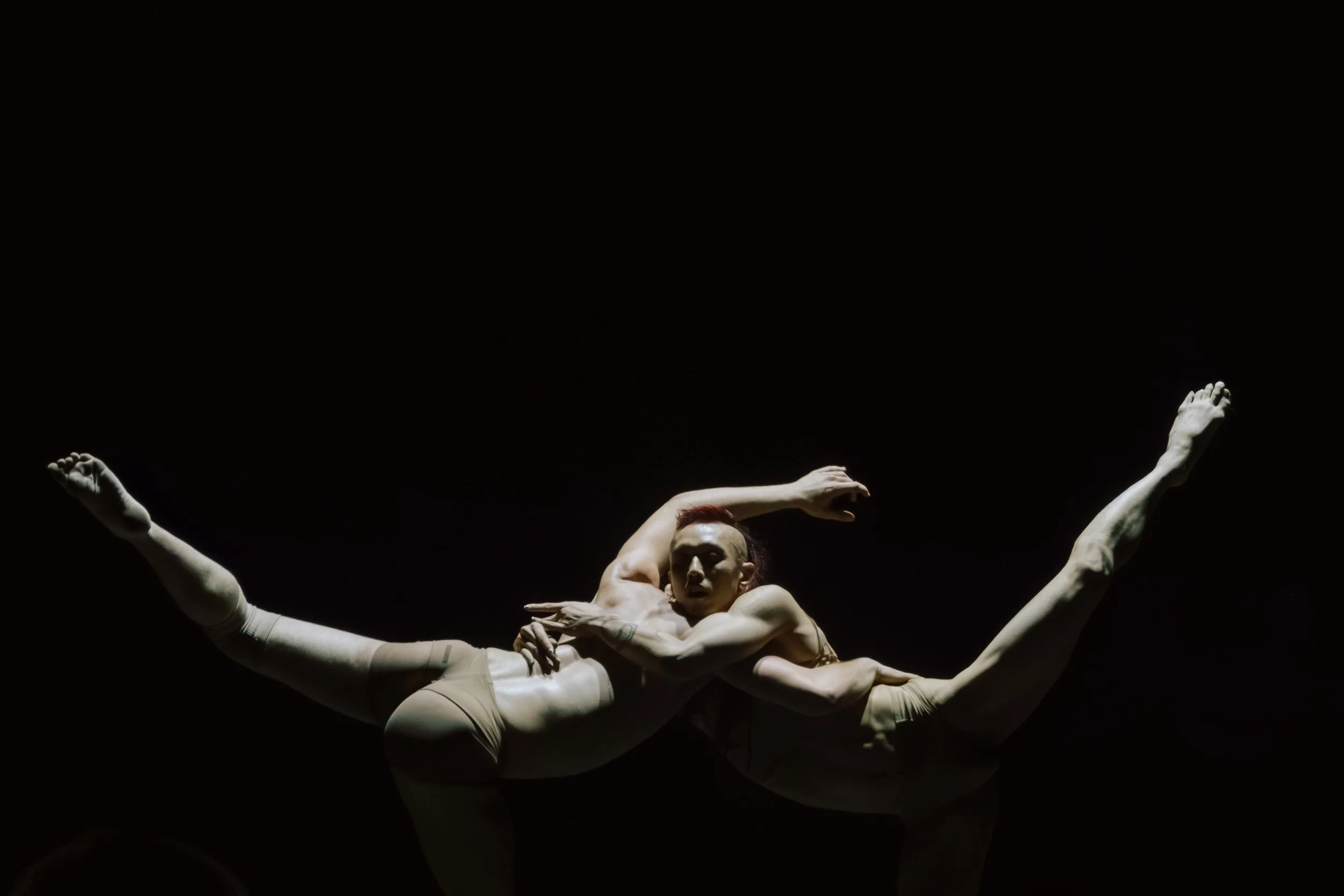
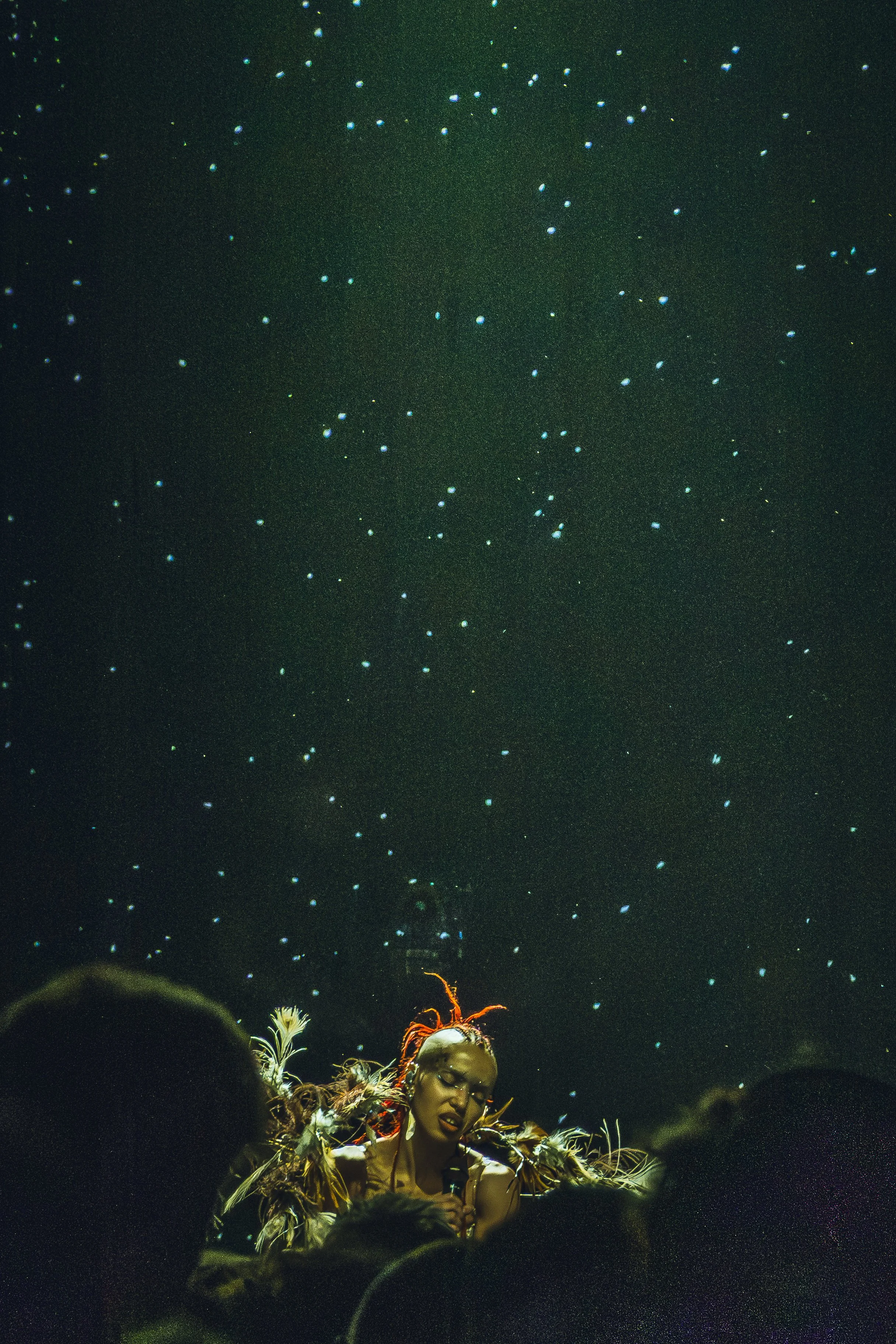
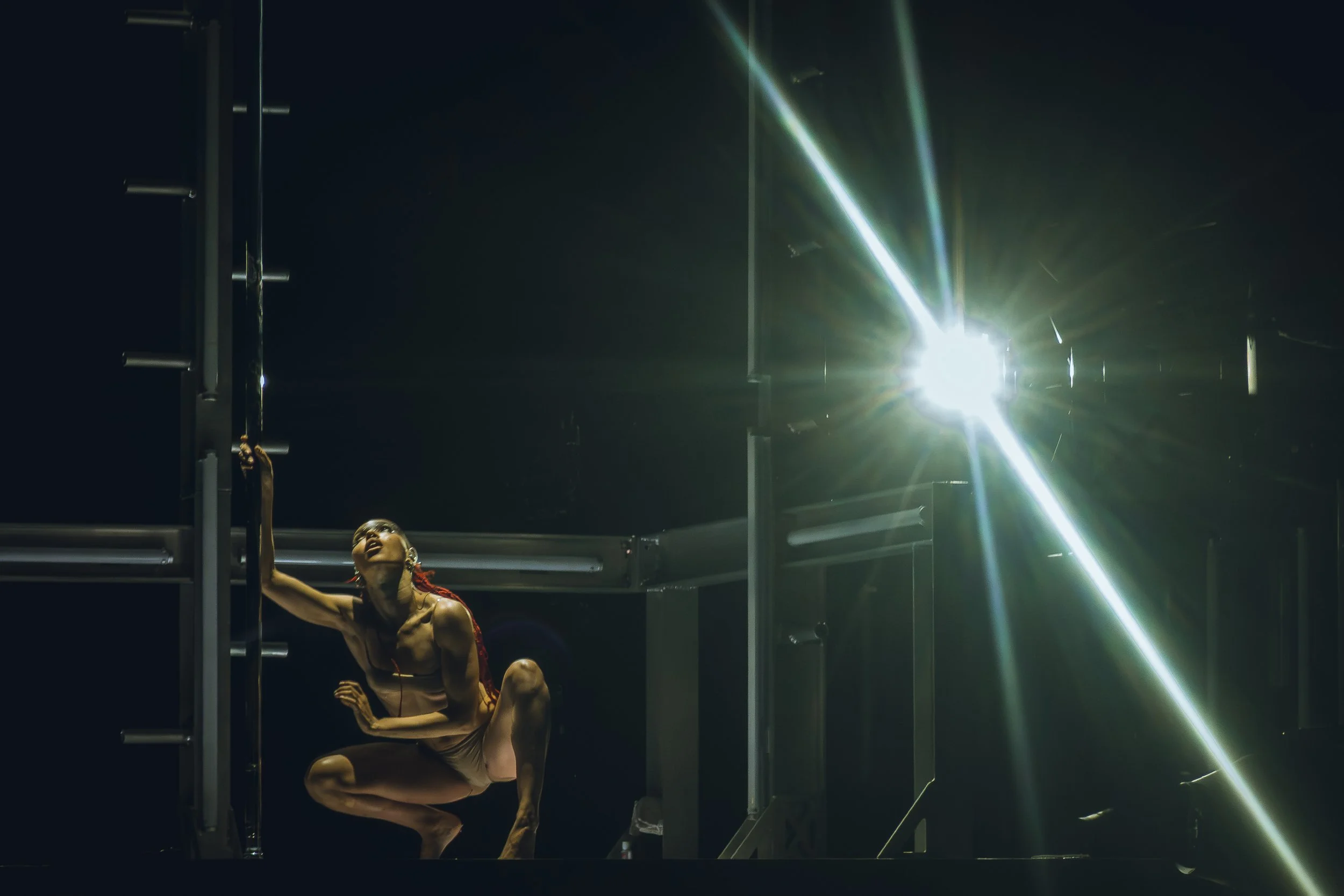
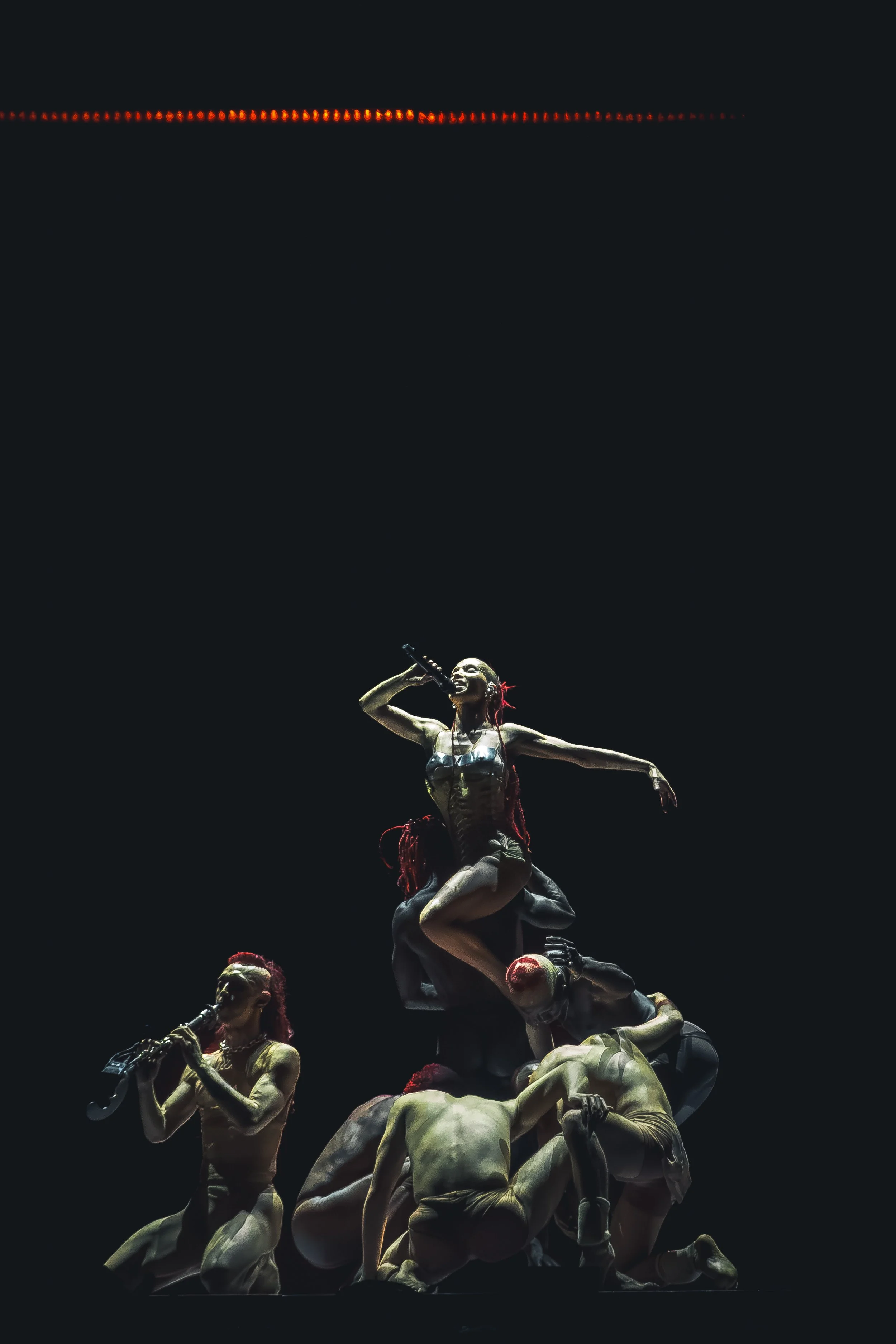
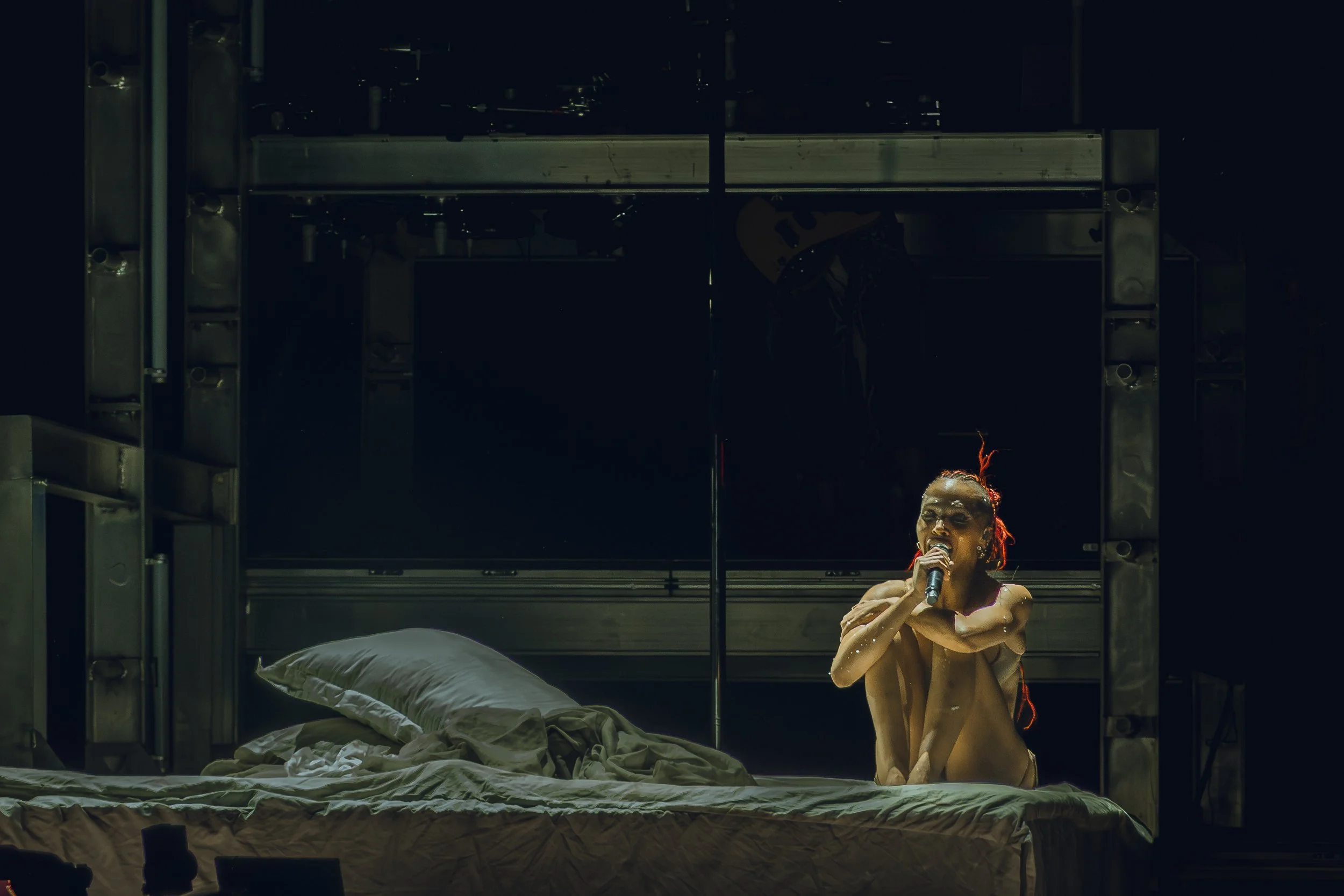
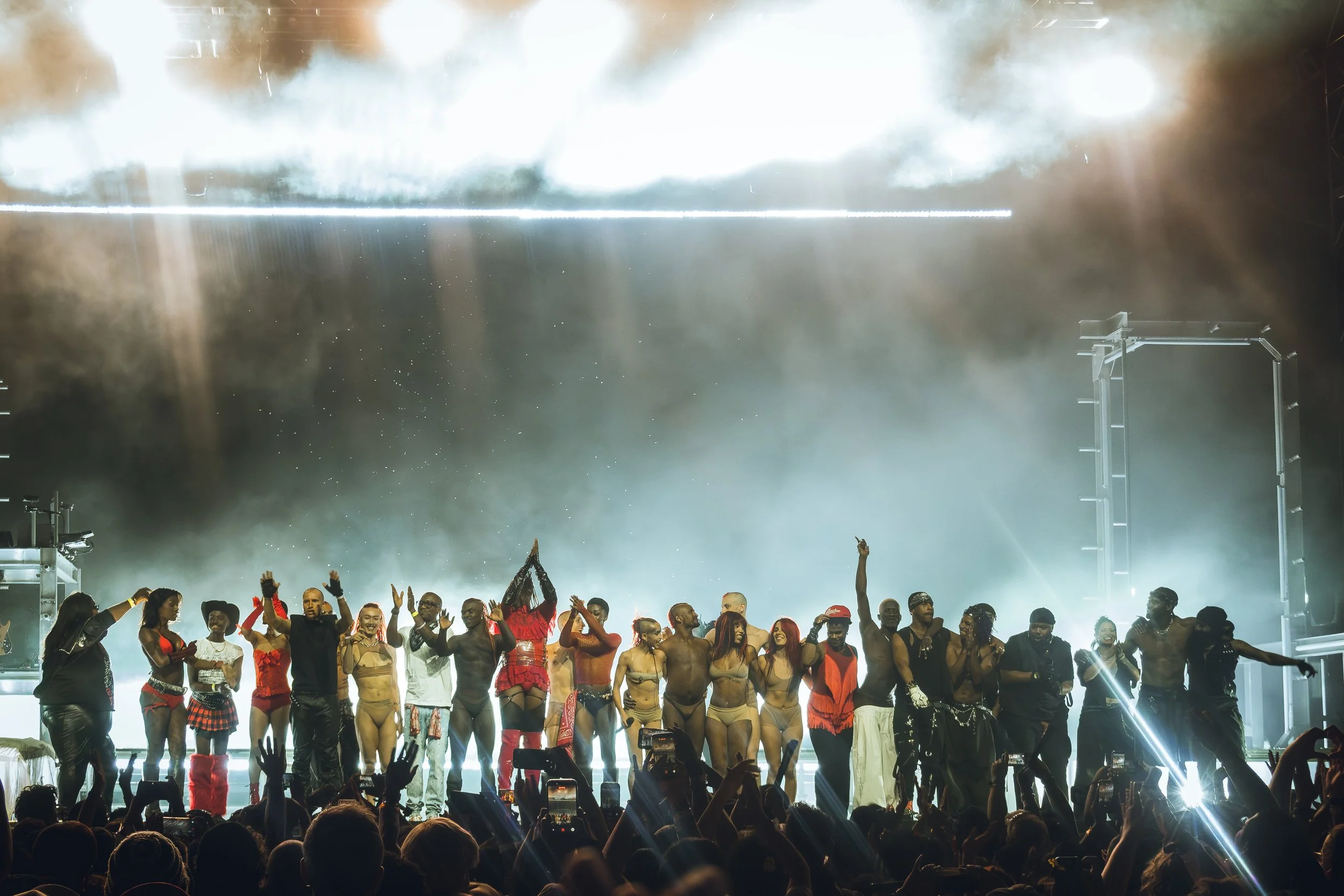
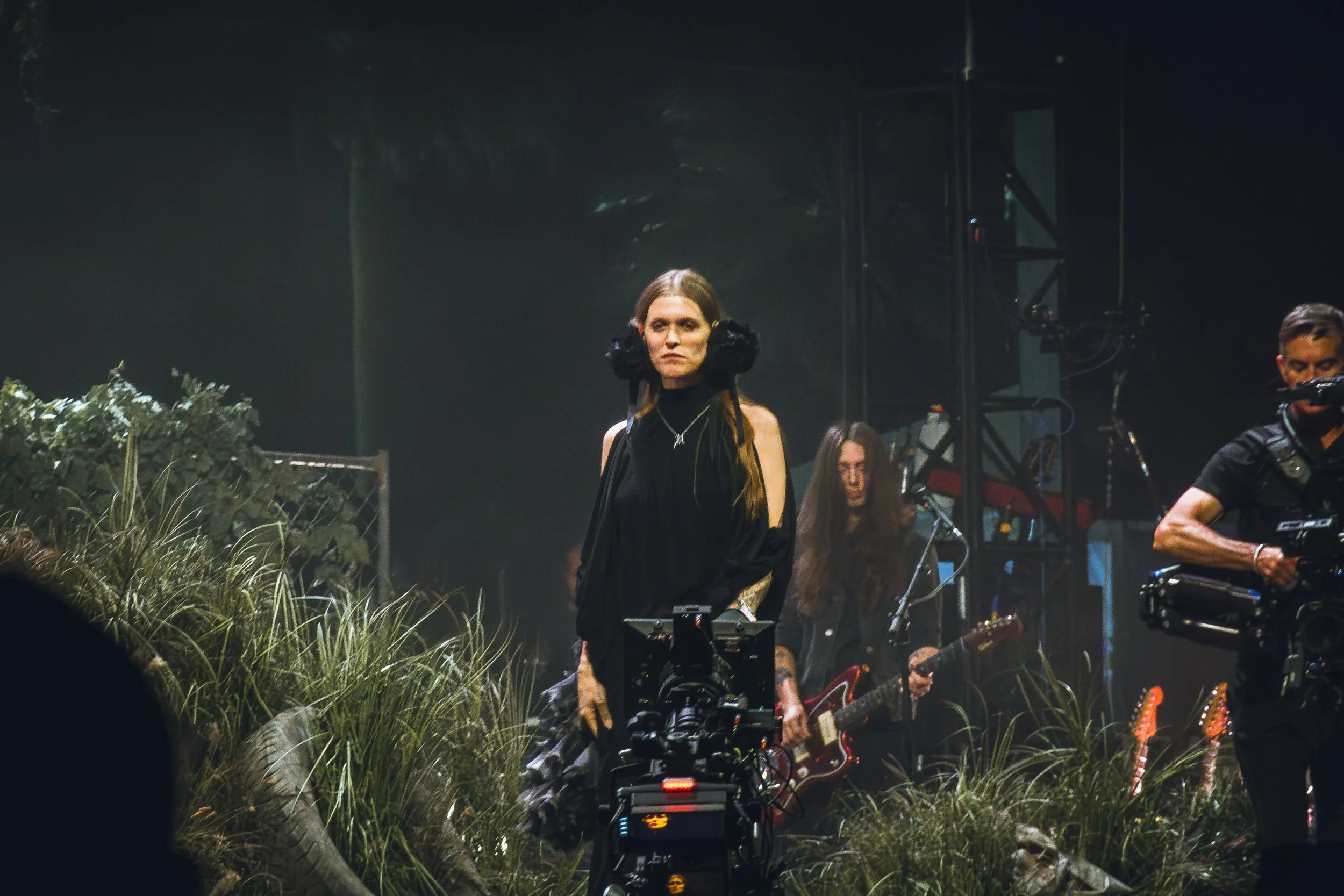
The moment the spotlight hit Twigs — barely clothed, prone on a pristine white-sheeted bed, an opening pose that announced an uncomfortable vulnerability — the audience understood they were about to witness an exhibit of various forms. Vocabulary from a dozen disciplines moved through at the pace of a single song — vogue battlers, chain acrobats, pole, butoh, krumping, dancers in nude thongs cracking bullwhips on the downbeat. Seventy-five minutes that was less a concert and more a balletic orgy, sustaining itself as a physical affirmation of ballroom culture, blackness, queerness, and every other form of otherness the festival's founding ethos seeks to make room for. In other words, it was the Zion rave scene from The Matrix Reloaded, but with less of Keanu's ass.
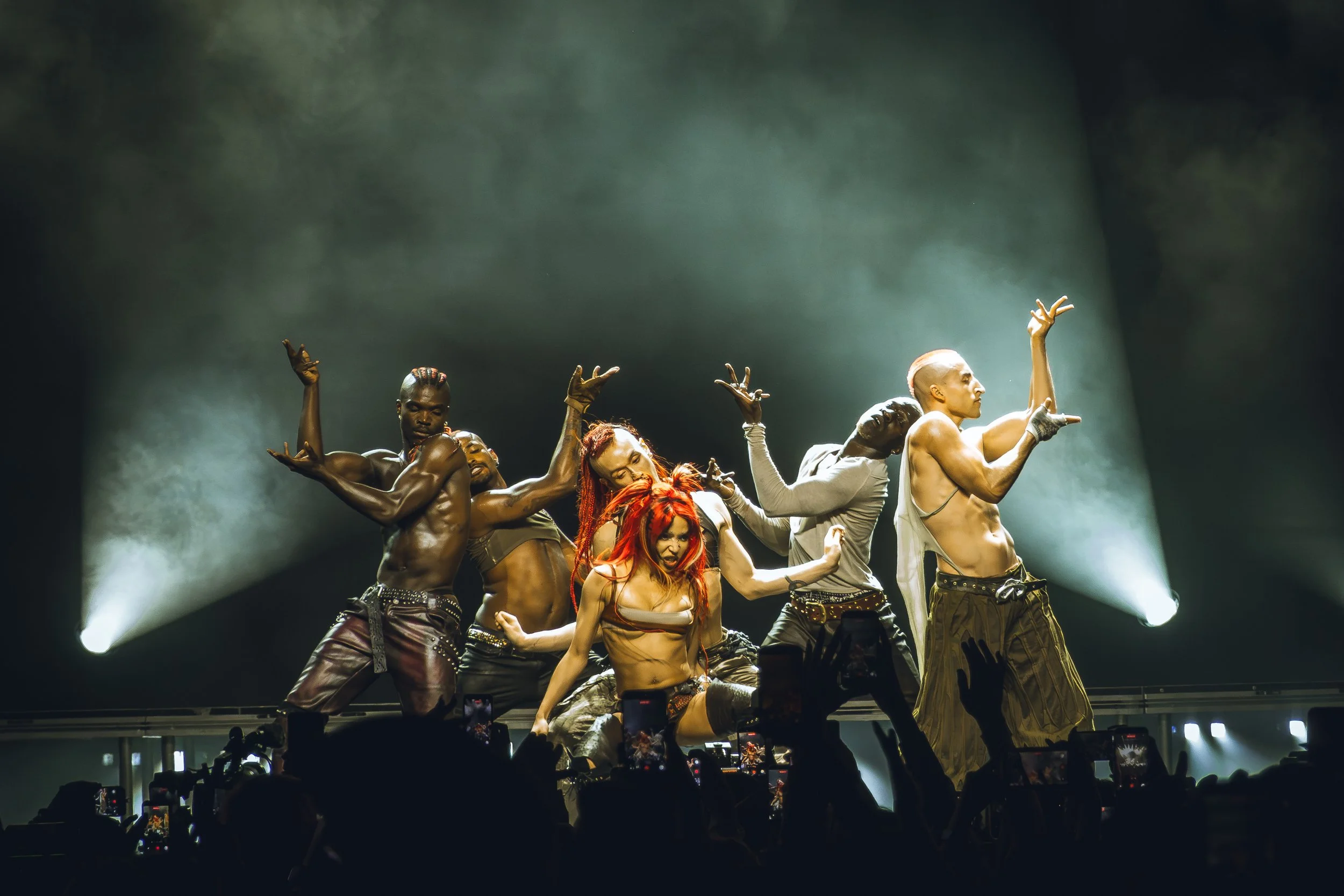
None of it was explicit, exactly. The obfuscation principle that runs through Eusexua was running through the choreography itself: bodies pressed close enough to suggest contact and stopped short of making it; a camera operator pulled into the frame with Twigs straddling the lens and his arm firmly around her neck — the audience as the peeping tom. The blurred interstitial on a phone screen, the one you have to scroll past to get to that spicy image titillating your nether regions, is sometimes more intoxicating than the image itself. Twigs's whole stage presence was that interstitial held in real time — constantly teasing, pushing, pulling back — the crowd collectively on edge (in more ways than one). By the end of the set, nothing on offer at any other stage in the desert that night could have followed it. Twigs had walked every distance the gap demanded.
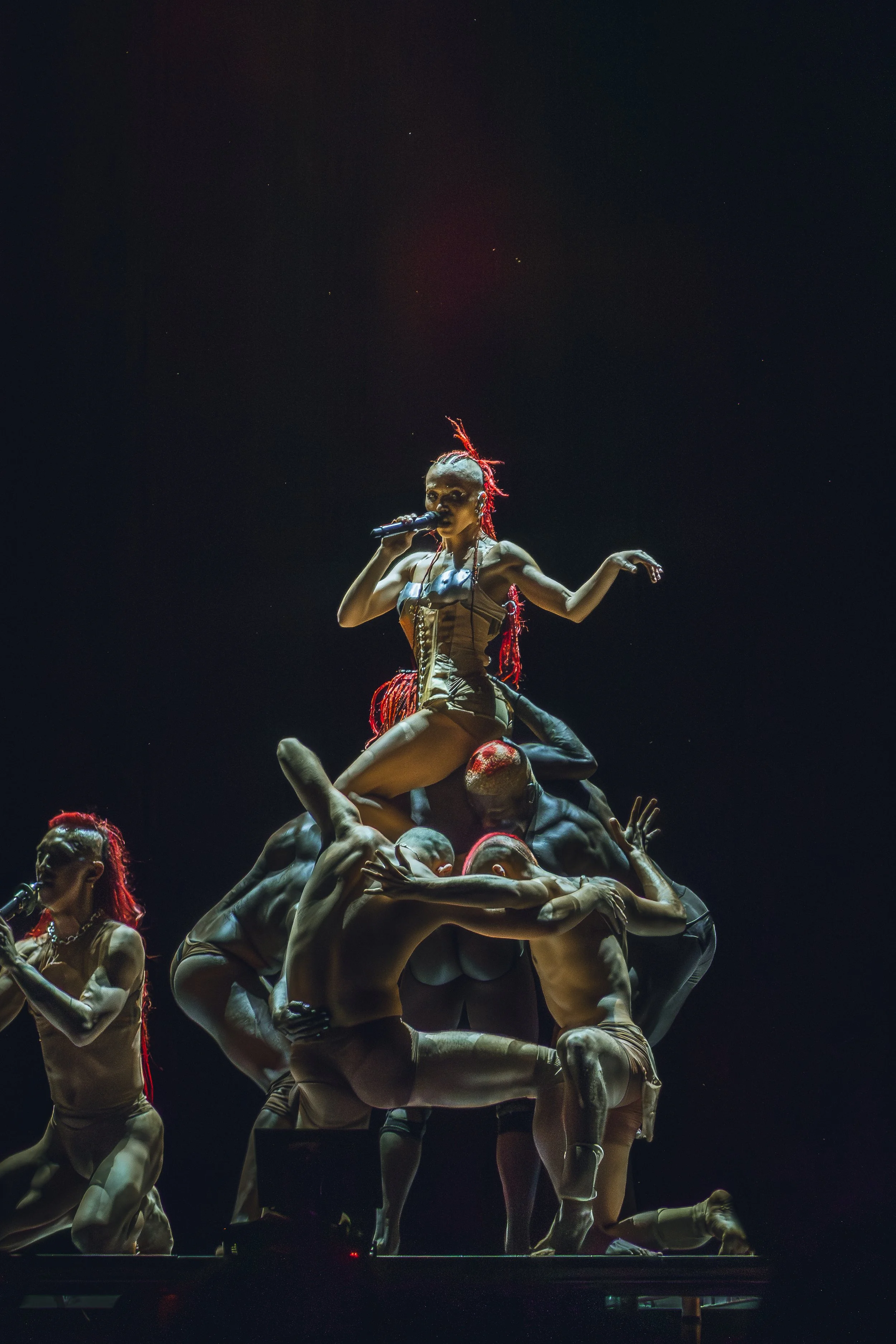
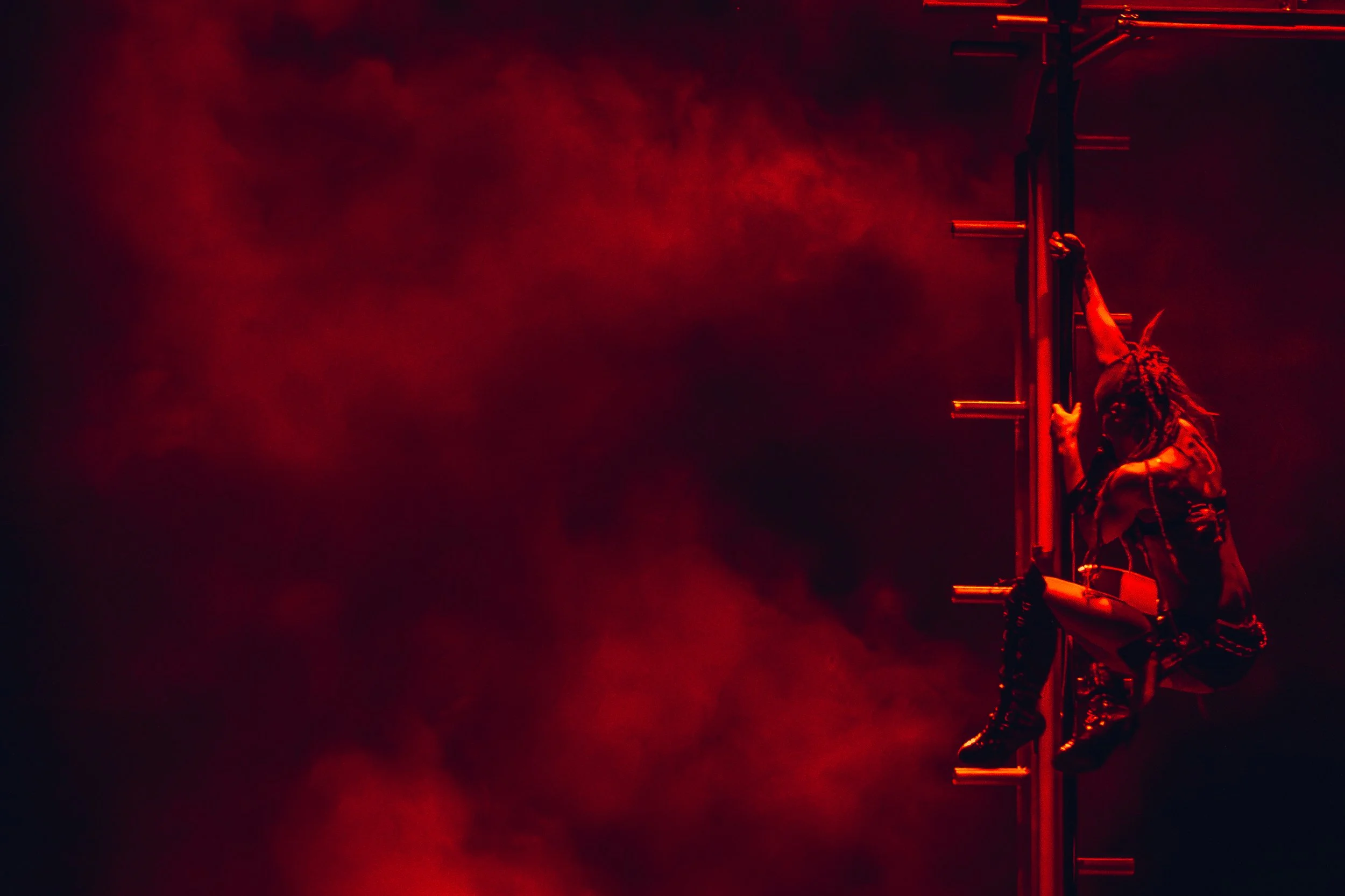
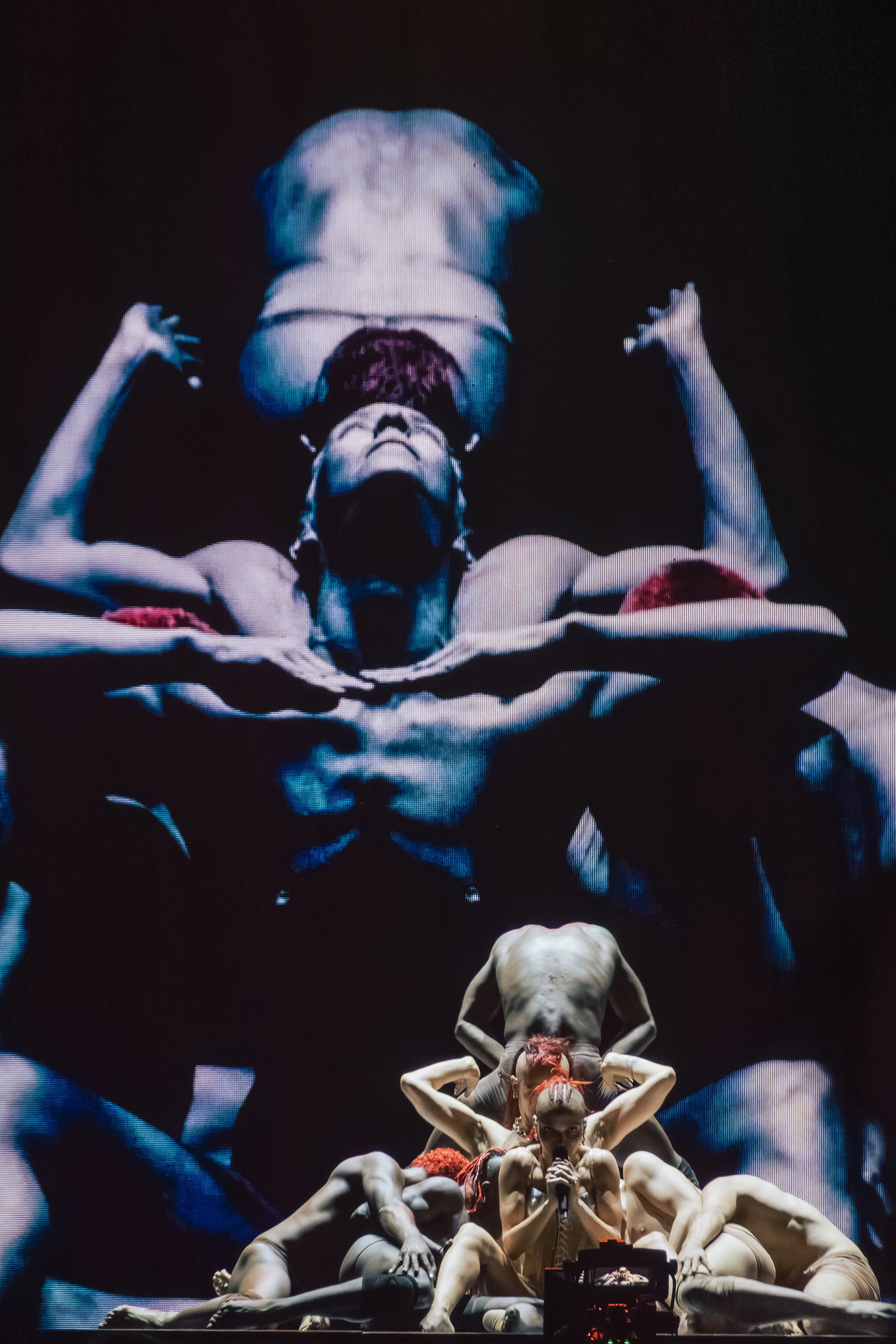
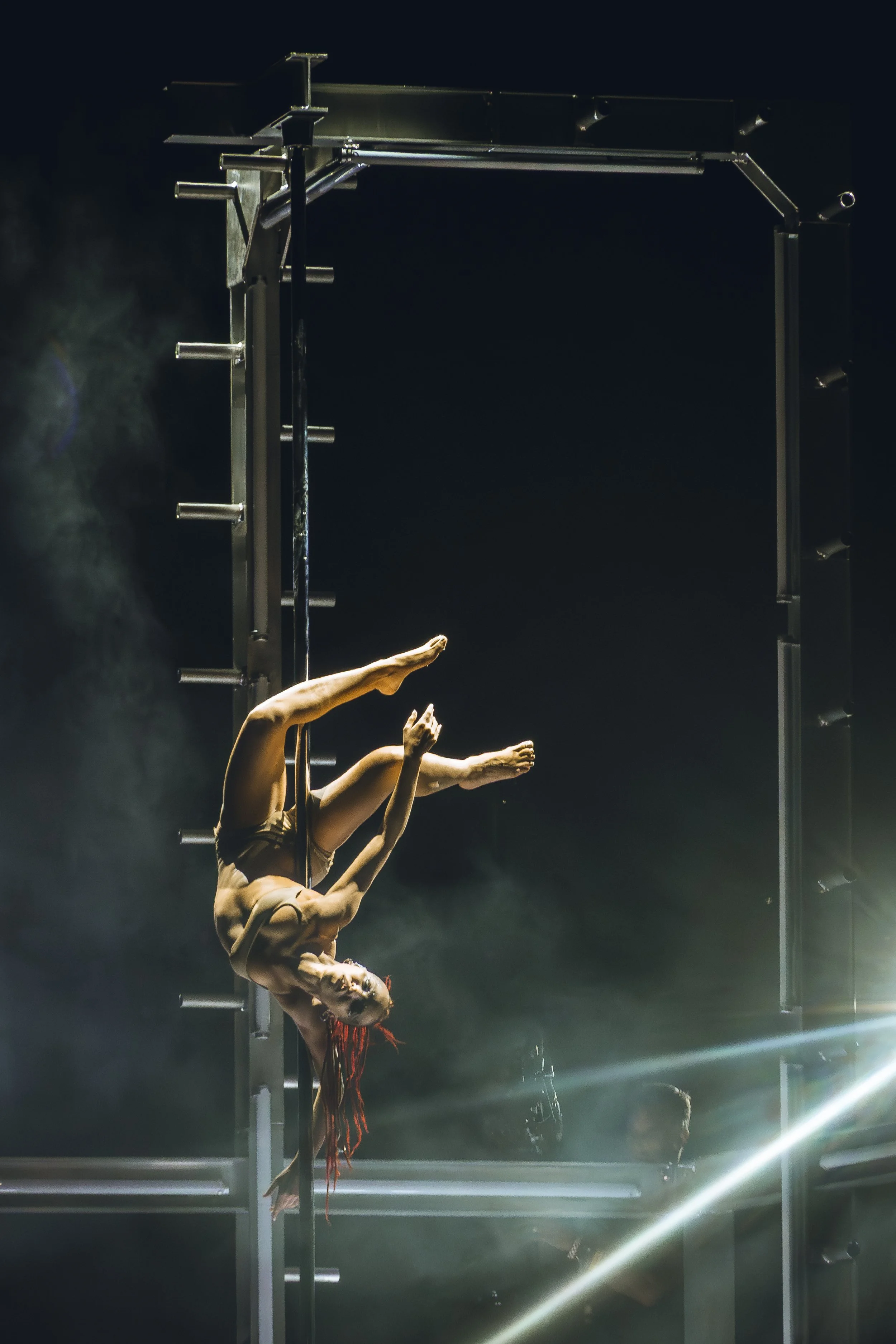
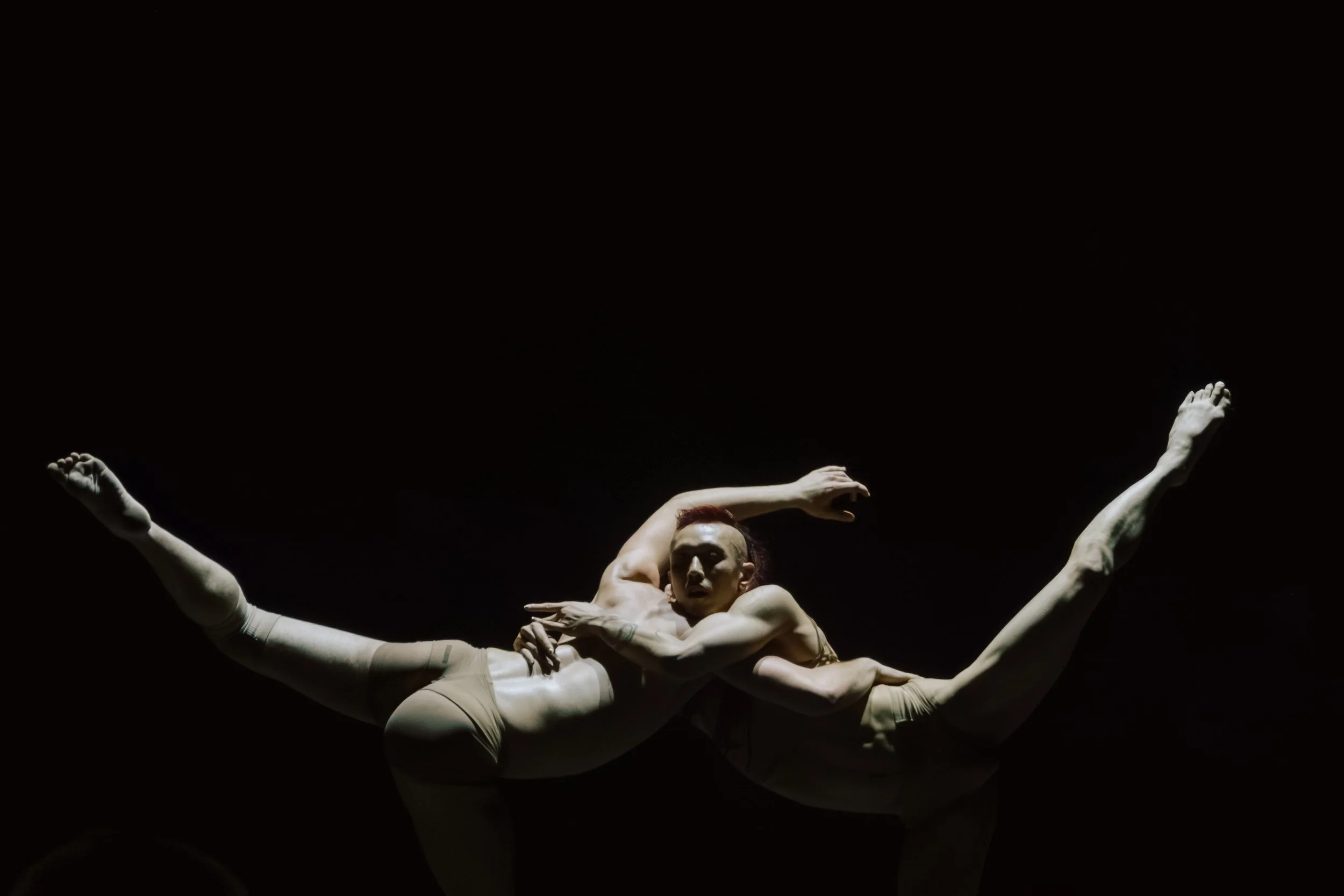
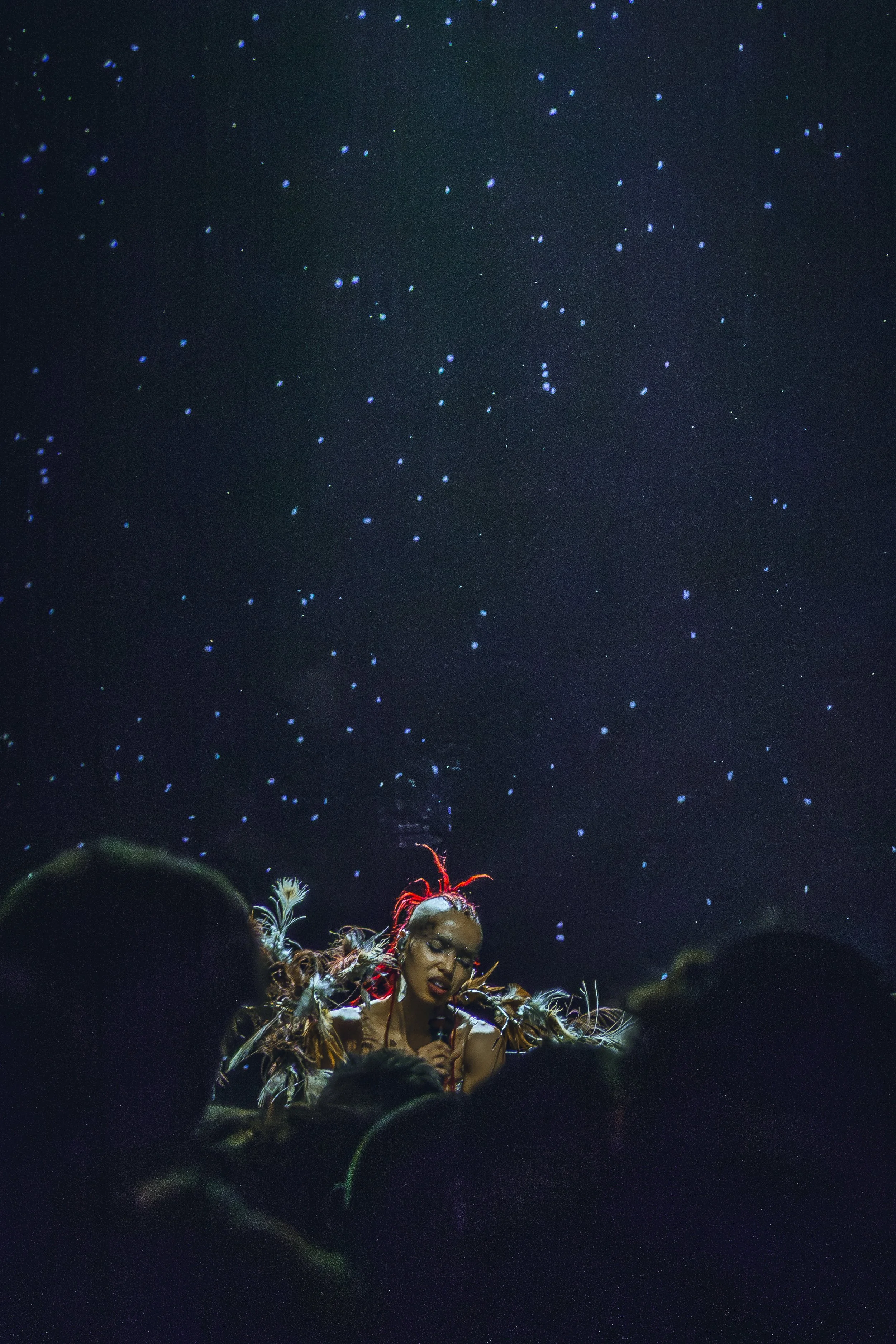
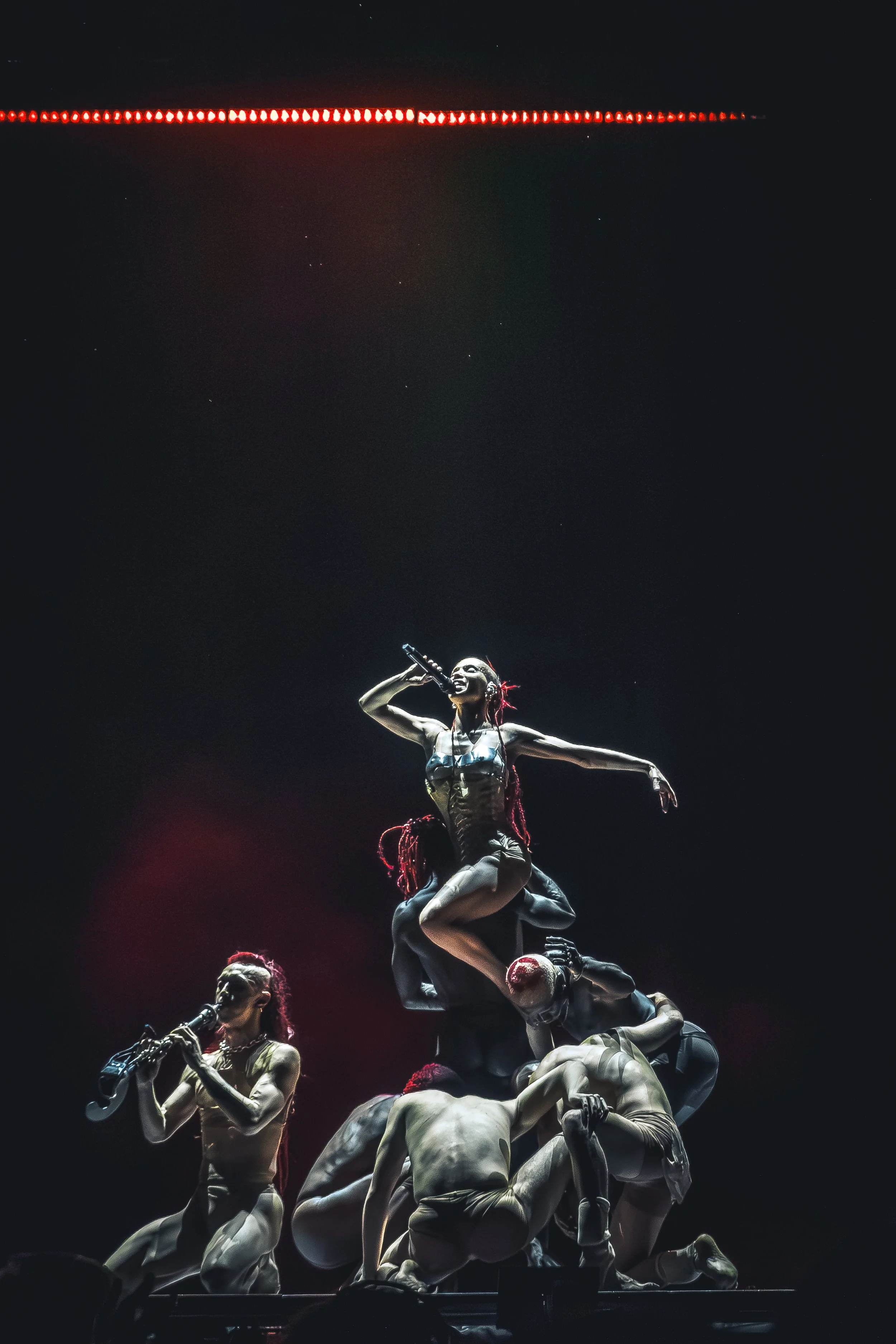
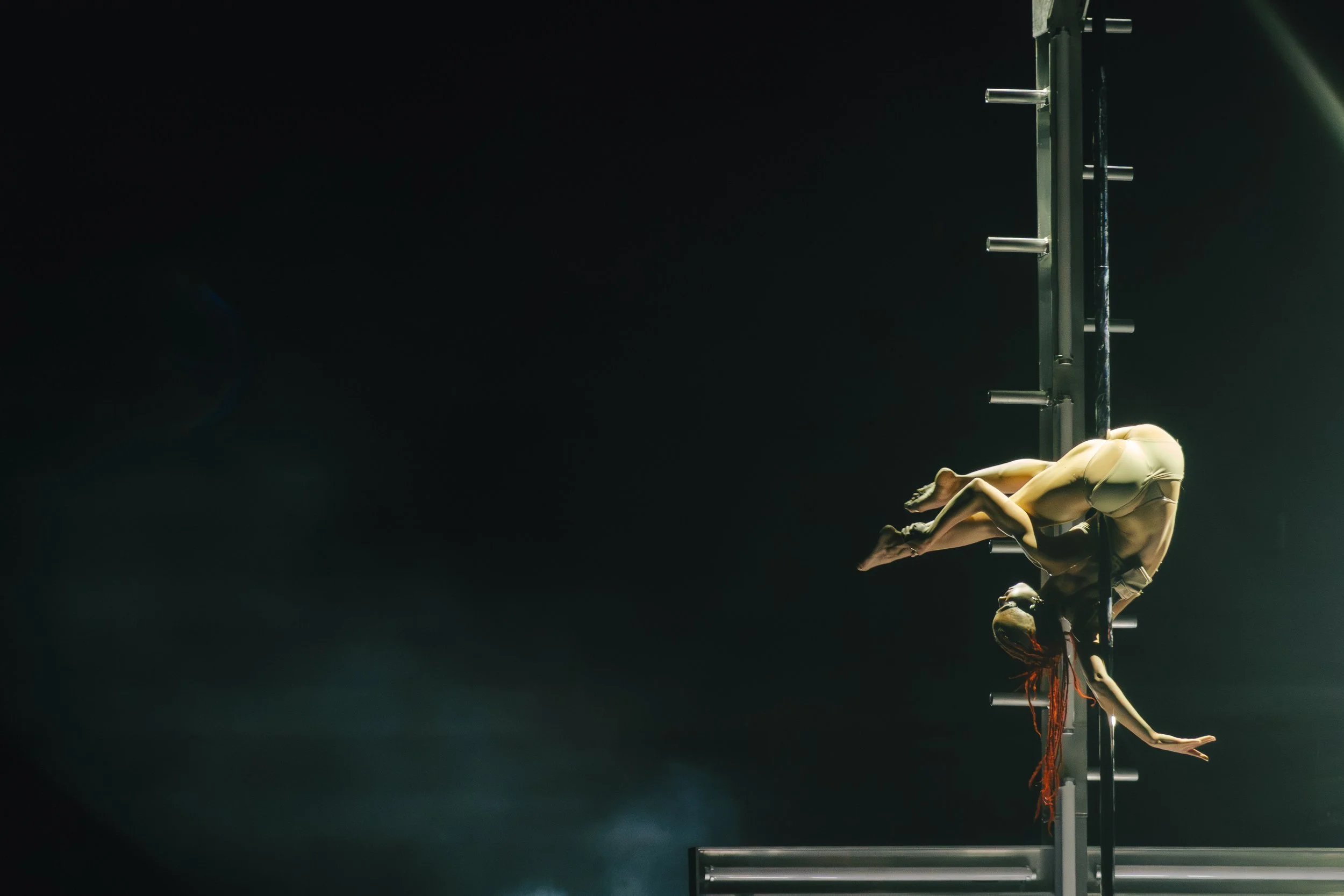
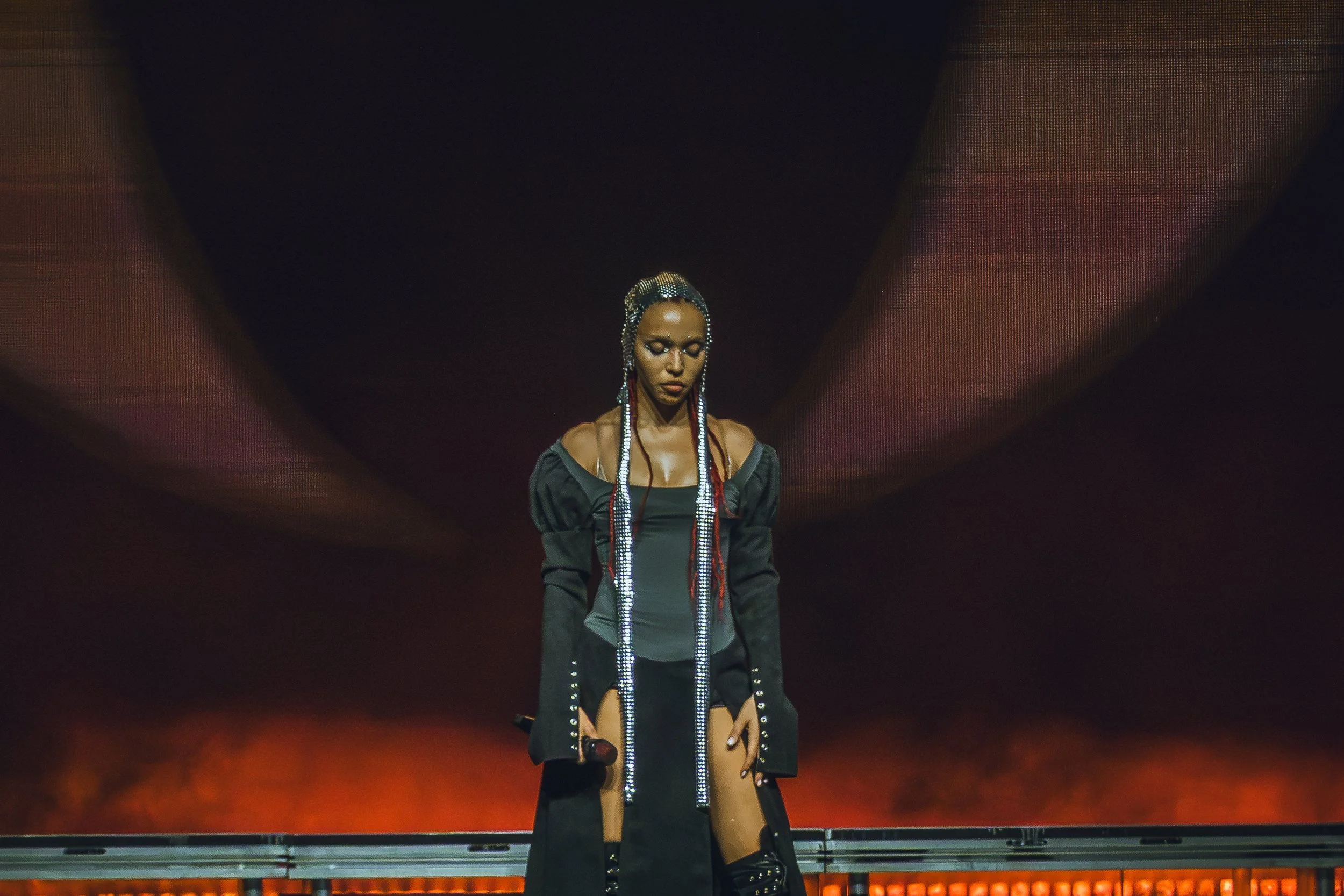
Before the start of her final act, Twigs walked into a spotlight to engage with the adoring crowd. "This really is about building a community. A community of superheroes, of like-minded people, open-minded people, kind people. People who don't judge. People that just want to live their lives and be creative. I said earlier this week that I don't need a million followers in one day. I just need ten people at a time that believe in me, and believe in what we're creating here tonight." Then she went into "Stereo Boy," and the run from there to the end was unbroken — straight into "Cellophane" as the closer. The community she'd just named — the one Coachella, at its best, is built to host — was already in the room. The front row, the most devoted of her community, hanging on every bated breath, could be seen openly crying. By the time she reached the line painfully exclaiming "Why don't I do it for you?", half the Mojave had stopped trying to hide it.
NINE INCH NOIZE
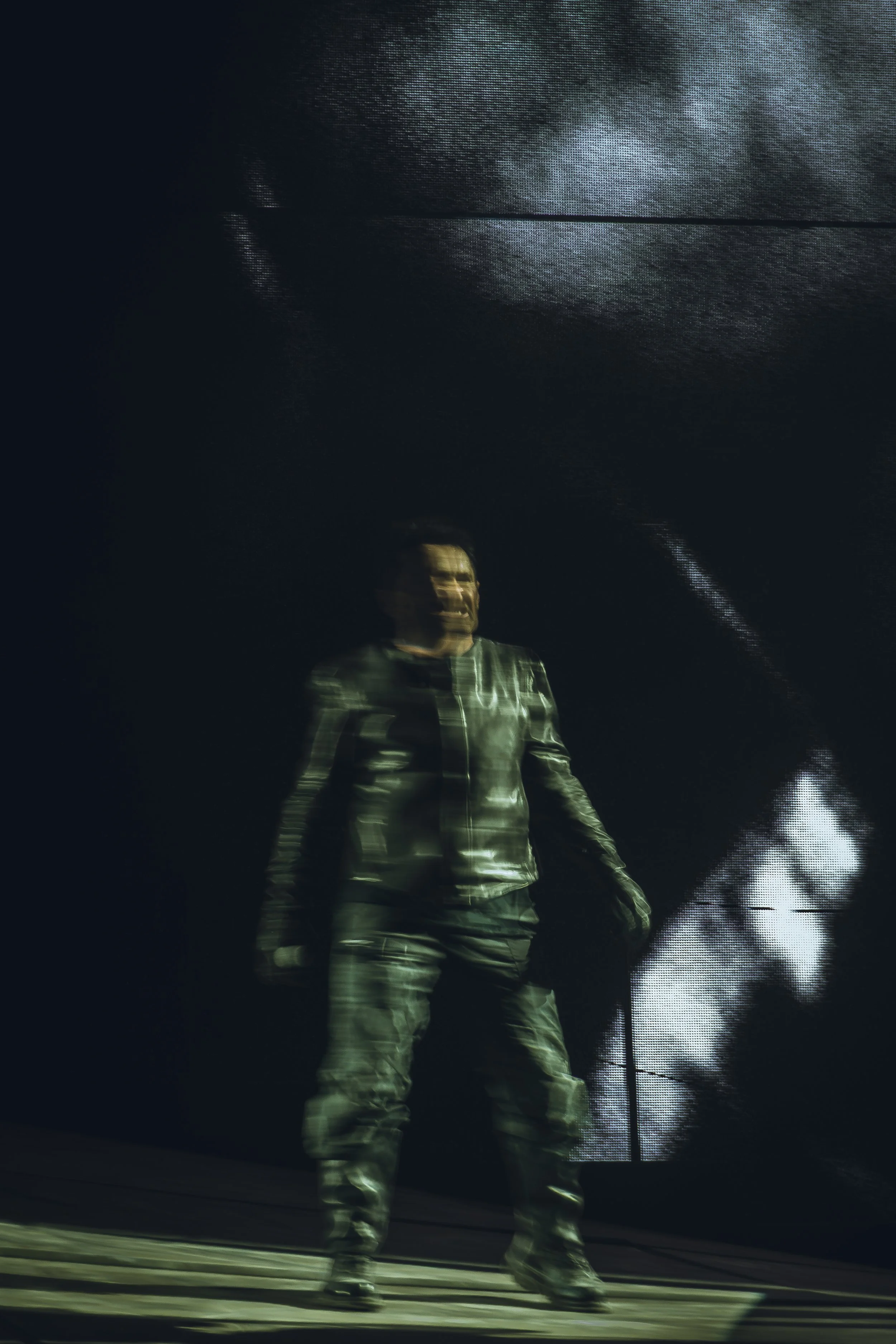
If you're a purveyor of the finest internet memes, you've likely seen the one. Trent Reznor onstage at a 2013 Tension Tour stop, telling the crowd: "How're you tonight? Having a good time? Ready to party, have fun? Yeah, well, that was the last guys. Wrong fuckin' band. We're here to have a bad time." It has reached the upper echelon of internet ubiquity, partly because it crystallizes the haunting cynicism the band built its reputation on, and partly because of its kicker frame: a still of Reznor at his rig, captioned "plays synthesizer." The synthesizer is the only instrument in popular music that has been prominently featured in both Studio 54 and an Aphex Twin video. Reznor's whole project has been making sure you know which.
Despite the moniker of Nine Inch Noize, Reznor's most permanent collaborator isn't Boys Noize (who joined last year’s Peel It Back tour to bring rave architecture to the live show). Reznor’s permanent collaborator is Atticus Ross, with whom Reznor has won two Academy Awards (The Social Network, Soul) and built a parallel career scoring films — Gone Girl, Mank, Bones and All, Challengers, this year's Tron: Ares. Two careers running on parallel tracks, refusing to acknowledge each other's existence: the industrial provocateur whose first Billboard #1 was an accident (Lil Nas X sampling "34 Ghosts IV" for "Old Town Road," which became the longest-running #1 in Hot 100 history); the Oscar-winning film composer whose most recognizable work is the song Johnny Cash made his death rattle.
Receiving the industry's highest prize one week and building a satanic concept set the next is the hallmark Reznor has built a shrine around for thirty-five years. He has been refusing to be put in a box since Pretty Hate Machine, and the Coachella booking was the opportunity to ossify the refusal in public — to bring his own flavor to a stage (Sahara) that the last decade of programming has handed over to the kind of twenty-something dudes from ASU who go by names better suited for dogs (Dash! Maverick! Finn!), fist-pumping in the air to the same H&M drivel that populates the top 100 of our Spotify algorithms (hi, John Summit).
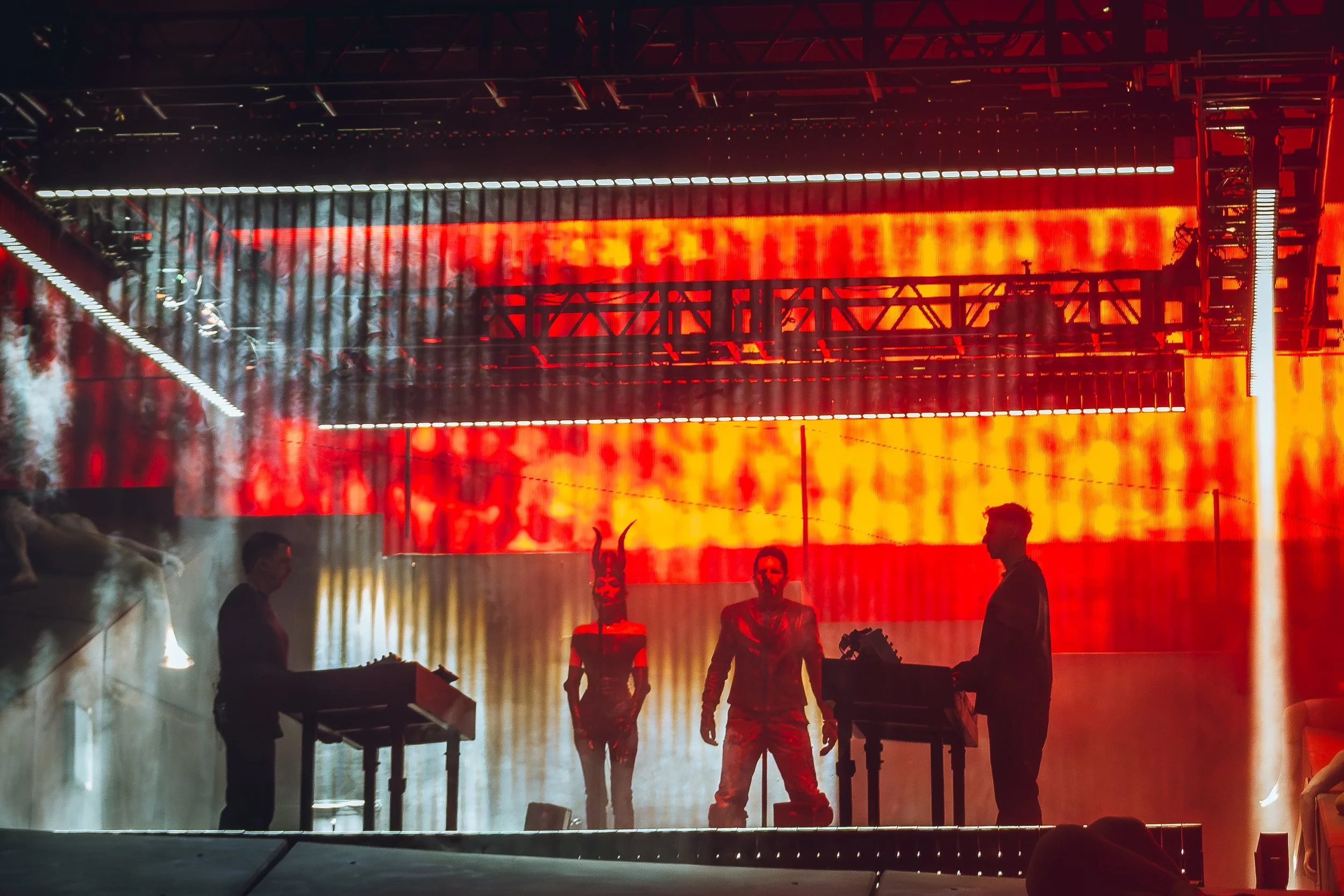
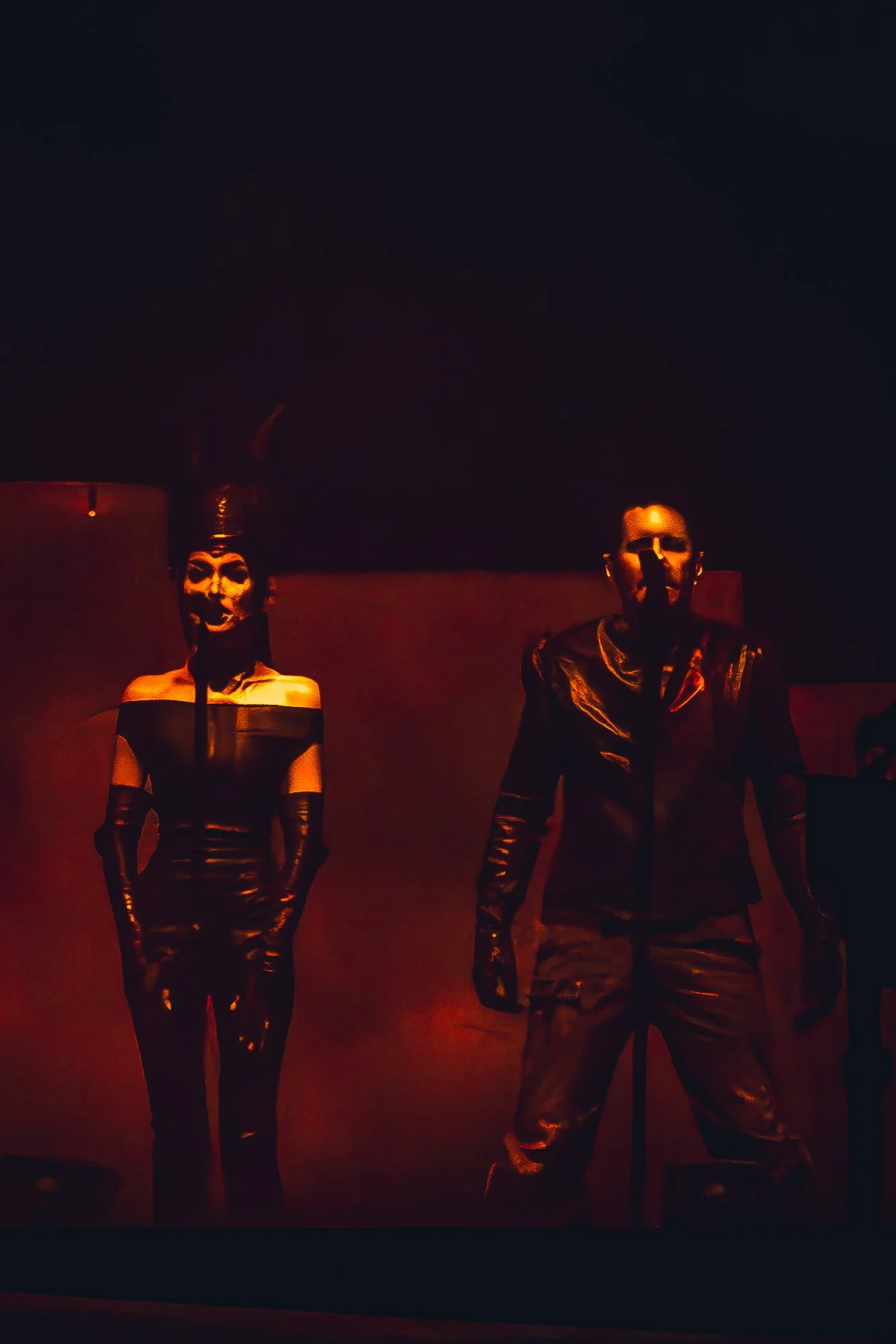
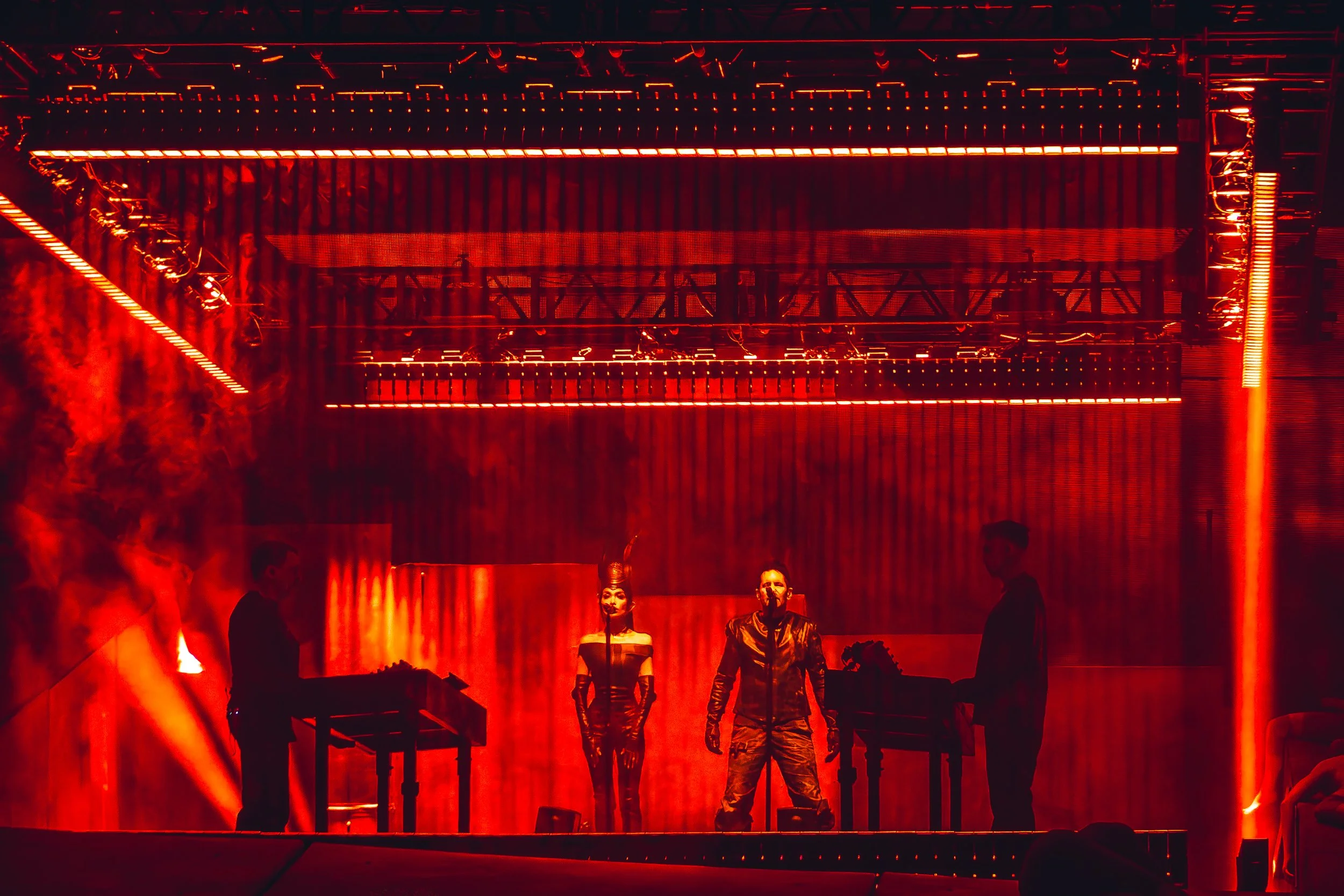
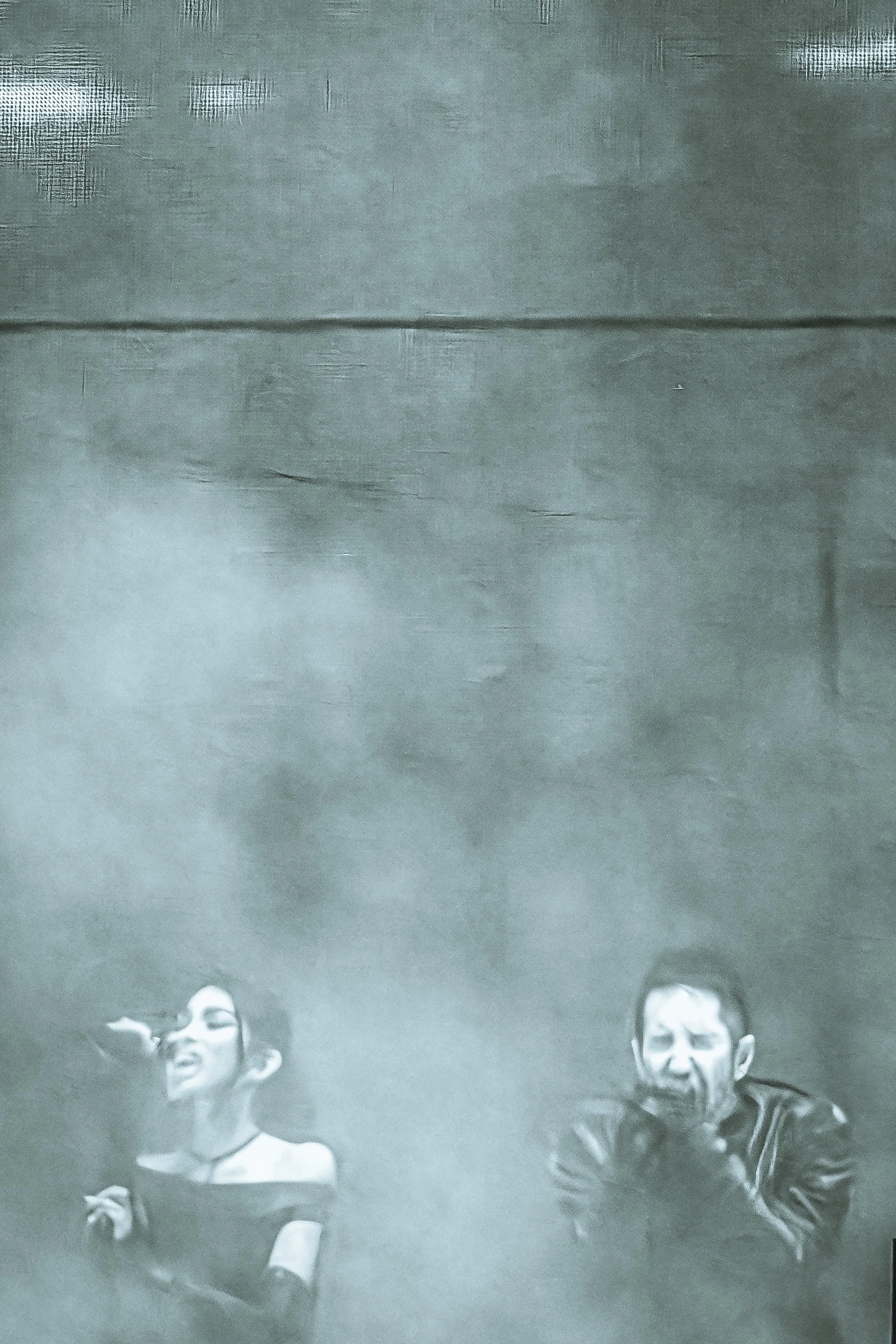
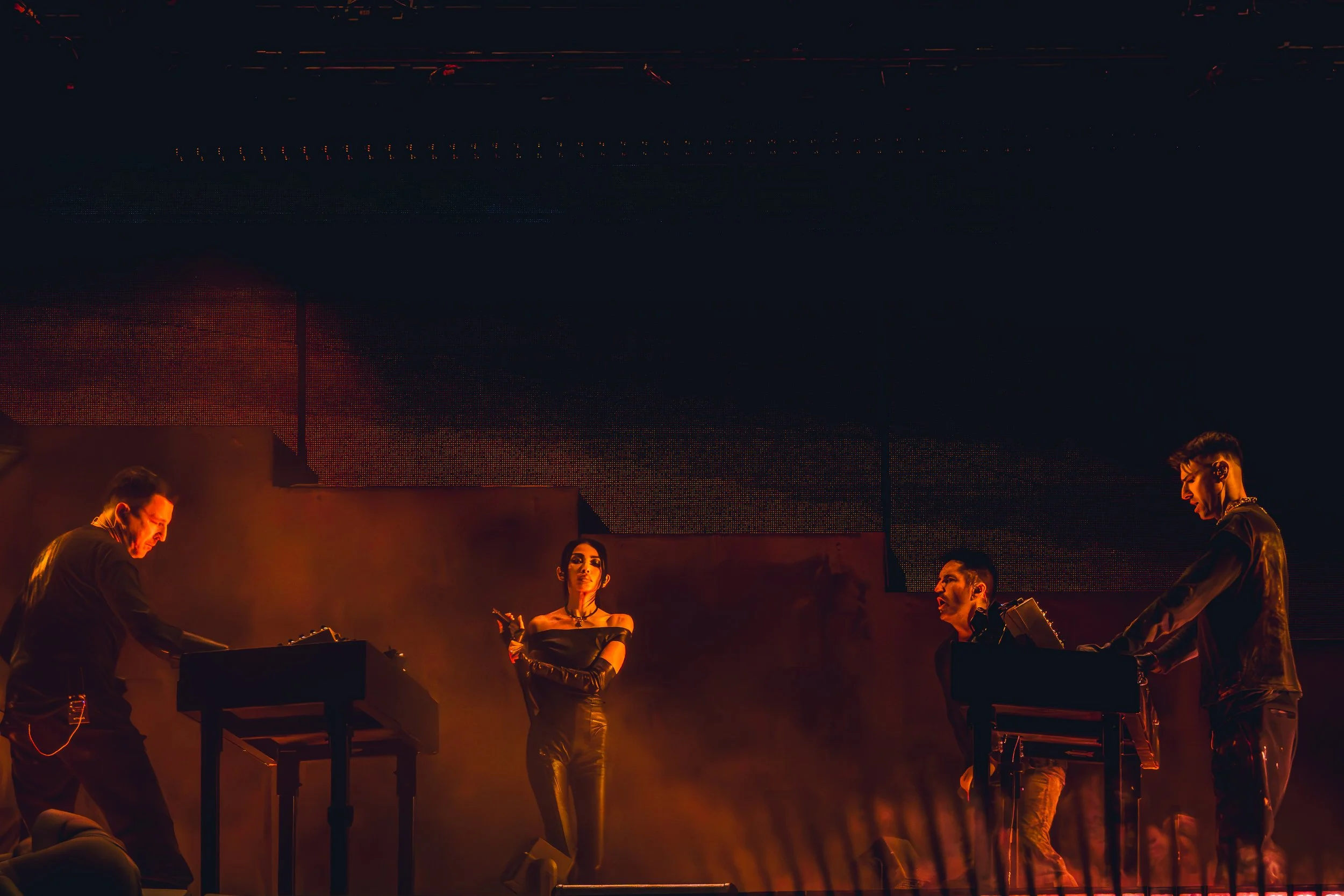
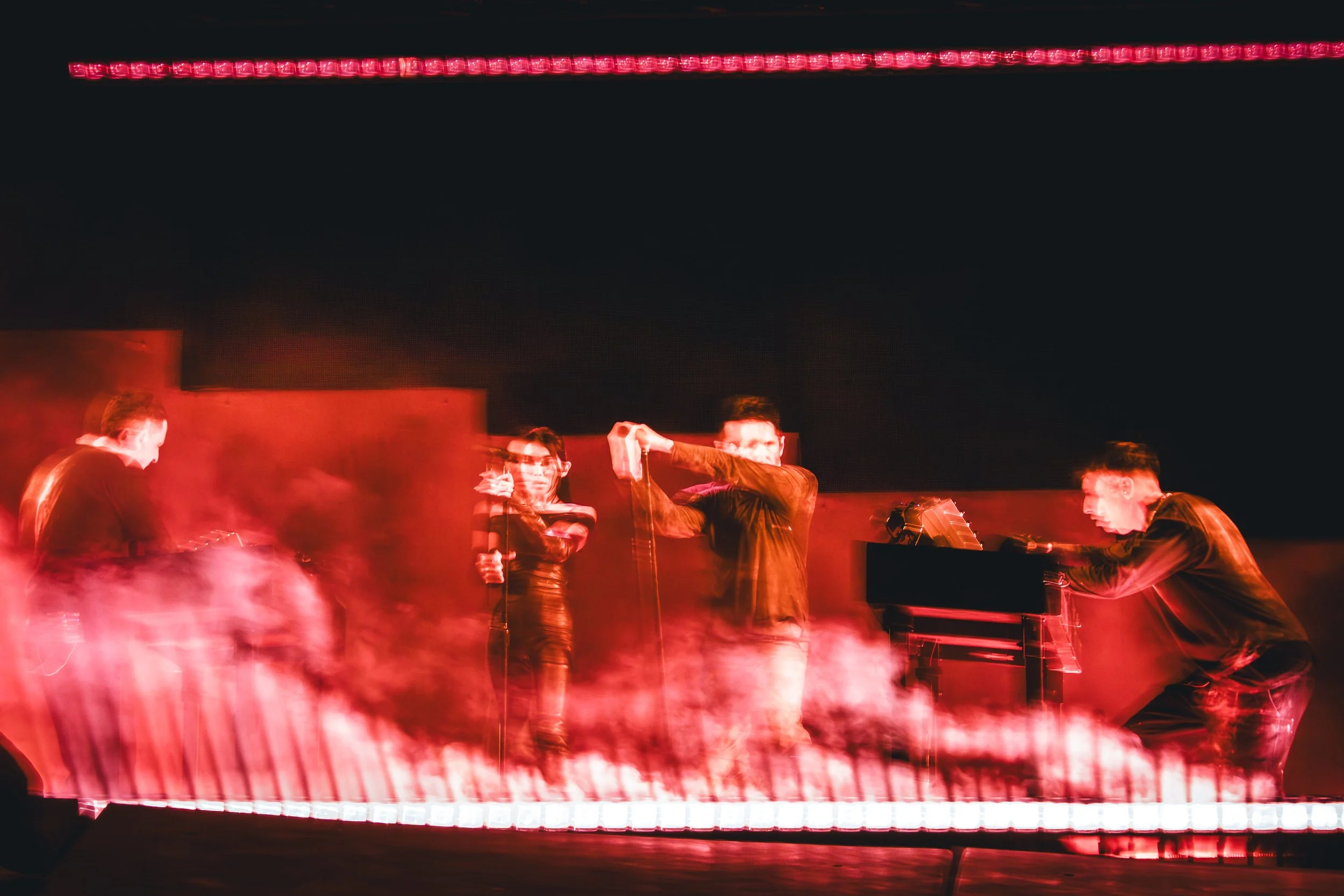
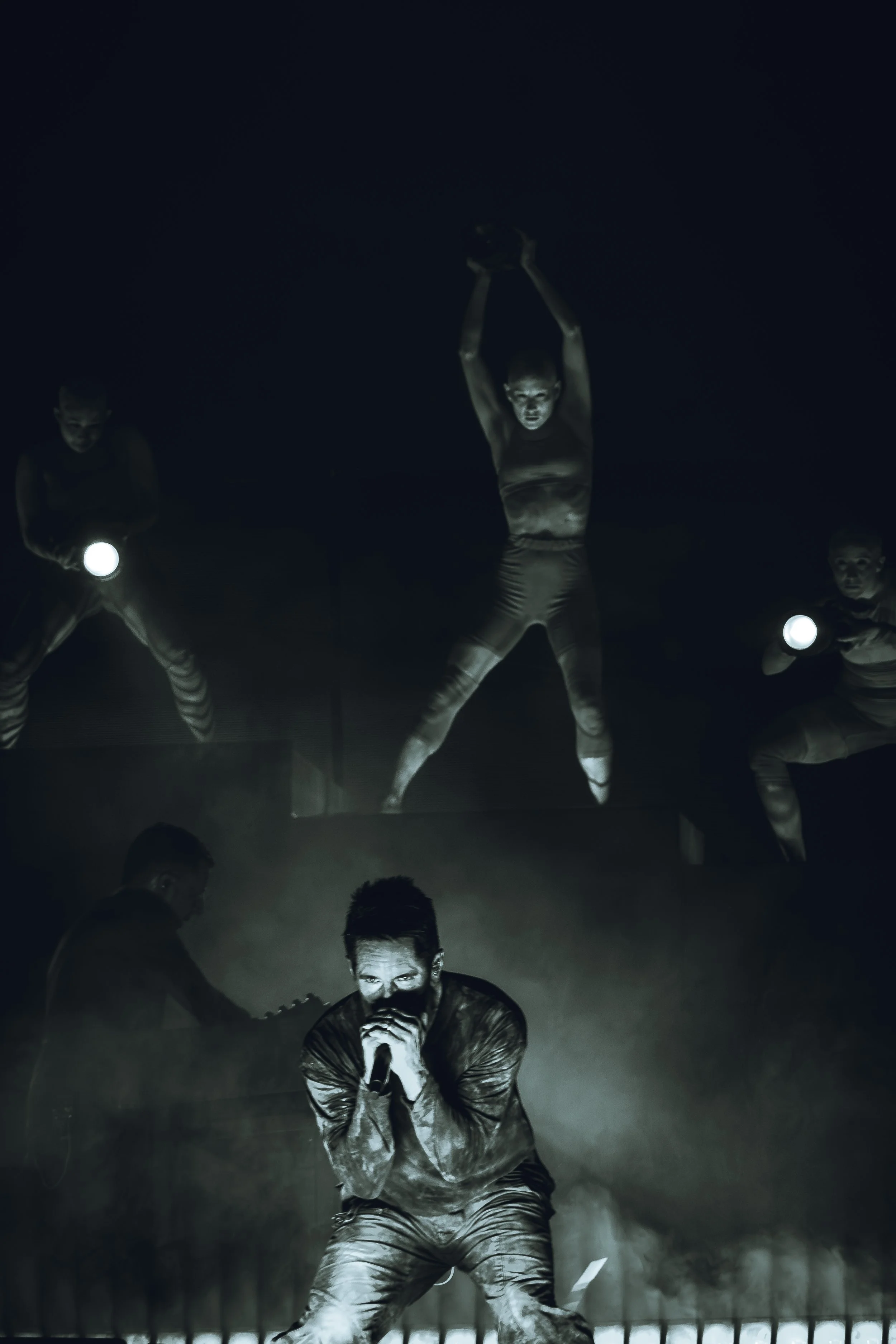
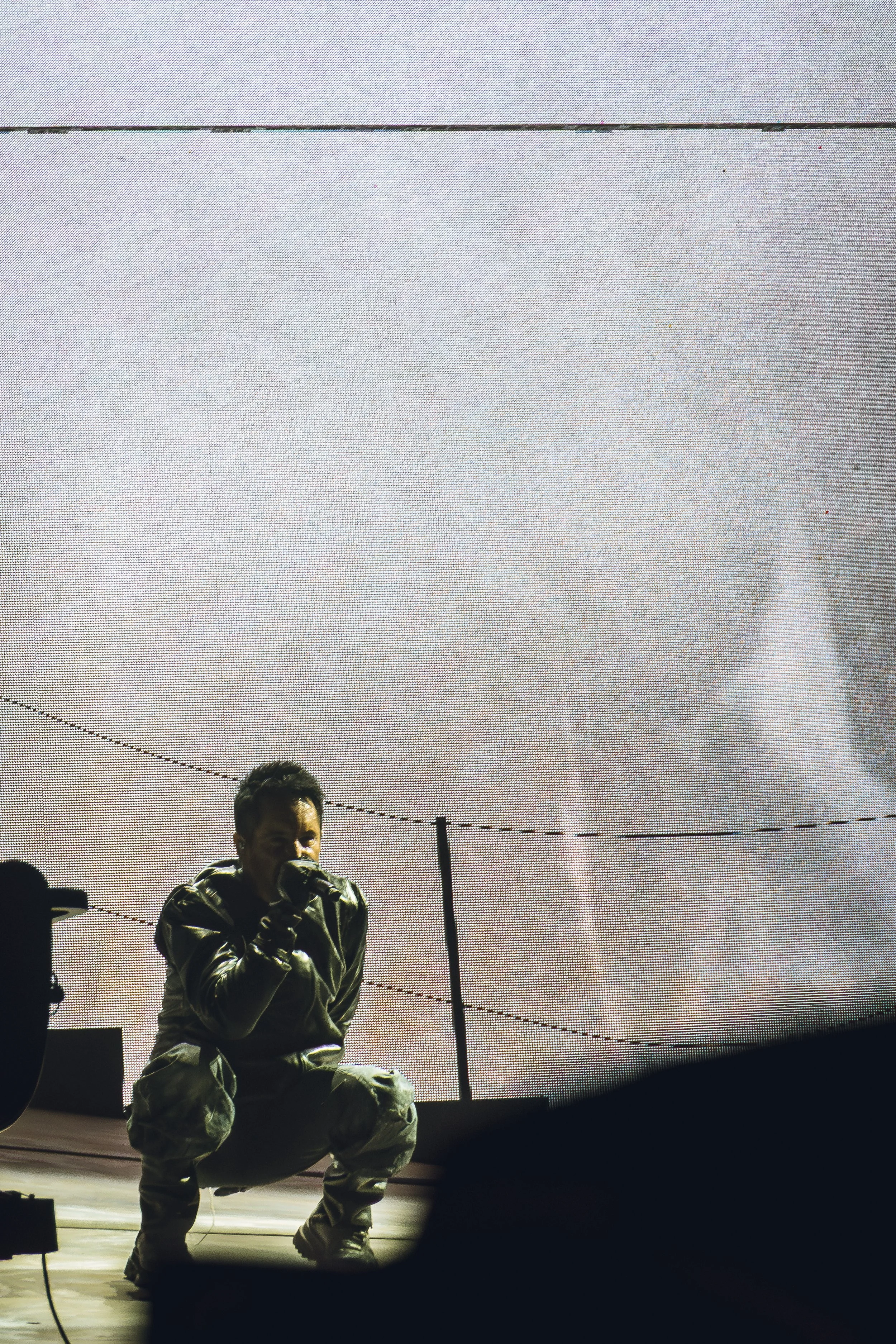
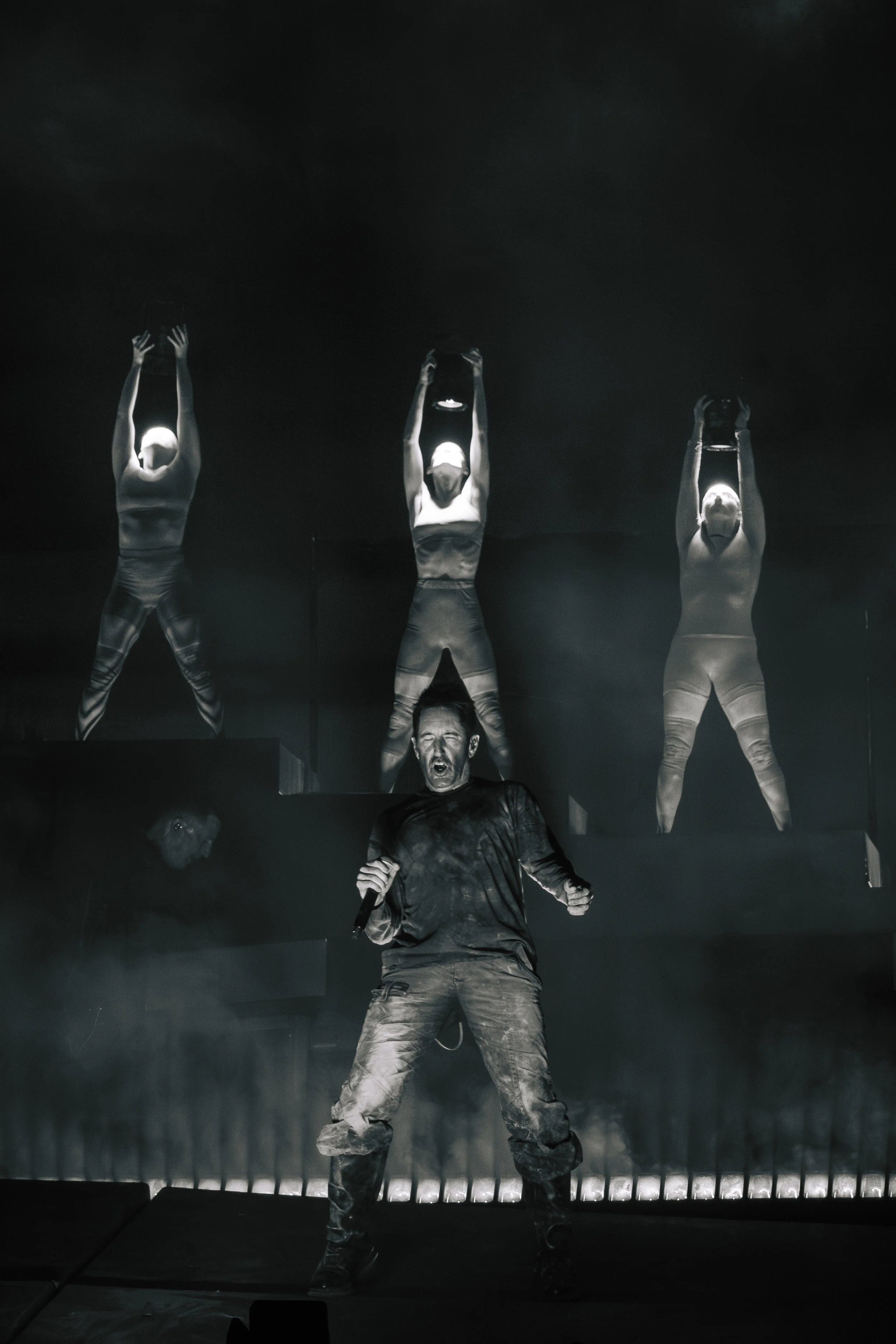
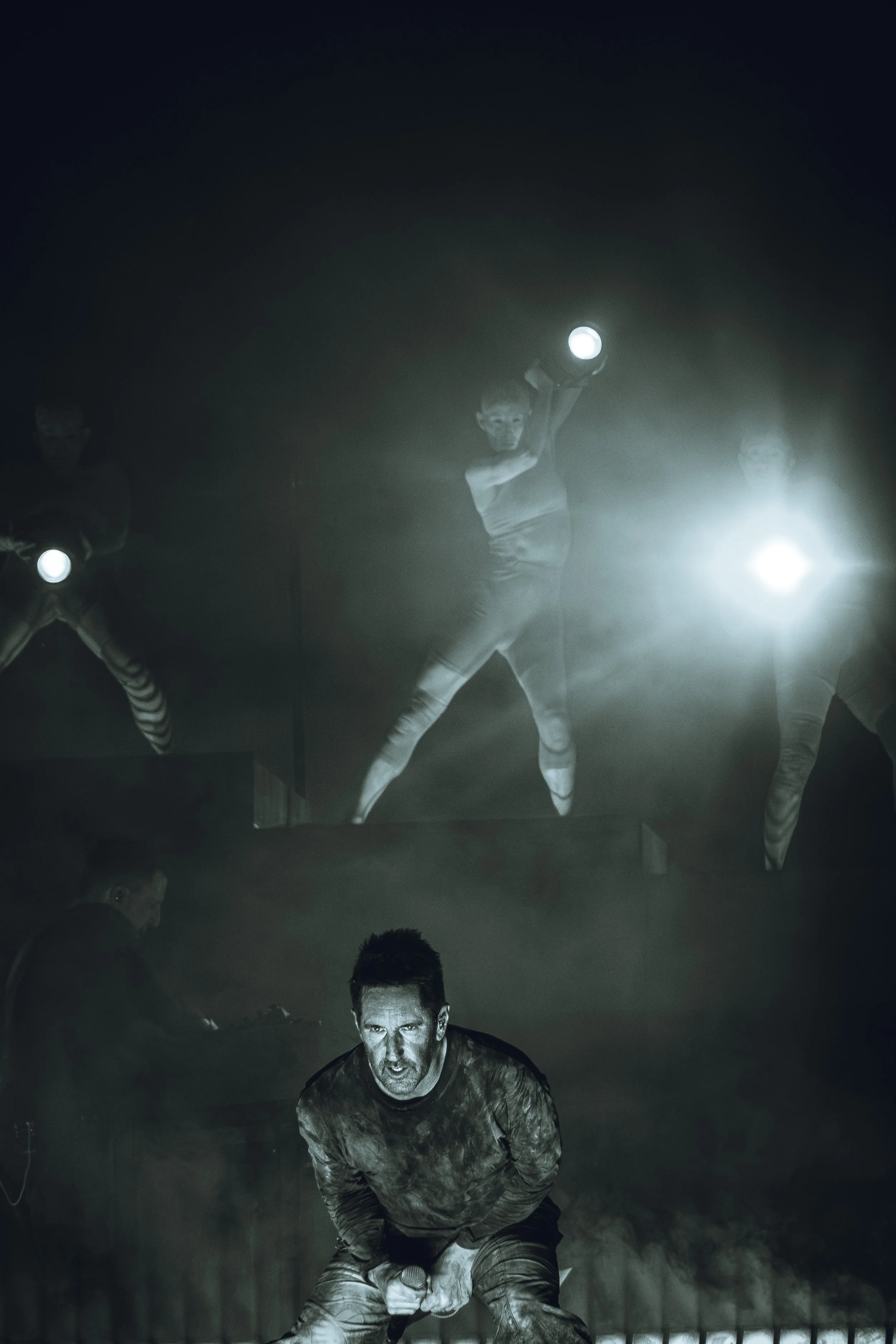
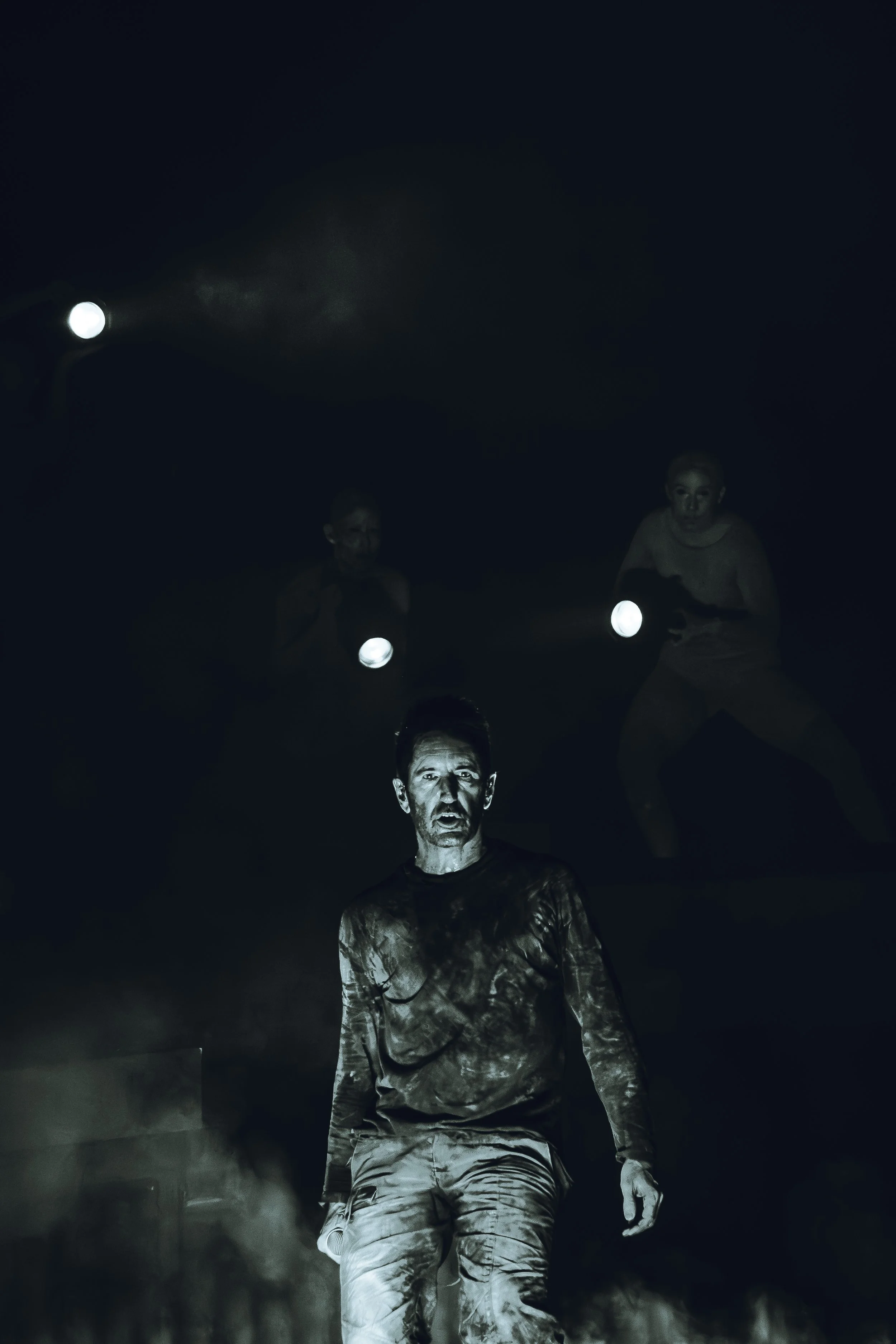
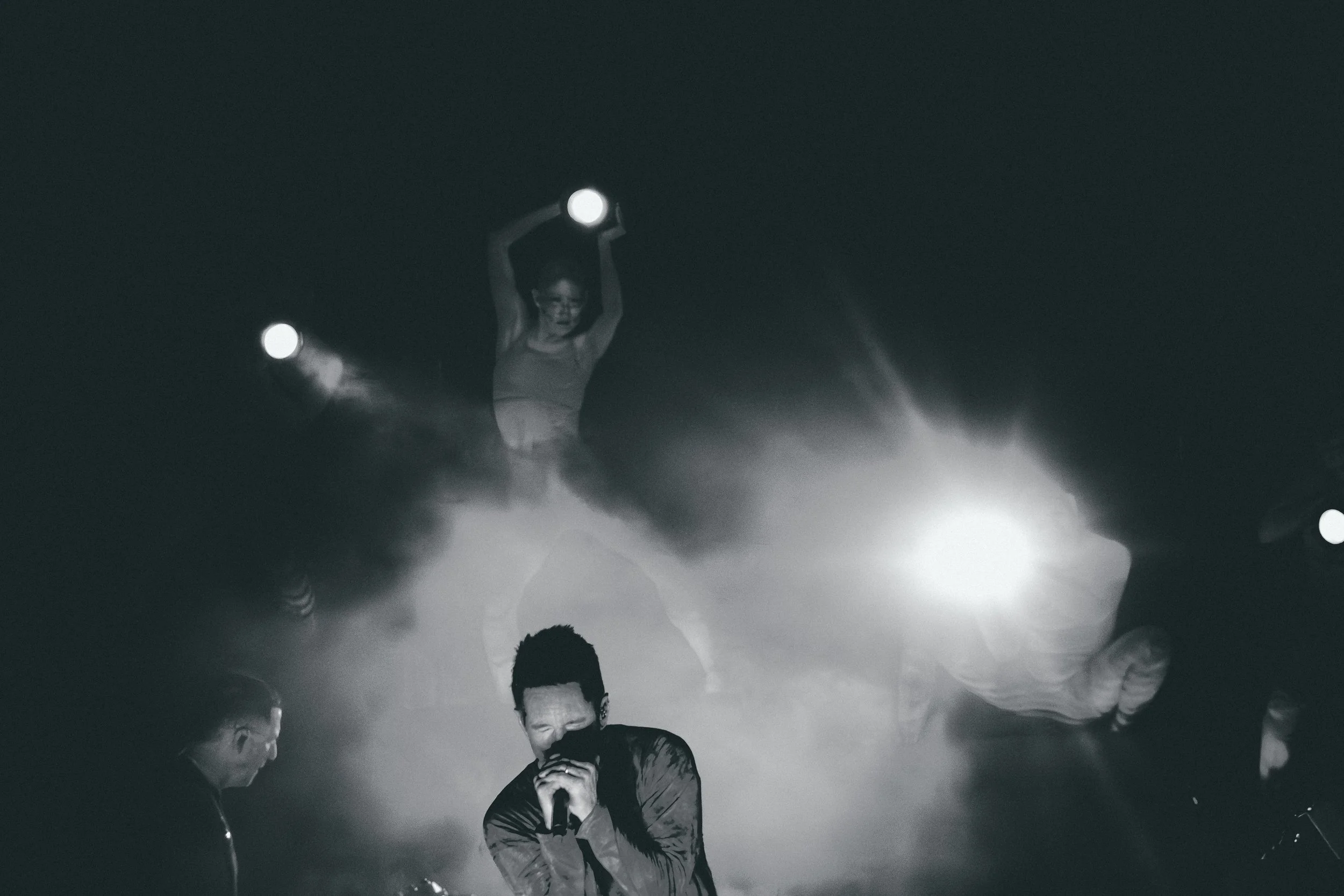
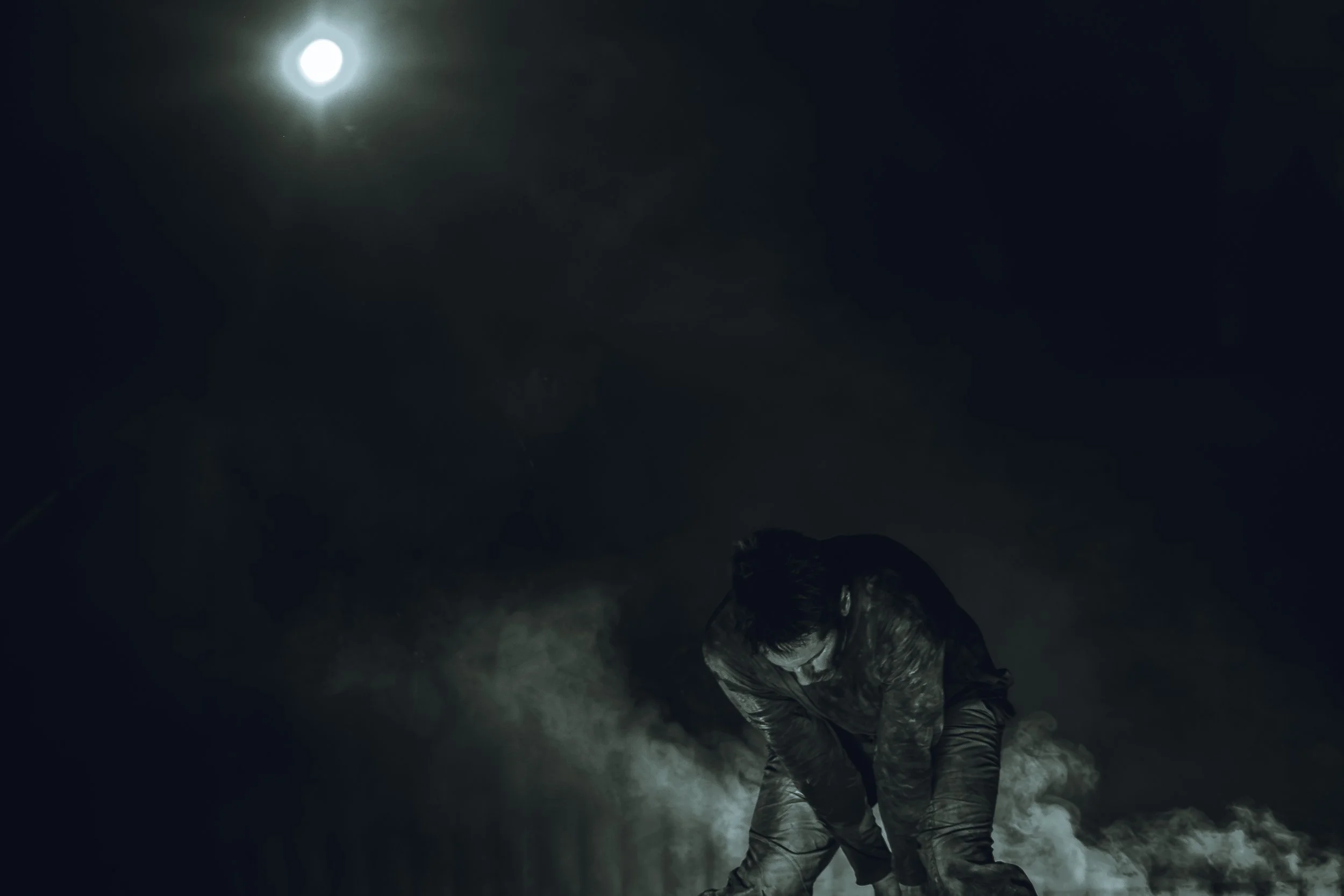
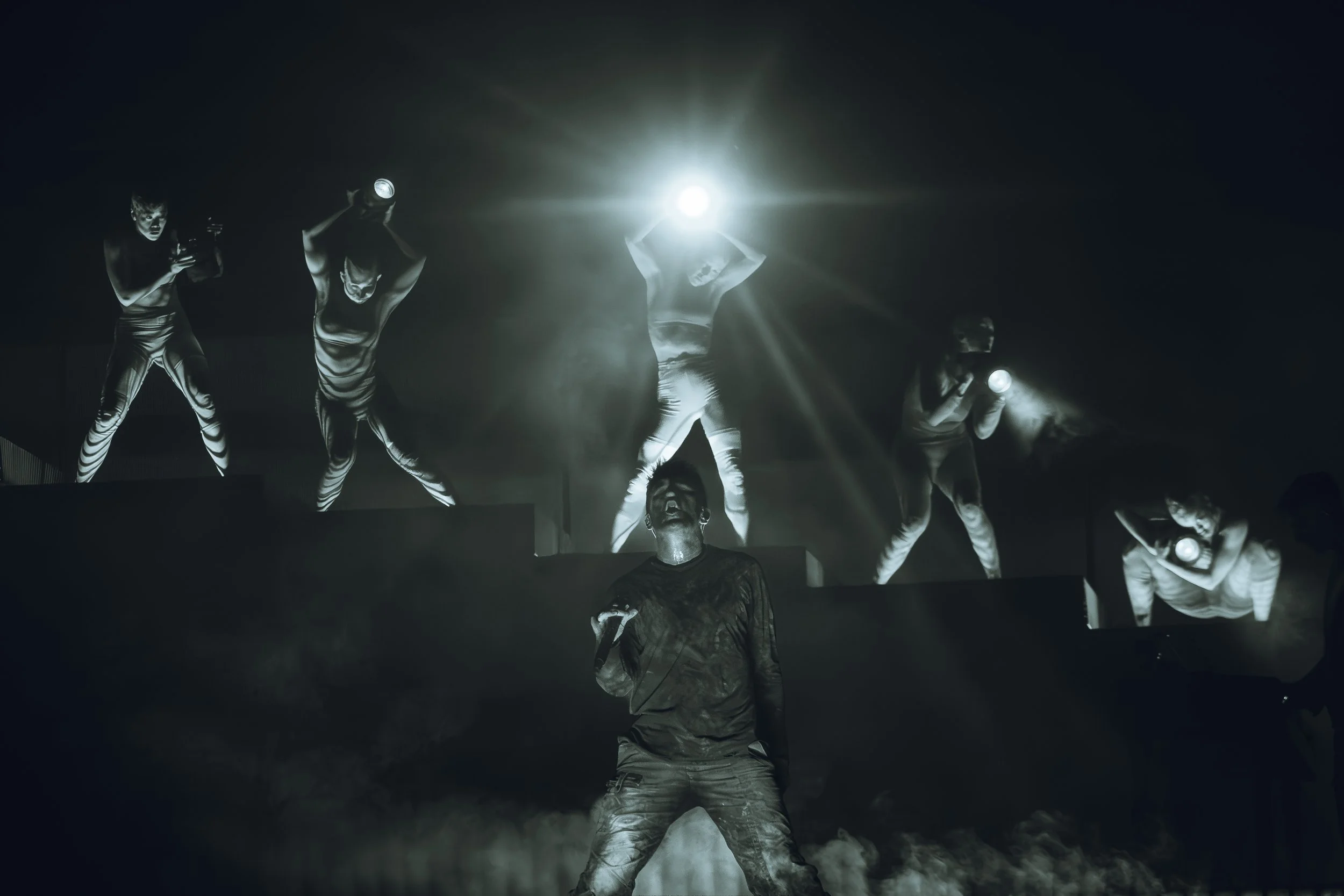
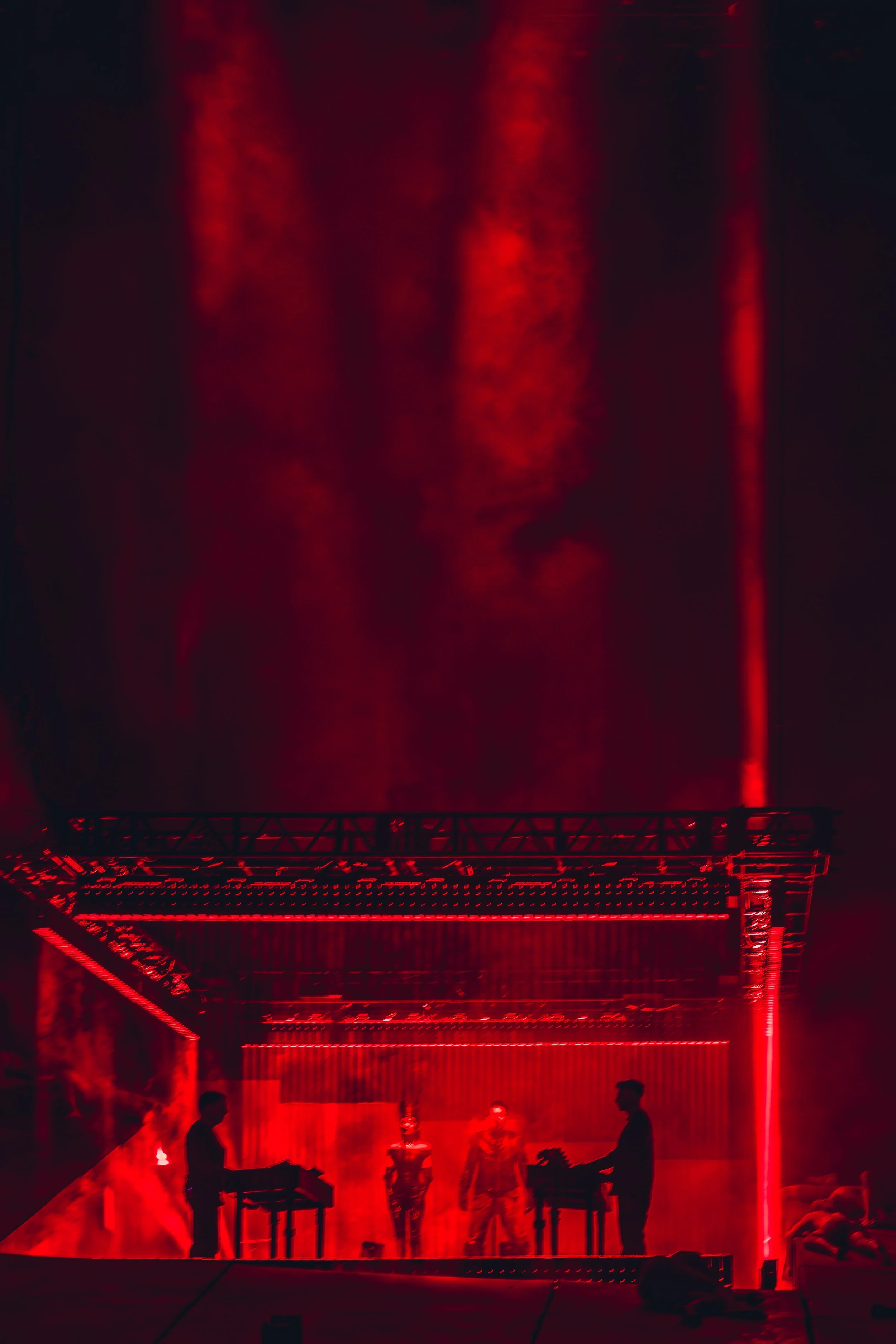
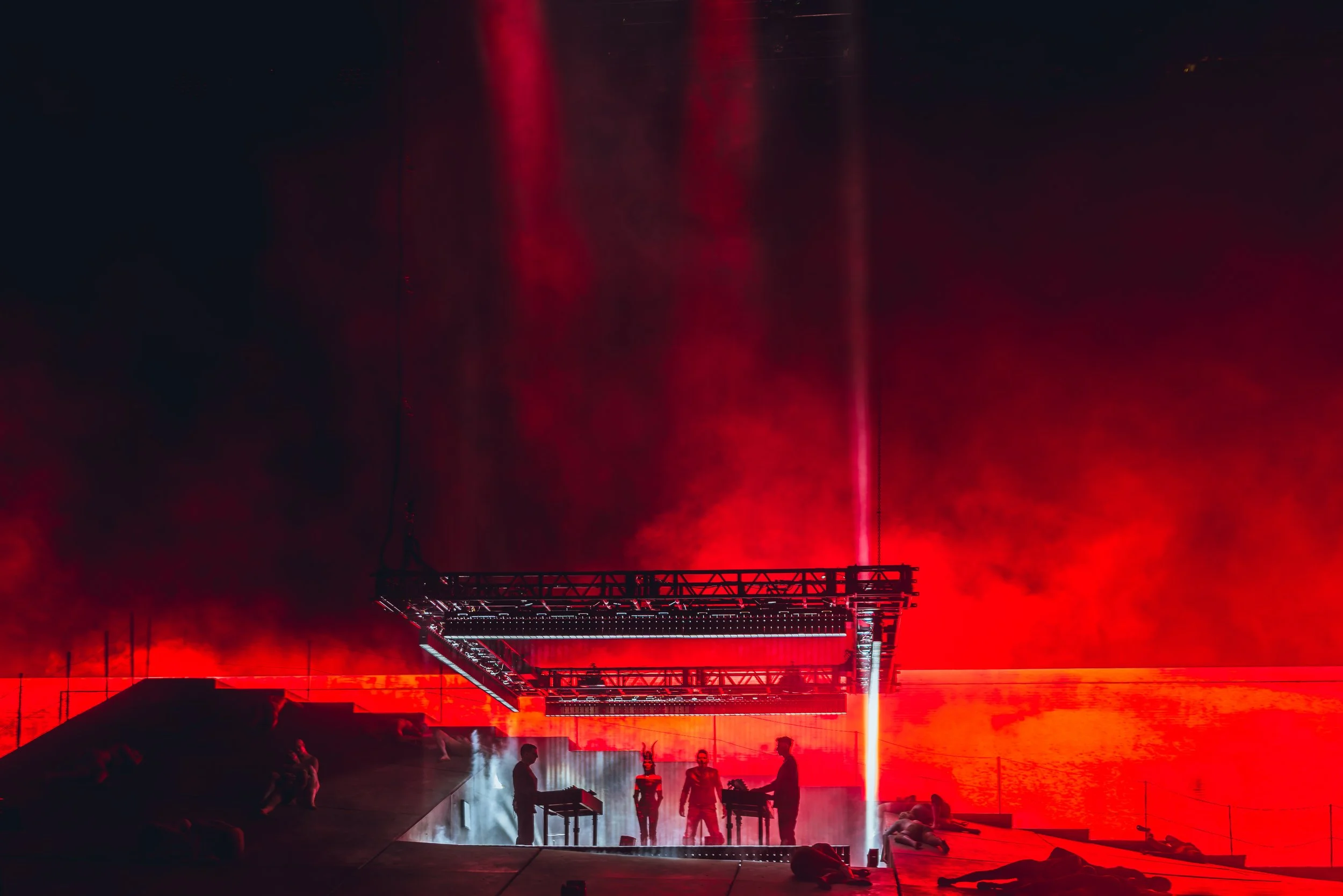
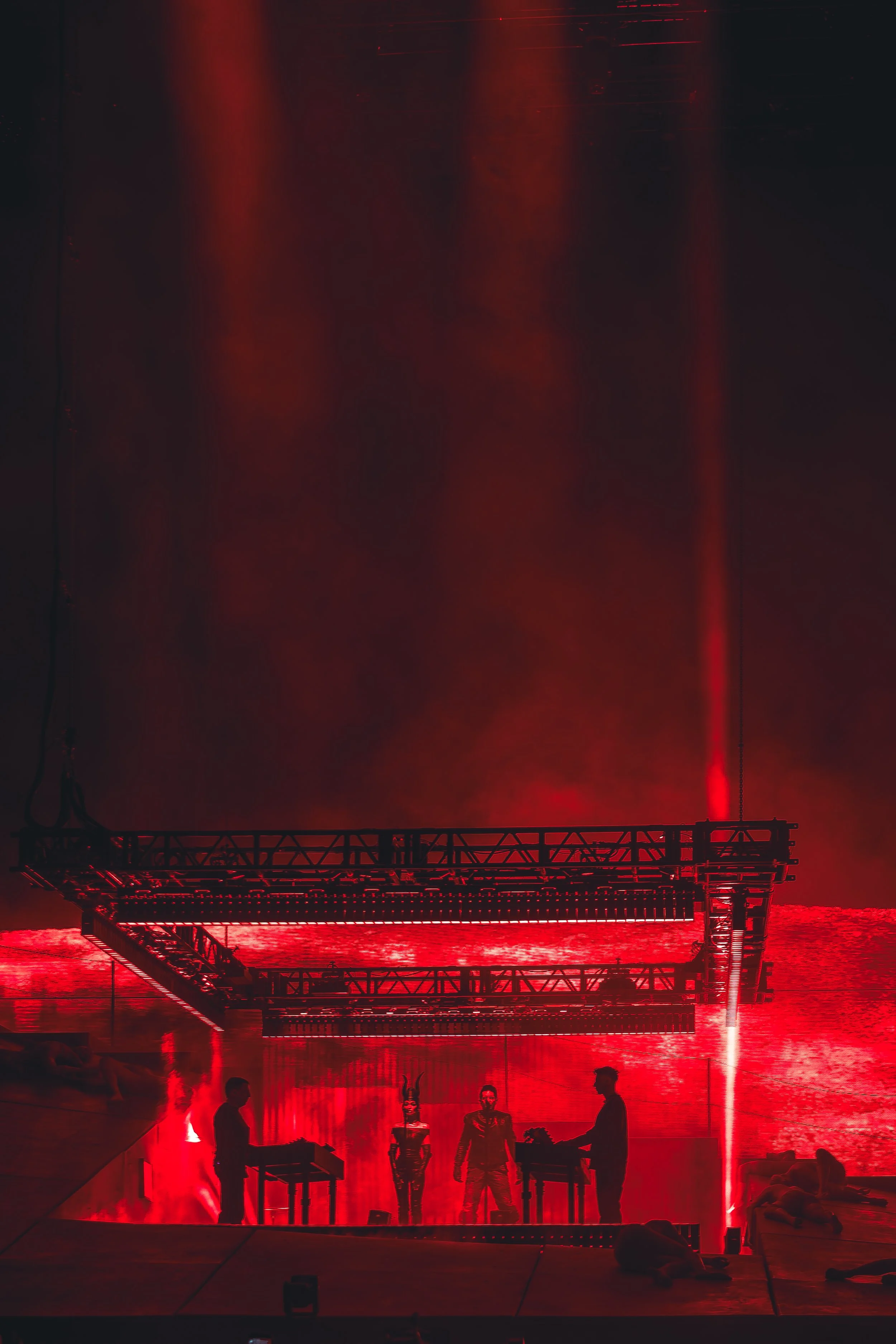
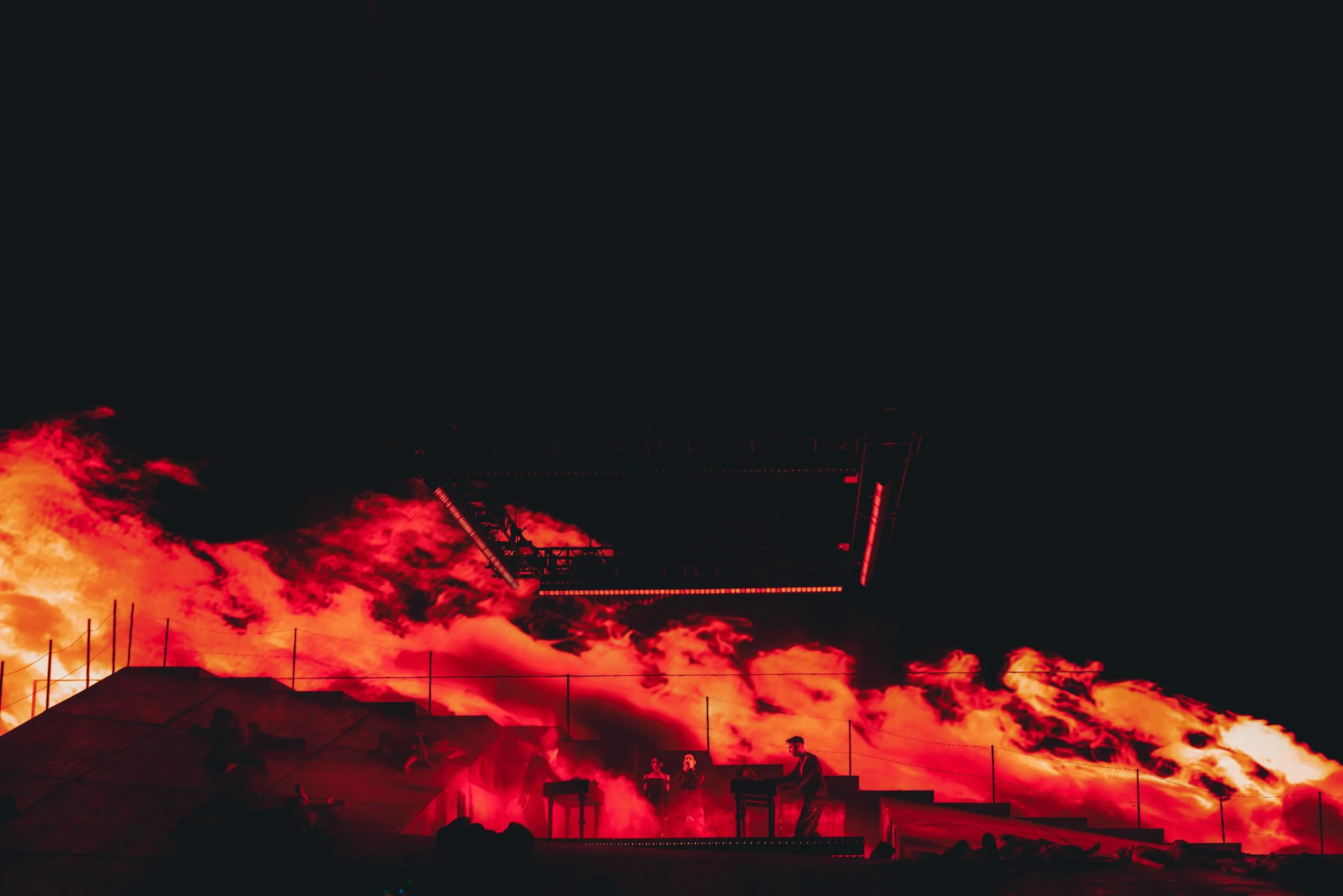
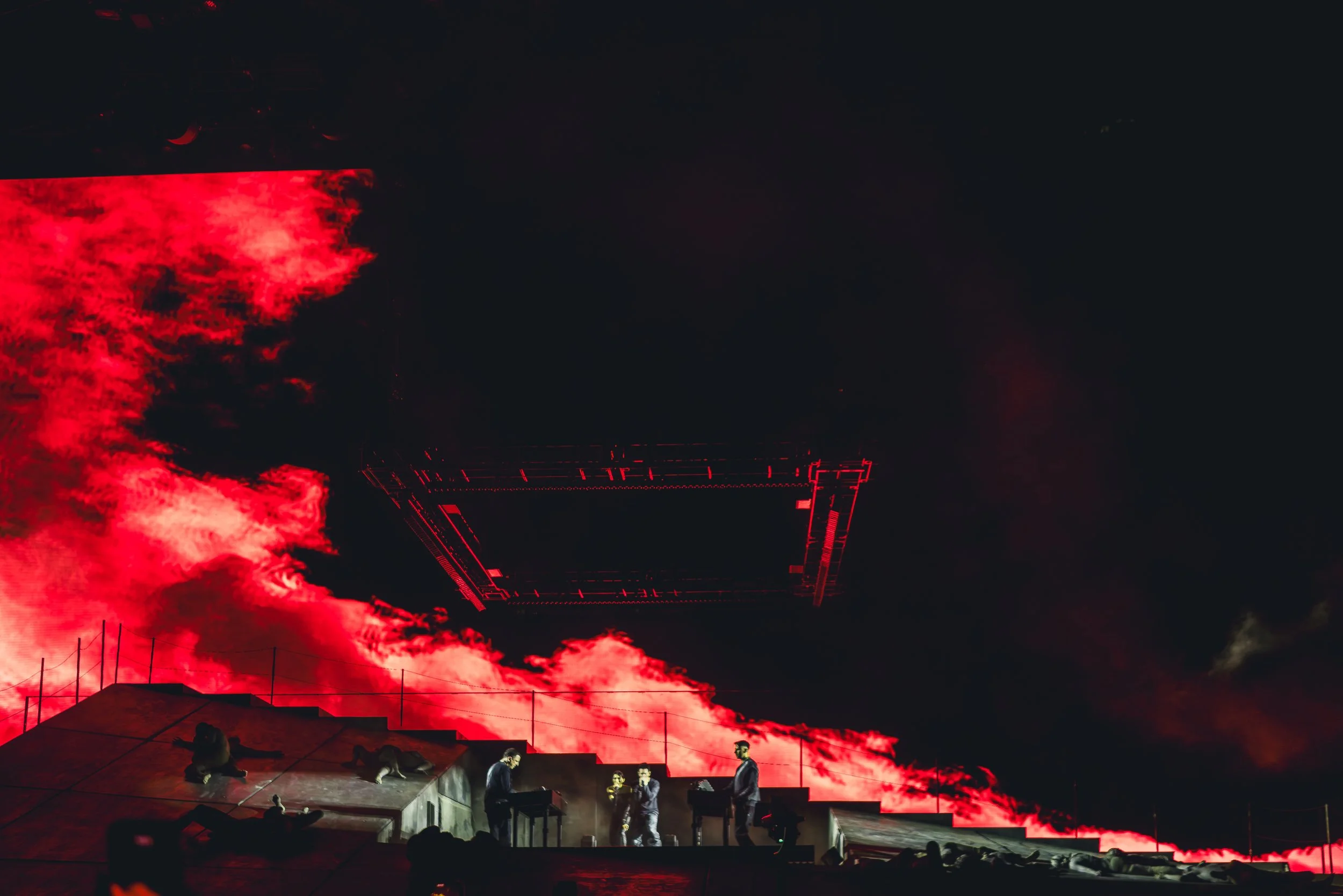
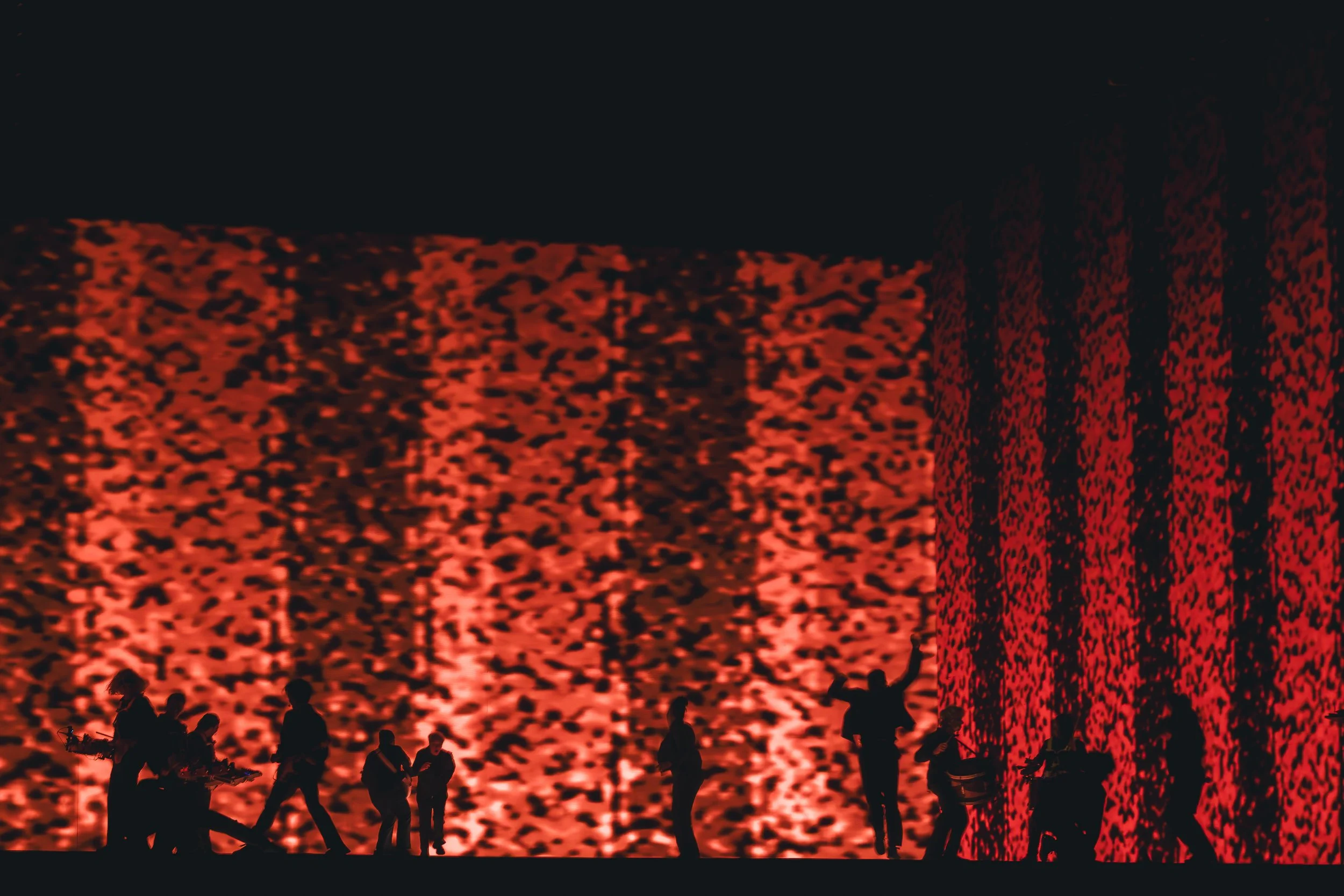
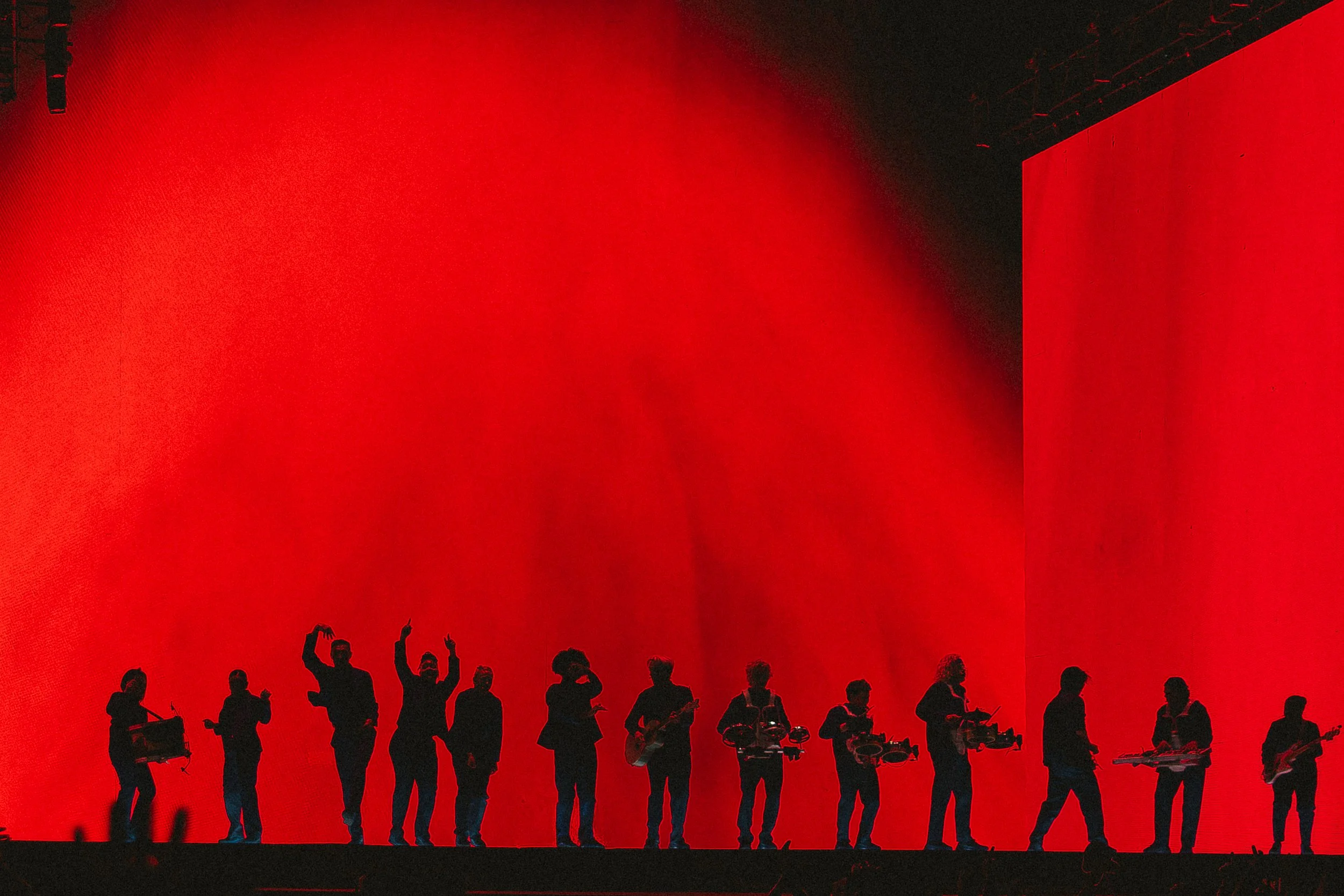
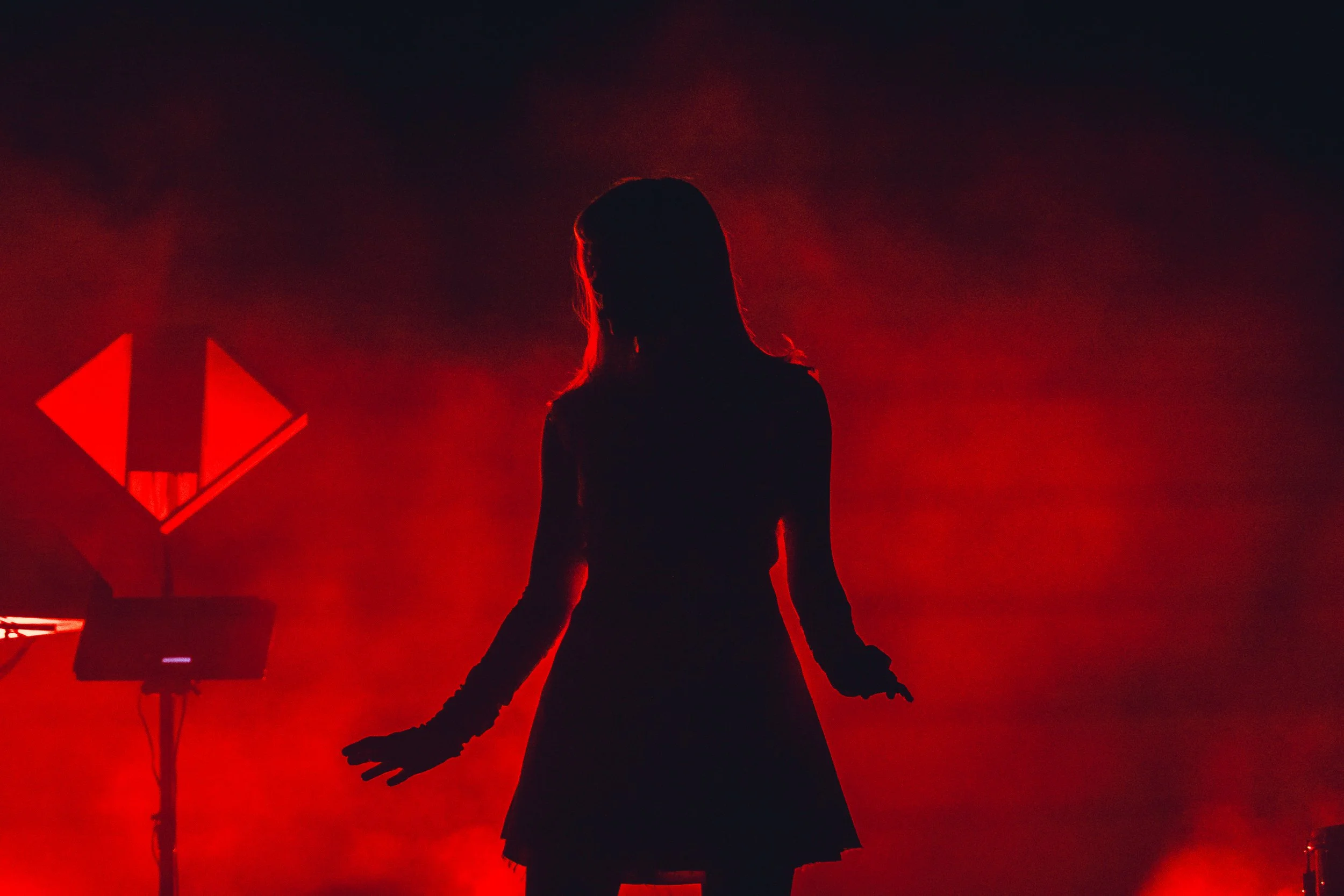
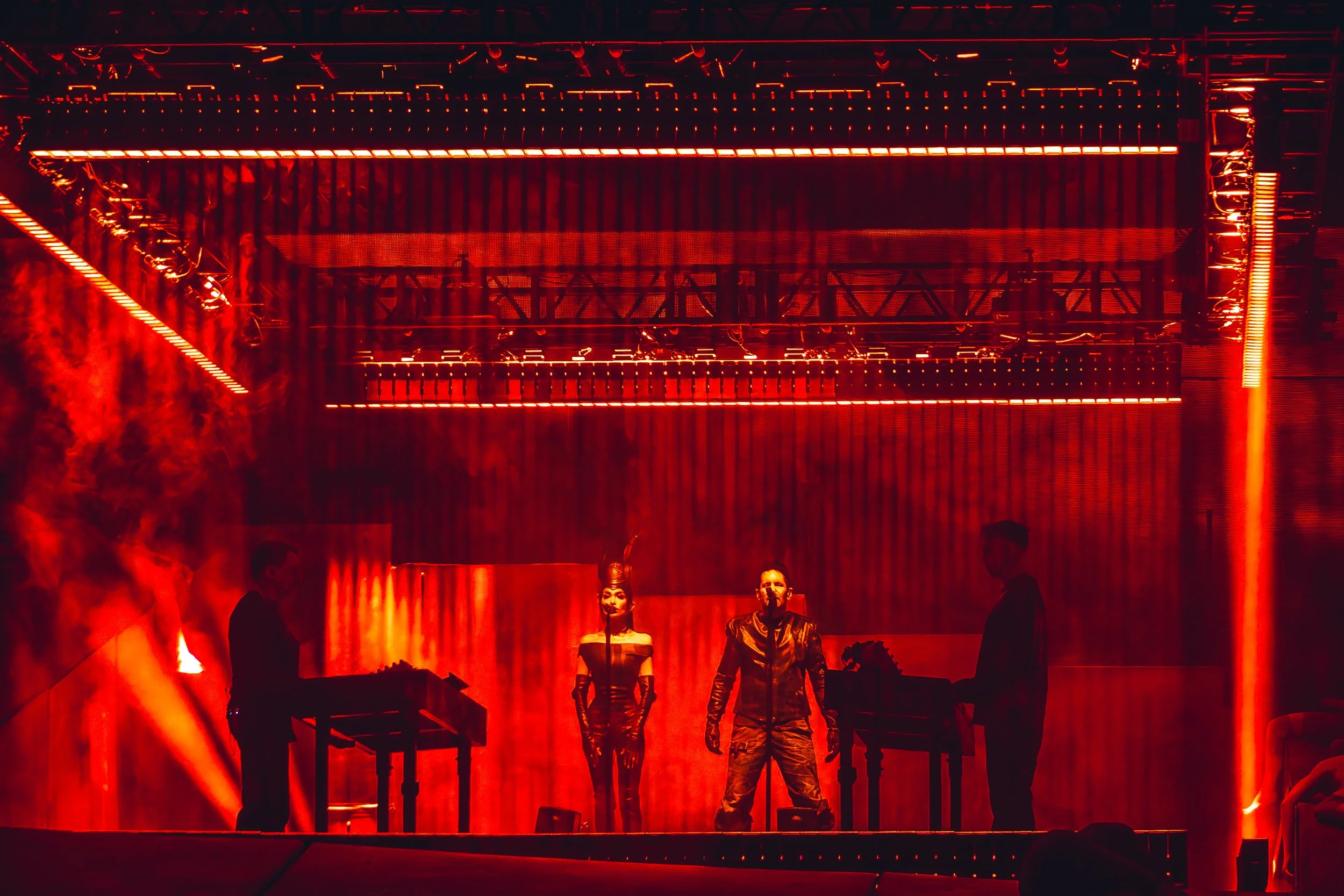
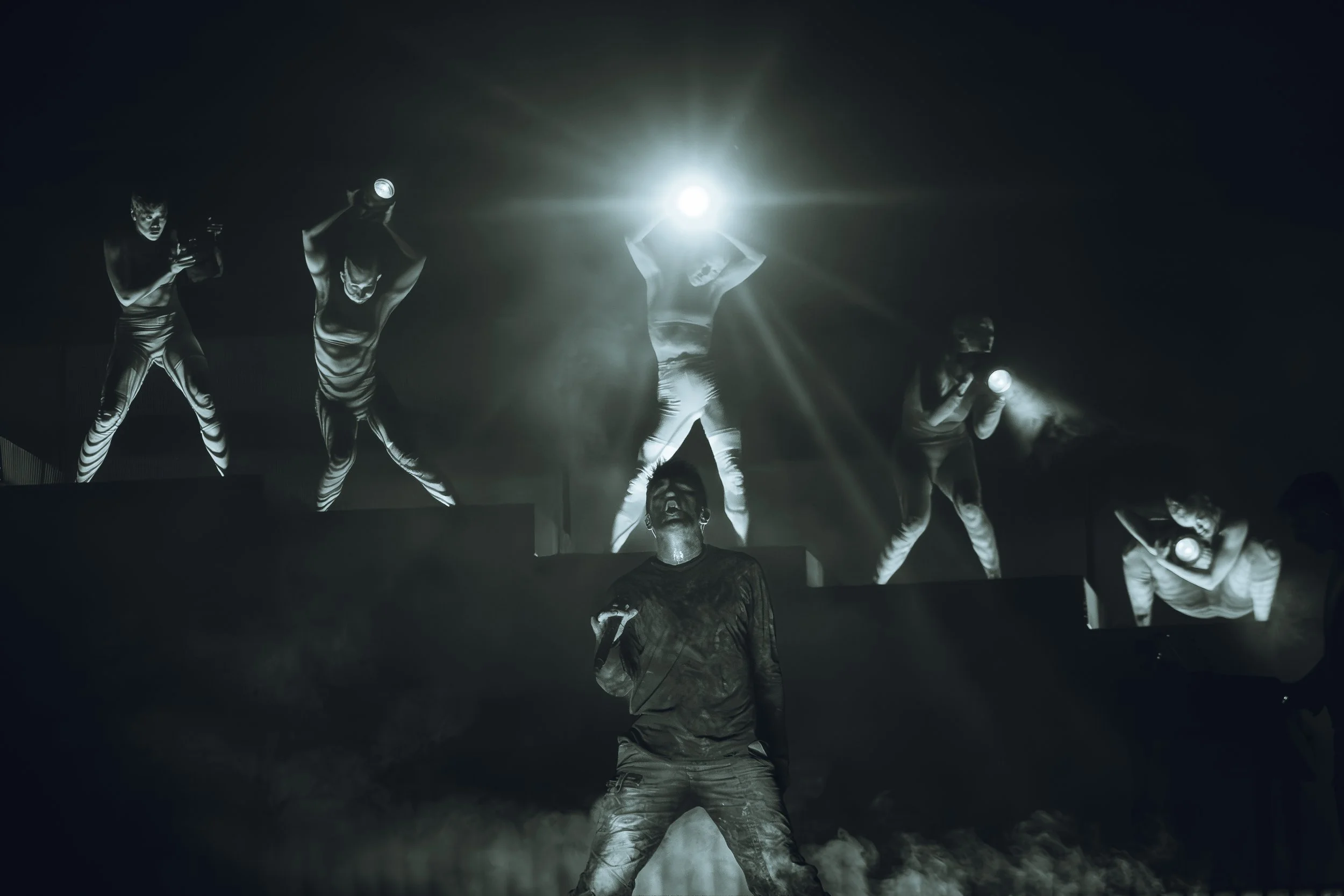
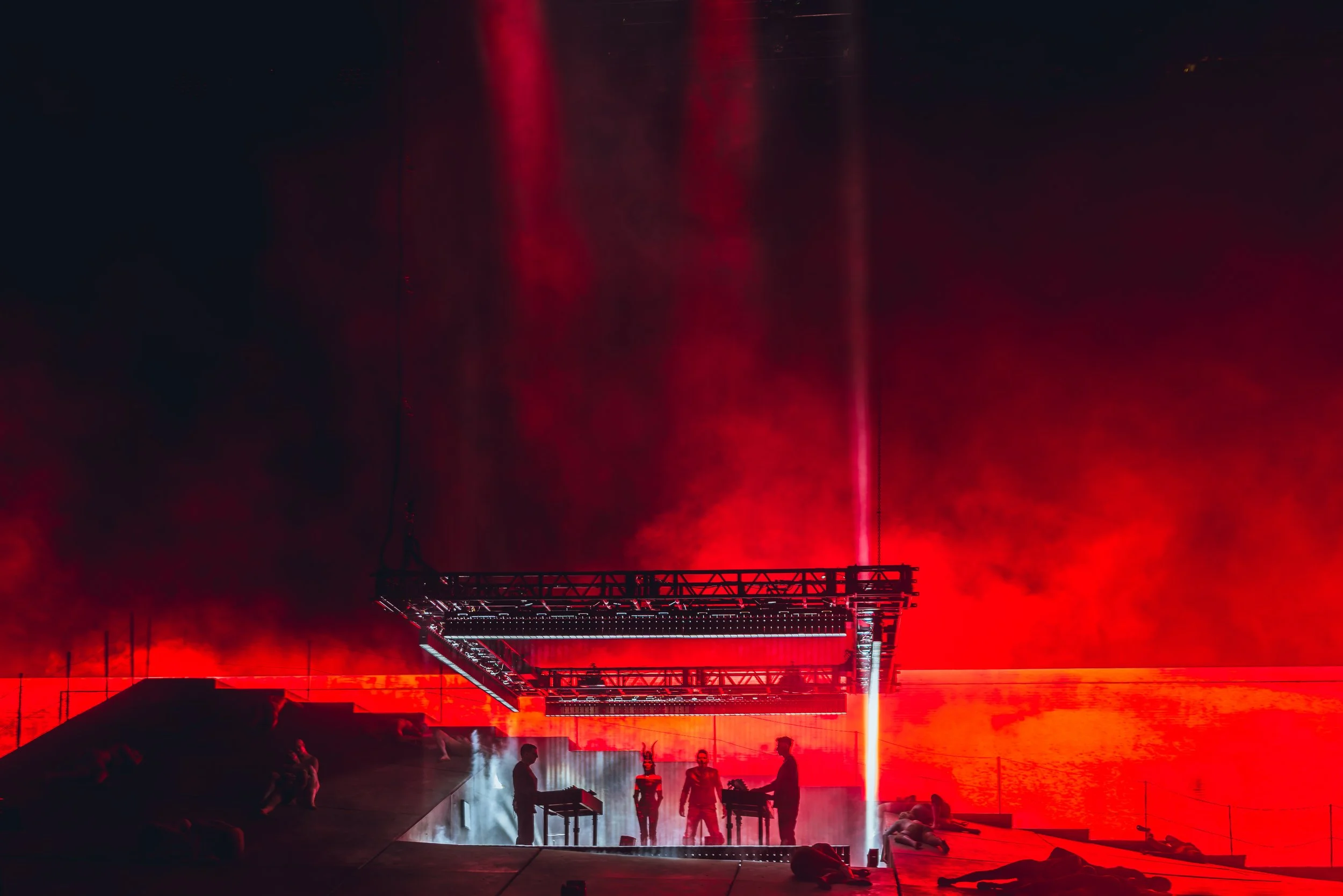
Where Twigs uses obfuscation as a weapon, NIN points the gun directly at you. The set was, as some scholars so eloquently labeled, "horny and scary" in roughly equal measure, with no apparent interest in pretending otherwise. Mariqueen Maandig — Reznor's wife and How to Destroy Angels collaborator — was onstage with him from the first song to the last, the two of them framed in red light at center, Boys Noize on one side and Atticus Ross on the other. Dancers in gray latex moved around them, simultaneously beholden to the throne and looking for an opening to overthrow it.
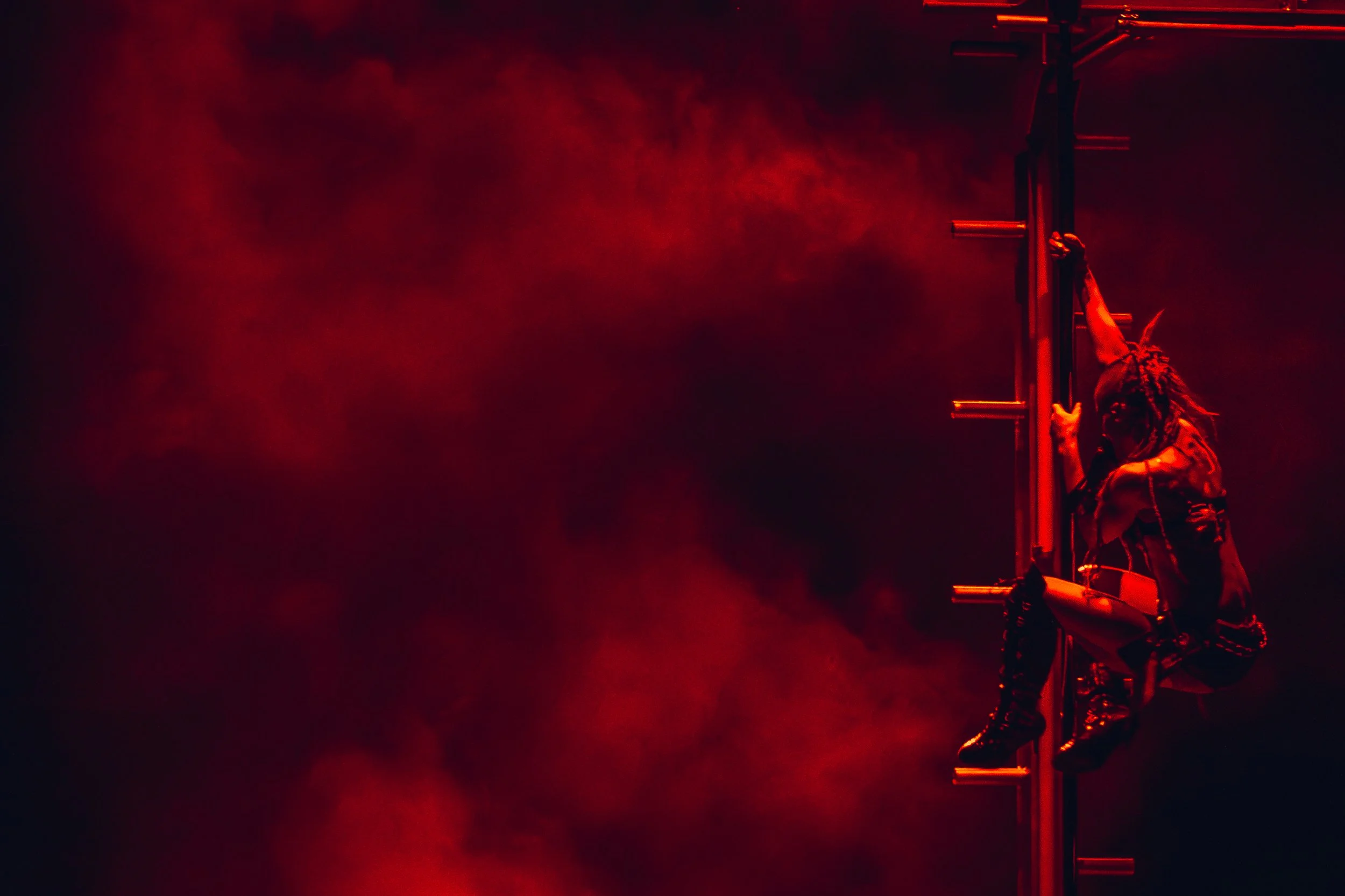
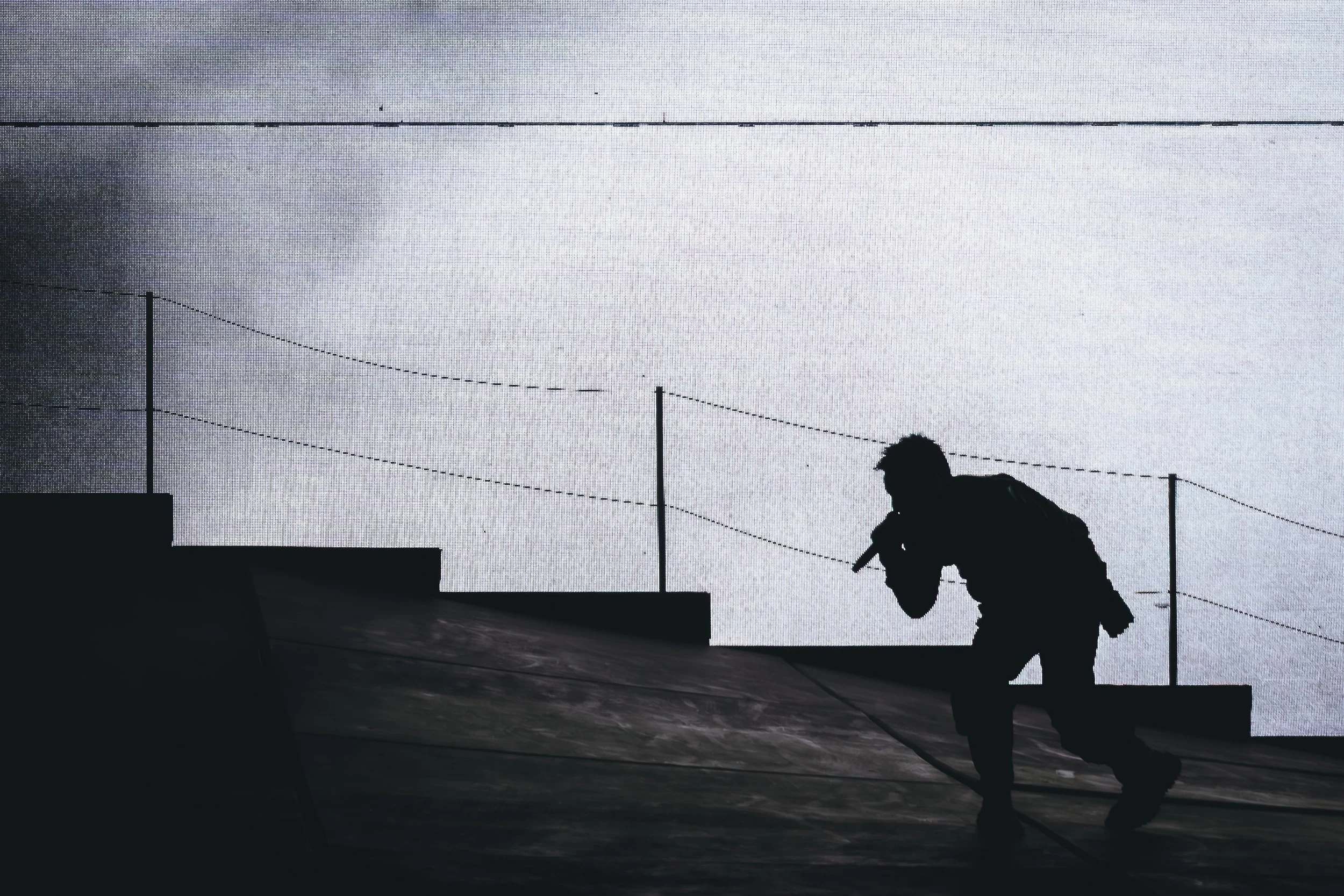
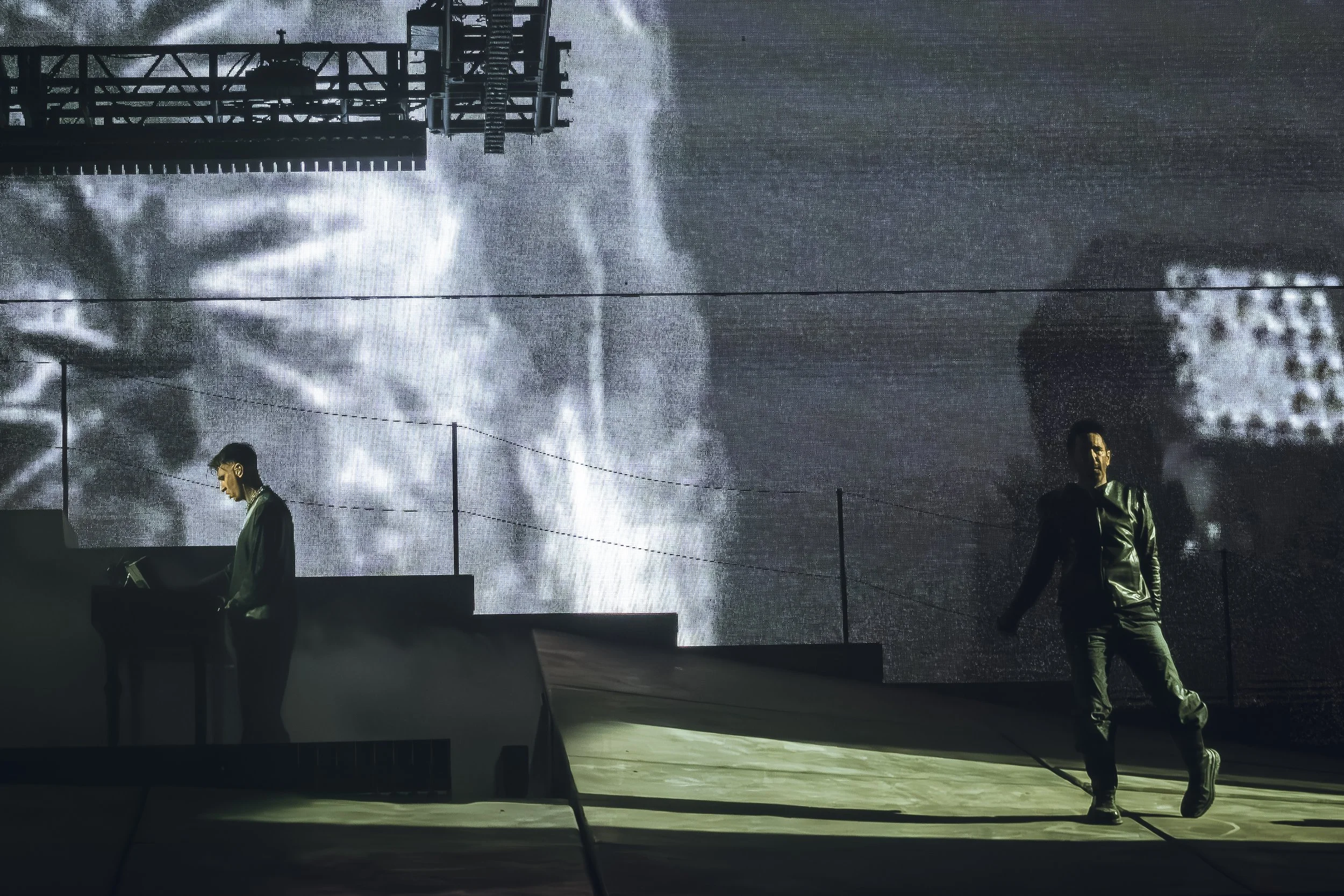
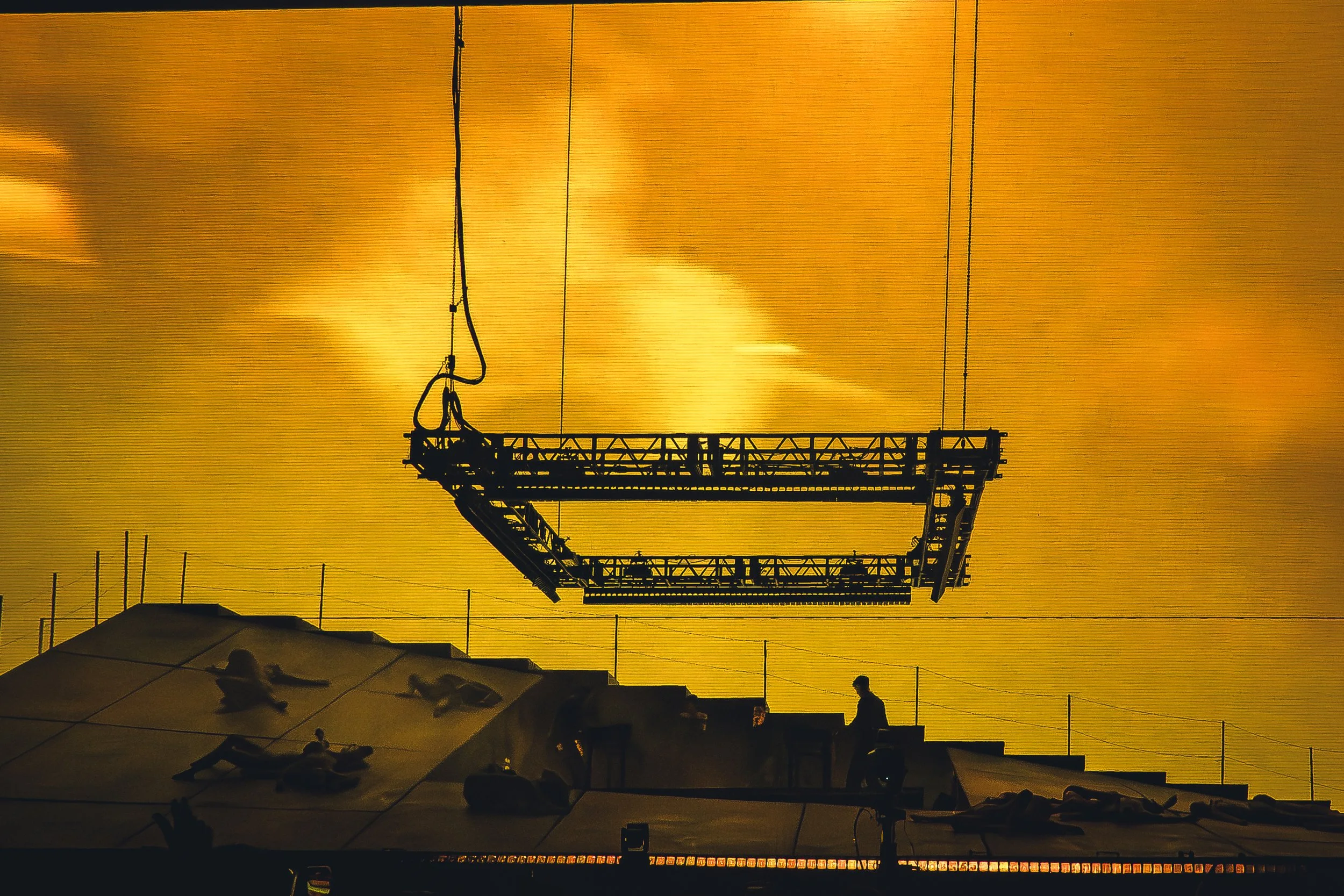
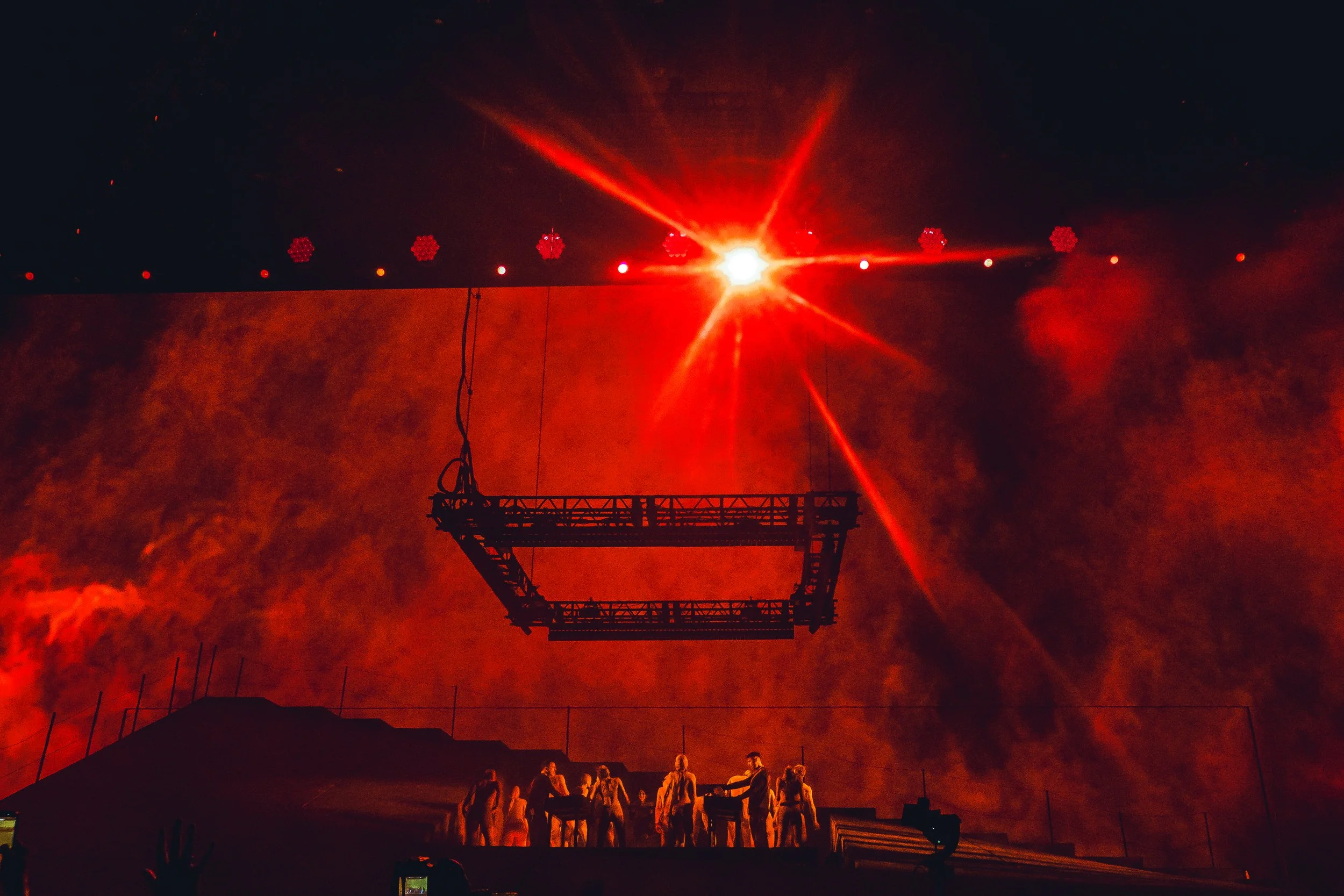
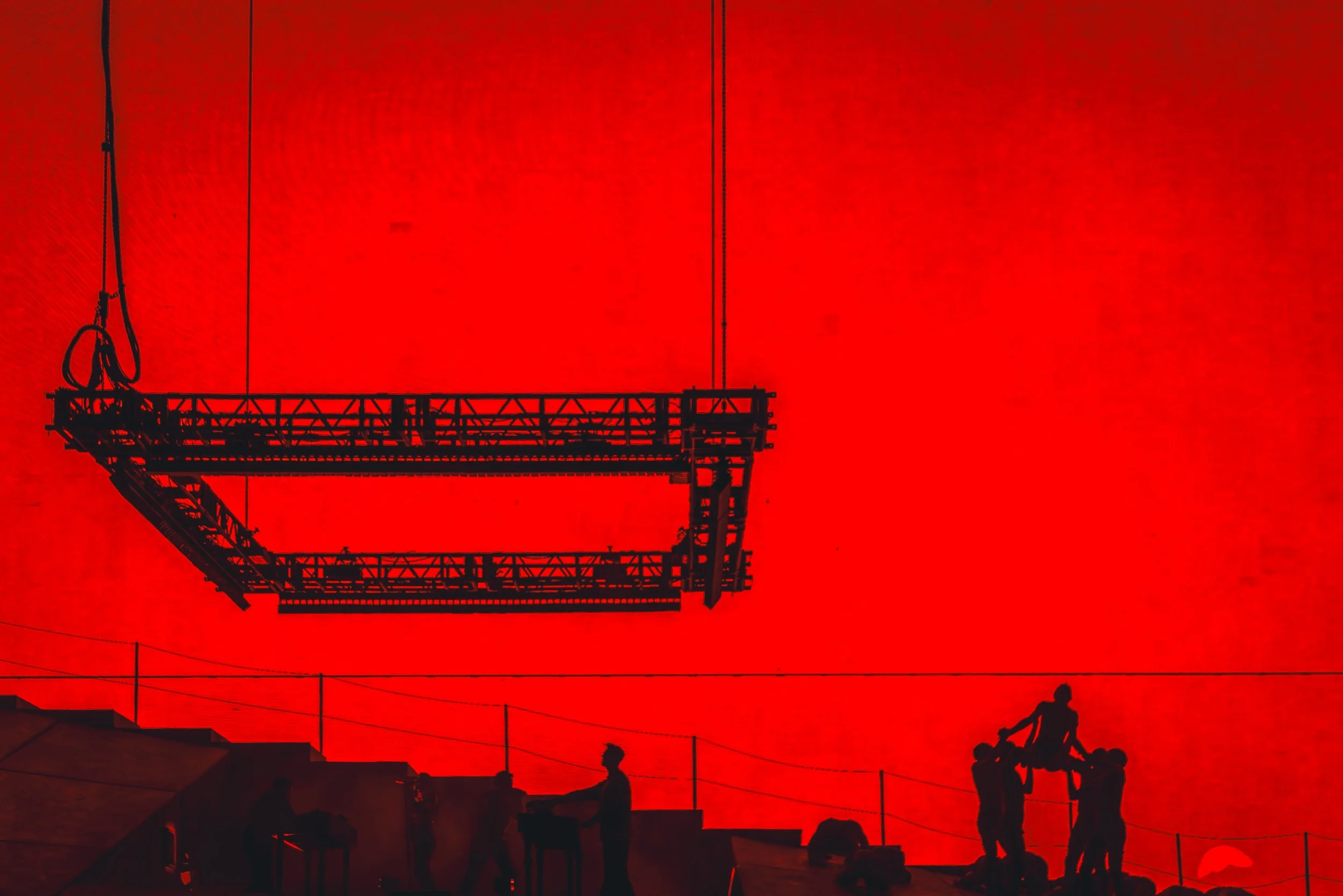
Defiant to the last, none of the songs you expect from a festival NIN set — "Head Like a Hole," "The Hand That Feeds," "Hurt" — made the setlist. Artists who hold to that kind of artistic integrity usually come across as overtly self-serious, their persona positioned above the paying audience that just shelled out $700 for a wristband. Reznor sidestepped the trap by giving the crowd a cohesive narrative worthy of the Globe Theater instead. The stage was a jagged angular mountain lit in piercing red — like the devil had come to earth and built his home in the crevices of the Aggro Crag from Nickelodeon's GUTS, with Hades and Persephone holding center.
The setlist was the script. "Vessel" opened on the body as a prison the throne couldn't escape. "She's Gone Away" pulled Persephone down into the dark. "Heresy” declared war on the gods above and claimed hell as home. "Parasite" arrived with Mariqueen leading, Persephone reframed as the predator. "Closer" arrived not just as the song your boomer parents conceived you to, but as Hades and Persephone turning toward each other in mutual desecration while the room collapsed around them. "The Warning" delivered the apocalypse. "Came Back Haunted" was the failed escape. And finally, closing on "As Alive as You Need Me to Be" — the marriage at the center of the underworld, surviving as their once loyal followers surrounds them in the inevitable fall from grace. The most challenging set of the weekend, given by the man whose meme is wanting you to have a bad time, who somehow gave the room the most fun it had all three nights.
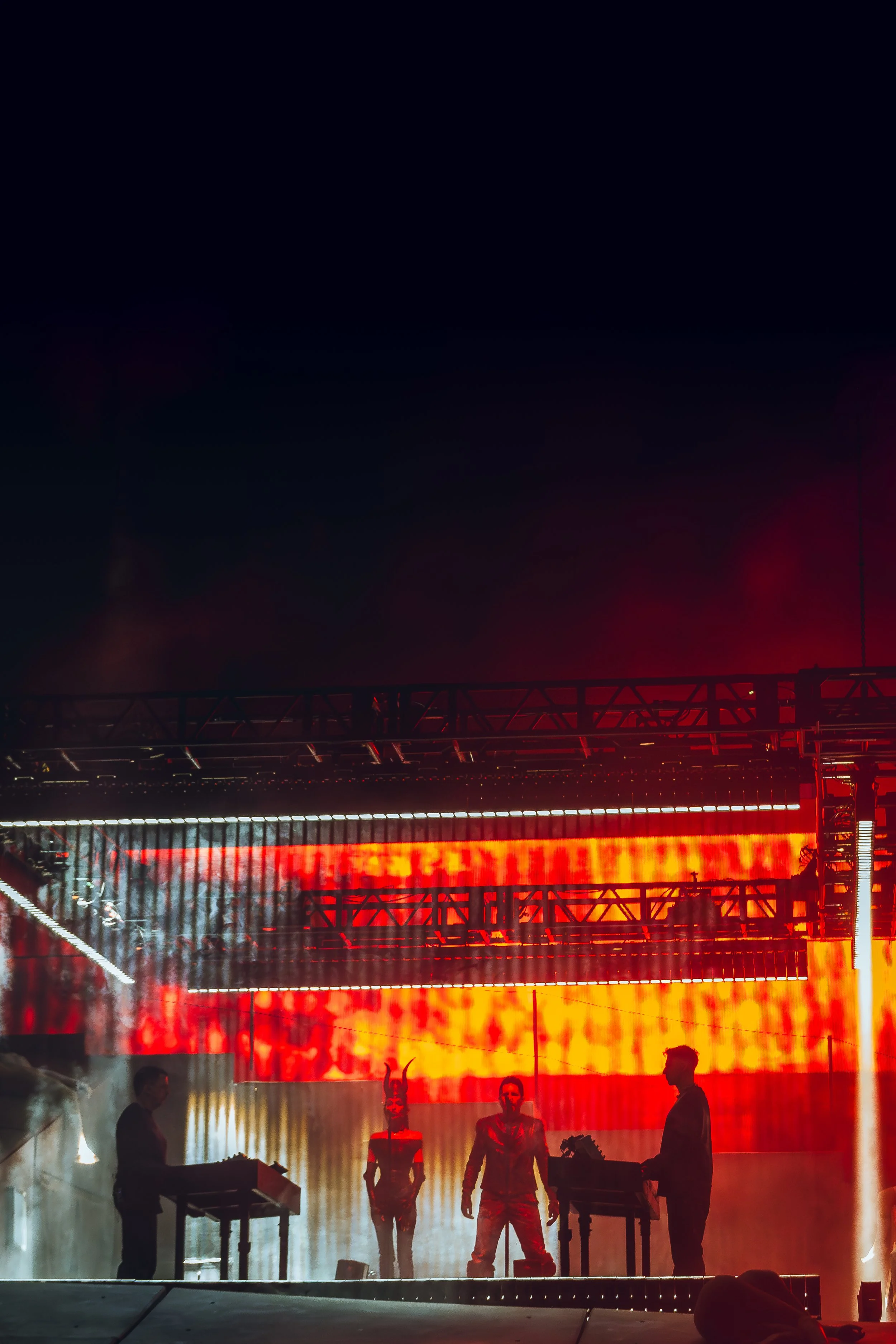
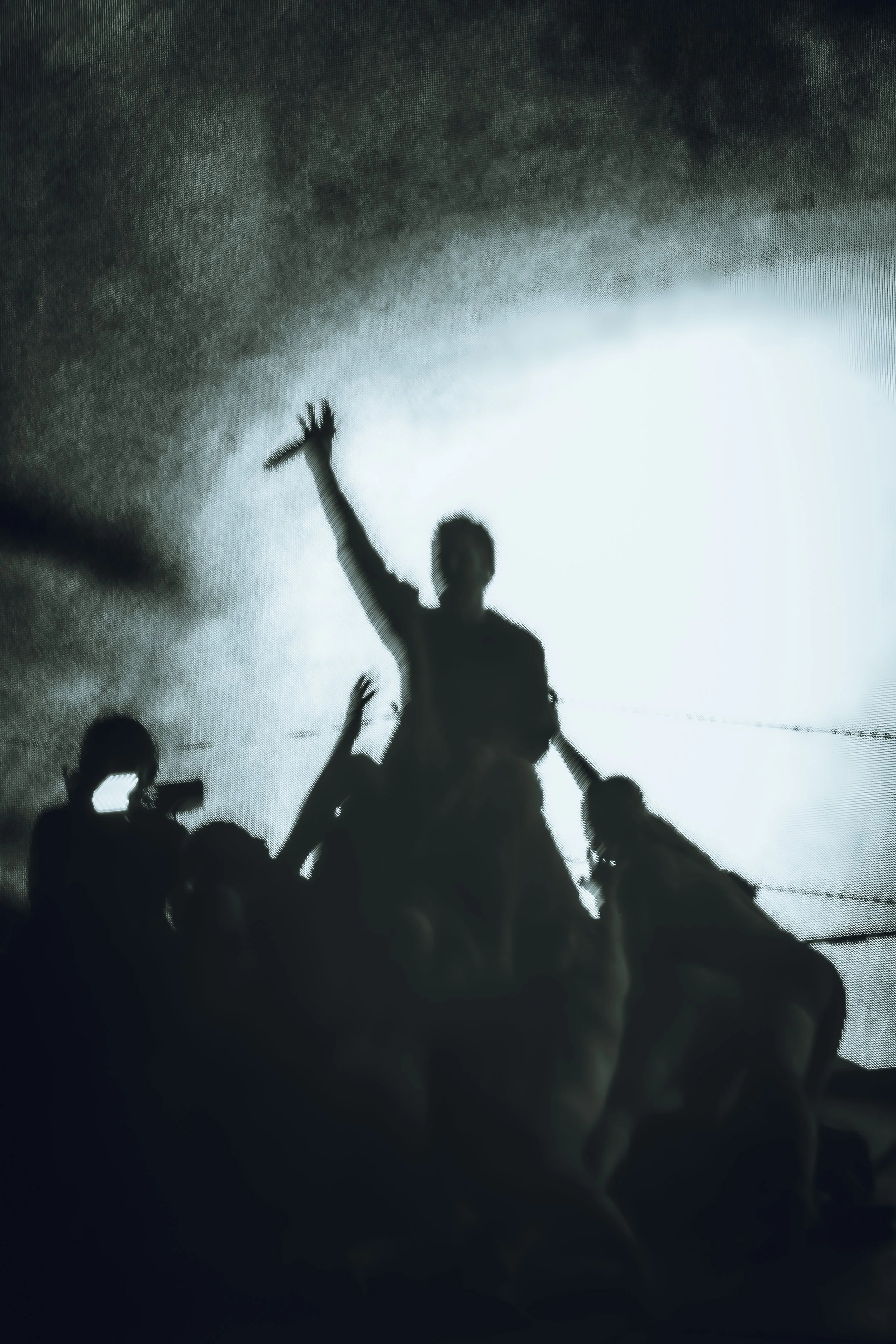
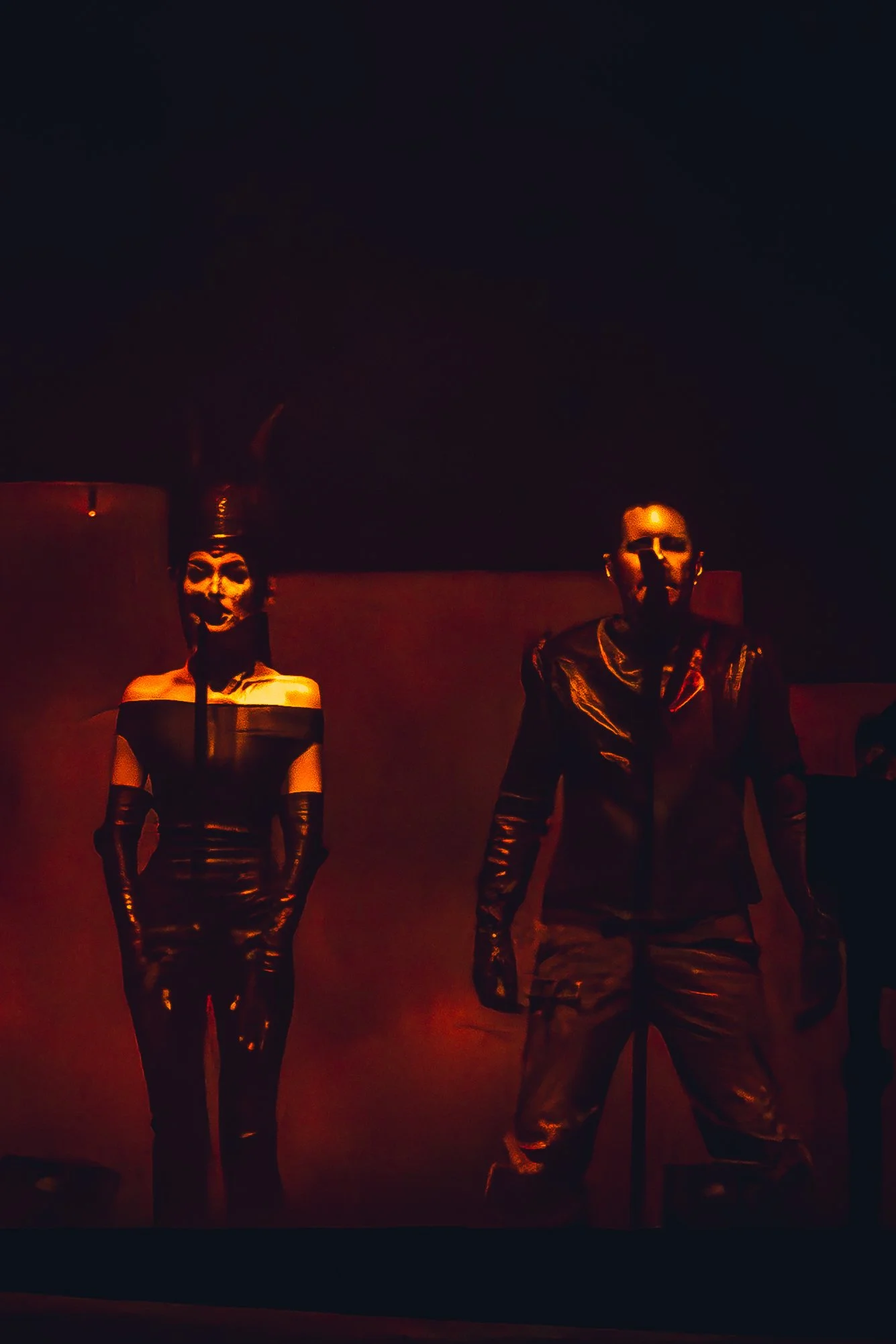
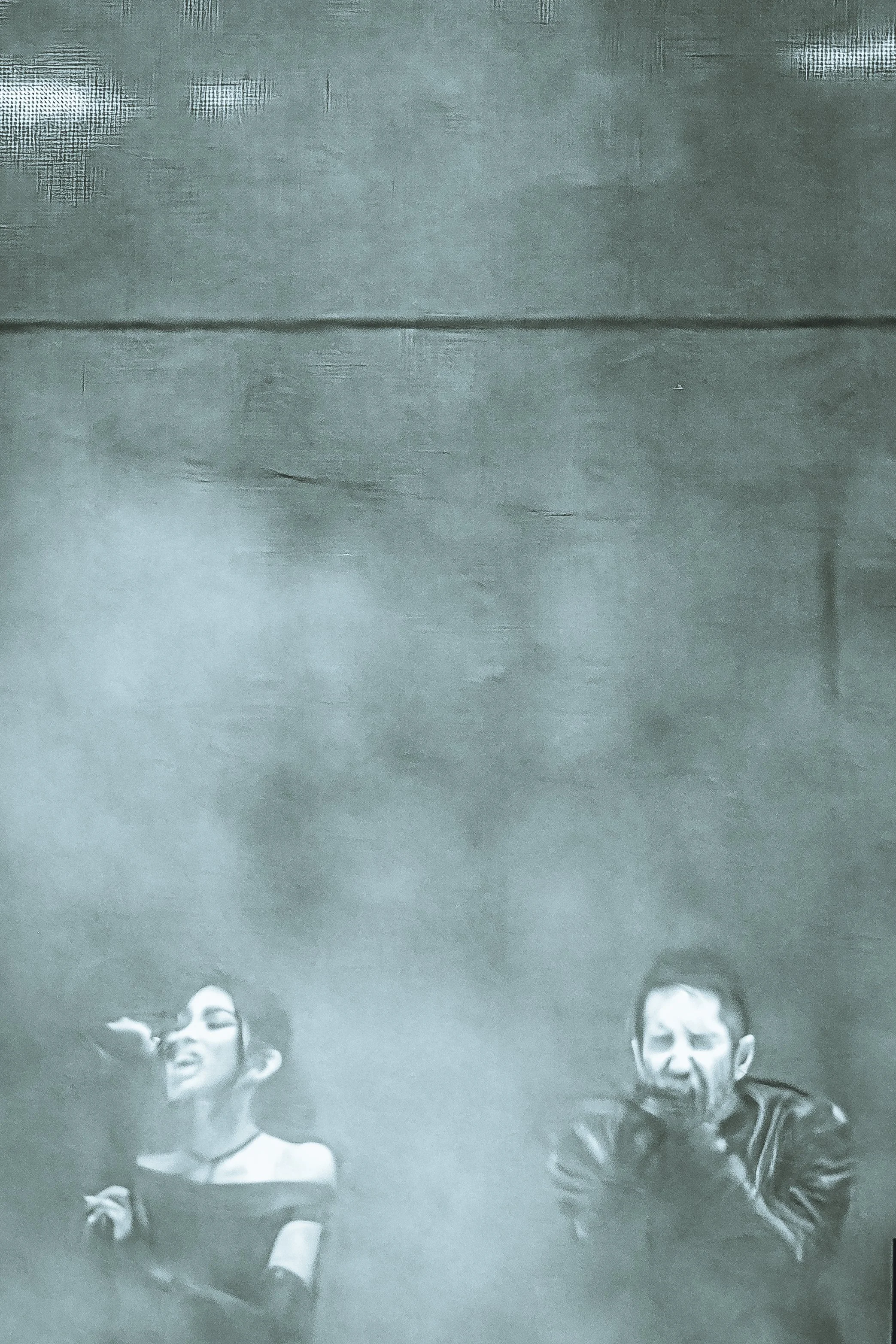
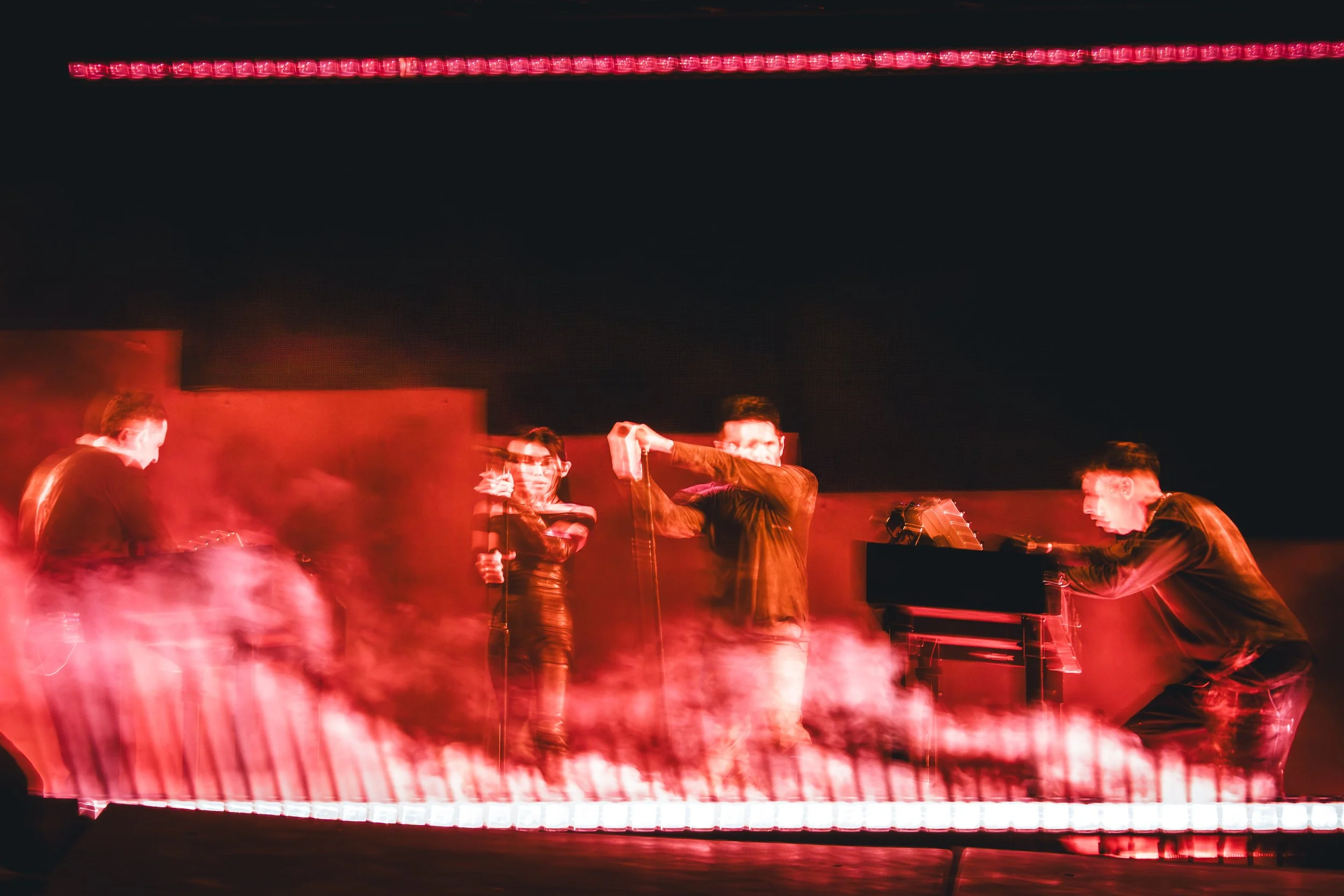
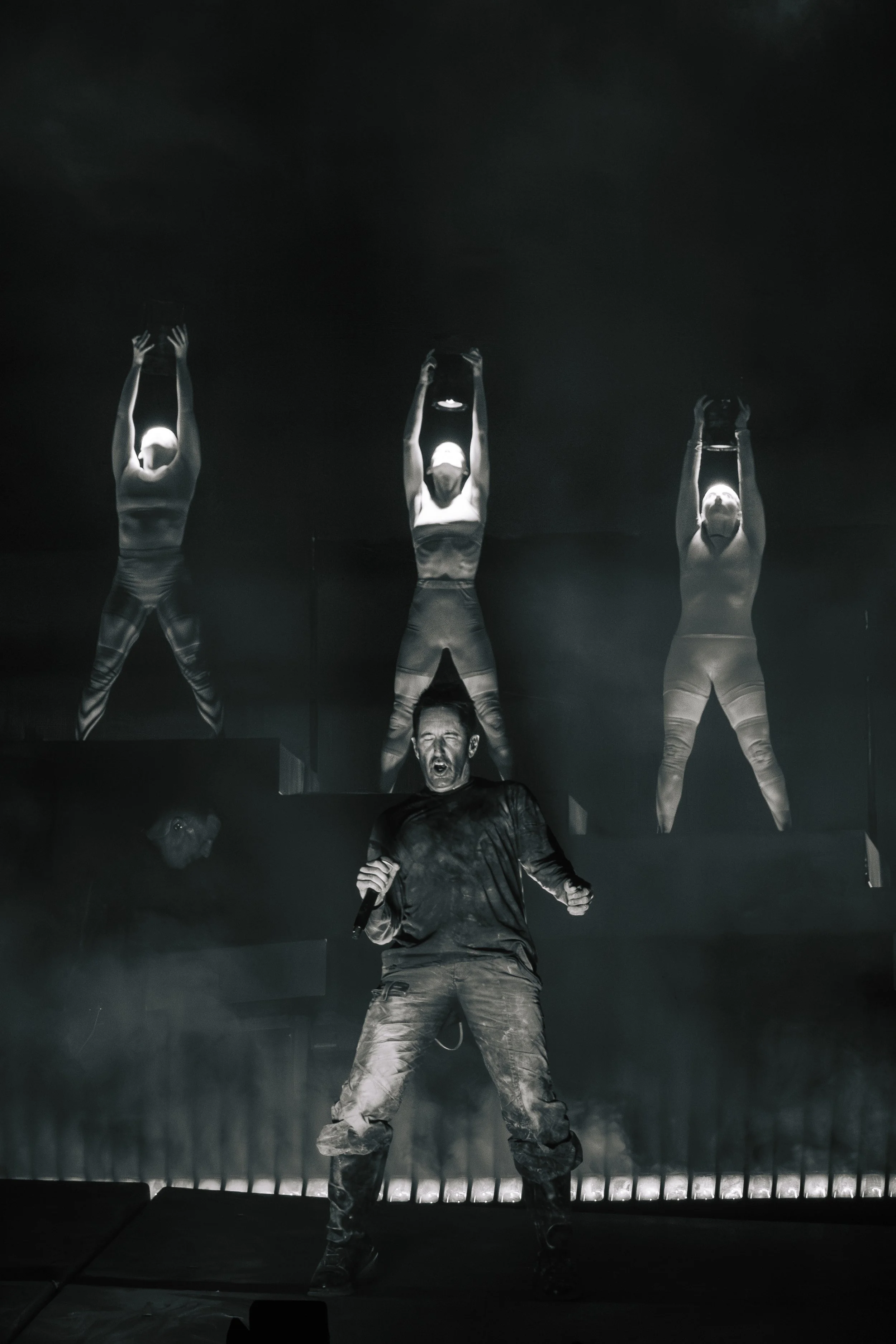
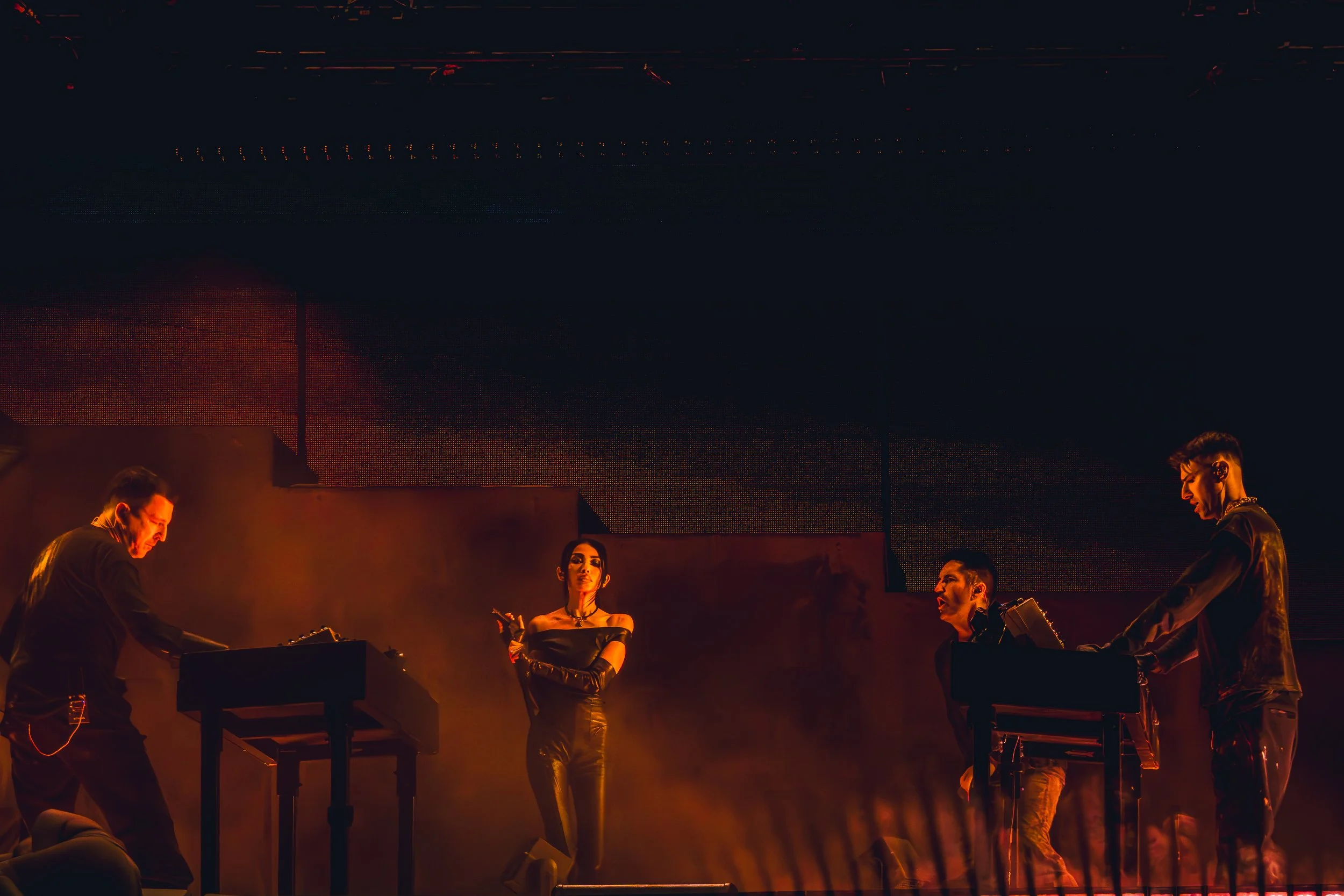
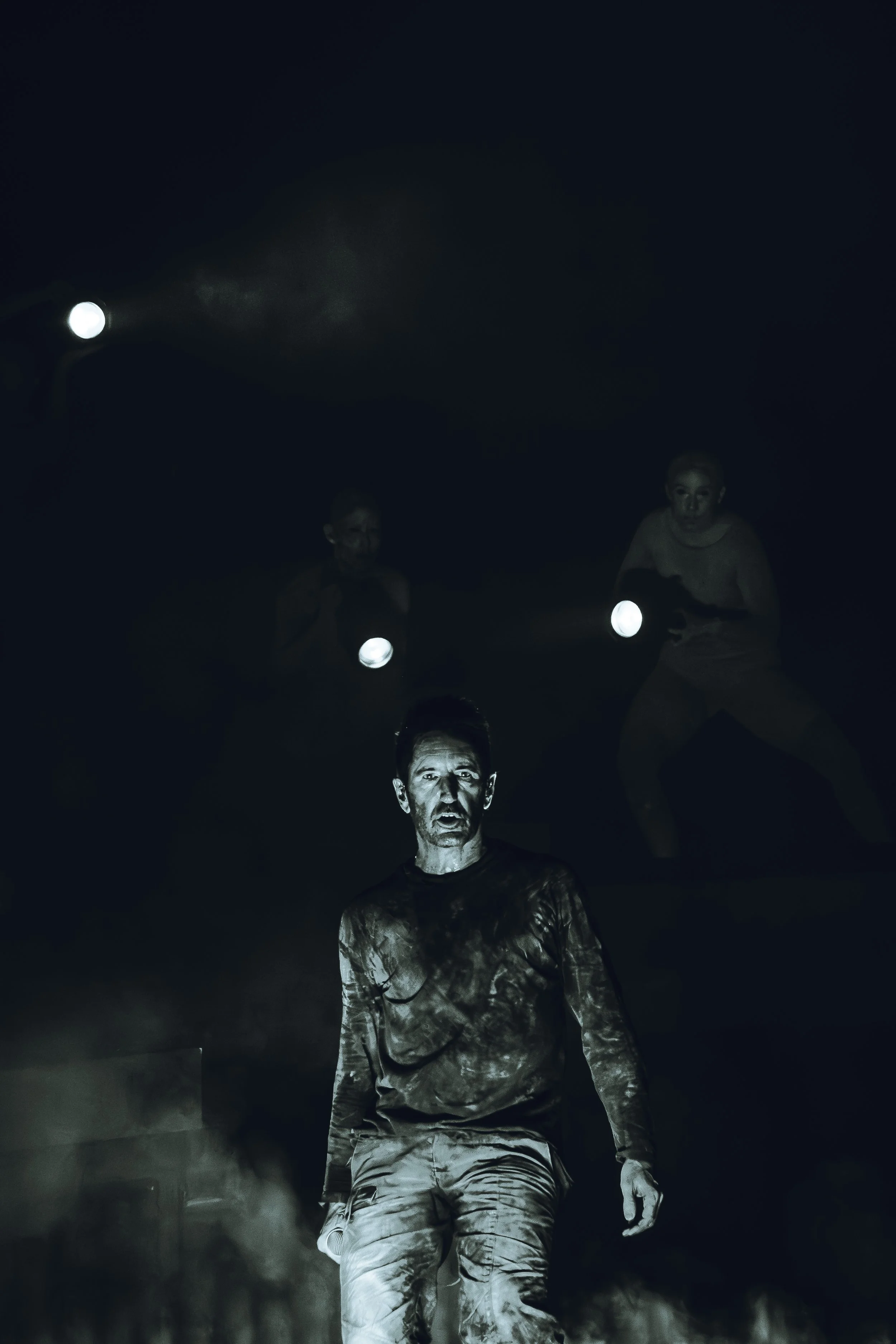
Late in the set, NIN played the live debut of a Soft Cell cover — "Memorabilia," the 1981 single from the synth-pop record that built the road industrial would later walk down. It's the type of choice that one of Reznor's key influences, David Bowie, made a whole career out of. Reznor gets called the godfather of industrial, electronic, and arena-scale spectacle. The more accurate parallel is Bowie: an artist whose primary commitment is reinvention through theatrical risk, always slightly ahead of the moment in which you encounter him. The impulse behind Ziggy Stardust, Aladdin Sane, and the Thin White Duke is the same one behind the original "Closer" video, the Lost Highway score, and the cursed marriage at the center of a Sahara Tent stage in a beam of red light. At sixty years old, a grizzled veteran who has powered through his empire of dirt, still refusing to be the man everyone wants him to be.
DAVID BYRNE
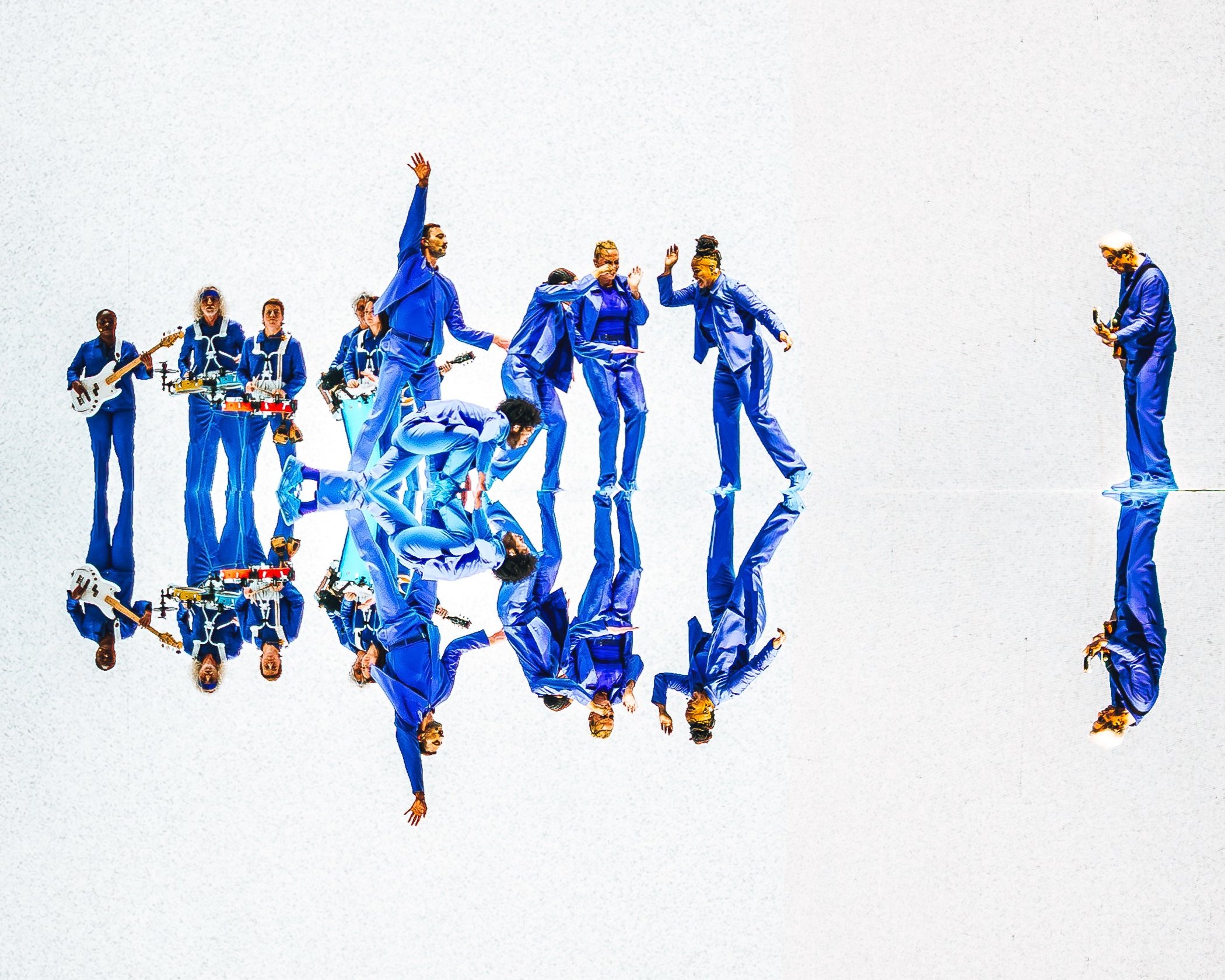
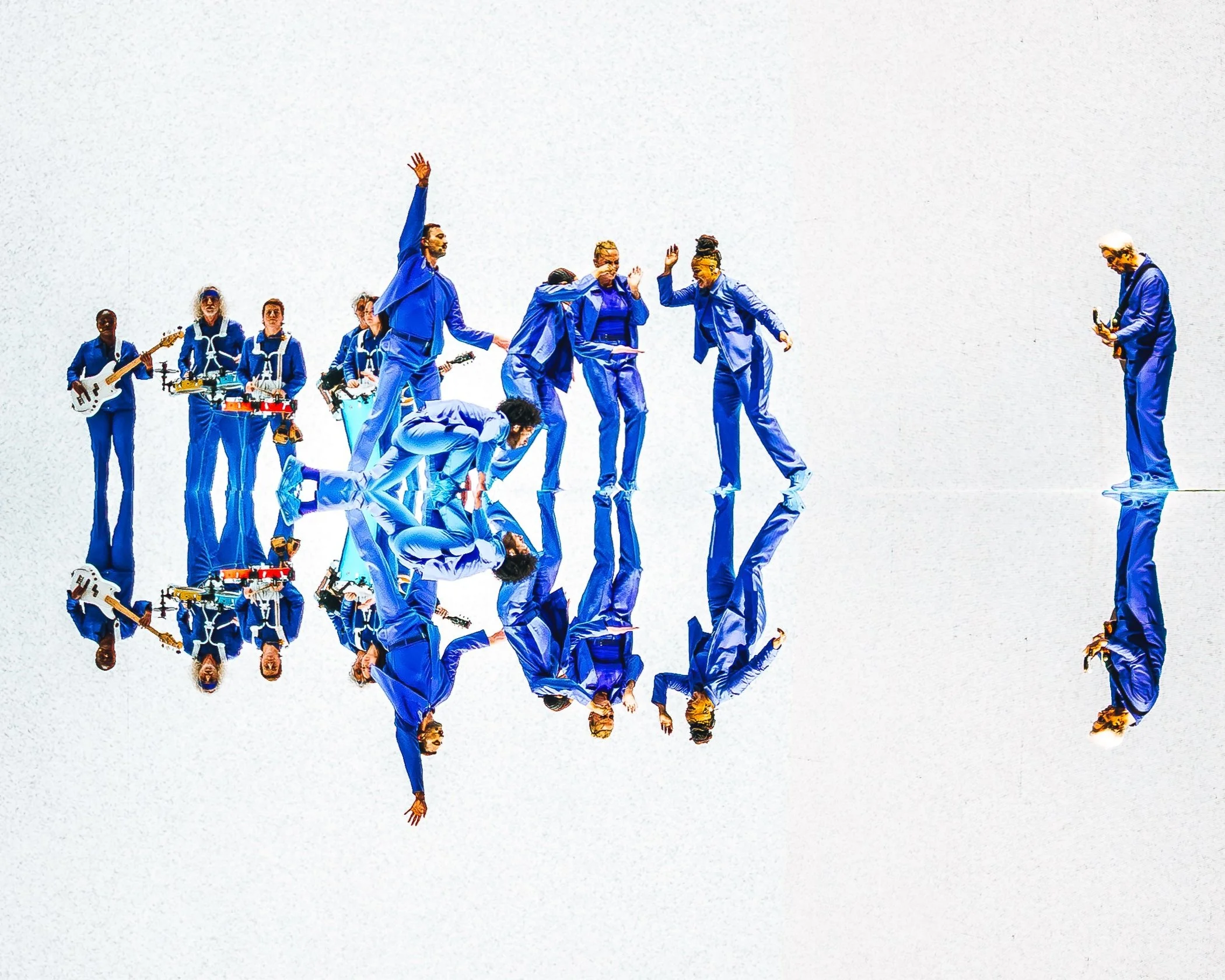
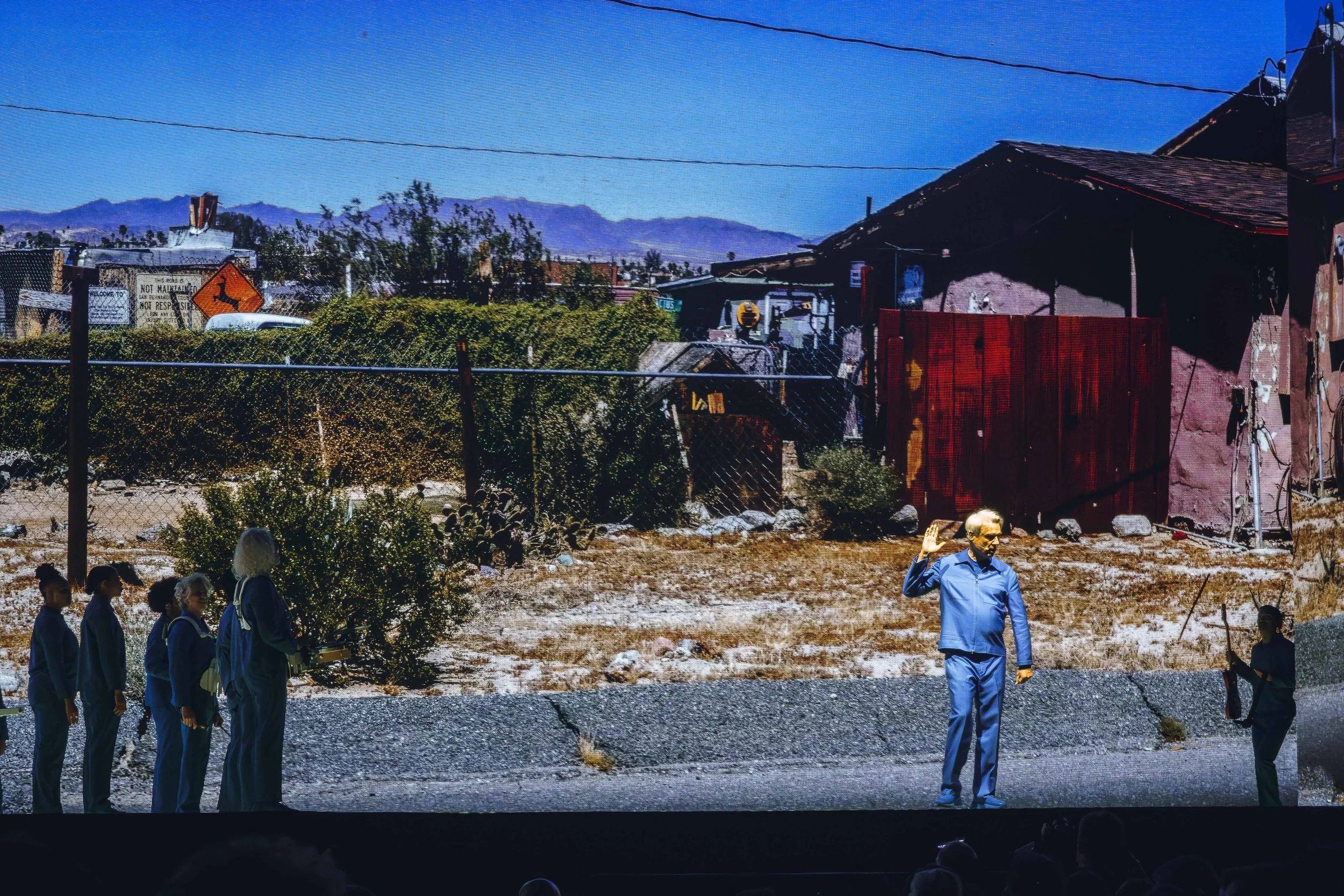
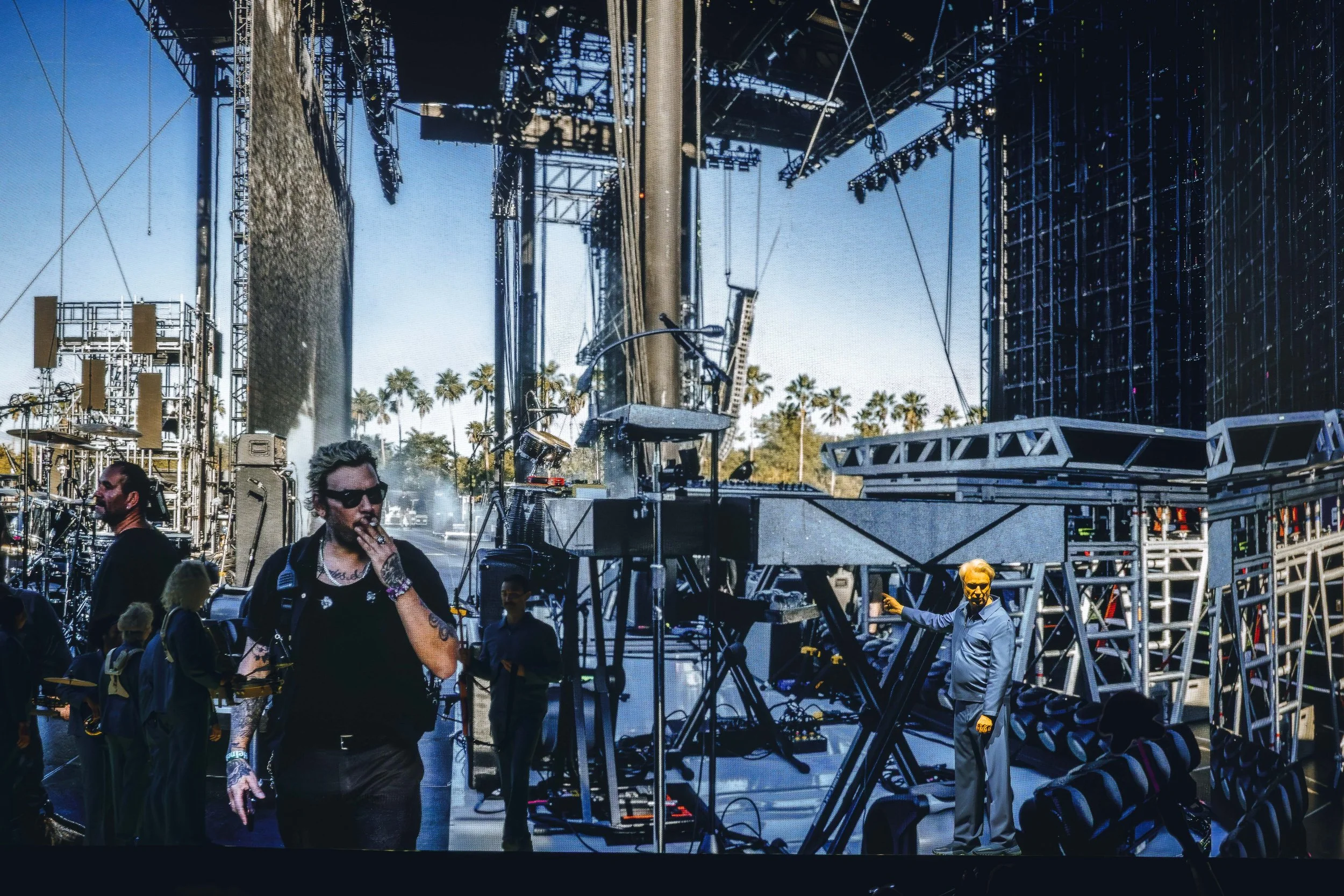
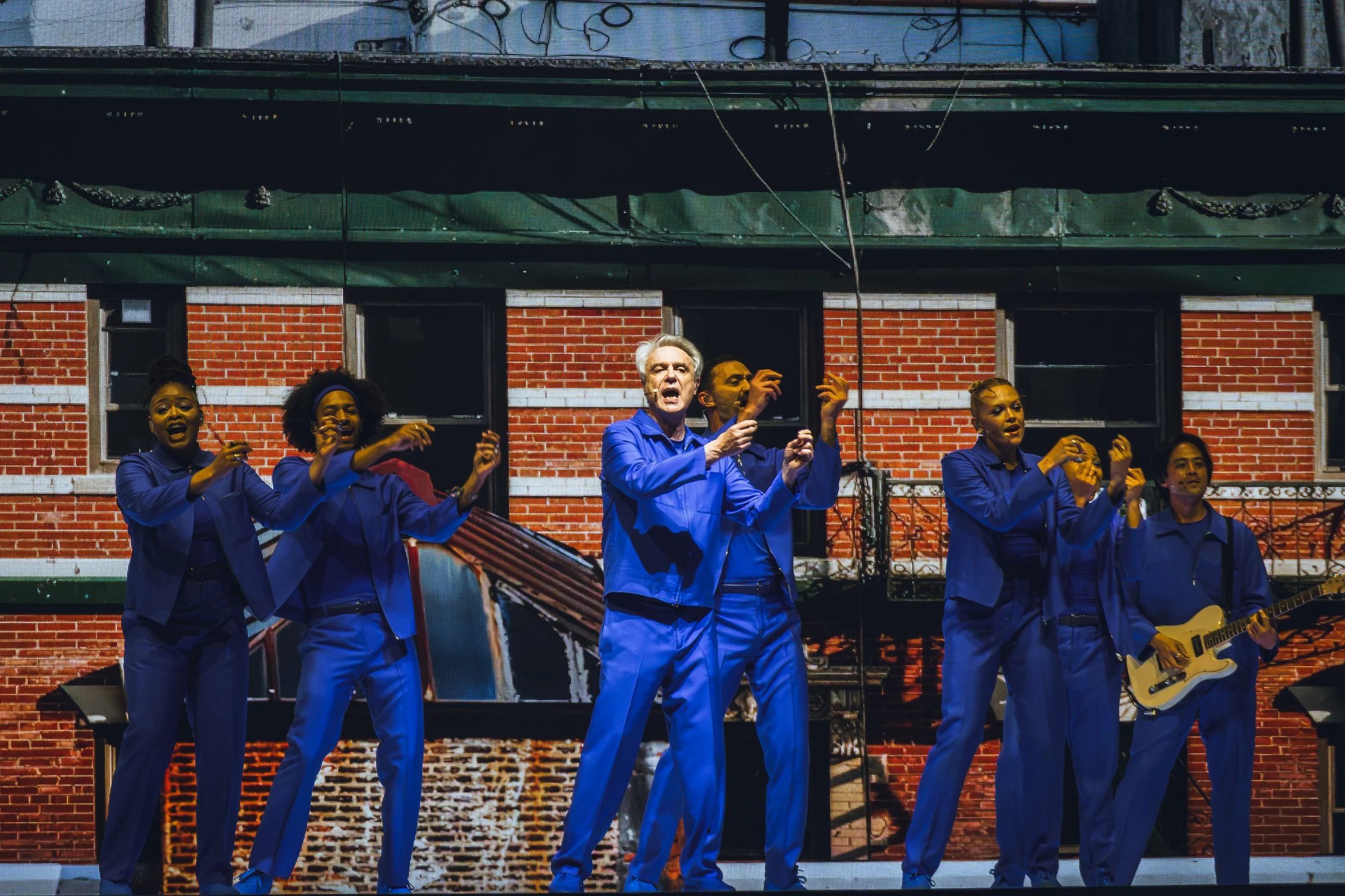
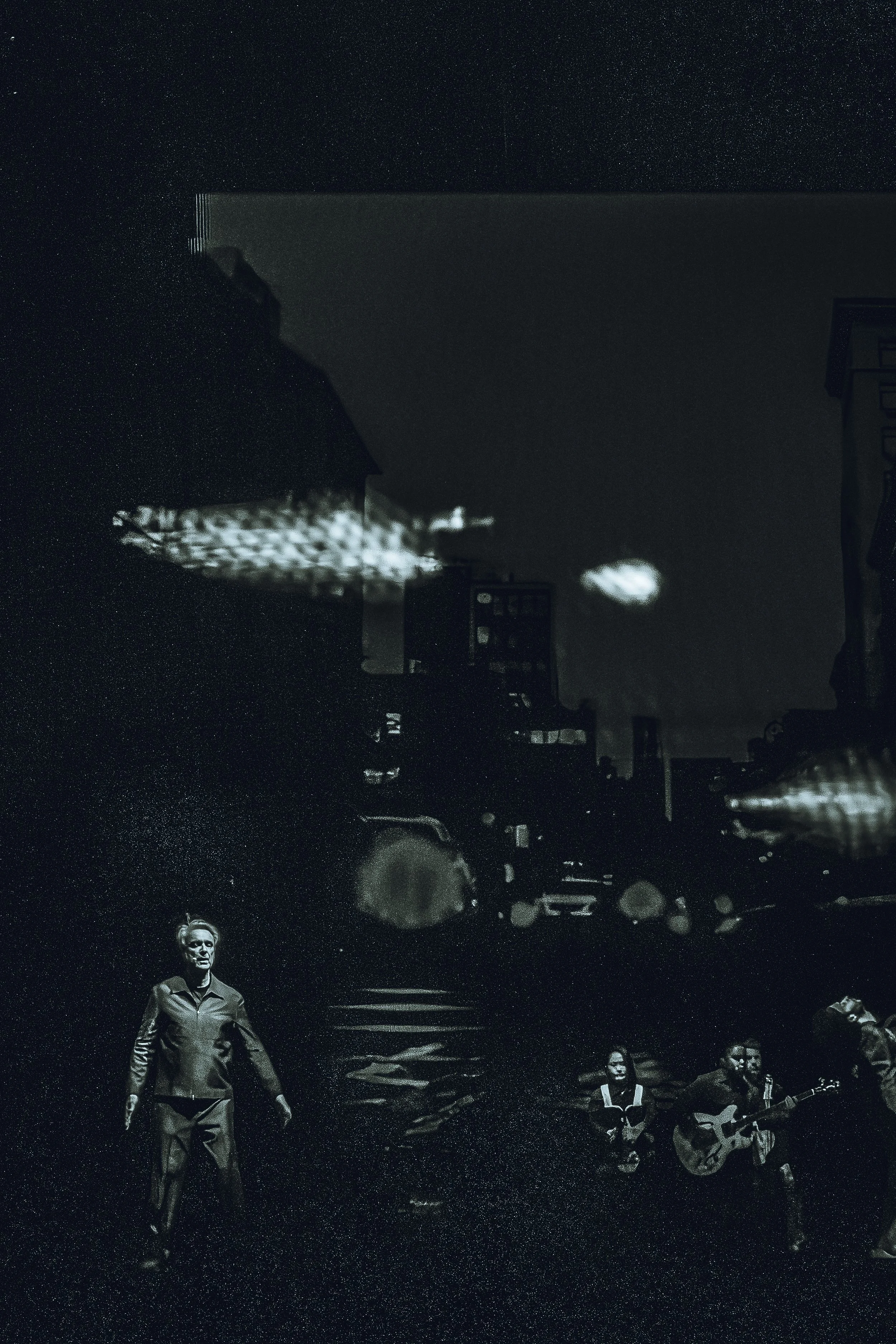
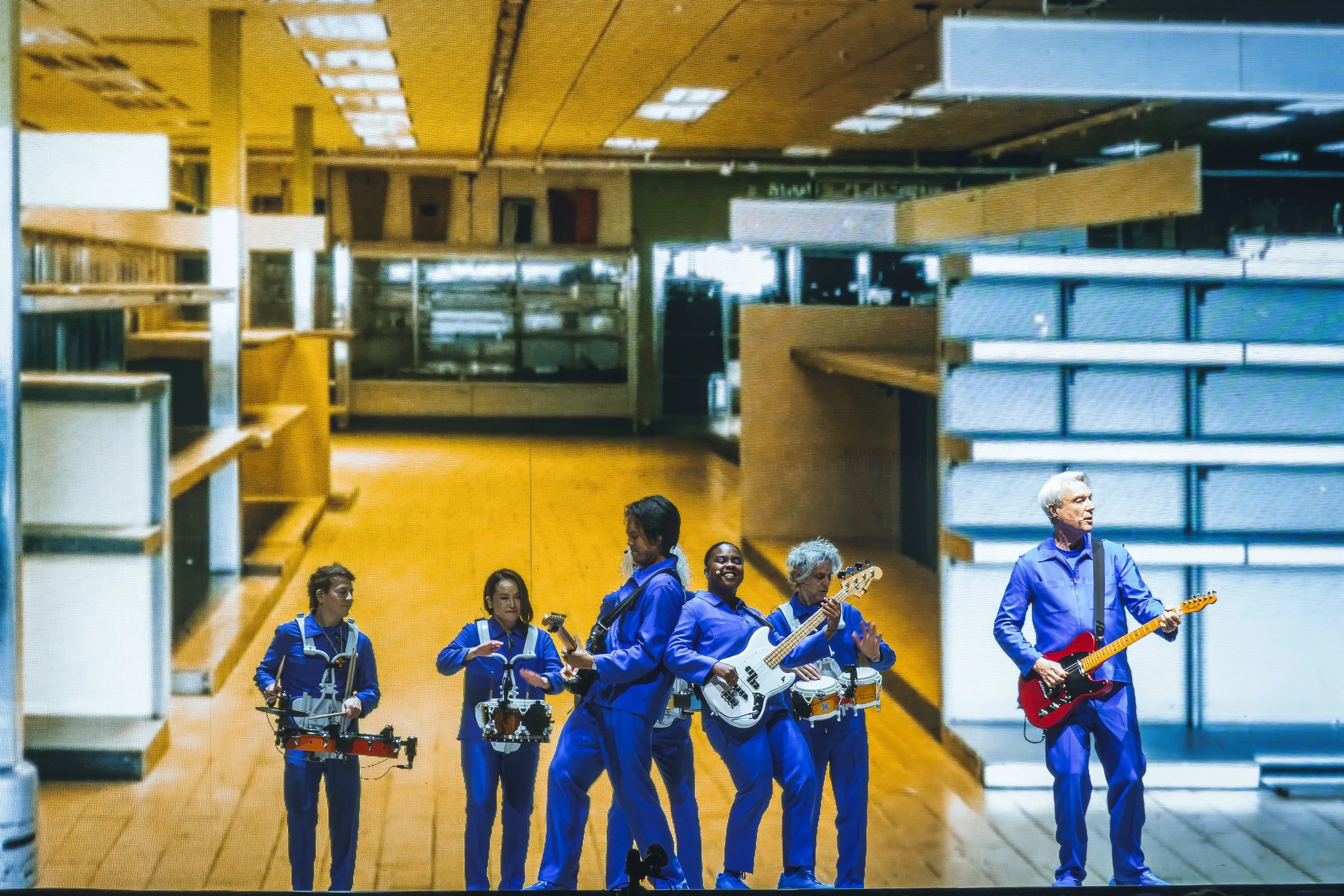
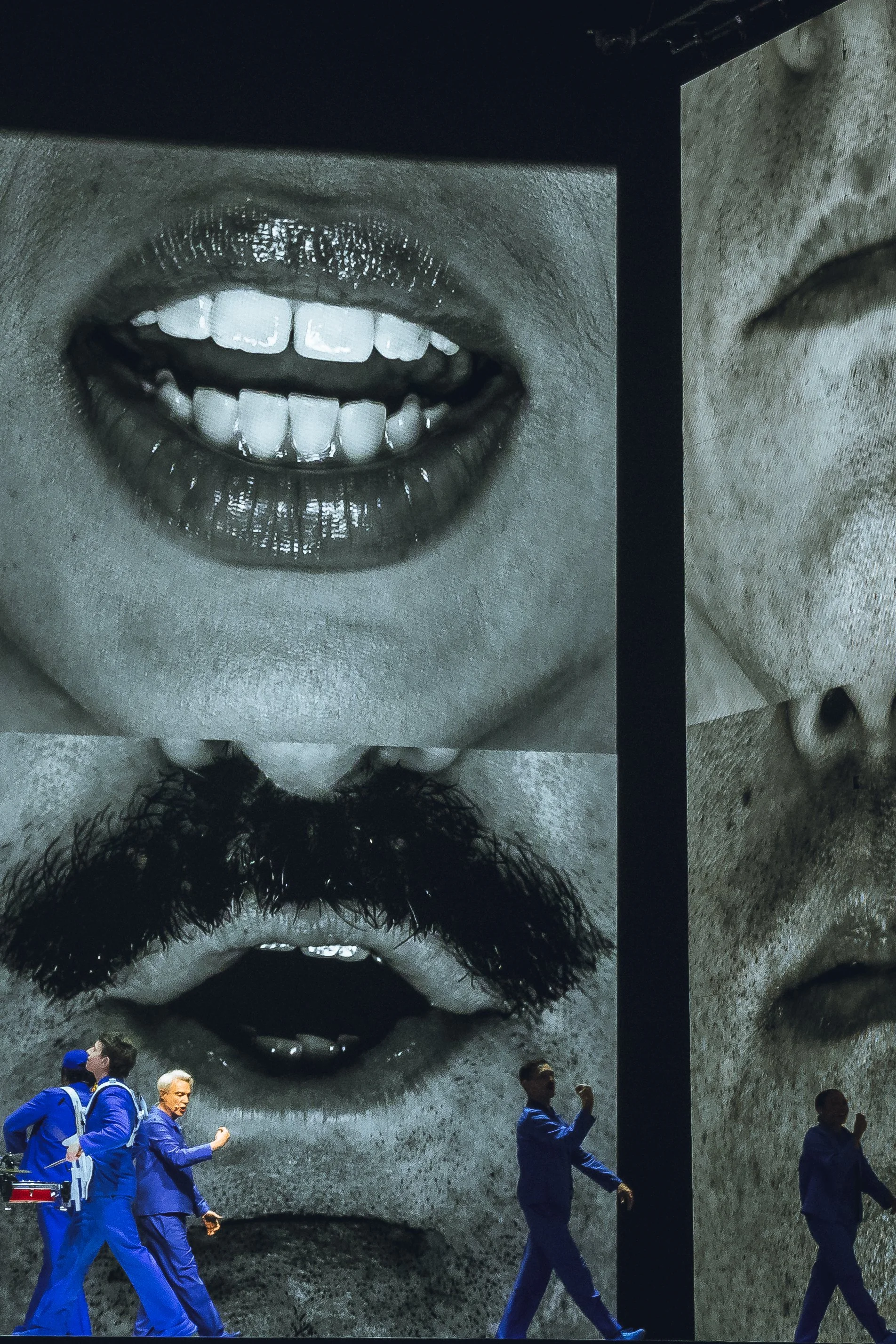
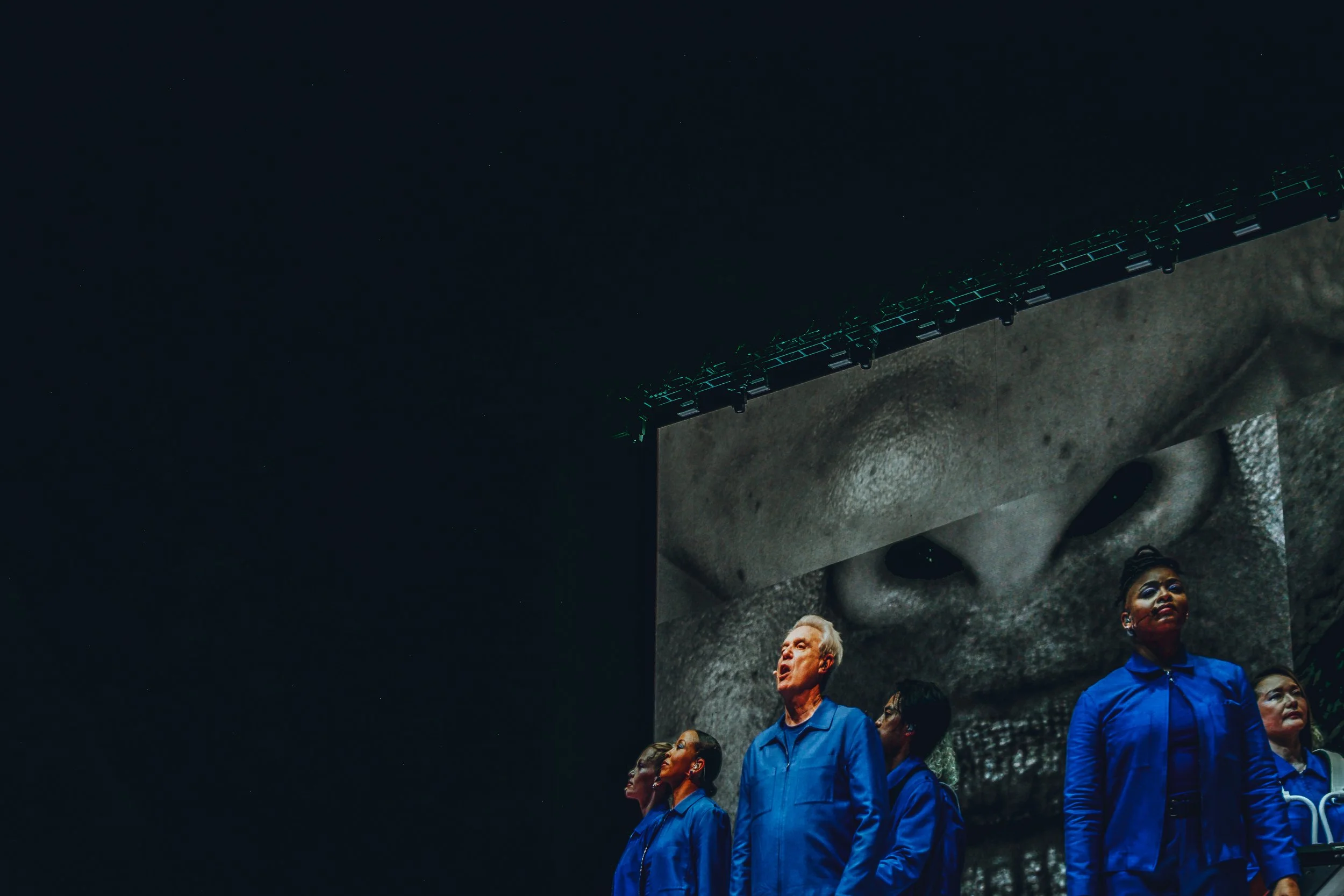
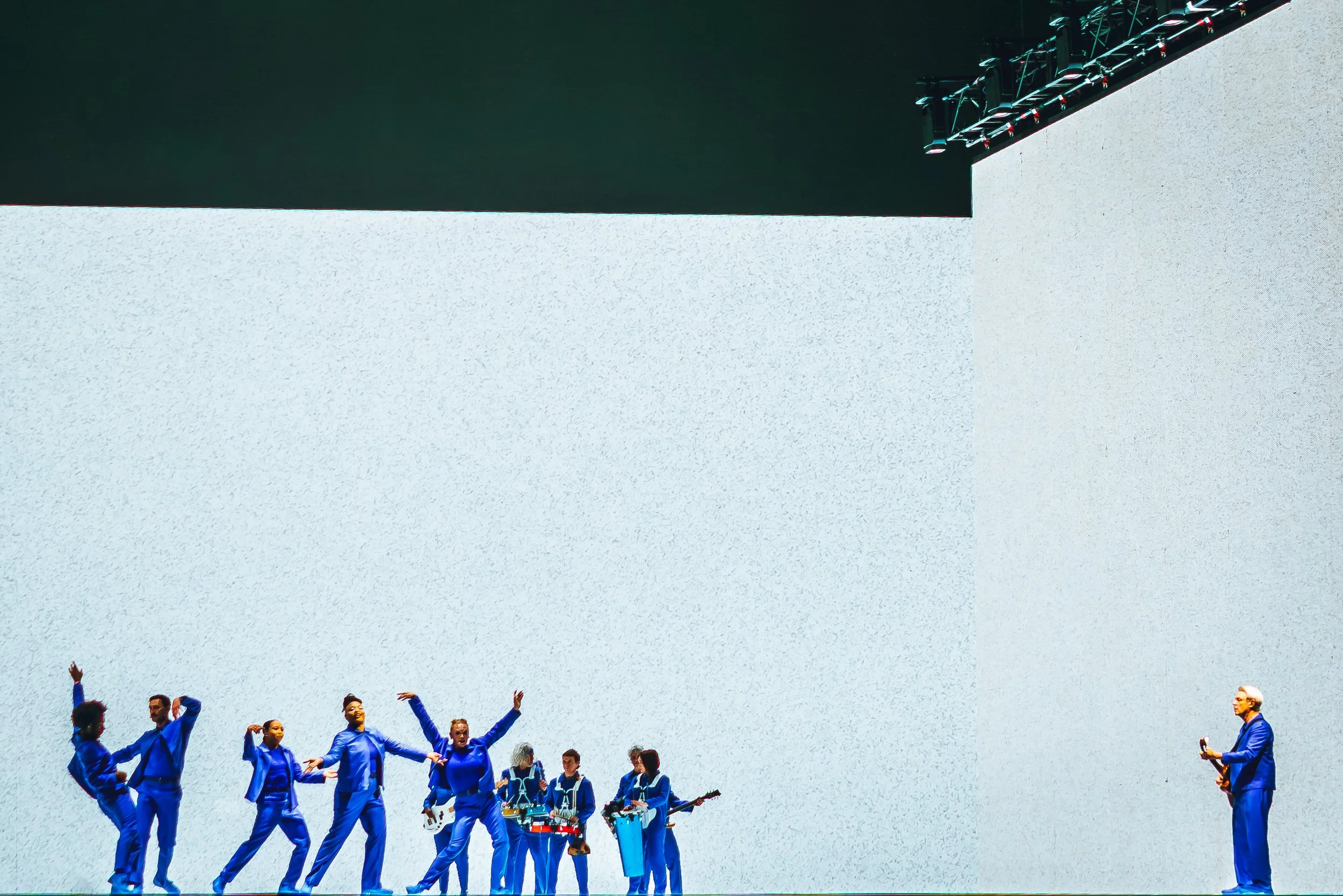
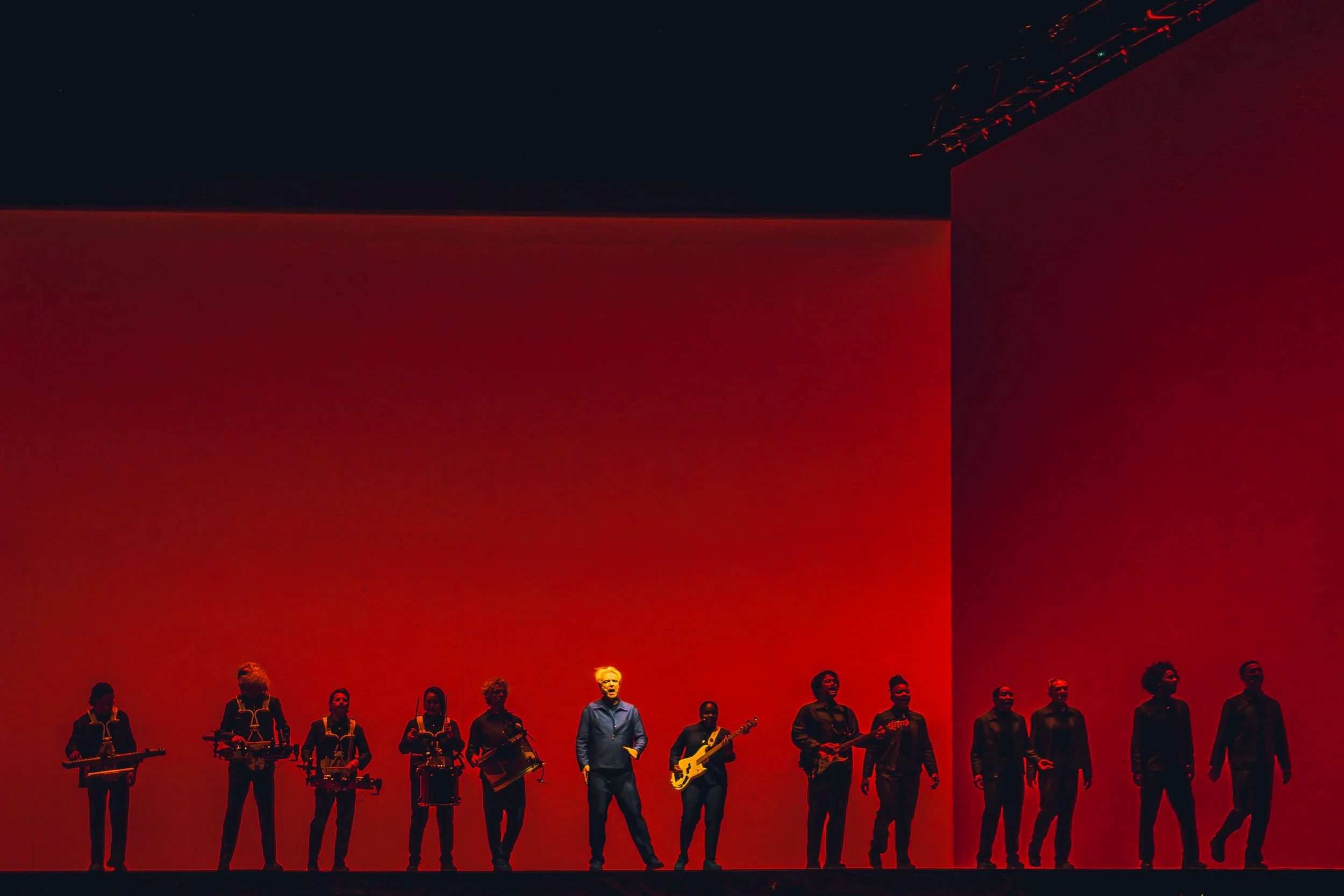
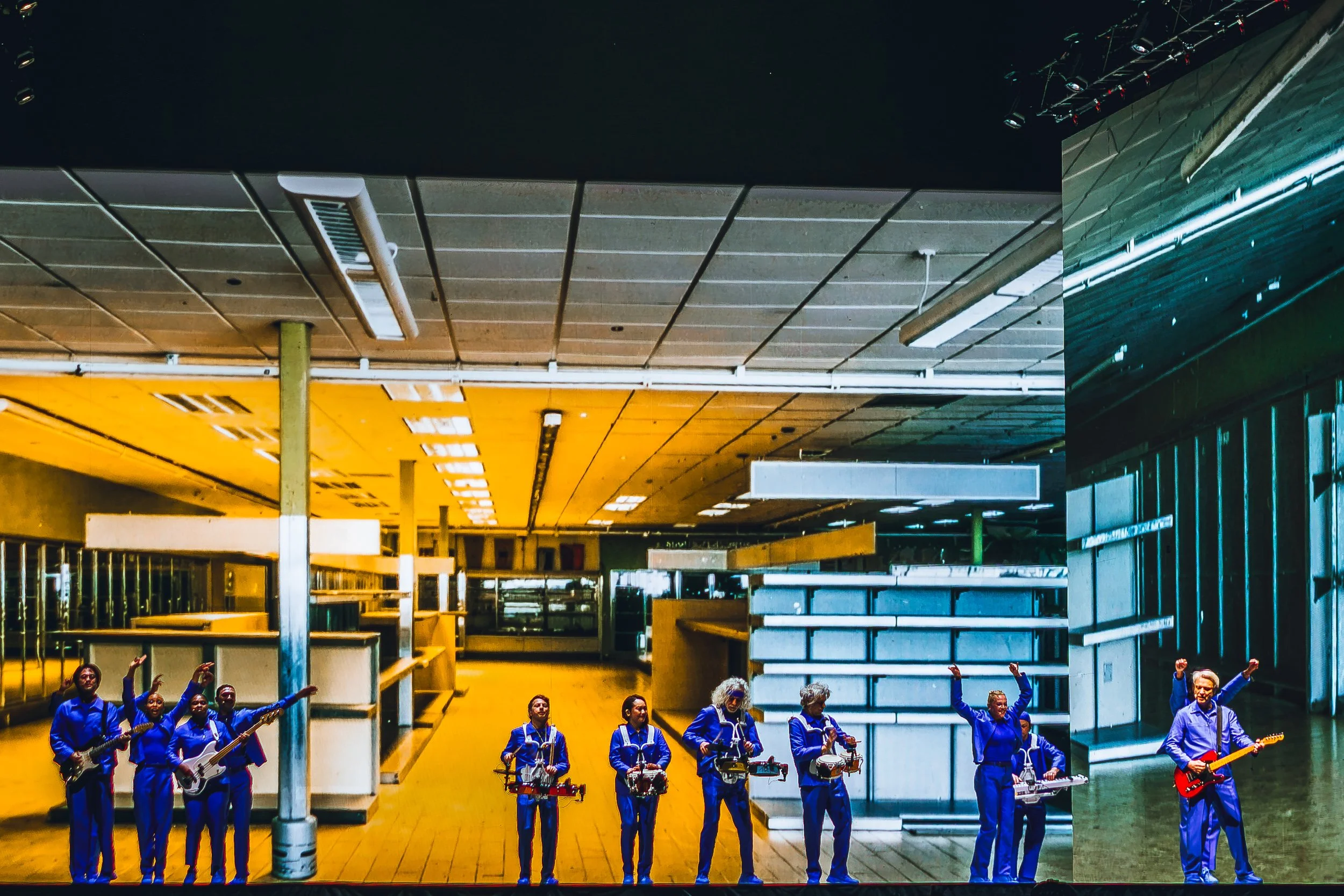
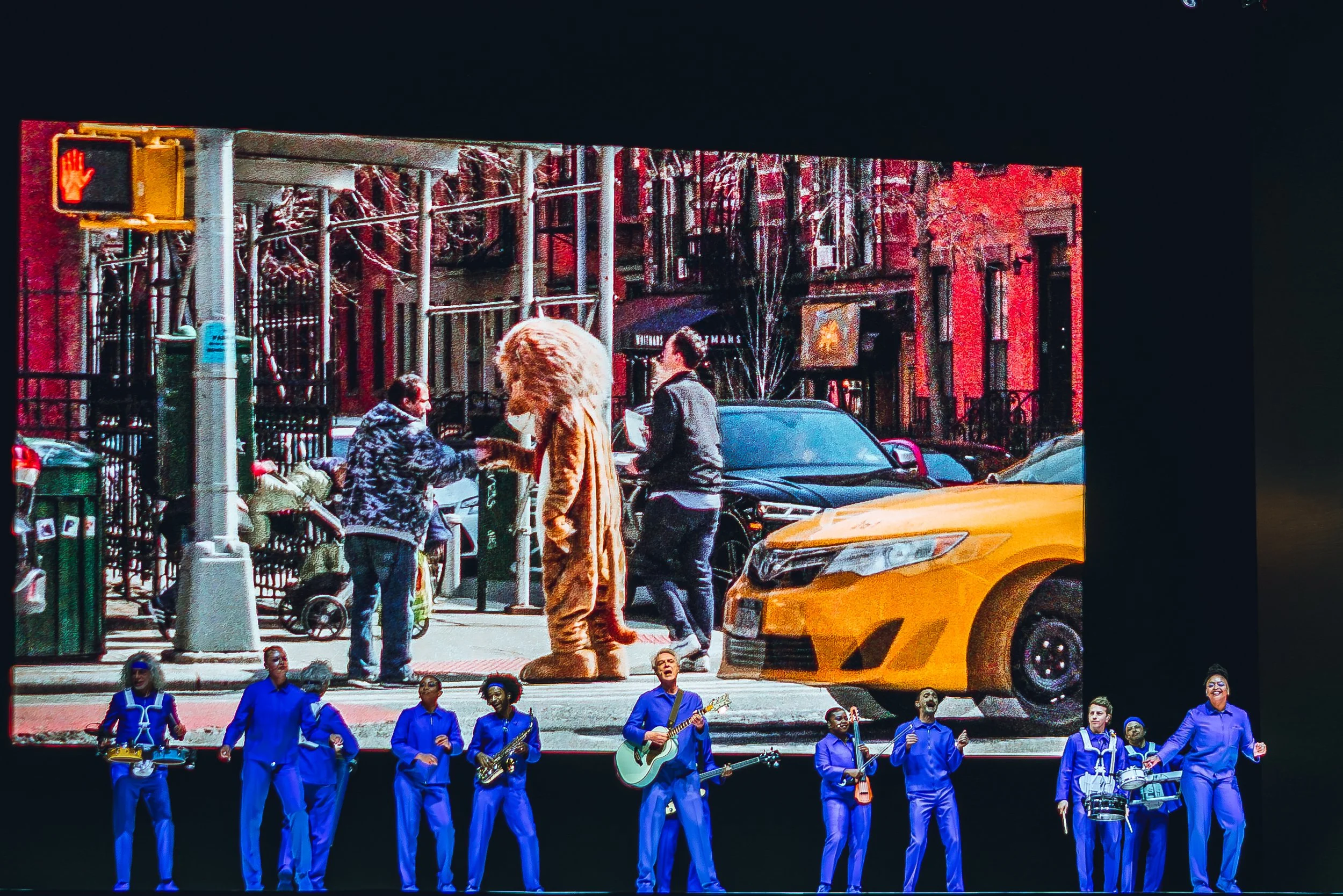
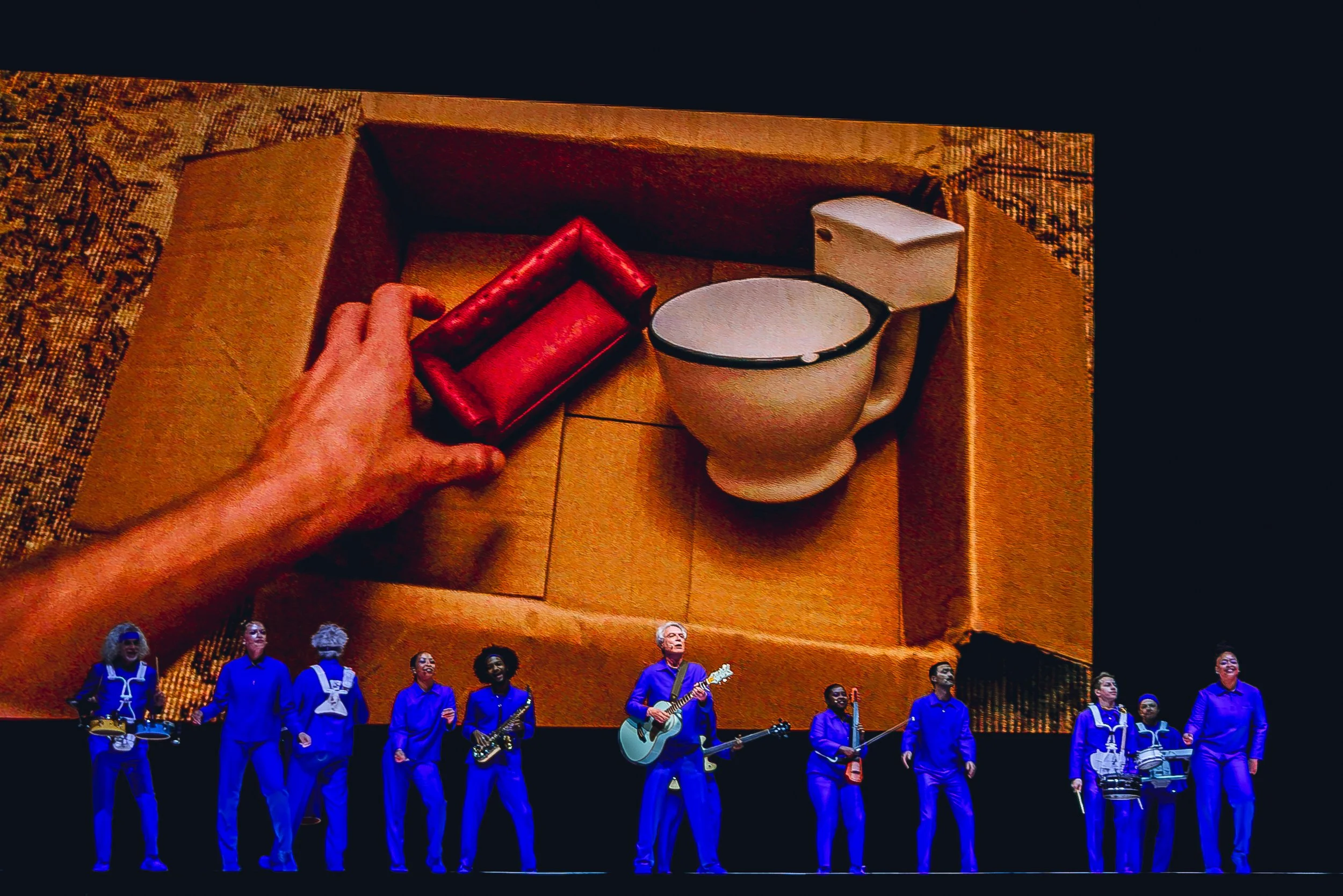
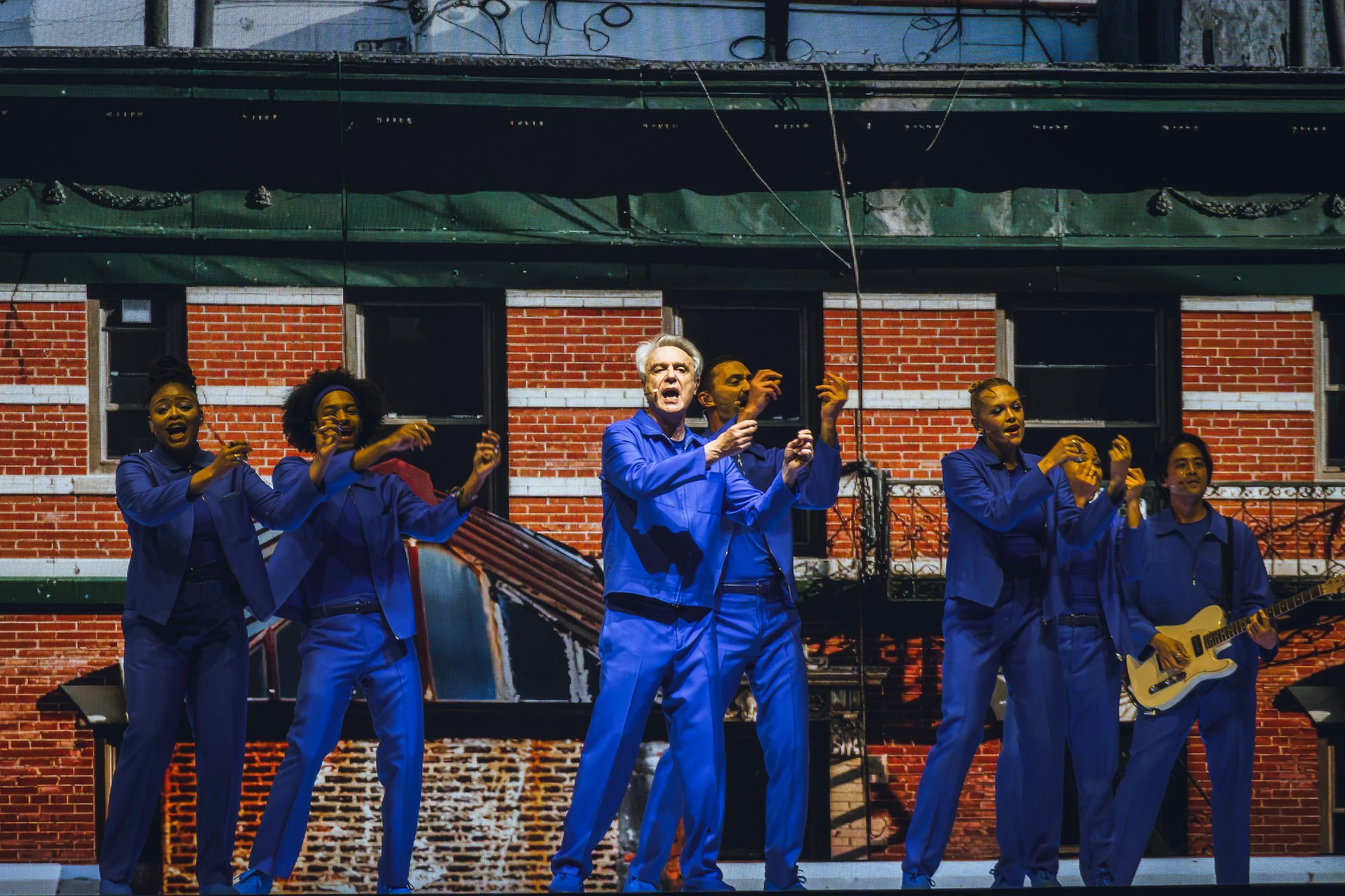
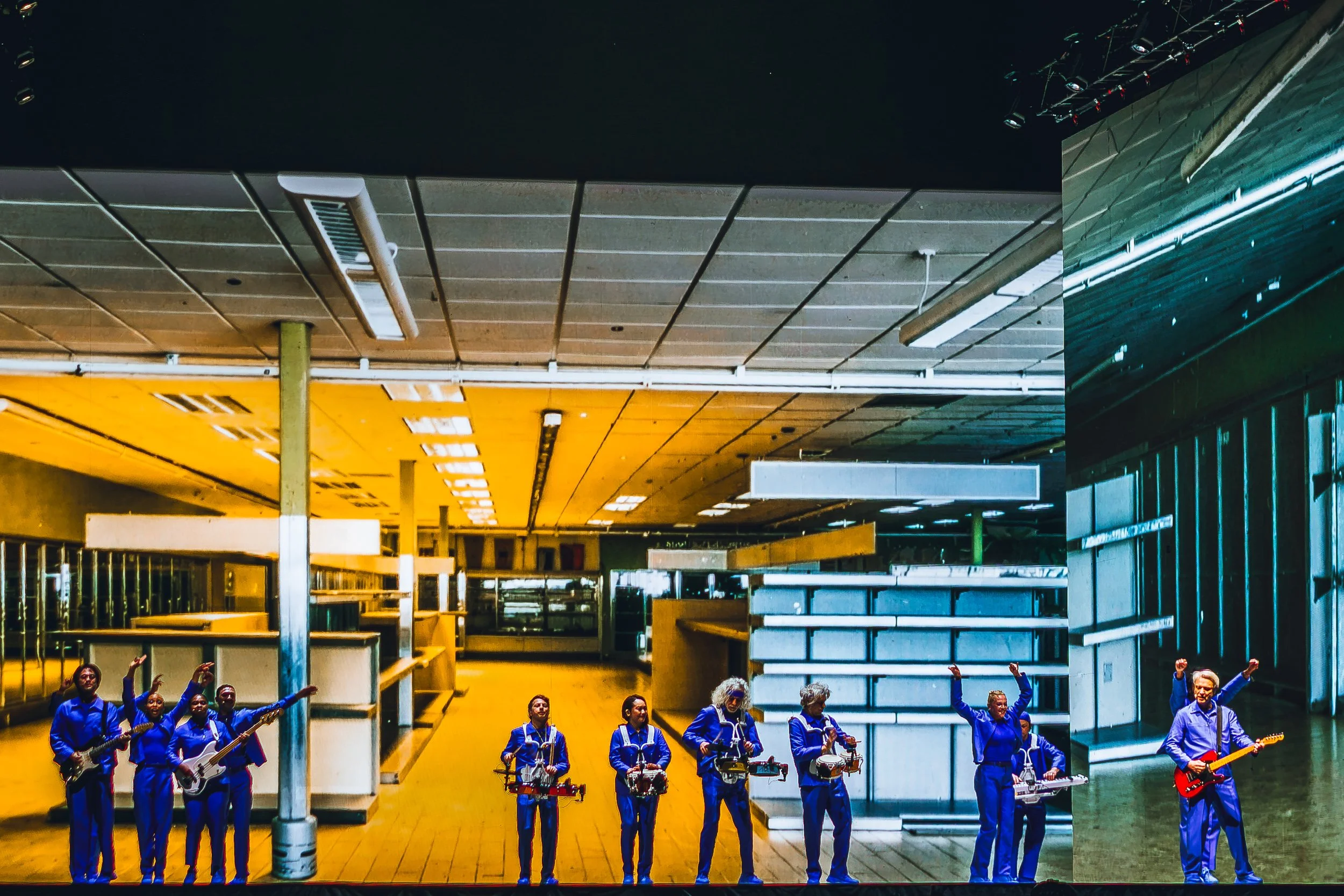
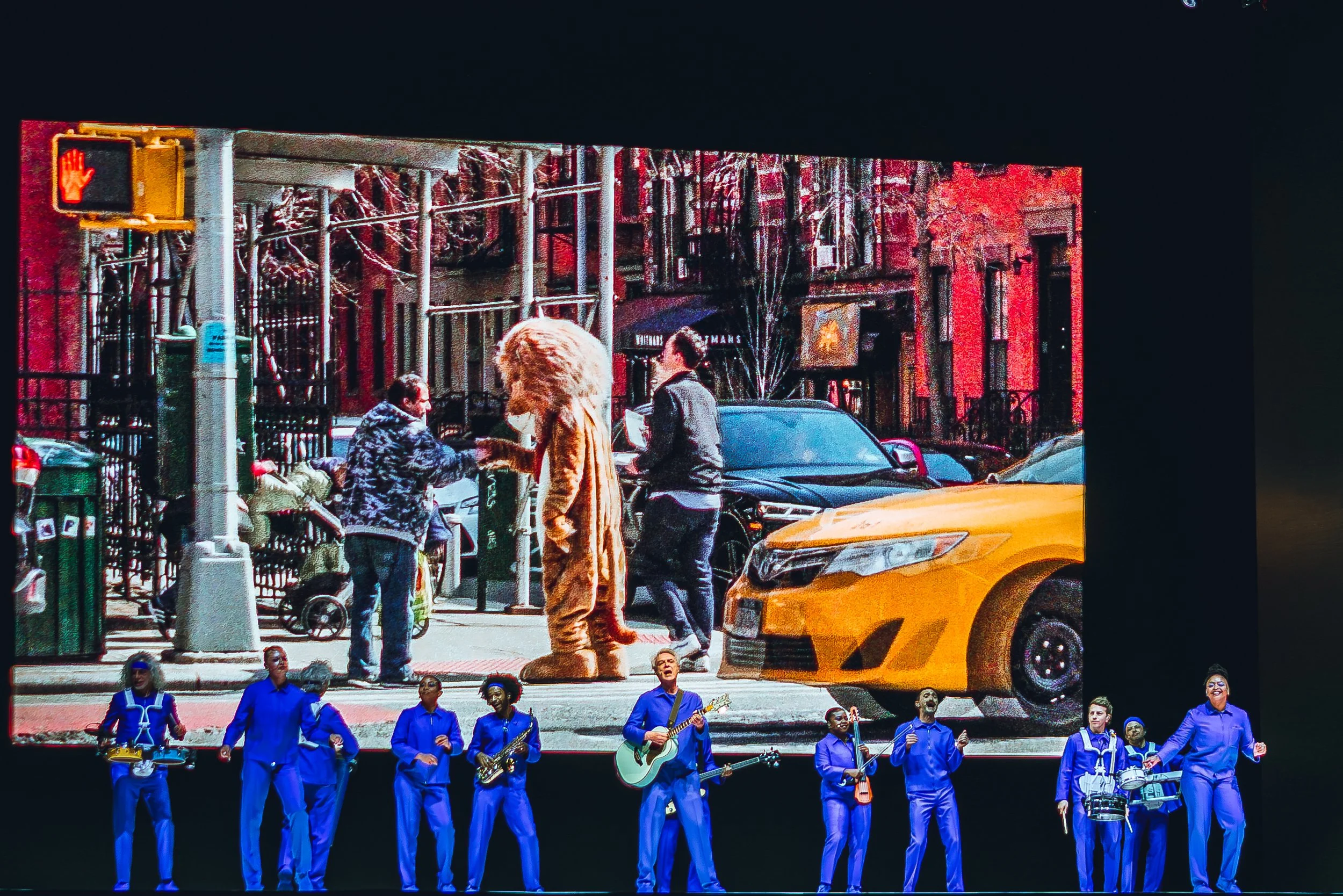
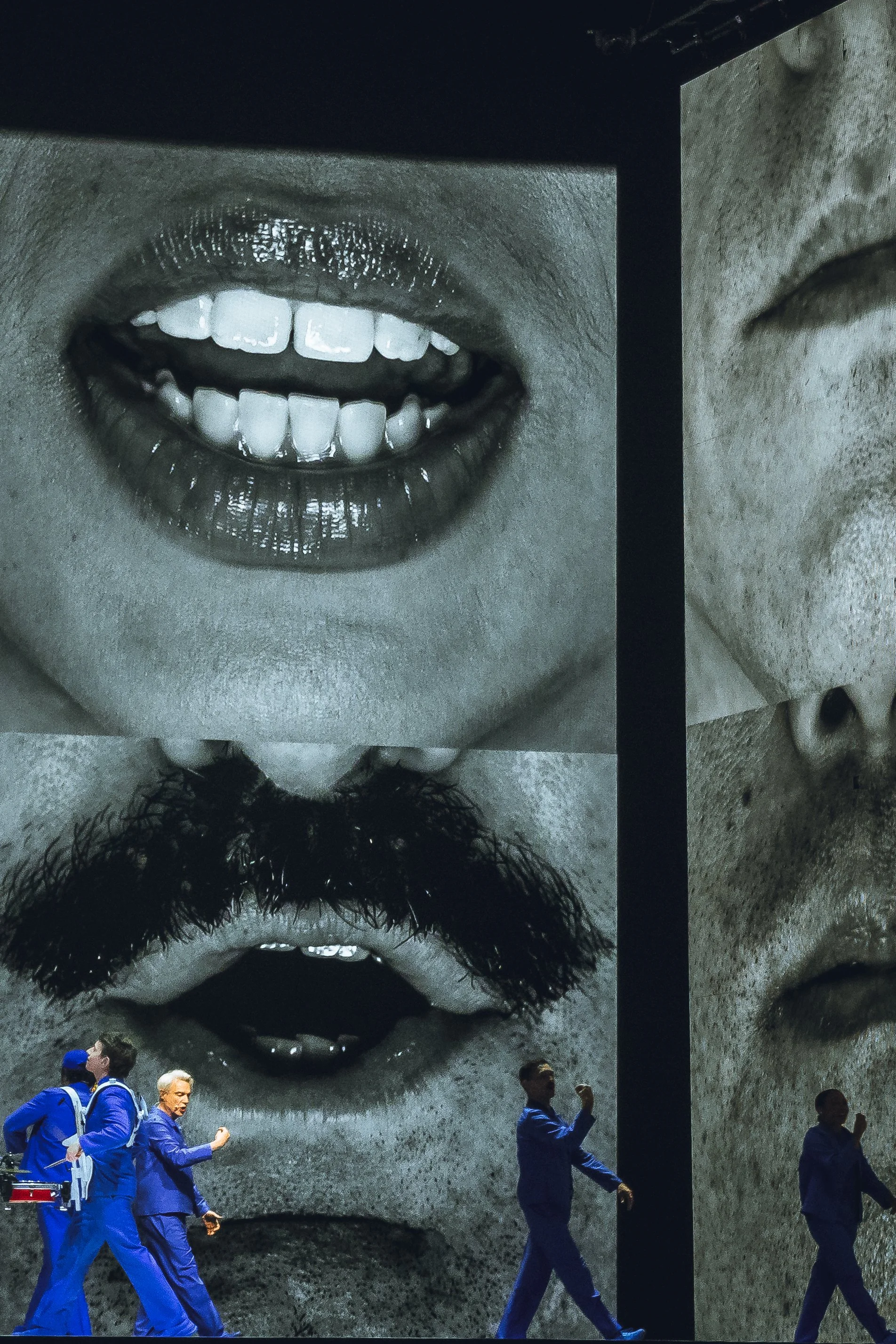
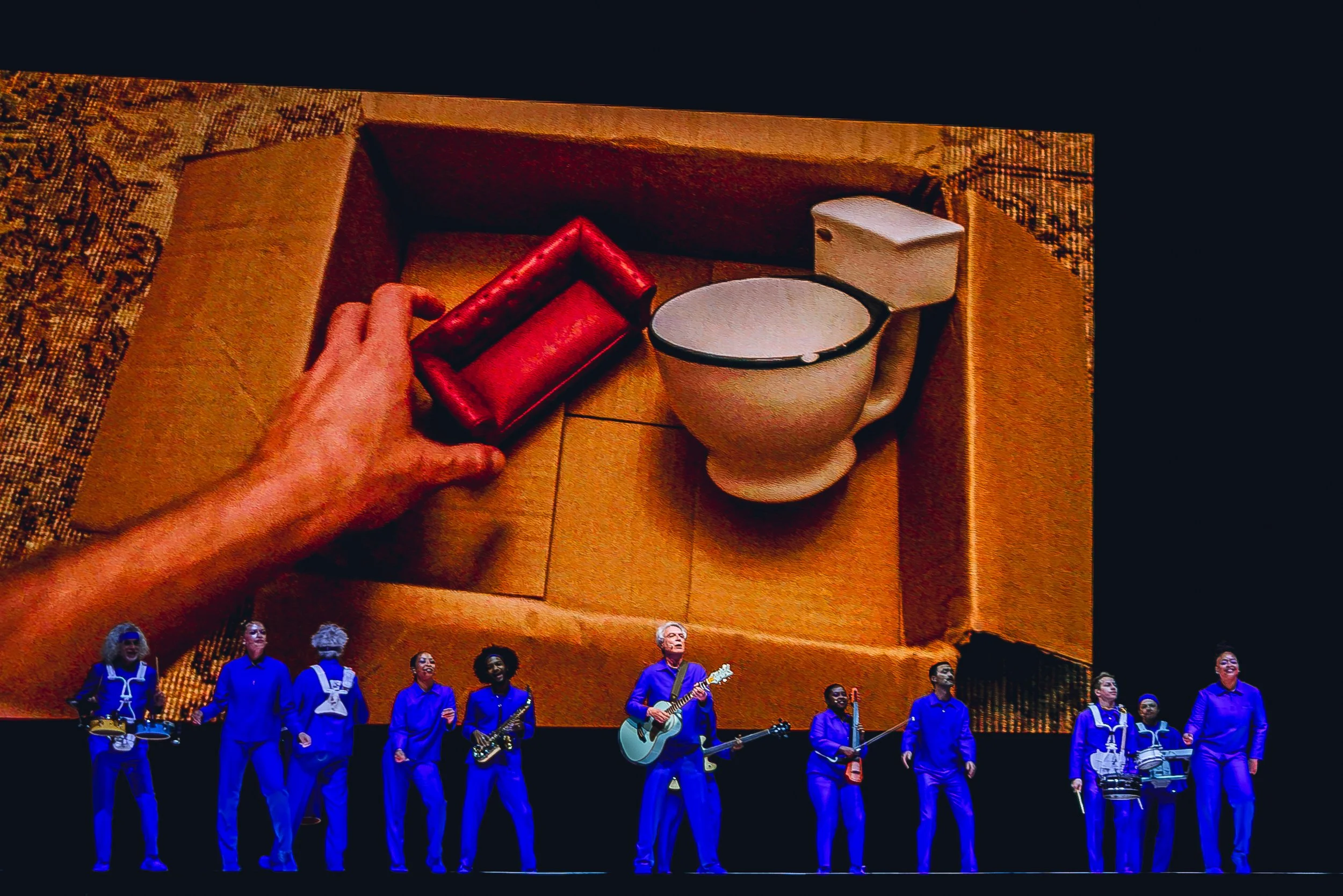
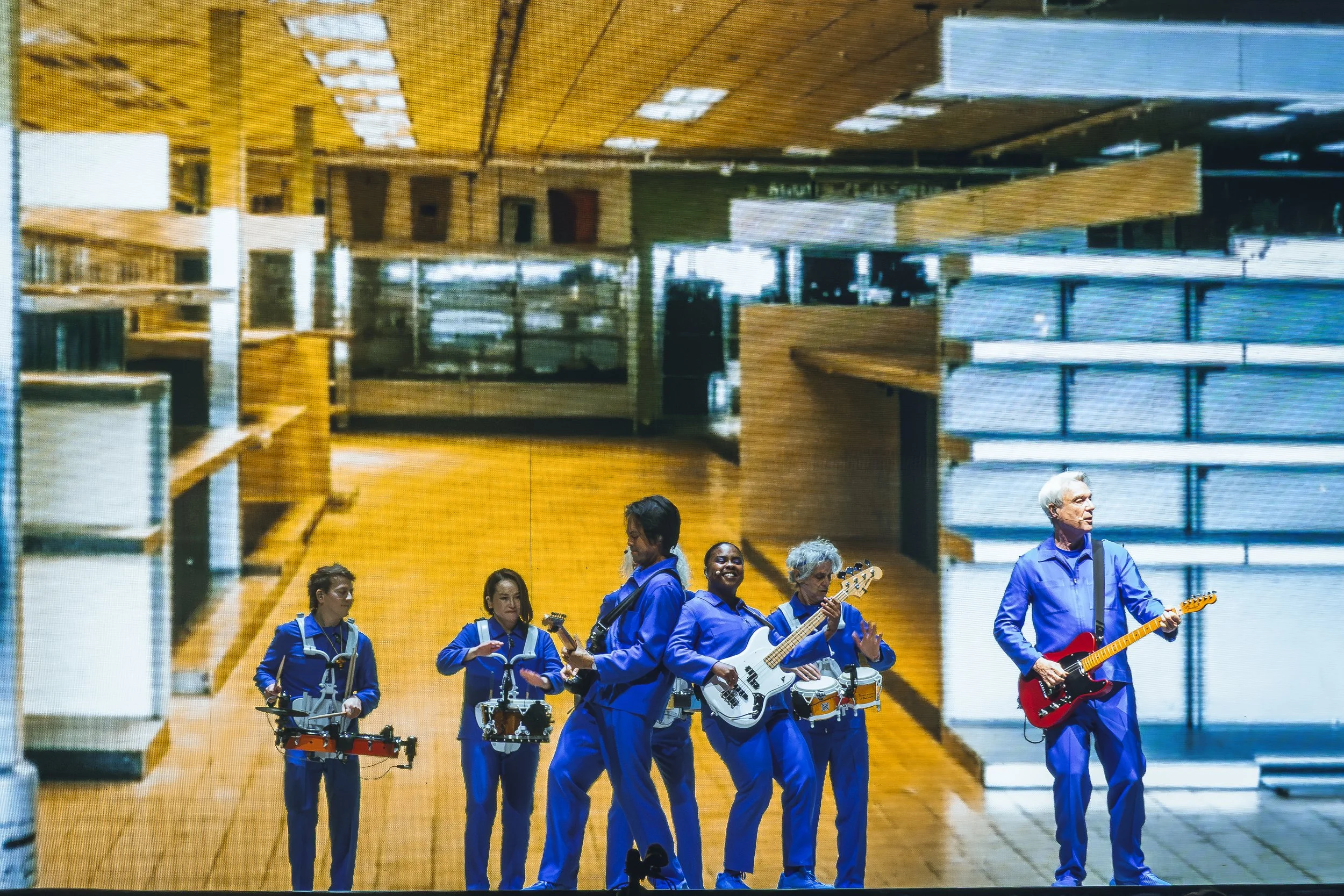
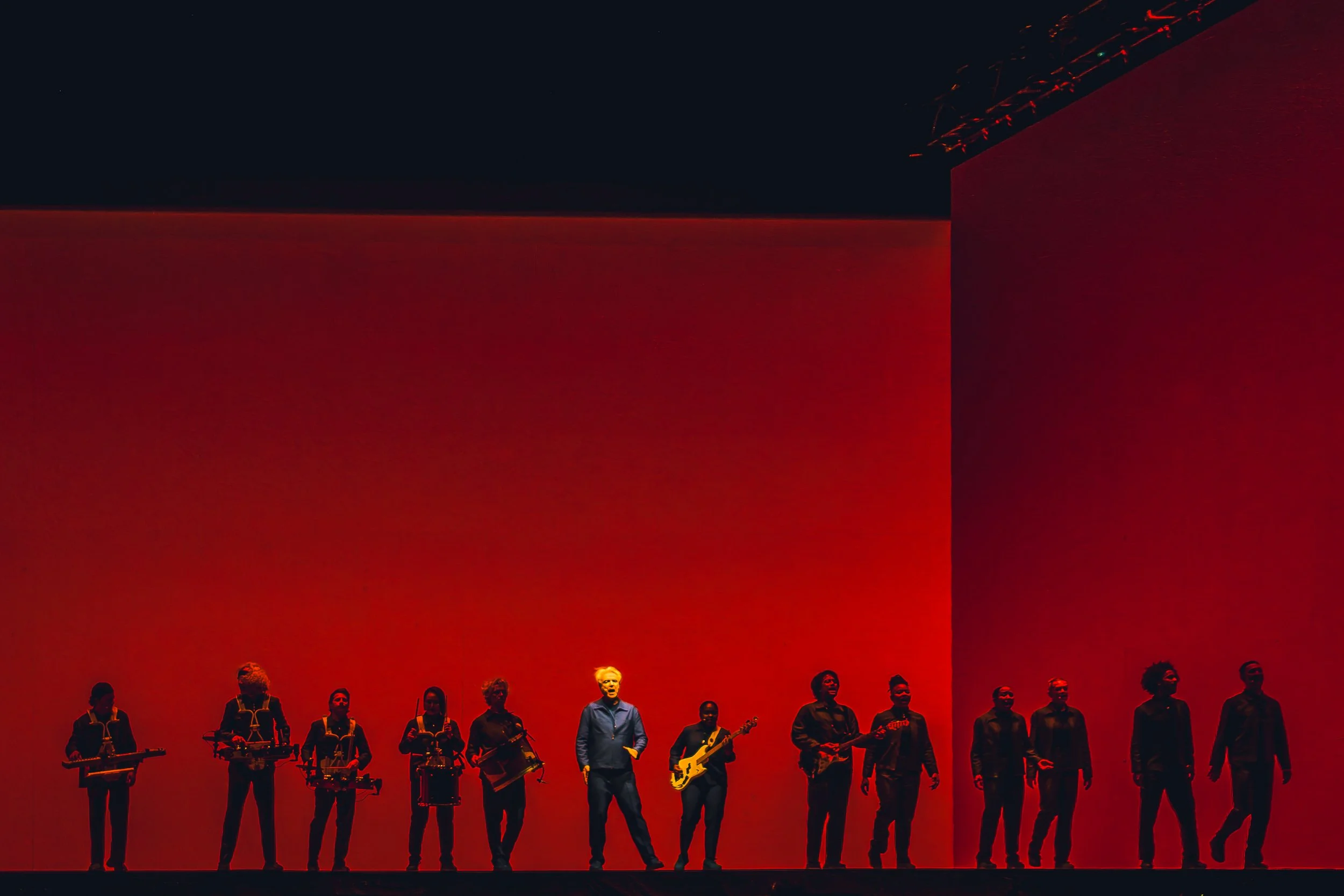
There is a whole generation of people (including me) who will never stop dreaming about a Talking Heads reunion. For years, Byrne's solo tours functioned as the consolation prize — what you went to when the thing you actually wanted wasn't on the table. Over time, through some combination of his bottomless whimsy, his color-saturated stage palettes (vibrant enough that even dogs can see them), and a choreographic vocabulary inspired by his not-at-all-surprising affinity for competitive color guard, the consolation prize outgrew its station. Byrne's touring troupe — broken up so each musician carries their own instrument across the stage on harness — has become its own institution. Most of his peers are doing the cynical version: heritage-act trots for the streaming-era money, three original members and four hired guns, the same encore for thirty years. Byrne, in blue jumpsuits at seventy-three, is doing the opposite — building a touring show more ambitious than anything Talking Heads ever staged.
Byrne's intrinsic whimsy has been his constant for the past few decades. His love letter to curiosity manifests in various forms of “what the fuckness.” He delivers TED-talk-style lectures from the stage. He uses the cheerful pedagogy of a kids' show explaining why letters are shaped the way they are or why root vegetables are nature's candy. He has spent thirty years biking through every city he tours through. He once made an entire art project out of hand-drawn PowerPoint slides, treating the corporate-meeting medium as a serious vehicle for emotional epistemology. The choreography is bright, friendly, almost compulsory — closer in spirit to a Bob Baker marionette show than to a rock concert. Pitchfork, reviewing his 2025 record Who Is the Sky?, called it "a firehose of forced positivity," which the album sometimes is. None of this is naive. He and Brian Eno were walking through New York in the late seventies when they got jumped by a group of fourteen people; Eno remembers Byrne being dragged into the bushes saying, "Uh-oh!", like a cartoon character mildly inconvenienced by an anvil. Byrne has been the patron saint of uh-oh ever since.
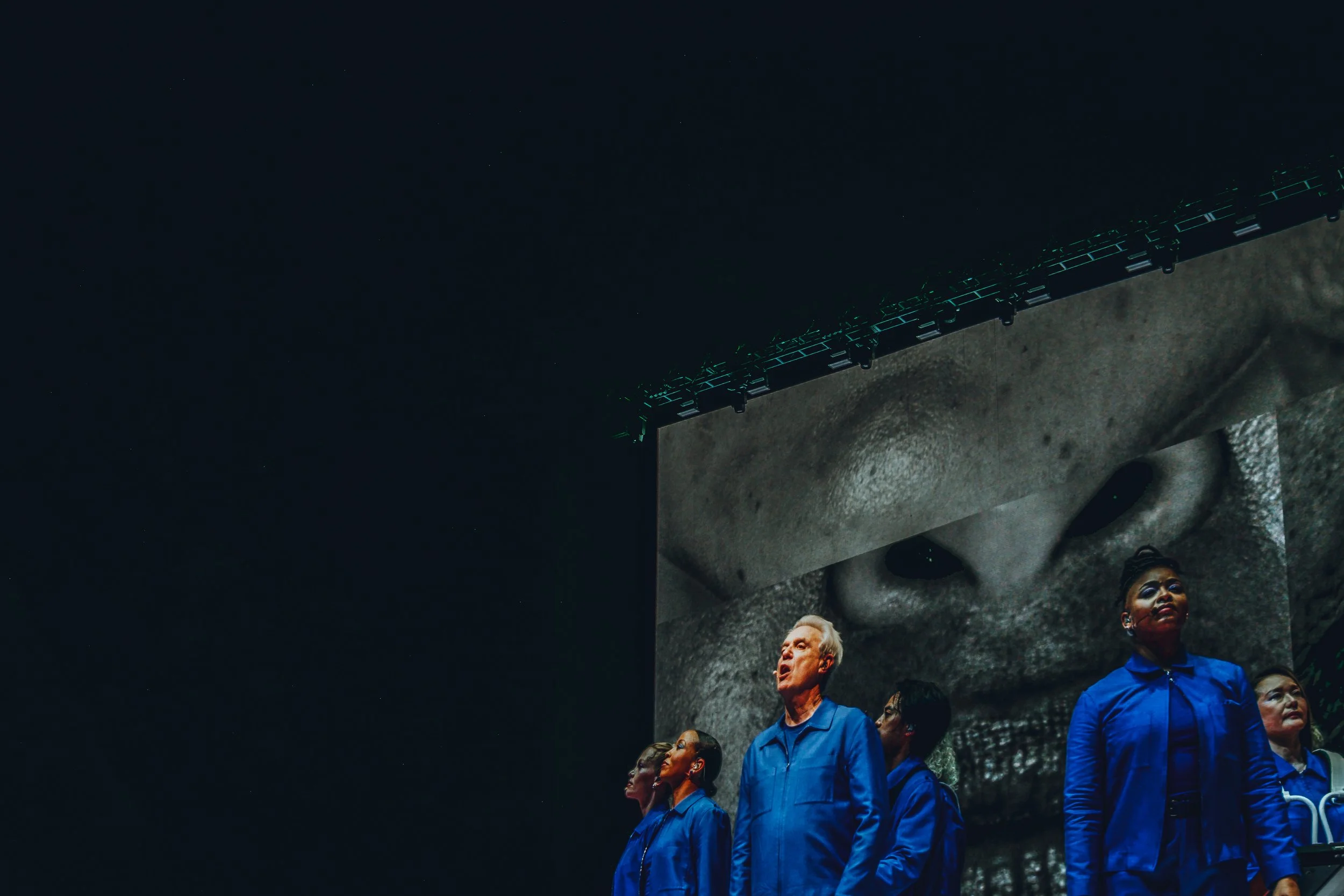
The catalog he was drawing from come via the brain of a man who notices things — songs about wartime, houses and dance floors, and the slow weird passage of an ordinary life. This Must Be the Place, possibly the most romantic song ever written, played slow enough to sway and swoon the couples in front of it. Life During Wartime — a song you can endlessly jog to while contemplating the end of the world, with the line reading on peanut butter being the funniest thing in modern music — landed as if newly written for whatever year this is. Slippery People, a dance song about wheels within wheels and the absence of God, did exactly what it has always done. Once in a Lifetime, Psycho Killer, and Burning Down the House arrived in a run that could power the AI datacenter your city's mayor is kowtowing to.
At the end, the screens behind him cycled through credits as a kind of curtain call — every musician on stage named, every dancer, every collaborator. The last credit read: and David Byrne. A coda, a tribute, a small theatrical move that says everything about his sensibilities. As Byrne and his crew left the stage, a wave of joy came over me as I imagined him getting straight onto a bicycle made of tuba parts and pedaling back to his hotel for a nightcap of chocolate milk and Lucky Charms, then settling in to his favorite episode of Pawn Stars before drifting off. Somewhere, in the luscious reverie of his Rube Goldberg mind, the sheep are counting humans to sleep.
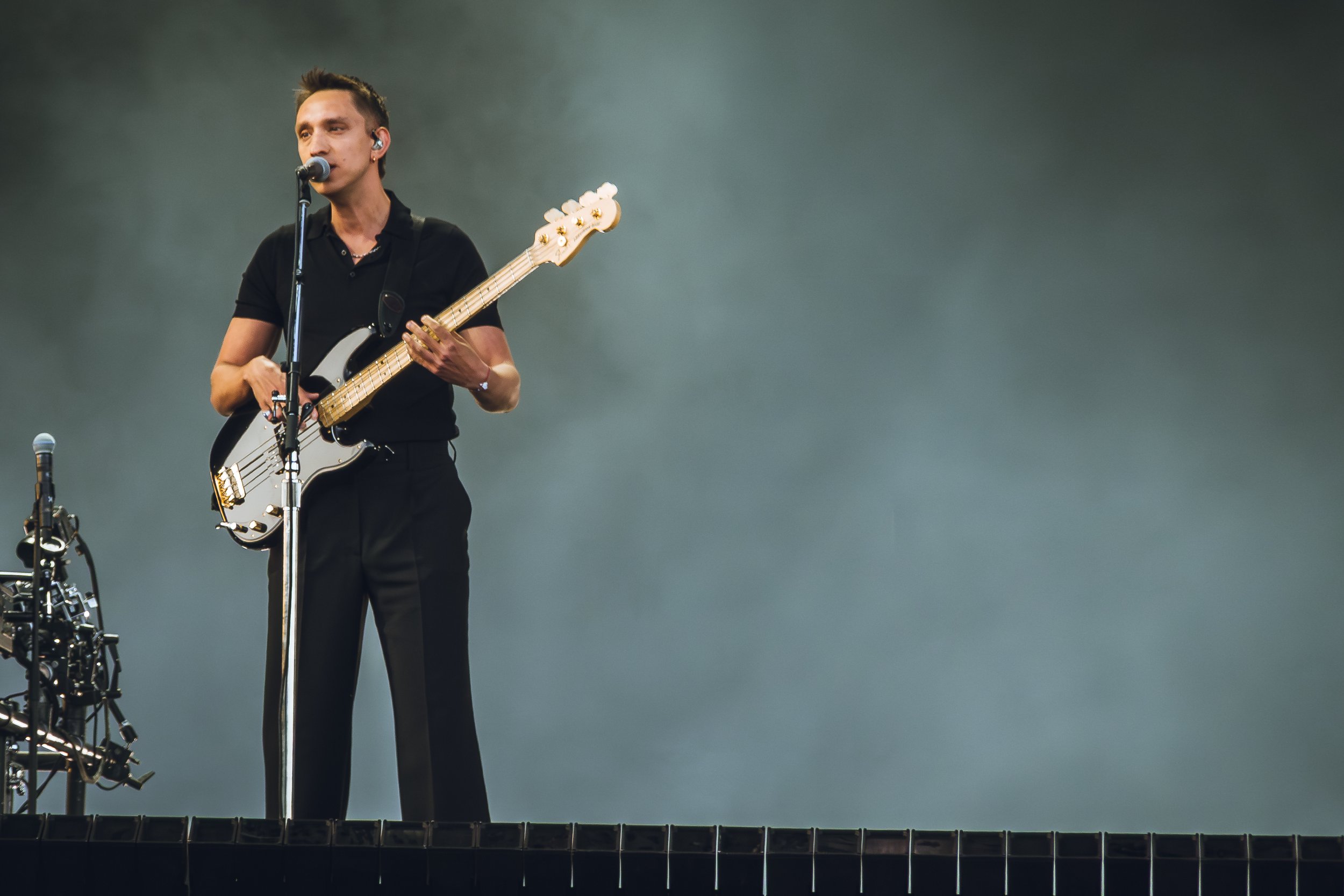
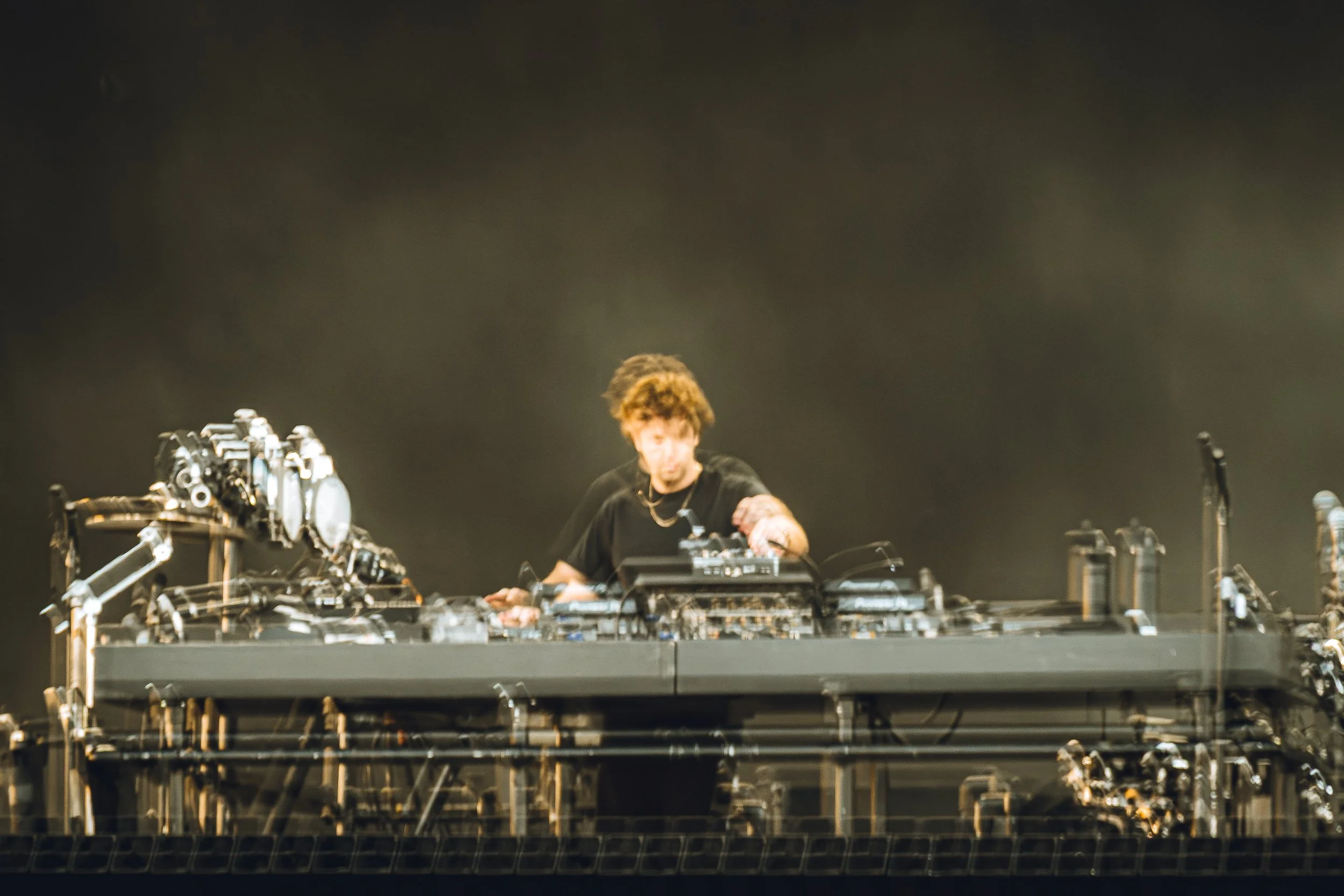
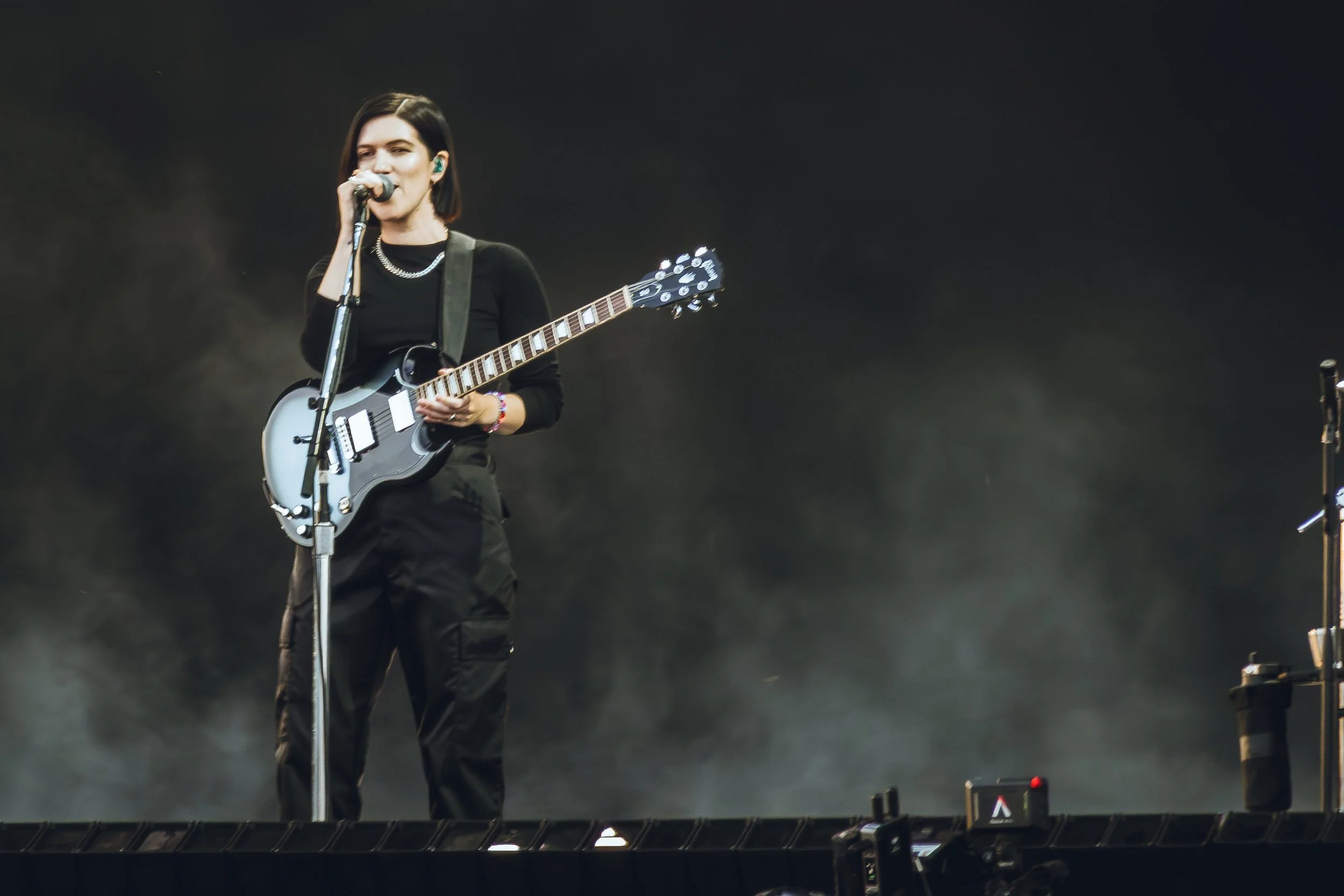
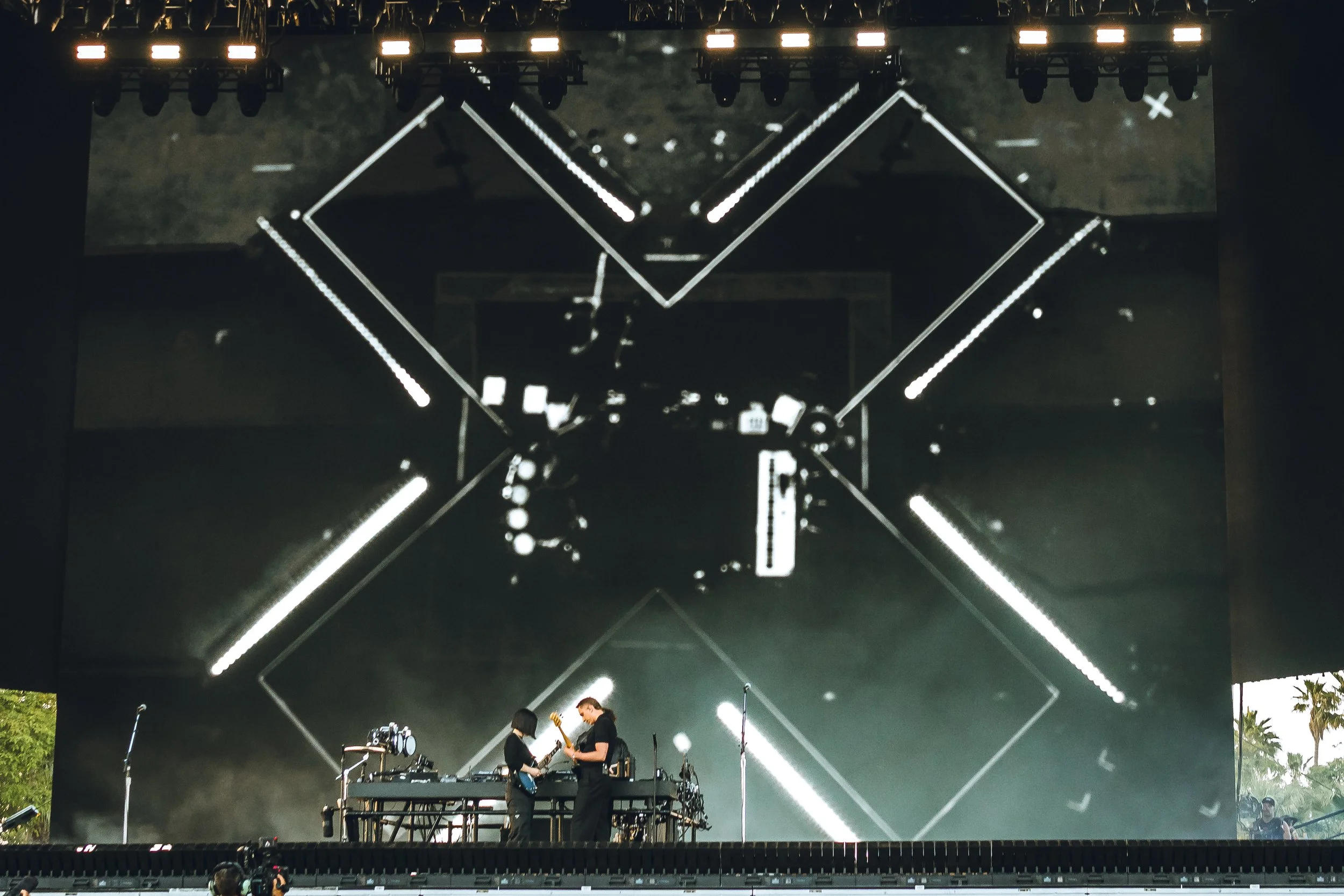
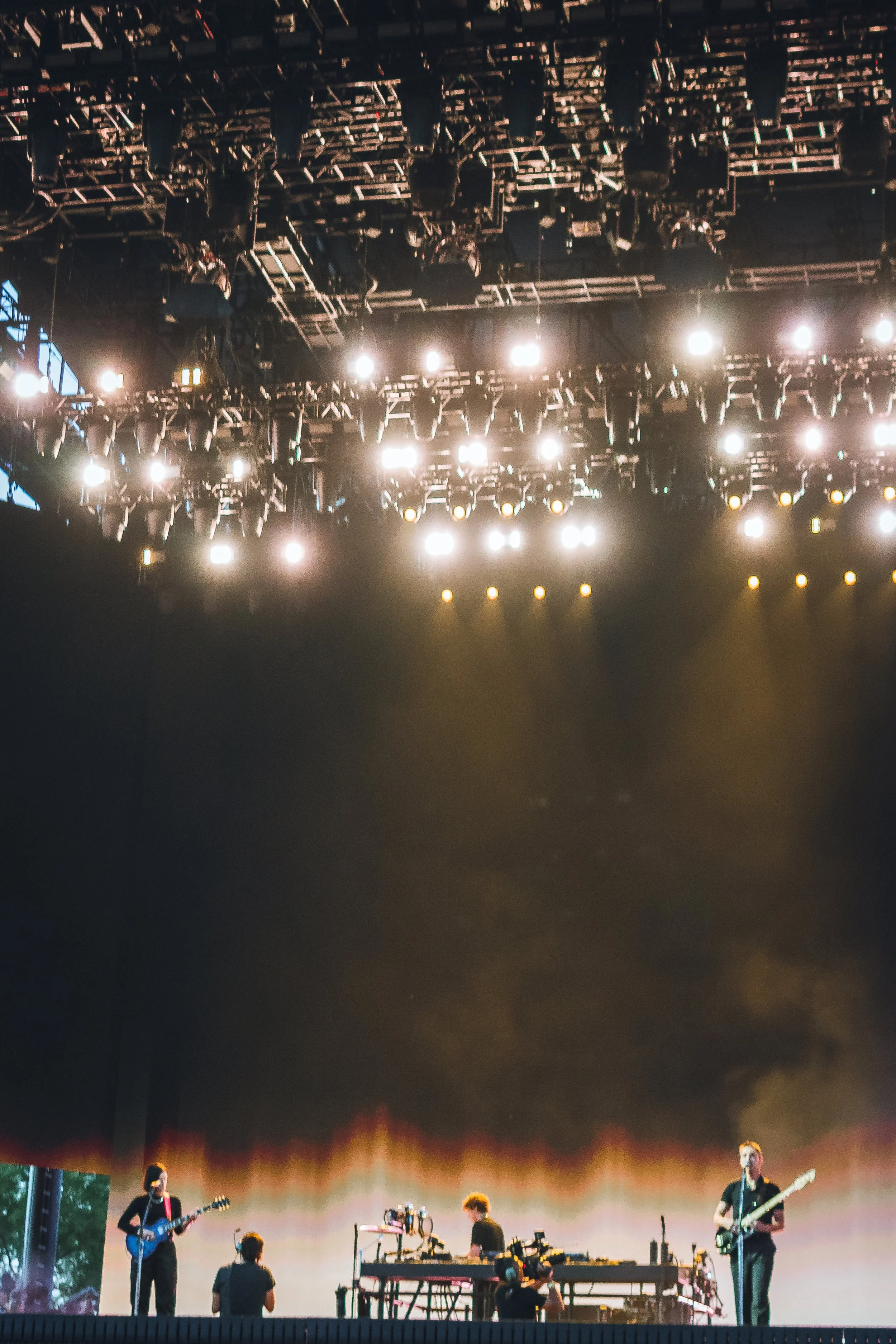
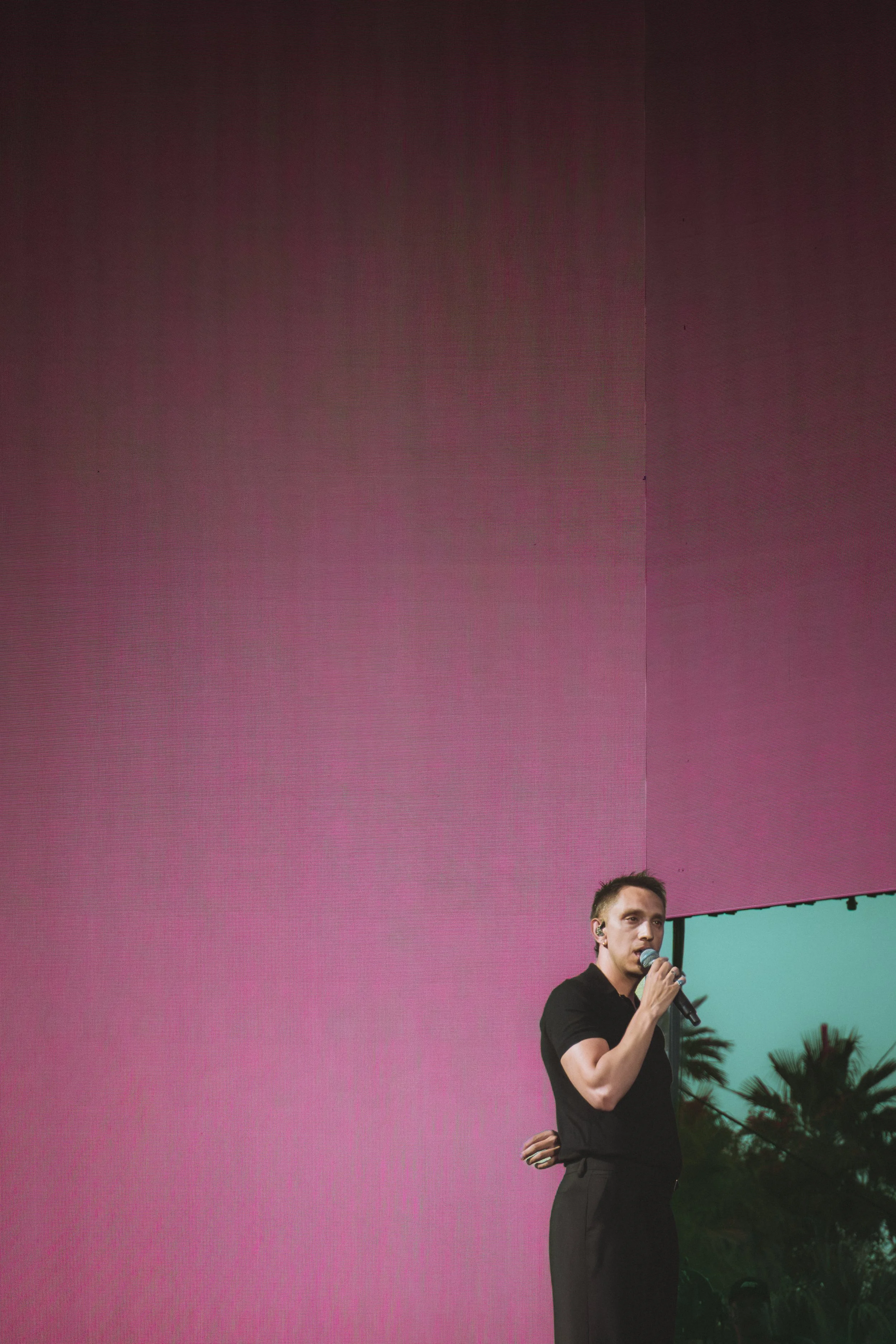
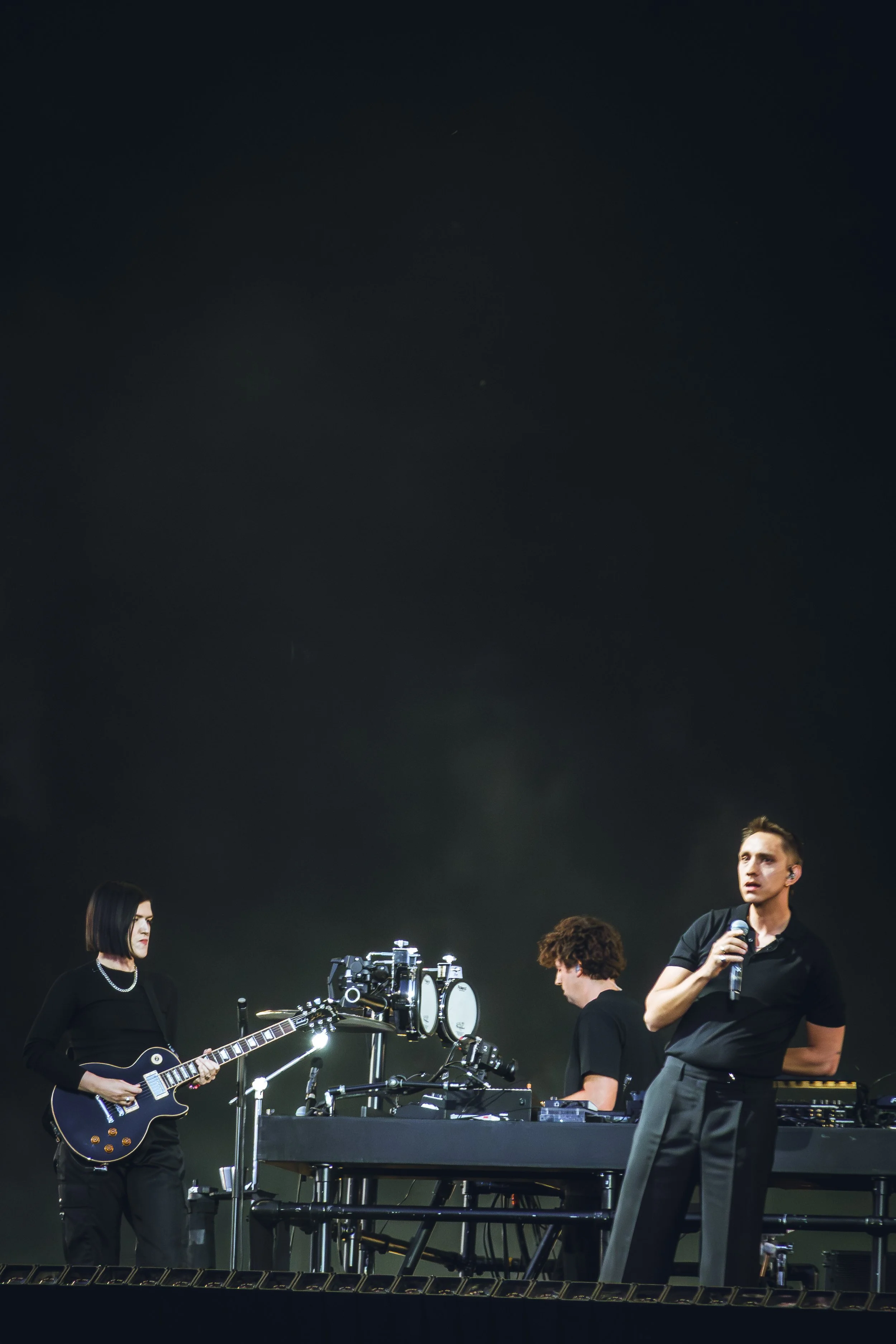
THE XX
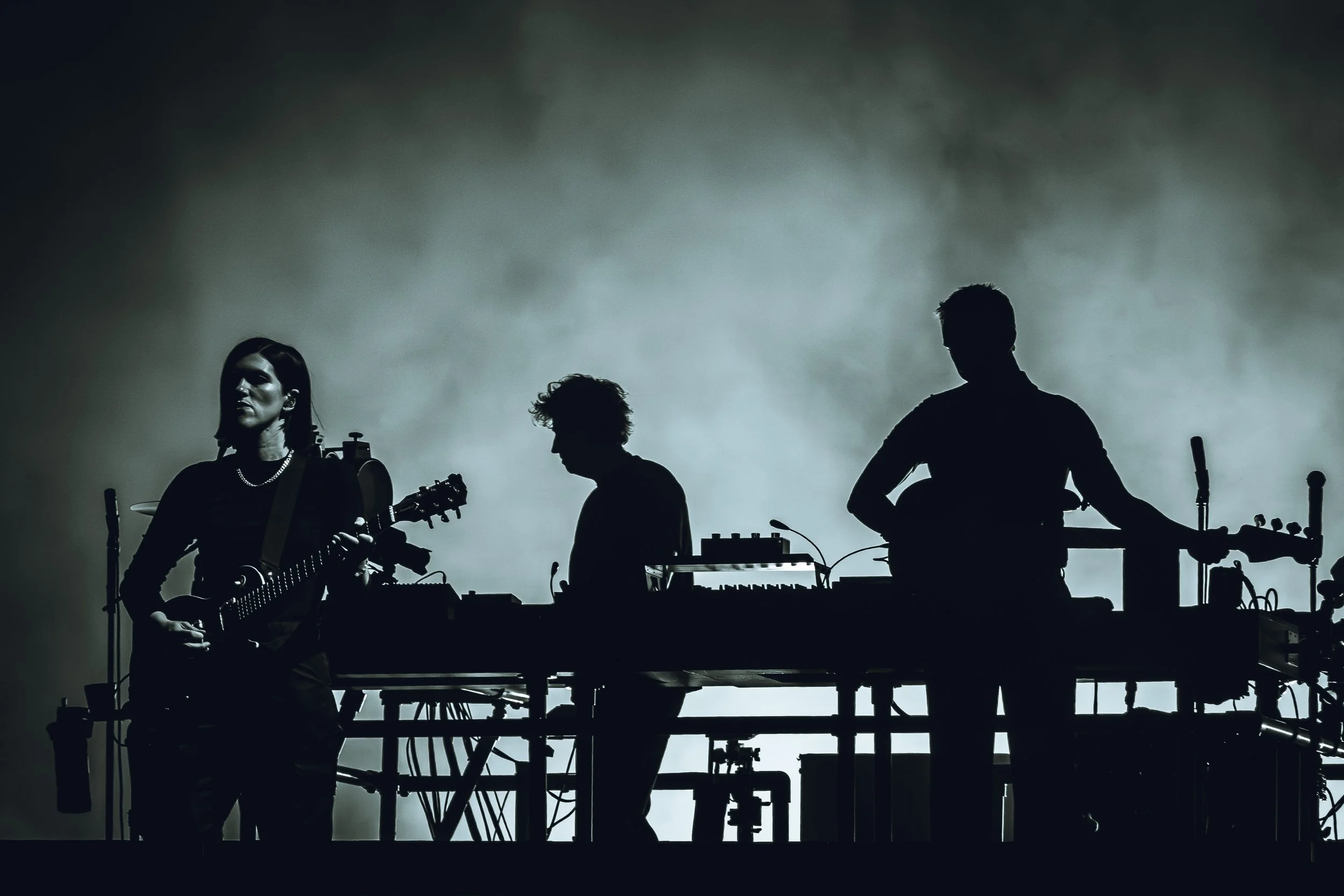
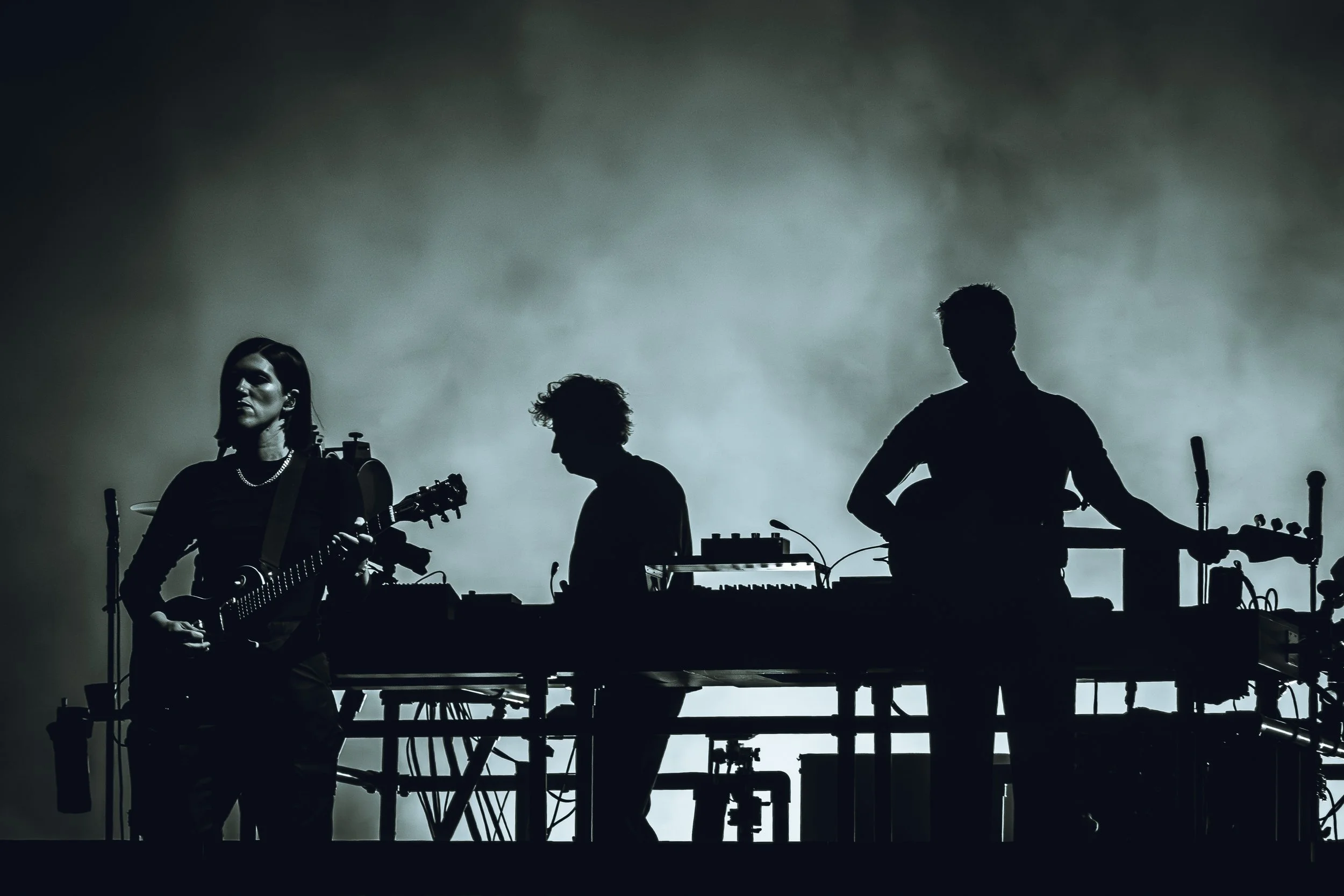
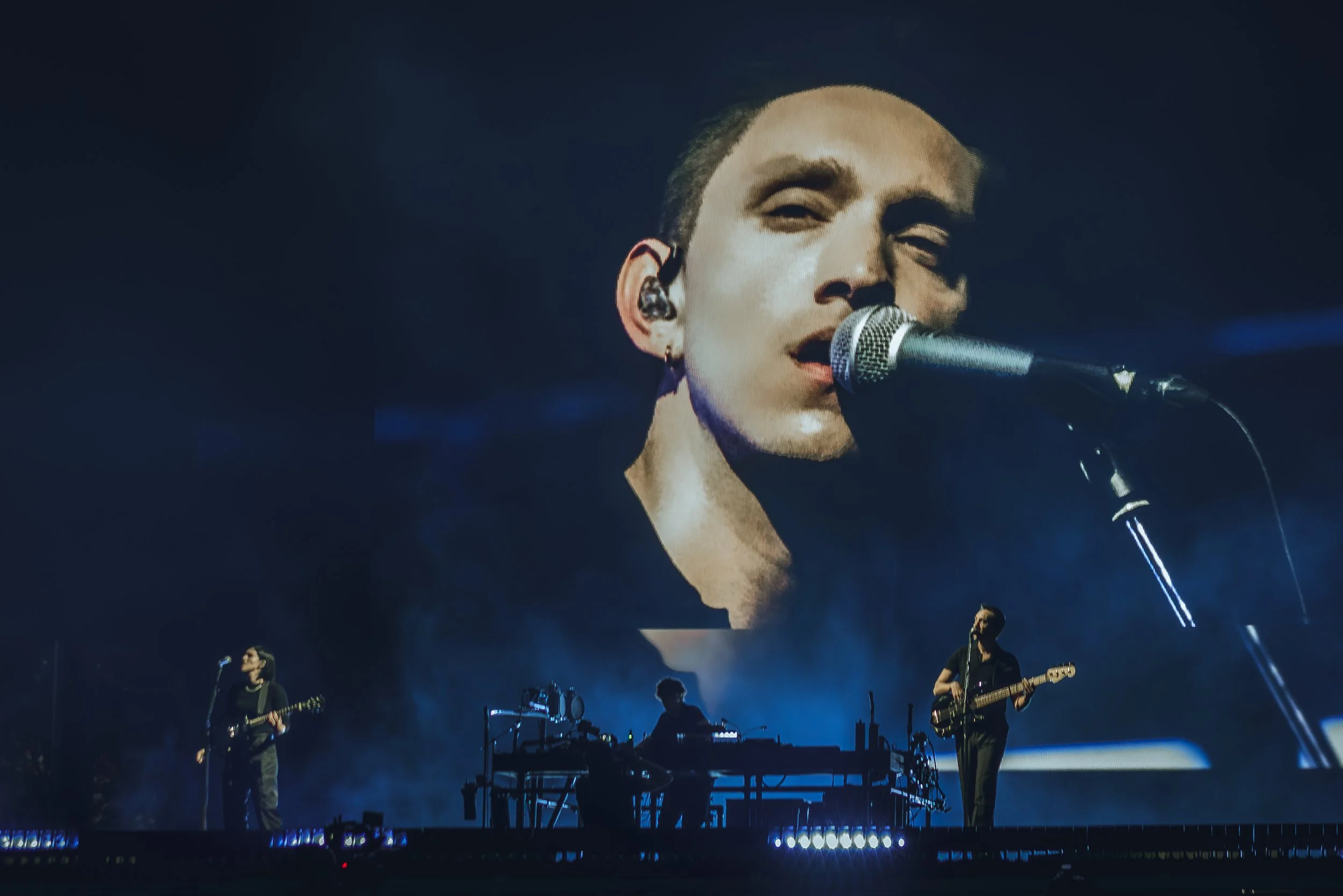
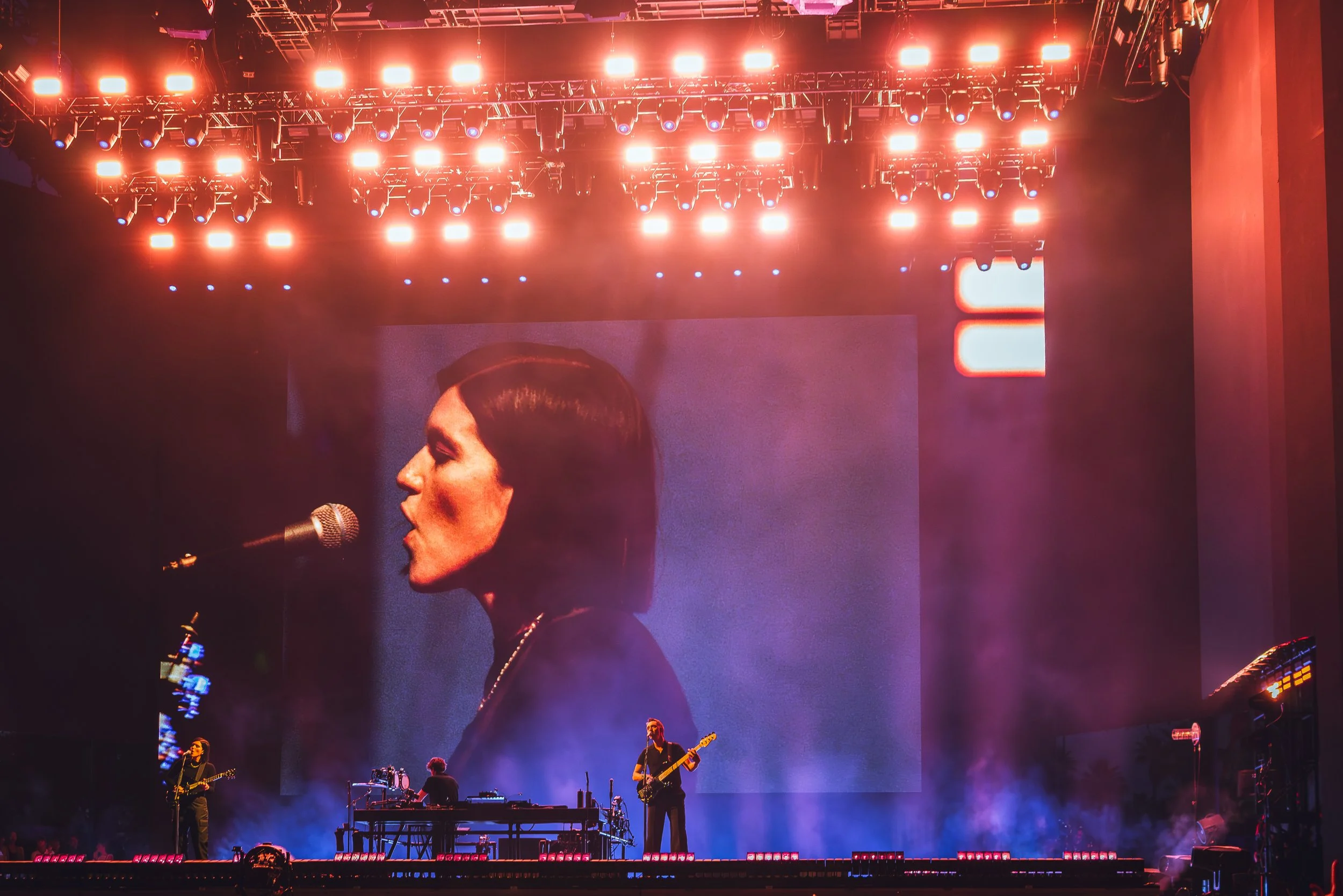
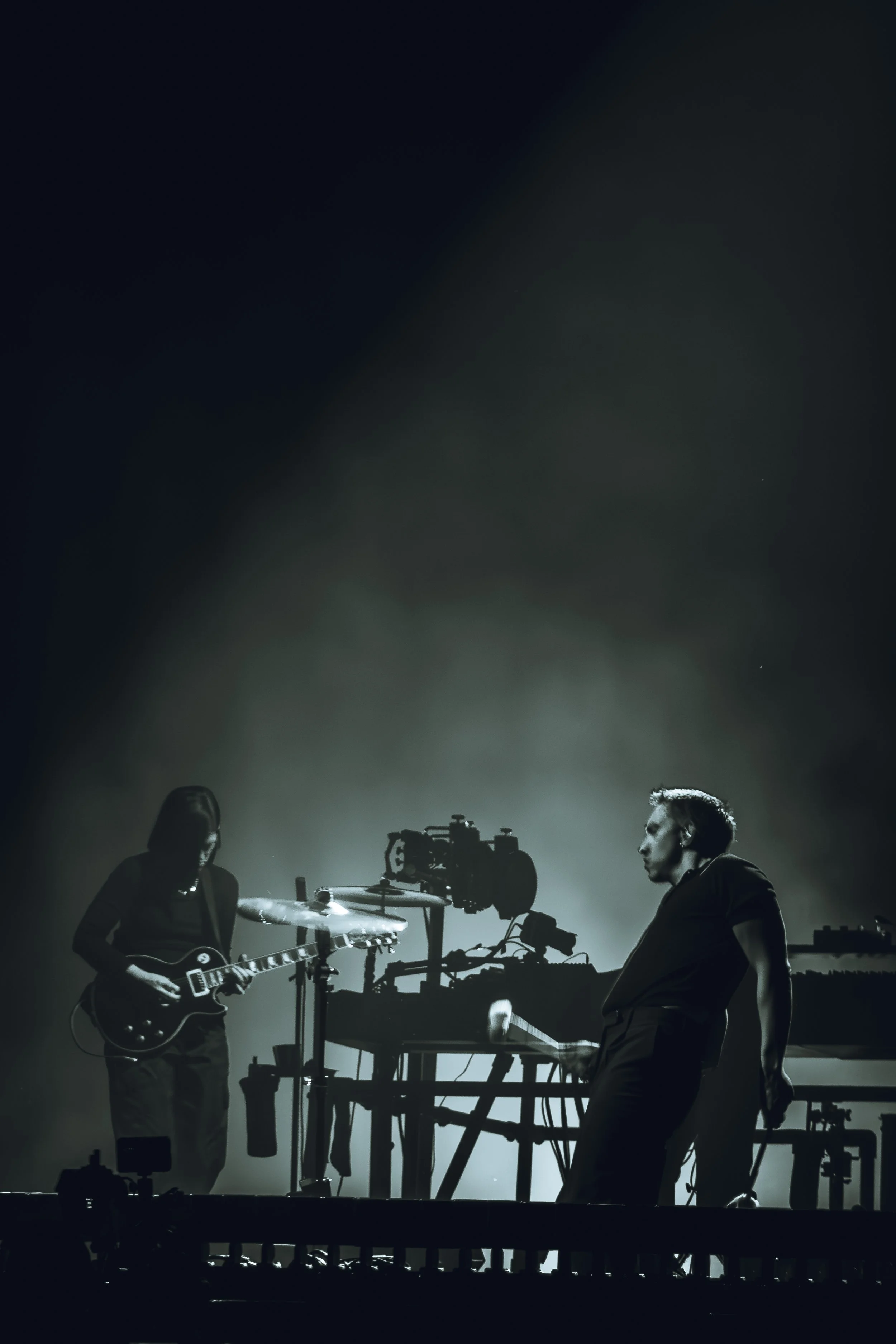
Eight years off the festival circuit is a long time in the fickle cycle of popular music. Long enough that most of the audience who first heard the band on a college playlist have lived an entire adulthood since, and long enough for the three members' solo careers to eclipse the trio in their own ways.
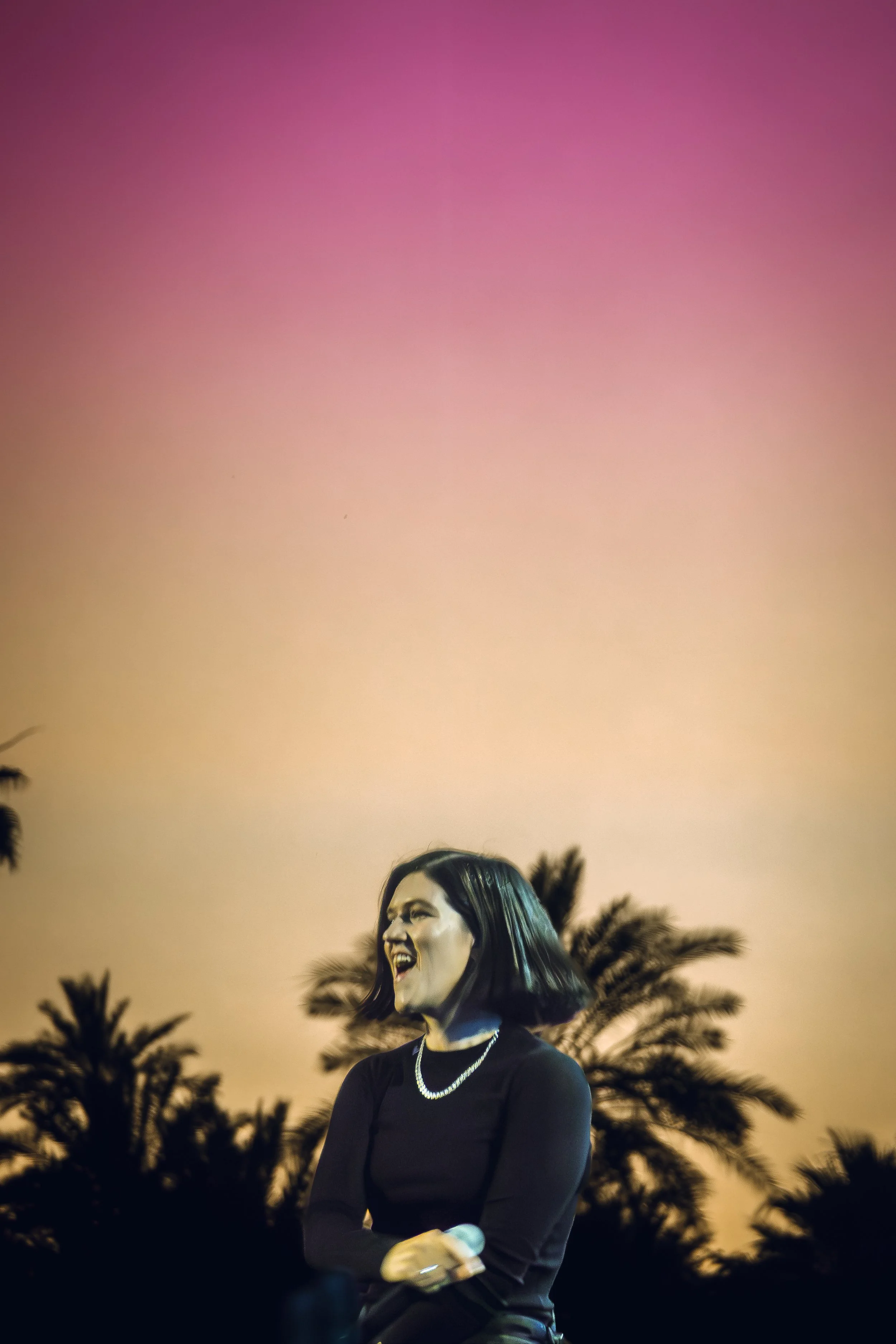
Jamie xx is now the premier DJ that any of your performative male friends harnessing a Trader Joe's tote bag would tout as the greatest behind a turntable since Larry Levan (I'm describing myself). Romy's Mid Air, released in 2023, has become a love letter to the queer community via her own queer life — an attestation of joy and light in a meteor storm of awfulness. Oliver Sim's Hideous Bastard, from 2022, did the same in a different register: a confessional record about HIV-positive identity, masculinity, and shame, delivered in the lowest, slowest baritone that makes Nick Cave sound like Ariana Grande.
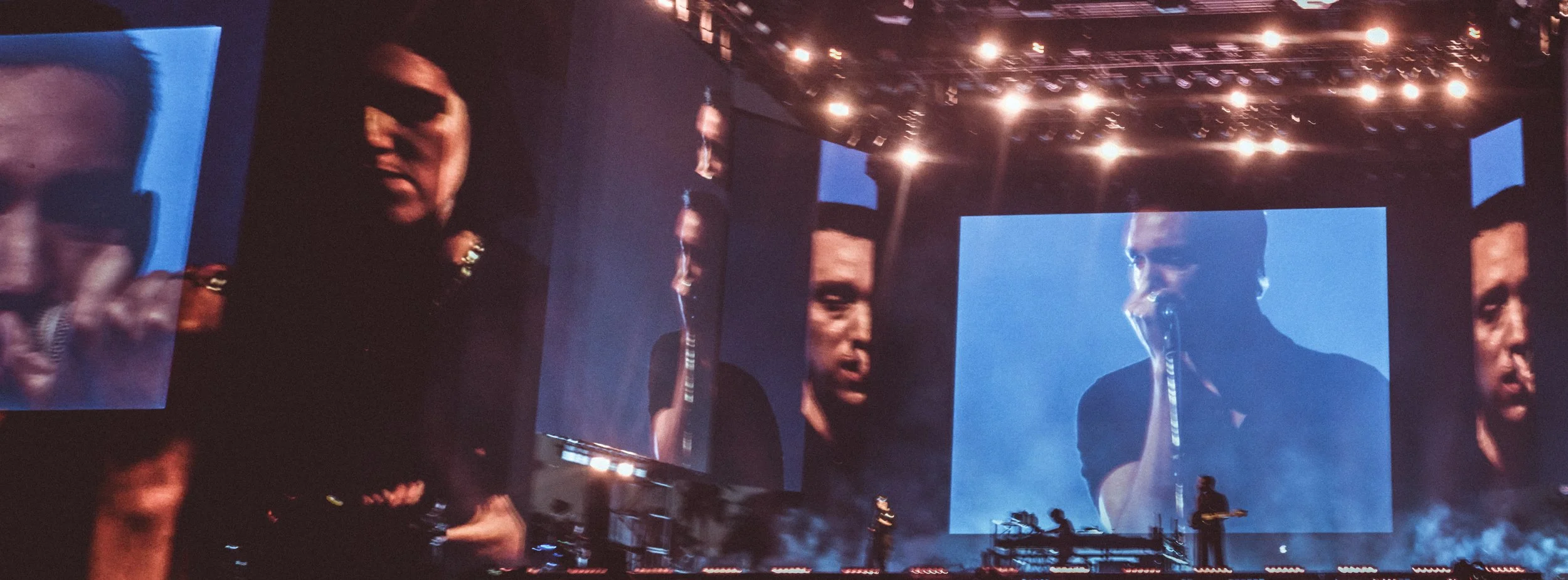
Each of those records has been individually accomplished enough to make the trio itself feel, at moments, like an artifact. More than once that weekend I overheard someone in the field ask whether Jamie xx had anything to do with the xx — only to watch their eyes light up the moment they spotted him behind the kit, playing actual percussion. That recognition repeated in waves through the night. The reunion's central pleasure was watching the audience remember that these three people made the music together.
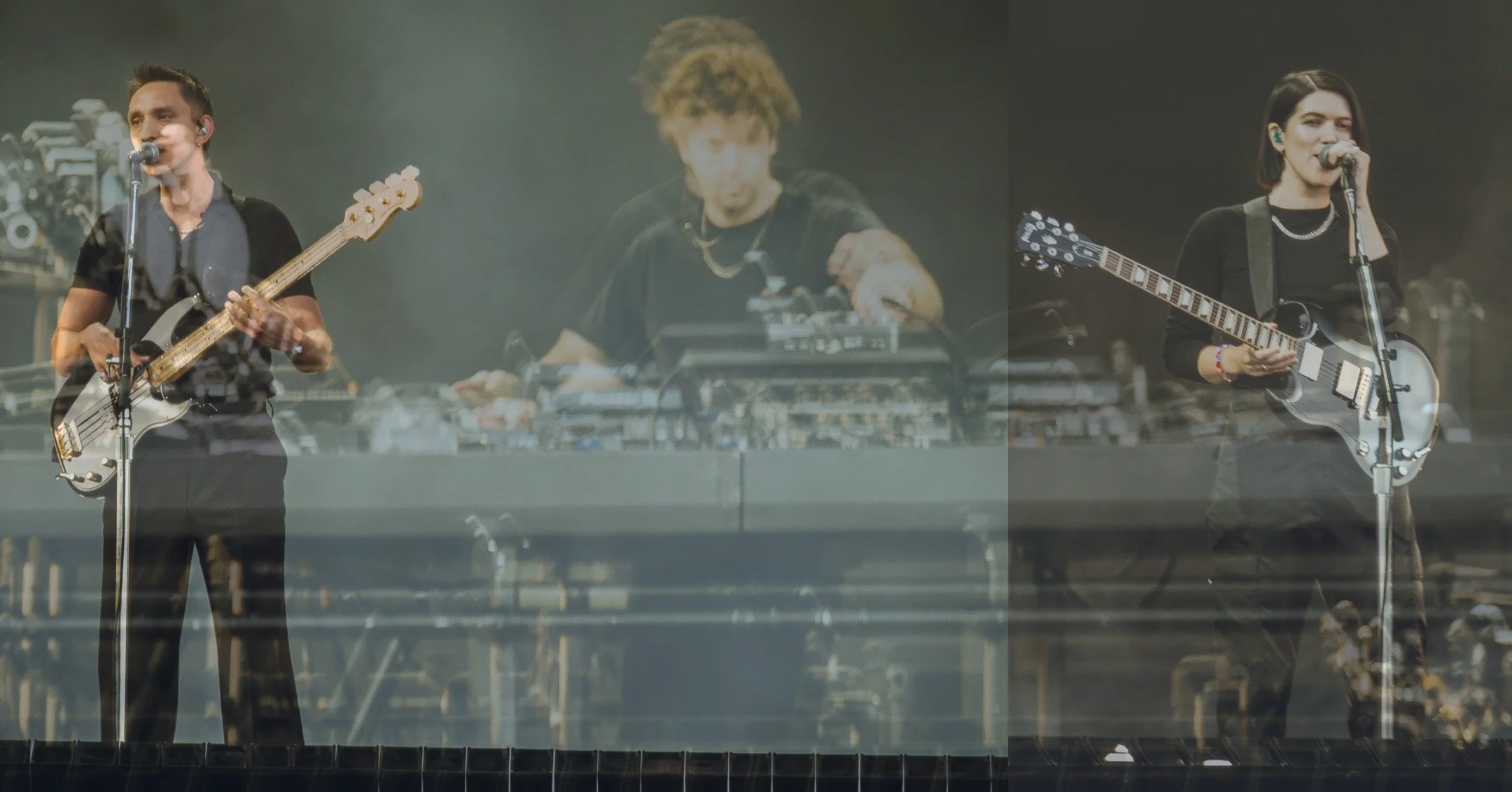
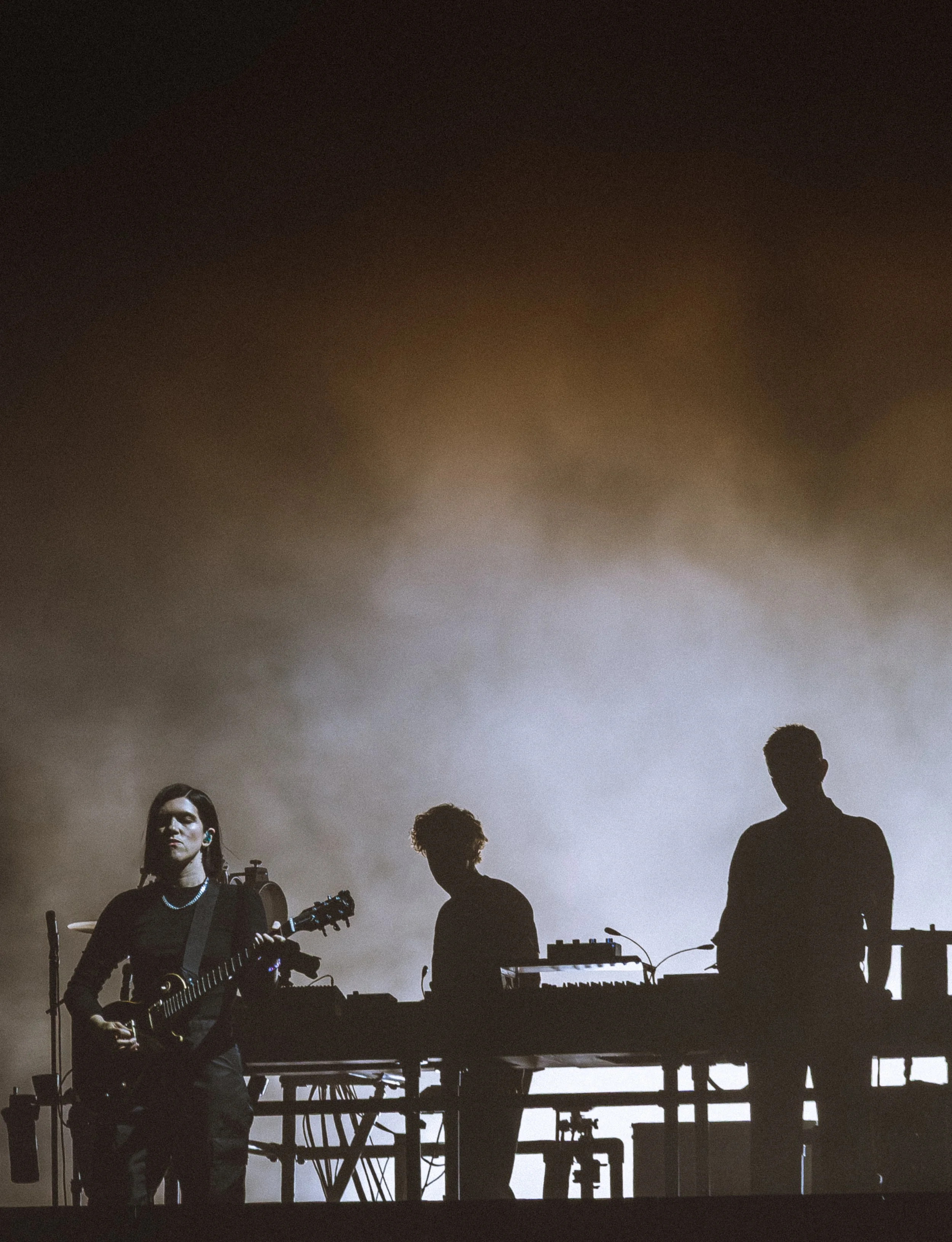
Together, on stage, they haven't missed a beat — until Jamie quite literally missed one, a single dropped trigger during Loud Places, which made Romy laugh so hard she had to step away from her mic while Oliver swayed in place like a sexy version of the Slenderman. The friendship was visible in the recovery. The three of them met as eleven-year-olds at Elliott School in Putney — the same southwest London comprehensive that also produced Hot Chip, Burial, and Four Tet, an alumni list that should have its own commemorative plaque on the front gate. The set's potency has never been the songwriting alone. It's the friendship: twenty-five years of it, the kind of unfeigned admiration that comes from people who watched each other learn to play, who gave each other their first records, who can still leave room for one another on a stage without making a show of it.
Of every set across the weekend, the xx's was the most deliberately sequenced. They hit you hard and soft, as Billie says — opening with the three songs every casual fan in that field came to hear. Crystalised arrived first, in ten seconds reminding you what this band was always about: a guitar figure you could fit in a teaspoon, Romy and Oliver trading lines like two people who never fully figured out how to say what they meant to each other, Jamie's drums arriving like someone knocking on the door of the song. Say Something Loving and Islands followed, the field singing every word back — confusing the Sabrina Carpenter fans who were only there to take up space and question why anyone would listen to anything other than Espresso.
Angels and Fiction slowed the pace to match the sun setting over the polo grounds, Romy's voice finding its quiet register, the room quieting with her. I'll Take Care of U arrived next — not a cover but a continuation of the collaboration Jamie did with Gil Scott-Heron months before Gil's death in 2011, taken up a notch by Romy playing the famed guitar lick live. The original is an old man's voice making peace with mortality; this version was a 36-year-old woman quietly carrying his blessing forward.
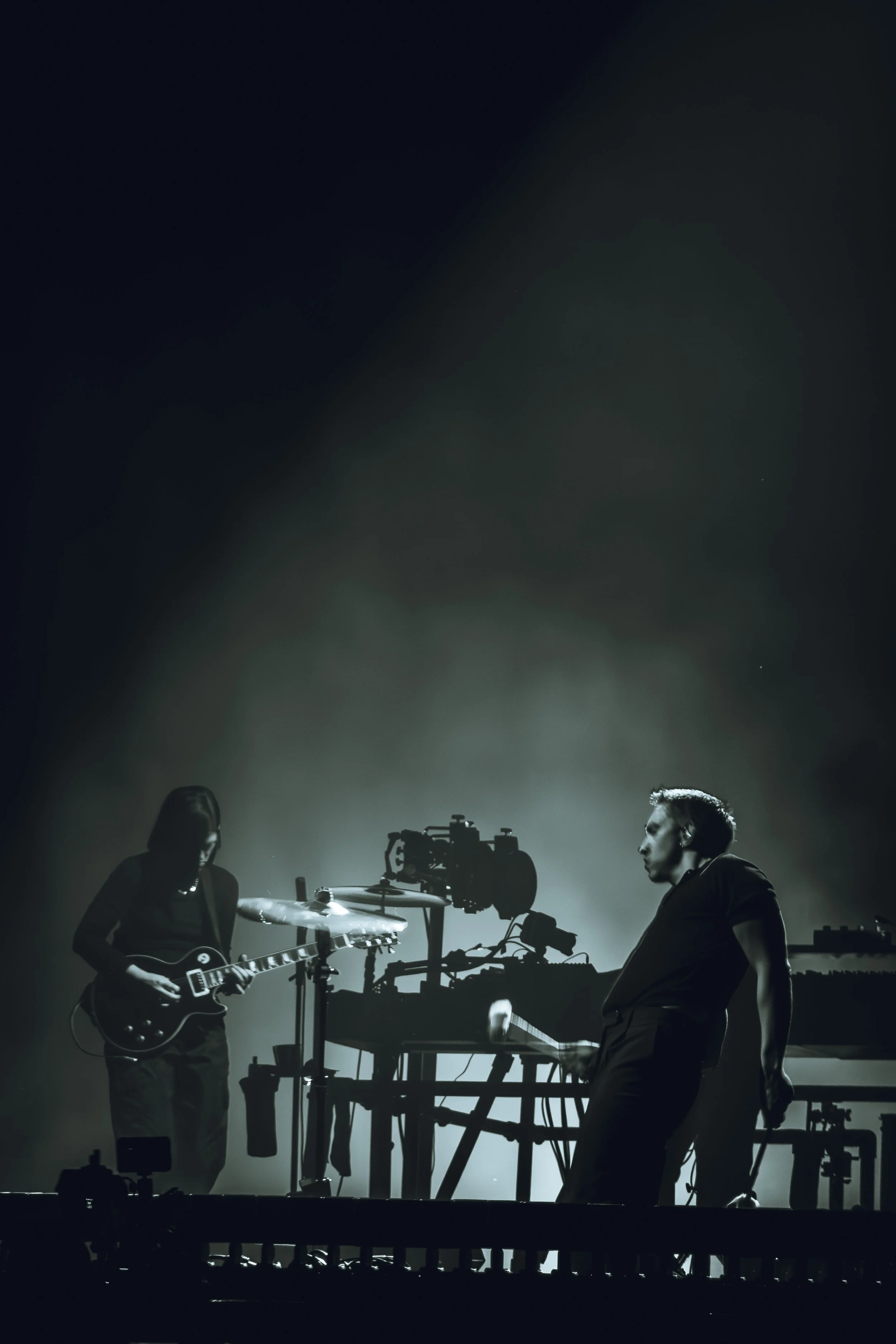
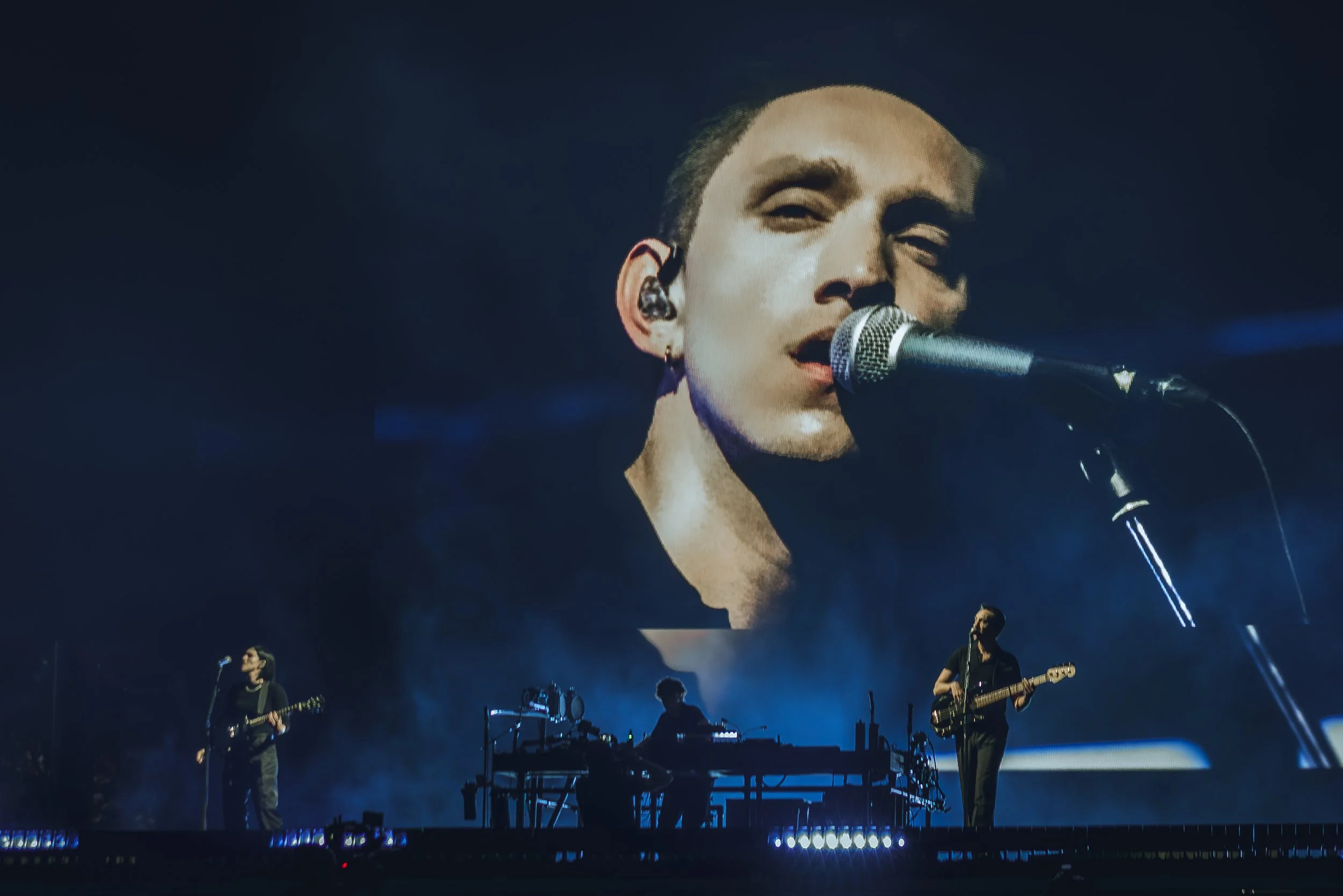
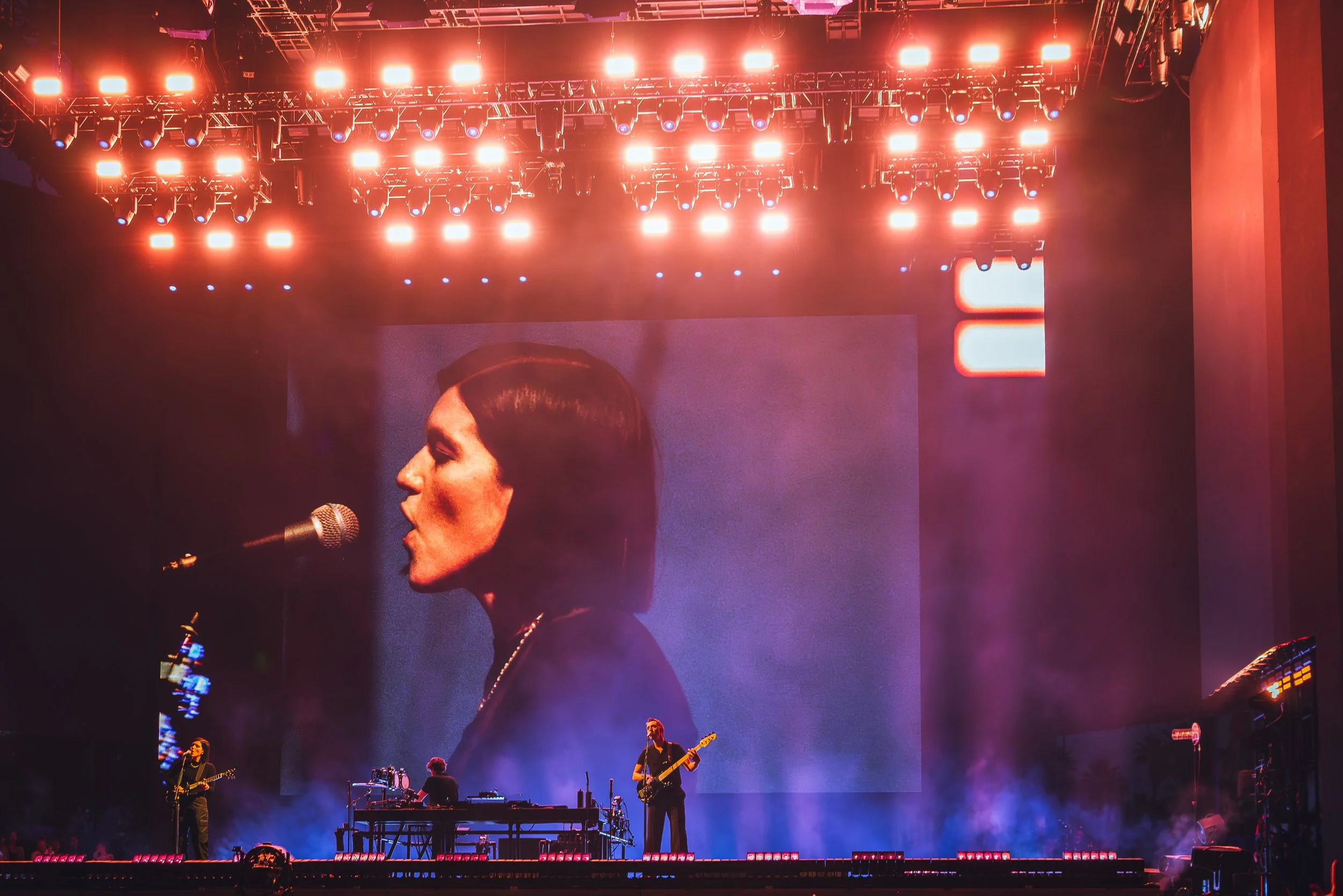
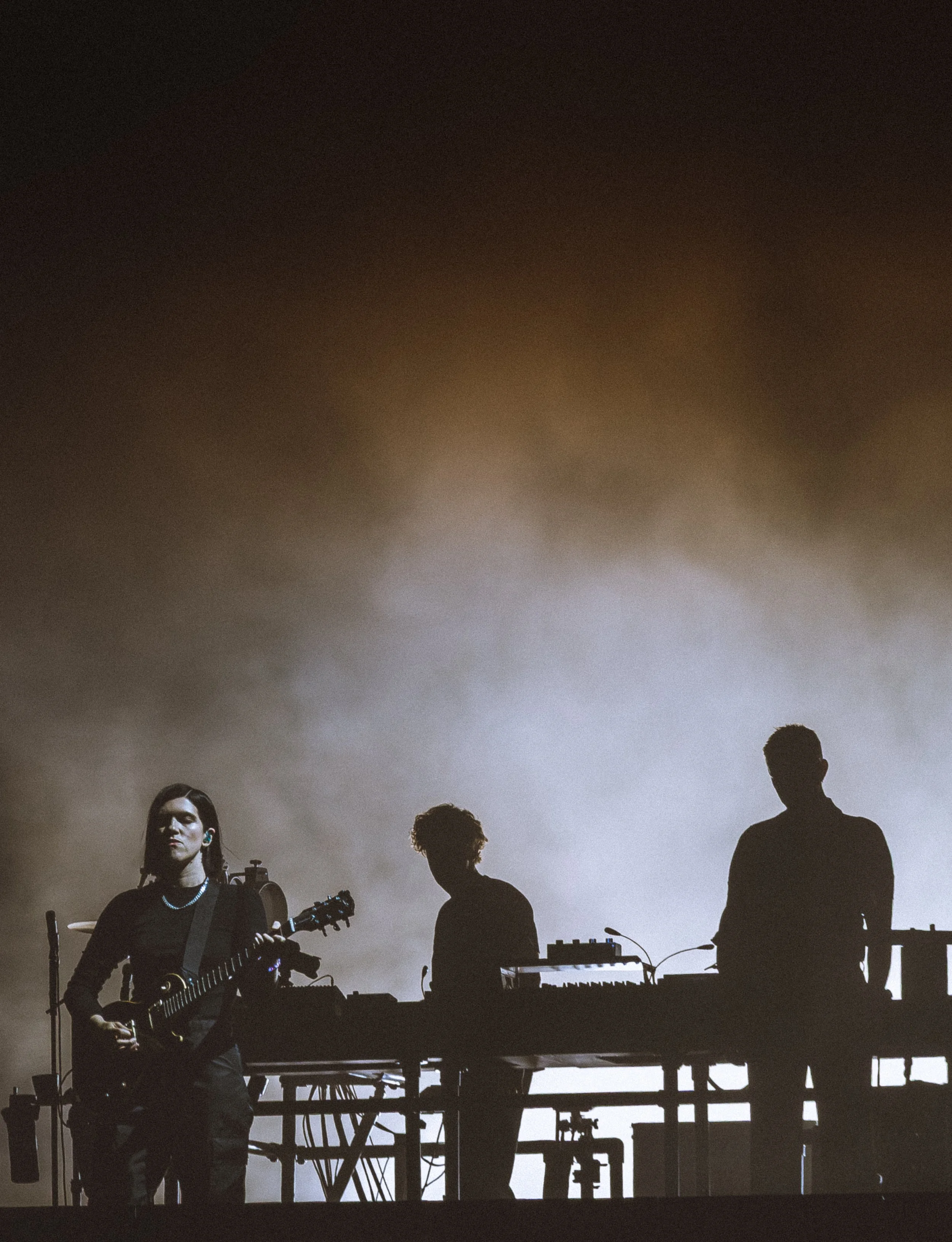
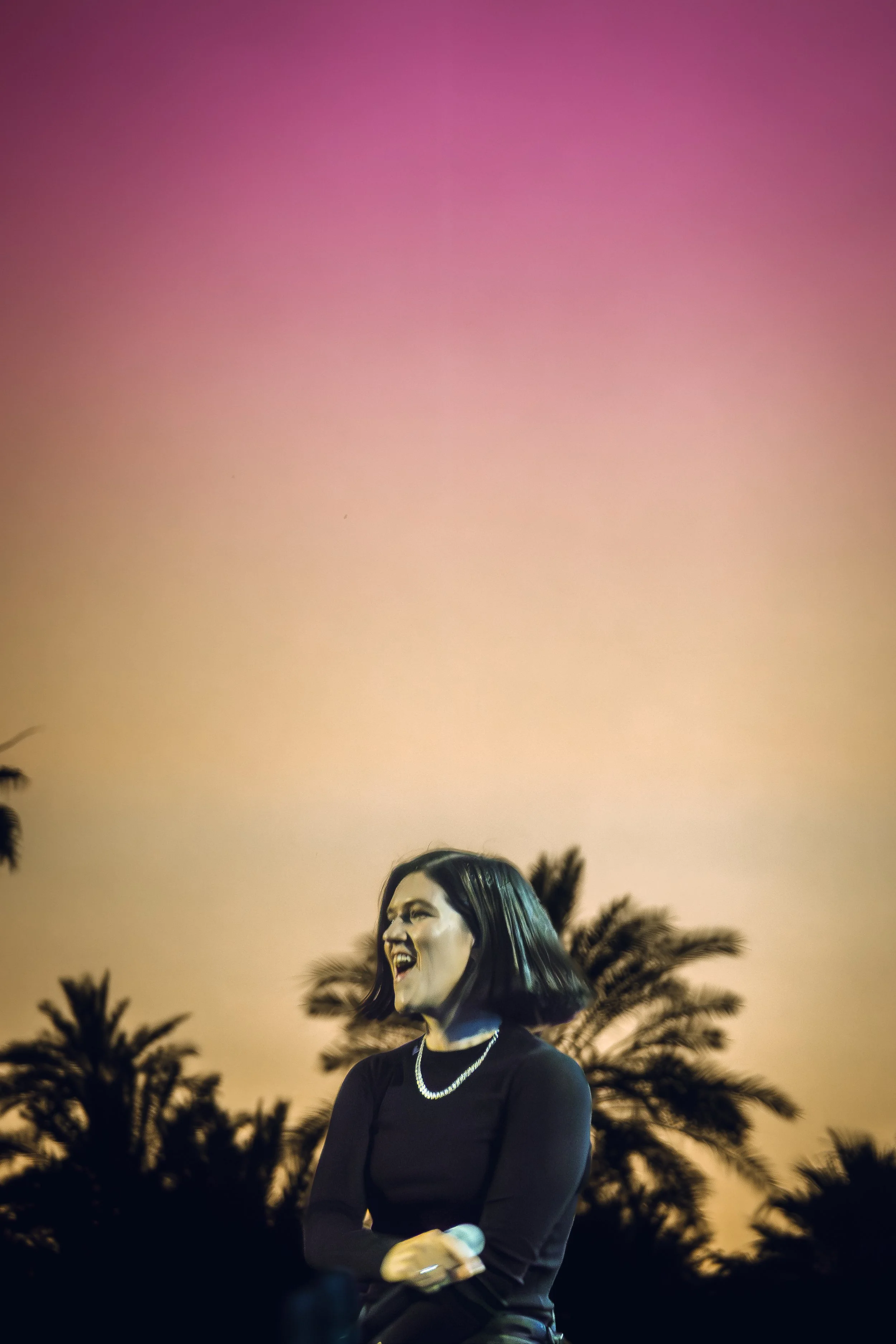
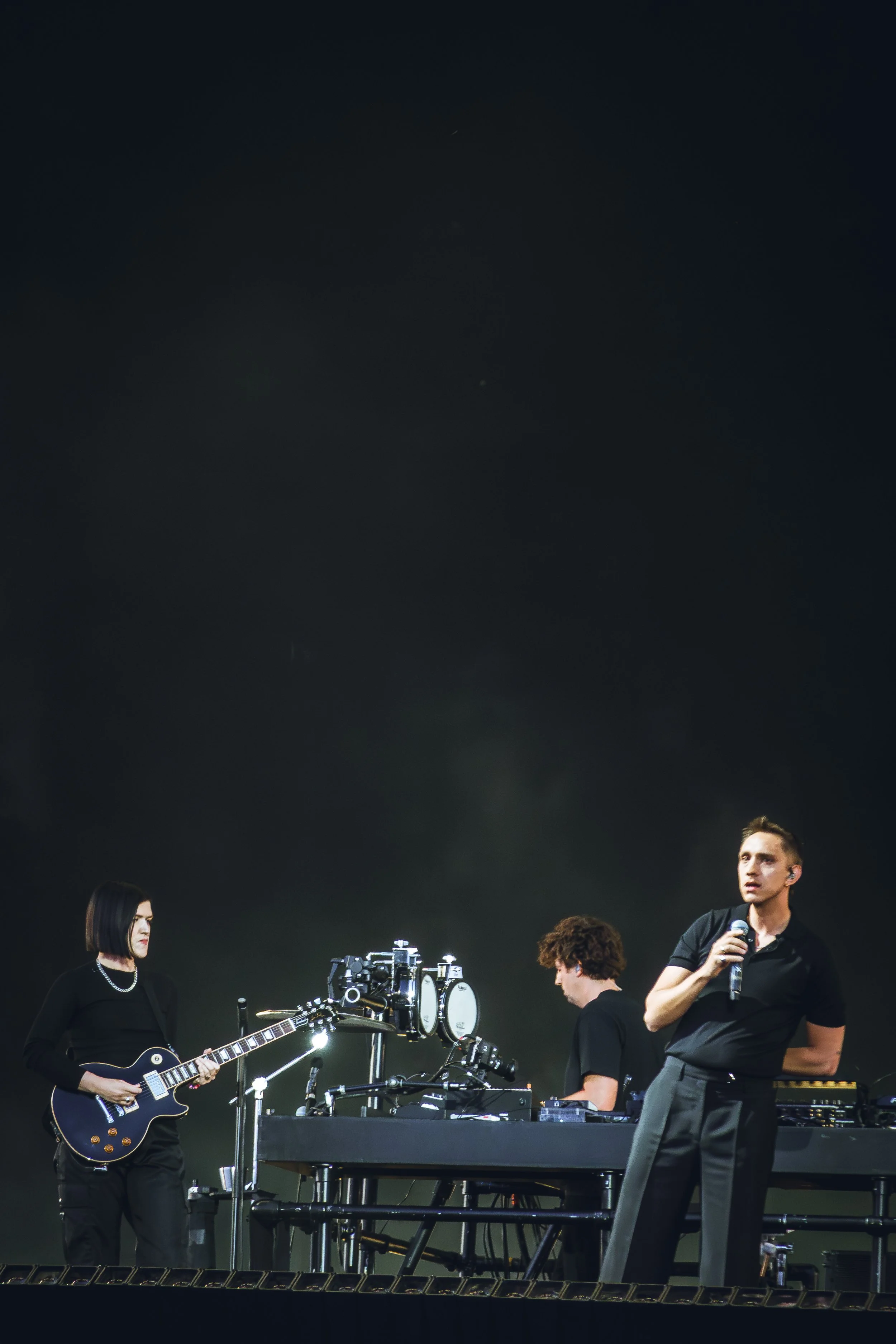
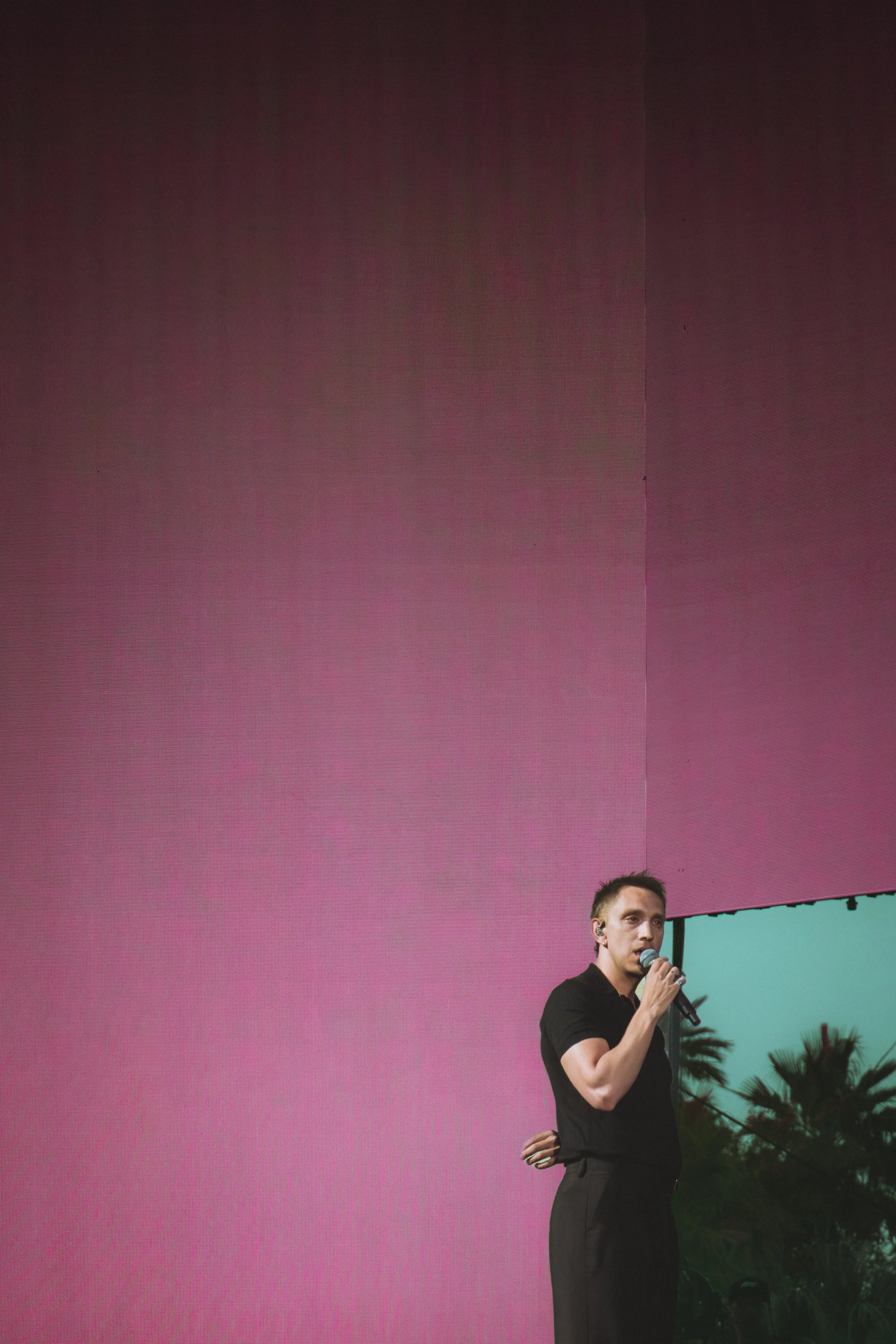
The whole set played as a love letter — to nostalgia, to the audience that has stayed with them through eight years of solo work, to each other. There was no sense, watching it, that a new album was coming after this tour. The lightness on stage was the kind that can only come from a group unencumbered by the pressure of continued fame: content, composed, free of the obligation to prove anything to anyone.
What was left, on the Coachella stage, was the part of being in a band that doesn't show up on a Spotify chart — the part you only get from playing songs you wrote together as teenagers, in a field, twenty years later, in front of people who came of age with them. It felt more like a family reunion to which we'd all been invited — three old friends hosting a London cold-weather BBQ in their shared back garden, grilling Tesco sausages over an estate's worth of council-flat barbecue smoke, all of us standing around with cans of warm Stella, grateful to have been invited at all.
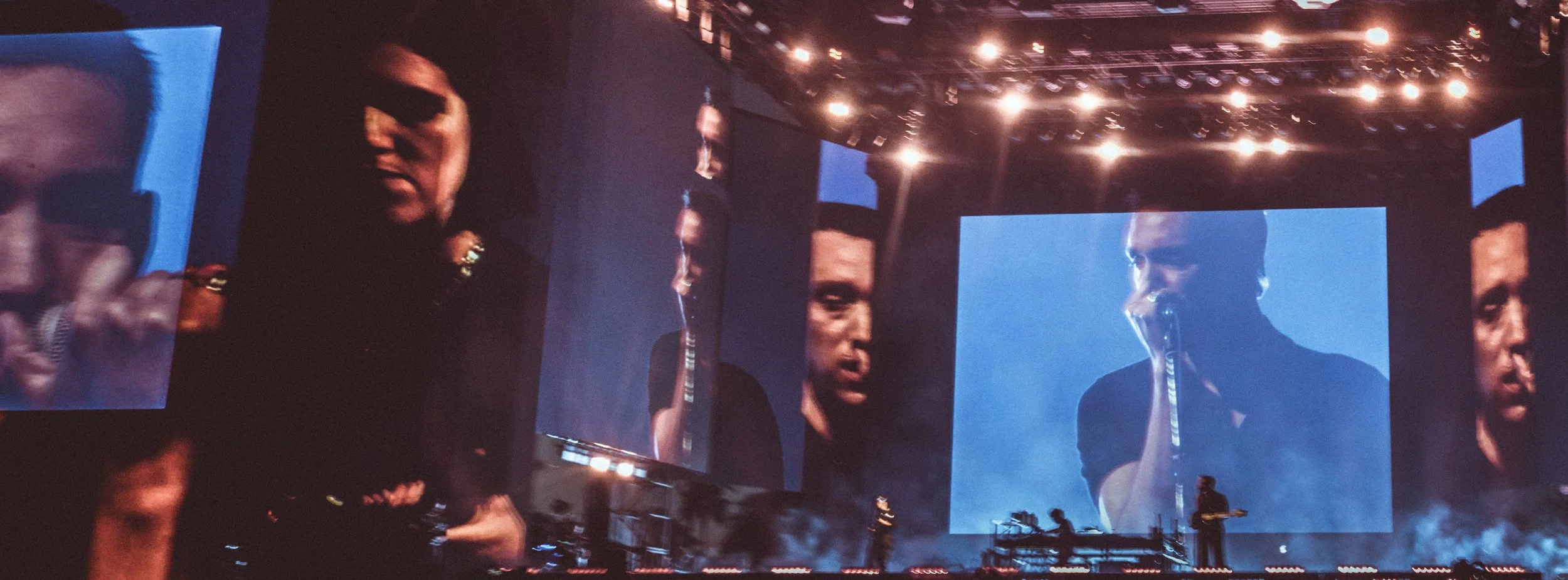
TOMORA
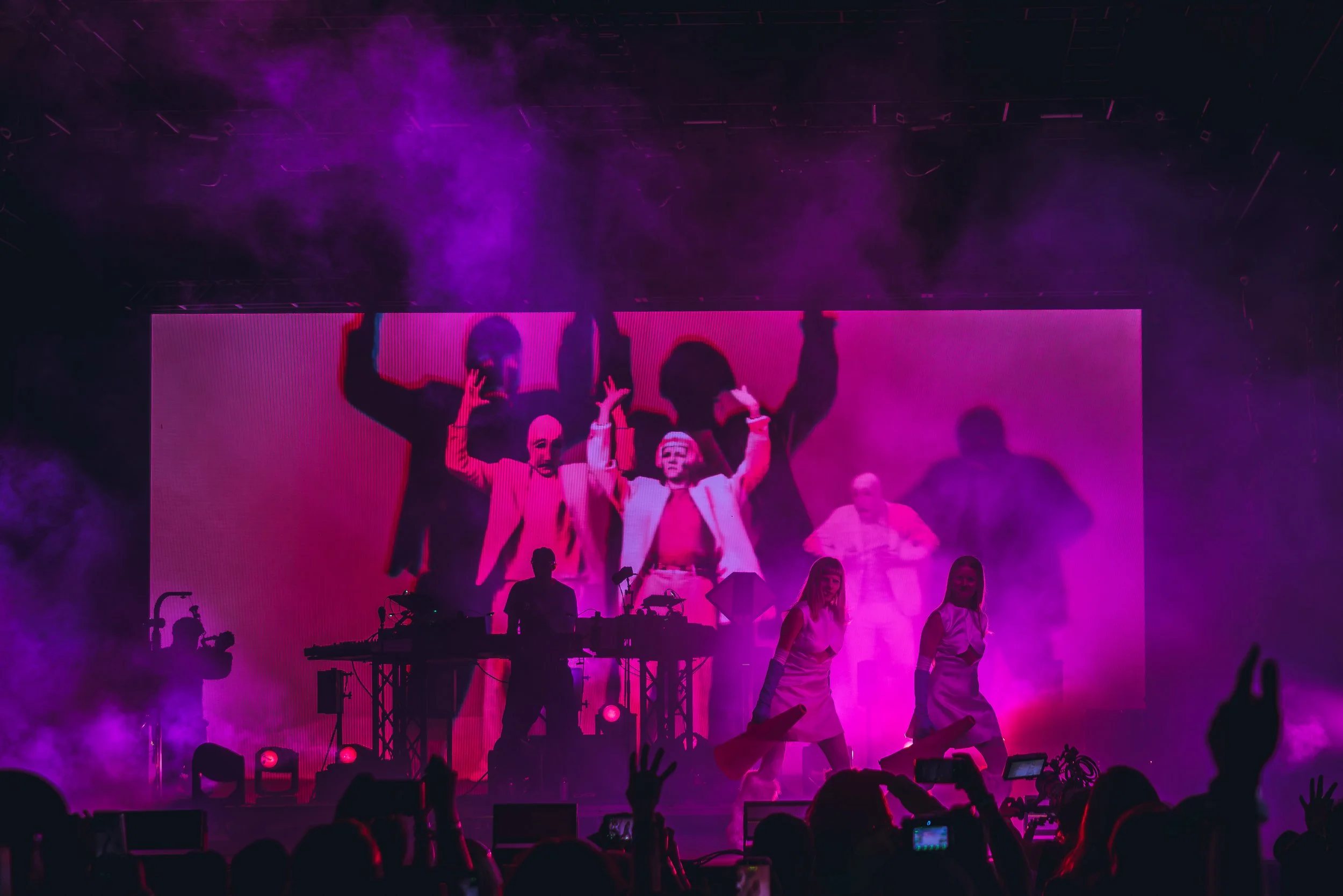
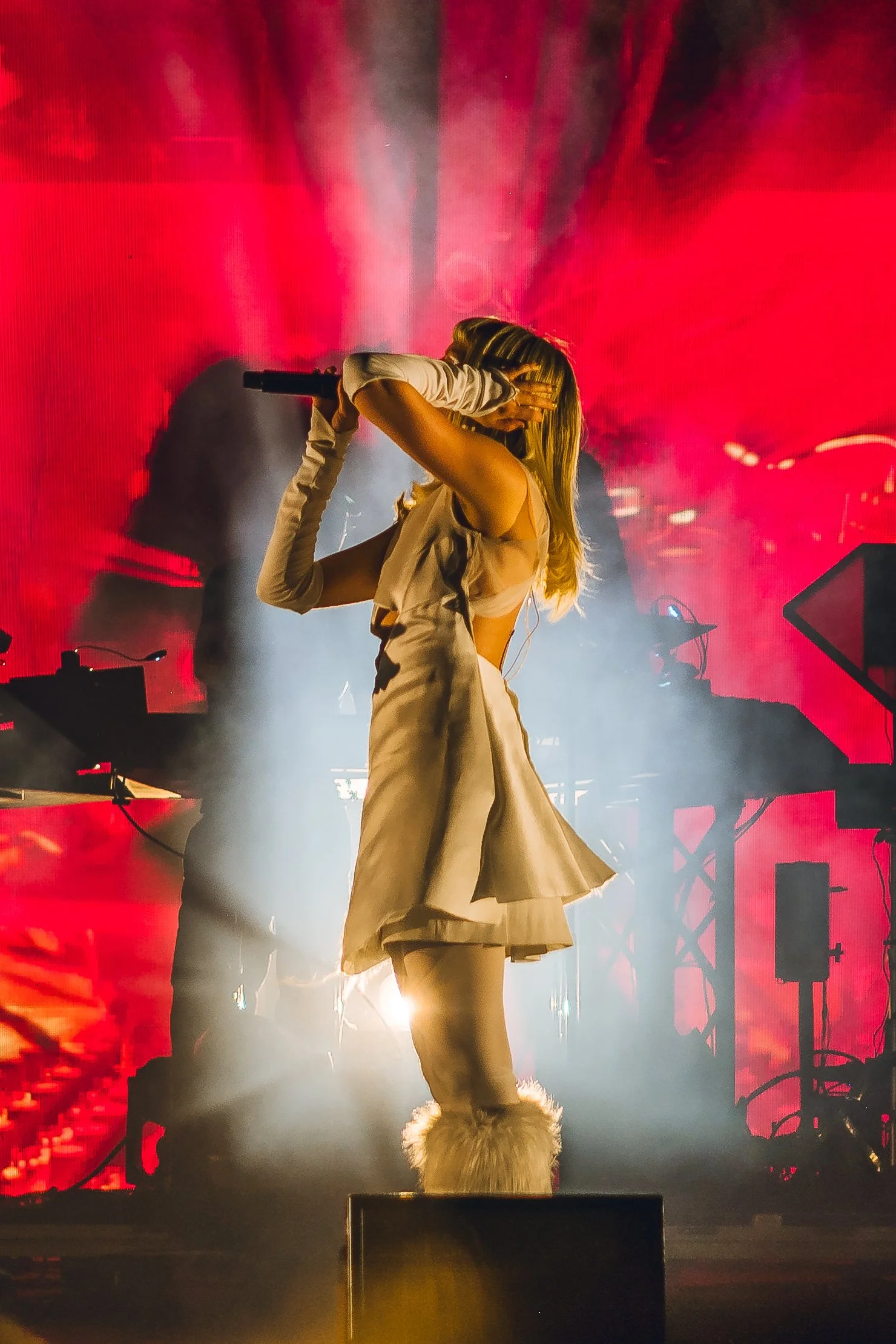
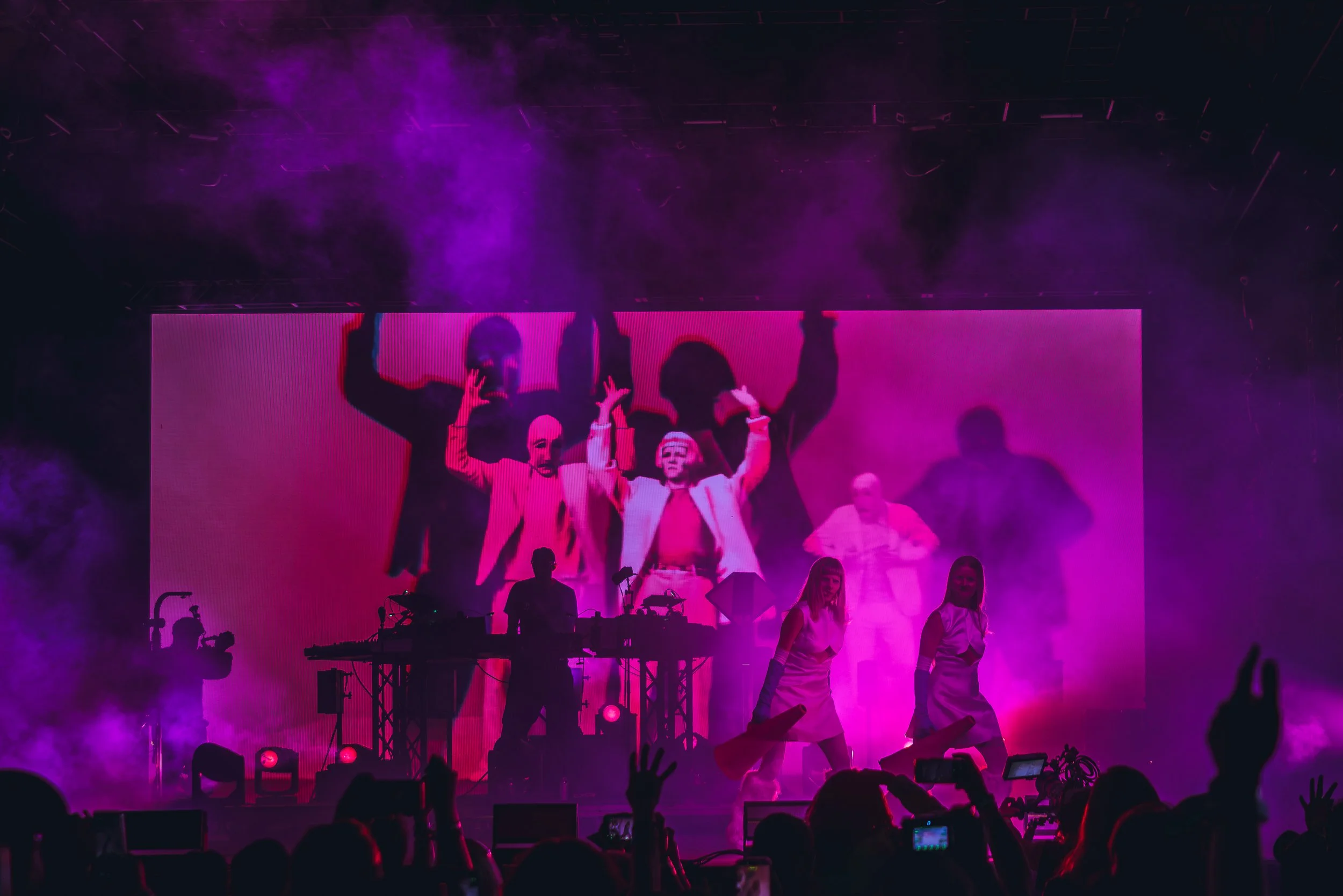
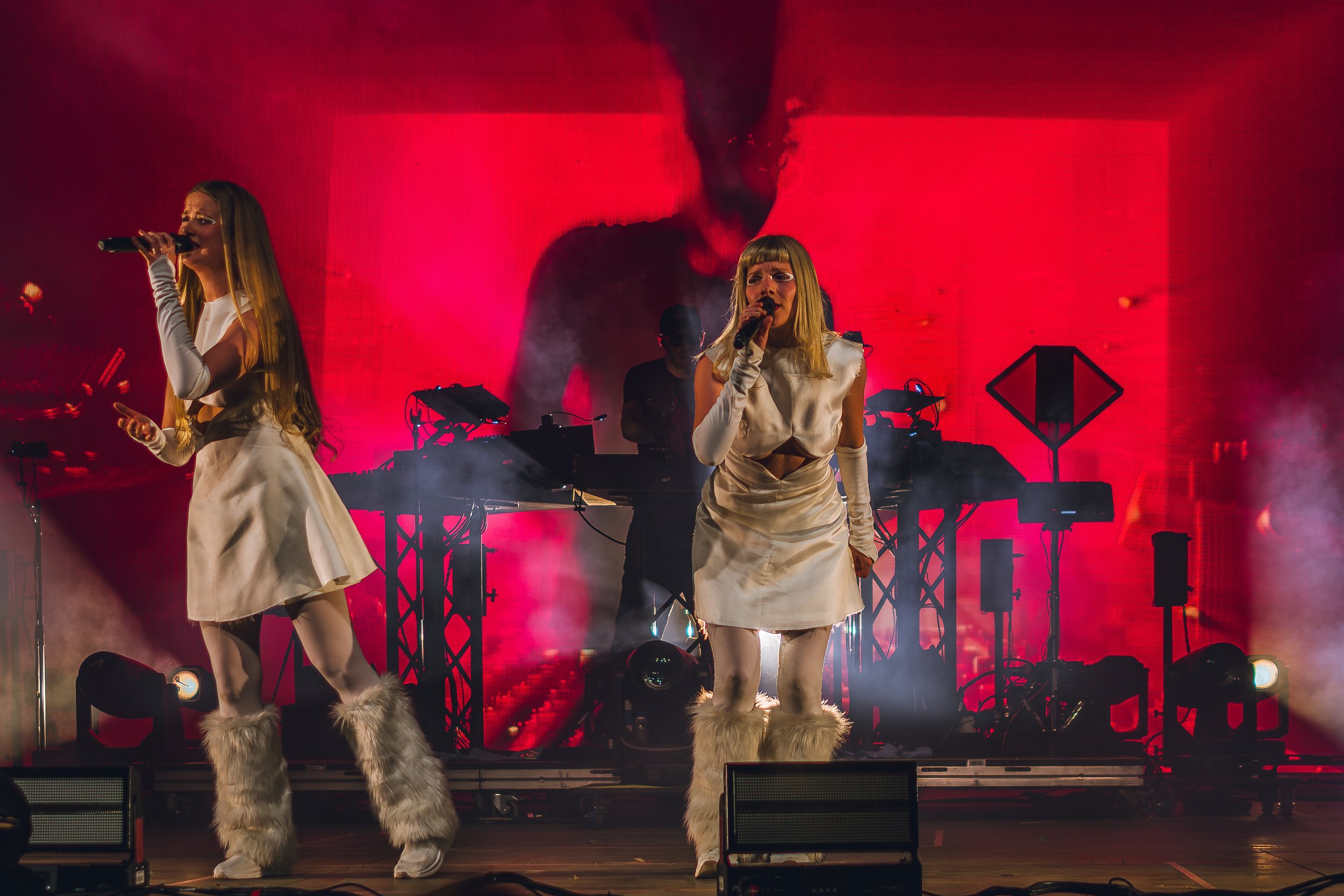
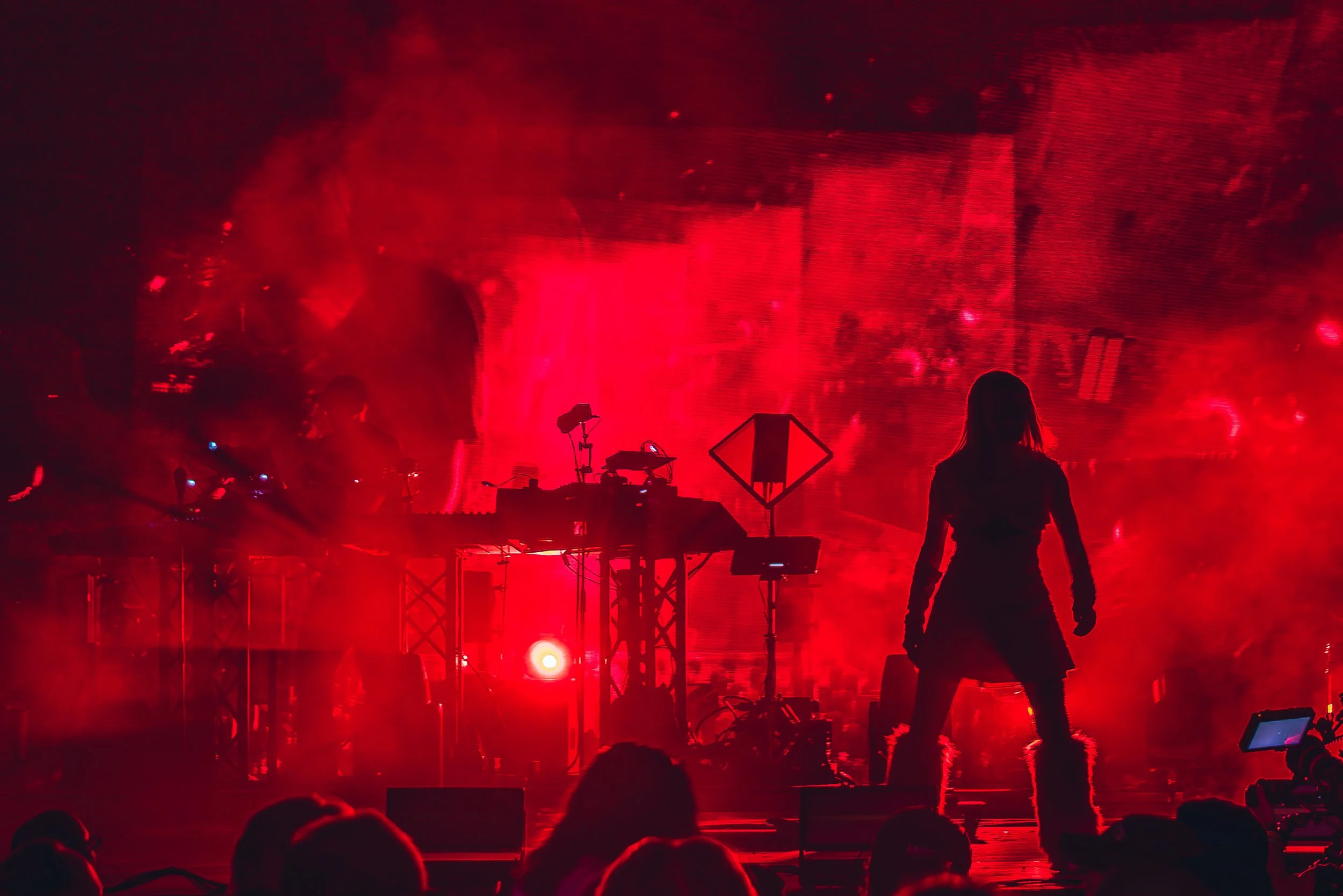
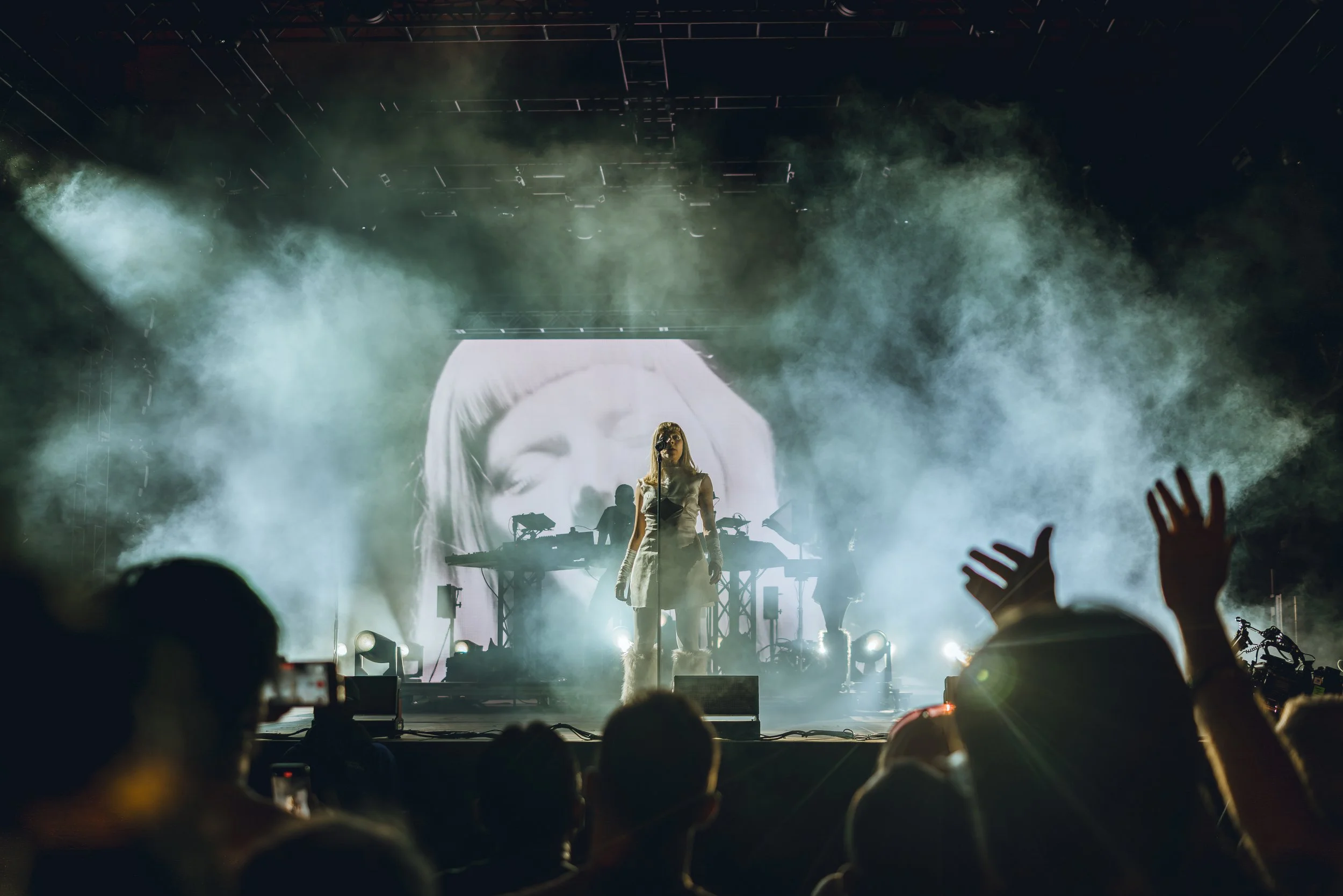
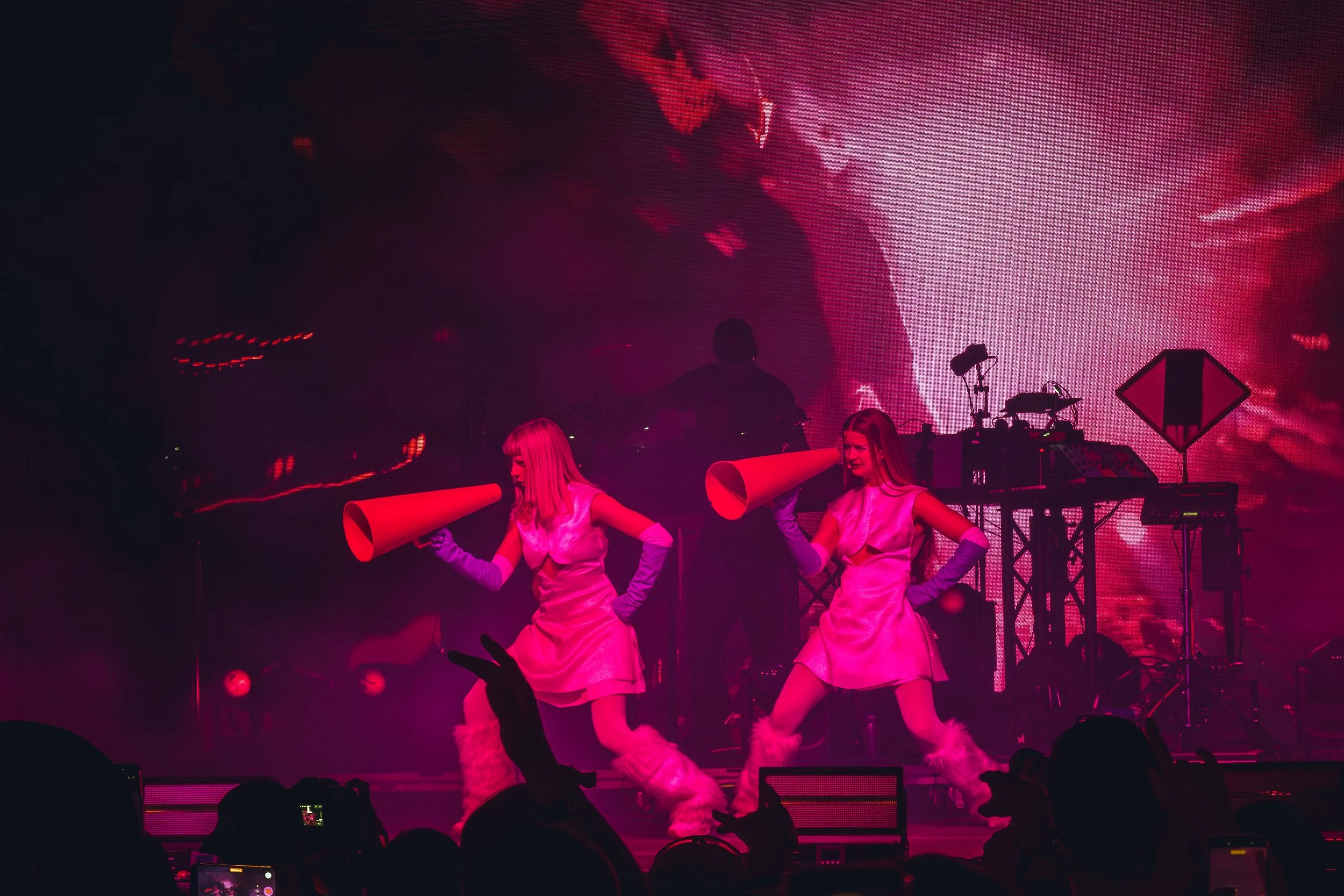
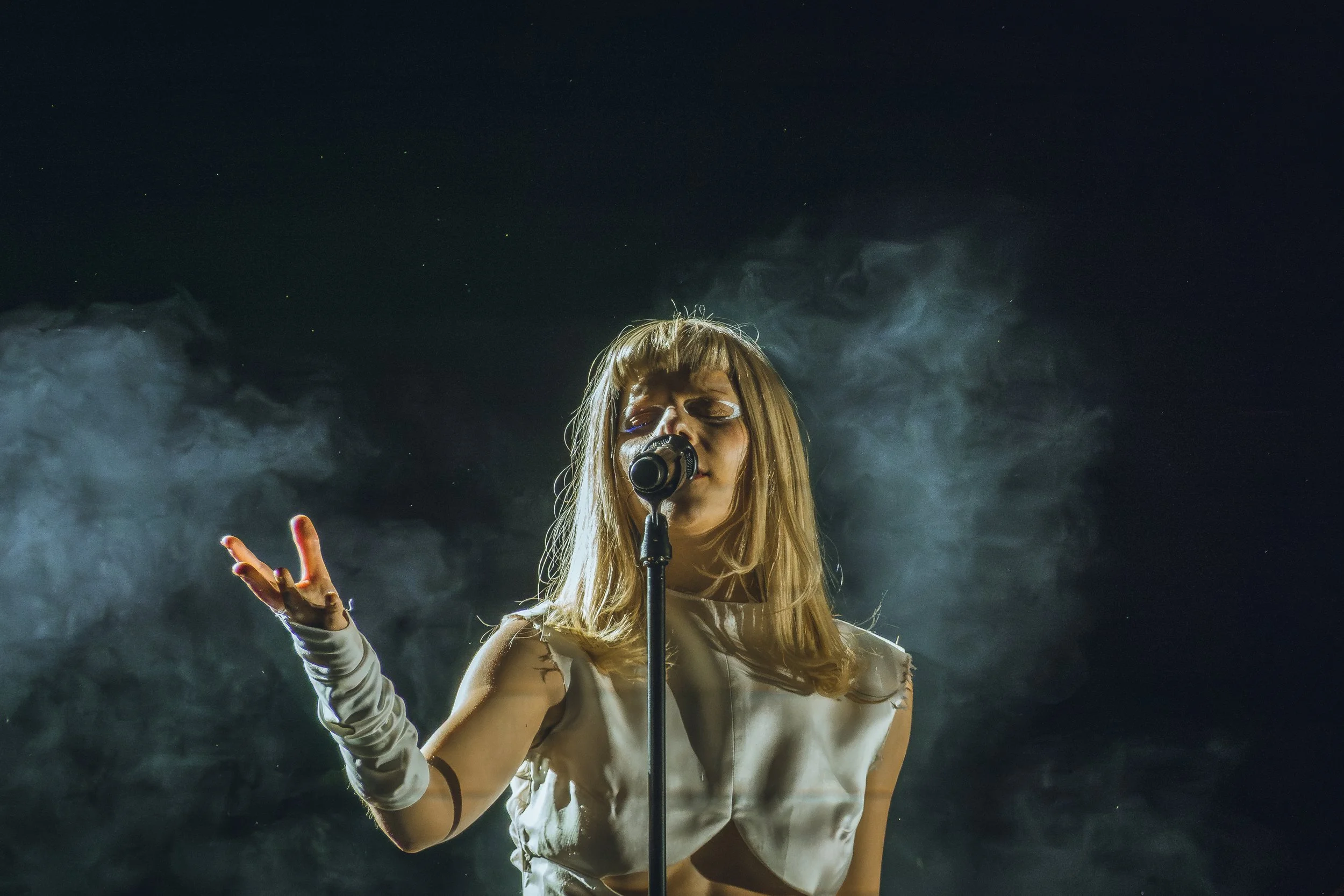
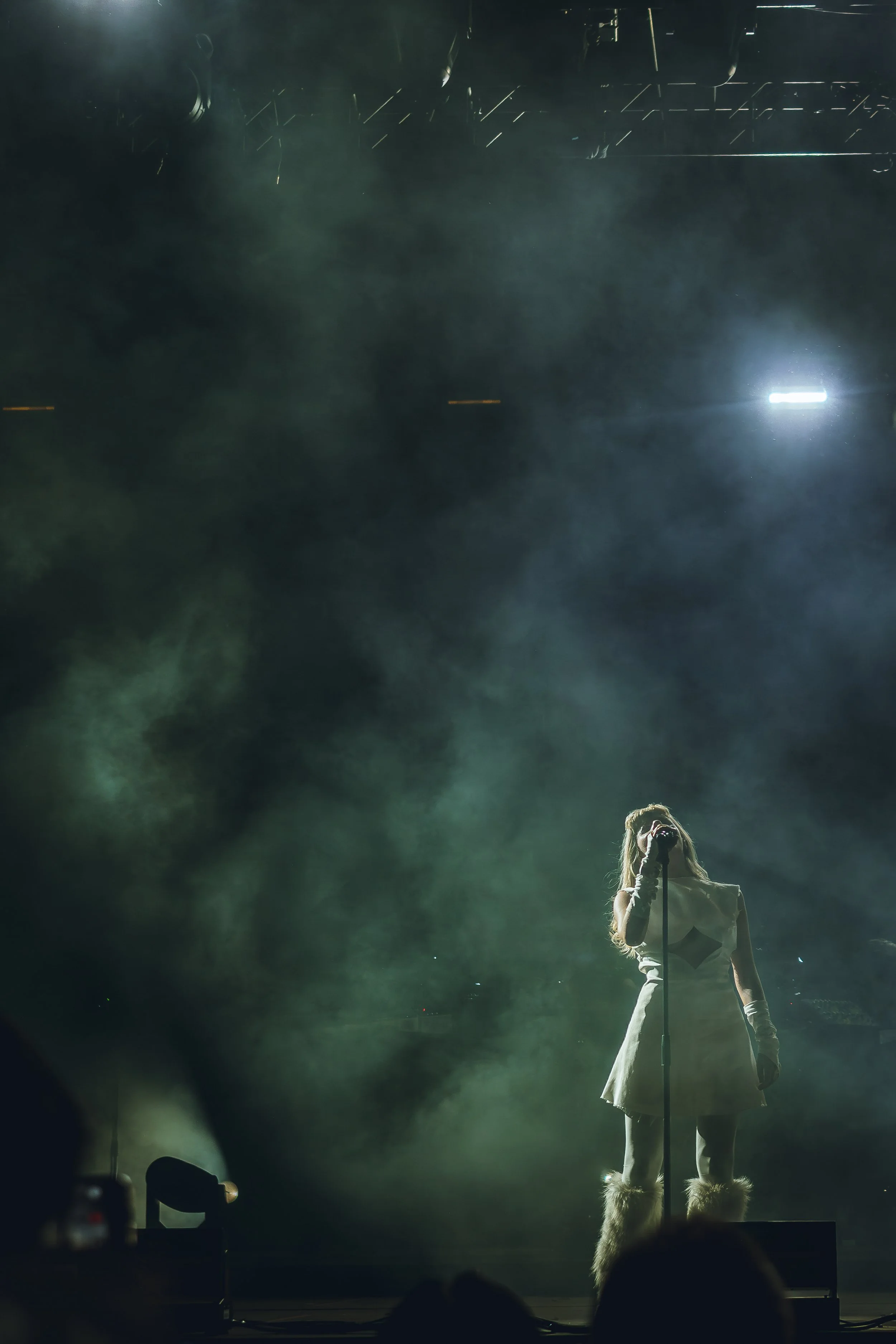
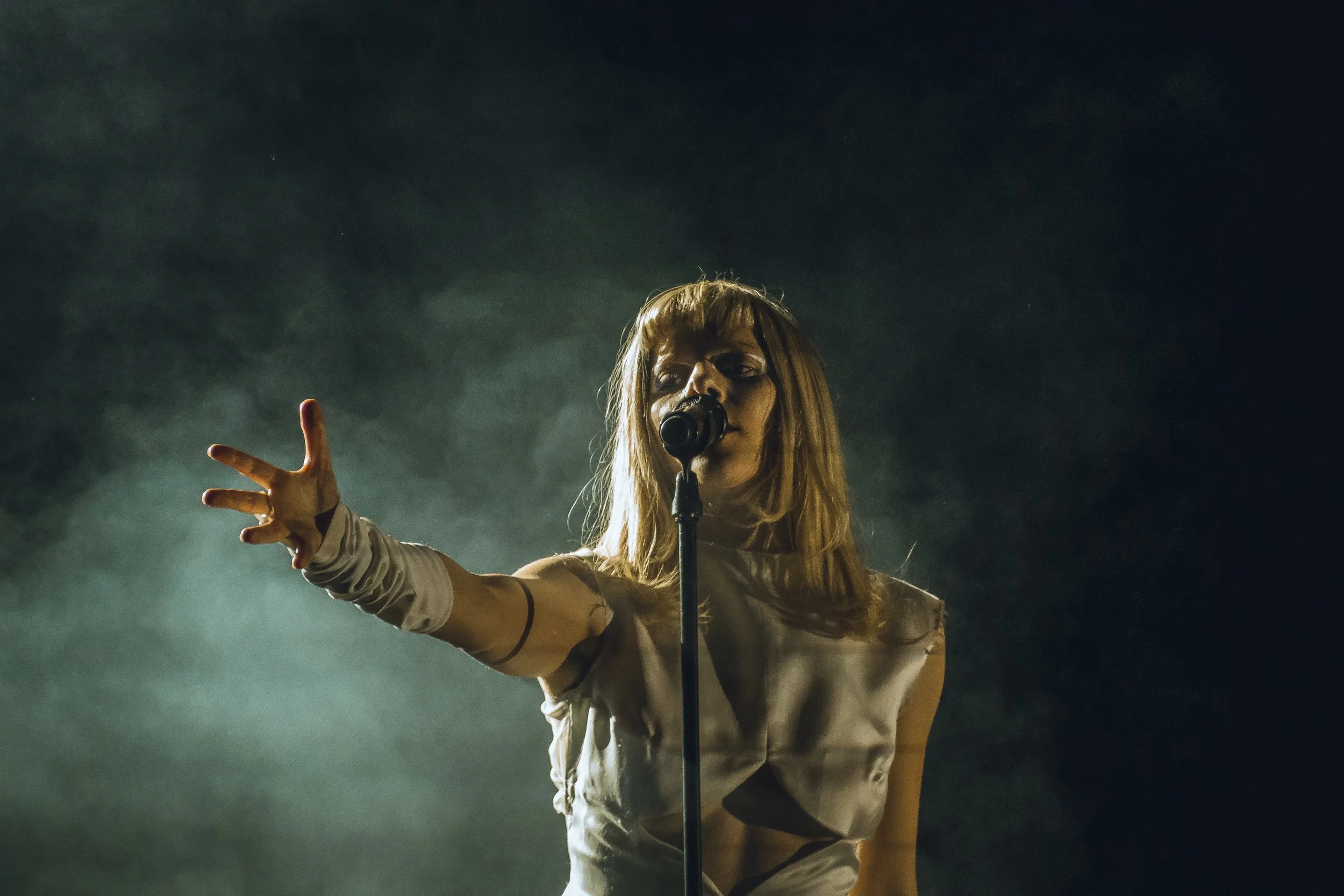
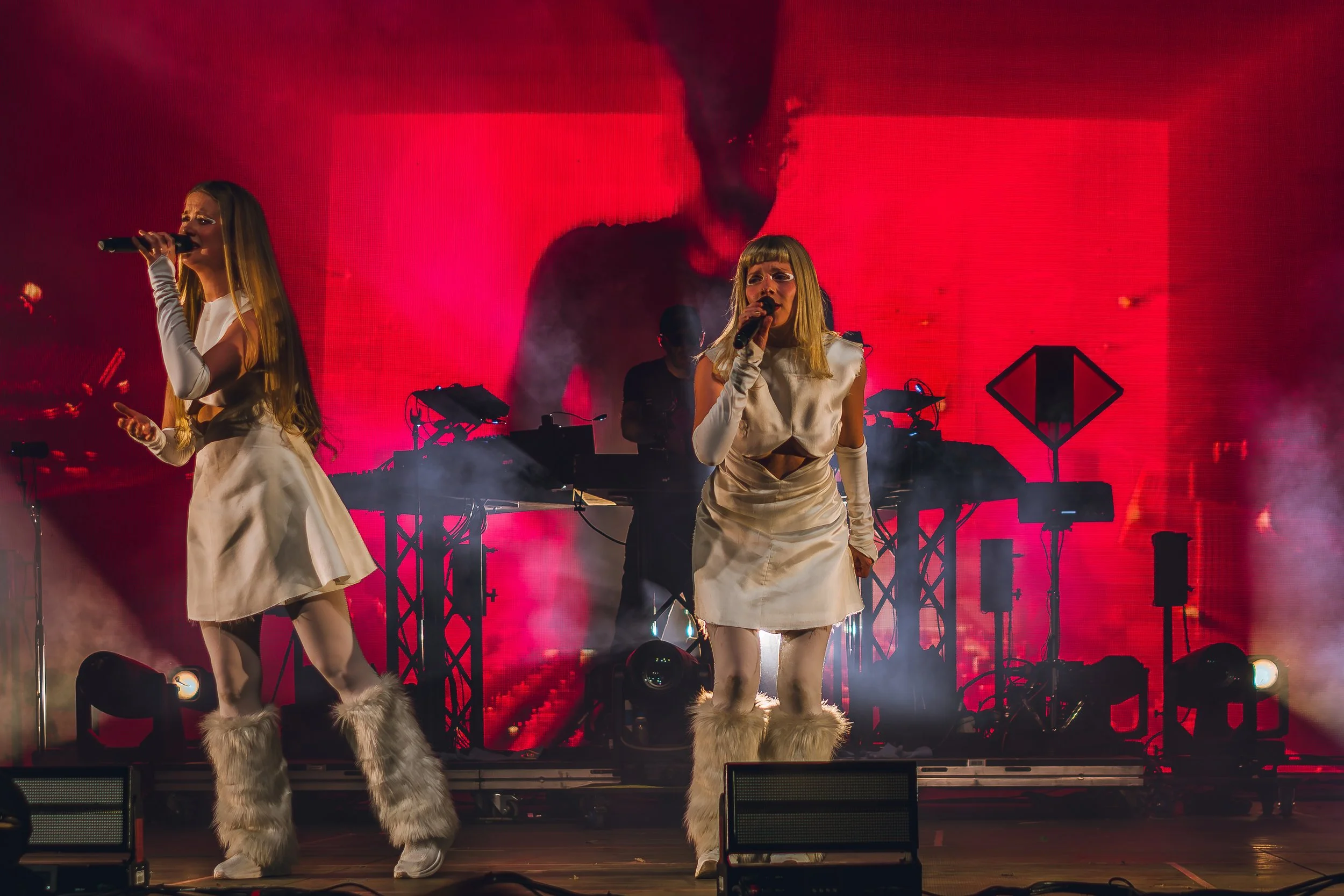
The best booking on the poster was a name nobody recognized — a slot that historically signals an unsigned act somebody at Goldenvoice caught in an East London basement and gambled on. Then Ring the Alarm dropped on streaming services in December, and within twenty-four hours every Discord server worth its salt had identified the worst-kept secret in dance music: TOMORA is made up of Tom Rowlands of the Chemical Brothers and Aurora Aksnes, the Norwegian singer who'd been orbiting his records since her 2019 Glastonbury set caught his attention. The portmanteau is theirs (and means friendly companion on earth in Japanese, which they may or may not have known when they picked it). The Gobi Tent on Sunday at 7:45 PM was the live debut.
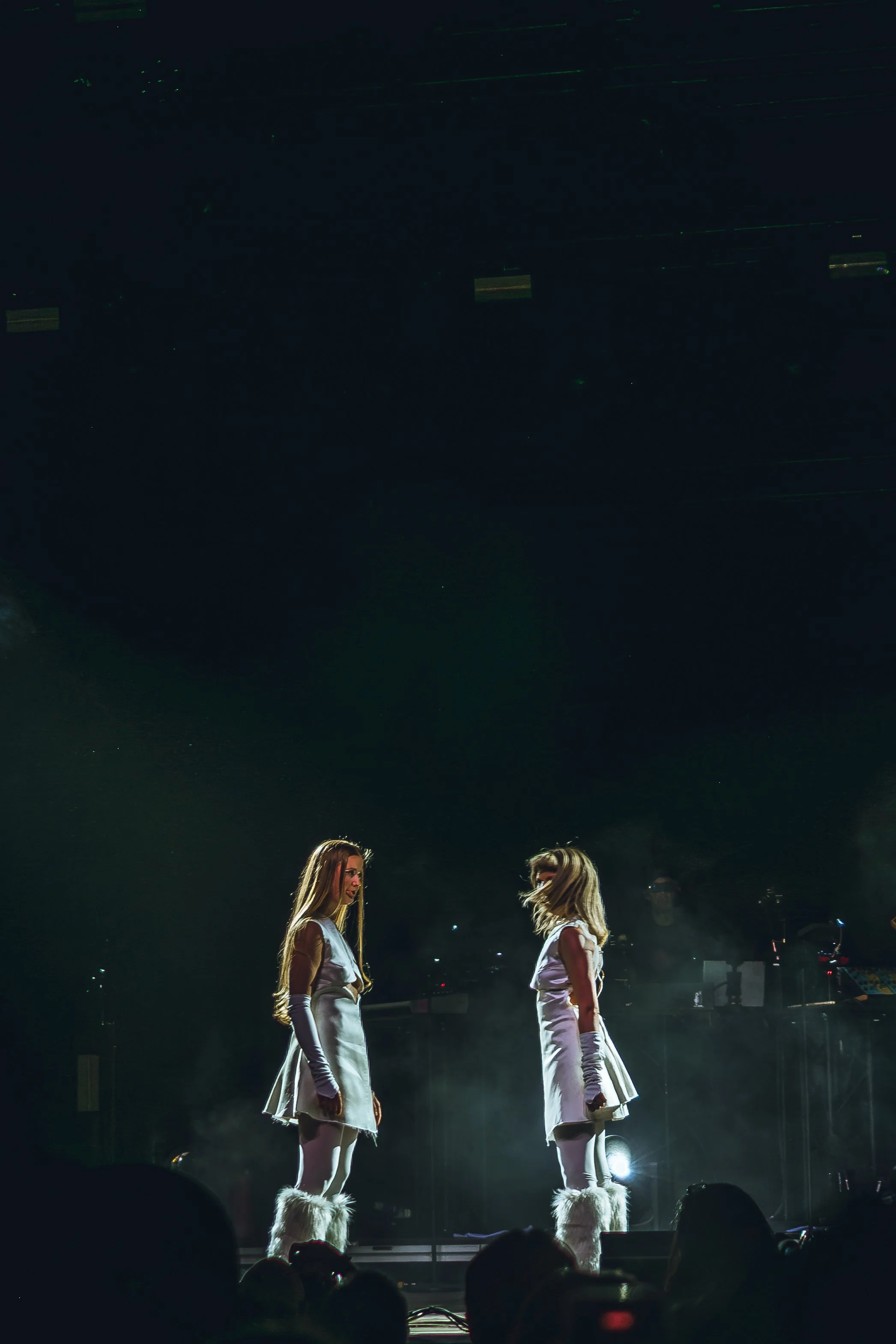
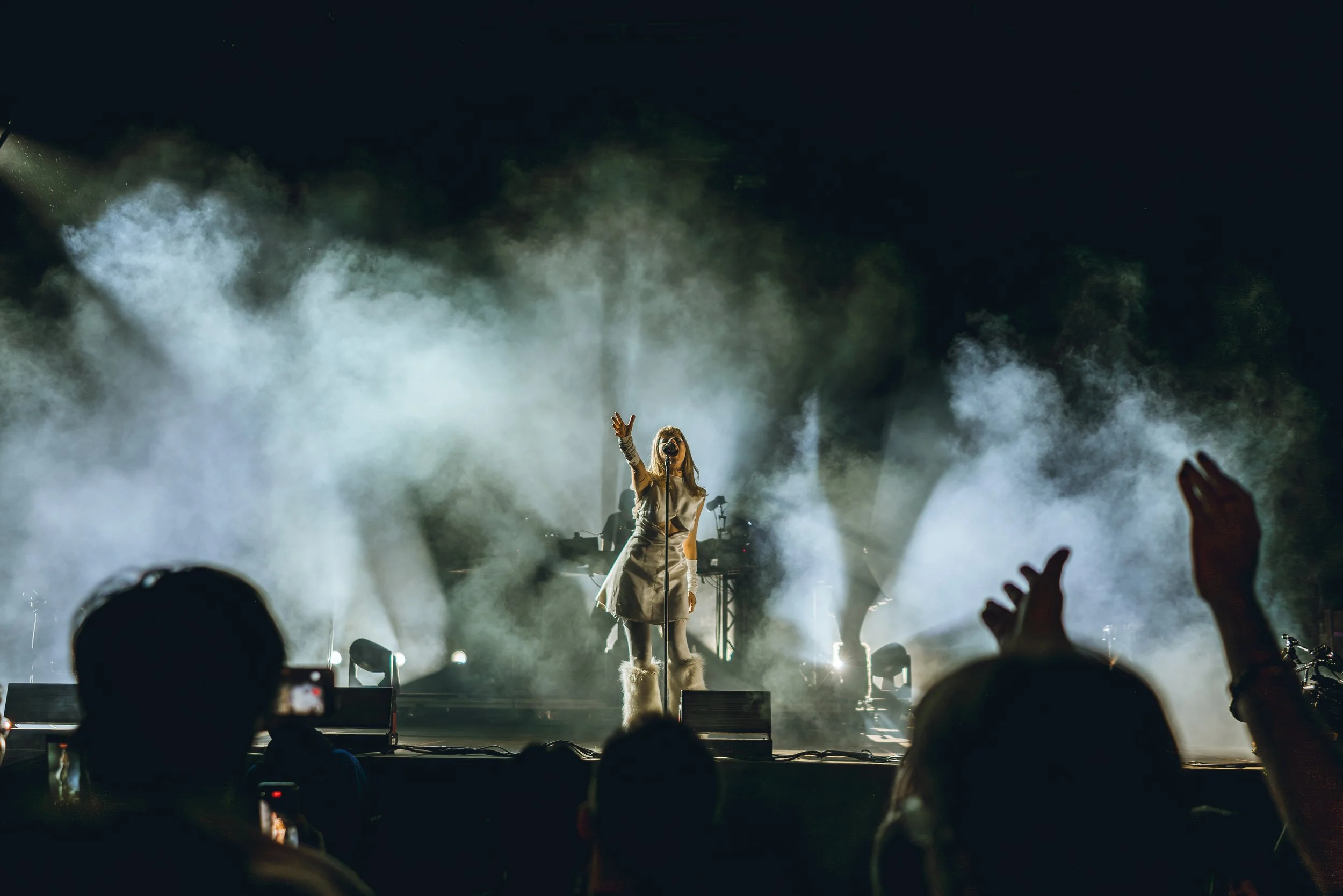
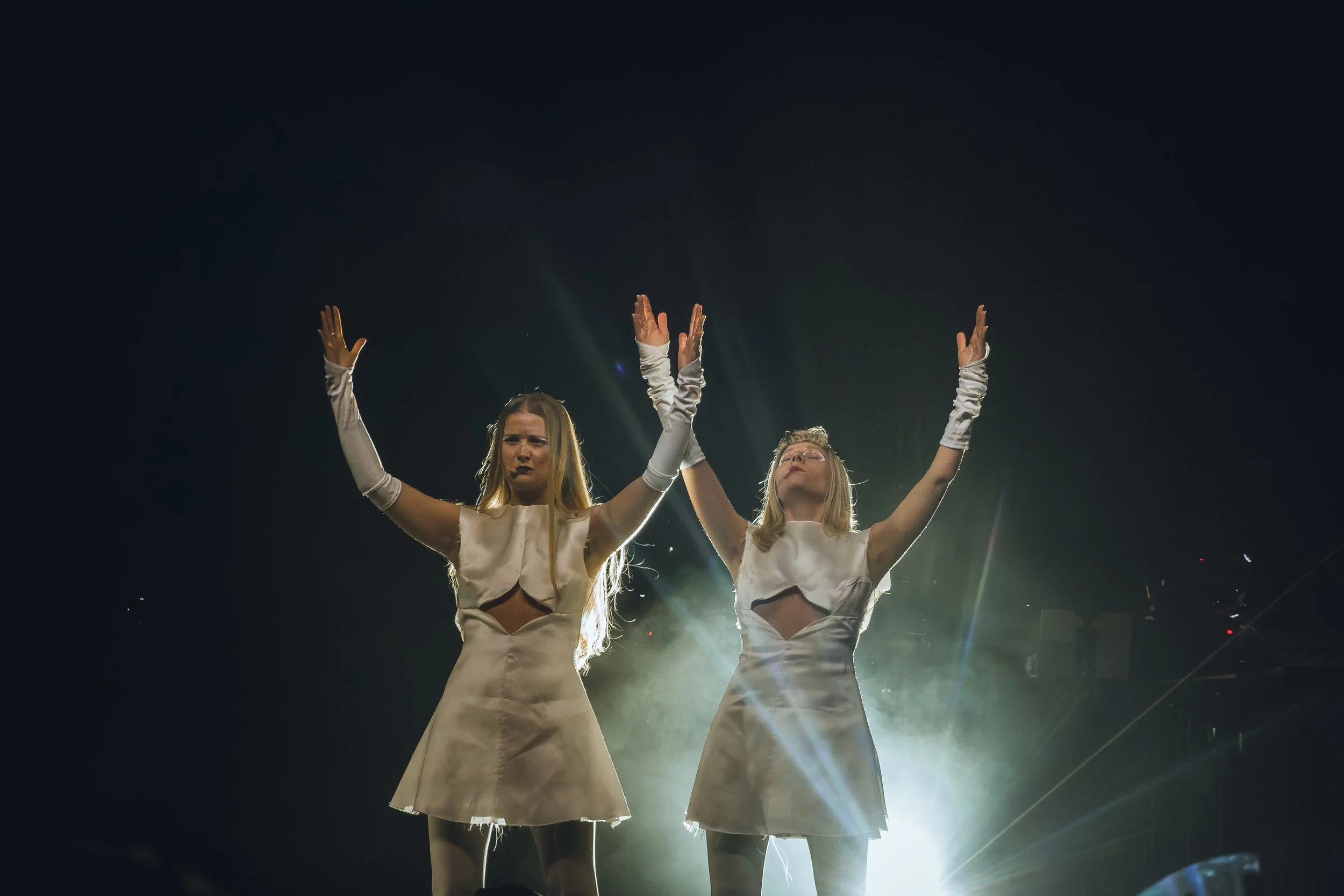
Two acts who could have arrived as a Chemical Brothers set with an Aurora cameo, or an Aurora record with Rowlands smuggling in heavier bass, arrived as a third thing entirely — a project that they’ve been planning itself for years before anyone outside the studio knew. Aurora was doubled on stage by a backup singer-dancer dressed as her mirror image. Rowlands was tucked behind a console of analog gear with the visual density of a Soviet submarine bridge. The lighting was washed entirely in pink, every drop registered as a color shift before the body felt the bass.
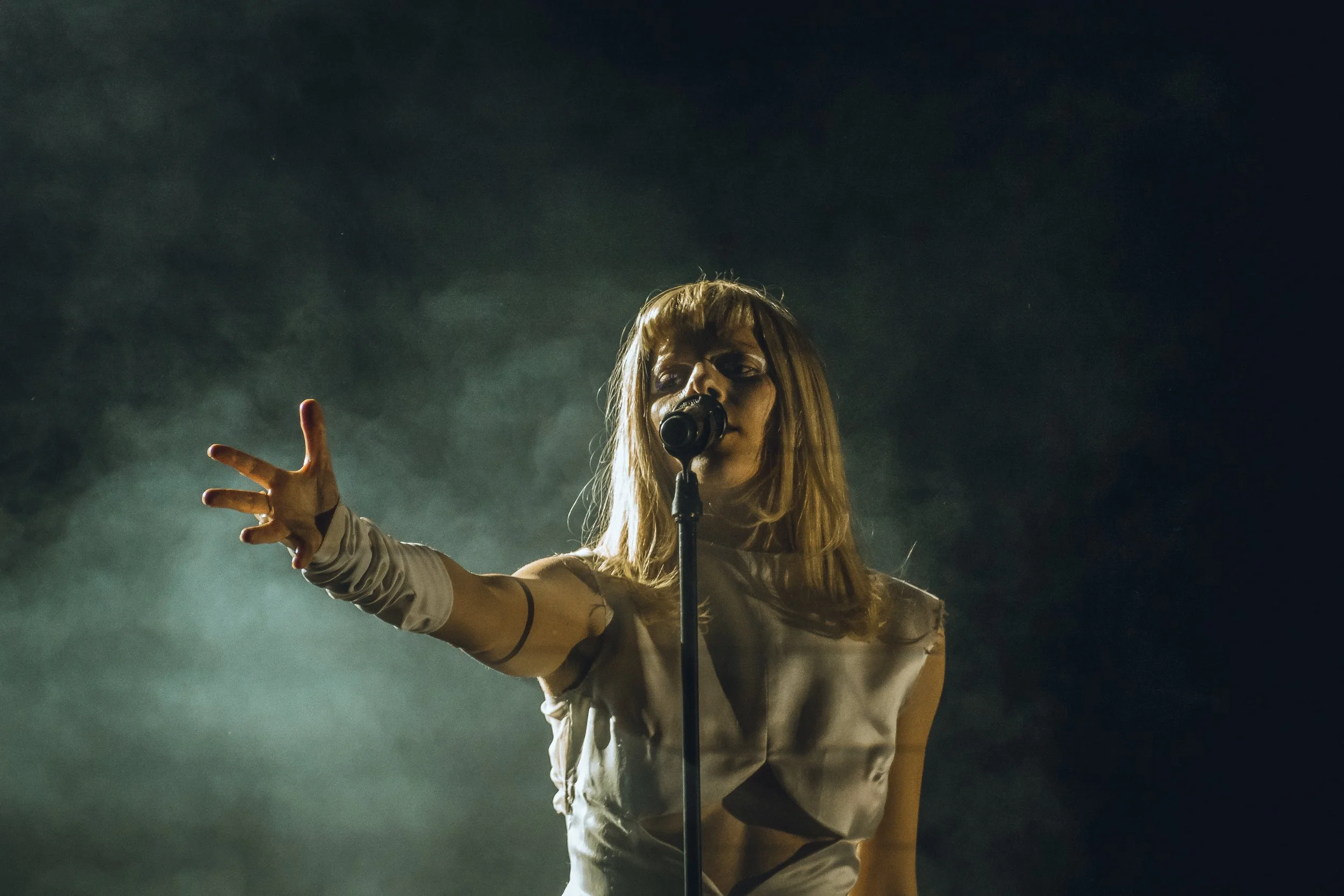
For an act that had never played live, the setlist felt eerily familiar — not in any specific song, but in the way the songs were sequenced. TOMORA cut between their own debut material and the back catalogs of their two parent organisms (a Chemical Brothers track here, an Aurora solo song there) at a tempo that flattened the distinction. By the third song you had stopped noticing whose discography you were in. The hinge of the set was The Universe Sent Me, a Chemical Brothers song from 2019’s No Geography, performed not as a Chems track but as a TOMORA track, with Aurora carrying the vocal that the original had treated as a sample. The literal title doing a kind of on the nose literal work — some divine being did send Tom Rowlands toward Aurora Aksnes, and the song they had once made apart became the song the joint project pivoted on. Somewhere Else, a new track and the peak of the set, arrived in the second half and absorbed the way the desert absorbs rain. In a Minute closed the set the way it closes the album — dissolving into the sunrise-rave catharsis the late-night dance tents on the polo grounds spend the whole weekend trying and mostly failing to engineer.
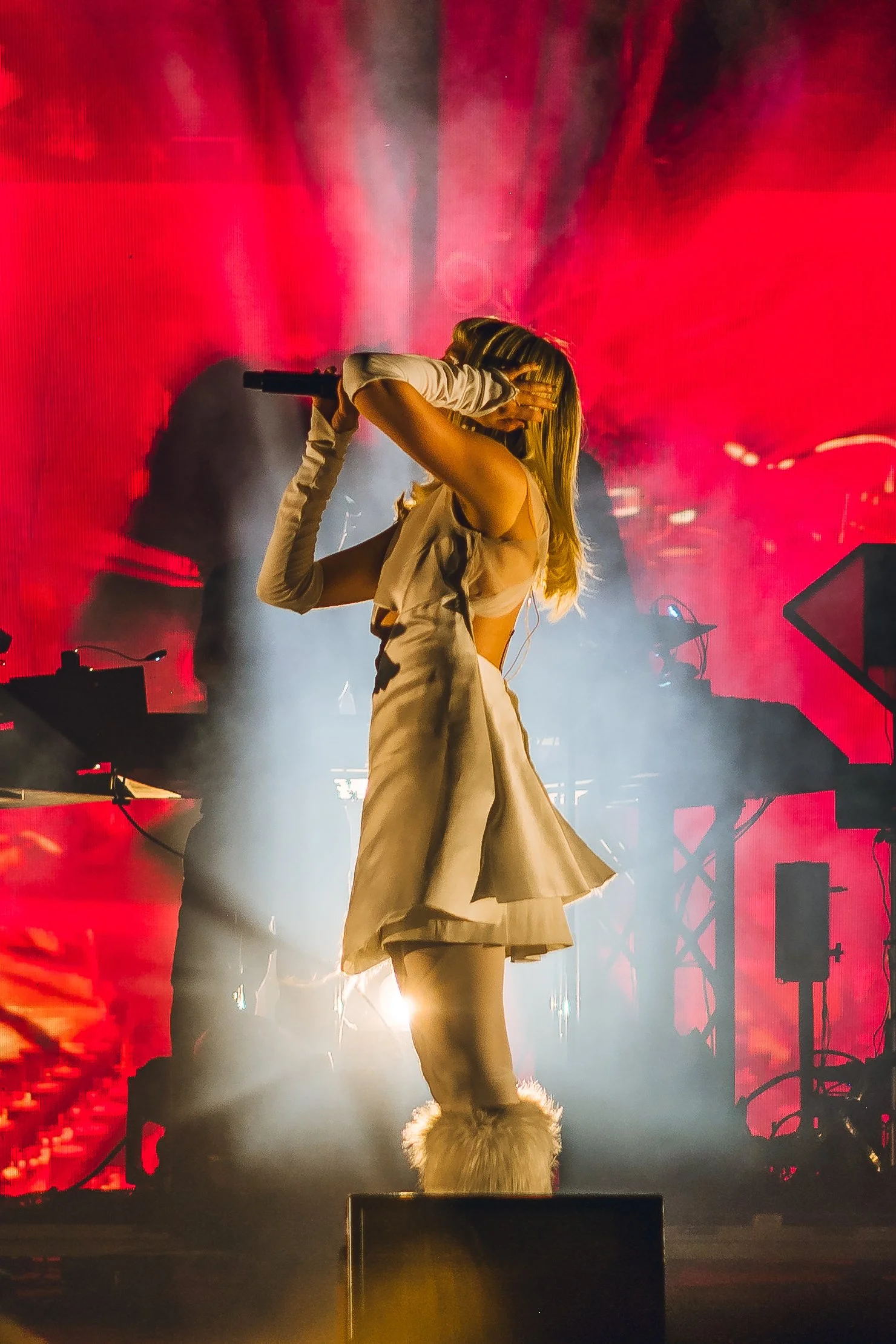
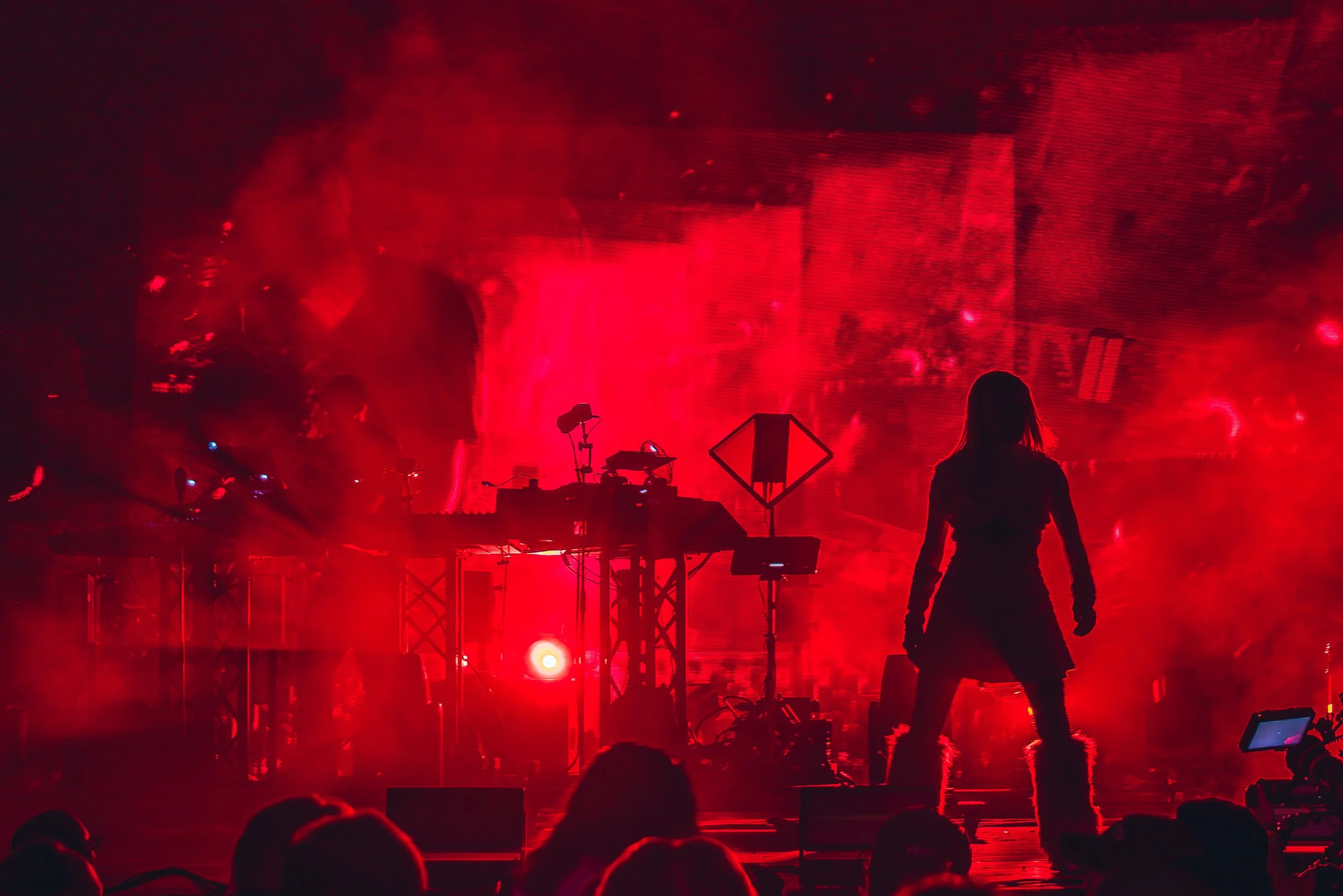
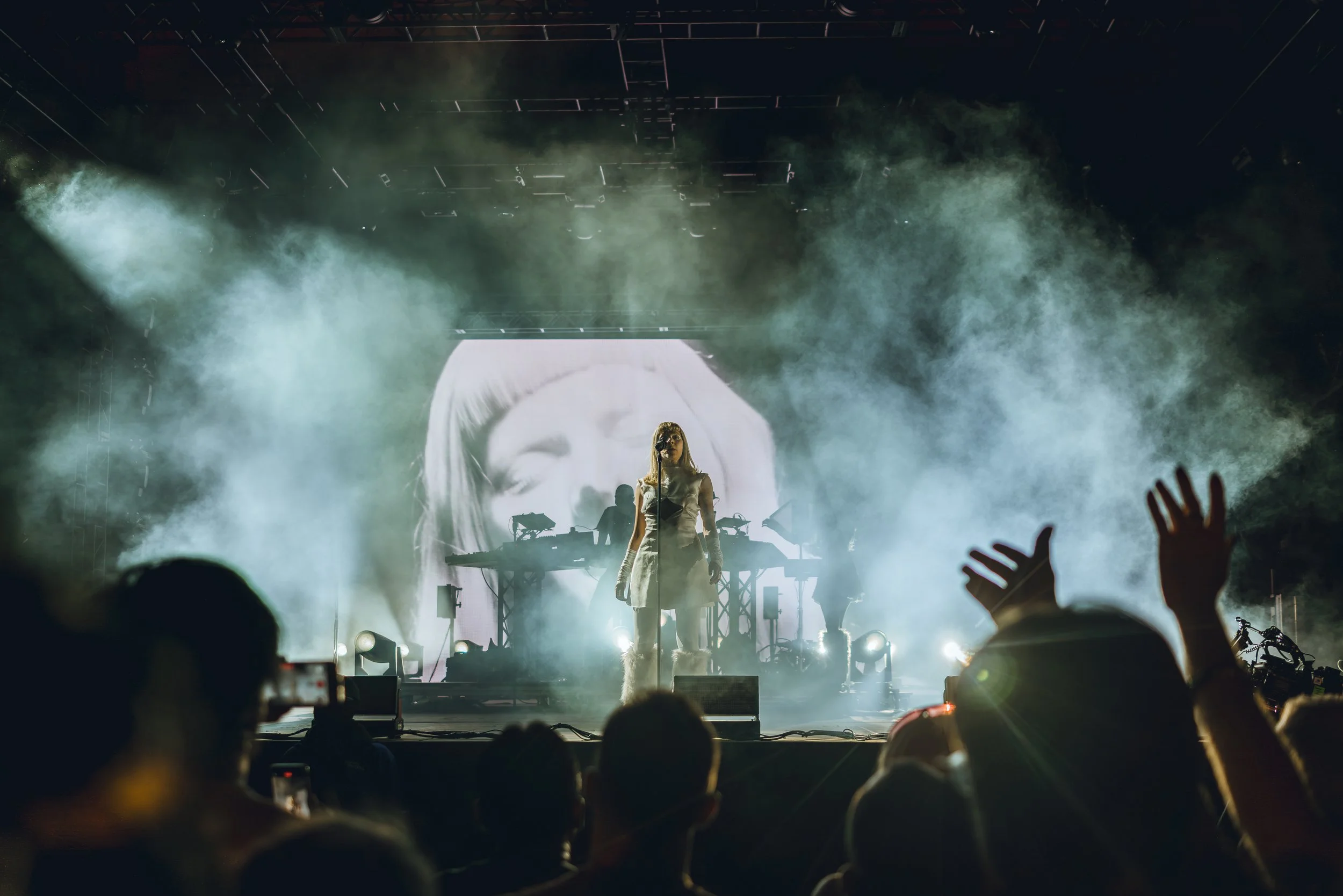
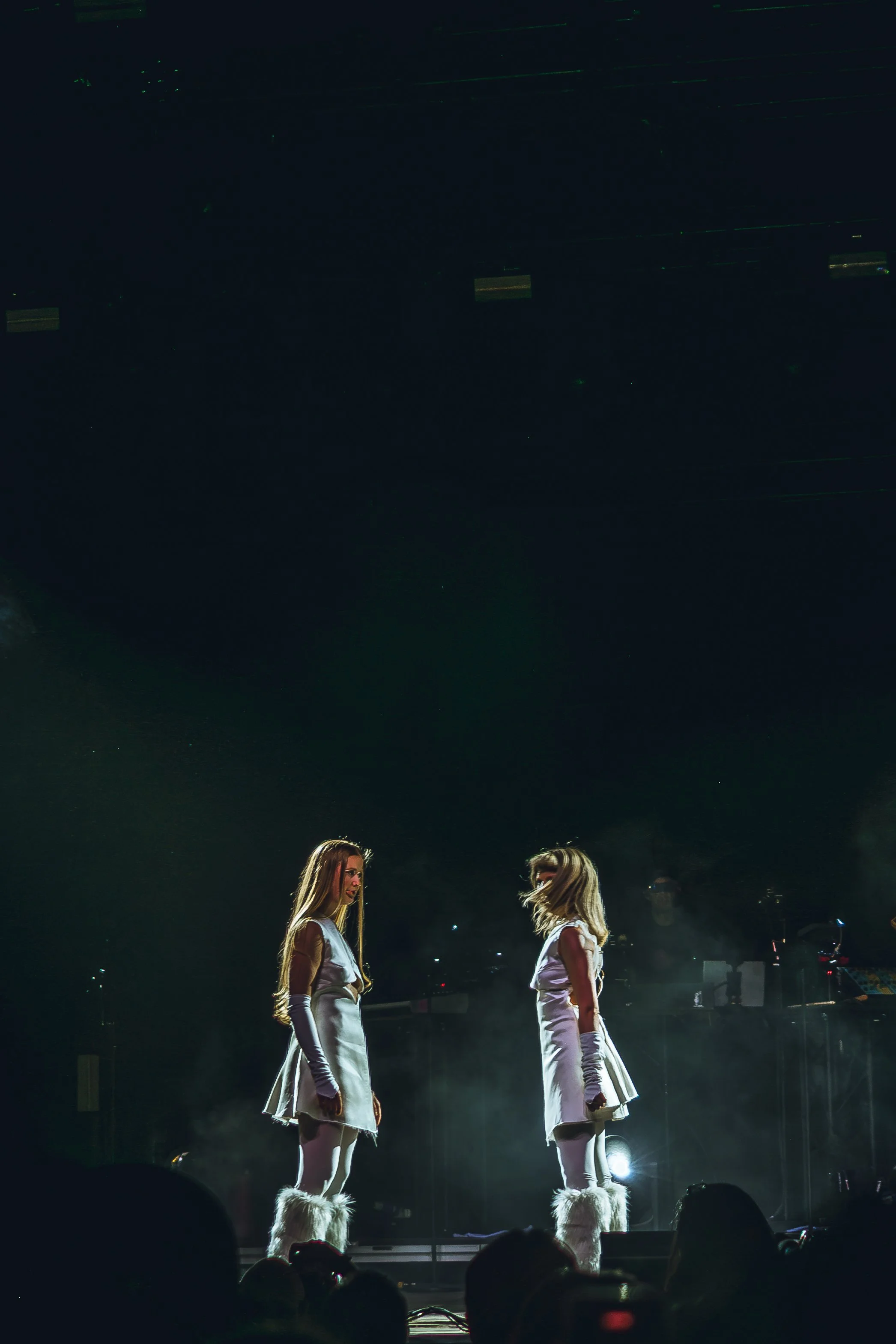
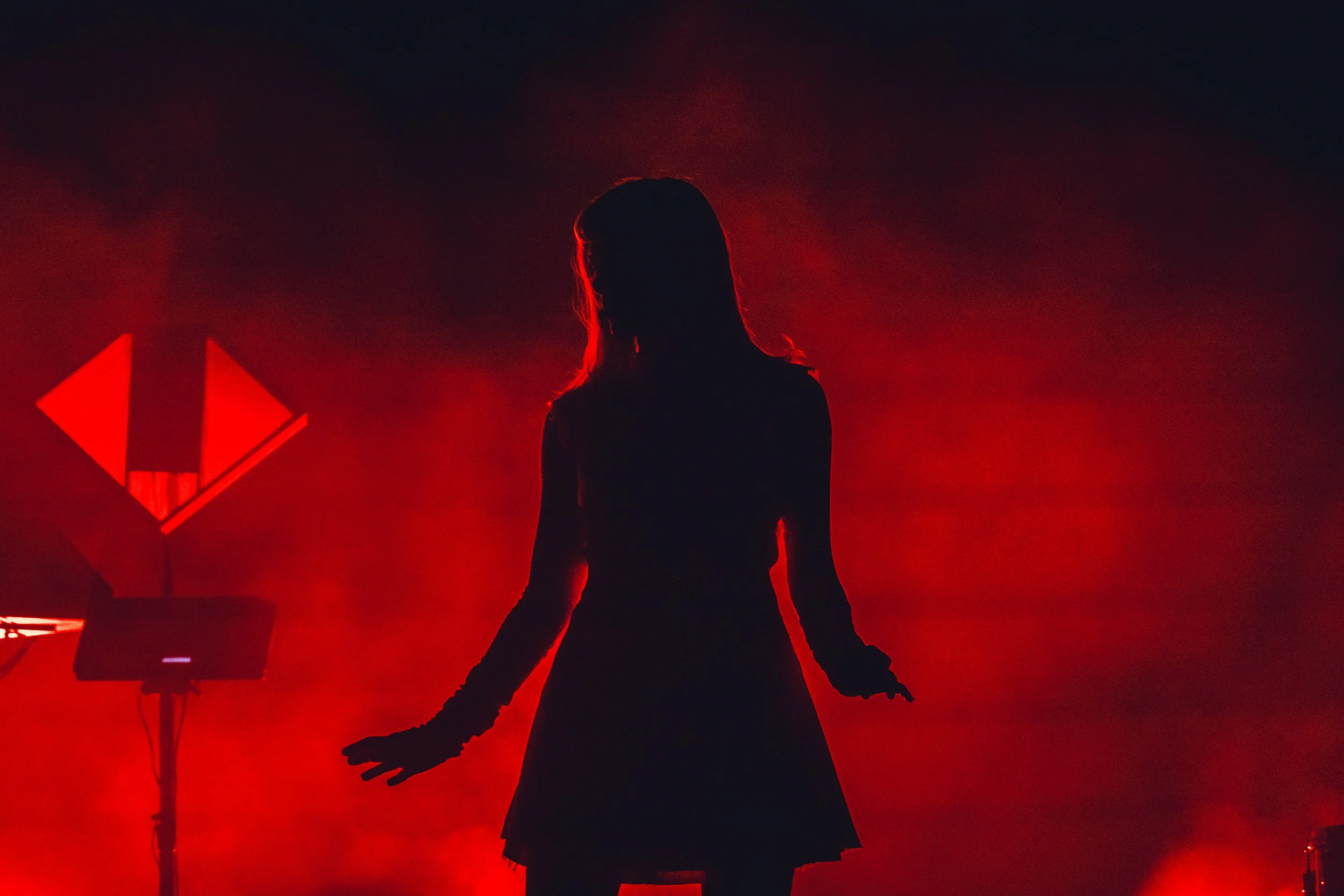
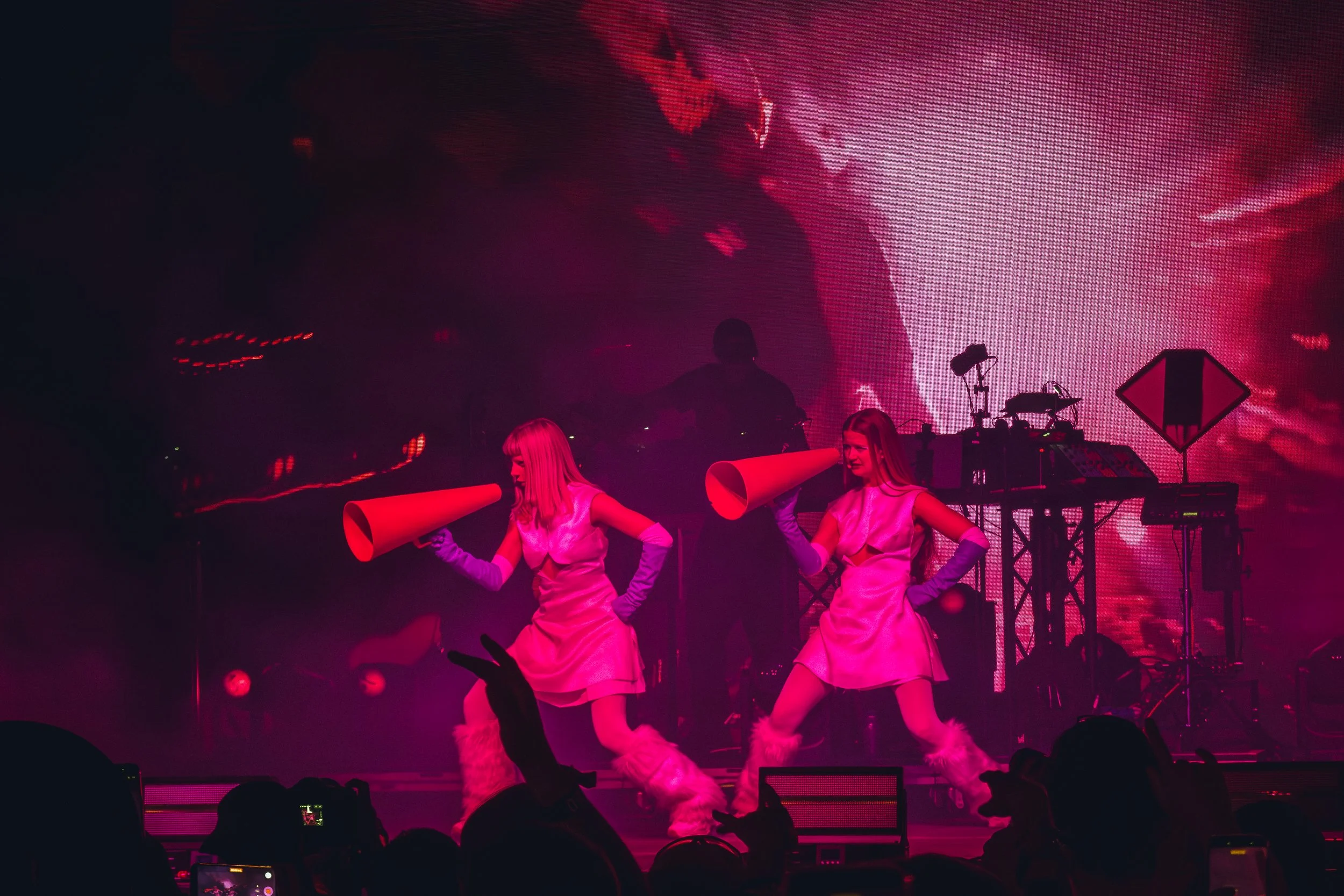
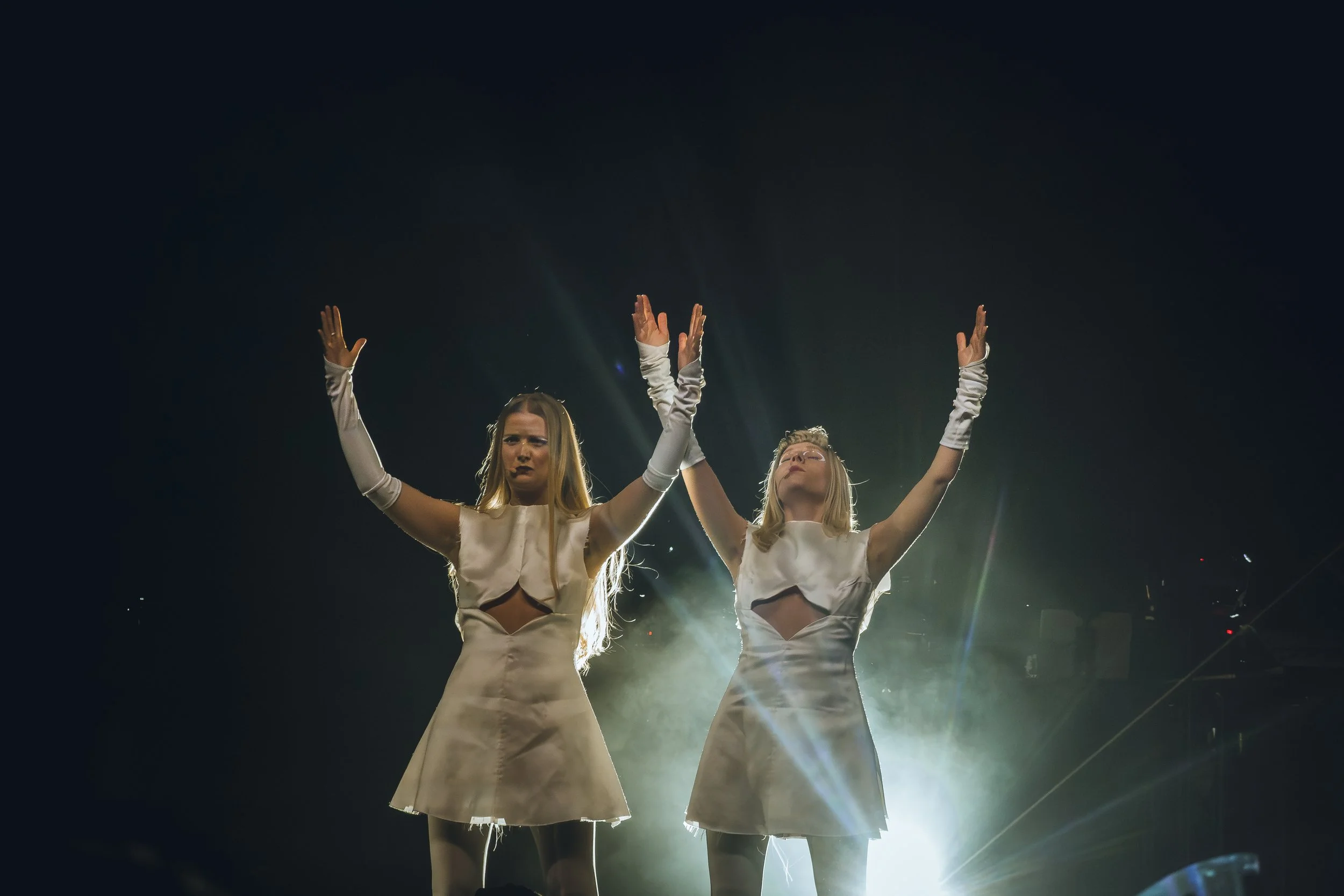
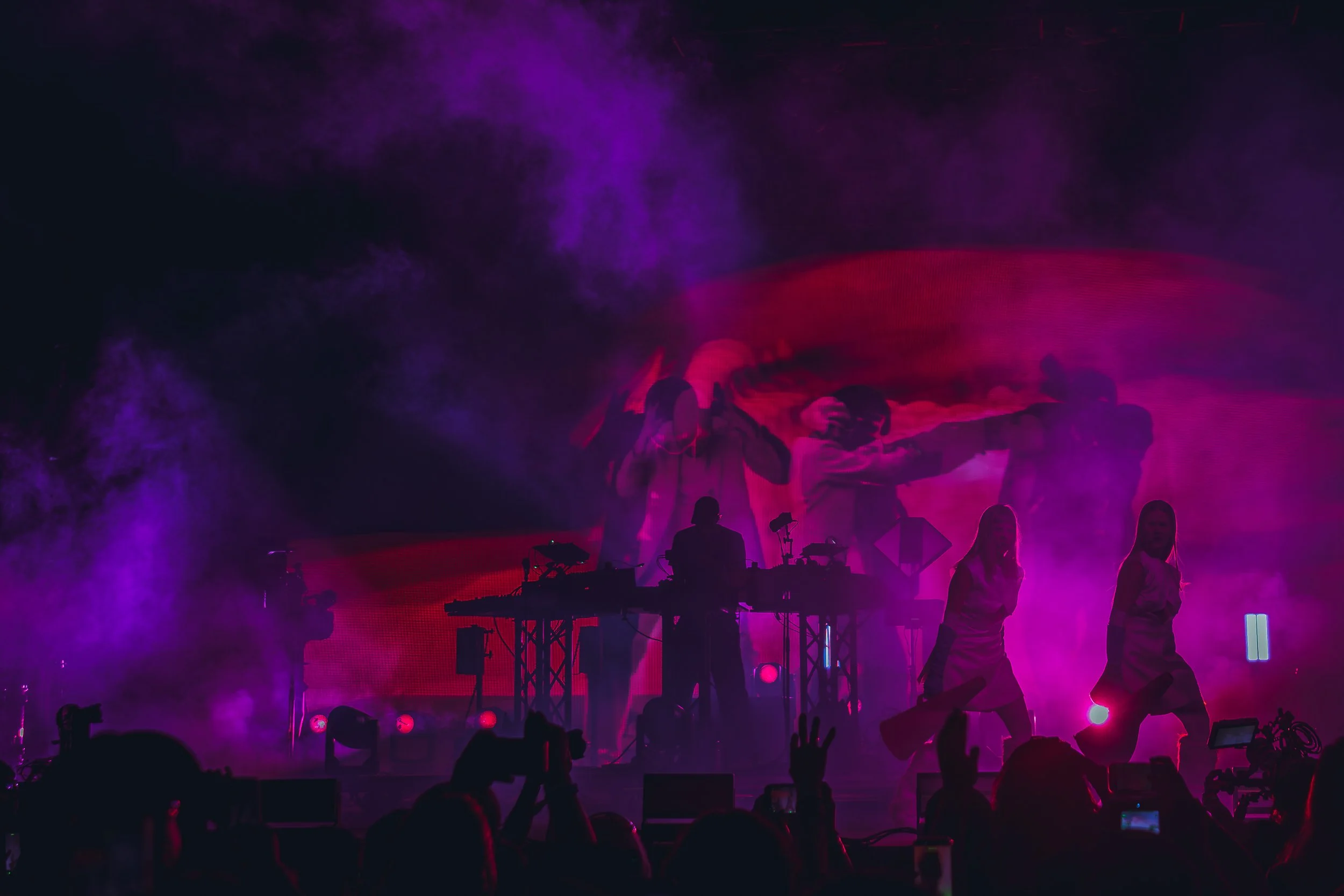
The thing about a set like this — Sunday, Gobi, 7:45 PM, against Young Thug at Coachella Stage and Iggy Pop in the Mojave — is that most of the festival did not see it. It existed in the memory of a few hundred people who happened to be near the right tent at the right time, the kind of set that does not get a livestream highlight reel because nobody knows yet what the thing is. Goldenvoice booked them blind and the booking worked. The festival is most itself in moments like this — when the algorithm hasn't caught up, when the room is the only place the set exists.
HONORABLE MENTIONS
It would take me another two weeks to write up everyone else who was great. Here is a quick-fire way of elaborating on everyone else who was great.
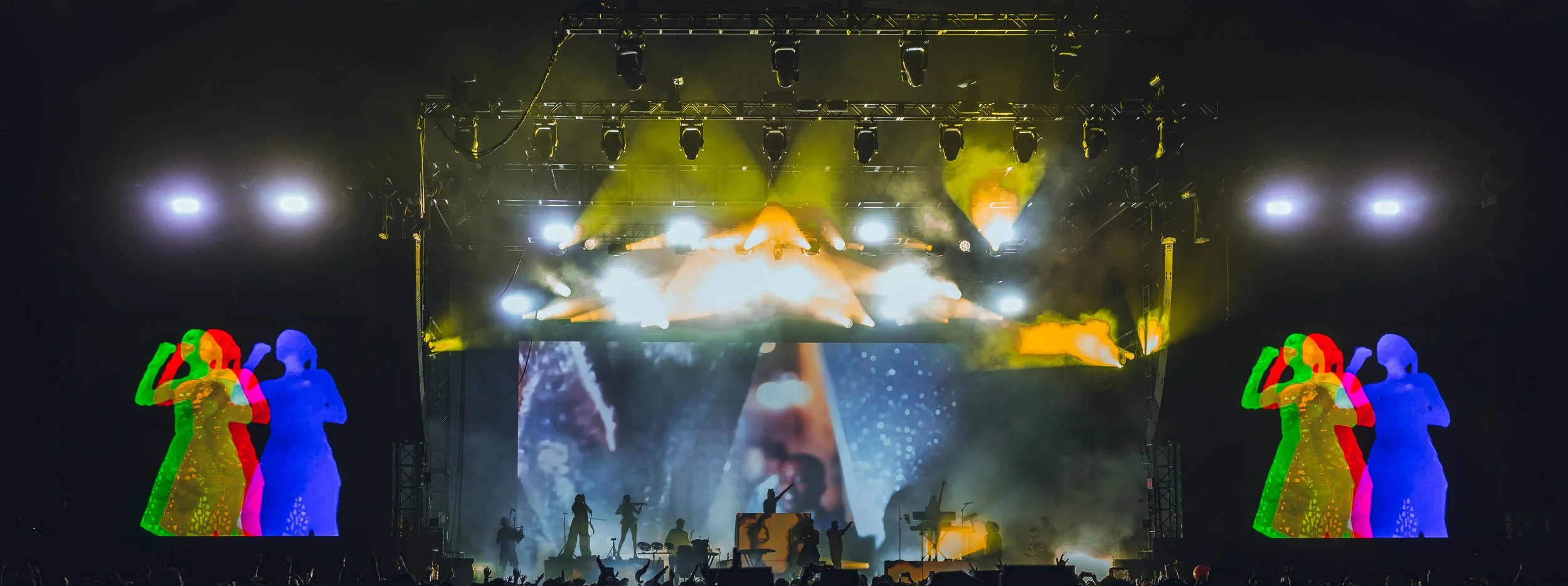
Moby proved that despite what Eminem says, everybody listens to techno. Moby has sustained that sound through the entire post-rave decade in which rave culture was being persecuted by the American government — and at Coachella 2026 he made the case in person. Highlights included Jacob Lusk from Gabriels came out and turned the Vera Hall sample on Natural Blues into a hymn; Eminem's twenty-five-year-old diss looped on the LED screen at club volume, the insult landing in 2026 as a hook. He closed on Thousand, his 1992 rave anthem, played by a sixty-year-old man who was donating his entire paycheck from both weekends to four animal-rights organizations. The first Coachella in 1999 was Moby's. The twenty-fifth, somehow, was also his.
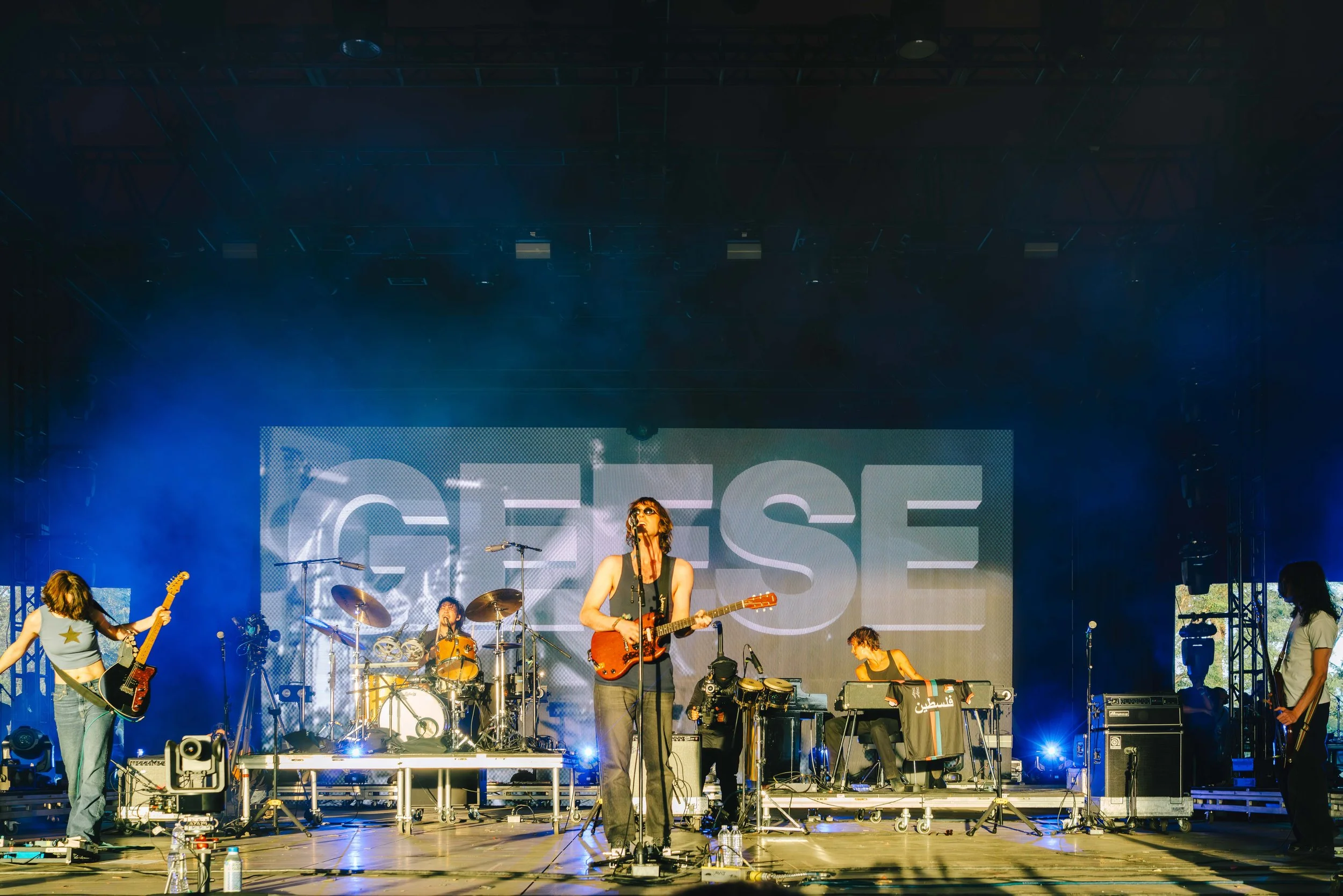
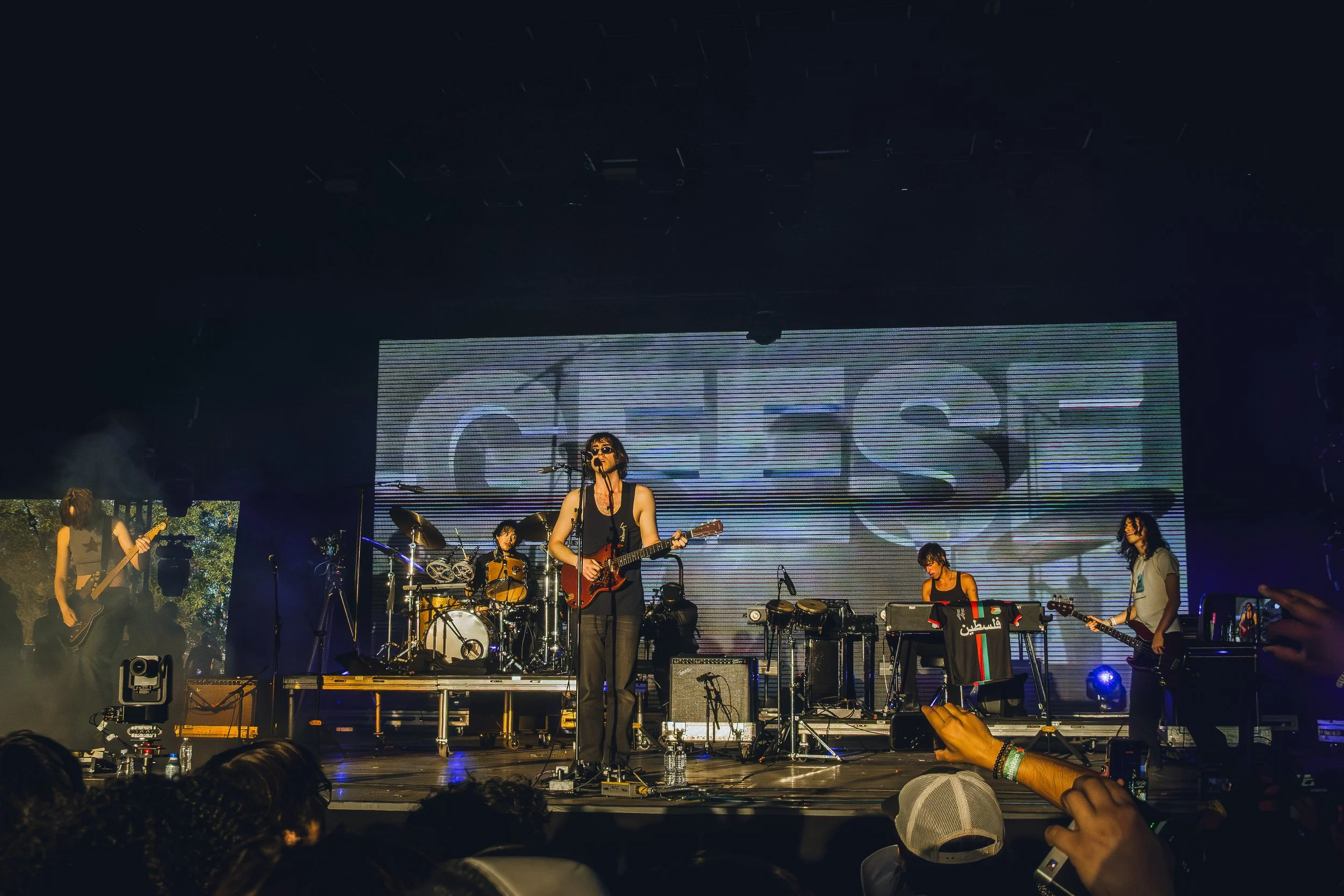
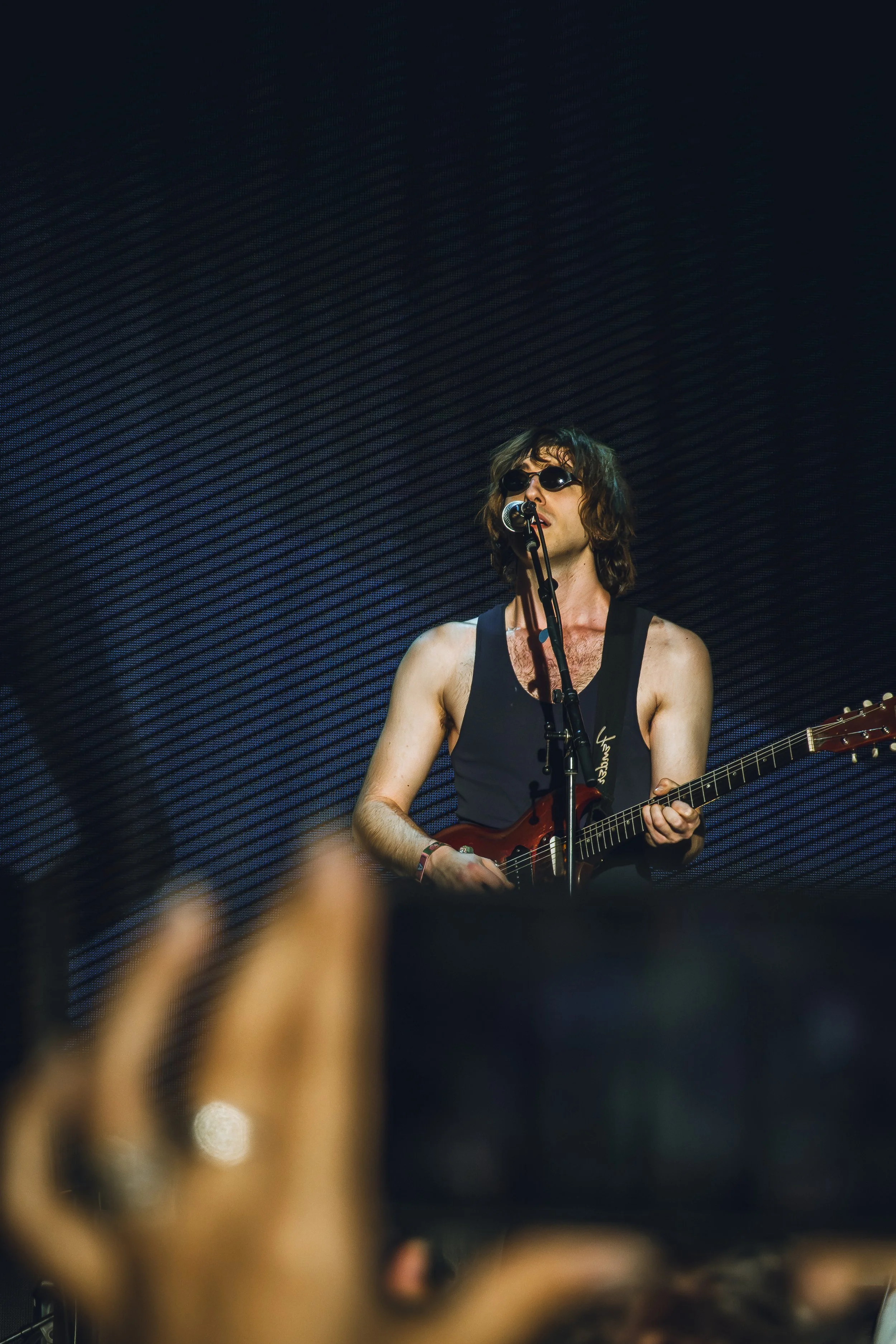
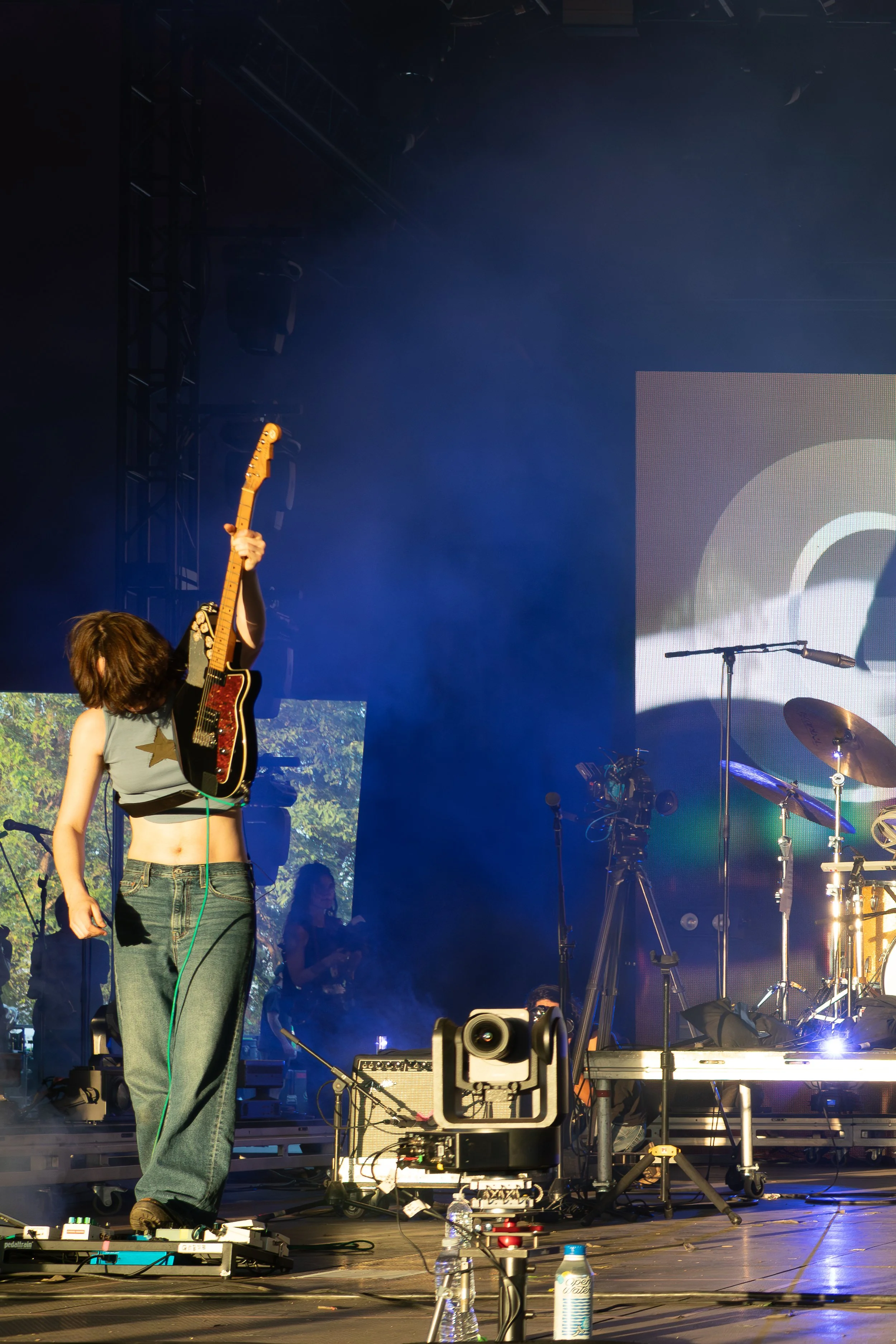
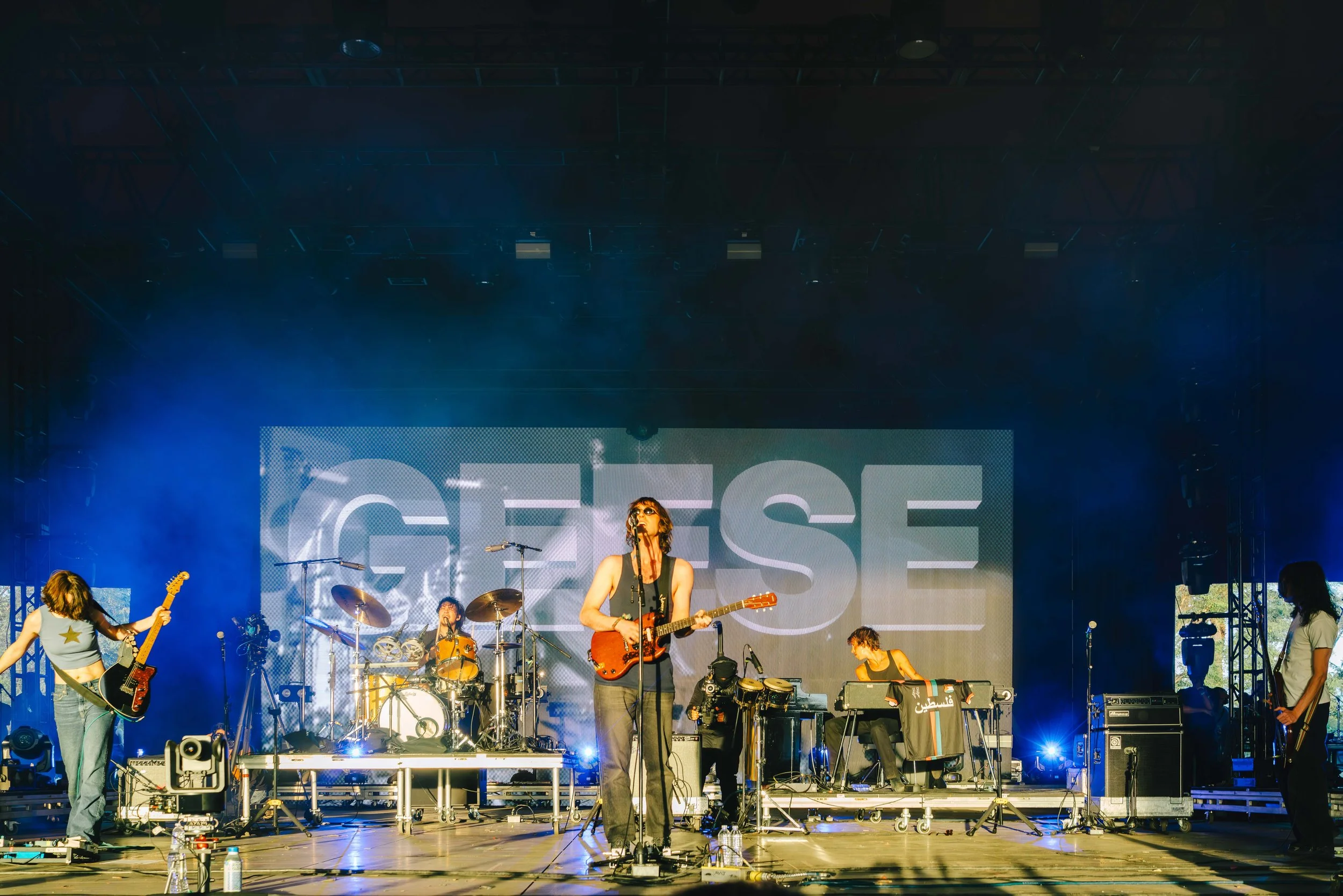
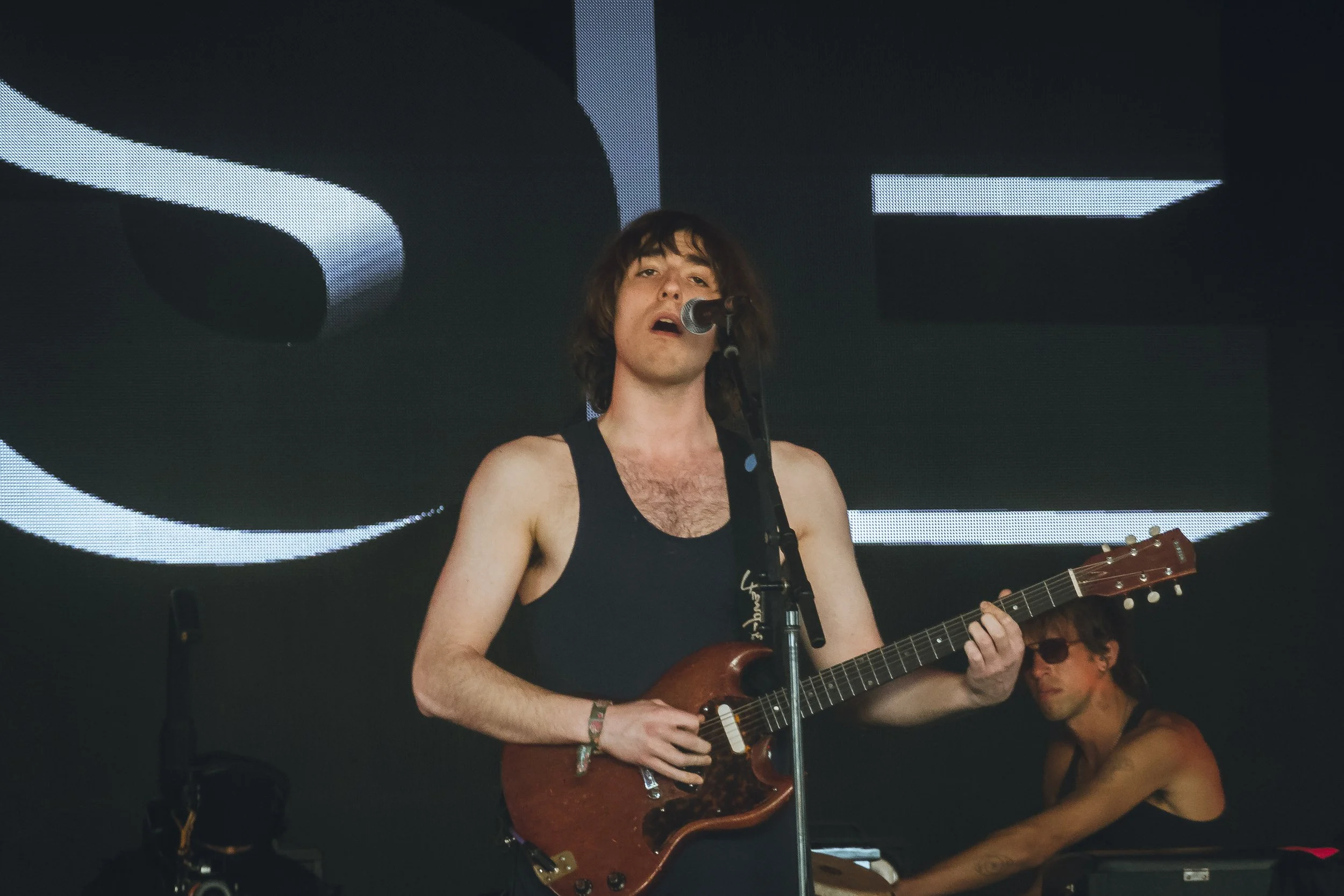
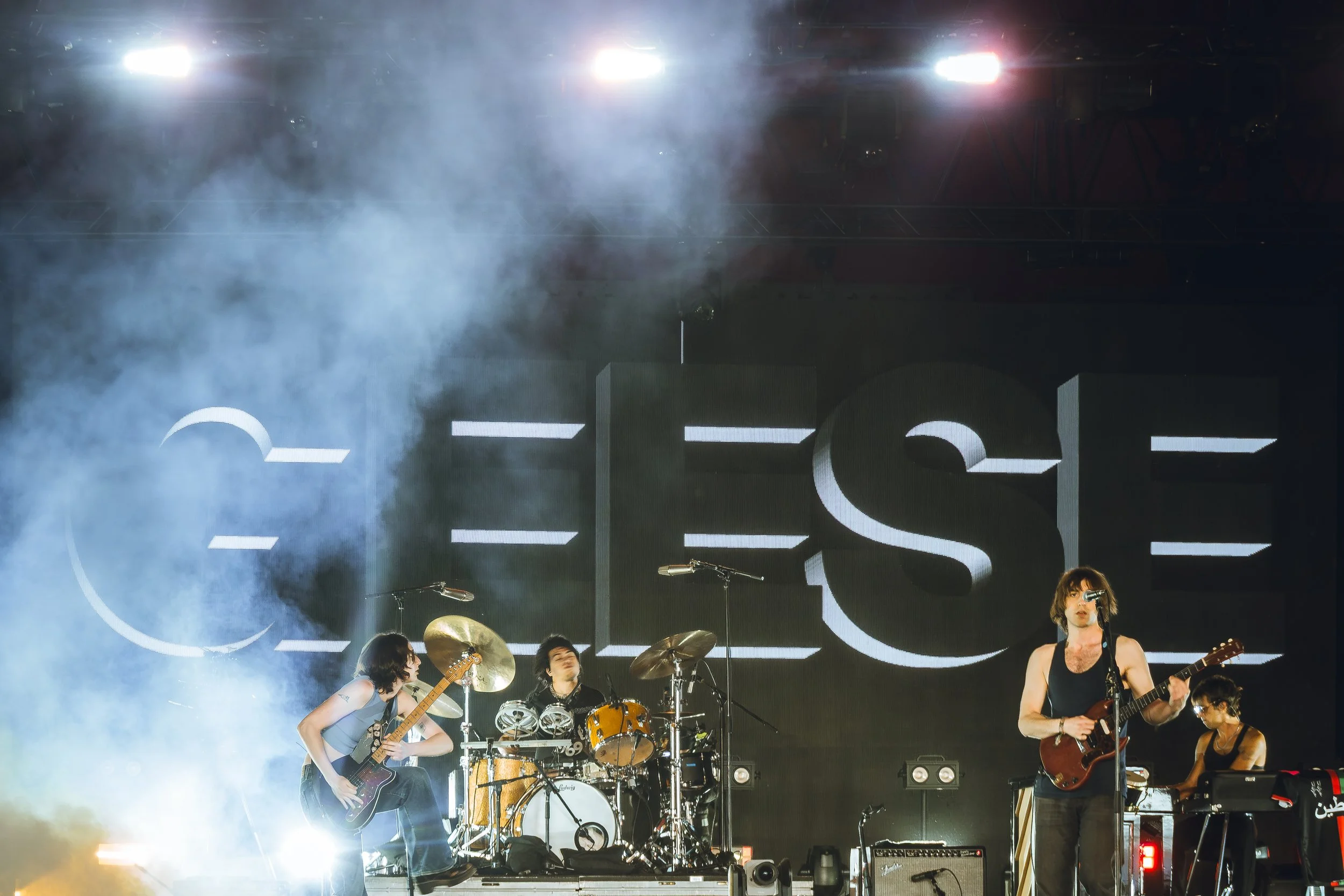
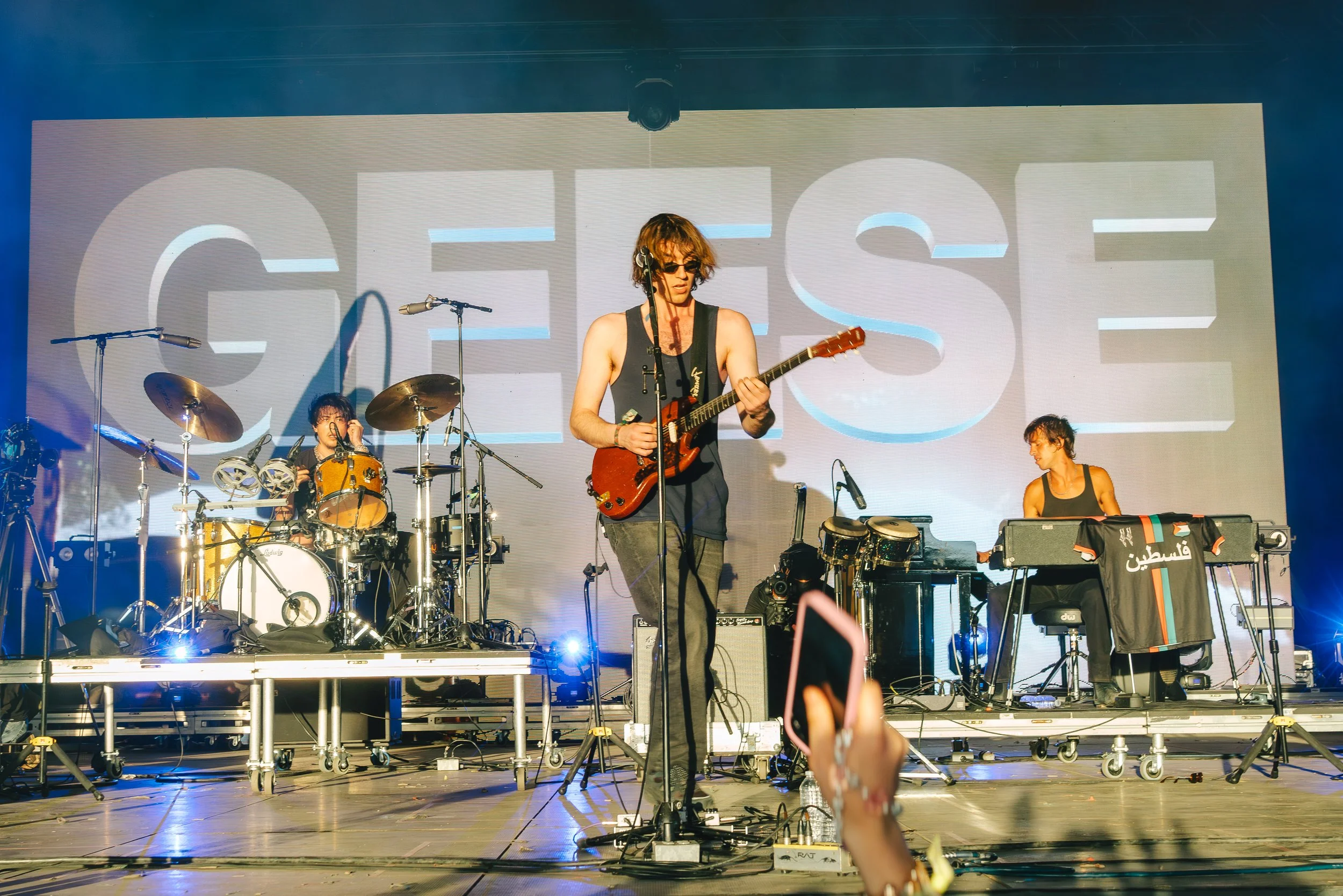
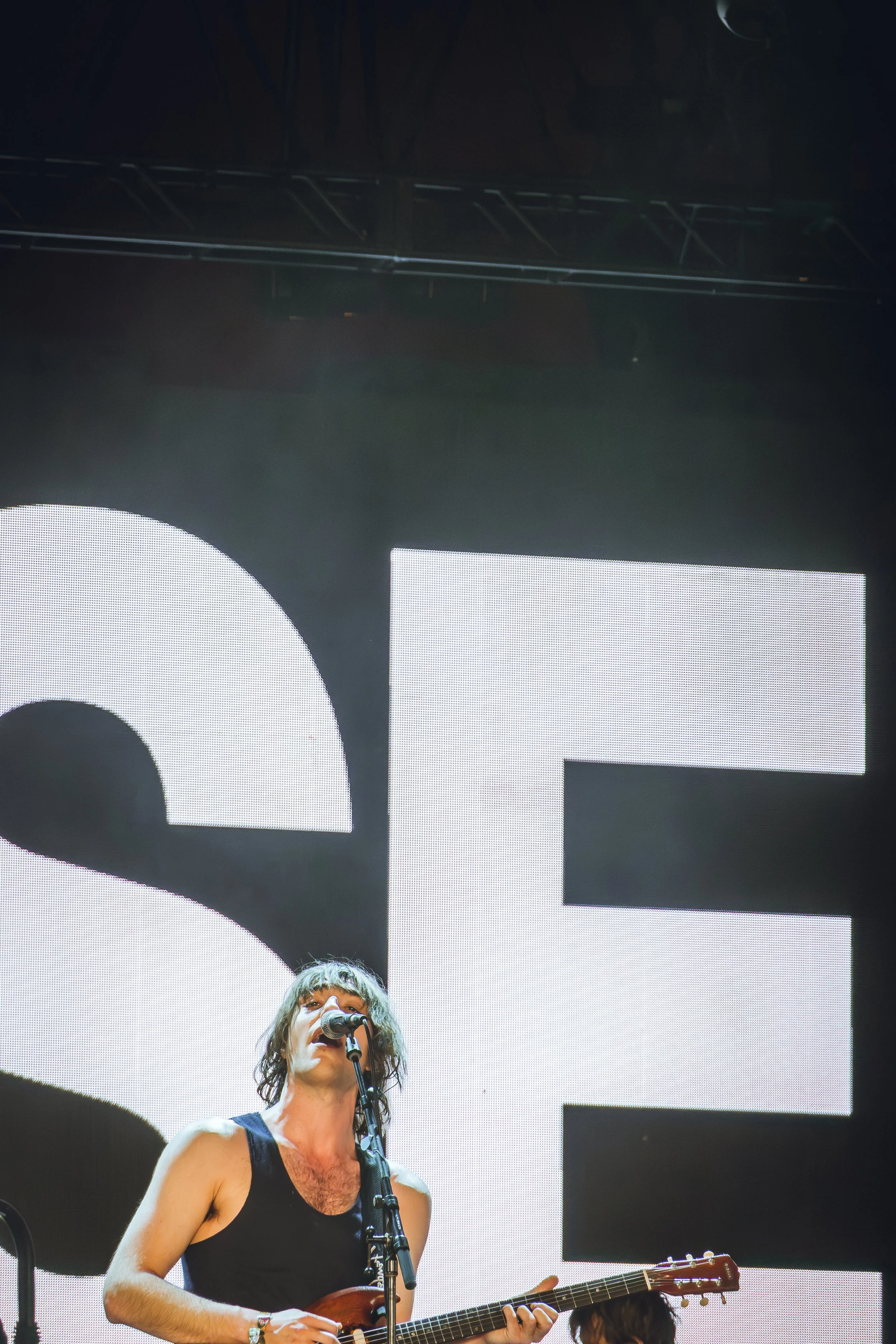
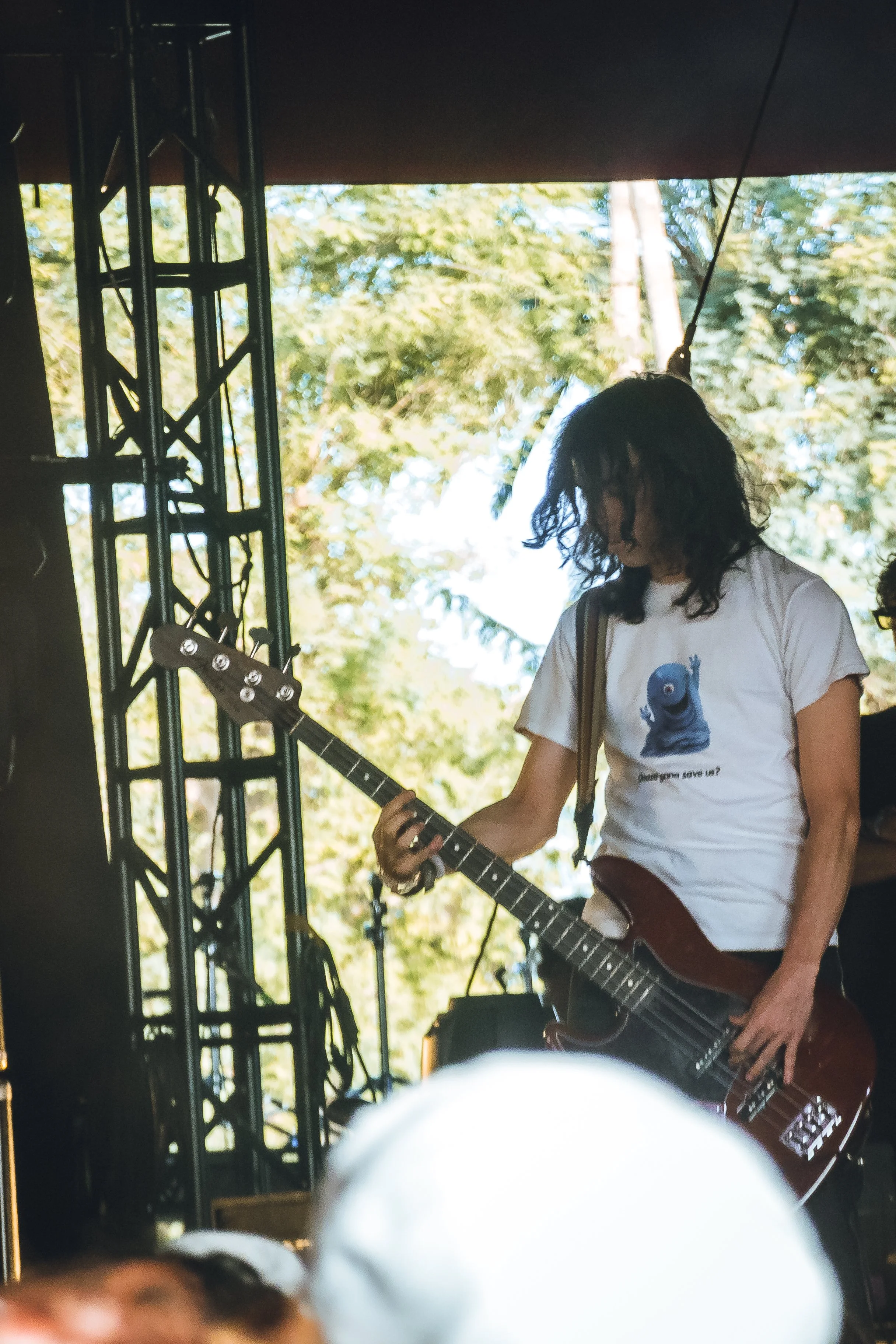
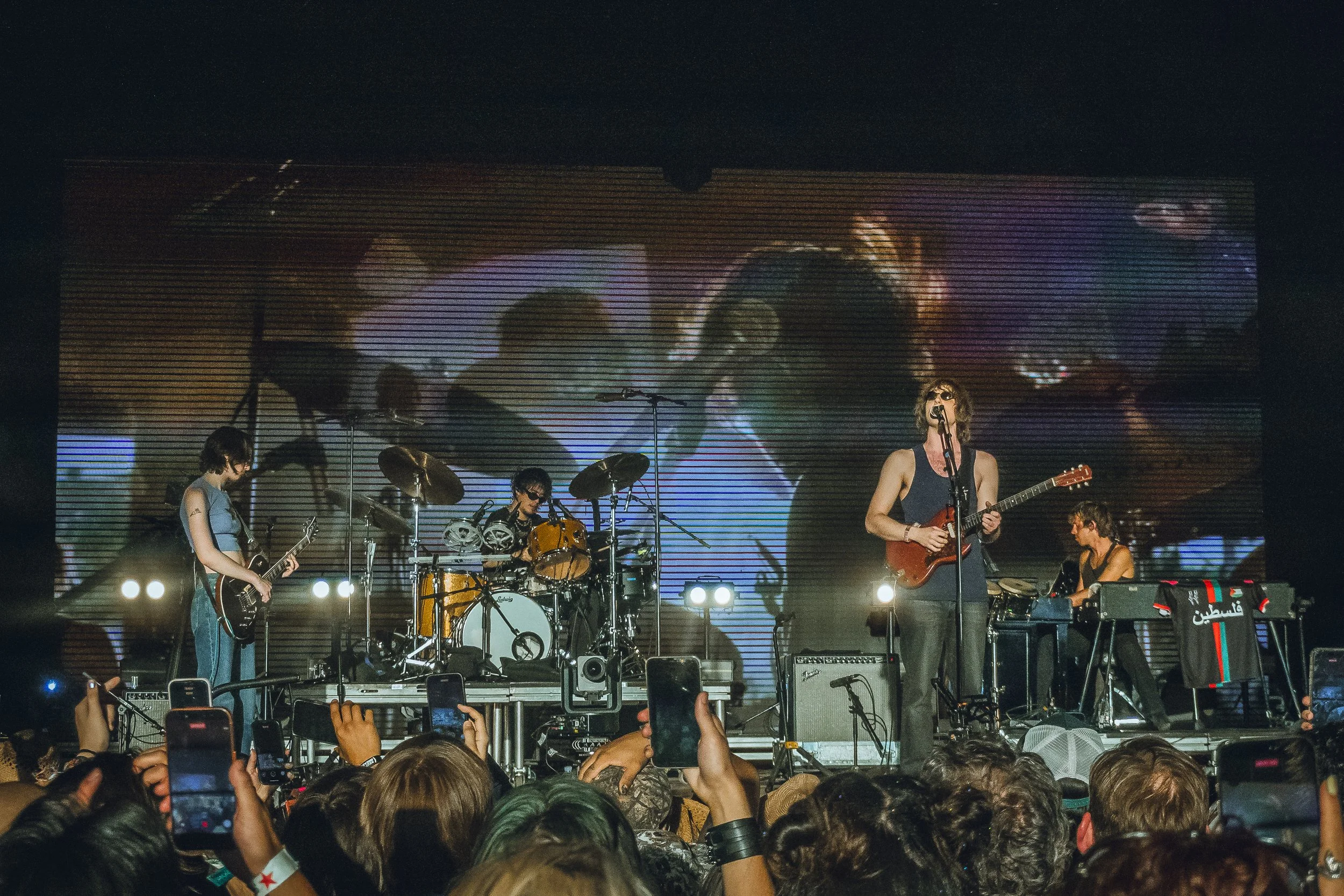
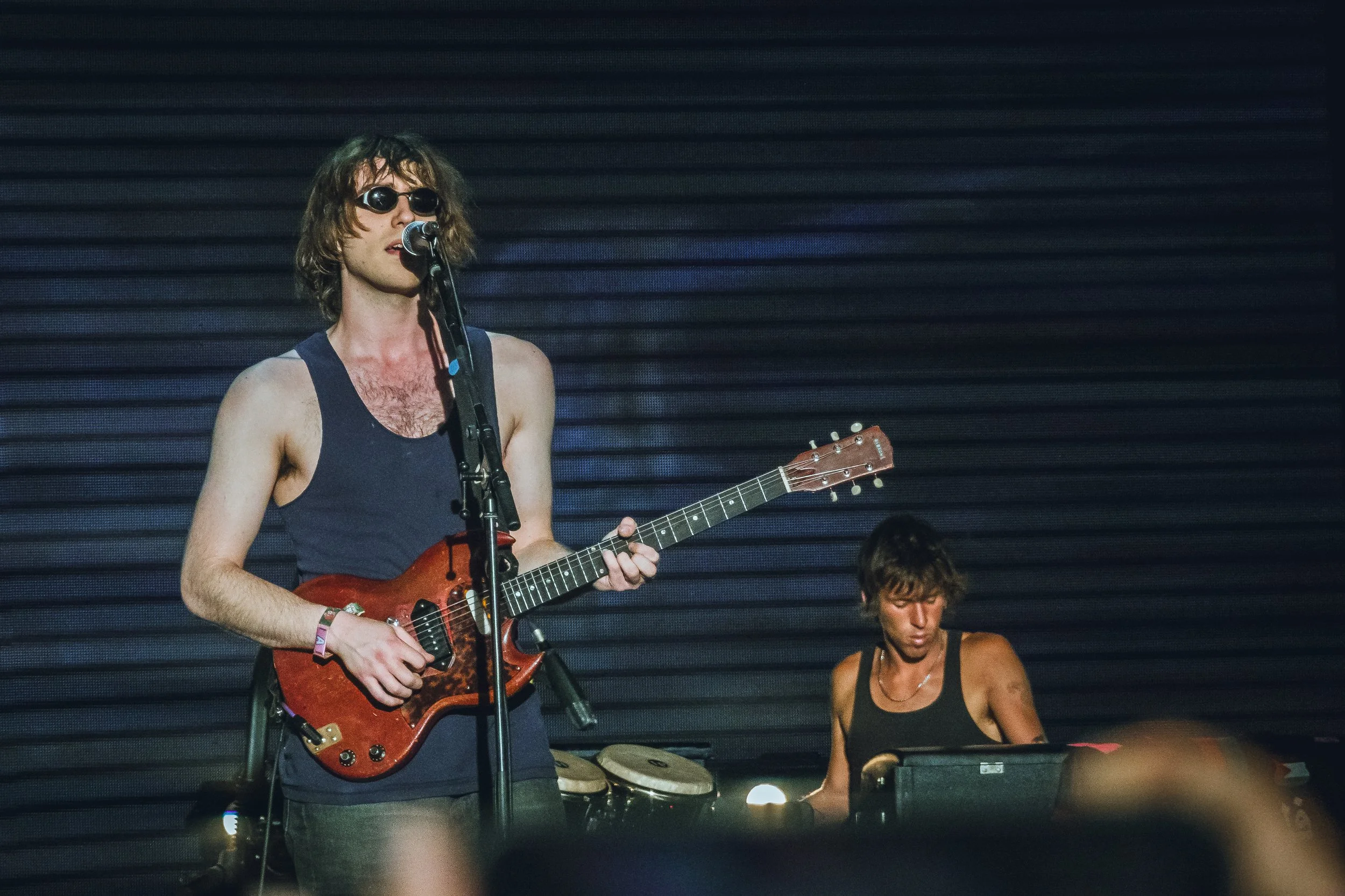
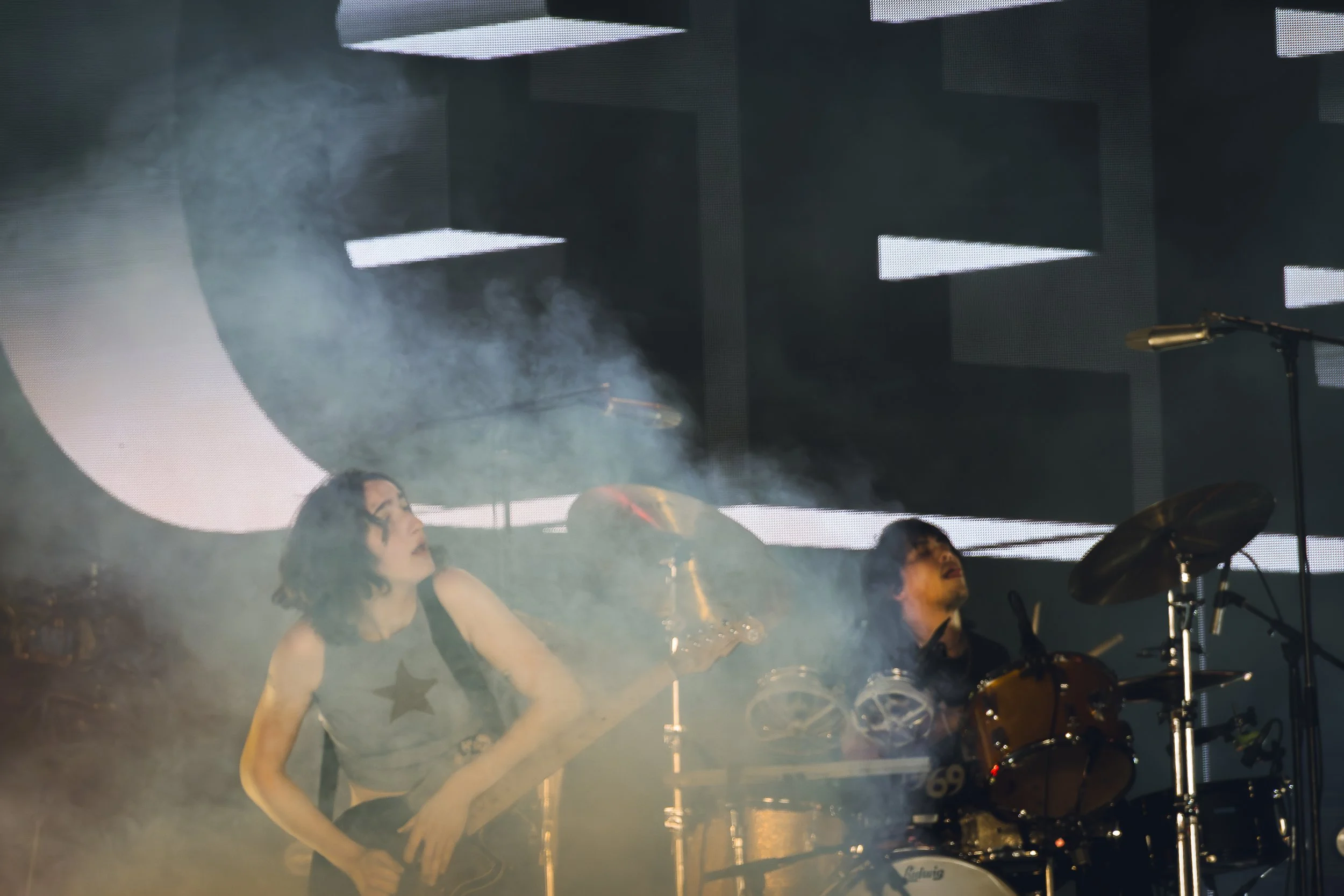
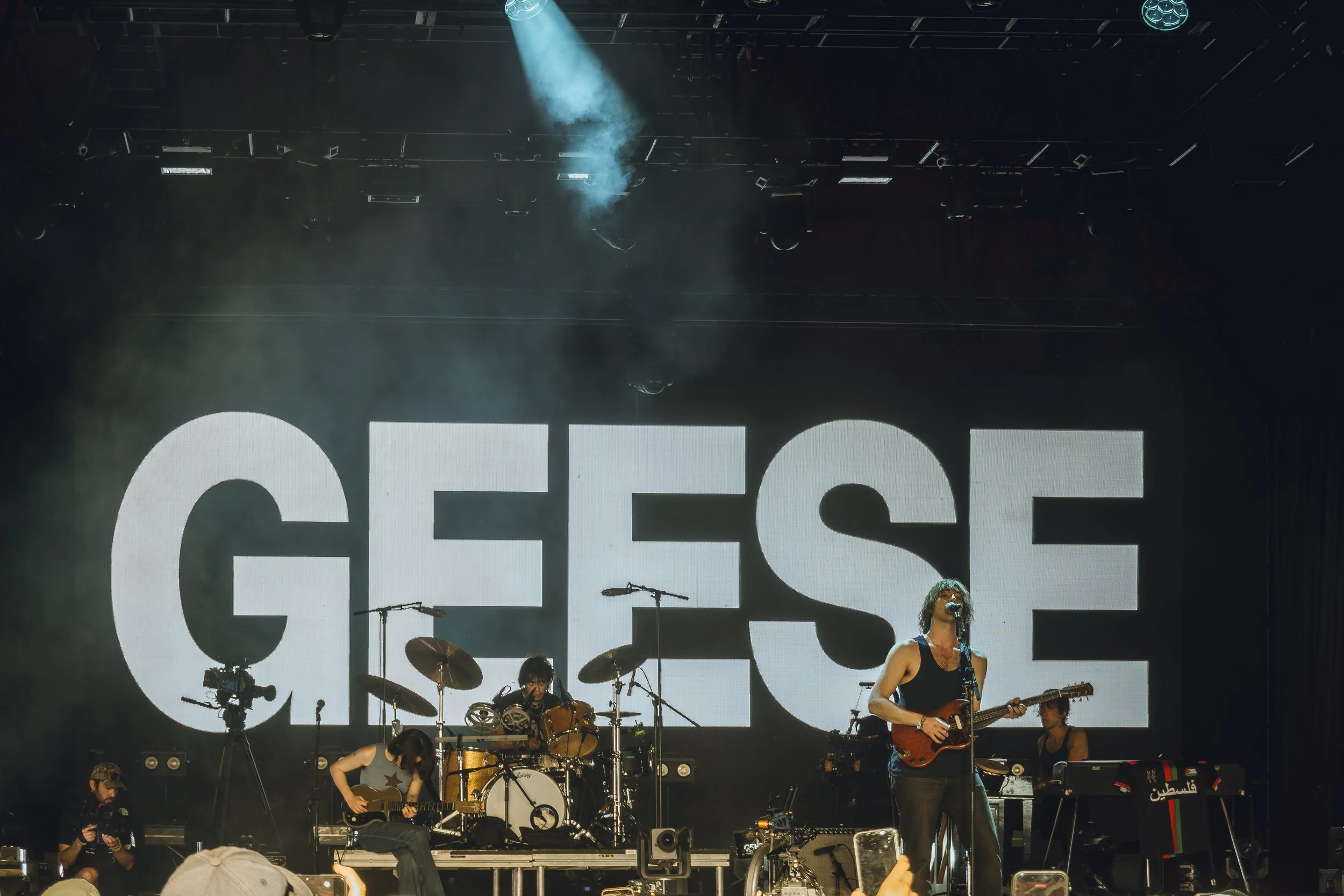
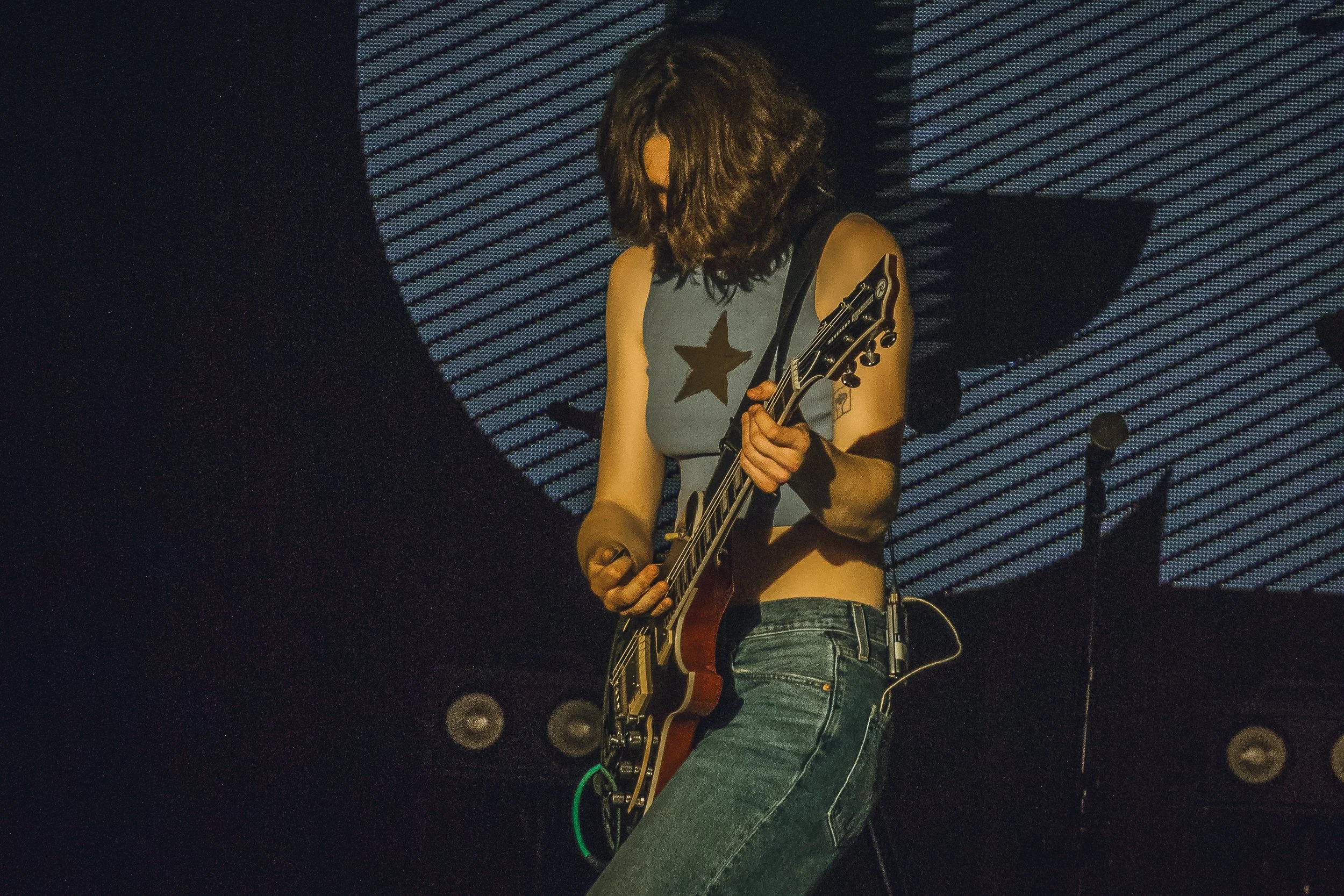
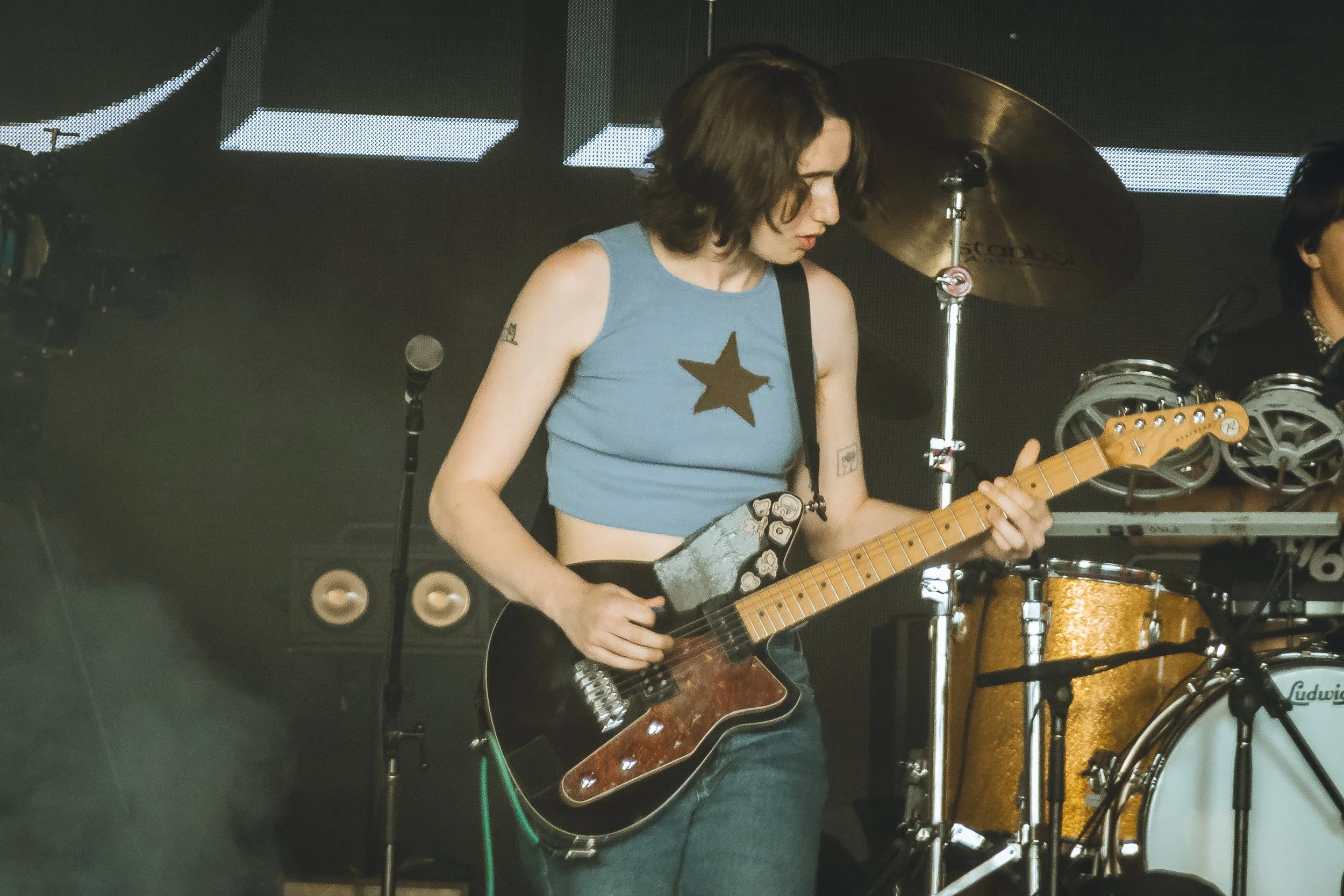
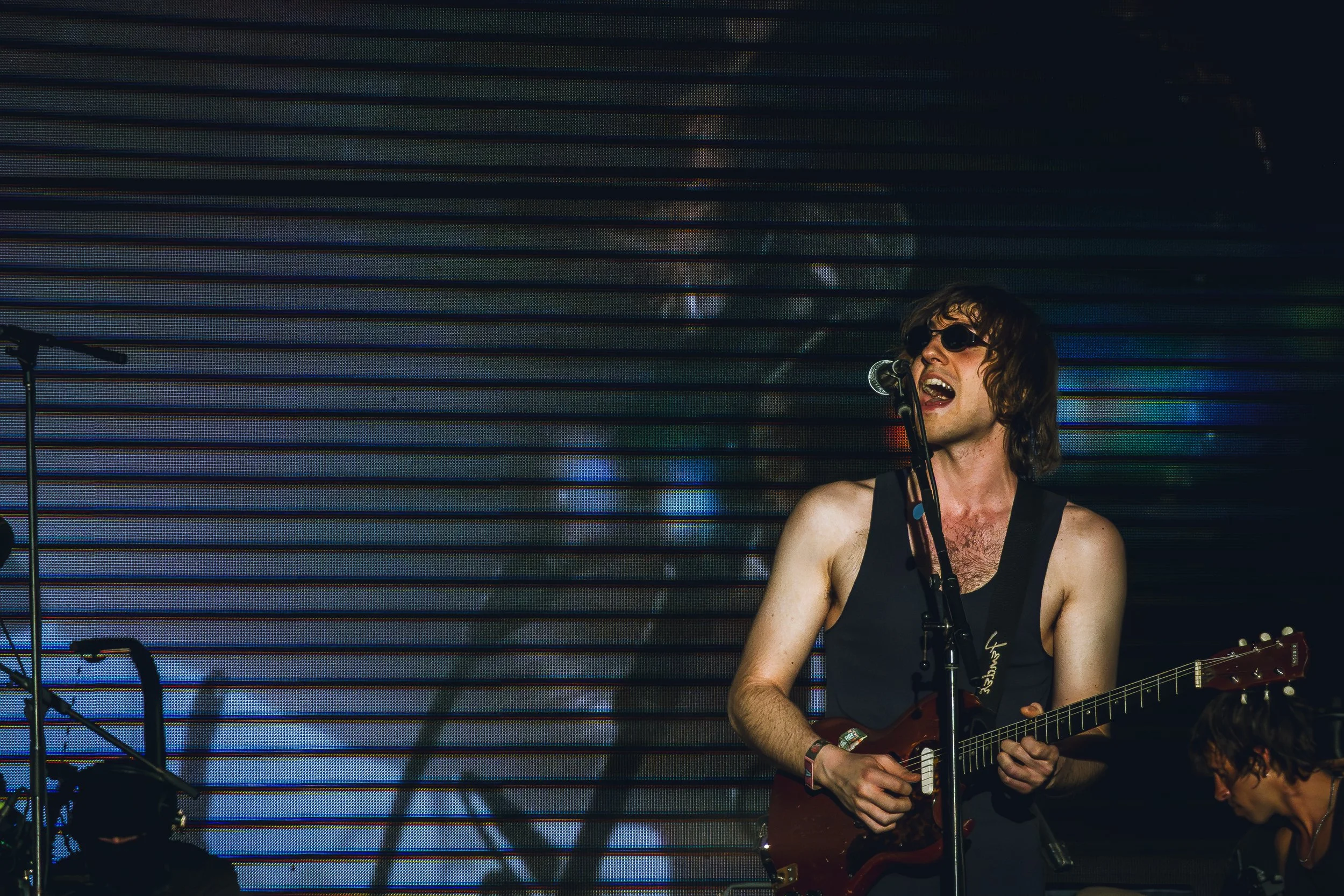
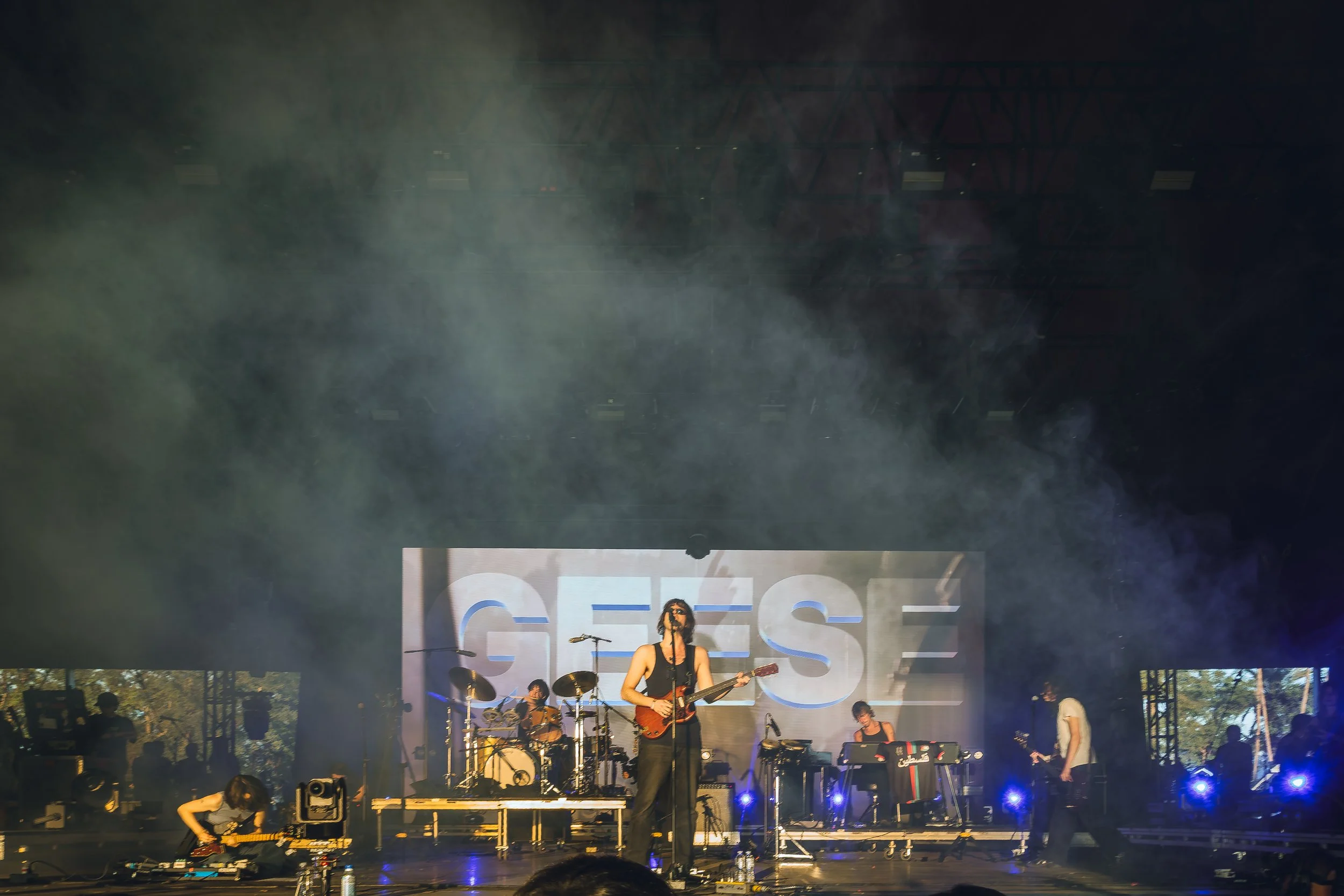
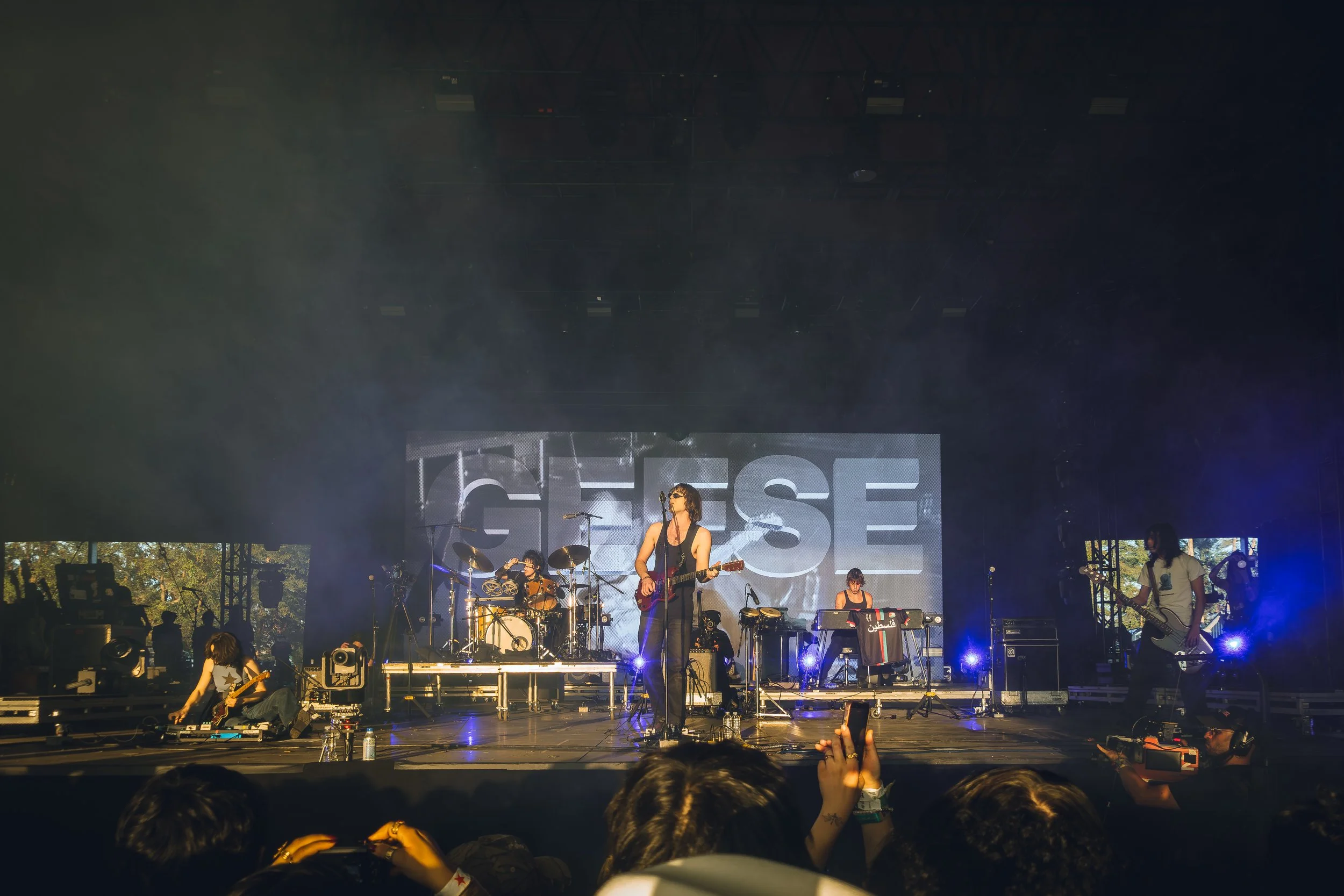
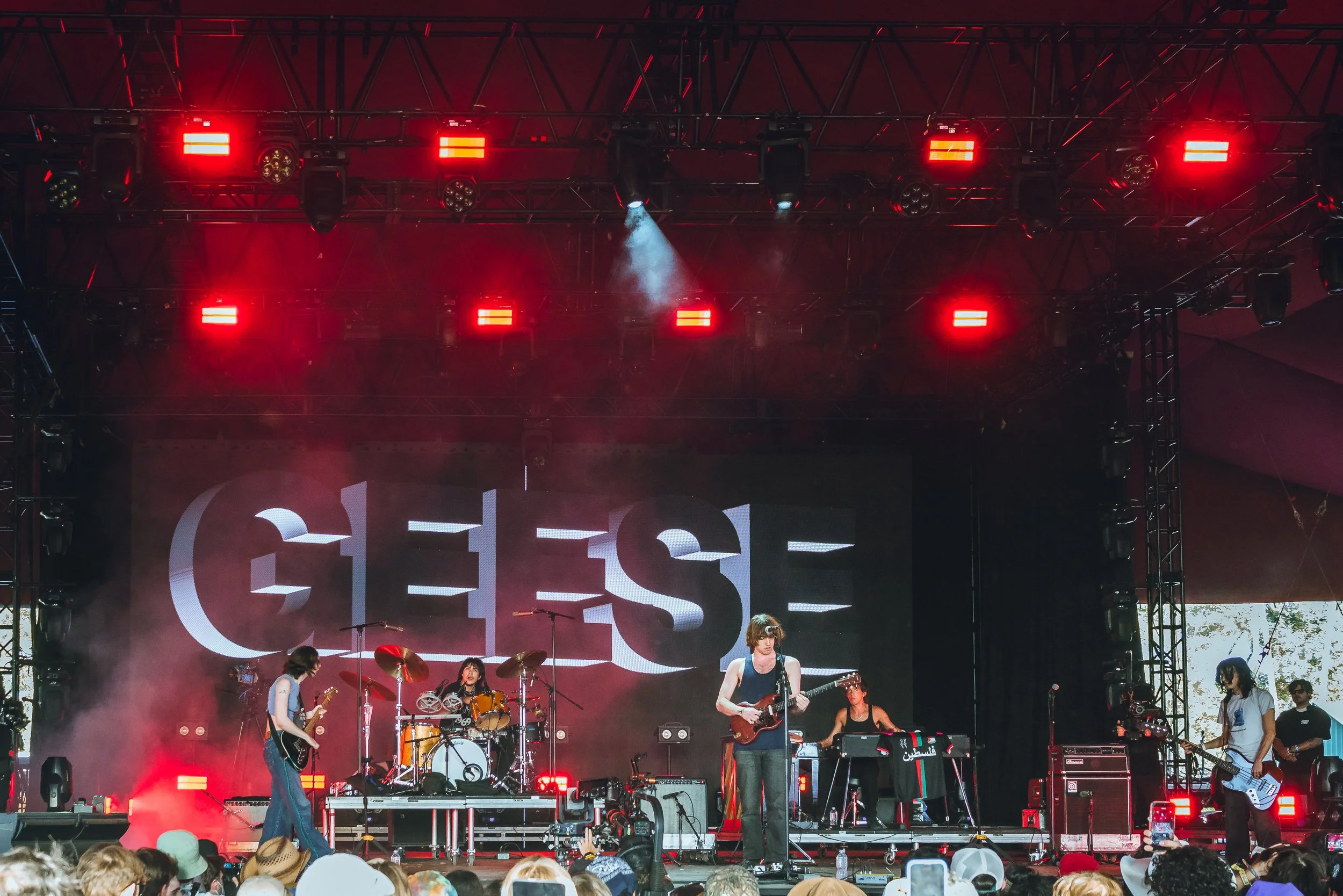
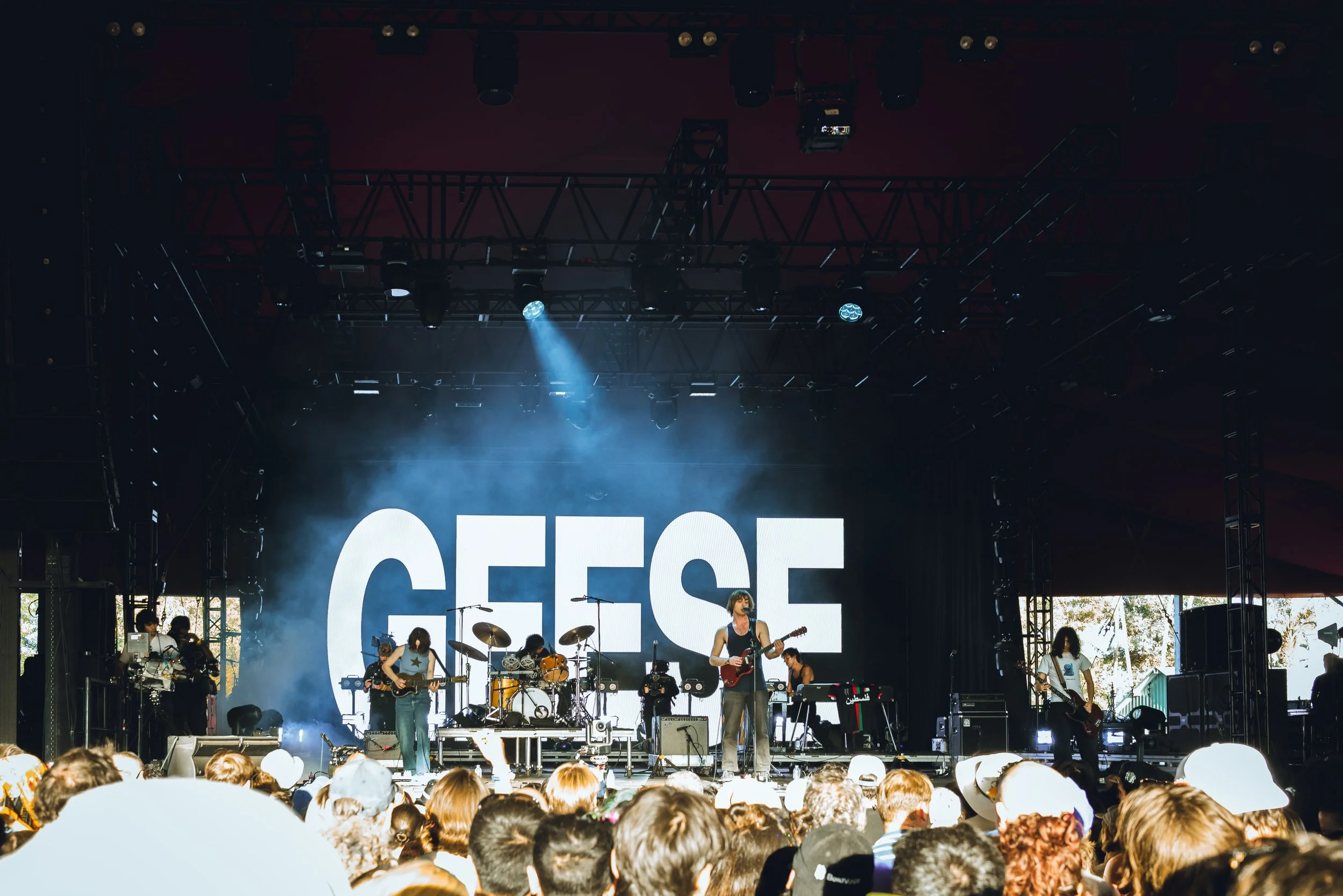
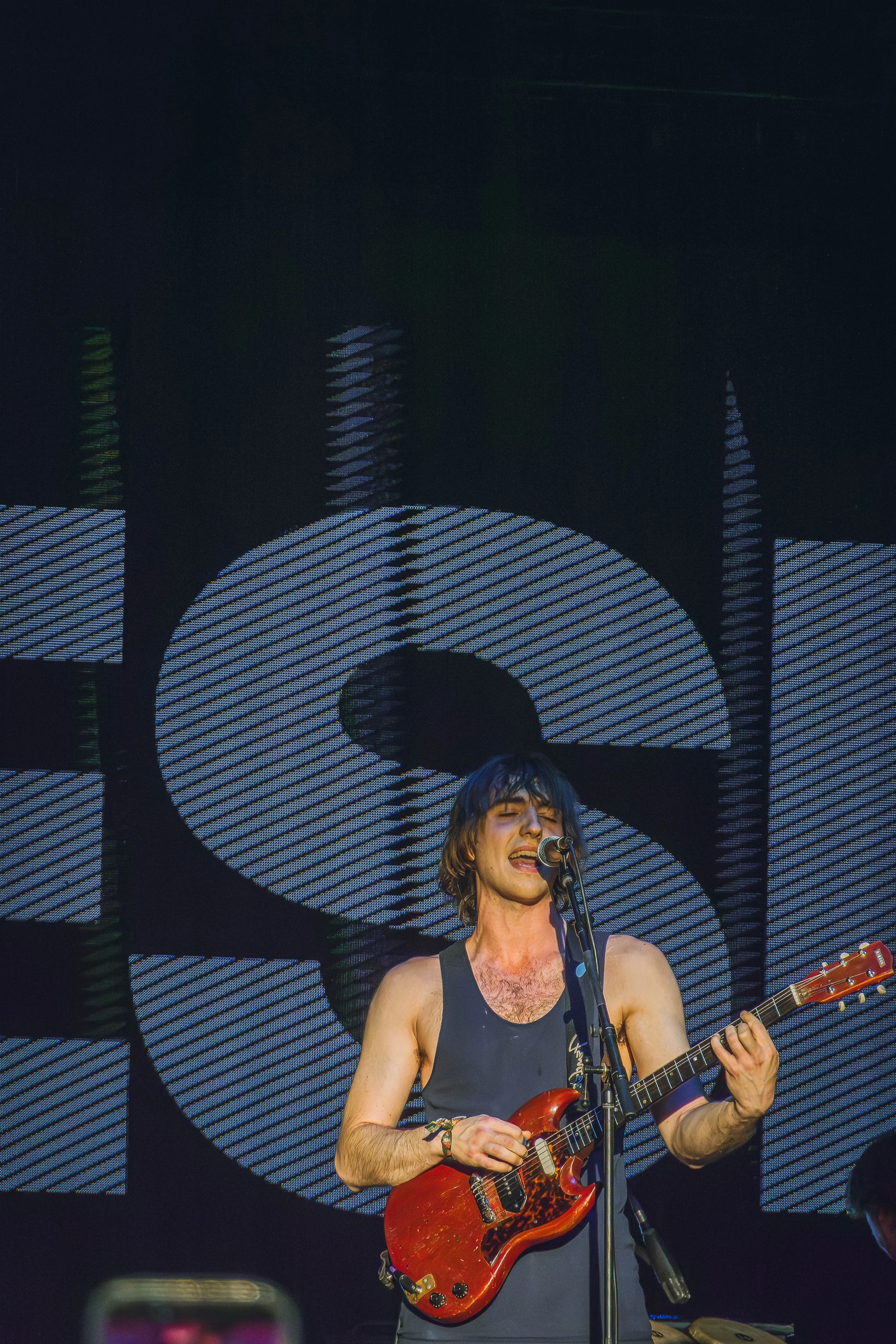
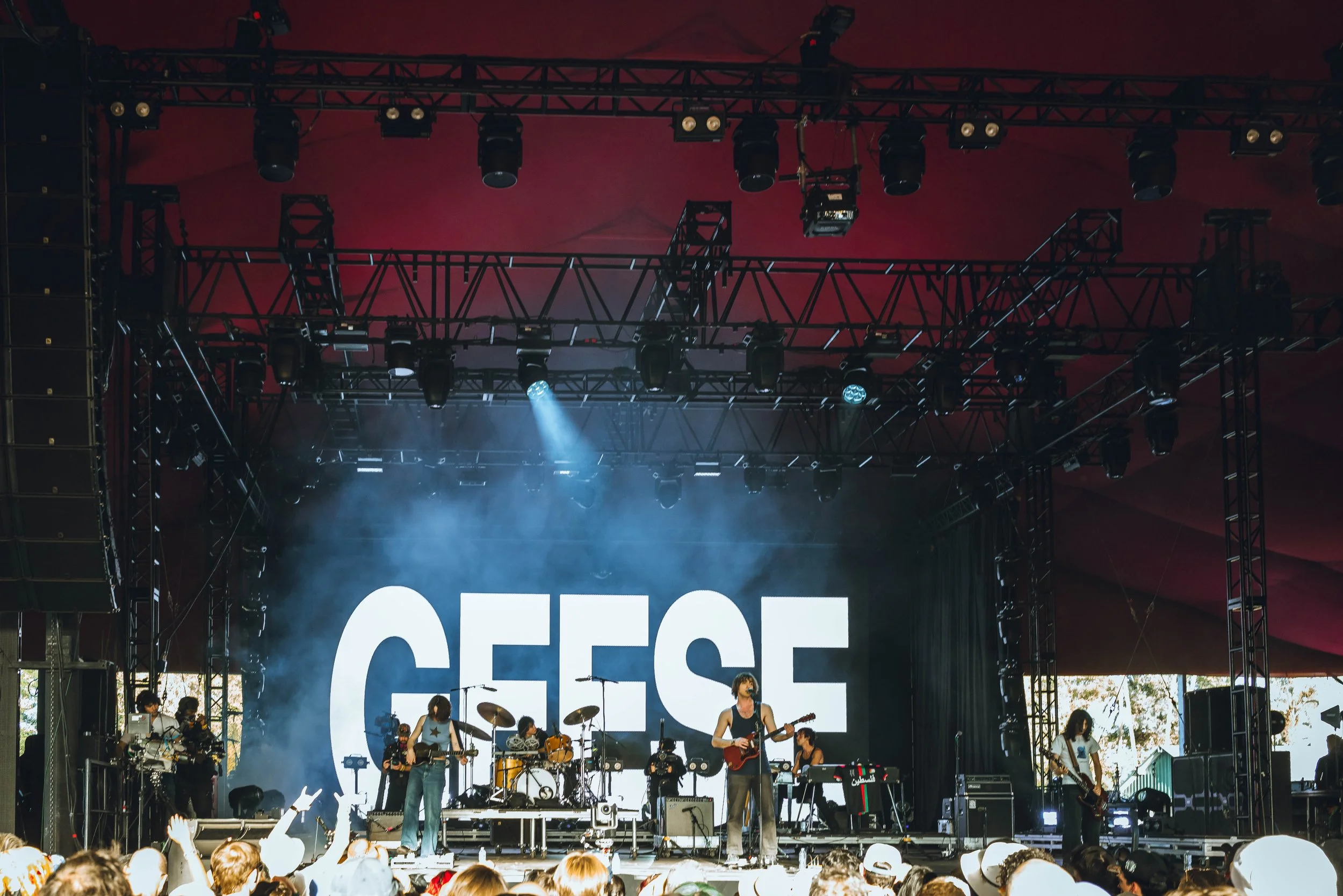
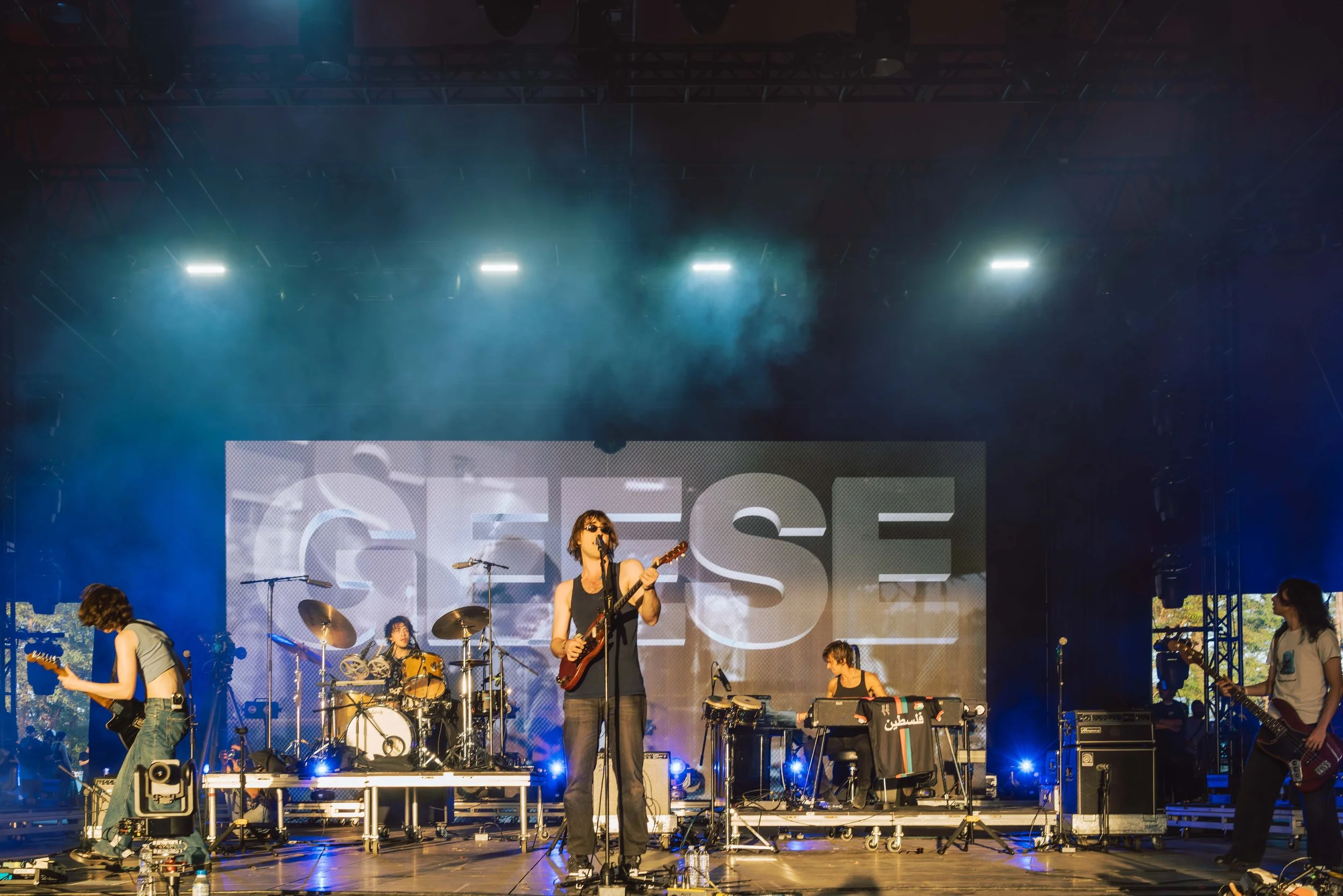
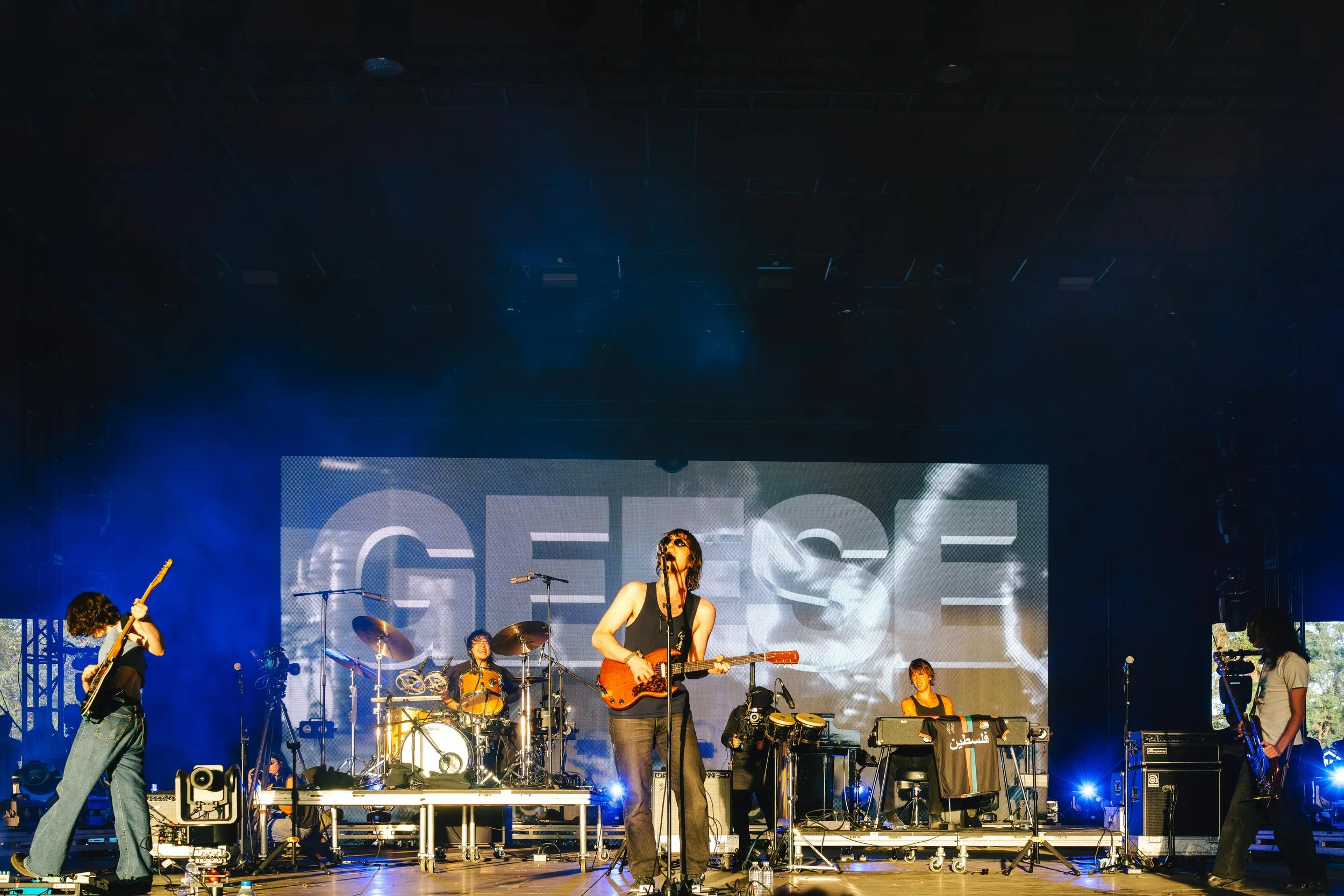
Geese are supposedly a psyop. Whatever the discourse dictates, the way the pit opened up like an avocado during Trinidad was proof that I don't care if the Russians are behind it — that shit ruled. Cameron Winter's voice — the wounded literary register of Leonard Cohen carried by a low wandering Bill Callahan baritone, half-drunk and fixated on sailboats and shipwrecks — is the band's entire game and it locks in live in a way the recordings can only suggest. GQ called them America's most thrilling young rock band; the discourse keeps trying to assign them sainthood or fraudulence at the same time. But something tells me — based on their attitude toward the work, the covers they chose to play out here — they're still four twenty-three-year-olds trying to make sense of the world. Before David Byrne's set on Saturday I noticed a kid standing alone at the lemonade stand, looking around like he was waiting for someone — turned out to be Dom DiGesu, the band's bassist. He asked my name. We talked about music for a few minutes. We were both excited about Byrne. A normal guy doing his job and looking to catch the same set like the rest of us.
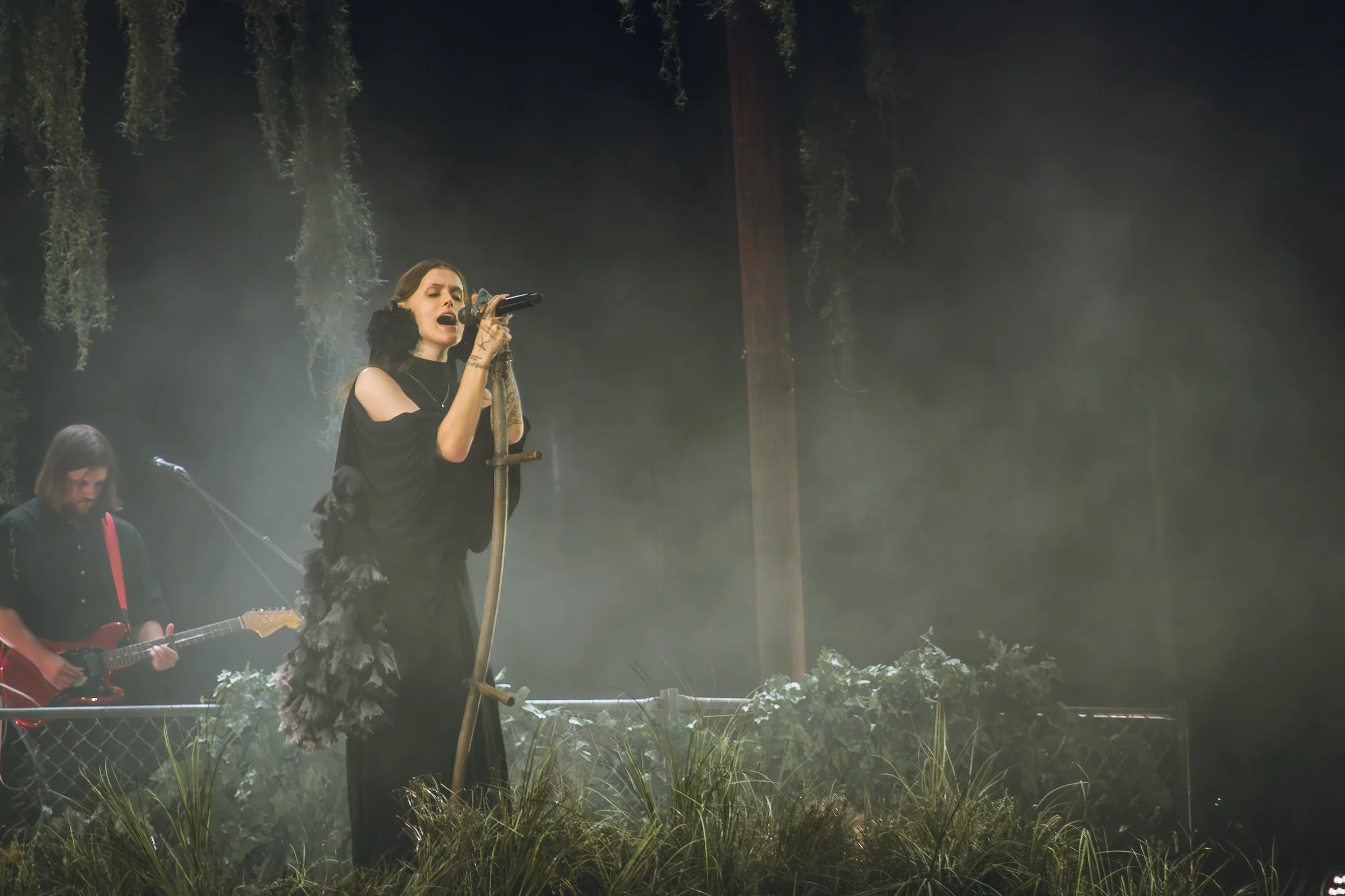
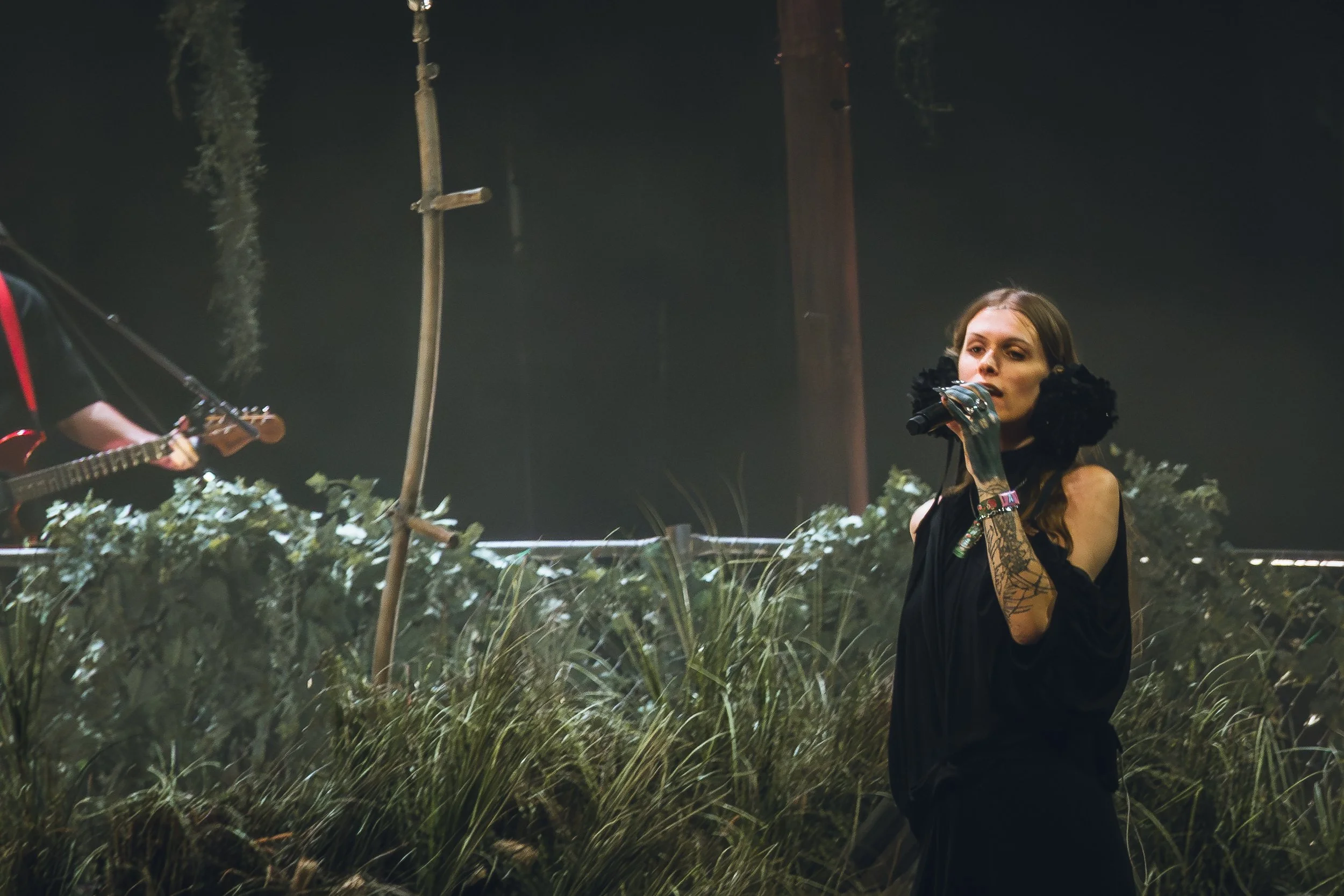
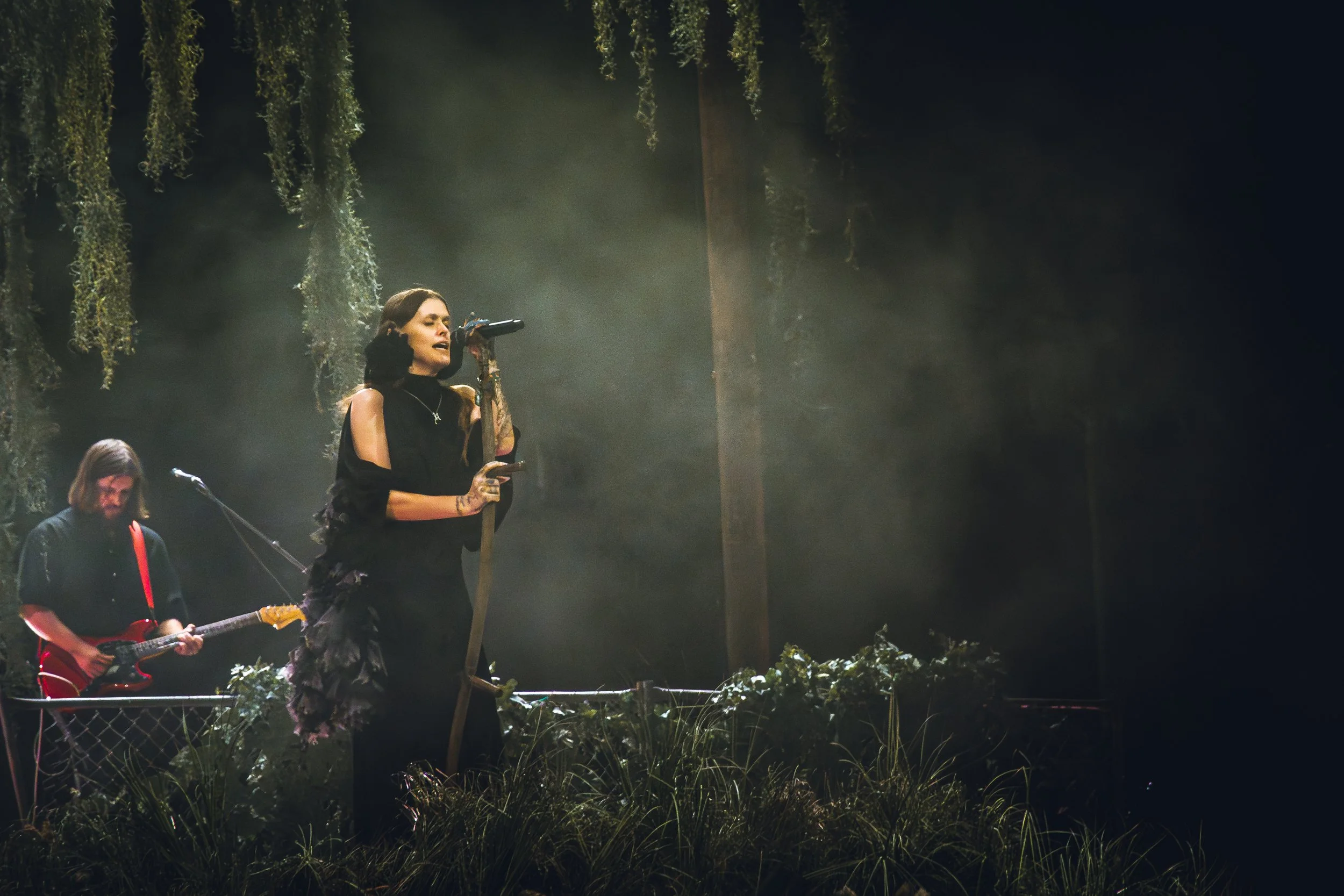
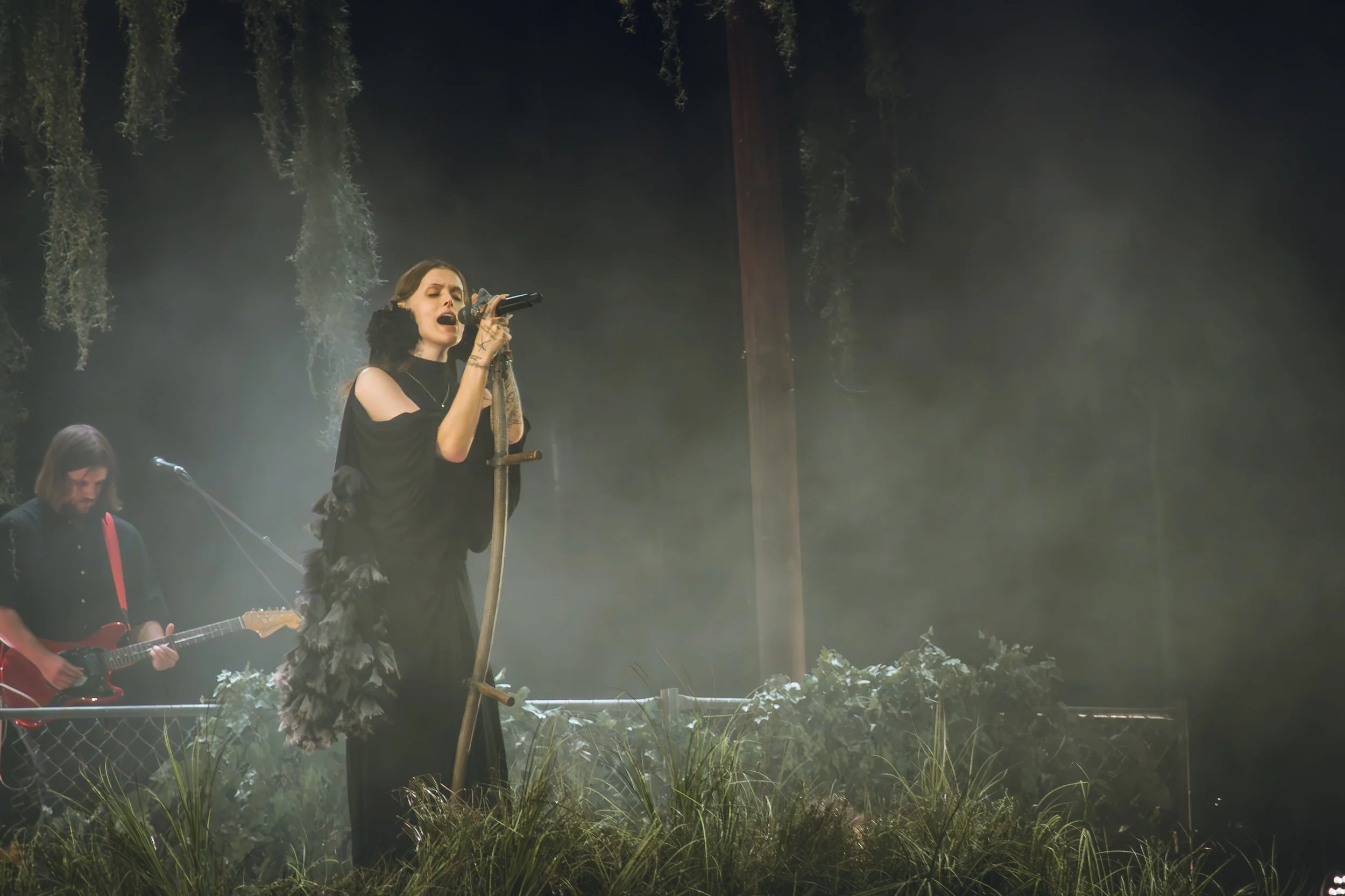
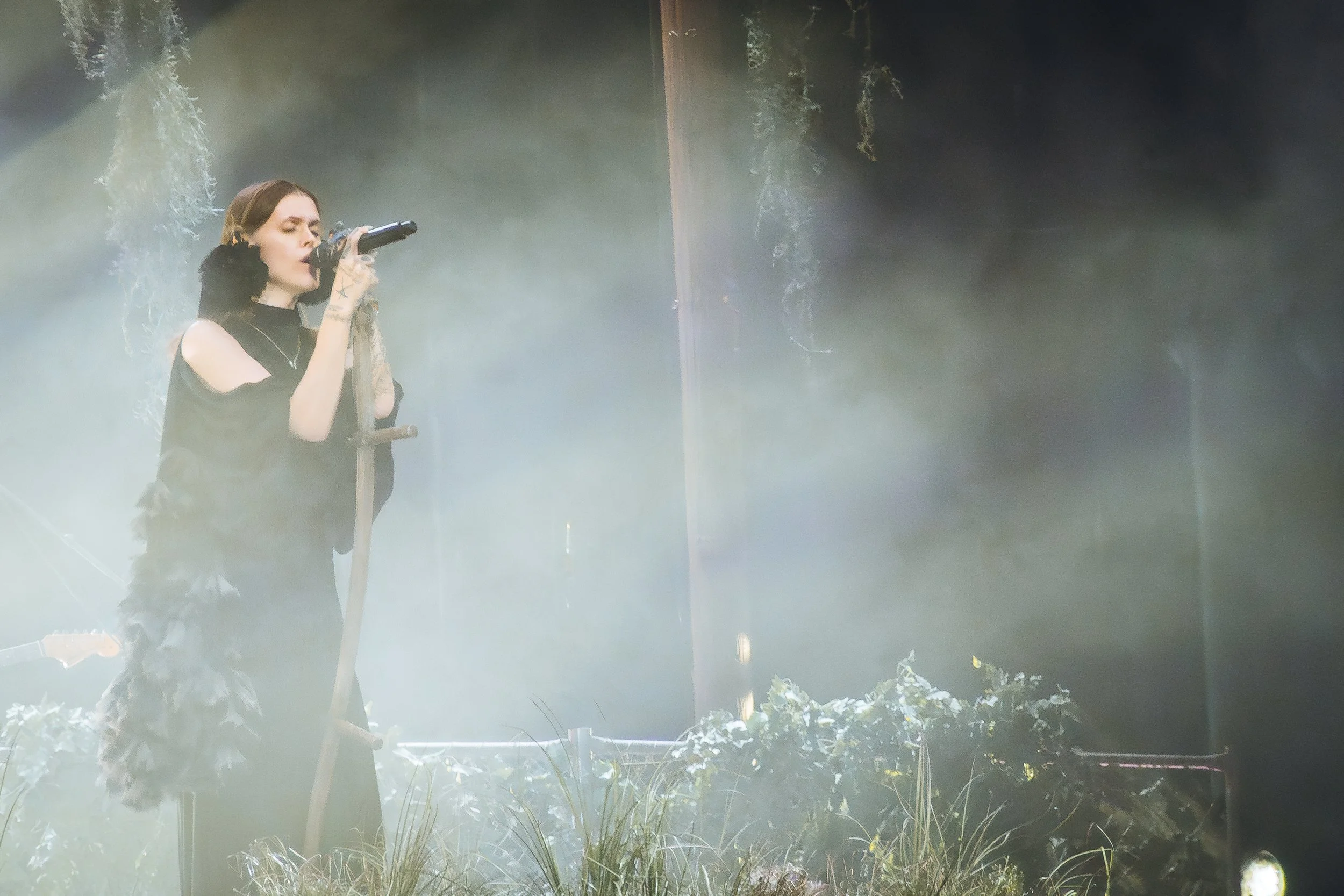
Ethel Cain built a graveyard of American industry on the Mojave stage — Spanish moss draped over power lines, rusted car parts, a yellowed lawn, and a full-size scythe being used as a microphone stand. The Punish / Thatorchia sequence ran twenty unbroken minutes and ended with the tent so quiet you could hear the Sahara bass leaking through from two stages over, an industrial set thumping in one ear and an elegy in the other. Shockingly heavy, unsurprisingly cathartic, and expectedly spooky.
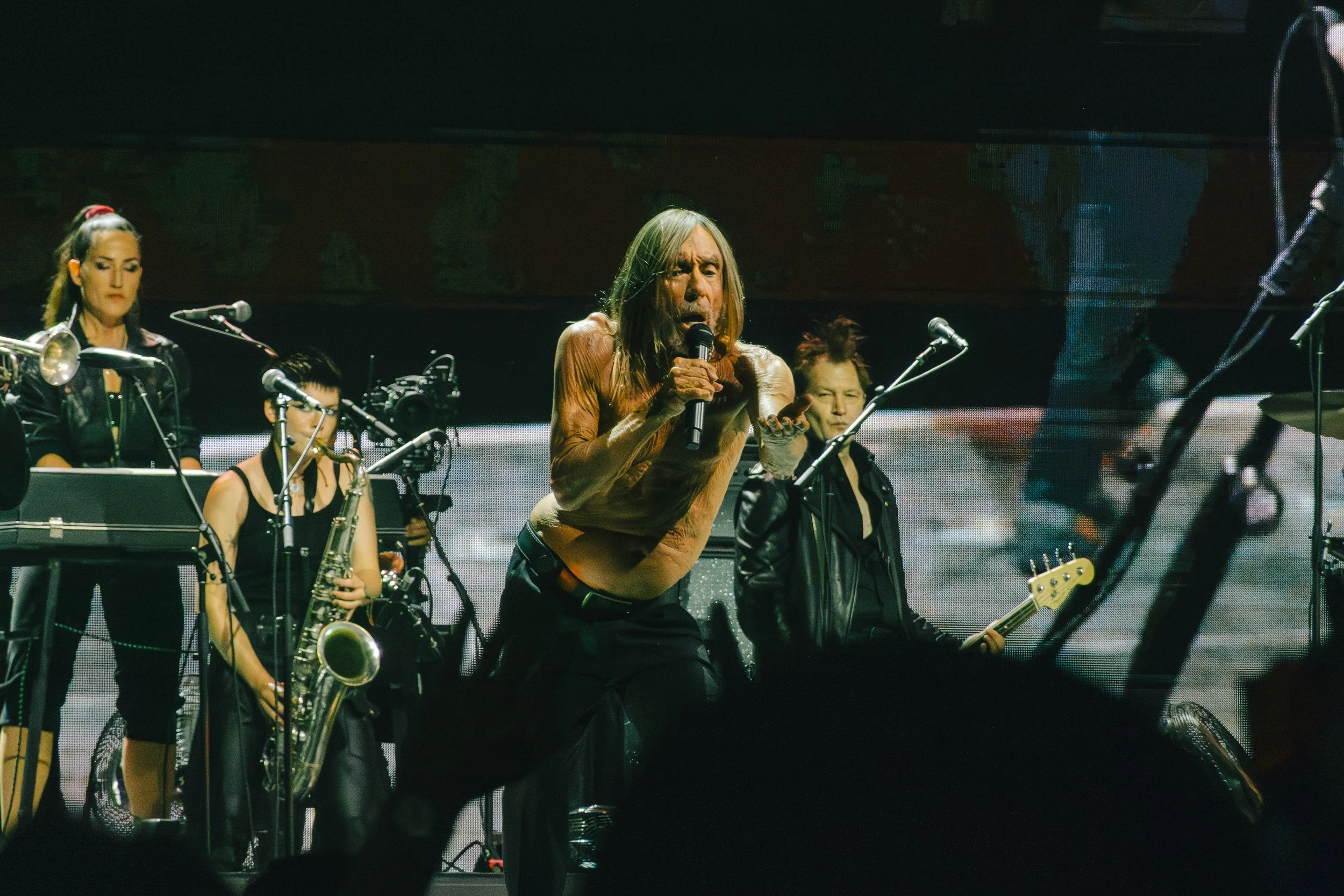
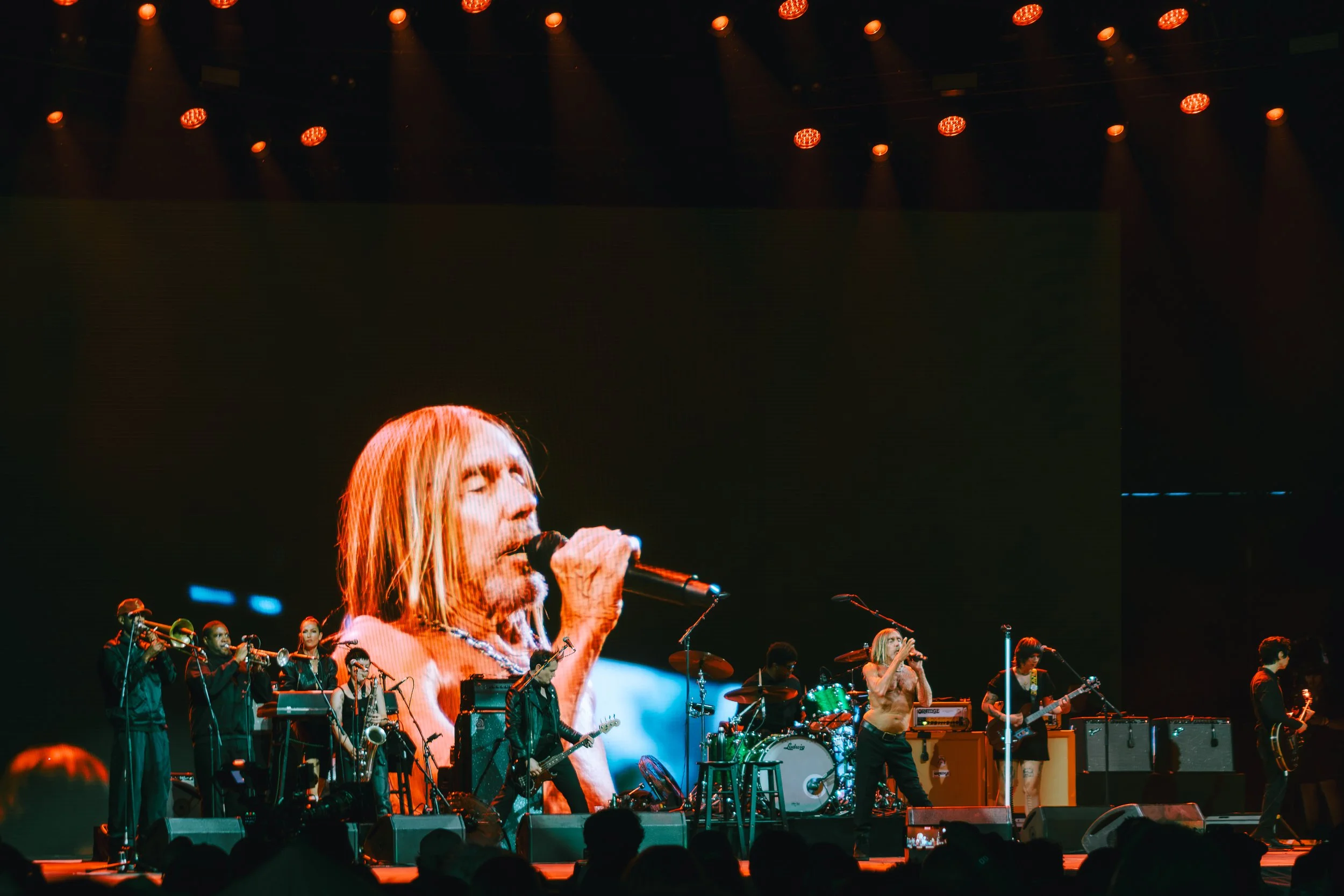
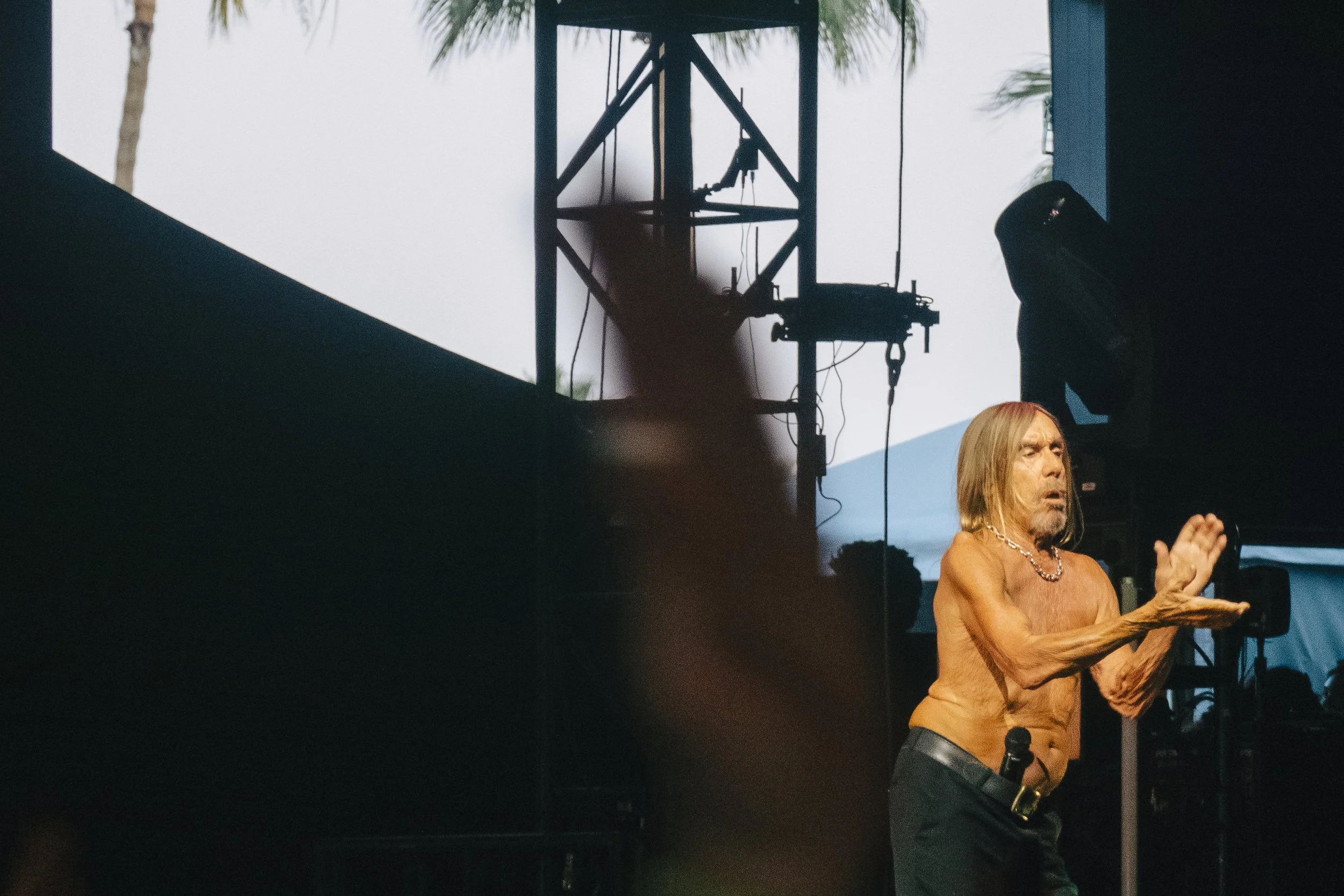
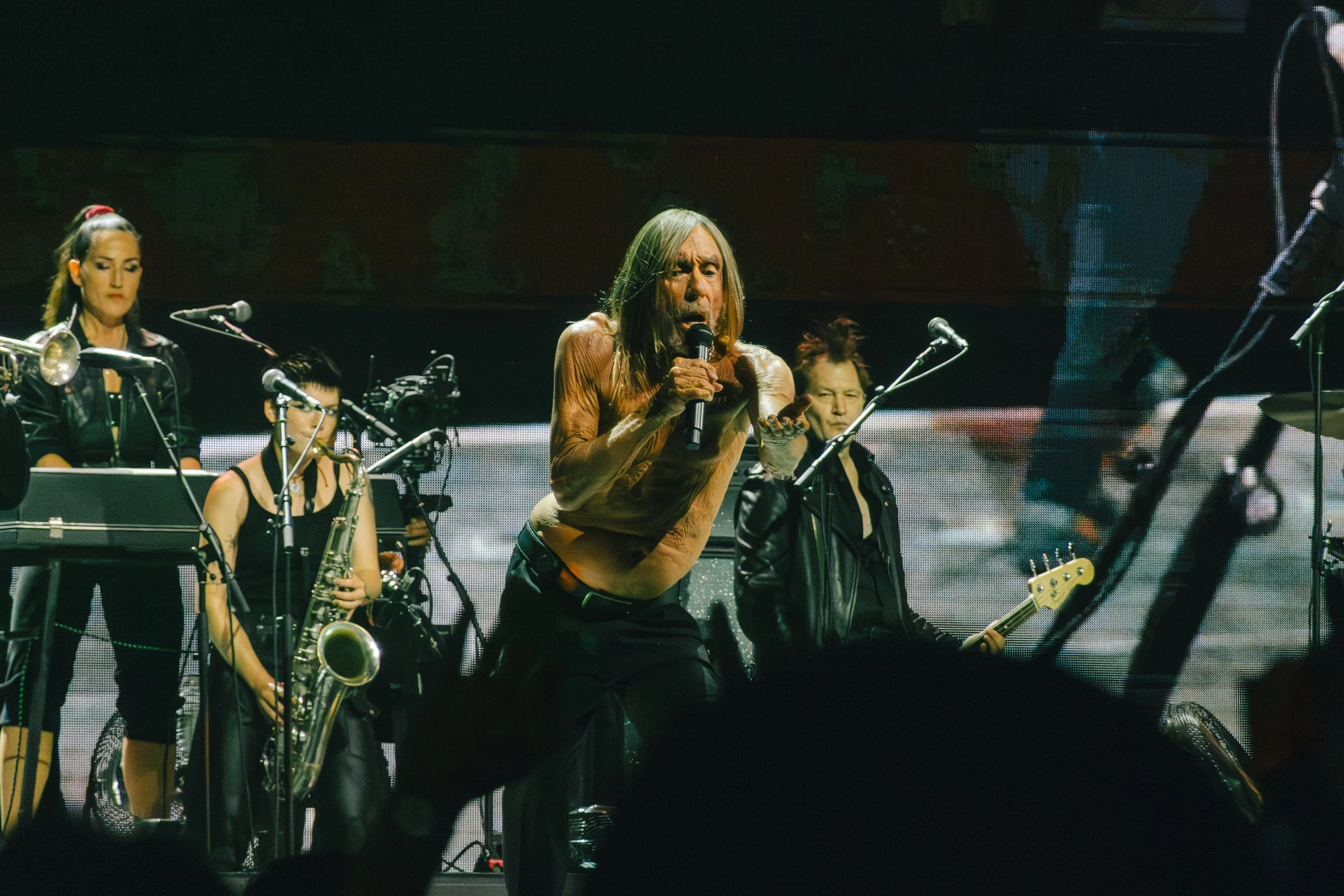
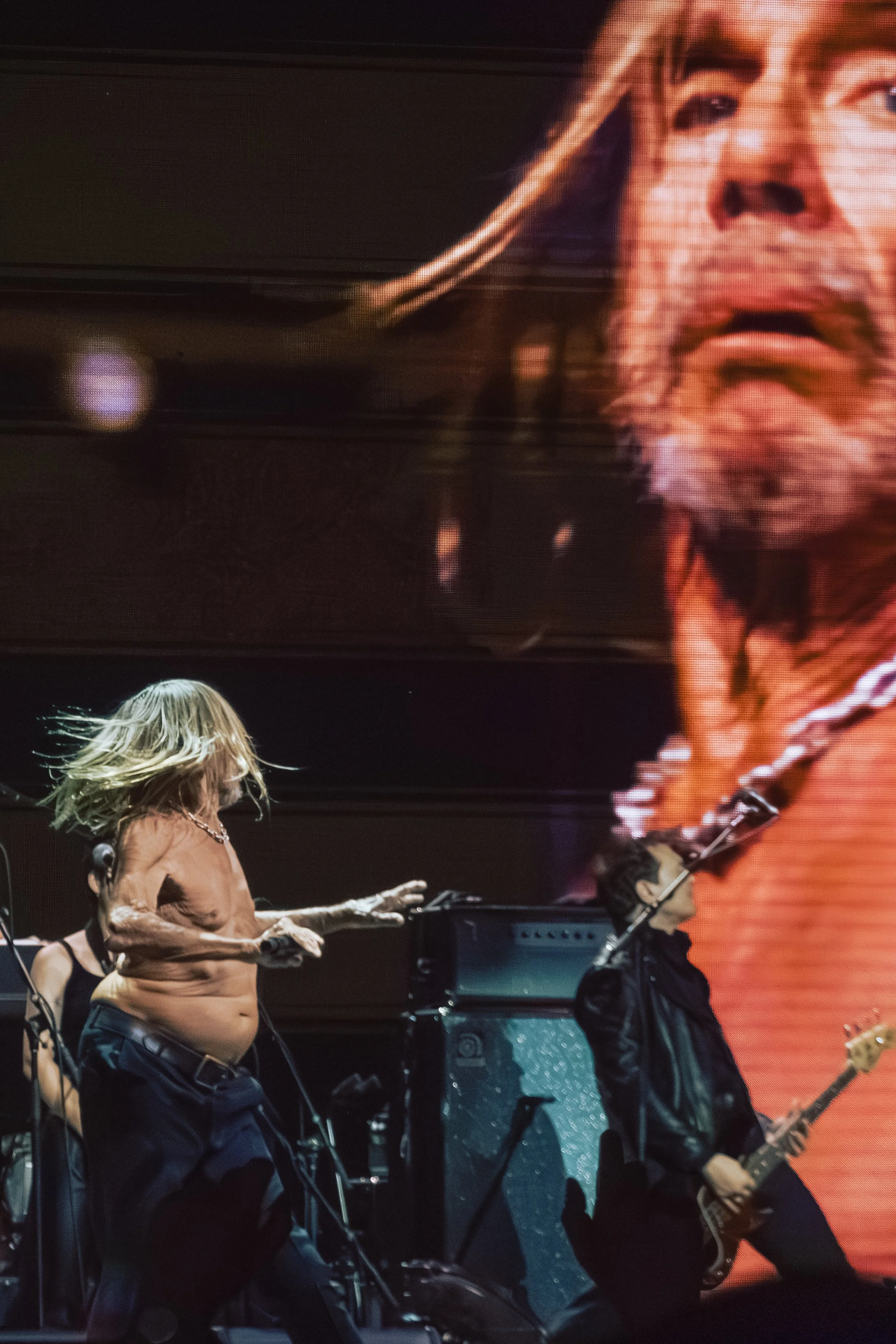
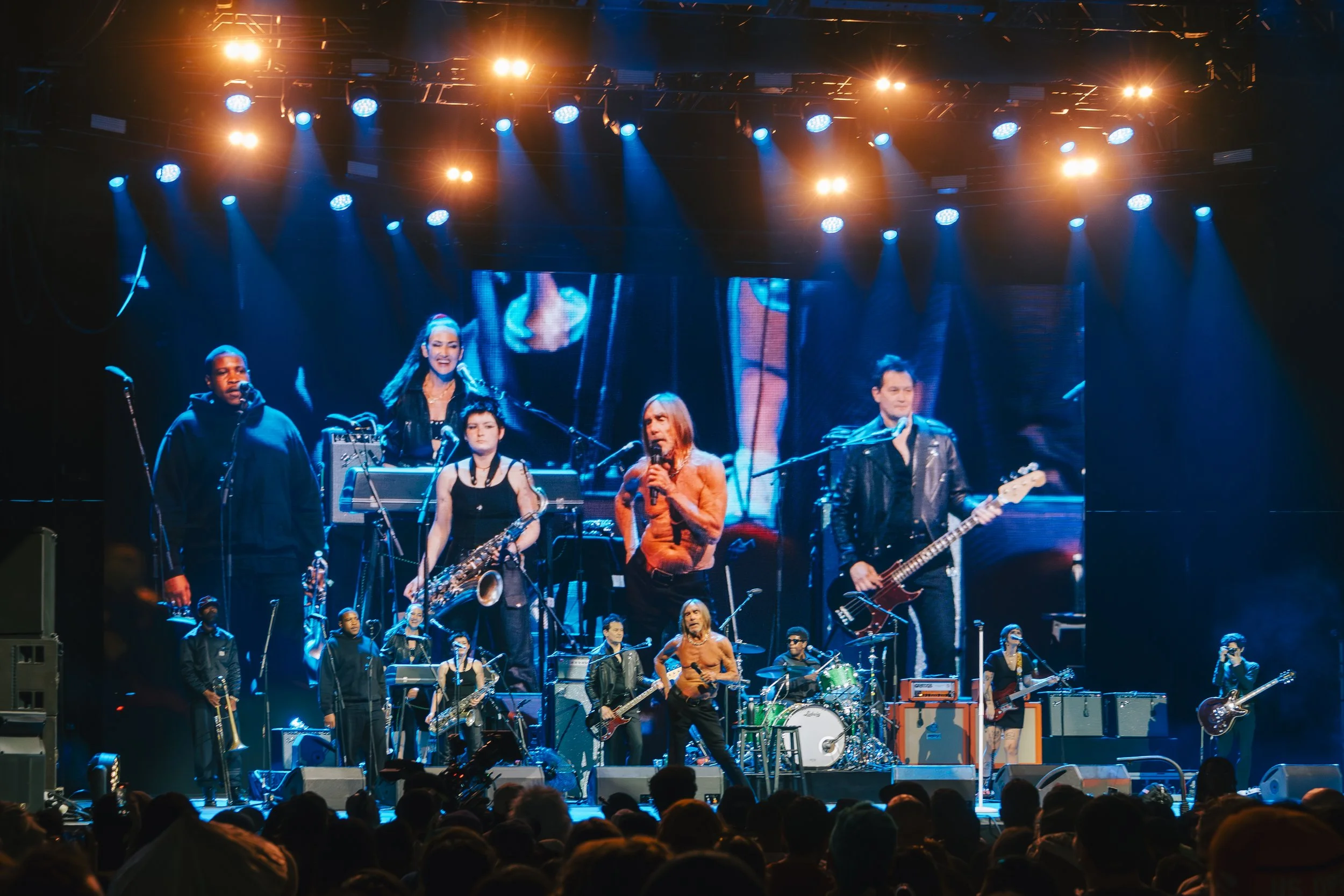
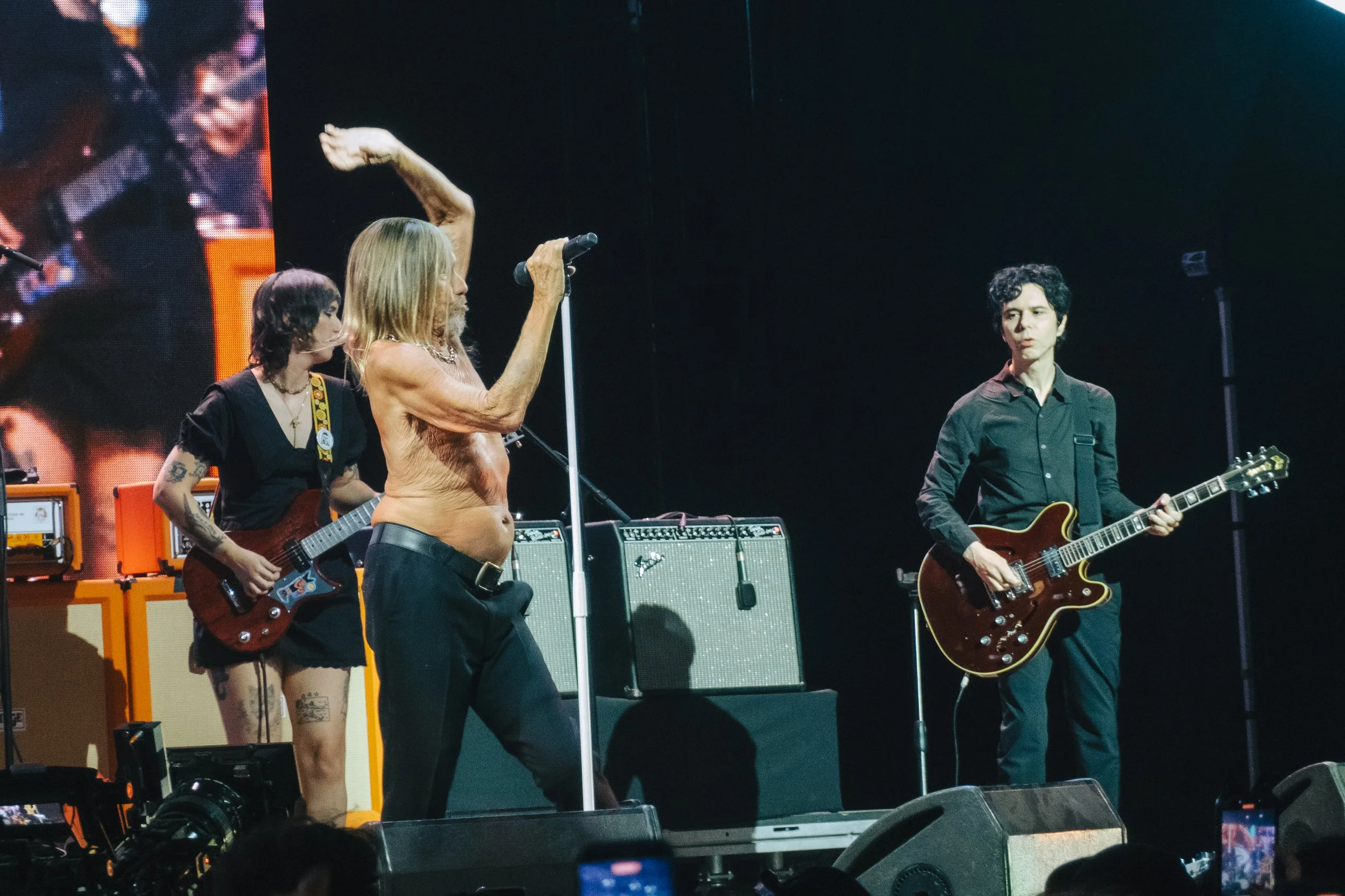
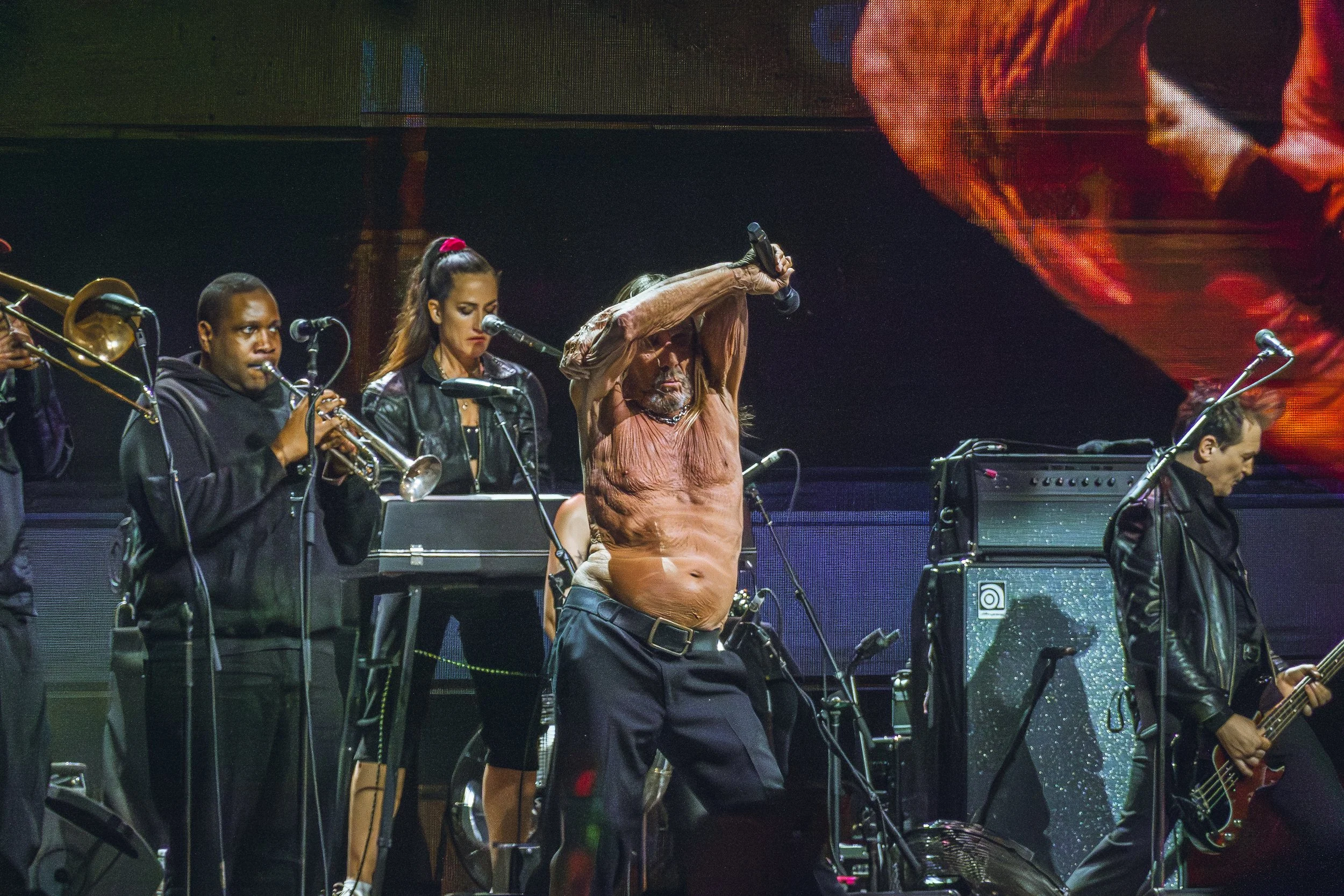
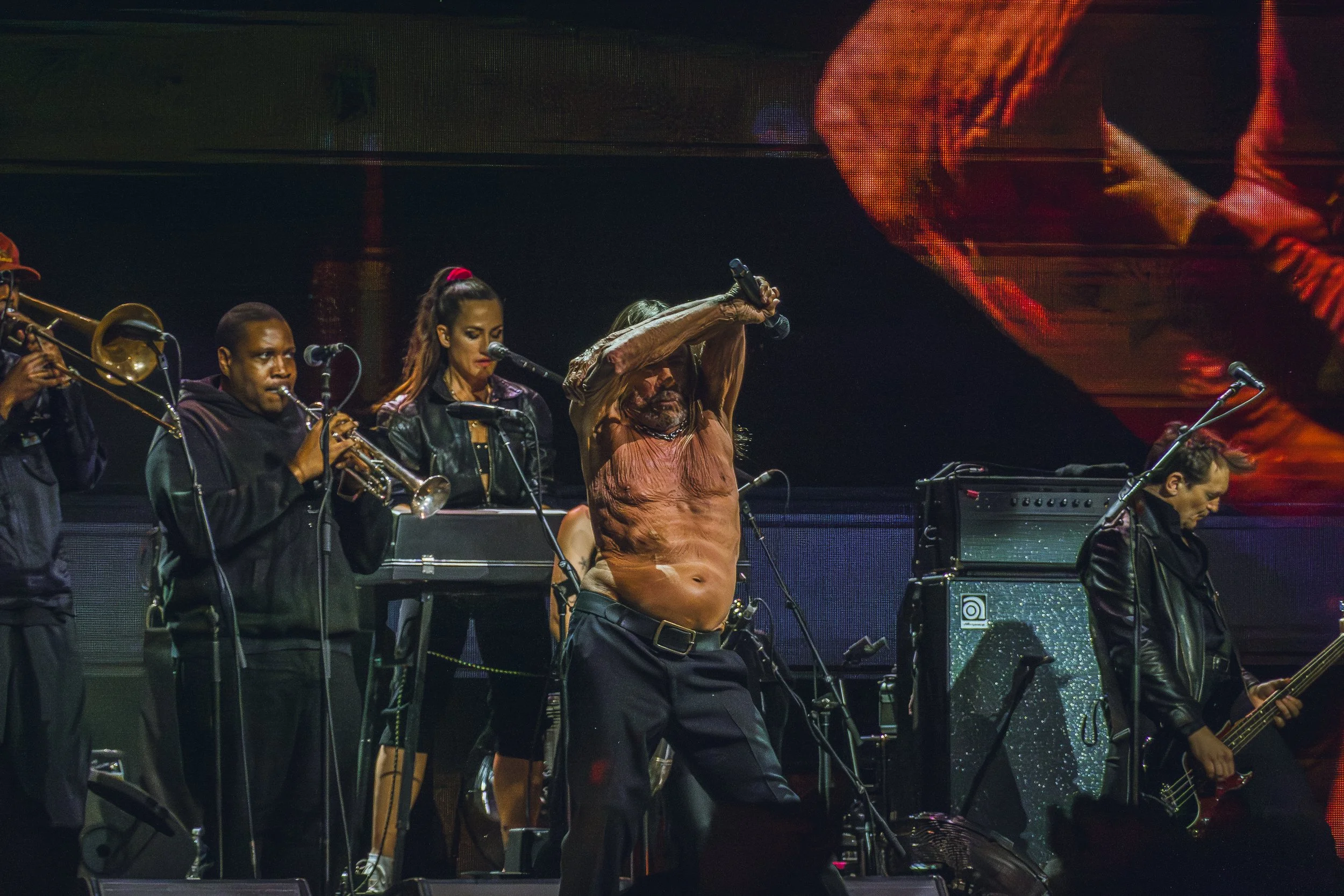
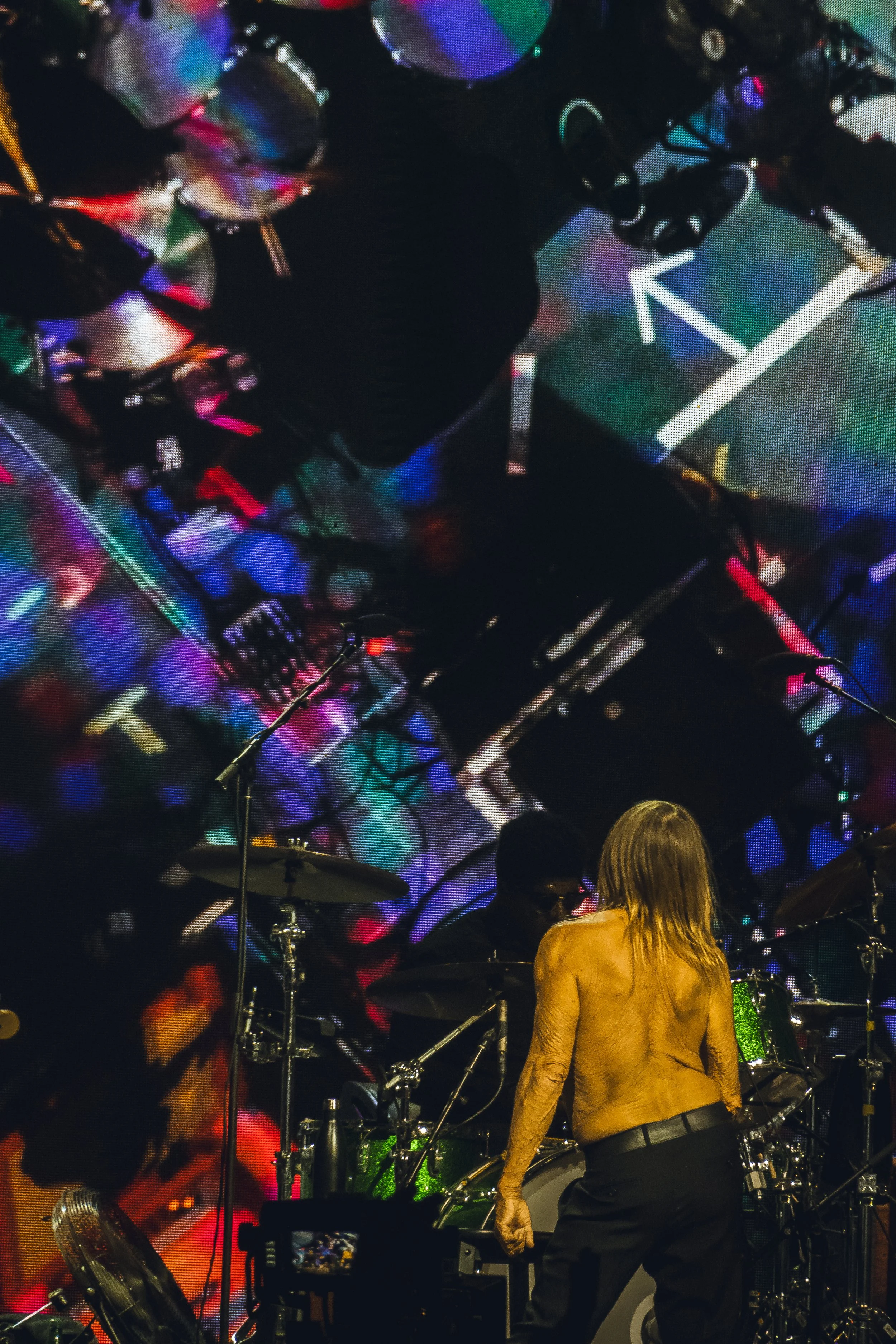
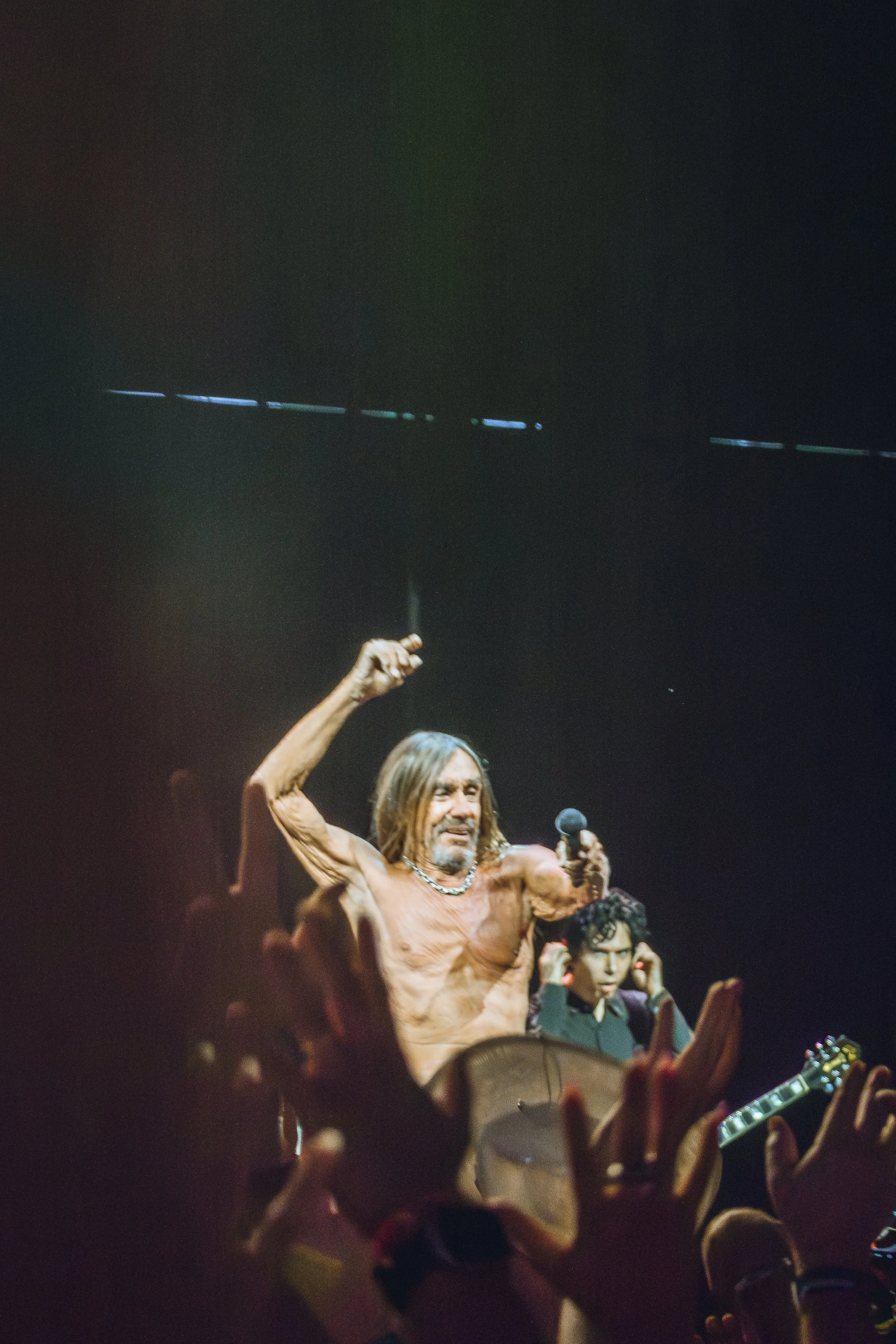
Iggy Pop, at seventy-eight years old, played The Passenger, Lust for Life, and I Wanna Be Your Dog in sequence. Three of the best rock songs ever written, played by the man who wrote them, with his shirt off, his torso looking like it had been dredged up from a tar pit. During Passenger, he stuck the microphone down the front of his pants so his hands were free to flail around as if his limbs were independent from his body. I had to leave early to catch TOMORA at Gobi, but reportedly he left the stage in a coffin. He turned seventy-nine the following weekend.
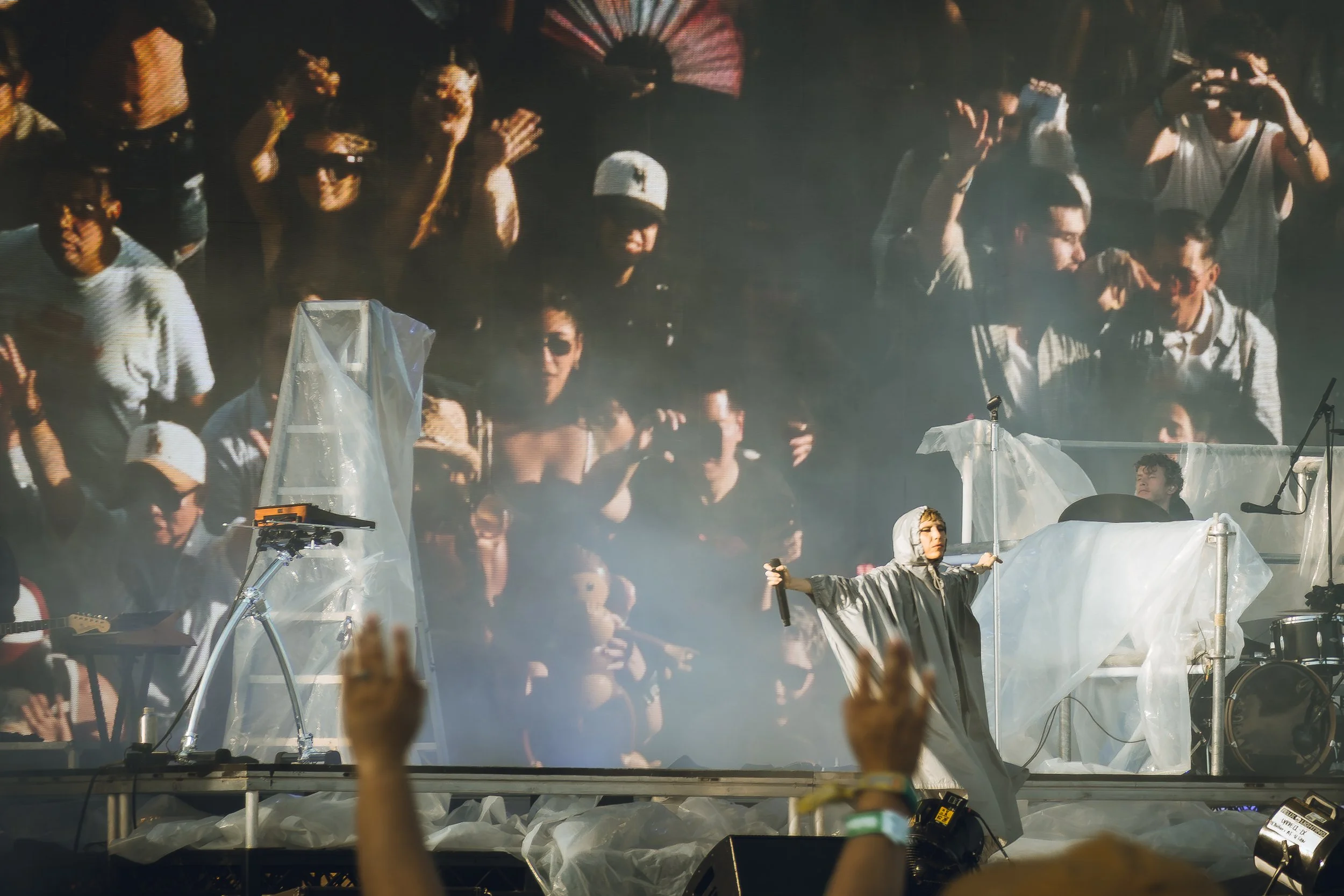
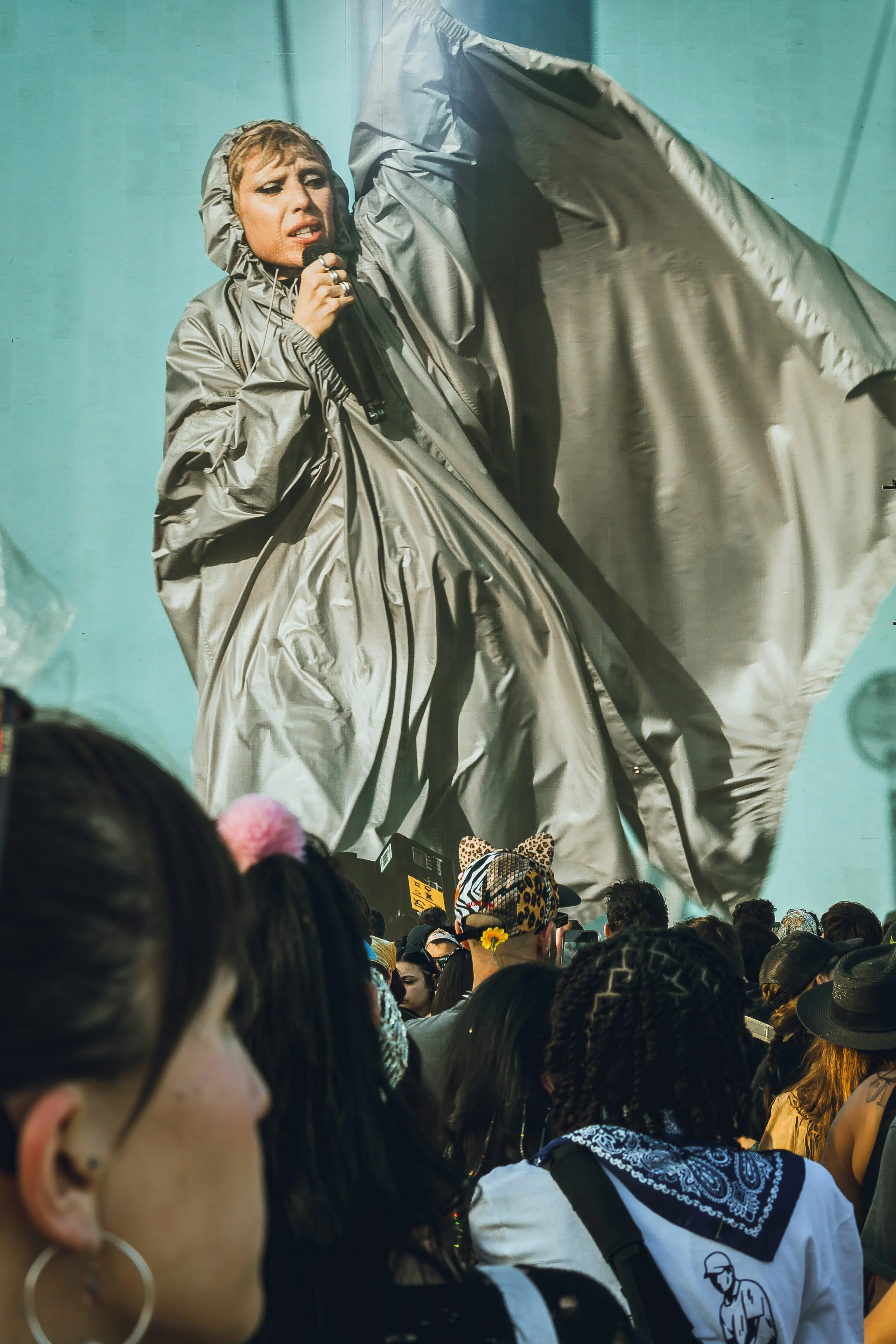
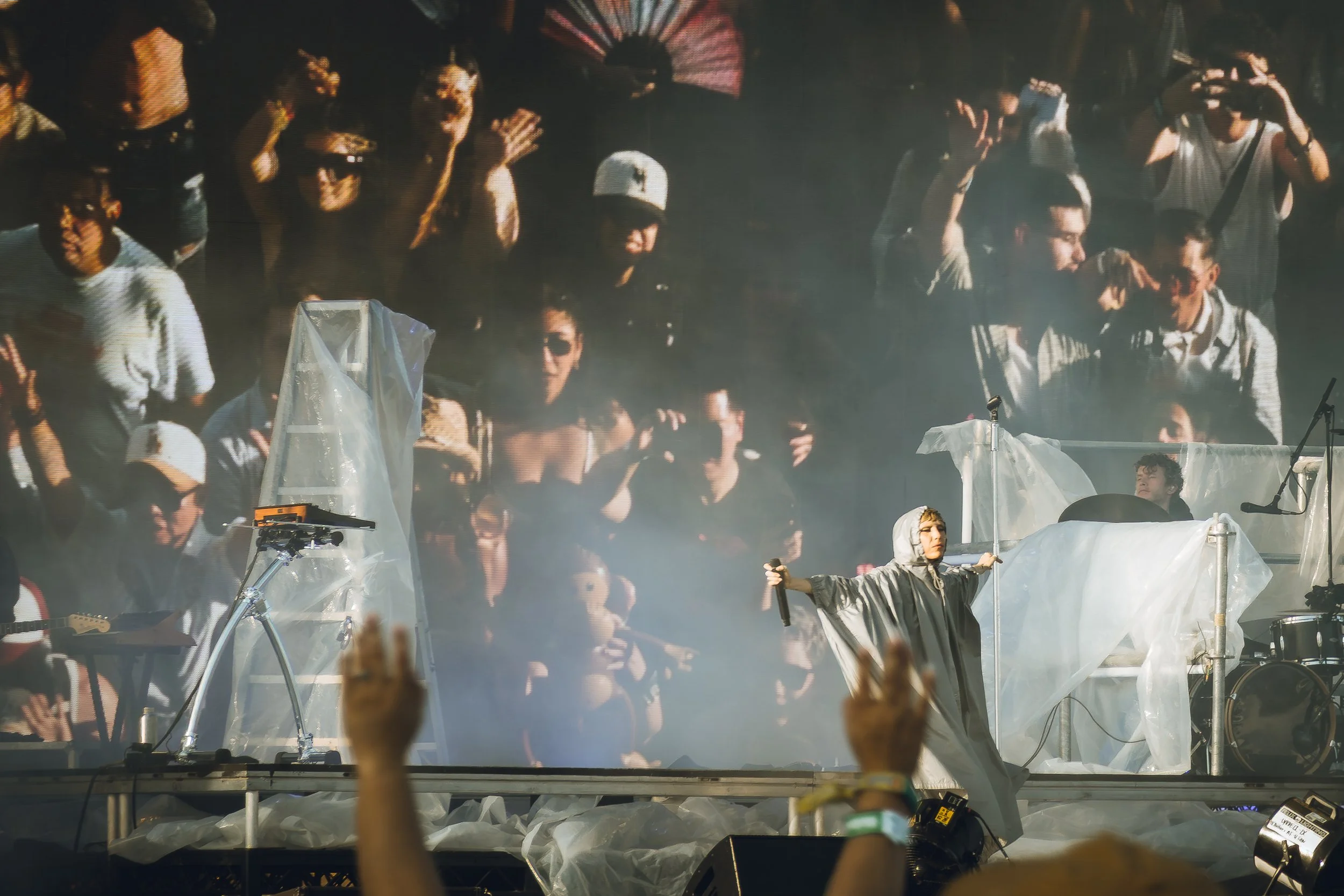
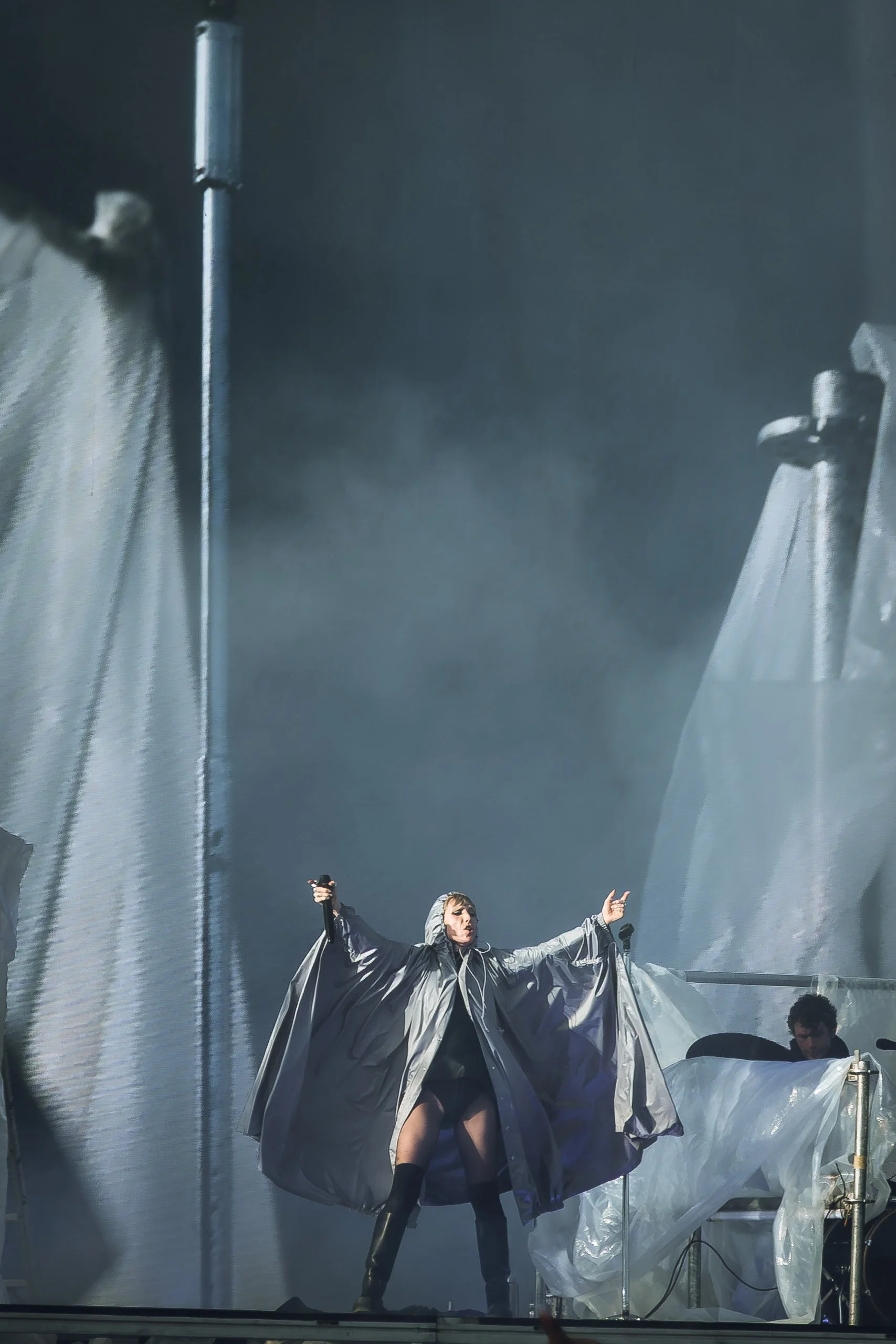
Lykke Li floated back in after a two-year absence, grey hooded raincoat over a sleek black leotard. Possibility — the Twilight: New Moon song that shipped a generation of thirteen-year-olds' first heartbreaks — sent the front rows back to their fifteen-year-old interiorities. She closed on I Follow Rivers, walked slowly to the side of the stage, lit a cigarette, took one drag, and walked off. The last image on the big screen was her in profile, backlit, exhaling. Then Rhythm of the Night came blasting over the PA, and Lykke reappeared on stage and danced like a demon possessed with the power of nicotine. Someone next to me said, out loud, "who IS that." American pop right now is selling you maximum availability. Lykke sold us, for fifty-five minutes, the opposite — and then, at the end, gave us the party as a small private gift.
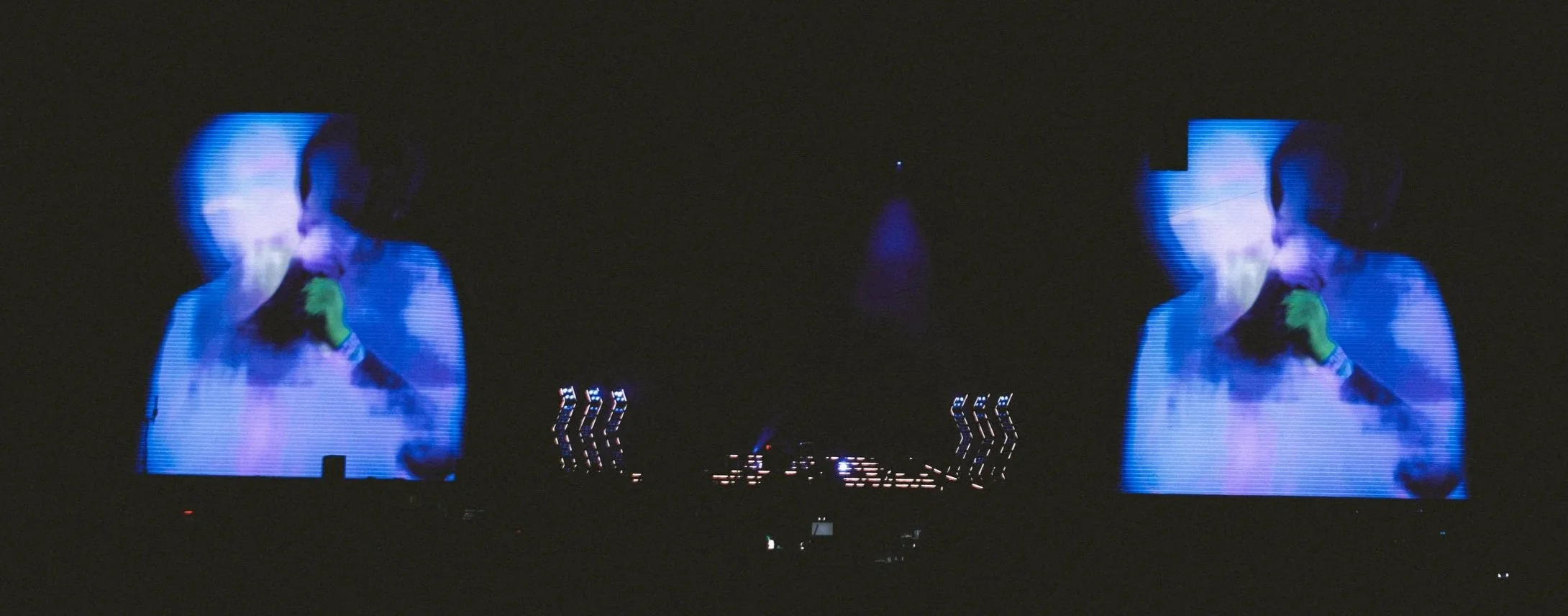
The Strokes proved they could be the biggest rock band in America if they wanted to be. Then they made the case, on the main stage immediately before Justin Bieber's headlining slot, that they did not want to be — closing on Oblivius, a song they hadn't played live since 2016, with a slideshow that worked through a long answer to the question why is the world the way it is? Latin American leaders the CIA was credibly implicated in killing (Torrijos, Árbenz, Roldós Aguilera). The last university standing in Gaza, destroyed by Israeli forces in 2024 — funded by US tax dollars. Over thirty universities in Iran reduced to rubble this year. The chorus repeating: what side you standing on? It was the most pointed political statement of the festival and probably the year. Forty minutes later, Justin Bieber opened a MacBook on stage and sang along to YouTube videos of himself.