
WITCH CLUB SATAN CHANNELS CATHARSIS, RAGE, AND RITUAL
WORDS AND PHOTOS BY JOSHUA MANALANG
I have a confession to make: I am a black metal virgin.
Sure, I have dabbled in the genre over the years, but I had never witnessed a live performance of the dark arts. When my editors expressed interest in covering the Los Angeles date of Witch Club Satan's first-ever North American tour, I jumped at the opportunity. Self-described as "haunting Norwegian feminist black metal, by resurrected witches," how could I say no?
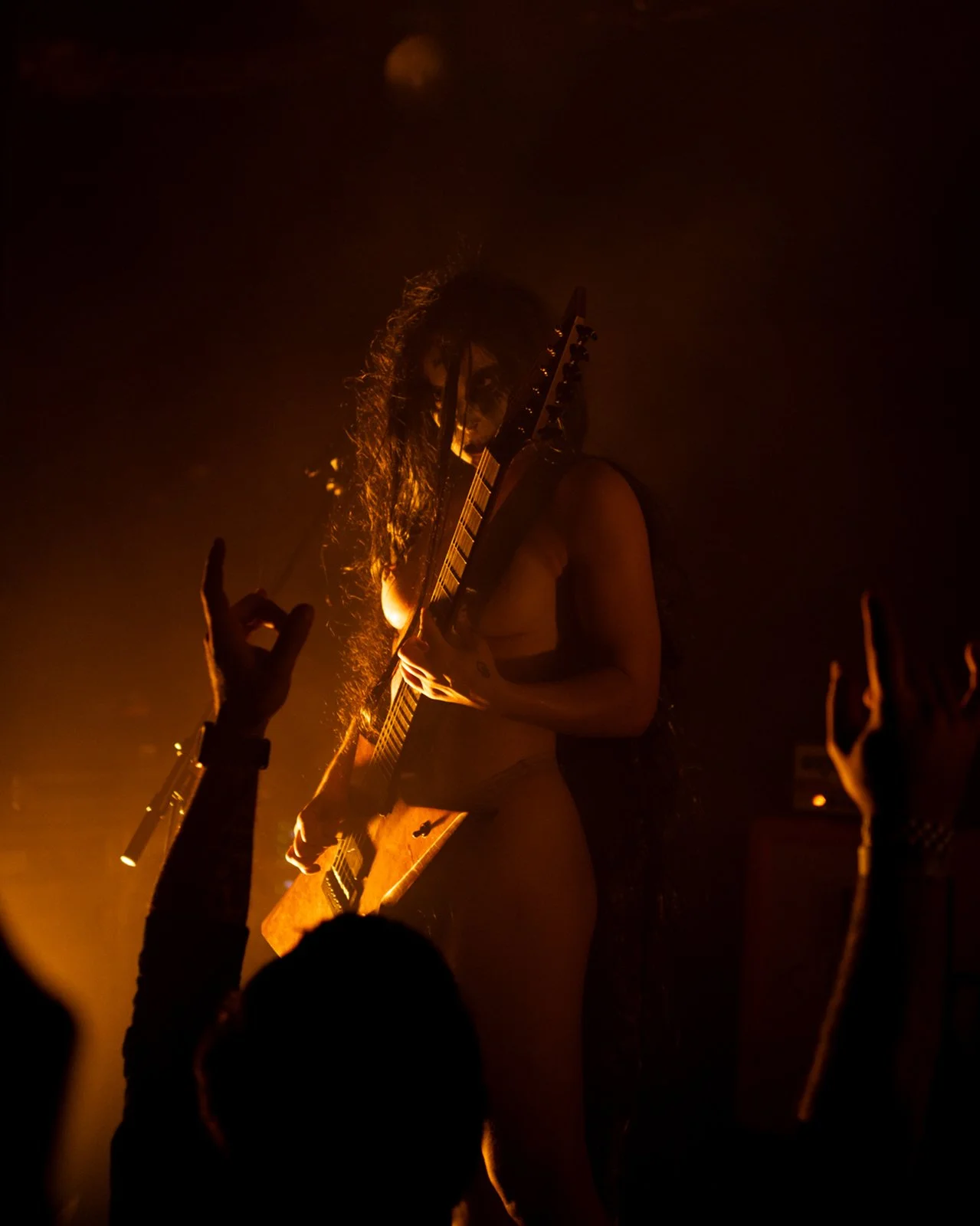
Despite my inexperience, I knew I could count on two things: corpse paint and an abundance of all-black attire. I was not disappointed.
It had been a few years since I had last visited the Lodge Room in Highland Park. It is one of those venues that, when empty, feels relatively intimate. But when it's filled with the heat and energy of an enthusiastic crowd, it somehow feels absolutely cavernous. This was especially true of tonight's sold-out show.
Scenes of debauchery and BDSM were projected onto the wall behind the stage as fans filed in and gathered in the main room. The provocative imagery served as a preview of what was to come.
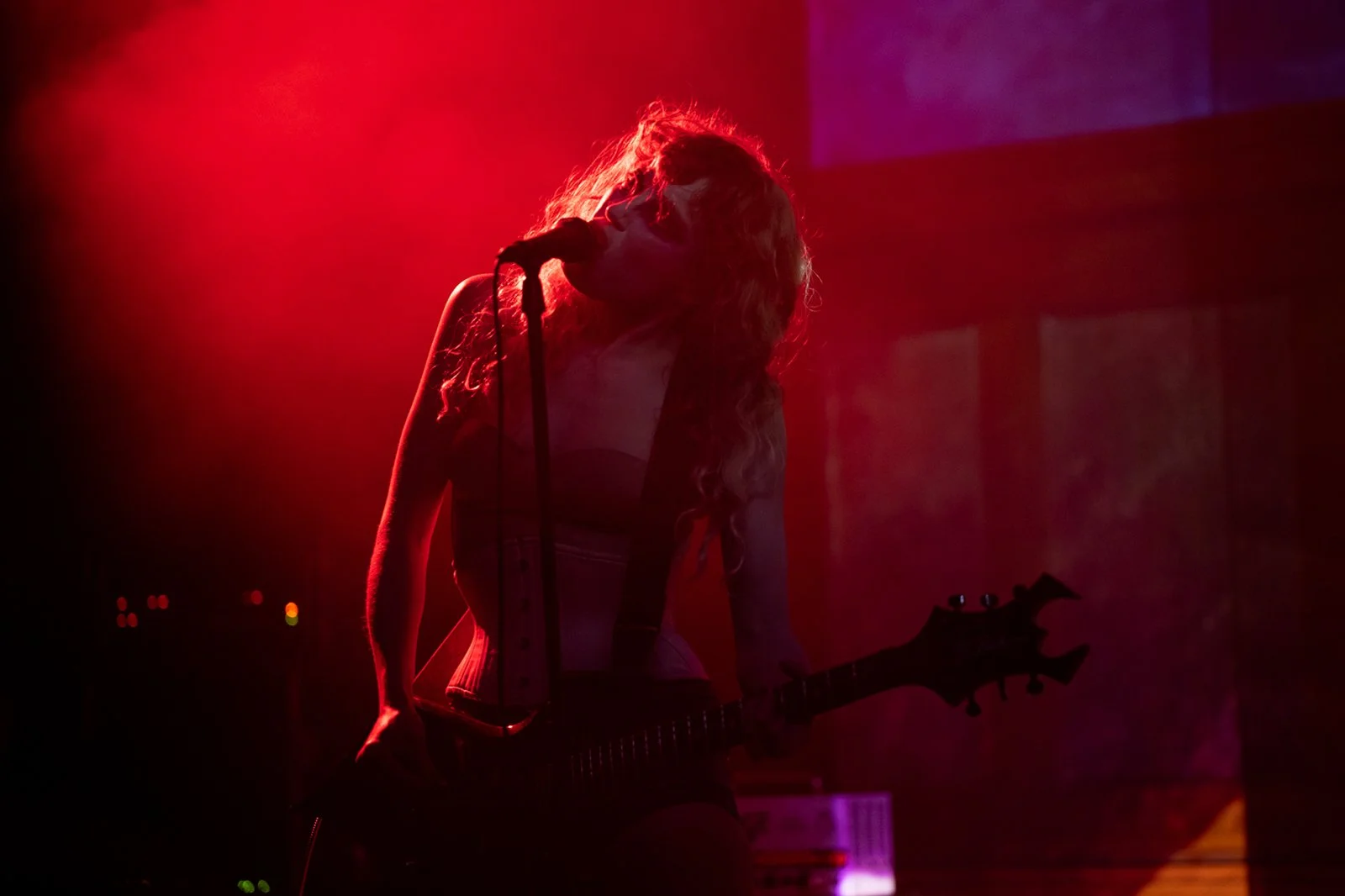
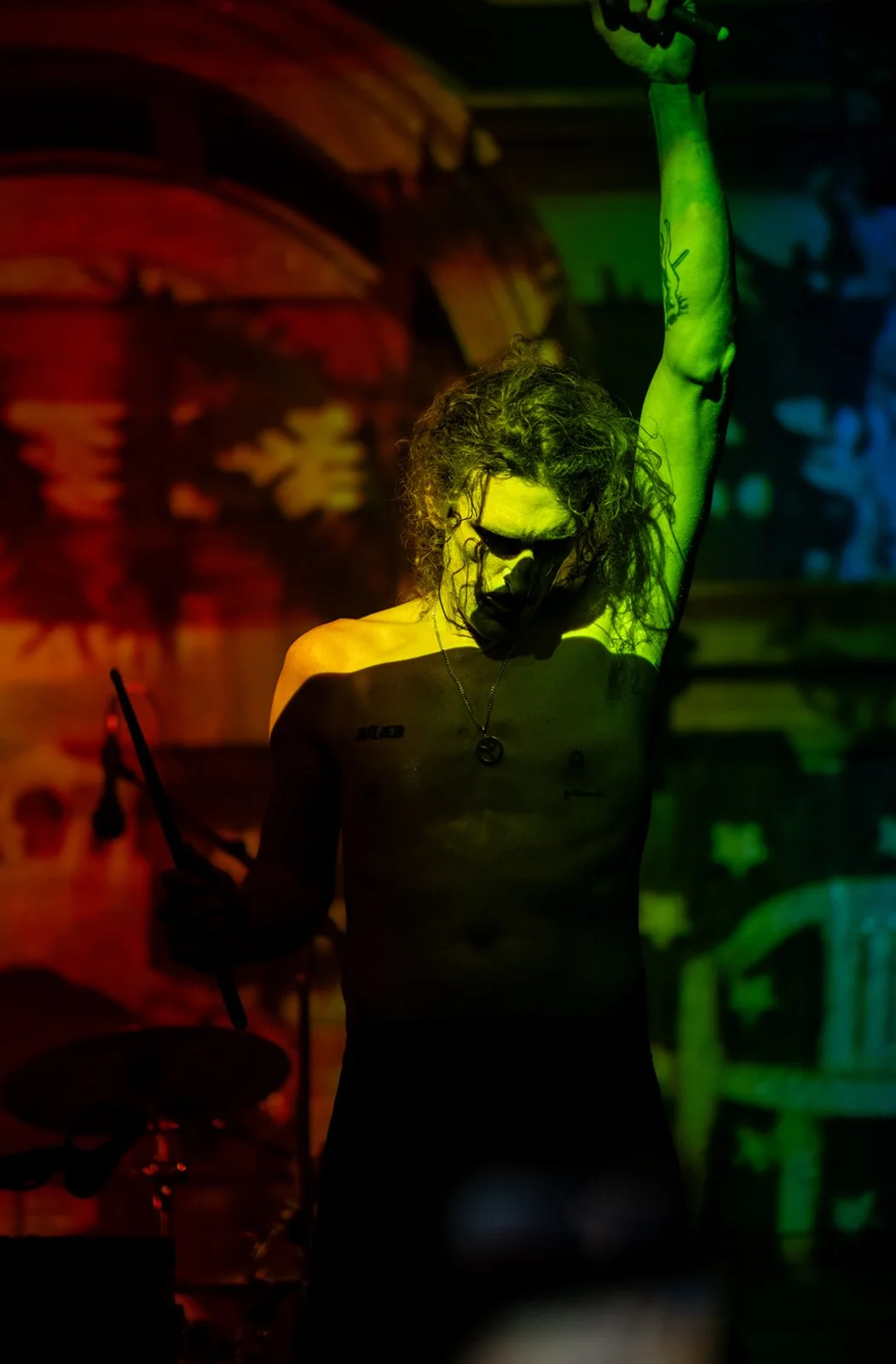
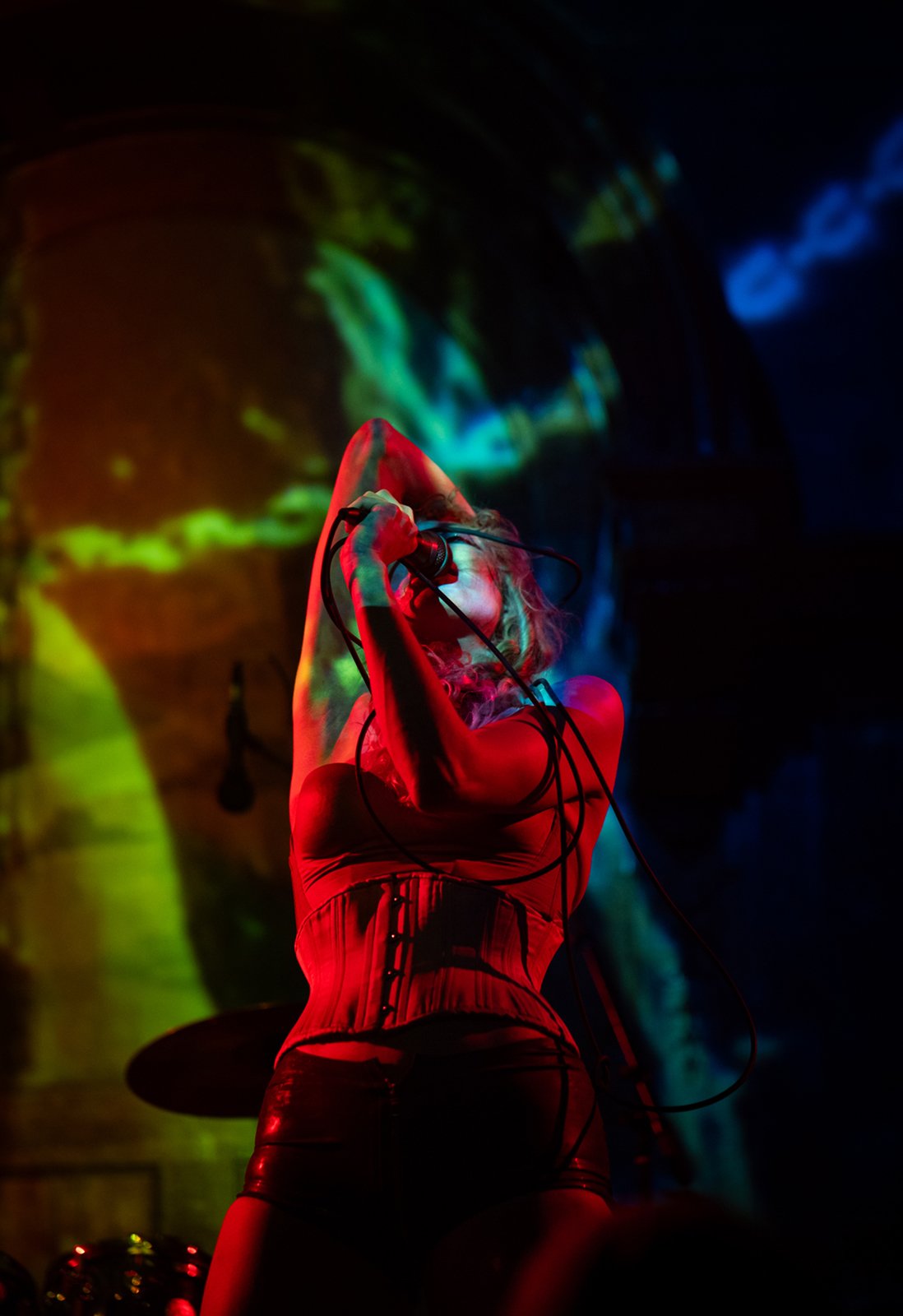
Opening the evening was Patriarchy. As the house lights dimmed and distortion echoed through the speakers, the Los Angeles-based band unleashed its infectious blend of darkwave, synth-pop, industrial music, and metal. Exploring themes of sex, love, power, and survival in the modern world, Patriarchy delivered a performance that was both hypnotic and intense.
Lead singer and guitarist, Actually Huizenga, proved to be a commanding presence on stage. Her haunting, shrieking vocals contrasted sharply against the band's driving industrial rhythms, creating a captivating tension that kept the audience locked in. By the end of the set, the crowd had been whipped into a frenzy.
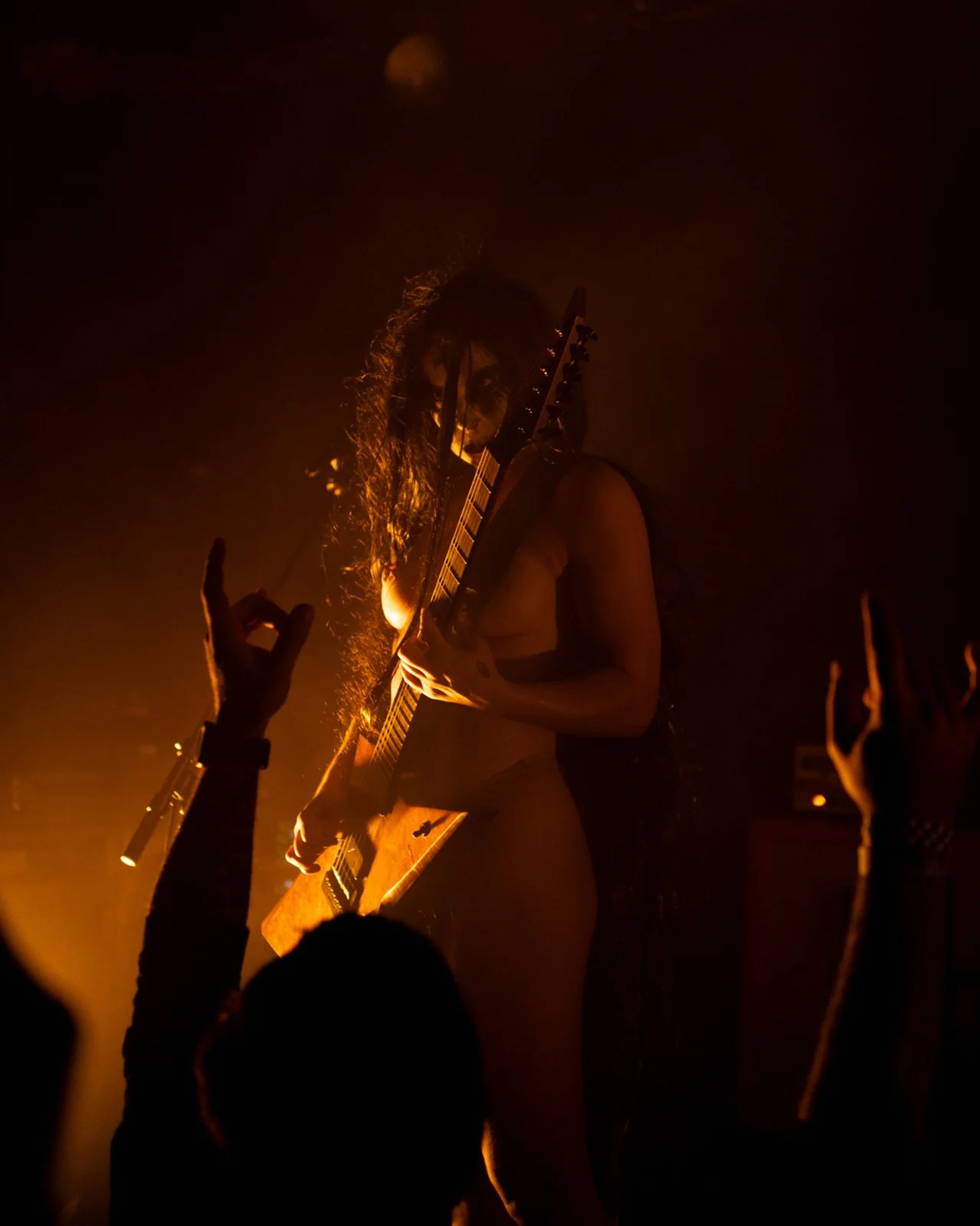
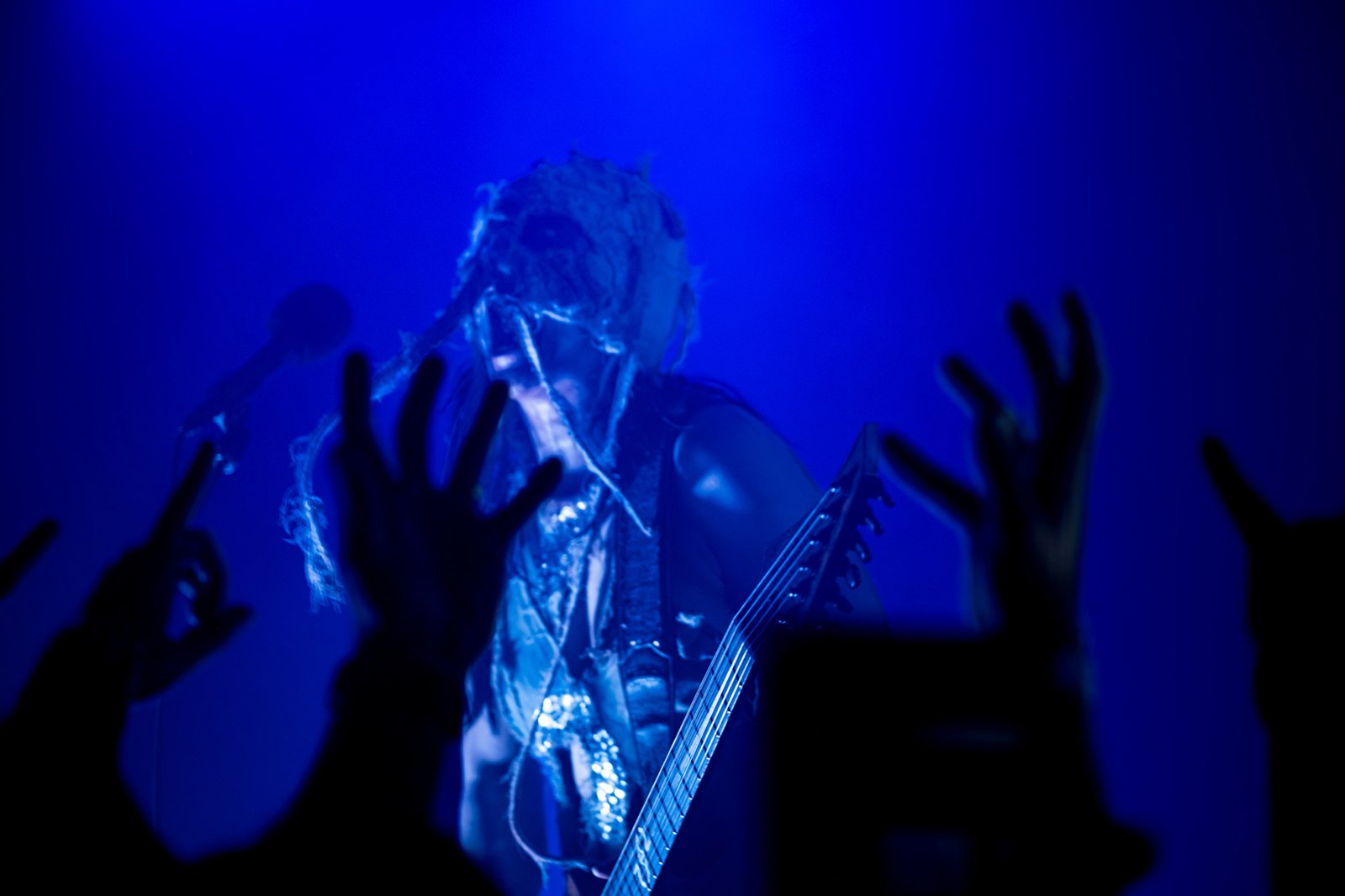
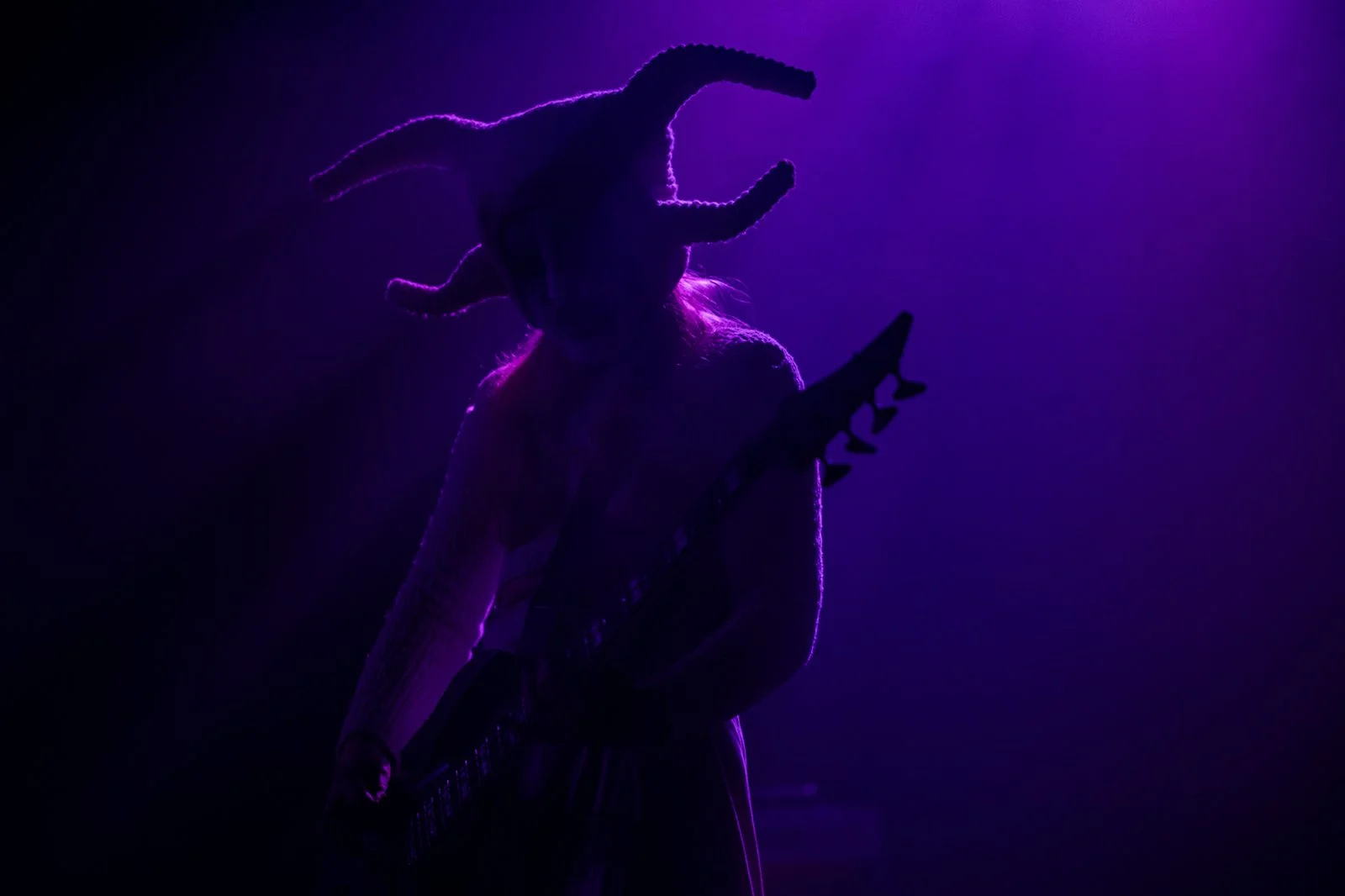
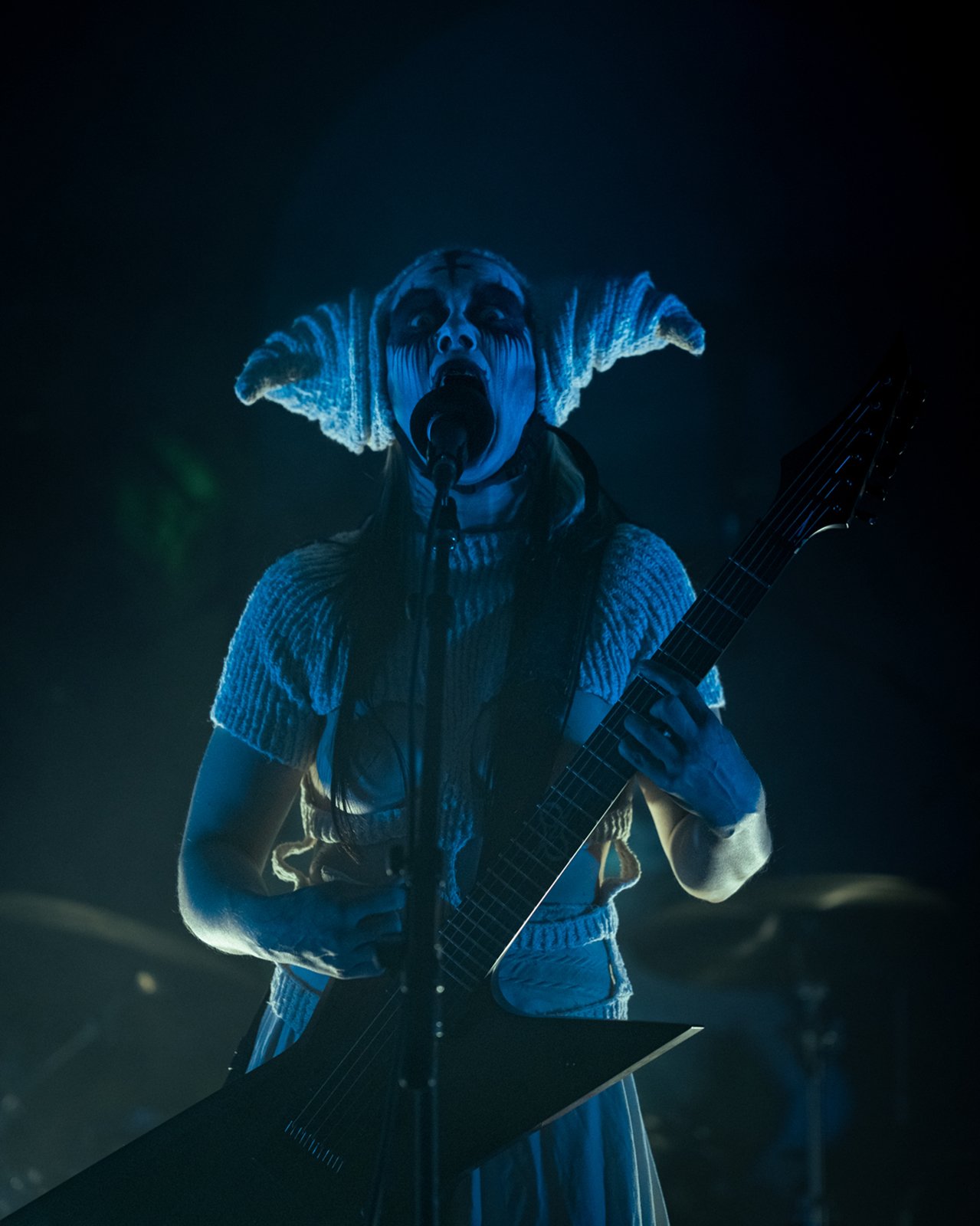
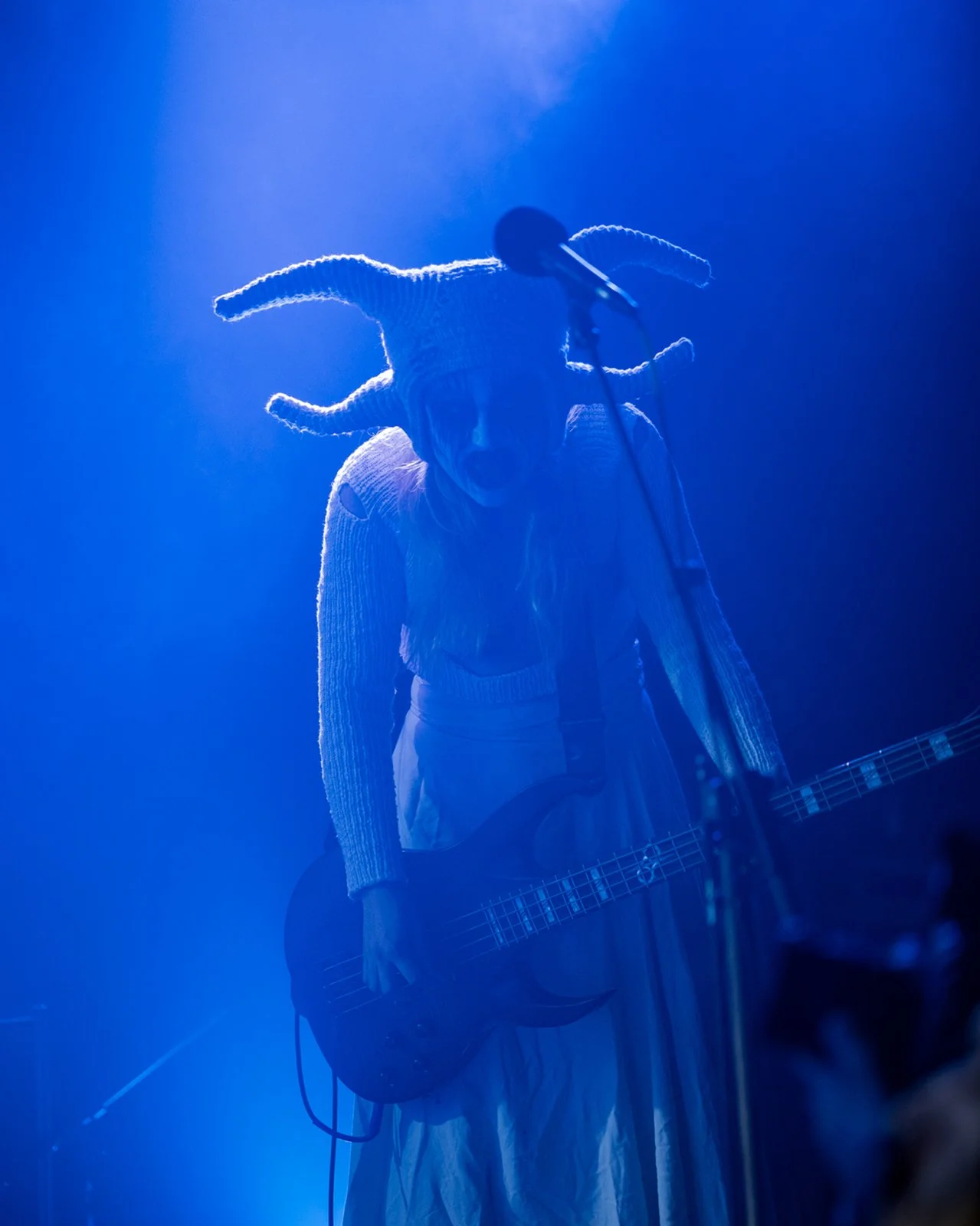
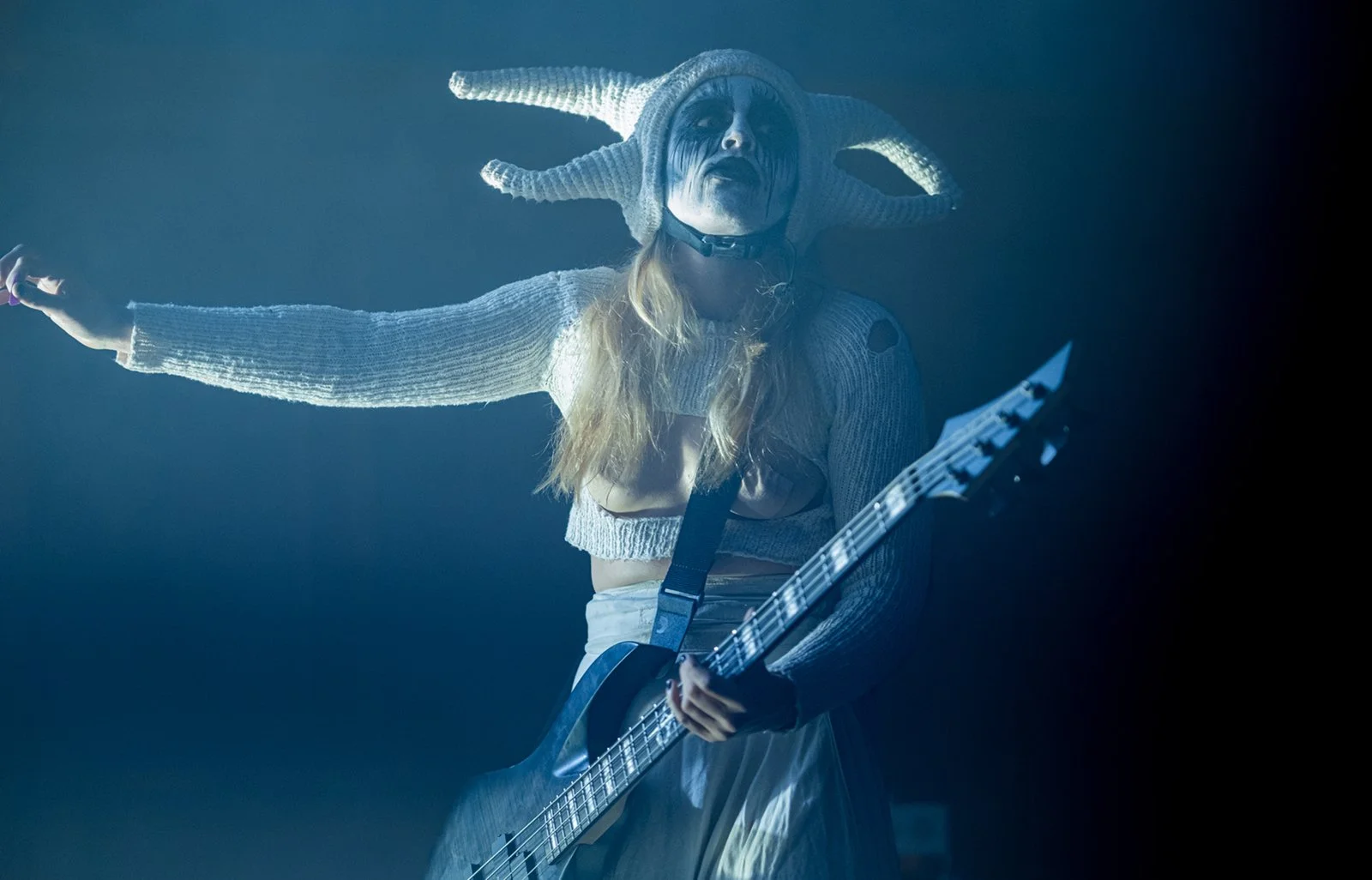
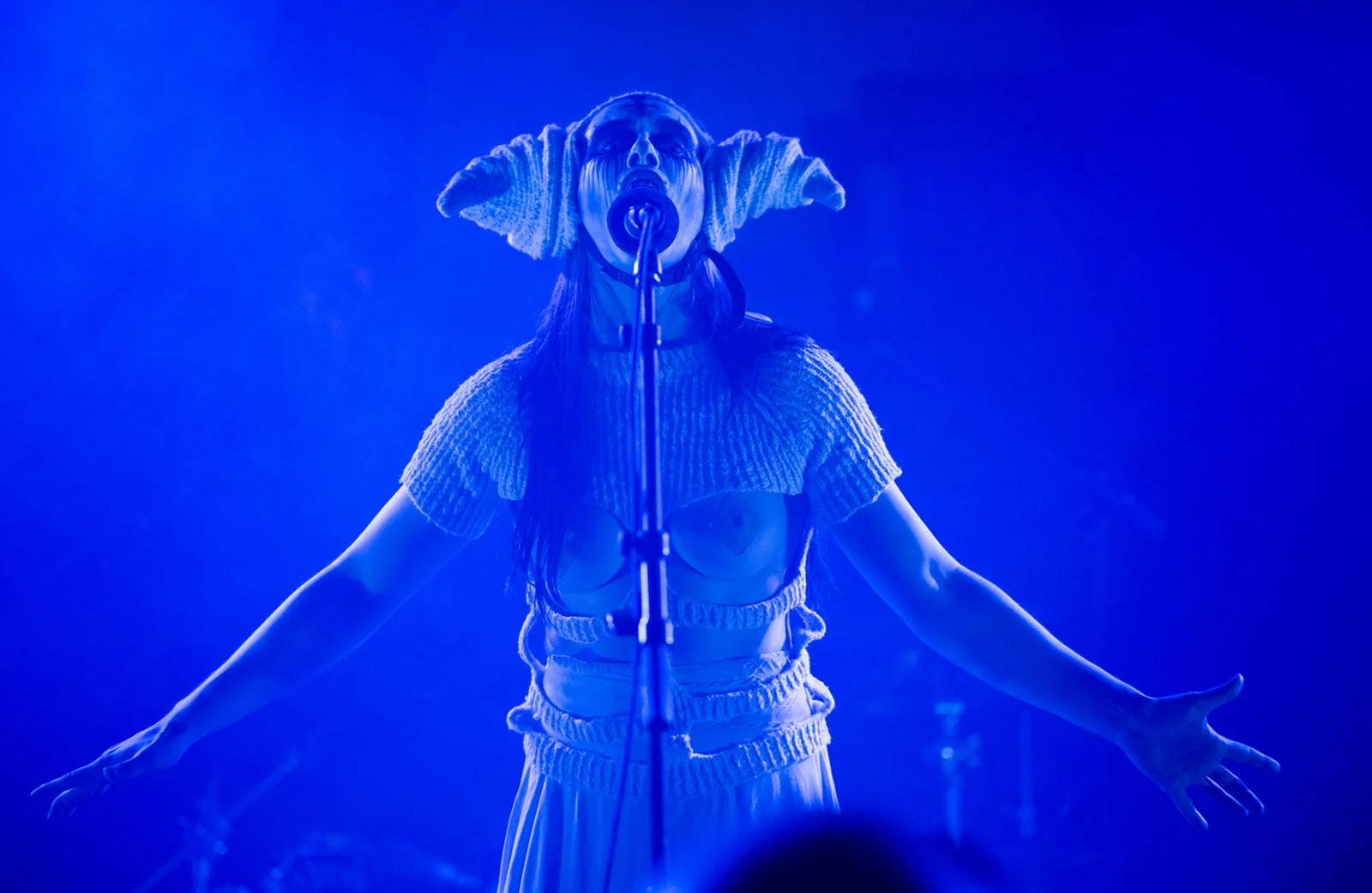
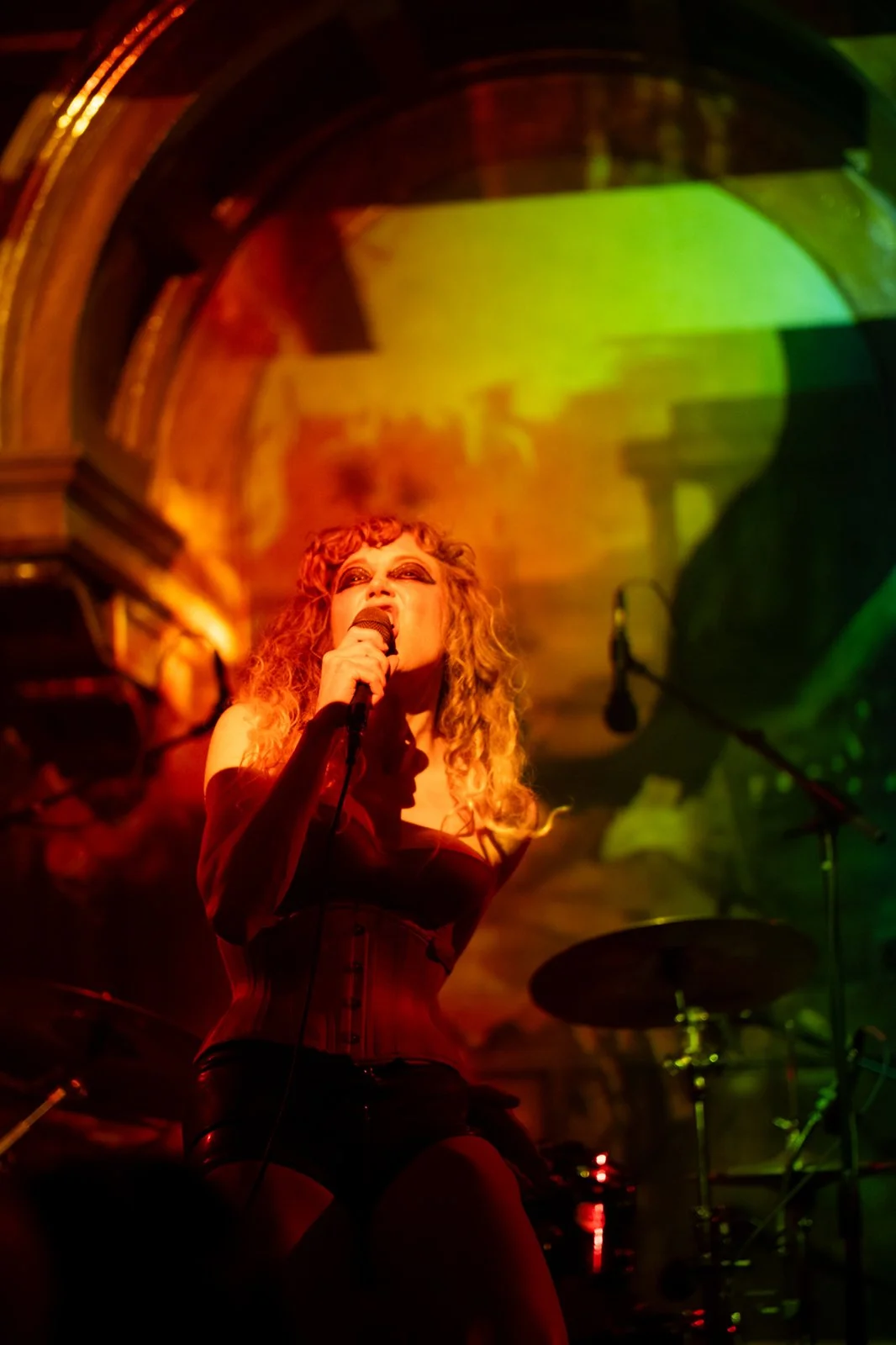
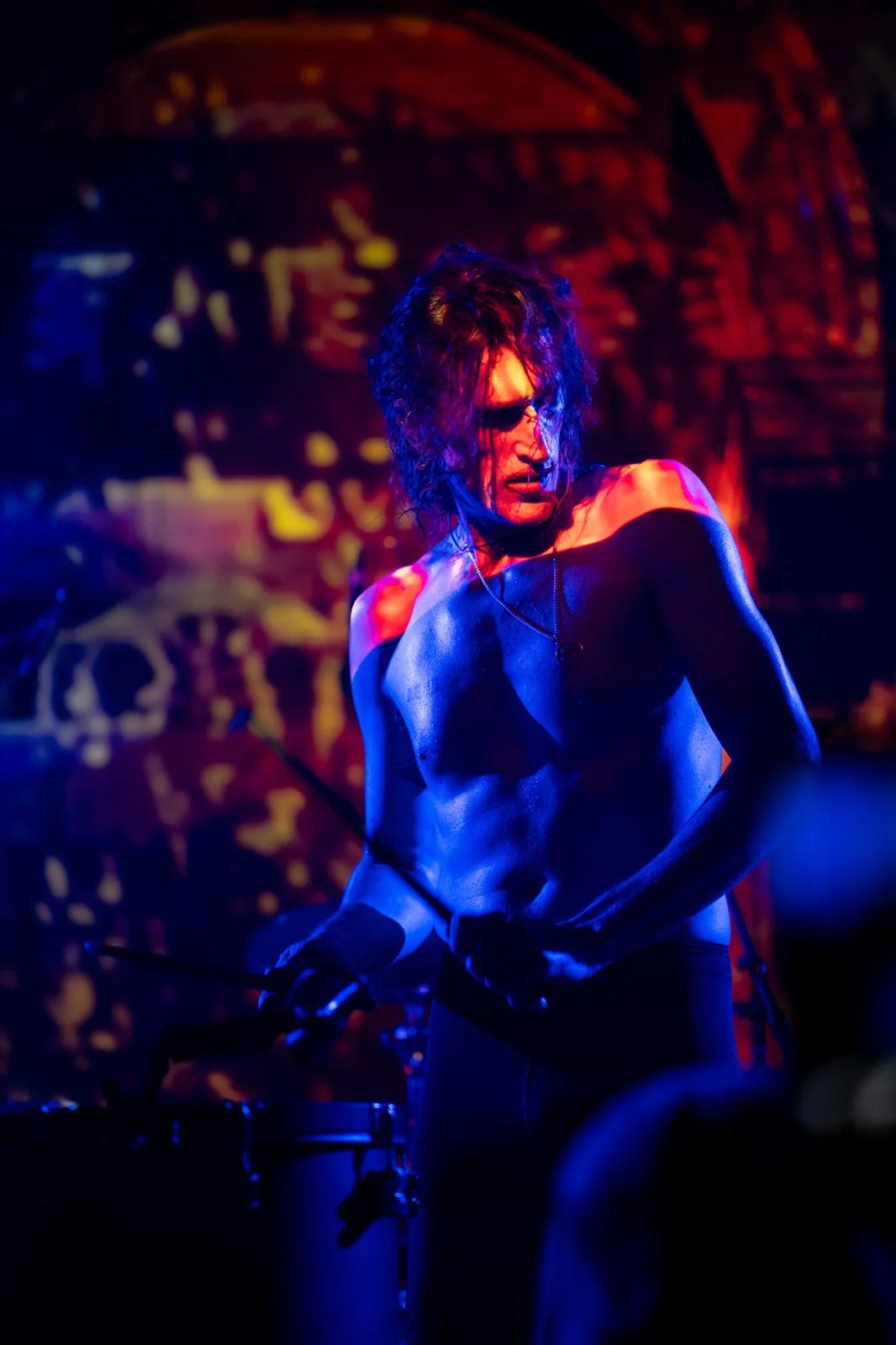
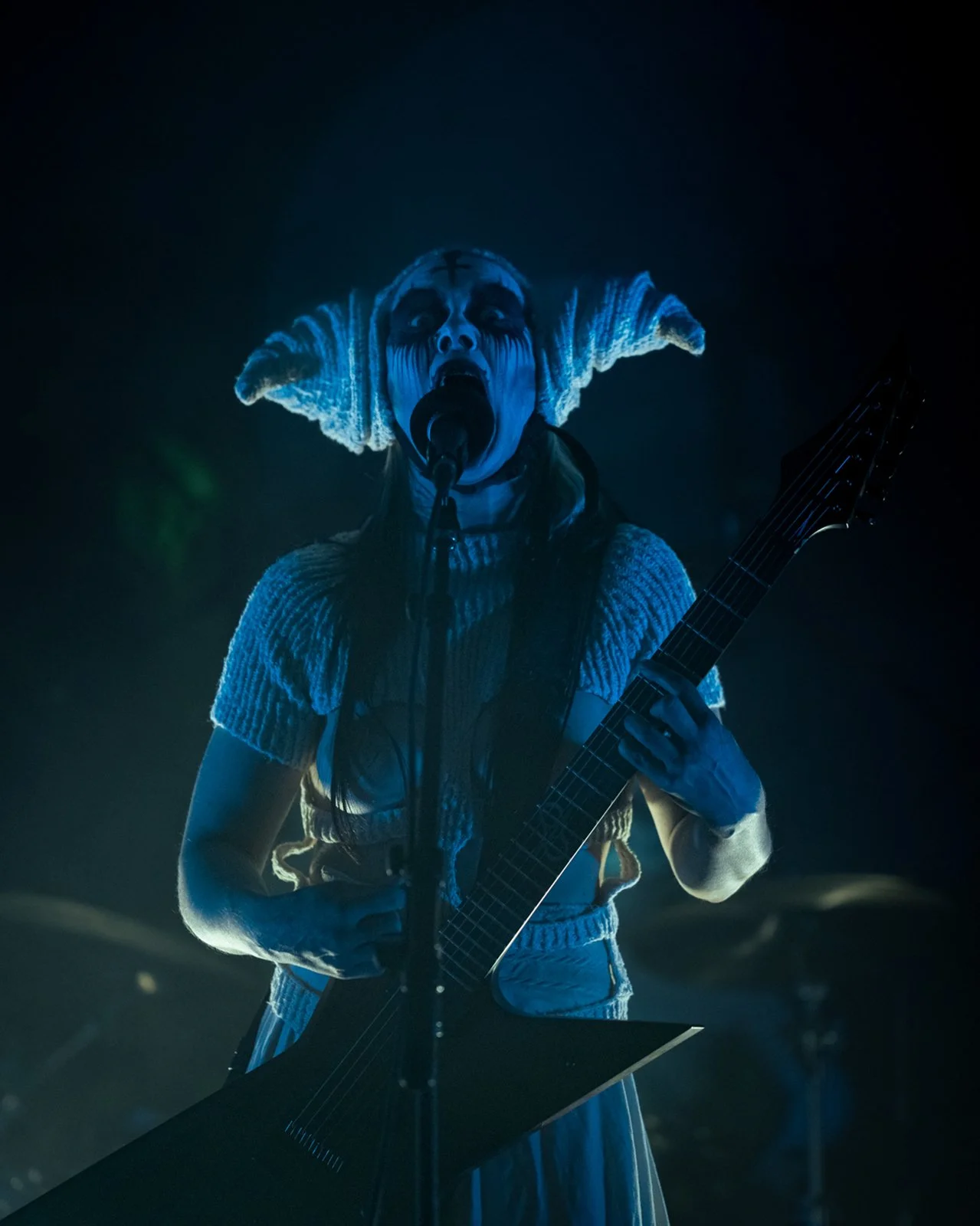
As Witch Club Satan emerged onstage wearing horned headpieces, the room erupted with anticipation before settling into an eerie calm.
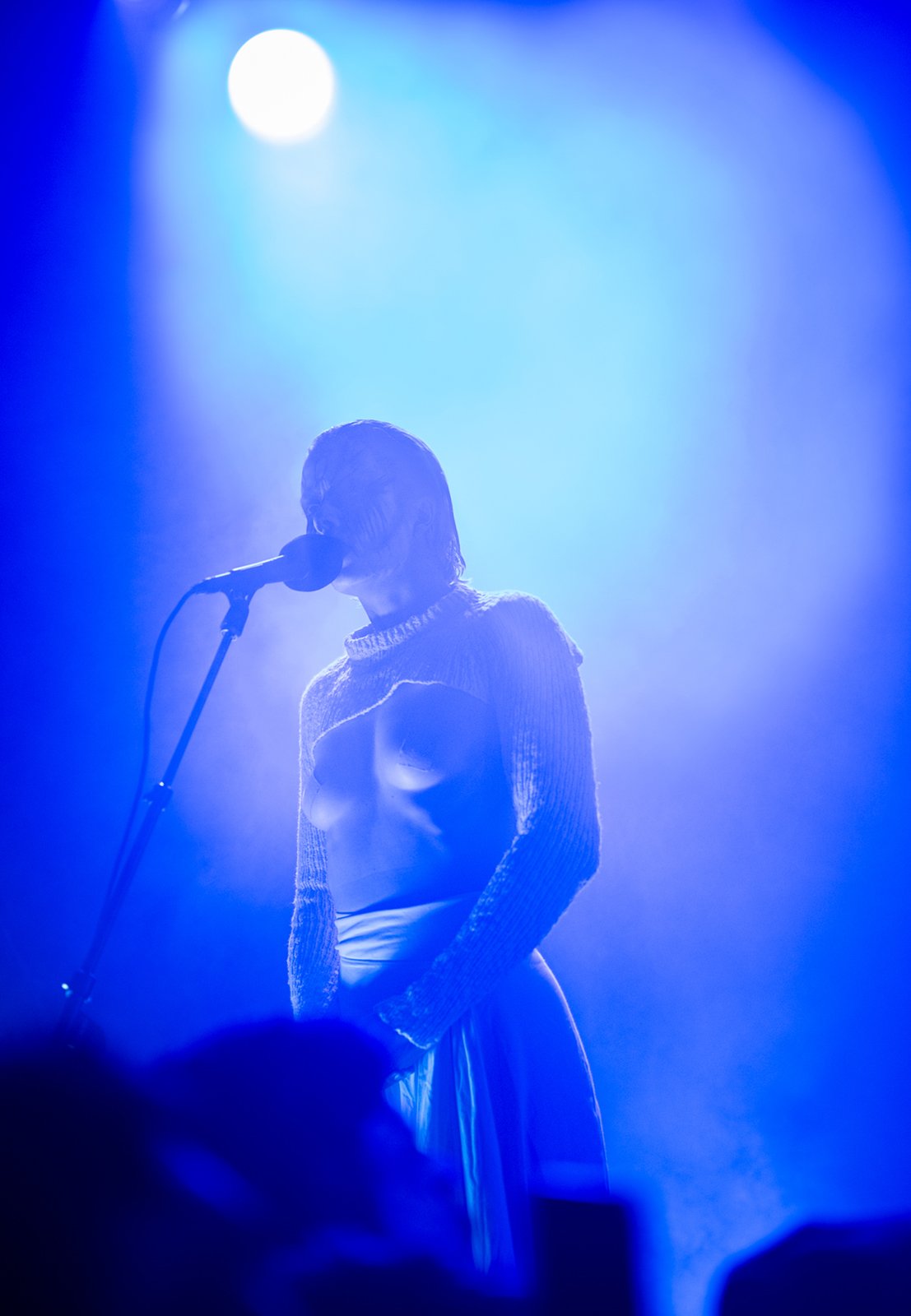
Without speaking, each member moved through the front rows, handing still-burning incense to audience members. Arms stretched wide, vocalist Nikoline Spjelkavik stepped to the microphone and addressed the crowd:
"Welcome to the founding meeting, welcome to the coven. I need you all to know that this is not a safe space... it is a space for you to grieve and rage in... this is not a show, it is a ritual."
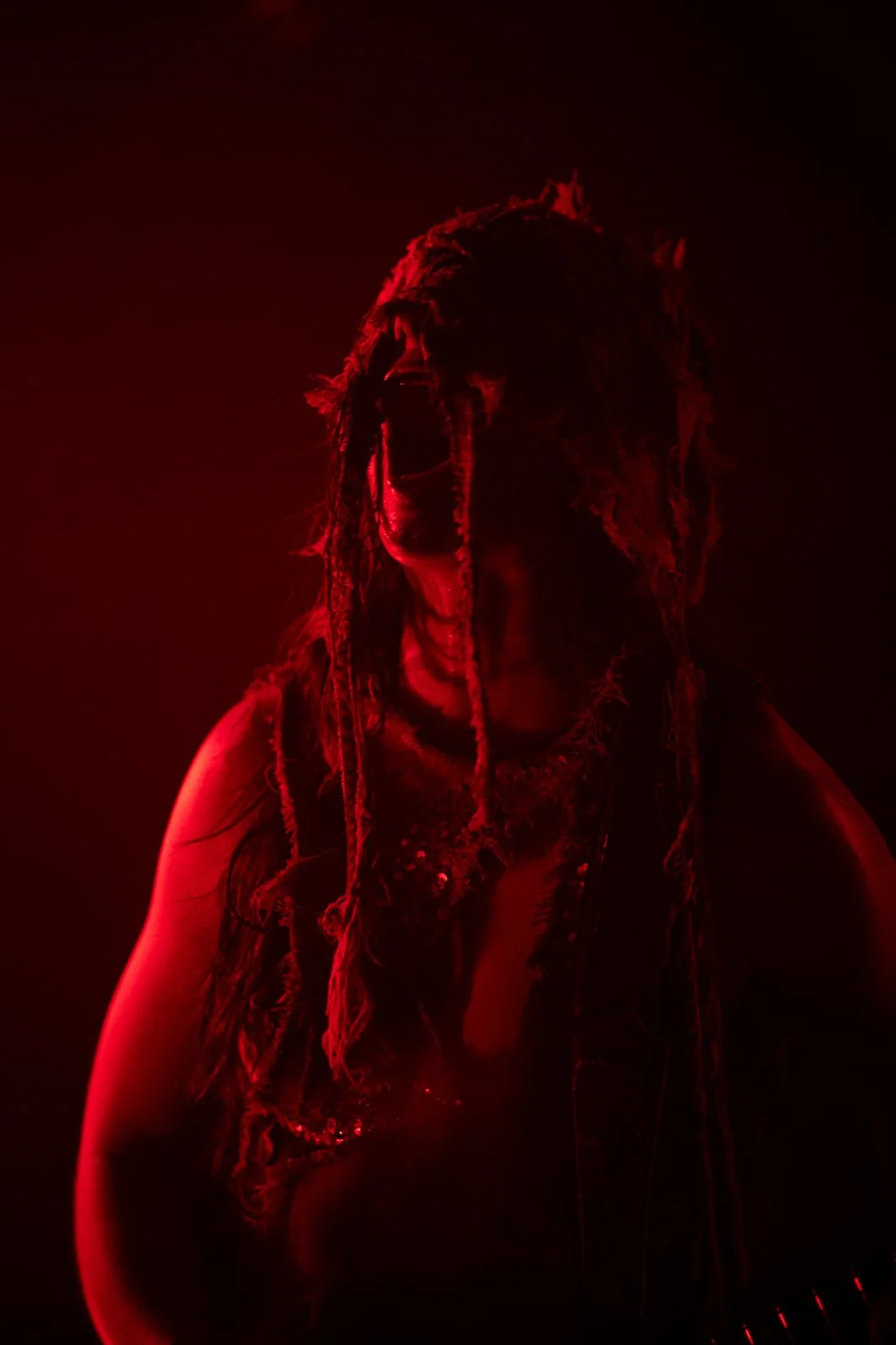
She then instructed the audience to unleash a primal scream before launching into "Hysteria" from the band's self-titled album.
She wasn't exaggerating.
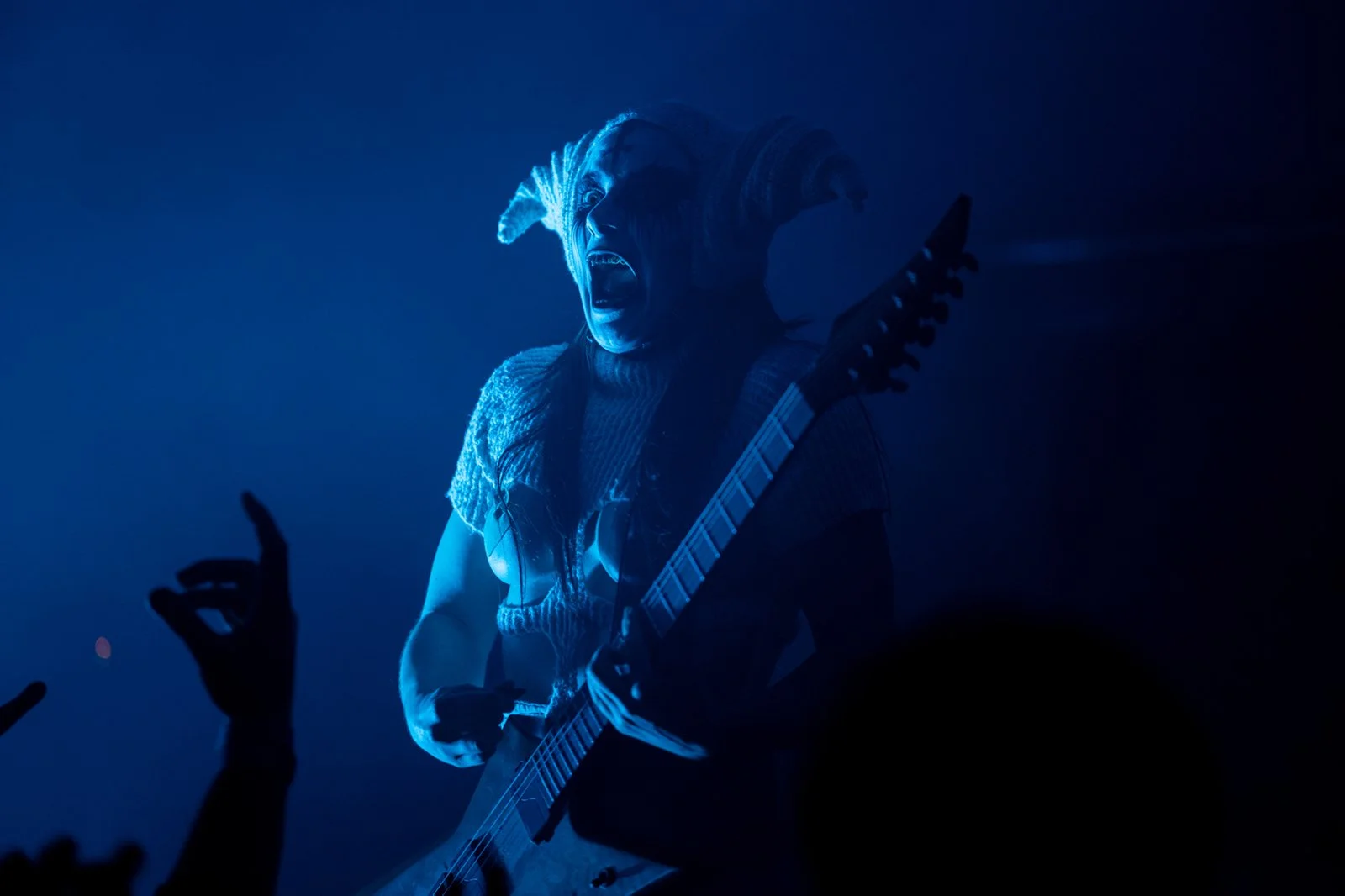
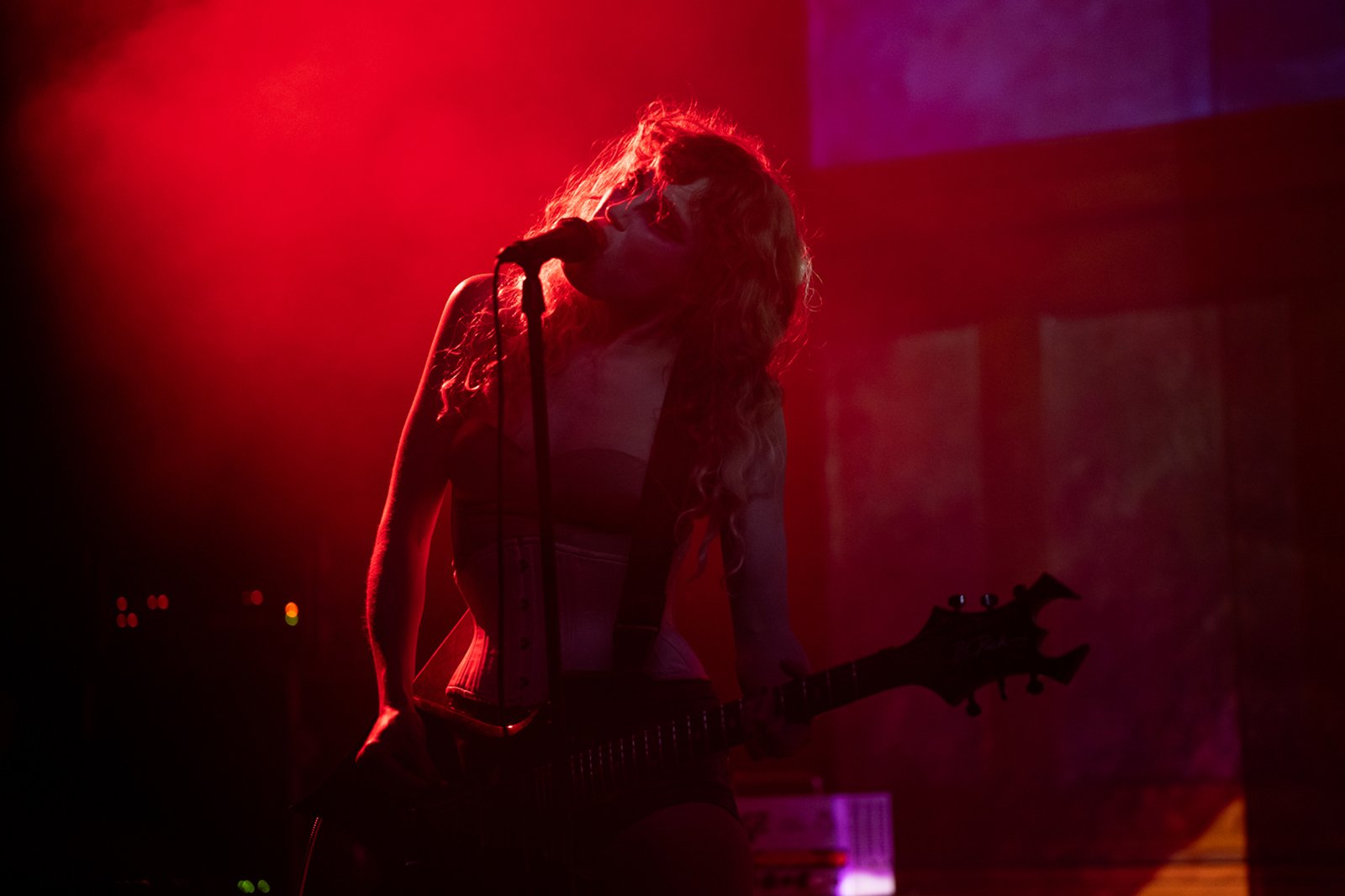
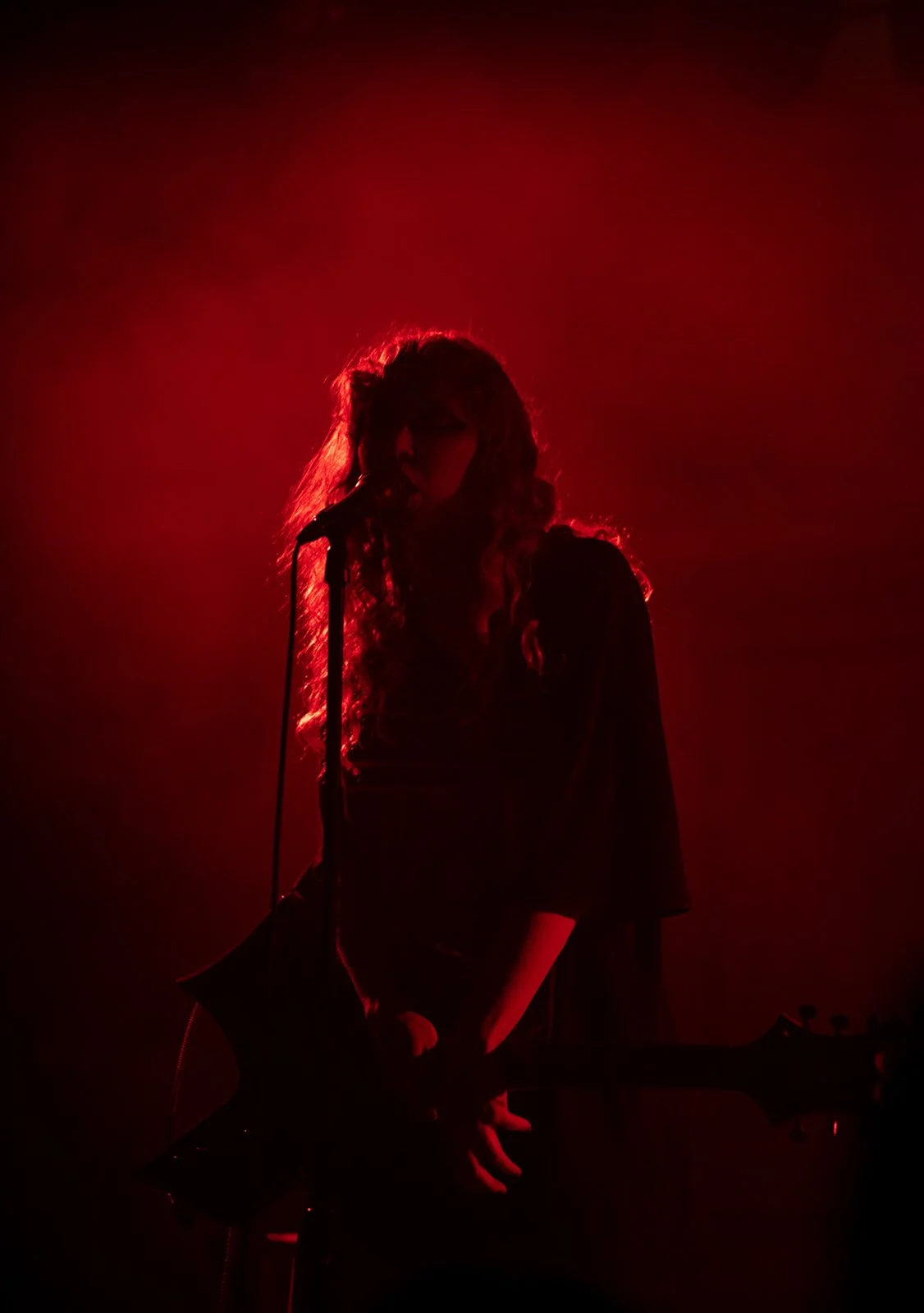
This was far more than a concert. It was an embodiment of catharsis, emotion, and collective release. The atmosphere created by Witch Club Satan was unlike anything I've experienced before. Lighting and performance worked in perfect harmony, with deep red light washing over the stage as though it had been drenched in blood. It felt less like watching a performance and more like participating in a rebirth.
Yet amidst the black metal chaos, distortion-soaked riffs, and guttural screams, there were also moments of unexpected beauty.
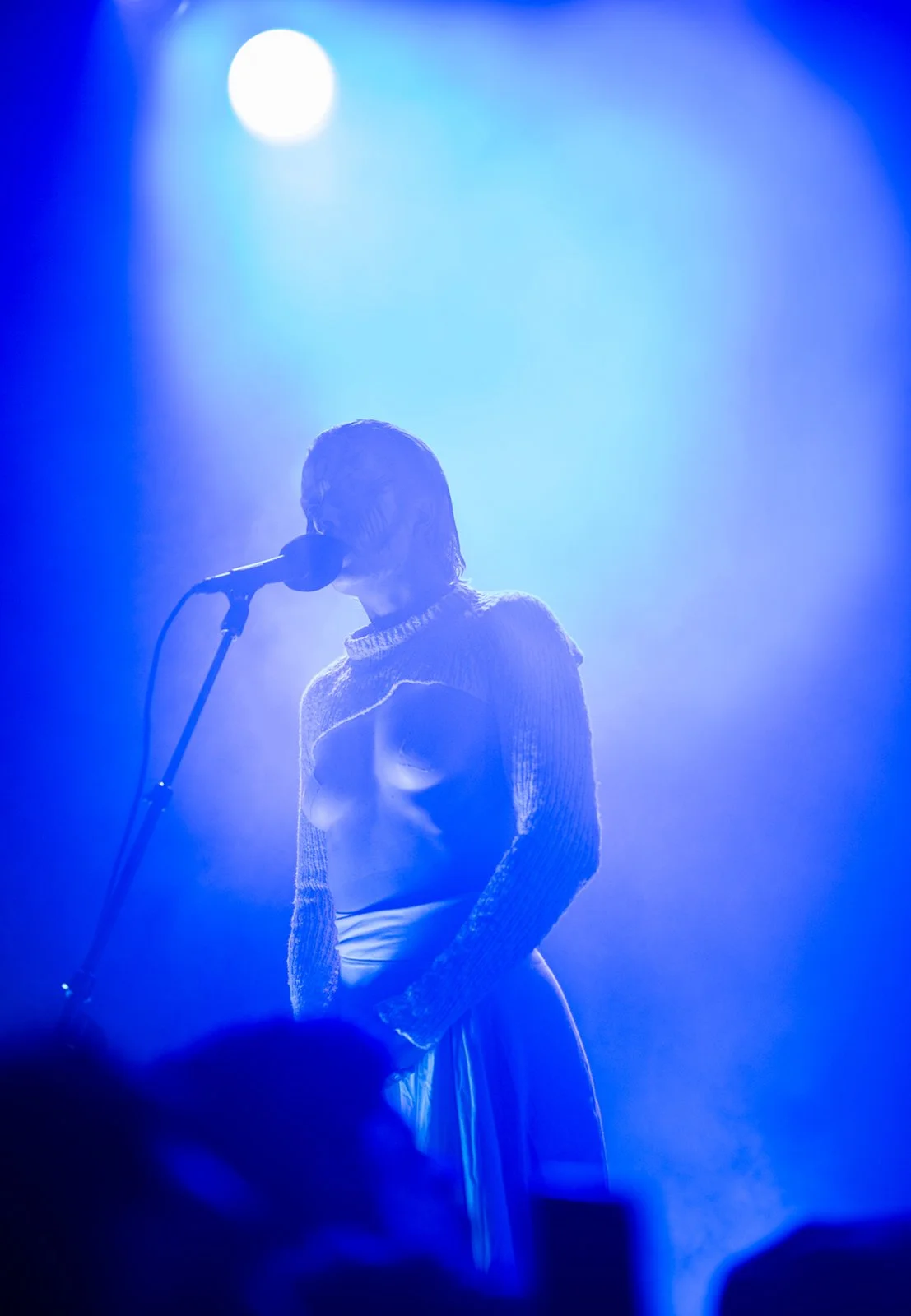
A pale blue glow settled across the room as Nikoline shared the tale of a mermaid before transitioning into "Water Girl." The contrast was striking. Beautiful, raw, and brutal all at once.
Few artists blend music, theater, and performance art as seamlessly as Witch Club Satan. Every movement felt deliberate. Every visual served a purpose. The confidence and precision of their craft inspired a level of reverence rarely found at live shows.
That became especially apparent when Nikoline stepped off the stage and into the audience during "You Wildflower." As fans carefully guided the microphone cable through the crowd, she prowled among them, repeatedly screaming:
"You keep fighting, you keep fighting, you wildflower."
It was one of the evening's most powerful moments.
By night's end, I realized Witch Club Satan had given me something far more memorable than simply my introduction to live black metal.
Their performance was confrontational, cathartic, unsettling, empowering, and unexpectedly moving. Whether channeling fury, grief, vulnerability, or strength, every element of the ritual felt intentional.
As the final notes faded and the crowd slowly filtered out into the Highland Park night, there was a lingering sense that we had all participated in something sacred.
For a few fleeting hours, the Lodge Room became a place of transformation—where grief became rage, vulnerability became strength, and strangers became a coven.