

ROSALÍA WENT HUNTING FOR GOD AT THE KIA FORUM
For a thousand years, strangers have walked the Camino de Santiago — the old pilgrims' road across northern Spain — for weeks, sometimes months, some to wash themselves of their sins, some to keep a vow, and some just to give themselves over to something larger than themselves. The road ends at the shrine of St. James, the first of the Twelve Apostles to be martyred — a man who refused to abandon his convictions in the face of certain death.
What awaits the pilgrims there, in the Cathedral of Santiago de Compostela, is the botafumeiro, a silver censer so large it takes eight robed men to move it. Hauled up to speed on its rope, it doesn't so much swing as fly, arcing the width of the transept and trailing incense. Despite its regal aura, the relic was created for far humbler reasons — odor control. Pilgrims in the 11th century didn't exactly have rest stops with dollar showers along the way, and they arrived carrying a stench you could mistake for a sign of the beast. But the object built to wash away a physical stench became a symbol of prayer, swung now to clean a spiritual one. Either way — whether it was built as the first contraption for mass Axe body spray or a receptacle for sacrament — the crowd of wanderers looked up to it and ascribed a meaning that would help them forget the physical body that carried them to it.
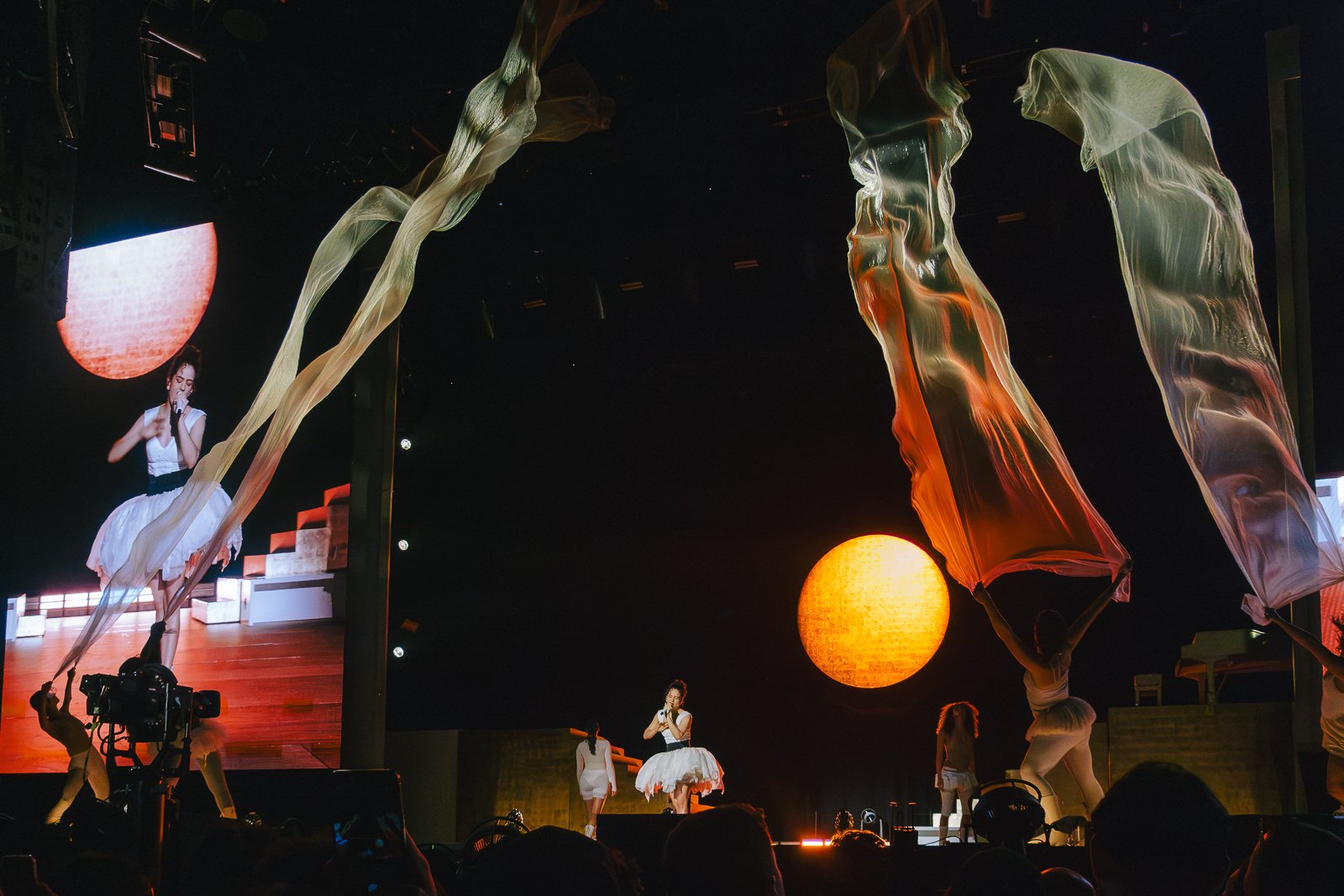
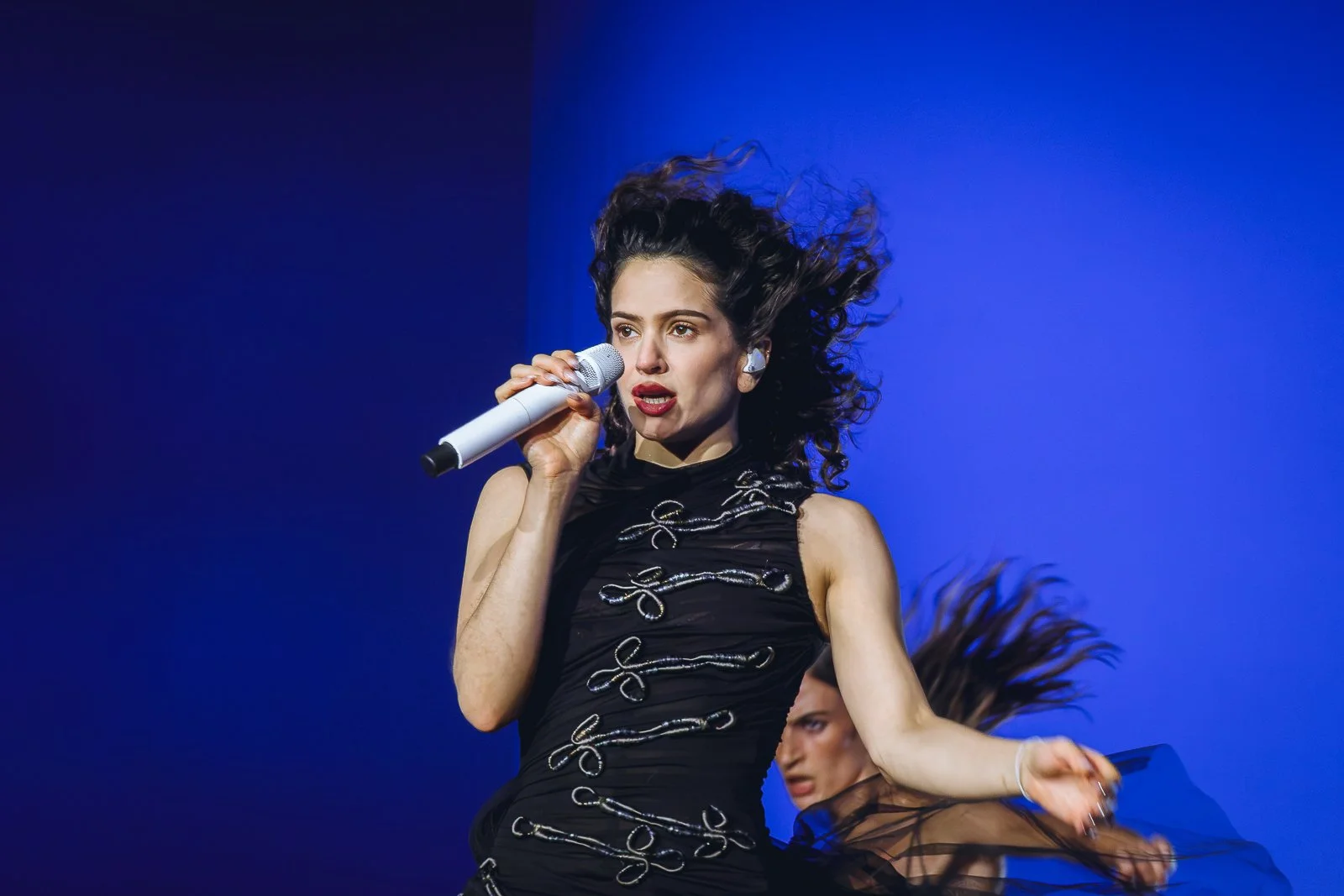
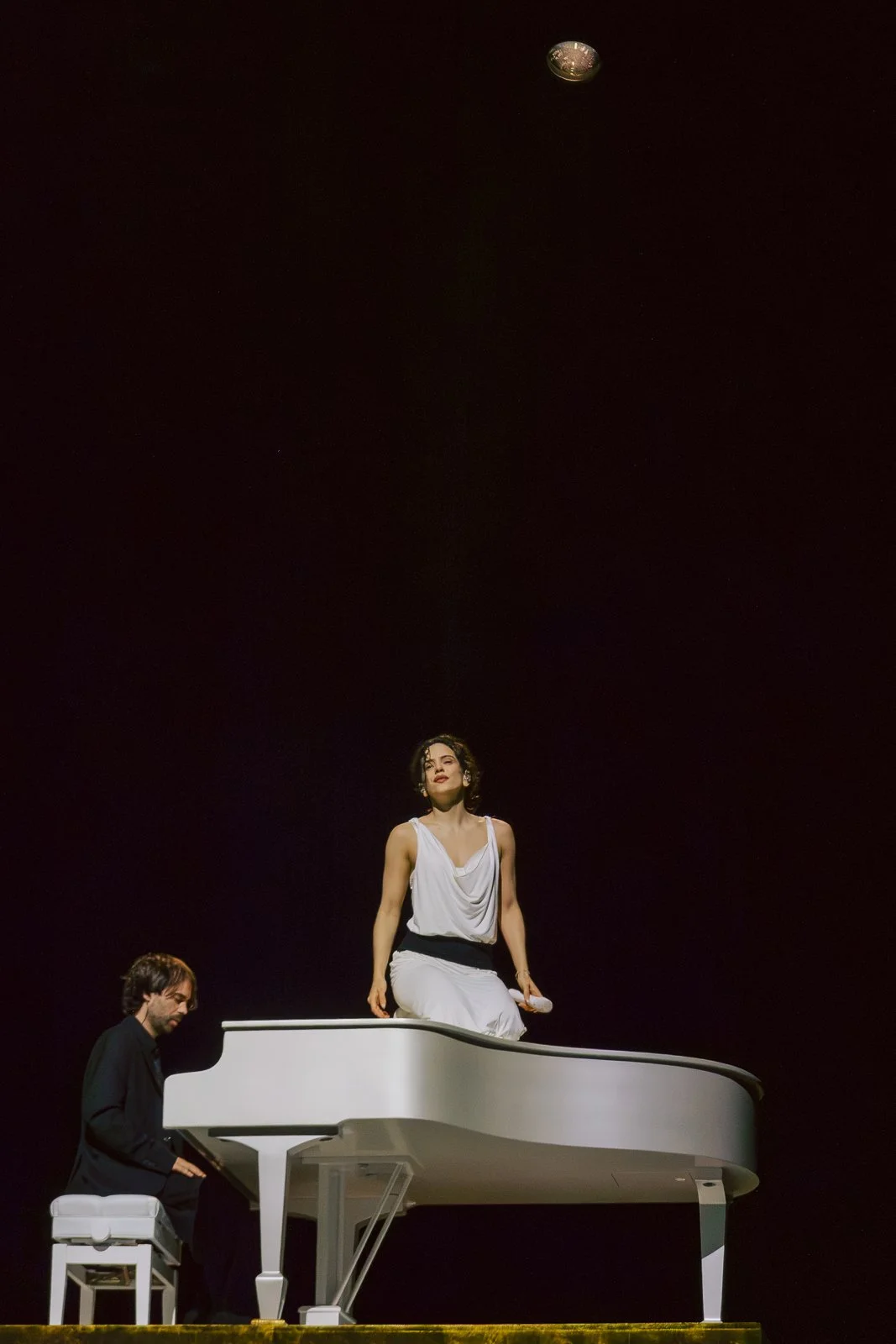
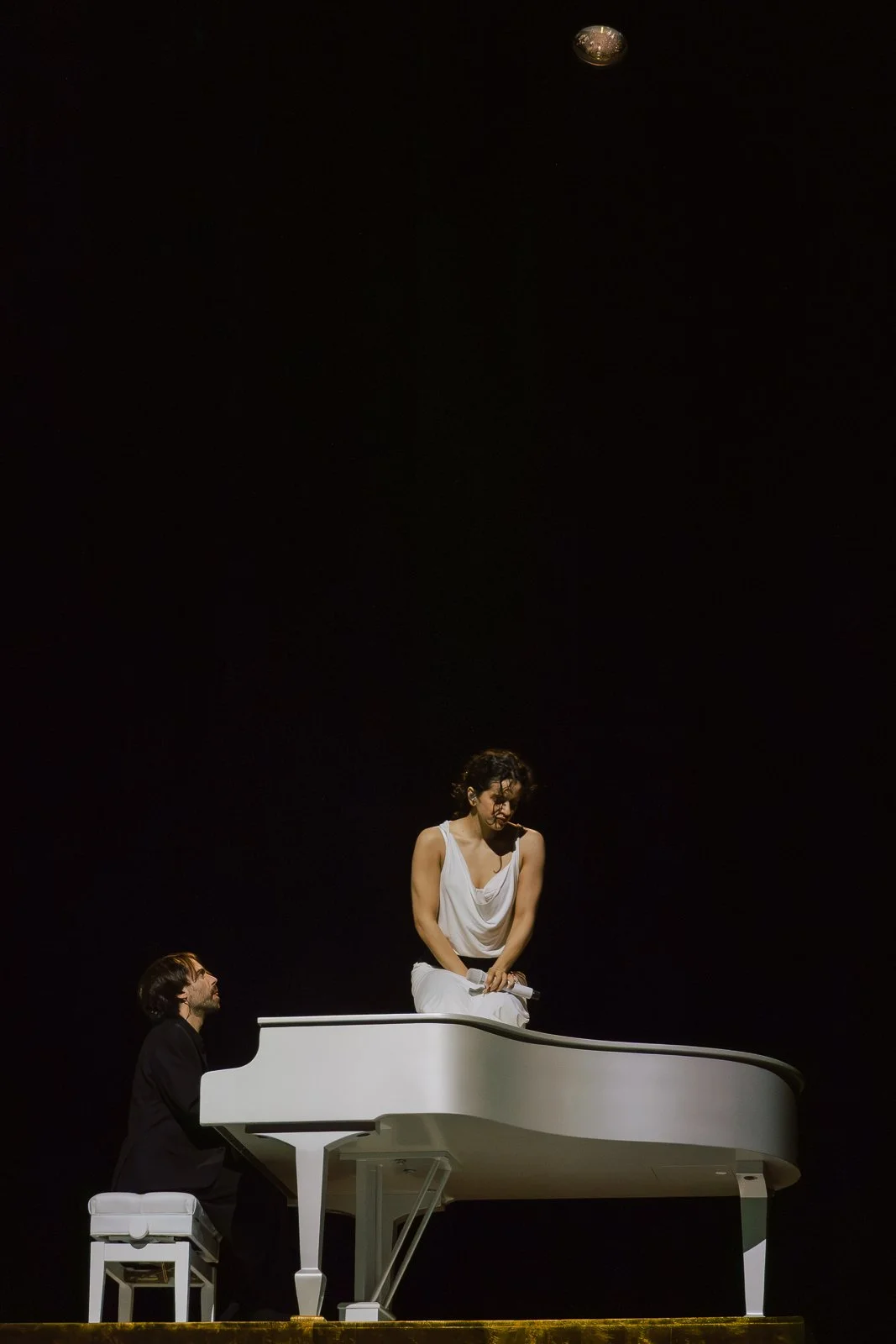
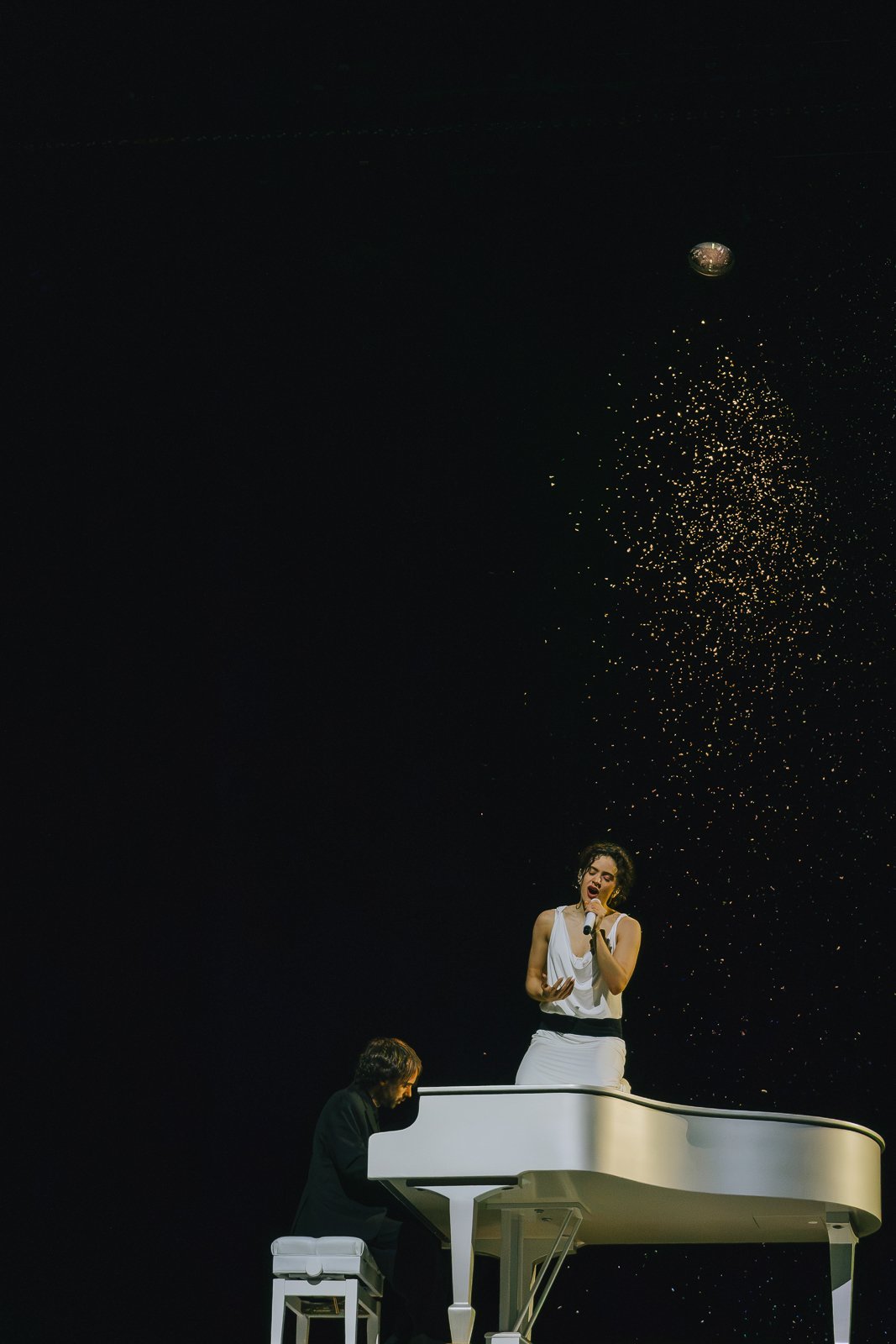
Ten centuries later, on June 29, a botafumeiro swung over the Kia Forum in Inglewood. This one, though, came rigged with technology that would drop the most devout of the medieval pious to their knees in renouncement — blistering strobes, a live camera craning down over an orchestra arranged inside a giant lit cross — but built for the same purpose as the one in northern Spain. The woman who put it there is Rosalía Vila Tobella — thirty-three, four albums deep, a polymath on the most ambitious tour of her life, playing night one of two in Los Angeles. The censer sailed out over the standing floor as the hook of "CUUUUuuuuuute" kept repeating that the best artist in the room is God, not her — a reminder that the only abundance in this world that isn't inherently sinful is the beauty that surrounds us.
All that pageantry is something we expect from every modern pop star — especially the women (unjustly so). But few are as steeped in meaning and intention than Rosalía. Where the bombast of pop so often reads as an immaterial empty vessel, she walks the line between spectacle and substance. She is Ariana Grande and Kate Bush at once, a little Britney Spears and a little Björk — with no shame and no trace of irony in any of it. Her debut, Los Ángeles, was a young cantaora's study in traditional flamenco — mostly reverent and faithful to the source. El Mal Querer was her leap, and, remarkably, her senior thesis at the Catalonia College of Music — a concept album spun from a 13th-century Occitan novel that went on to win the Latin Grammy for Album of the Year. Motomami was the bombastic swing after it, a genre-detonating experiment in what reggaetón and pop could be, arriving as the wave of Spanish-language music crested toward Bad Bunny's stadiums and Karol G's headline slots.
LUX, her fourth and most recent, is the most audacious yet — a production built with the vigor of a brutalist architect, venturing into undiscovered territory both sonically and thematically. On it, Rosalía draws a straight line between heaven and earth, chasing one central question — how can she get closer to God?
In the years before the album, she immersed herself in the lives of female saints and mystics (Teresa of Ávila, Hildegard of Bingen), women who reached God through the body, not around it. LUX proceeds as if no single language could carry the answer, so it moves through thirteen, spread across four movements. Through all of it, she presses the sacred against the profane, pleasure against the pious, building toward a single intention — an otherworldly space where she and her audience can briefly step outside the body and find what's true. It's the oldest use anyone ever found for incense and prayer, rebuilt in an arena for a crowd with no cathedral left to walk to.
One would be remiss not to acknowledge the contingent of critics (not this one) who have long recast these lofty descriptions as something a bit more sinister — a euphemism for theft. It isn't hard to see where the charge comes from. A European-born Catalan — raised comfortable and middle-class just outside Barcelona, schooled at a conservatory that admits a single flamenco student a year — won Album of the Year at the Latin Grammys, then did it again — the first woman ever to win it twice. It's a recipe for exactly the kind of argument that plays out on music Twitter and in the deeper corners of r/fantanoforever. The charge has been loud for years — around the reggaetón of "Con Altura," a Vogue Mexico cover that billed a Spaniard as a "Latina artist," and a European collecting a genre's highest honors in a medium she wasn't born into. And now she brings all of it to Los Angeles, the epicenter of Latino America.
Blow on the accusation, though, and it goes up in smoke. Flamenco is no fixed ancestral inheritance — it is itself a centuries-long synthesis, Andalusian and Roma and Moorish and Sephardic, a marginalized art that was never pure, made by people borrowing from people. Rosalía, acting on her artistic instinct, absorbs that evolving history into a point of view of her own. And hers is shaped not only by her upbringing and her years at the conservatory, but by a heritage that was never the tidy "European" critics needed it to be — a Cuban great-grandfather and a Catalan mother, from a country that spent five centuries entangled, for better and for worse, with the Americas. "I belong to the world," she has said, and LUX is that testament — thirteen languages, a spread of genres, blossoming out into ostensibly different paths that all lead back to the same place.
But the verdict that counts was never going to be handed down online. It’s delivered, instead, during her performance of "Sauvignon Blanc," when Rosalía raised a toast to the crowd, and they roared back — not "cheers" but a loud, rapturous "salud.” She looked genuinely surprised, almost caught off guard, as if some part of her had walked in unsure she'd be accepted as one of them. She so clearly was.
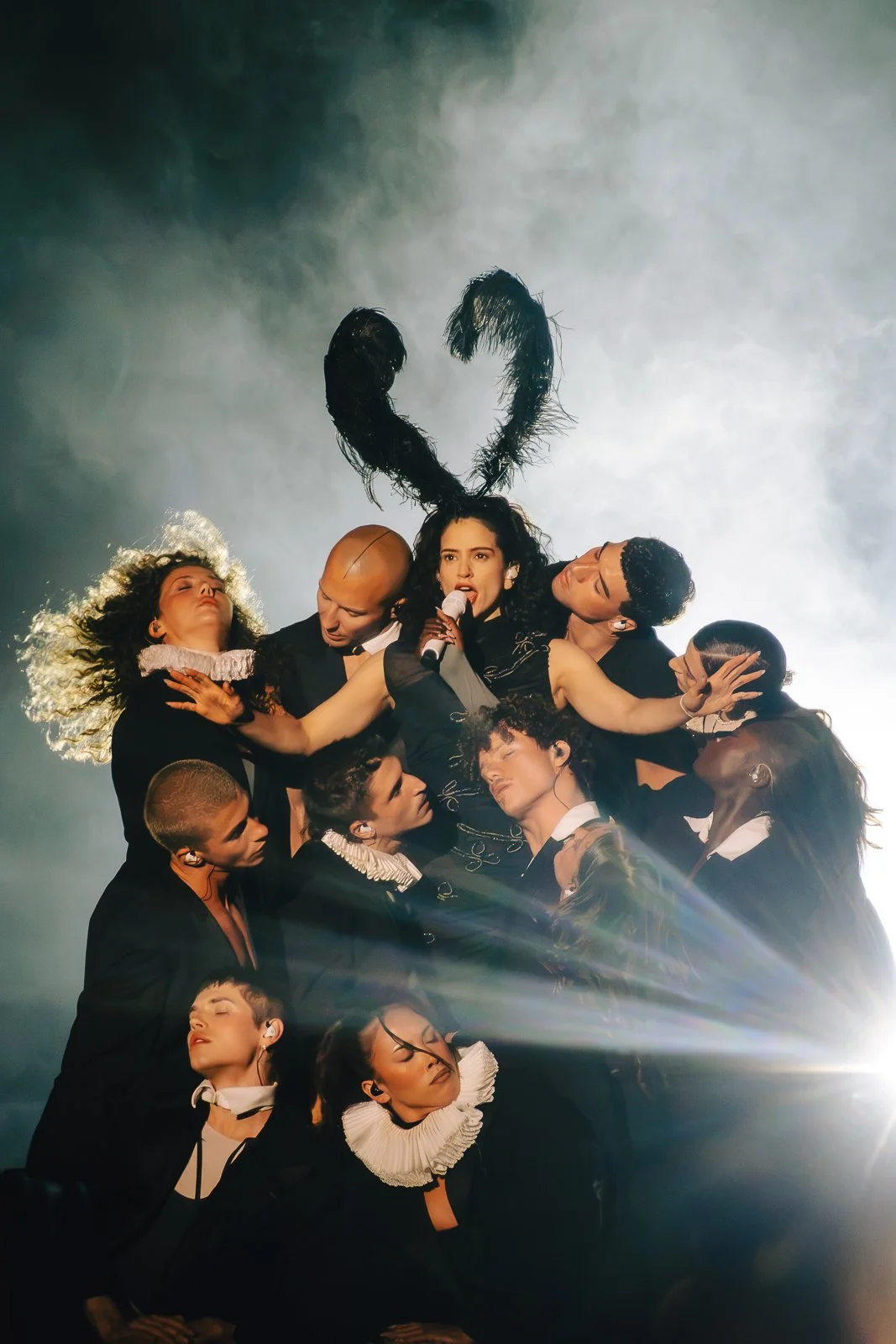
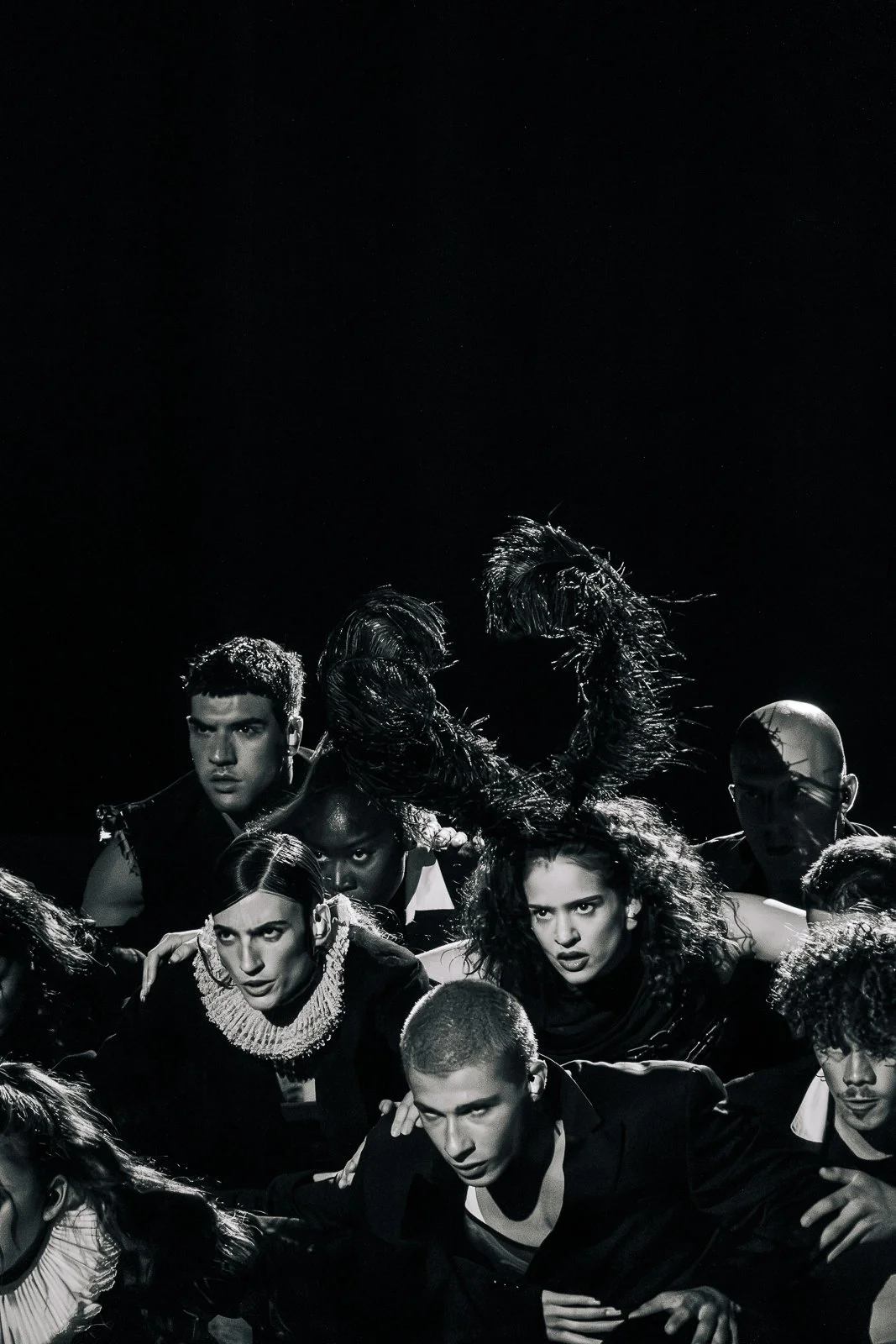
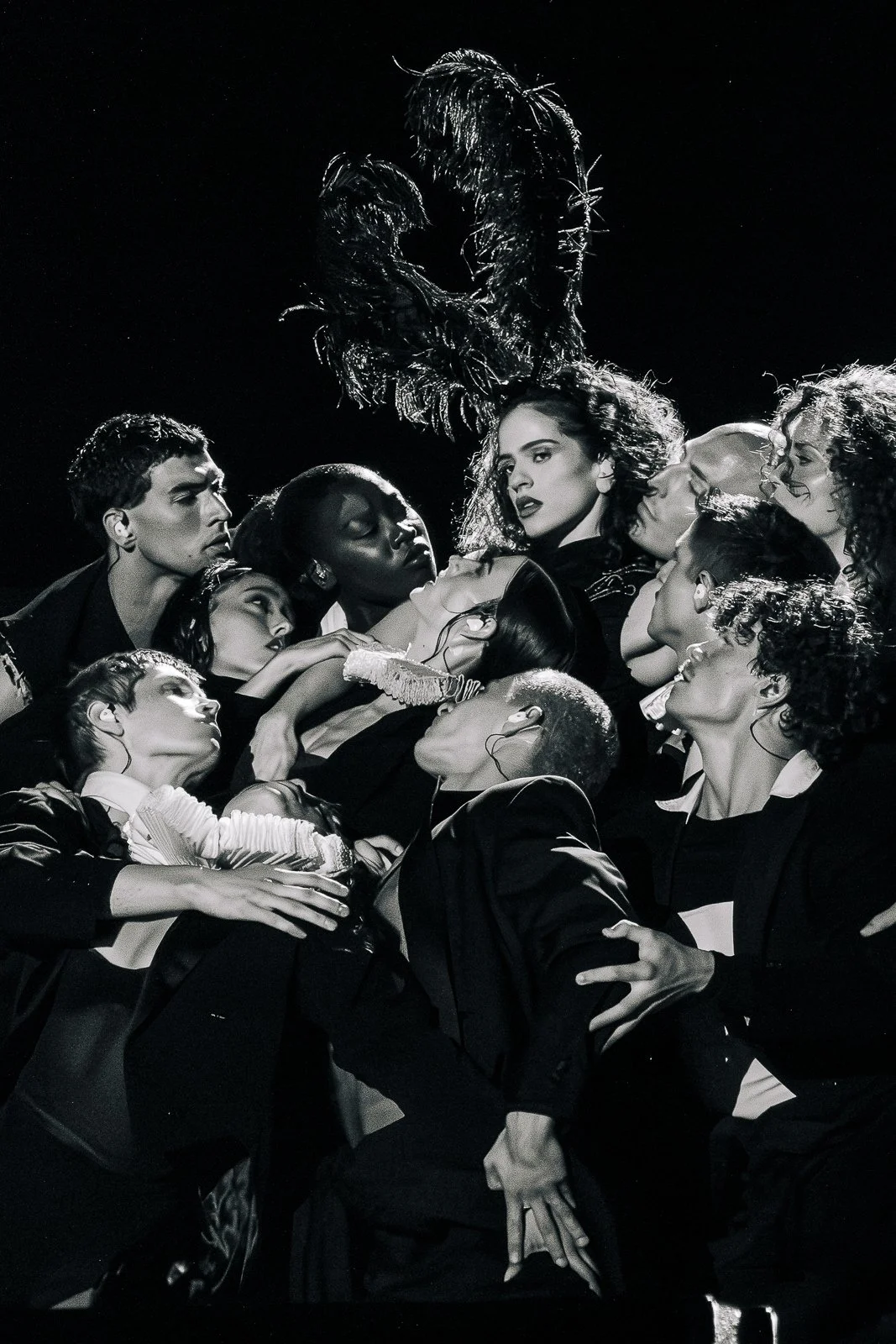
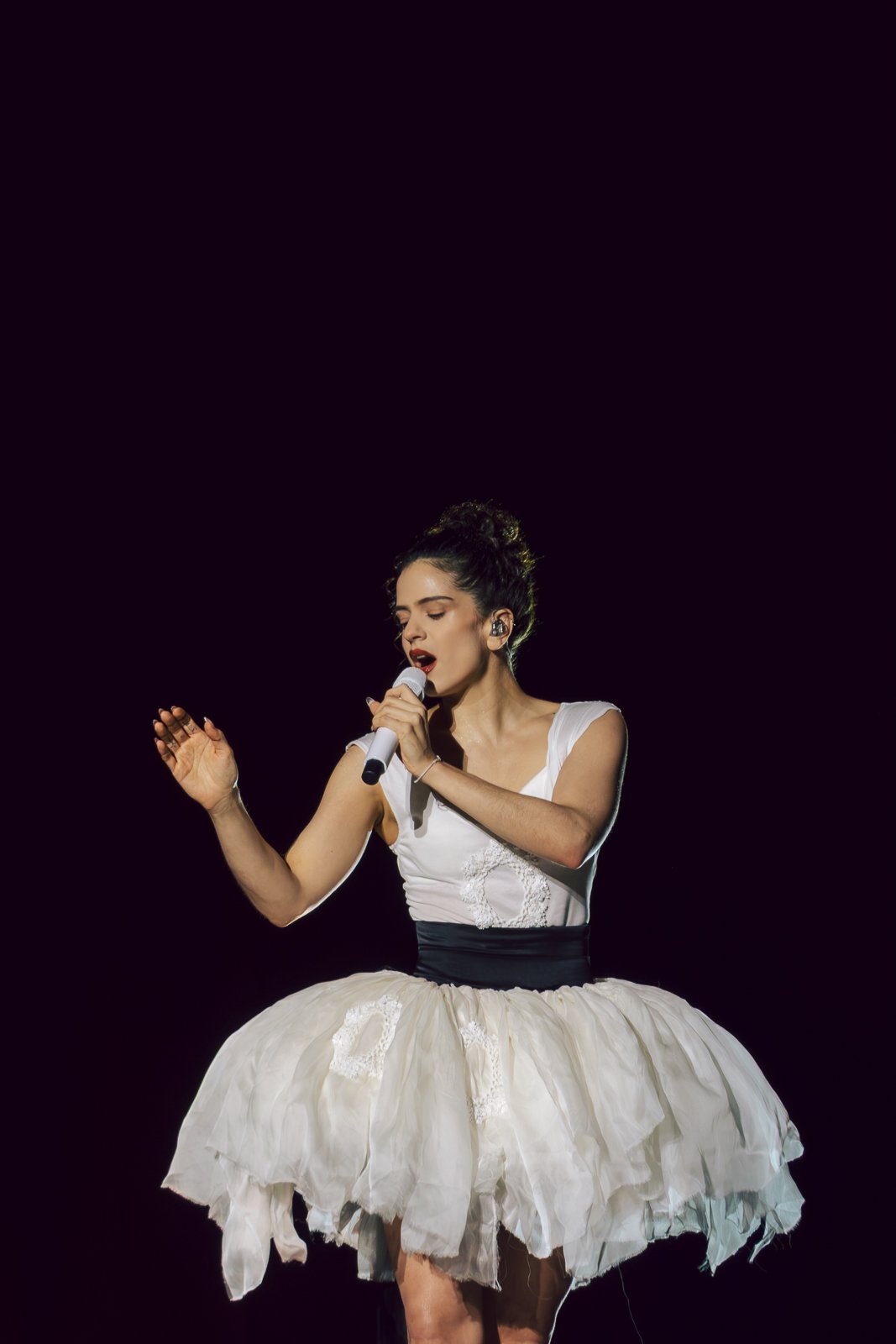
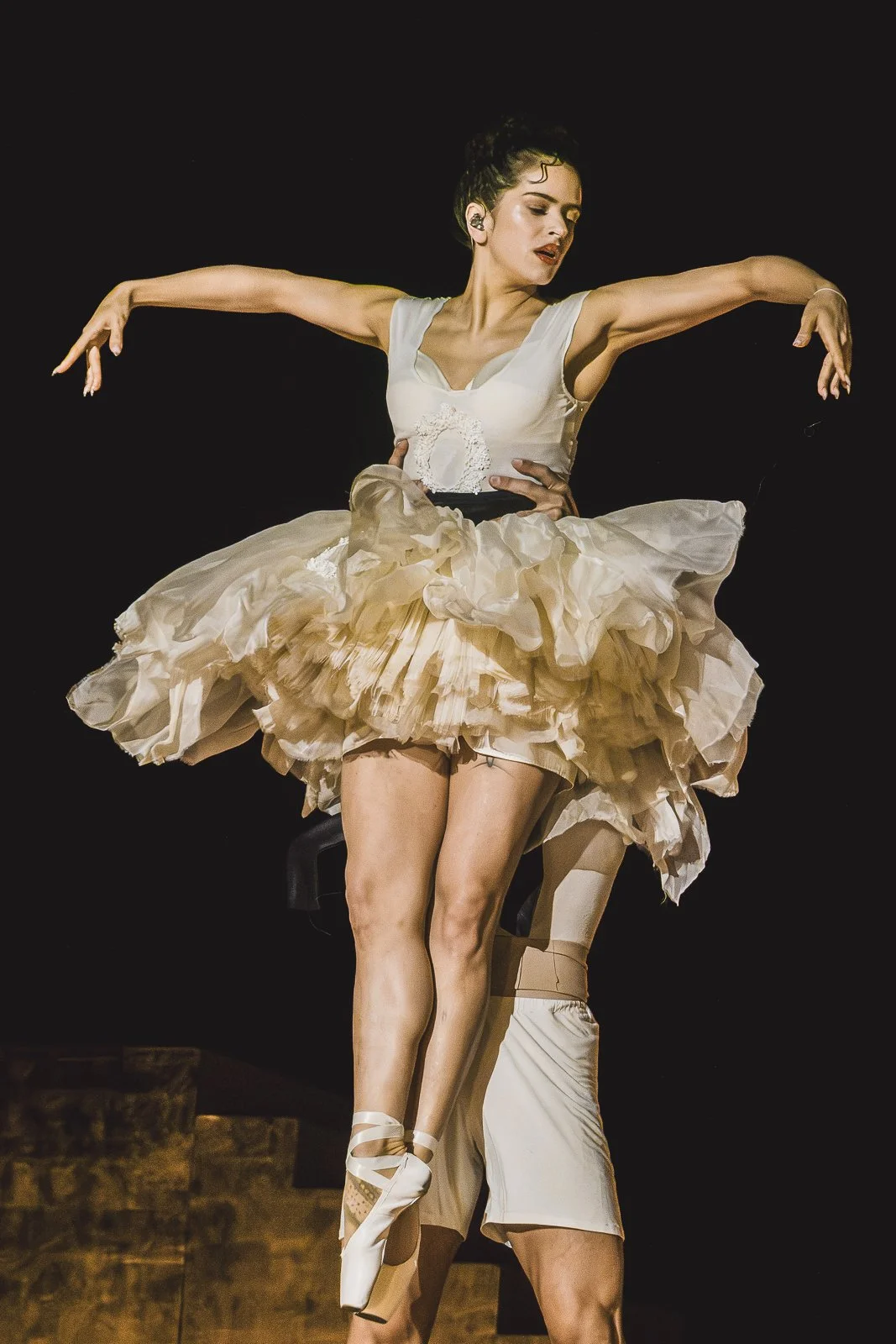
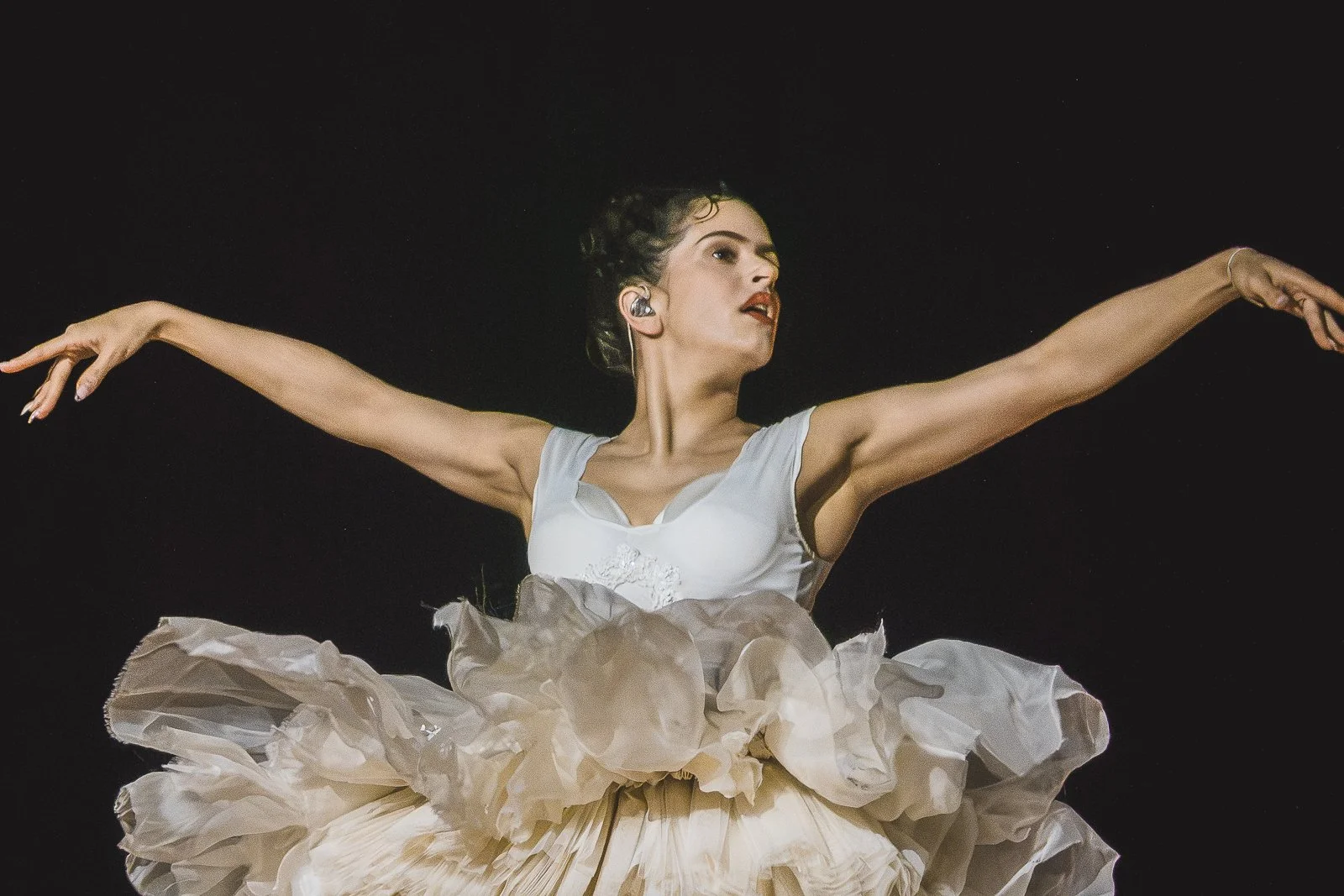
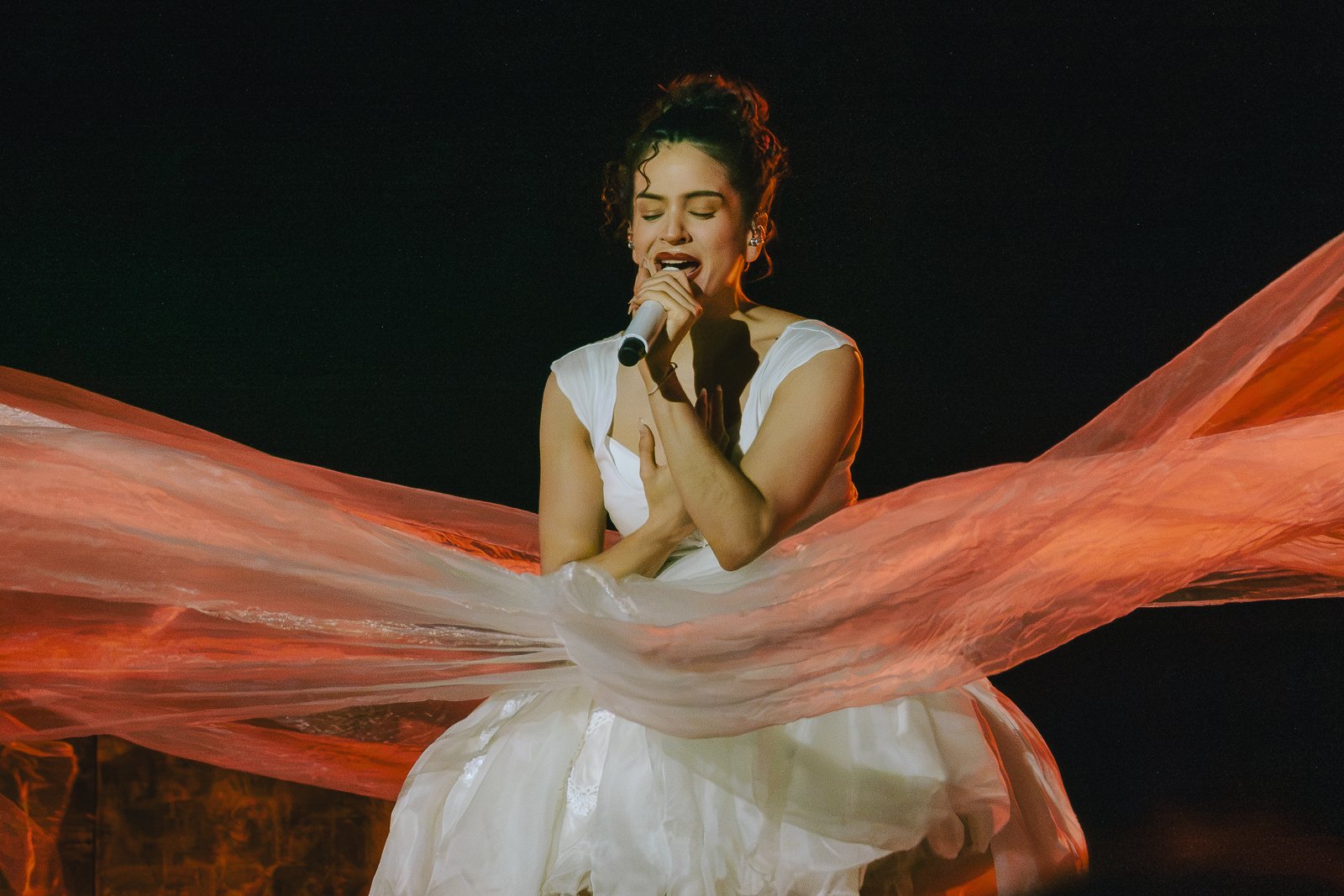
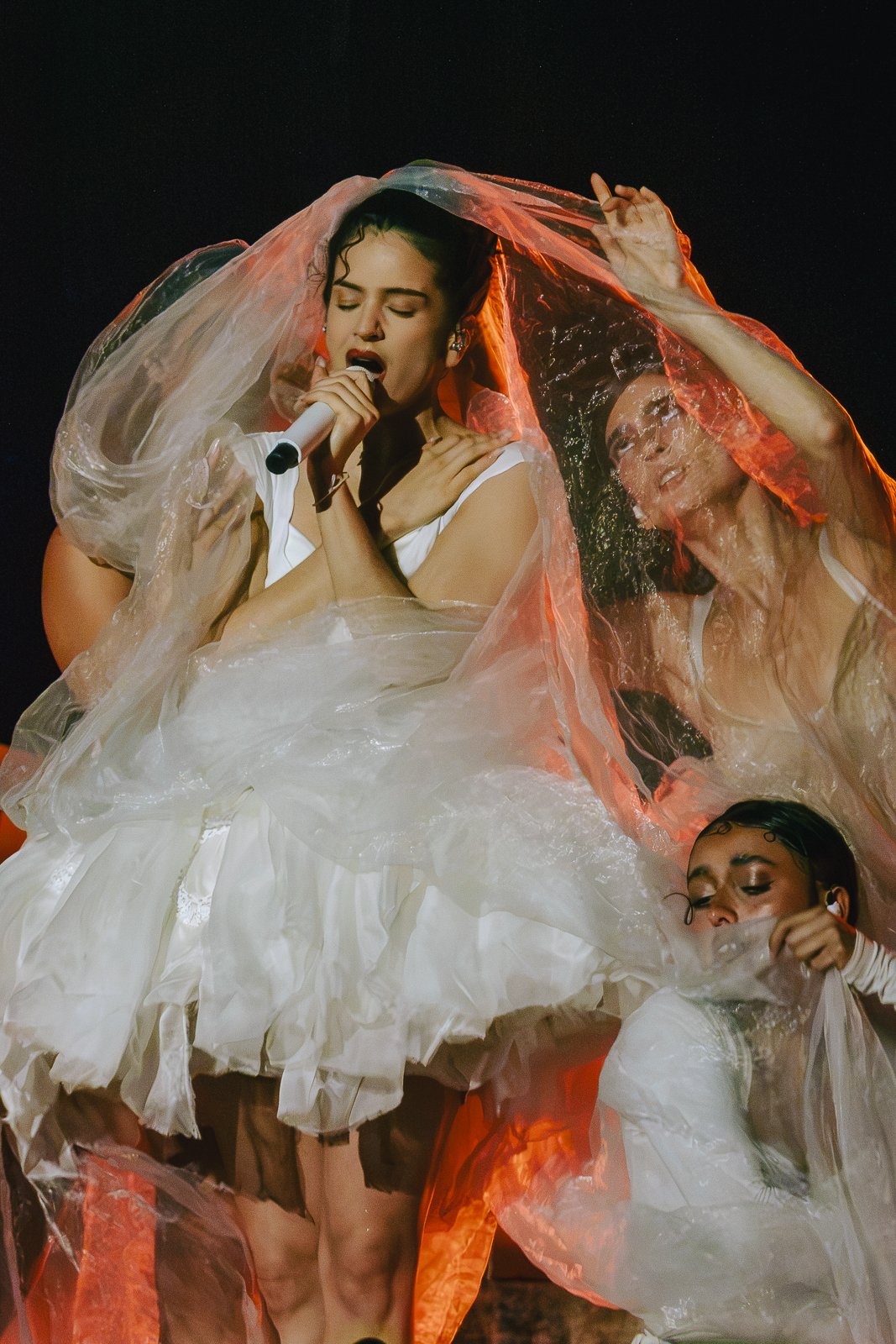
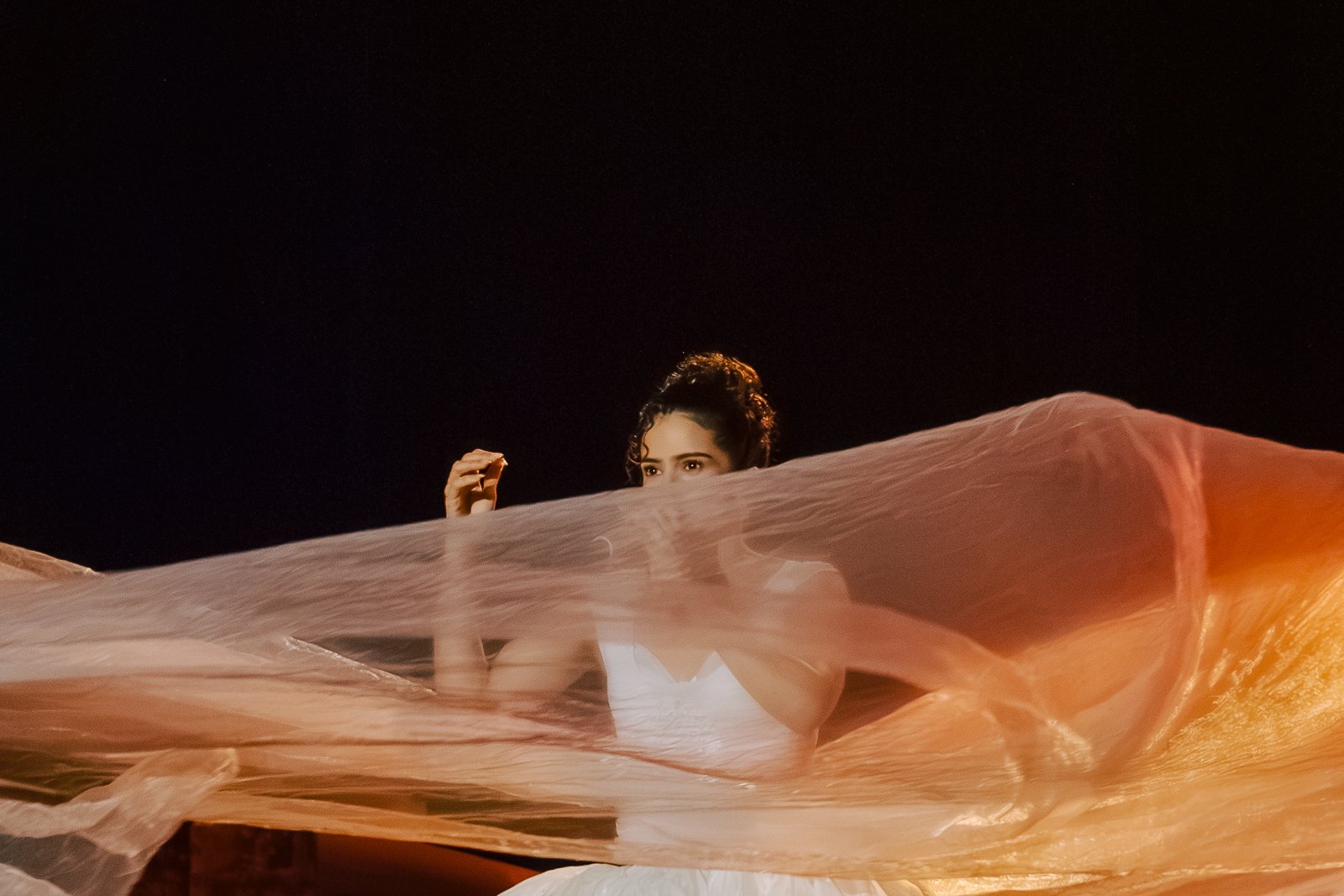
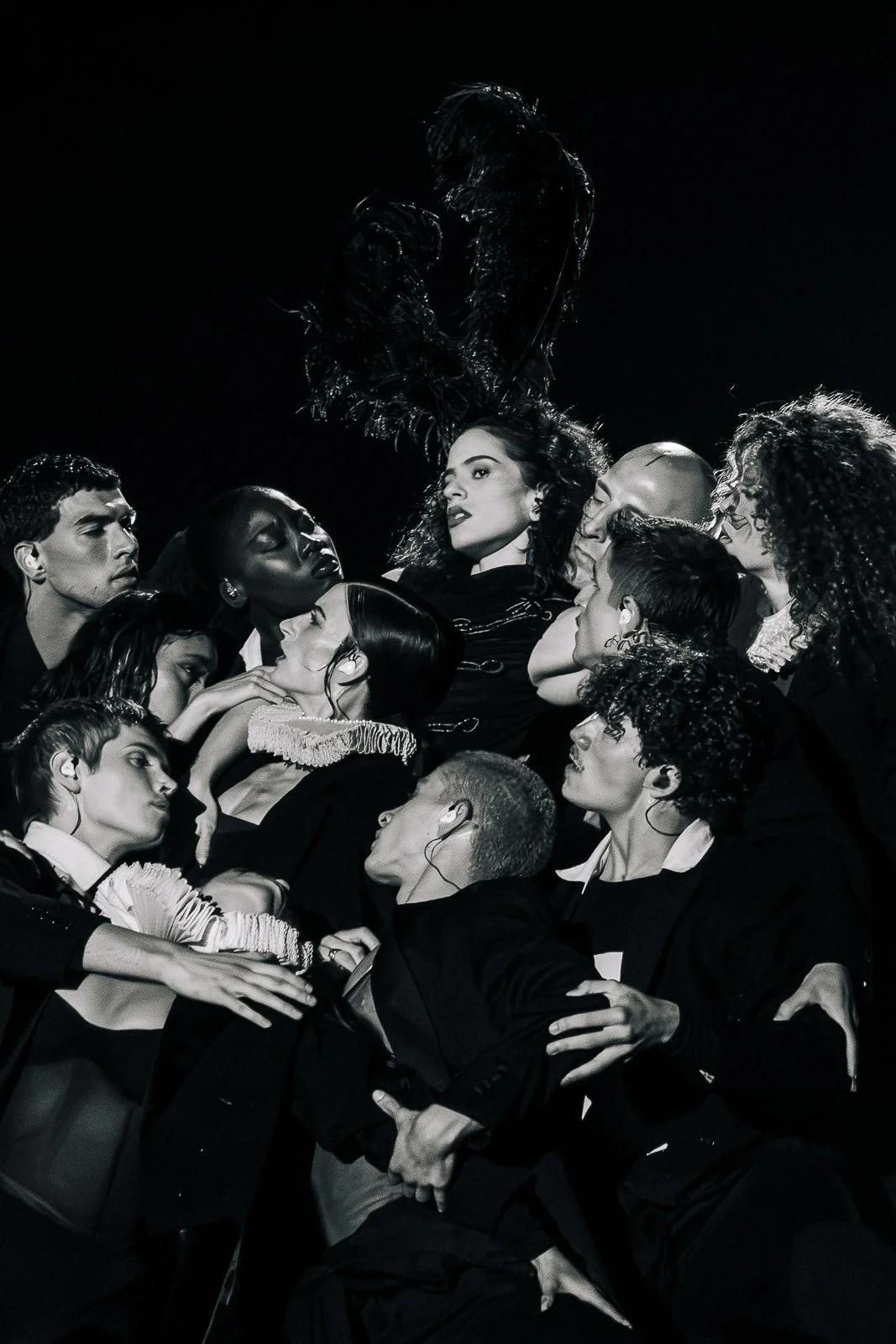
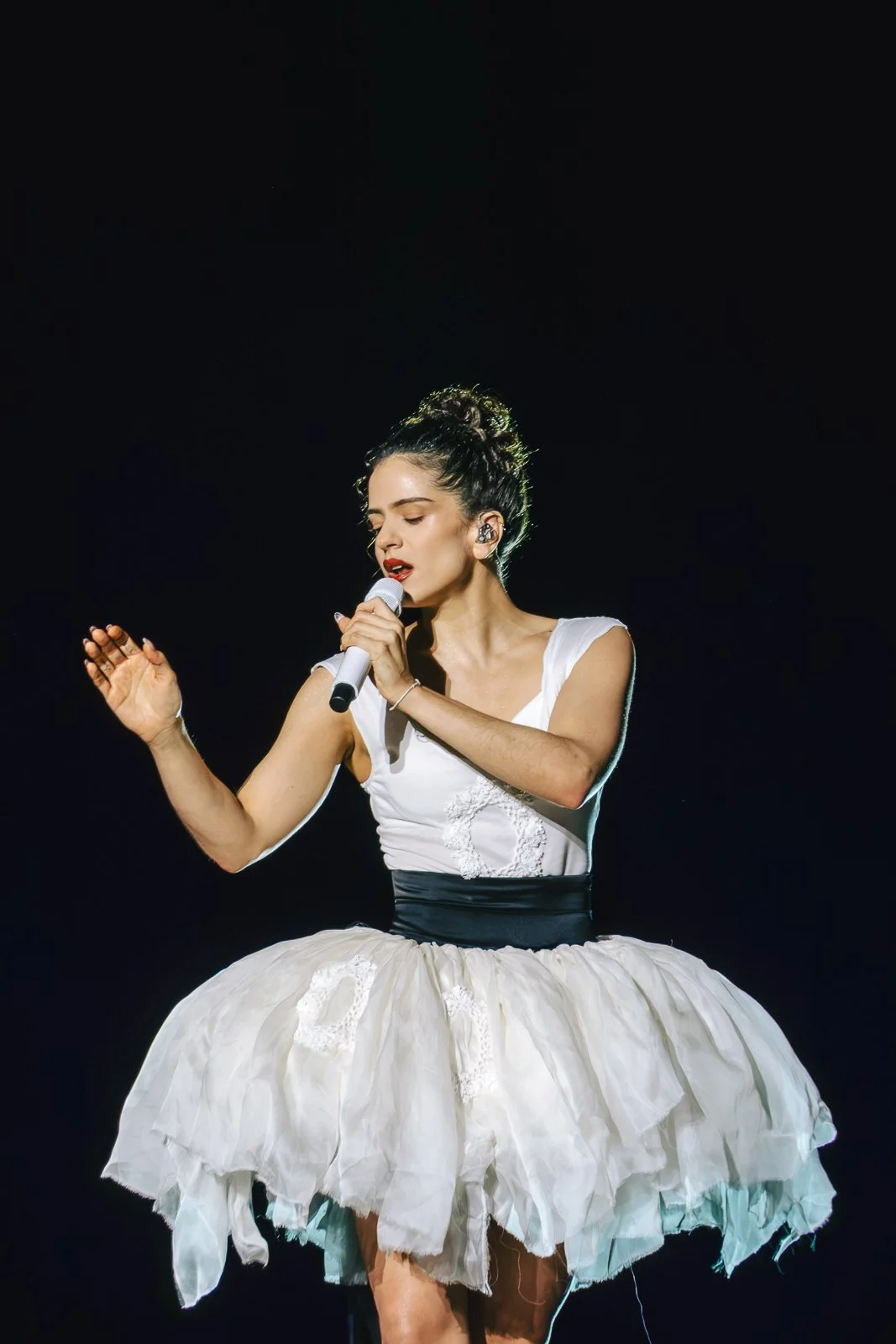
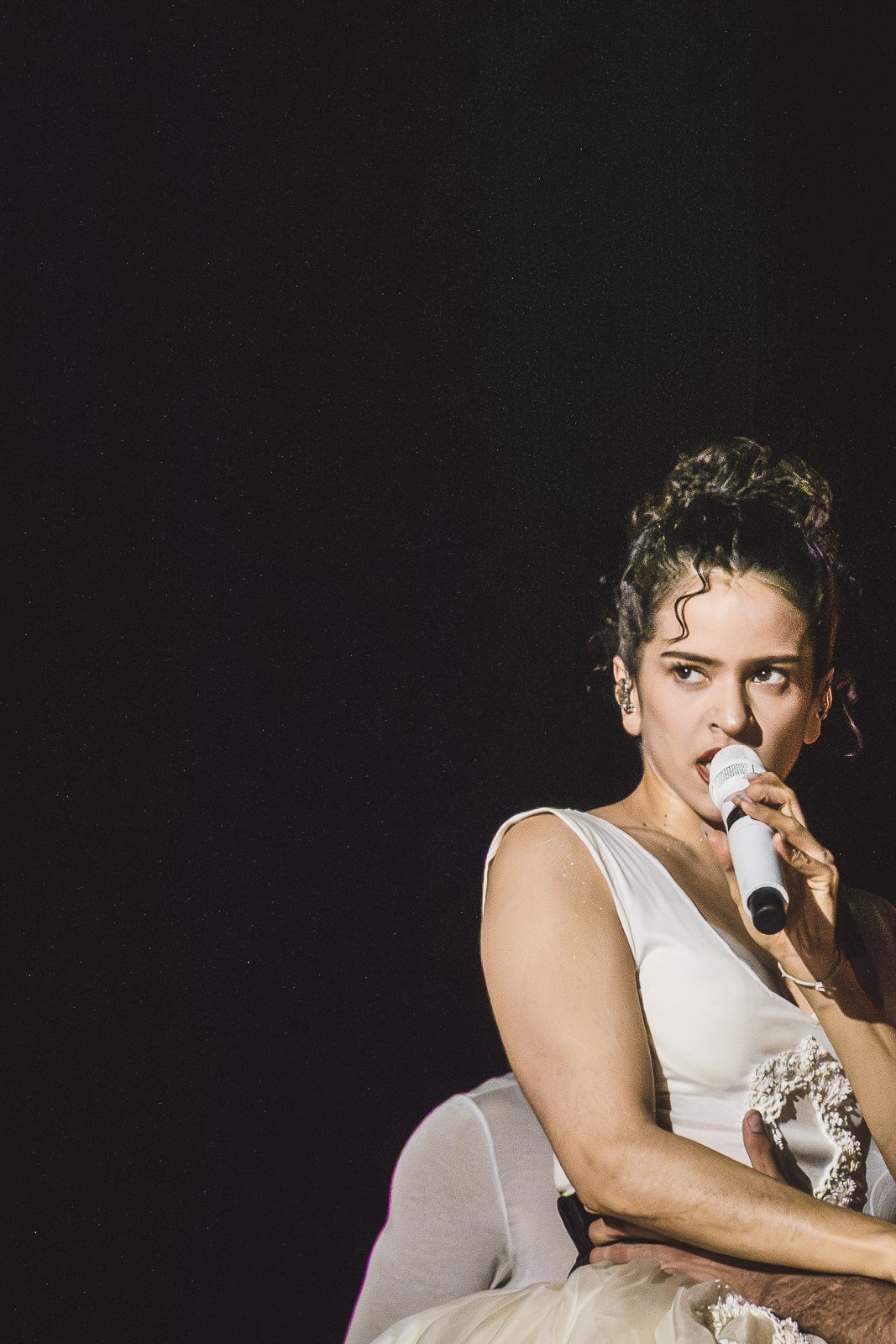
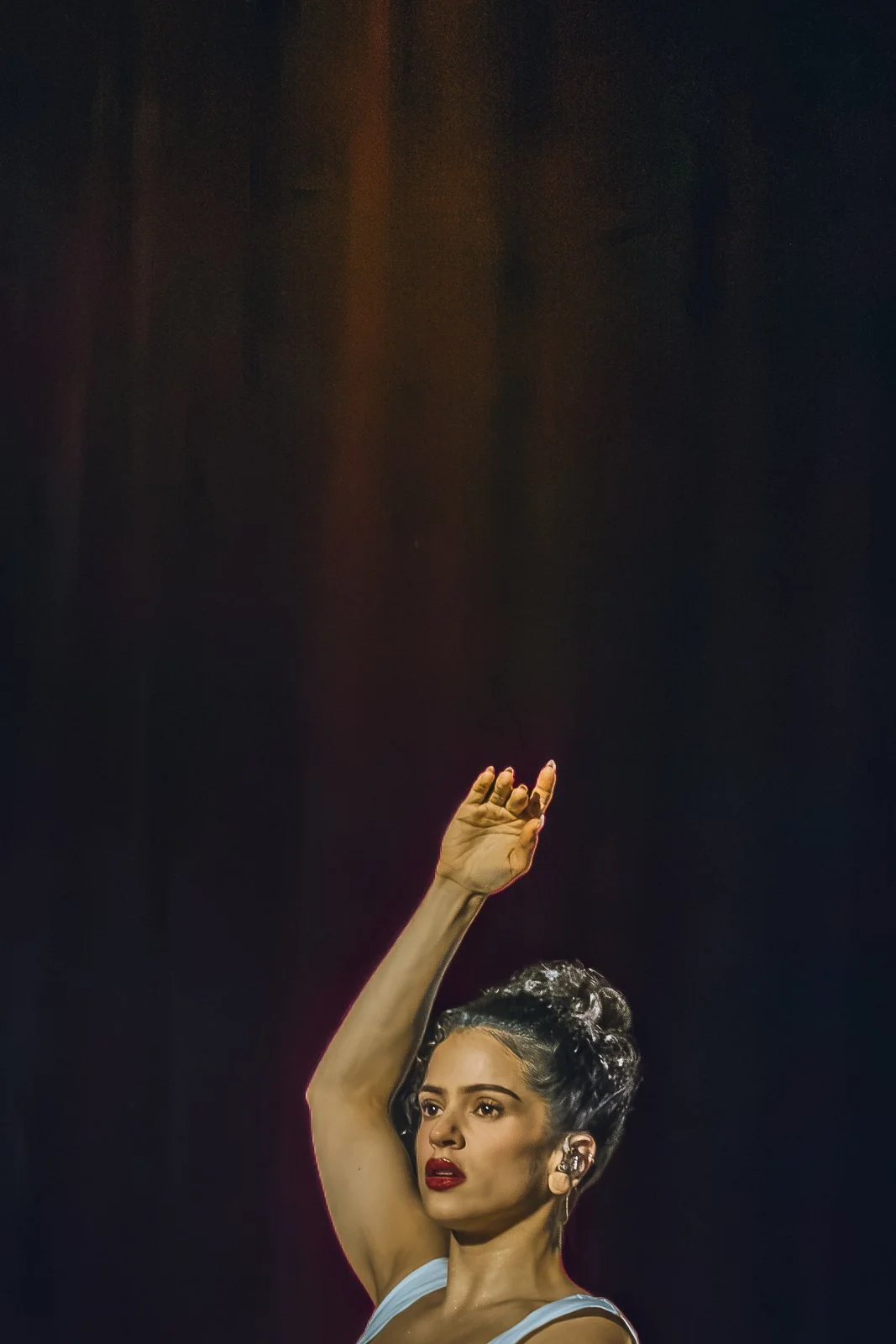
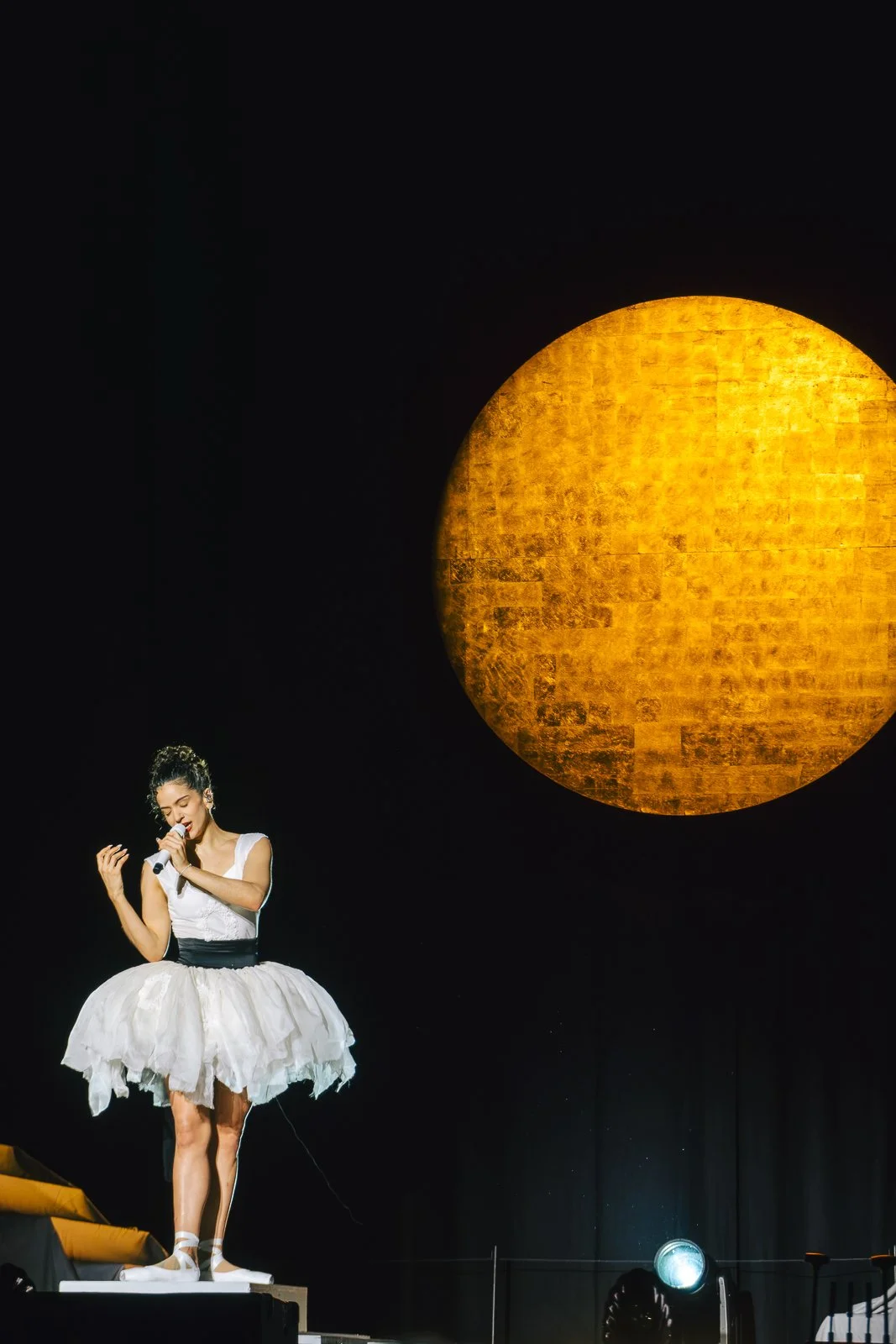
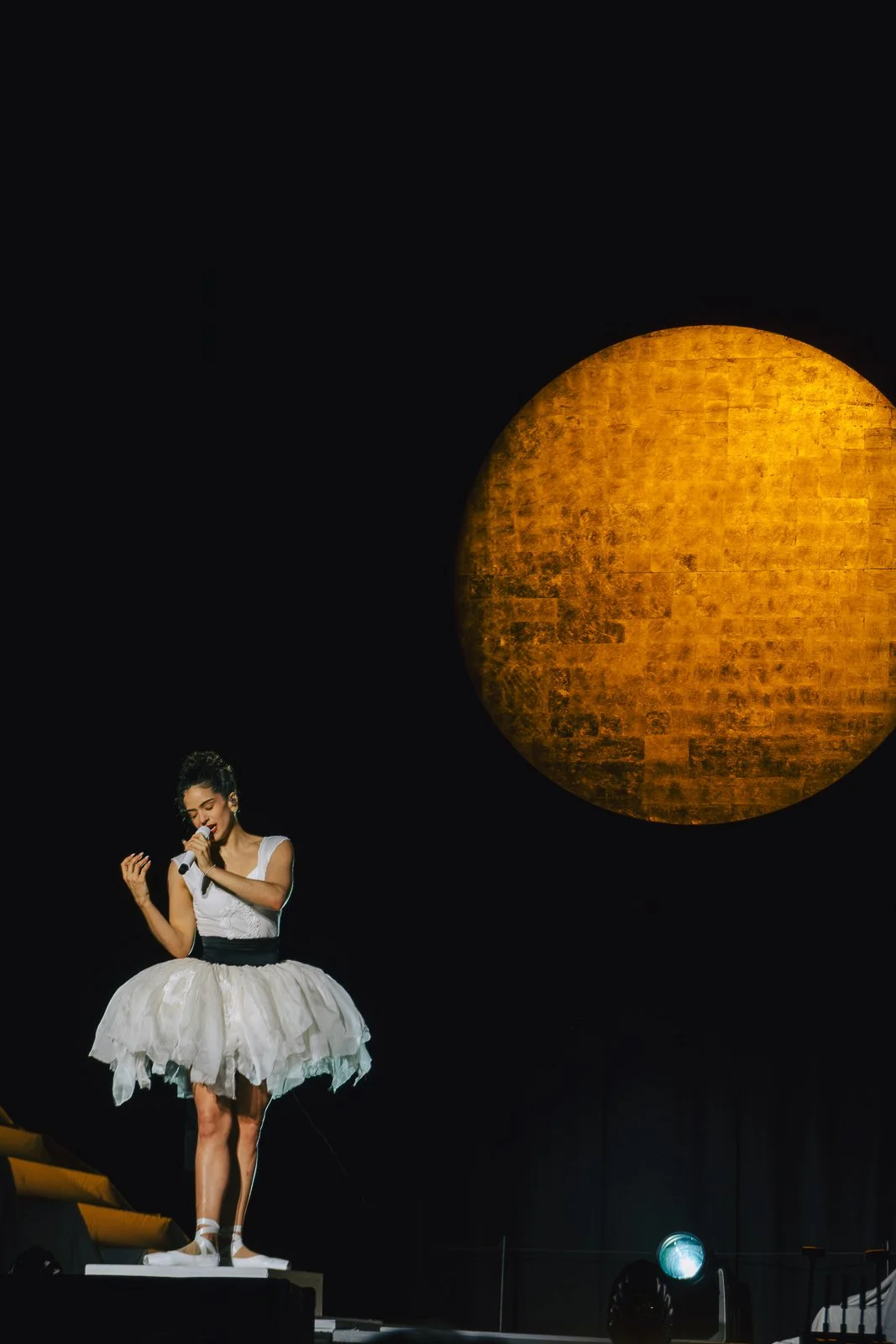
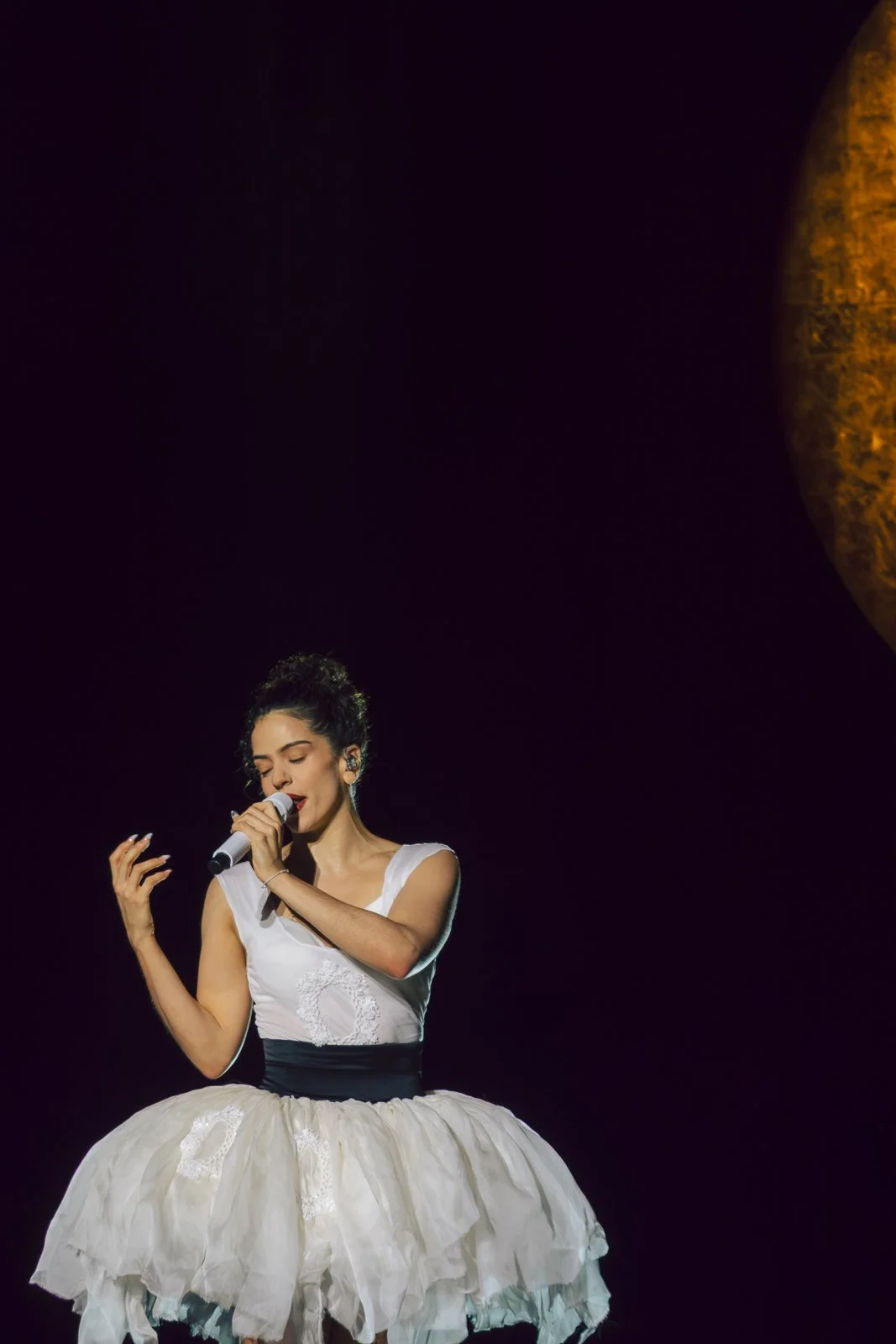
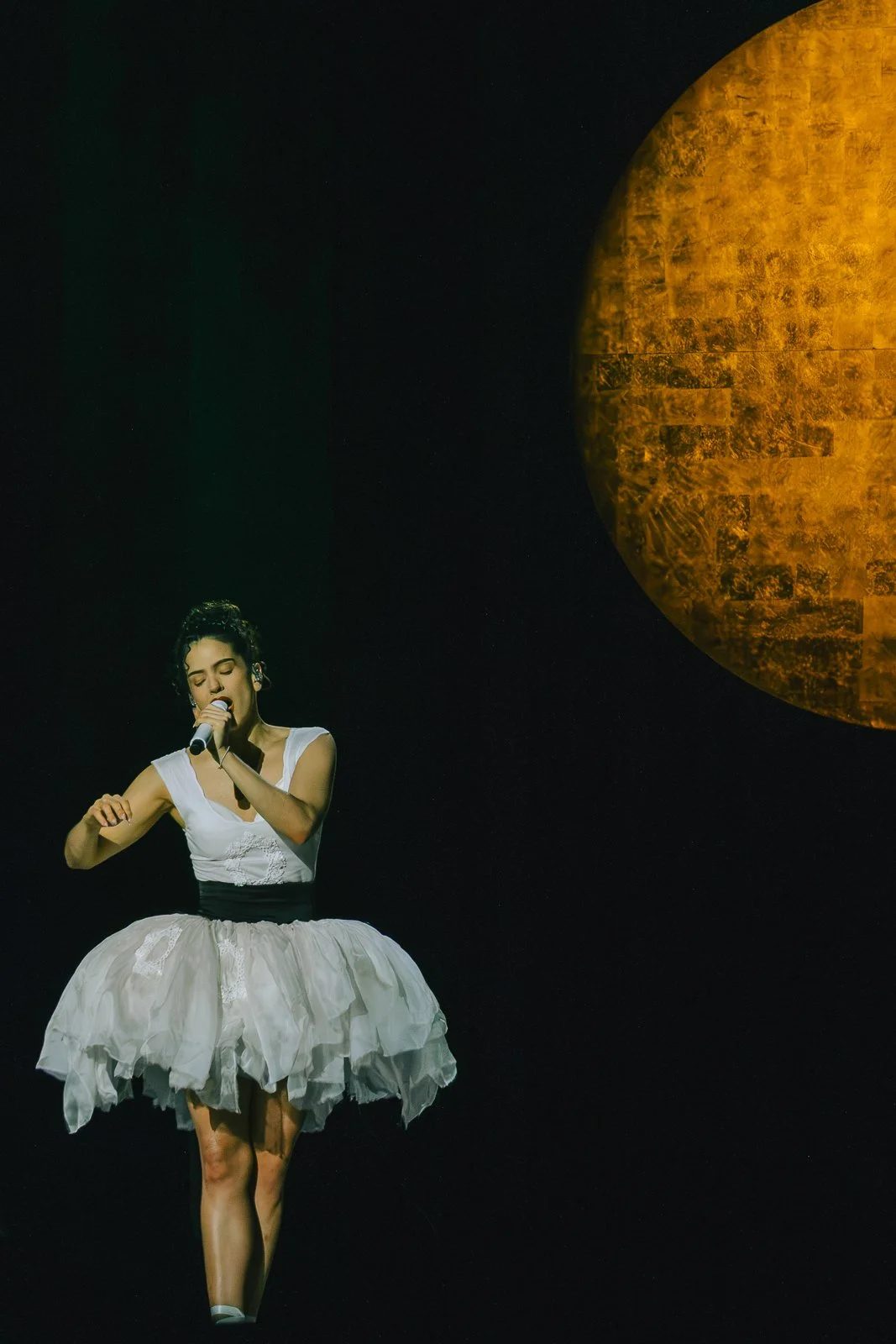
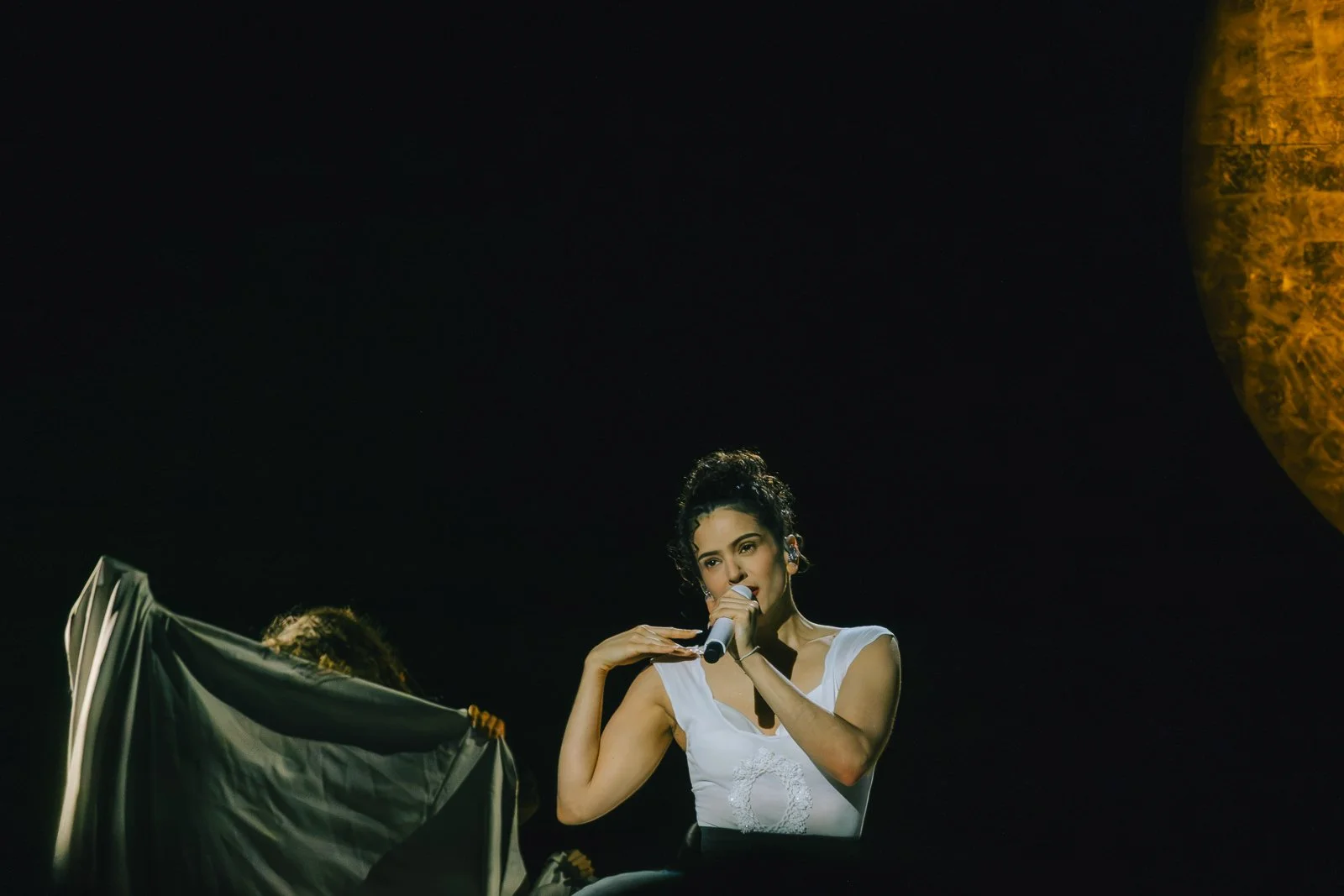
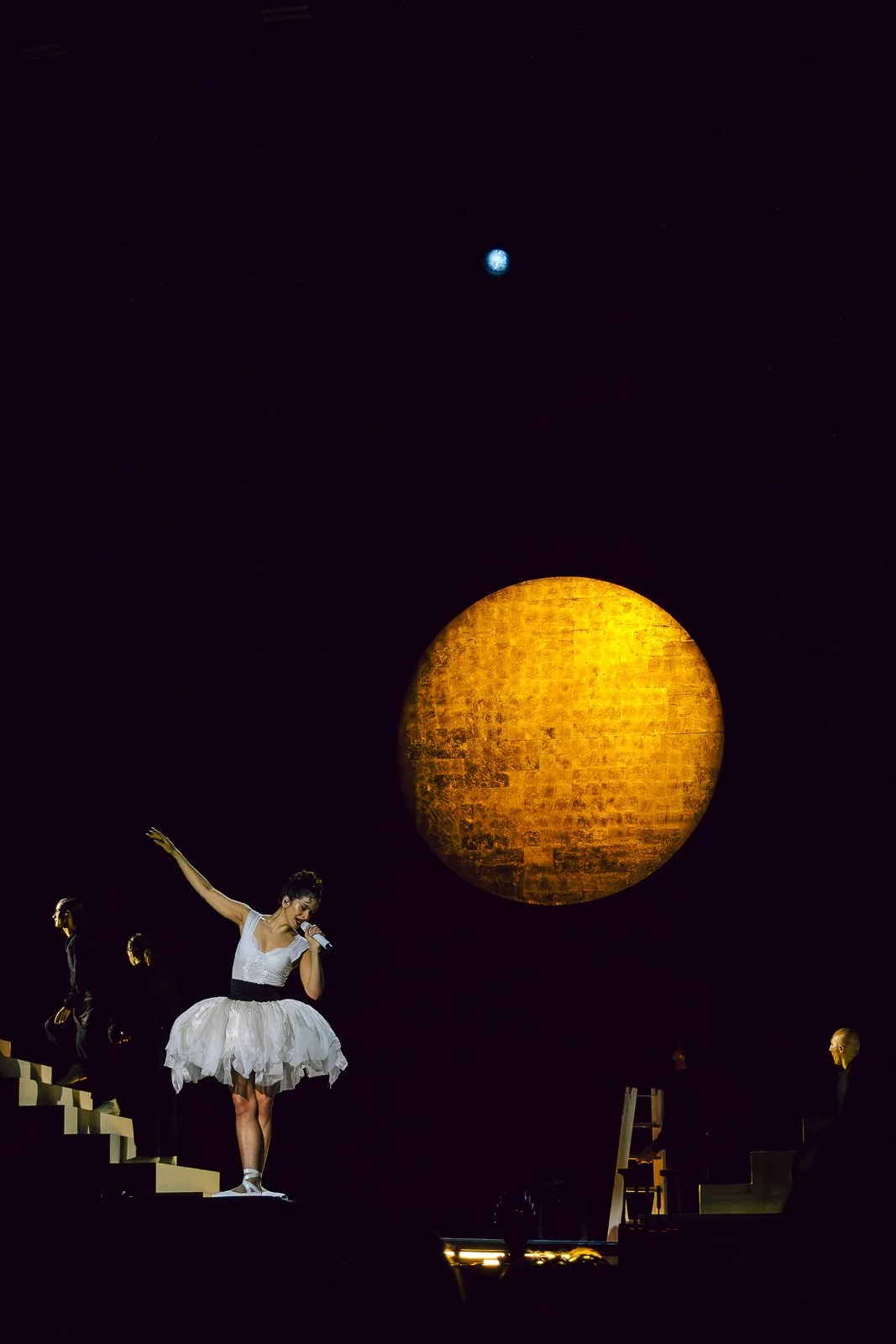
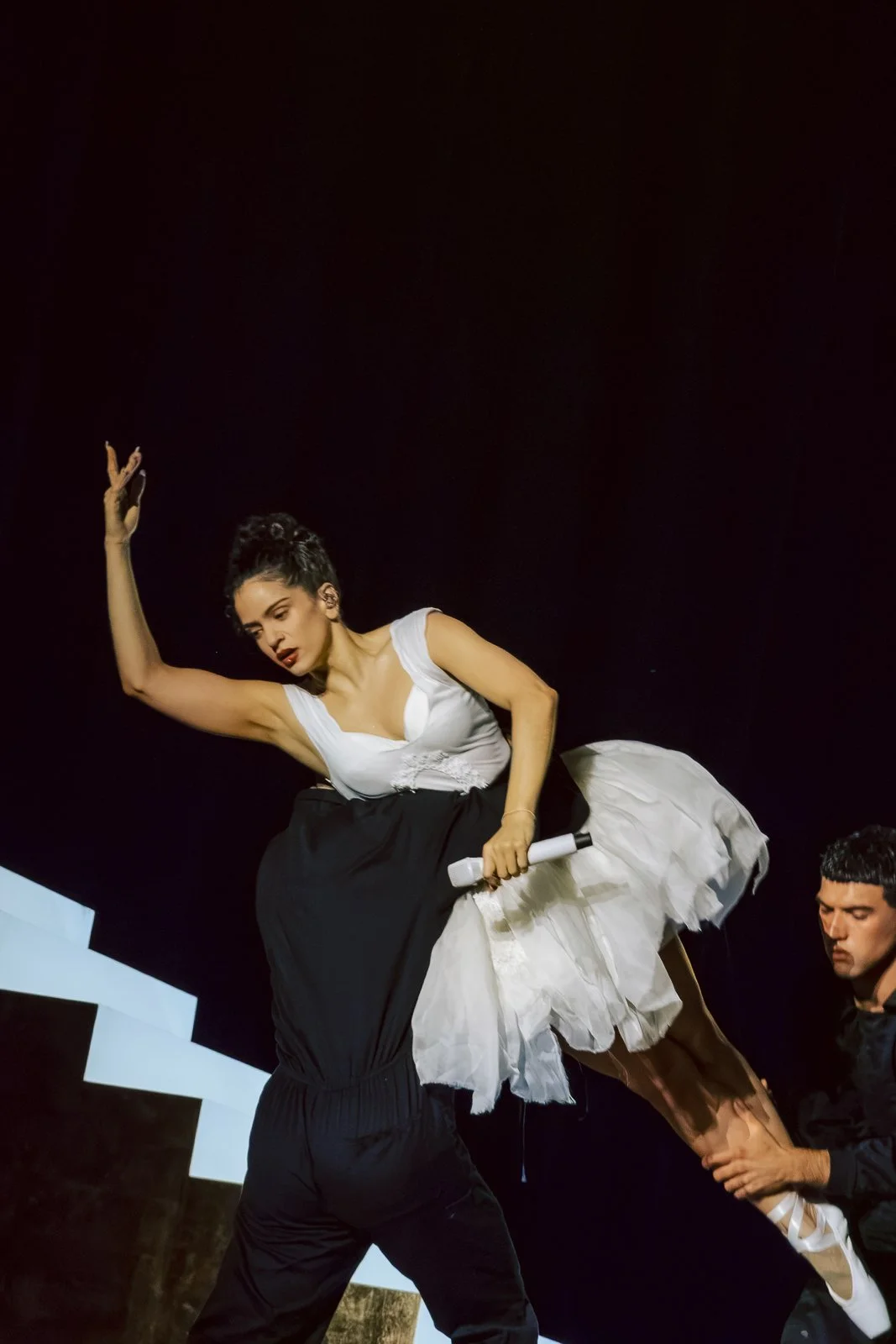
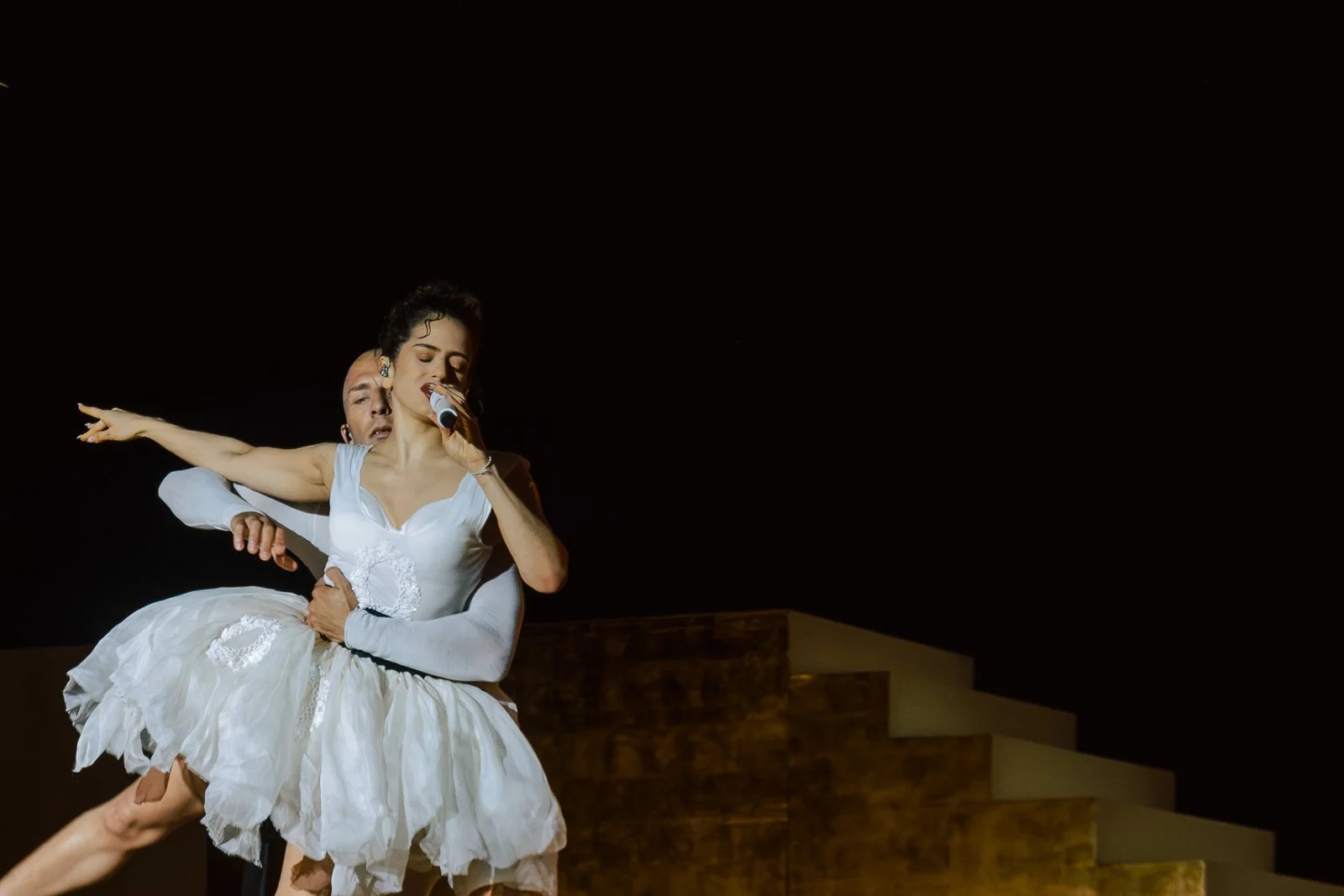
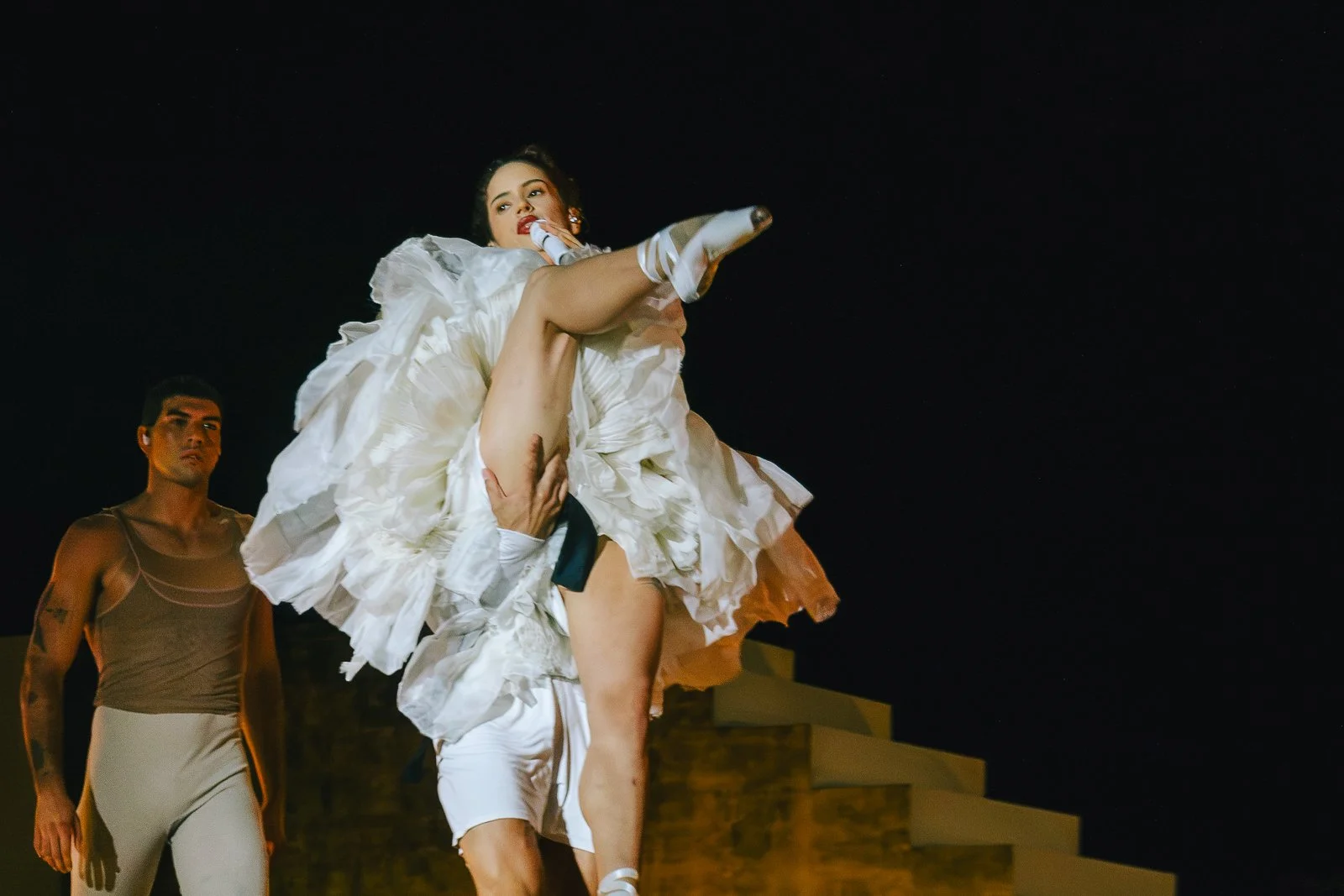
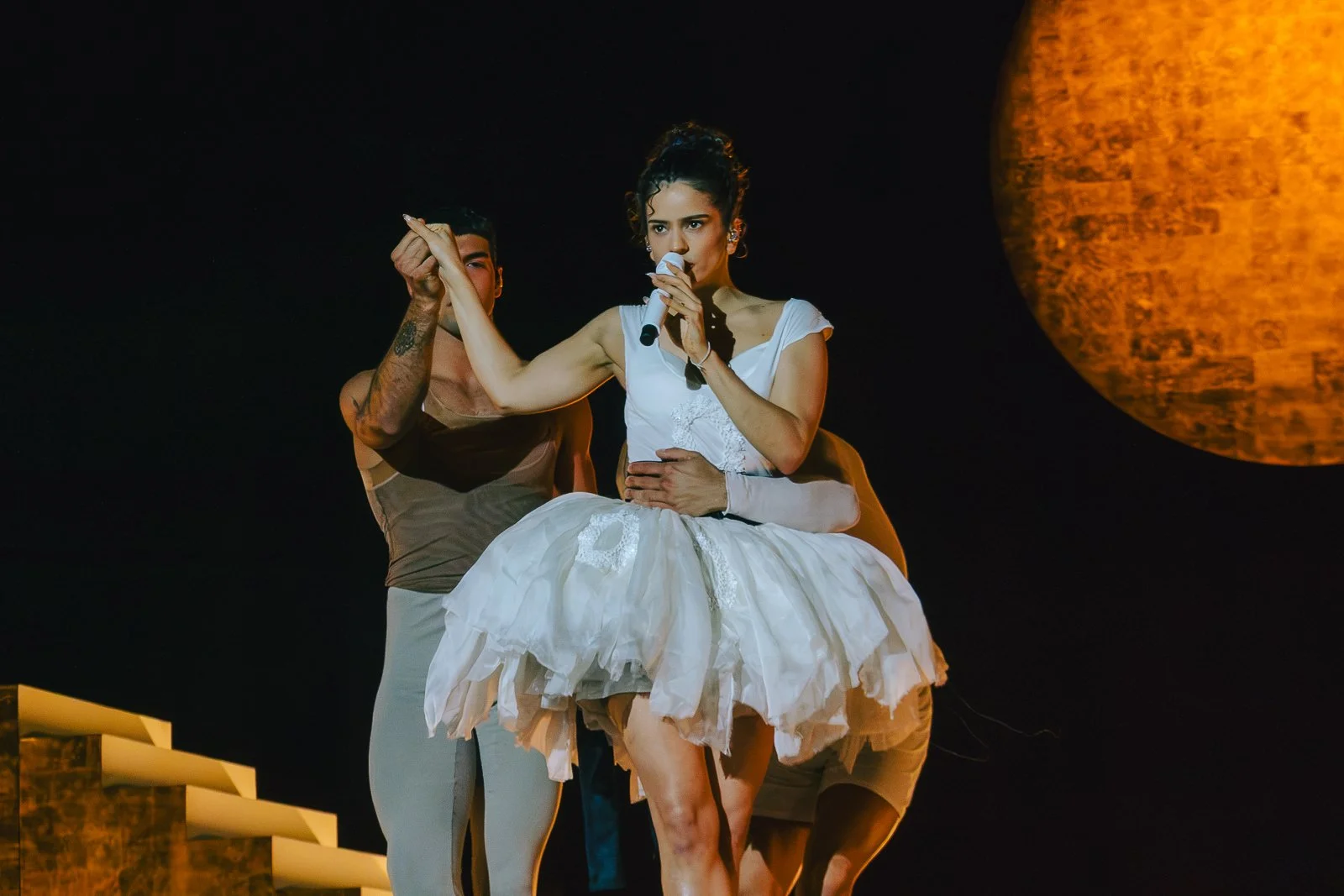
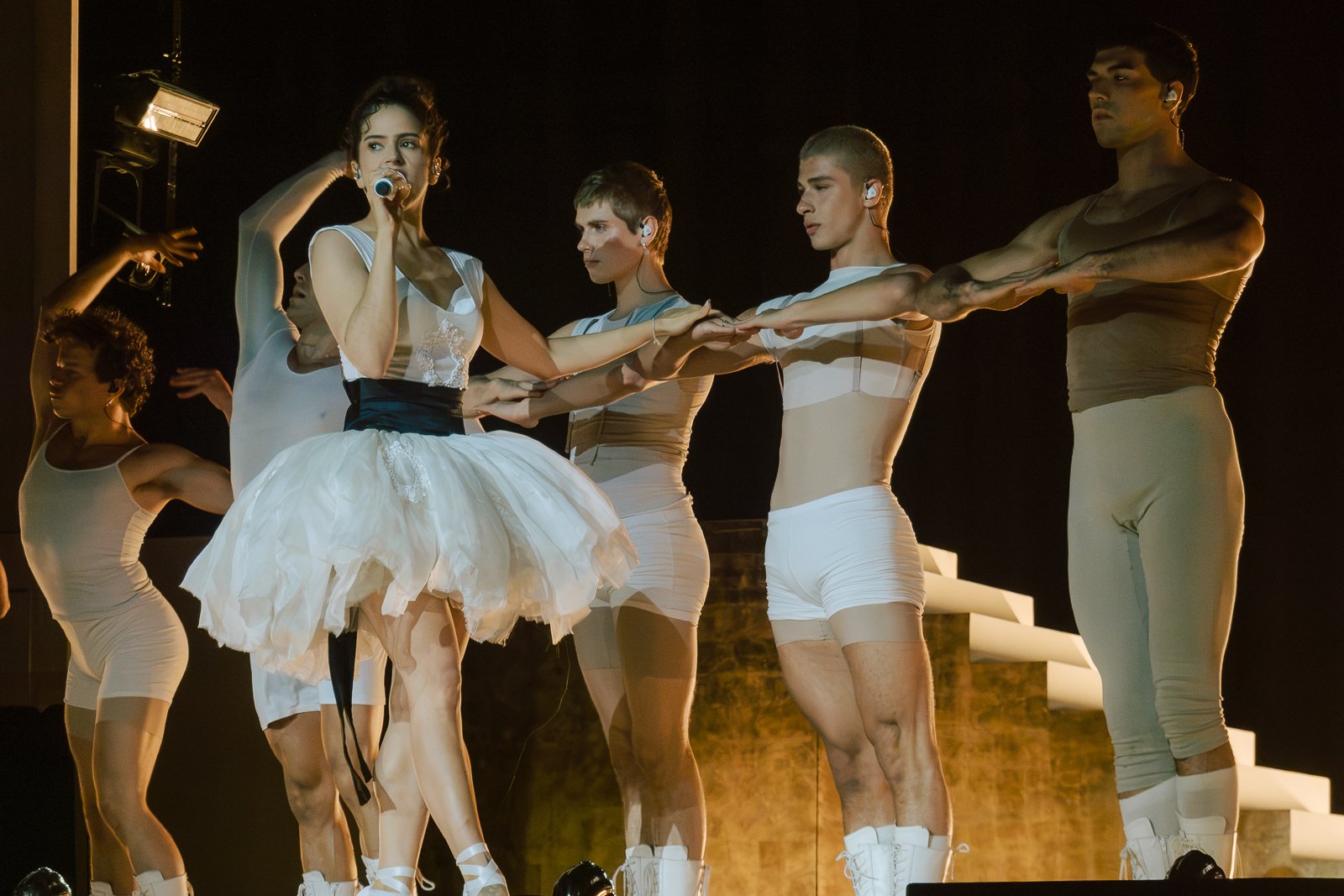
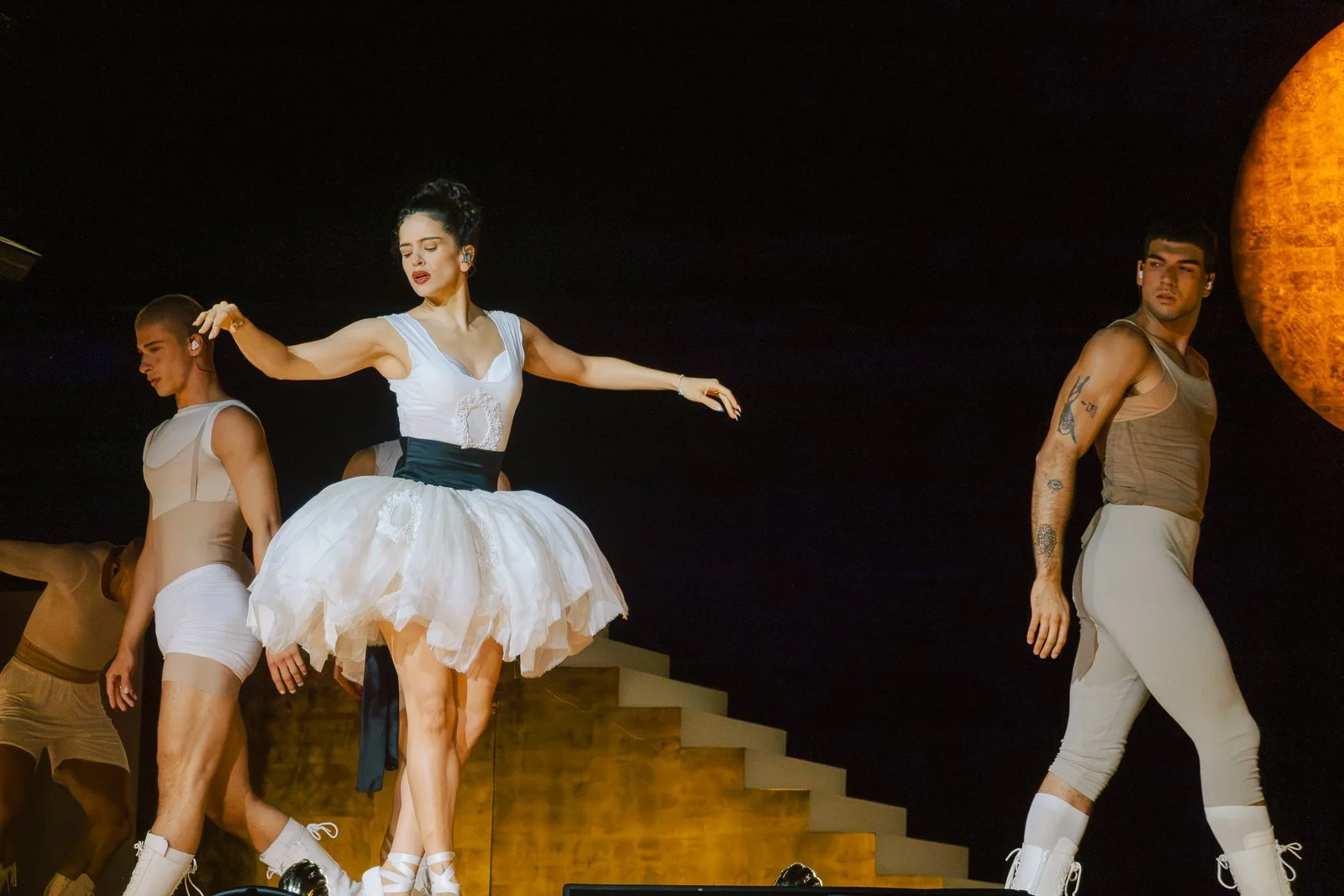
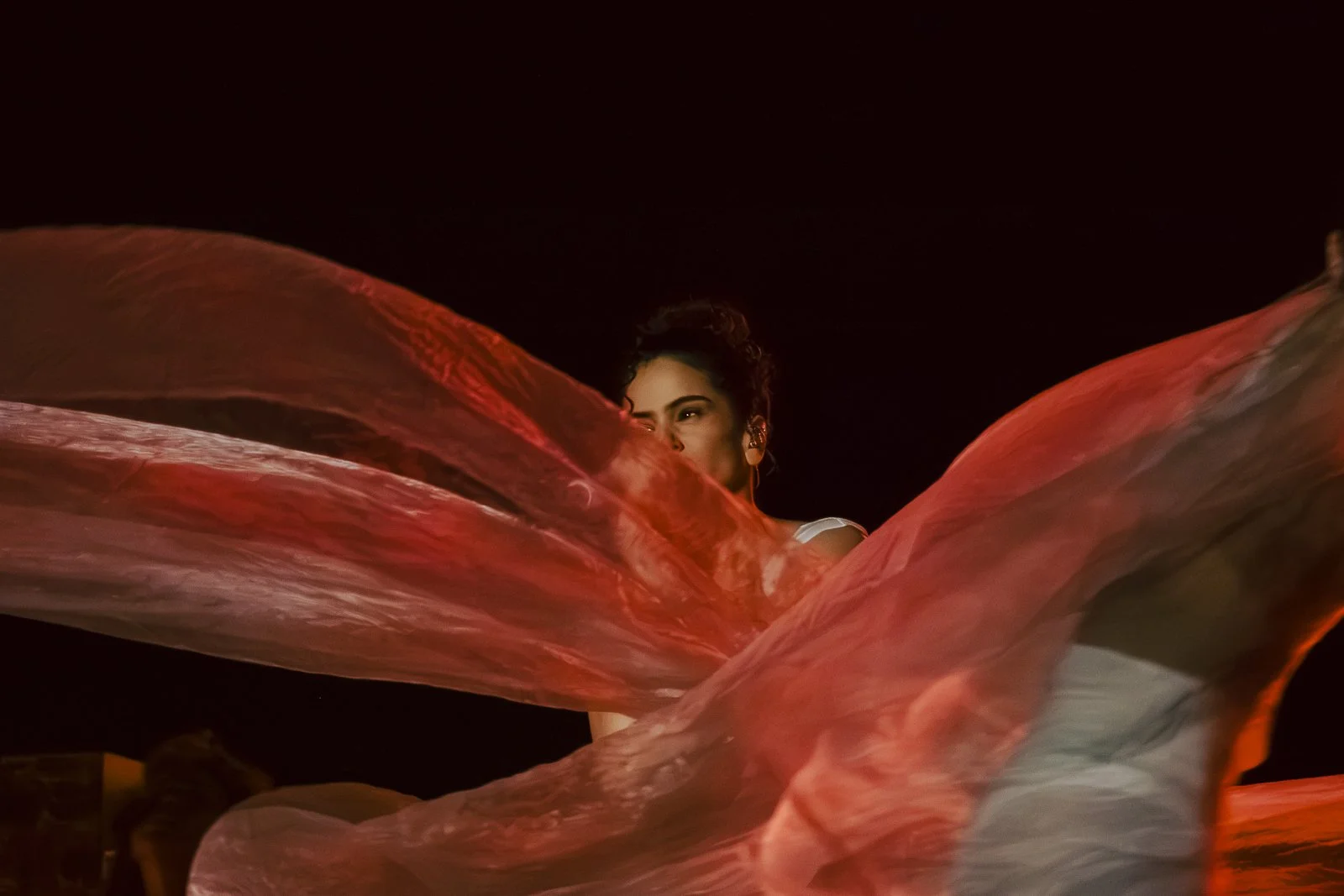
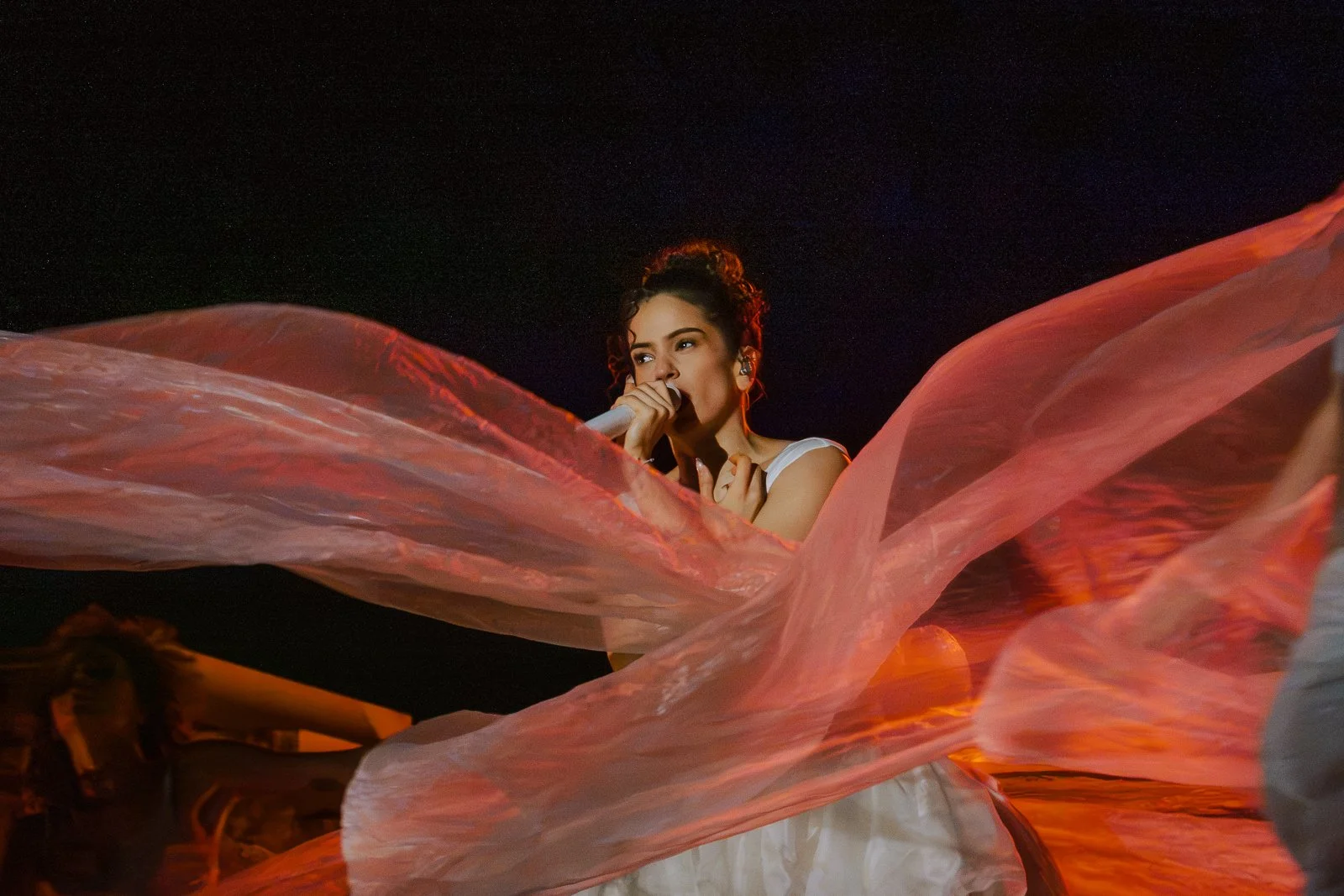
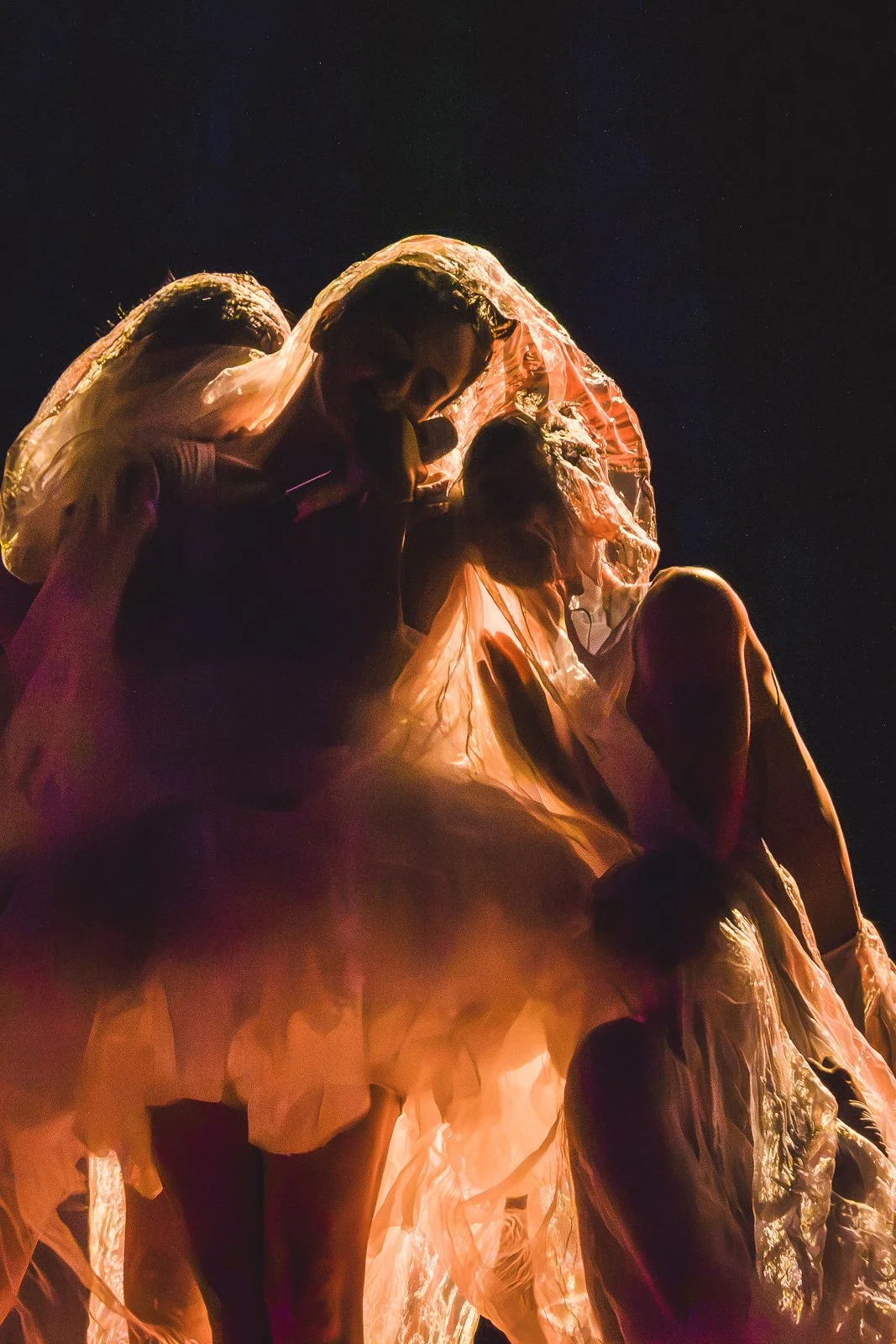
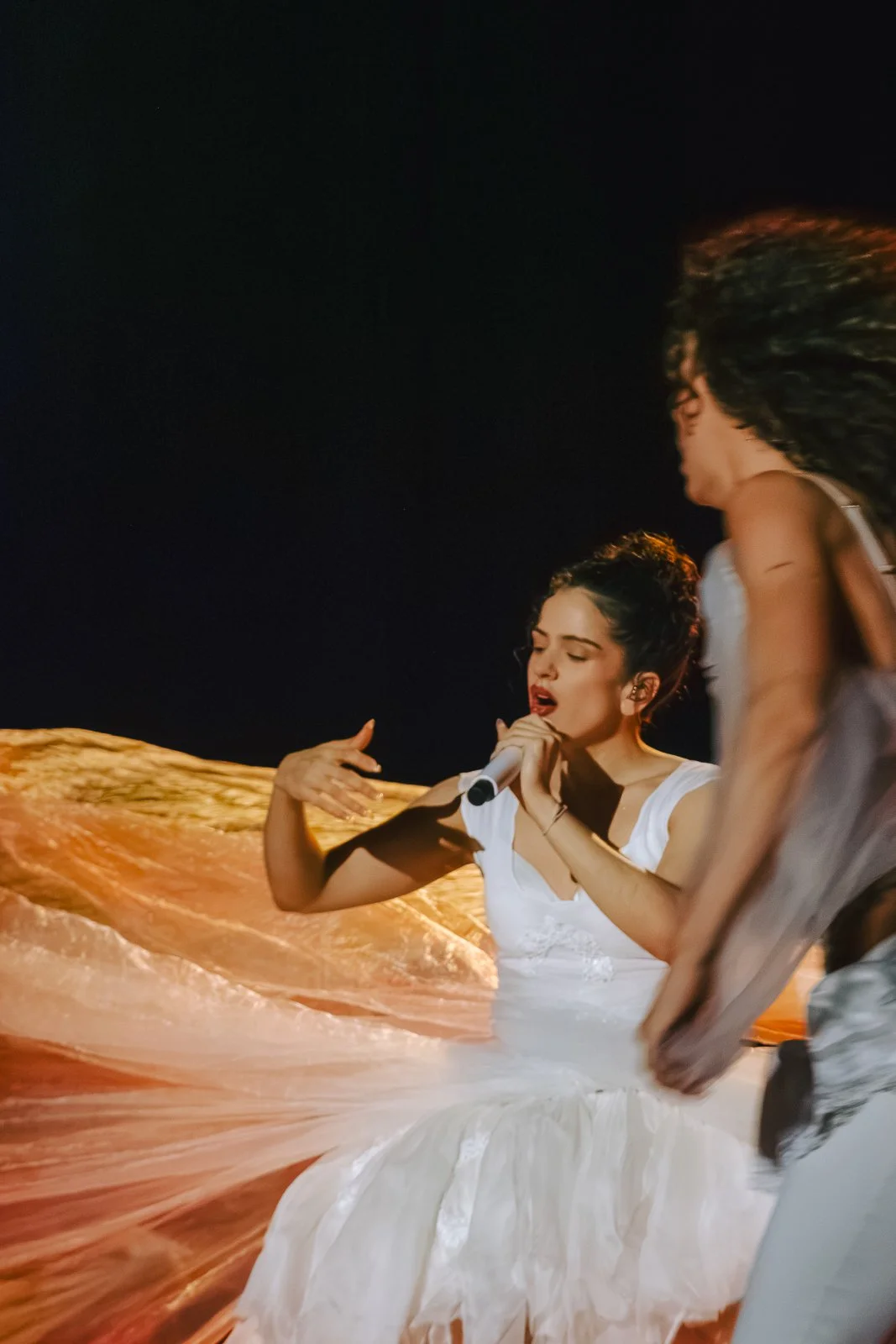
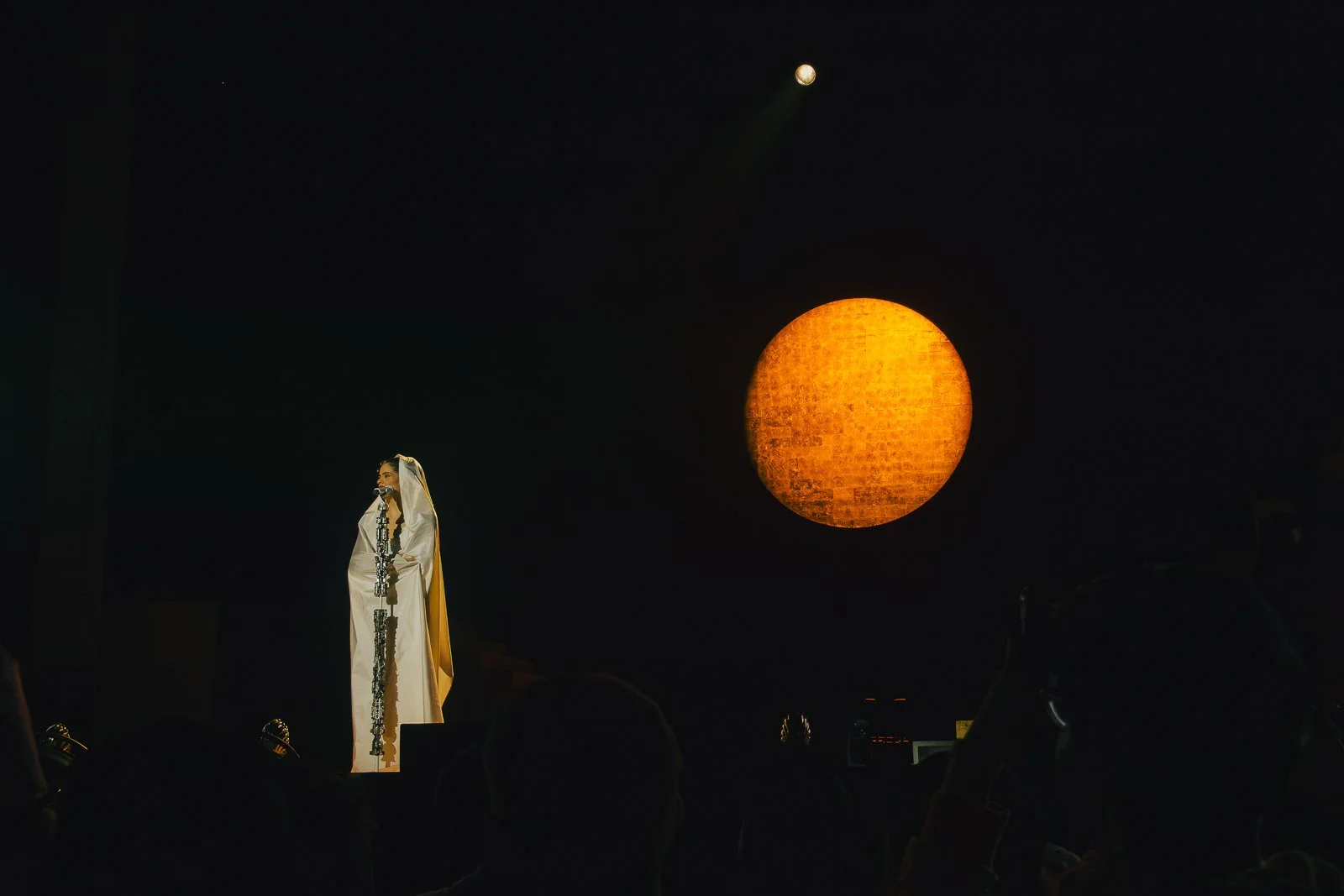
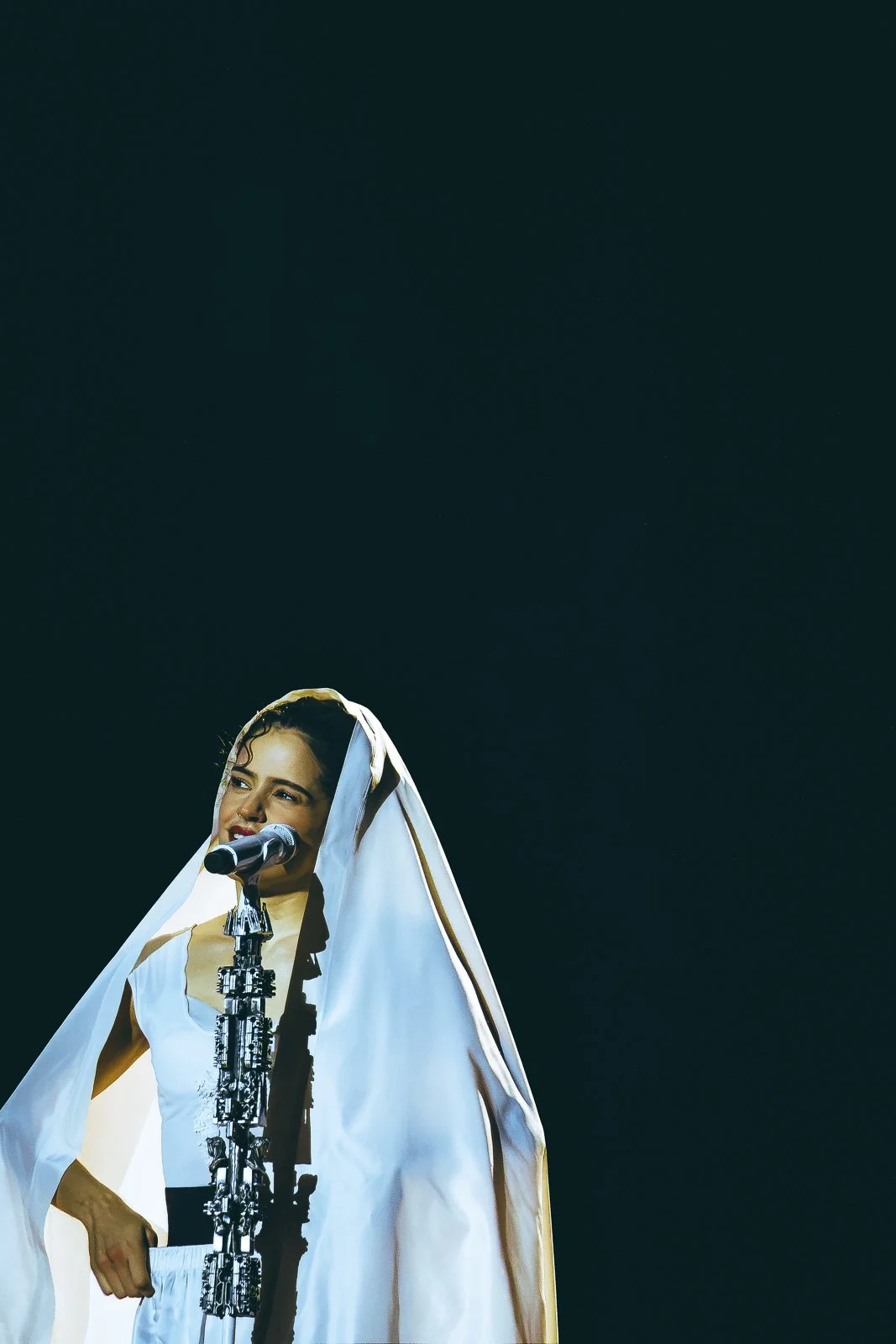
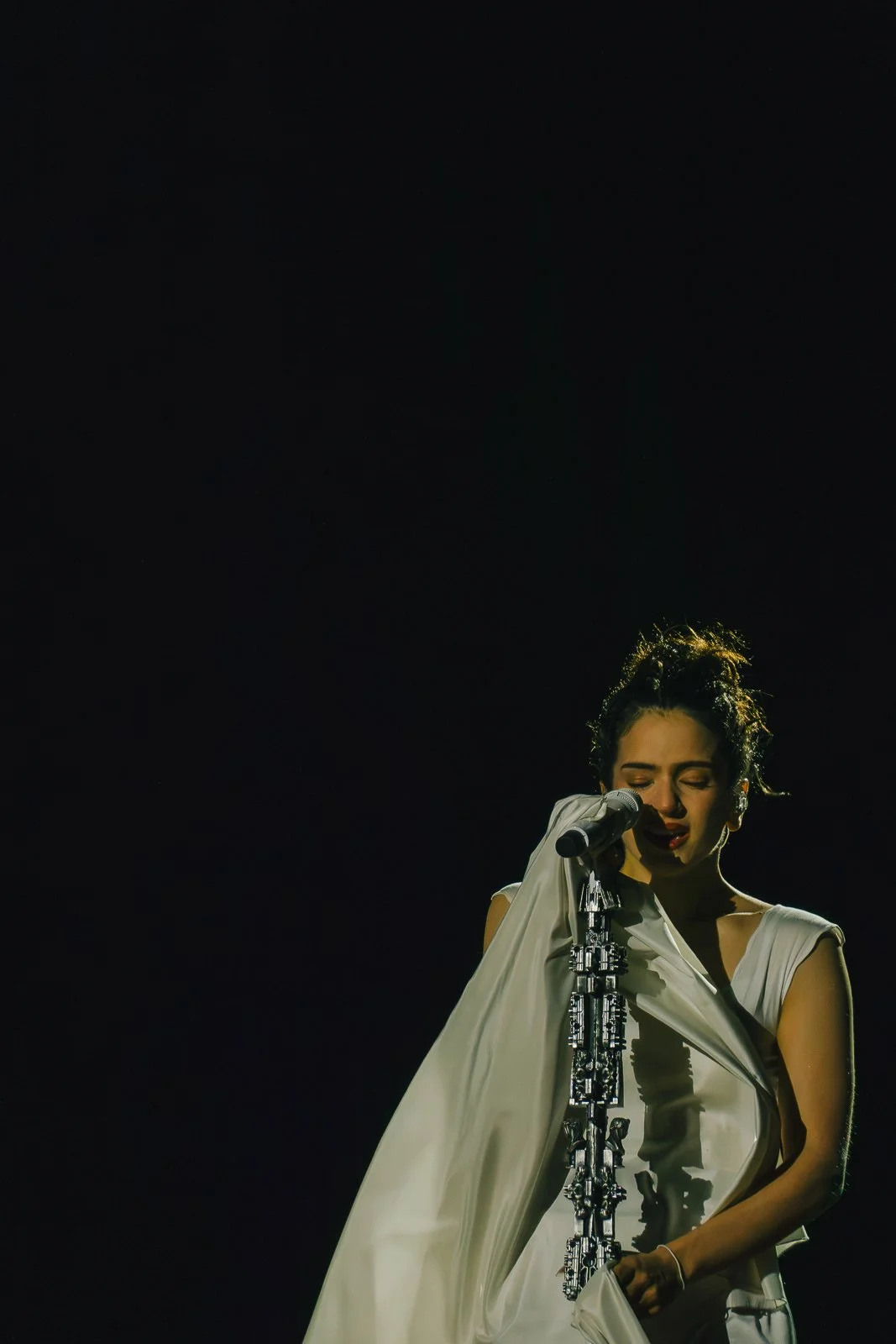
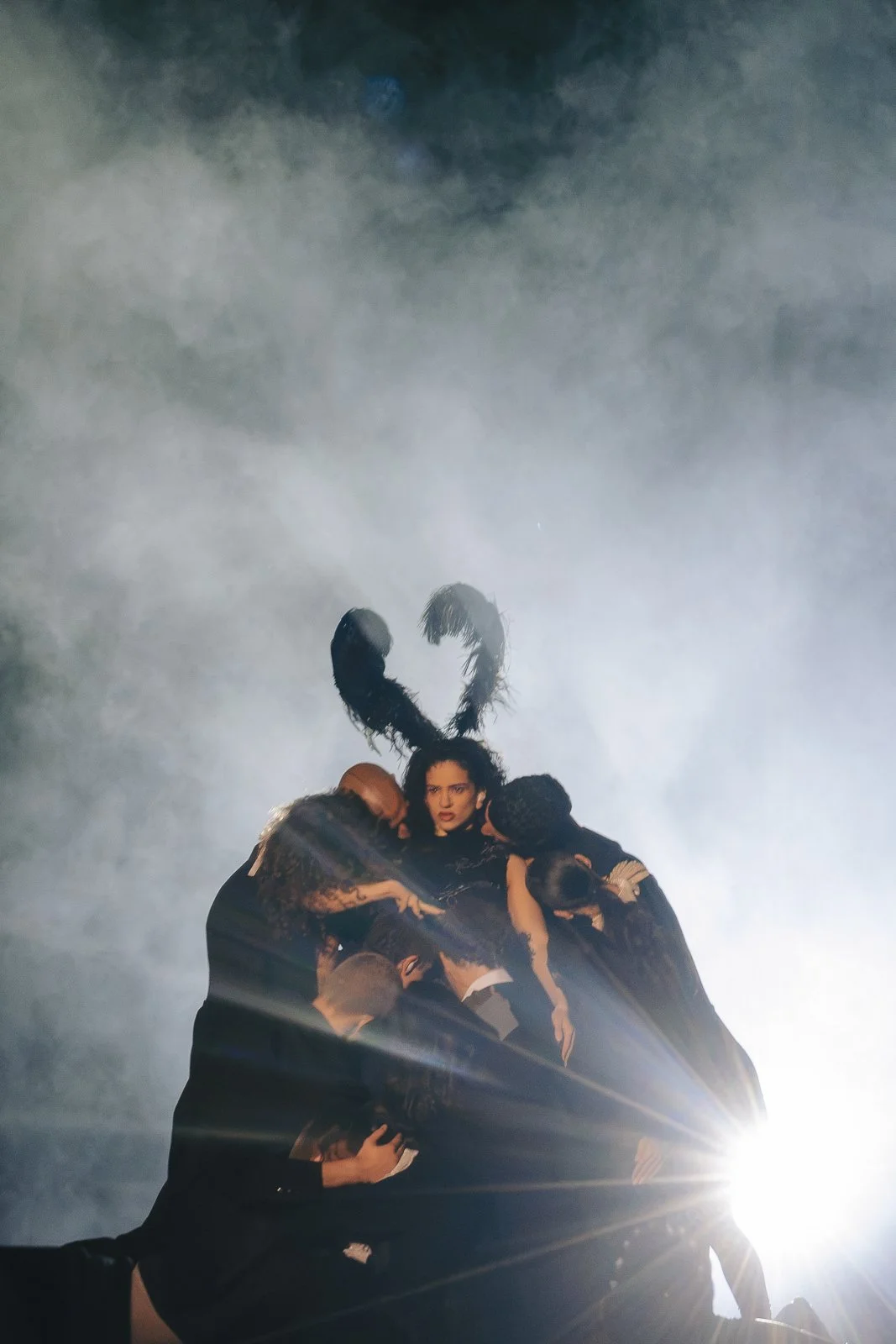
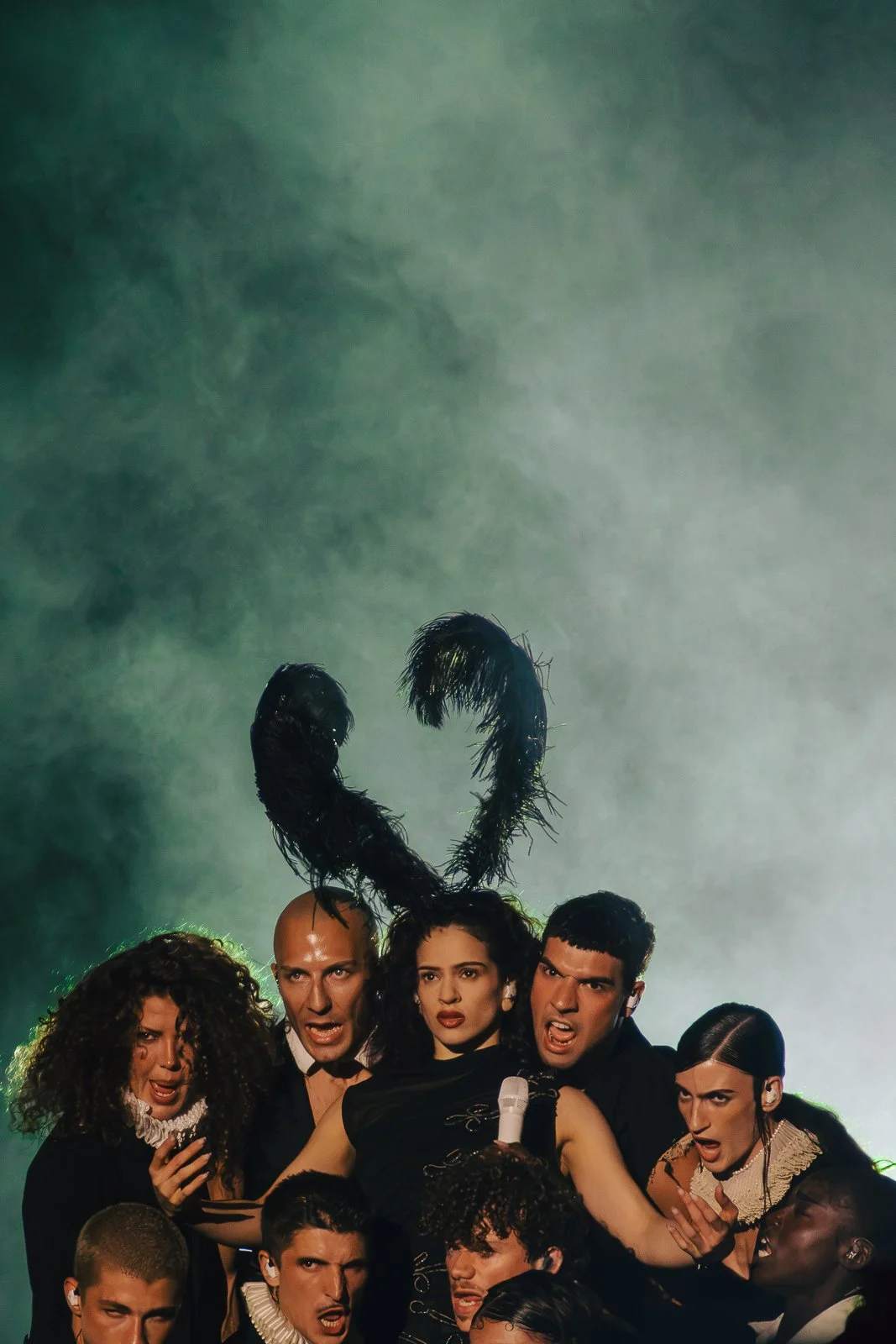
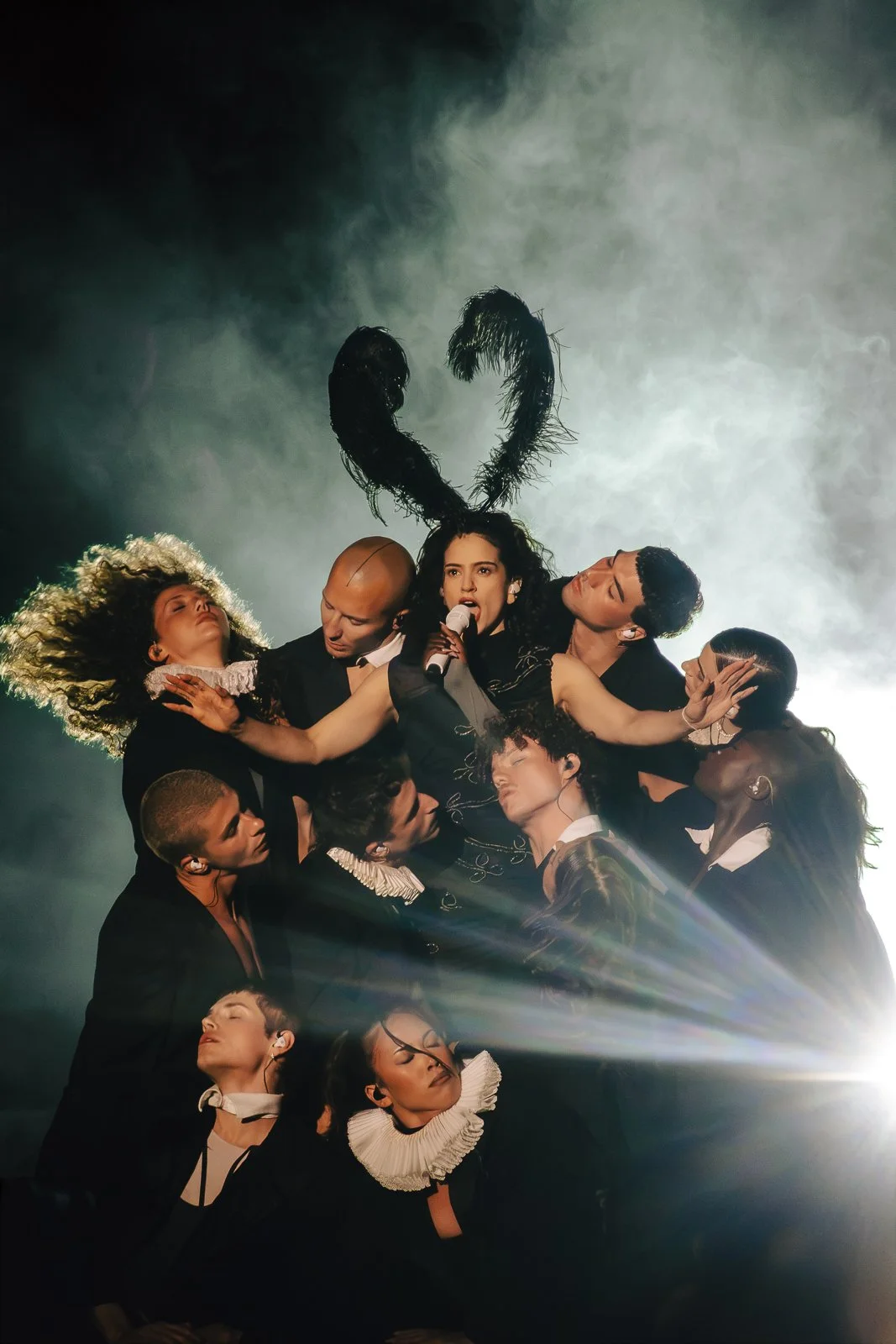
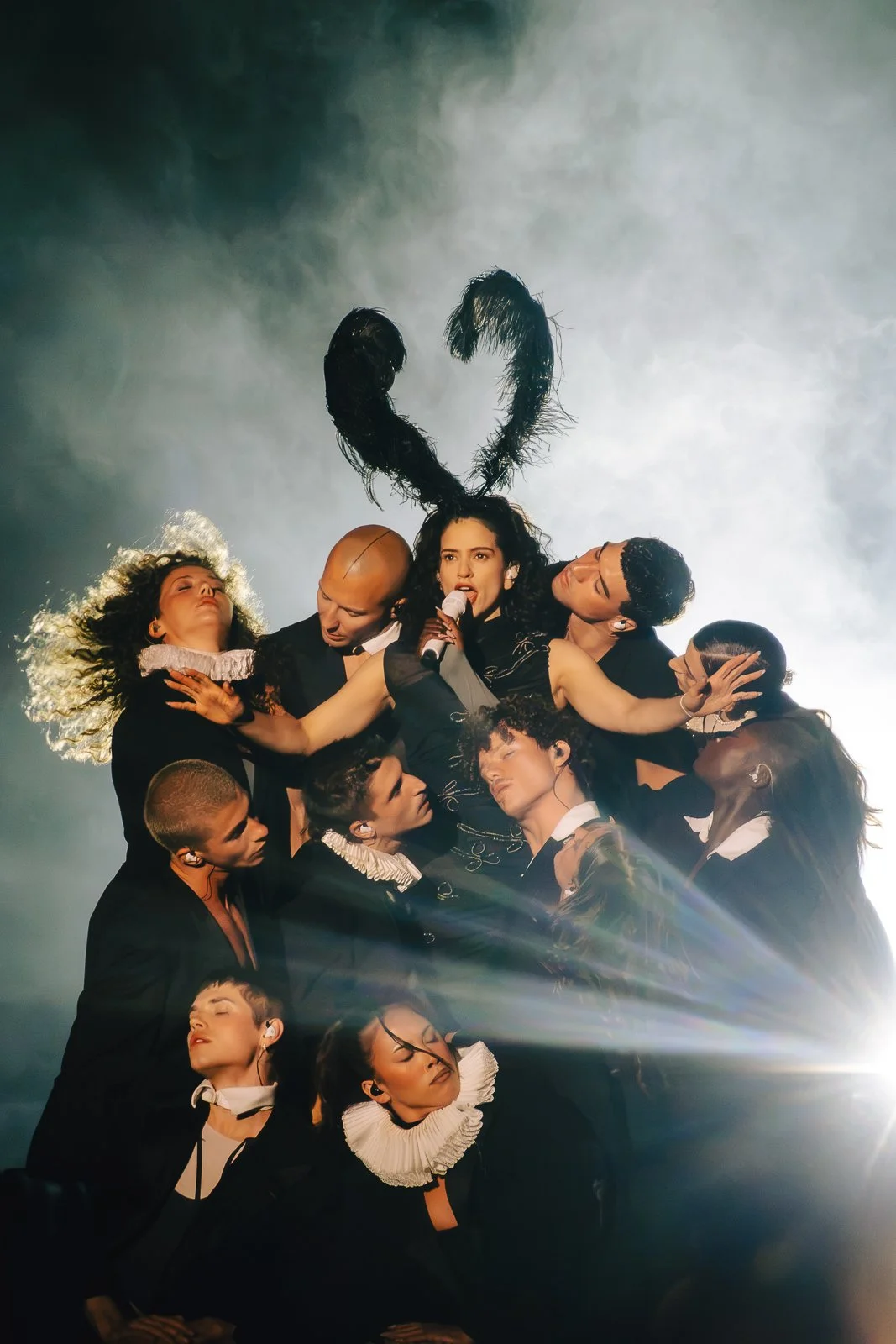
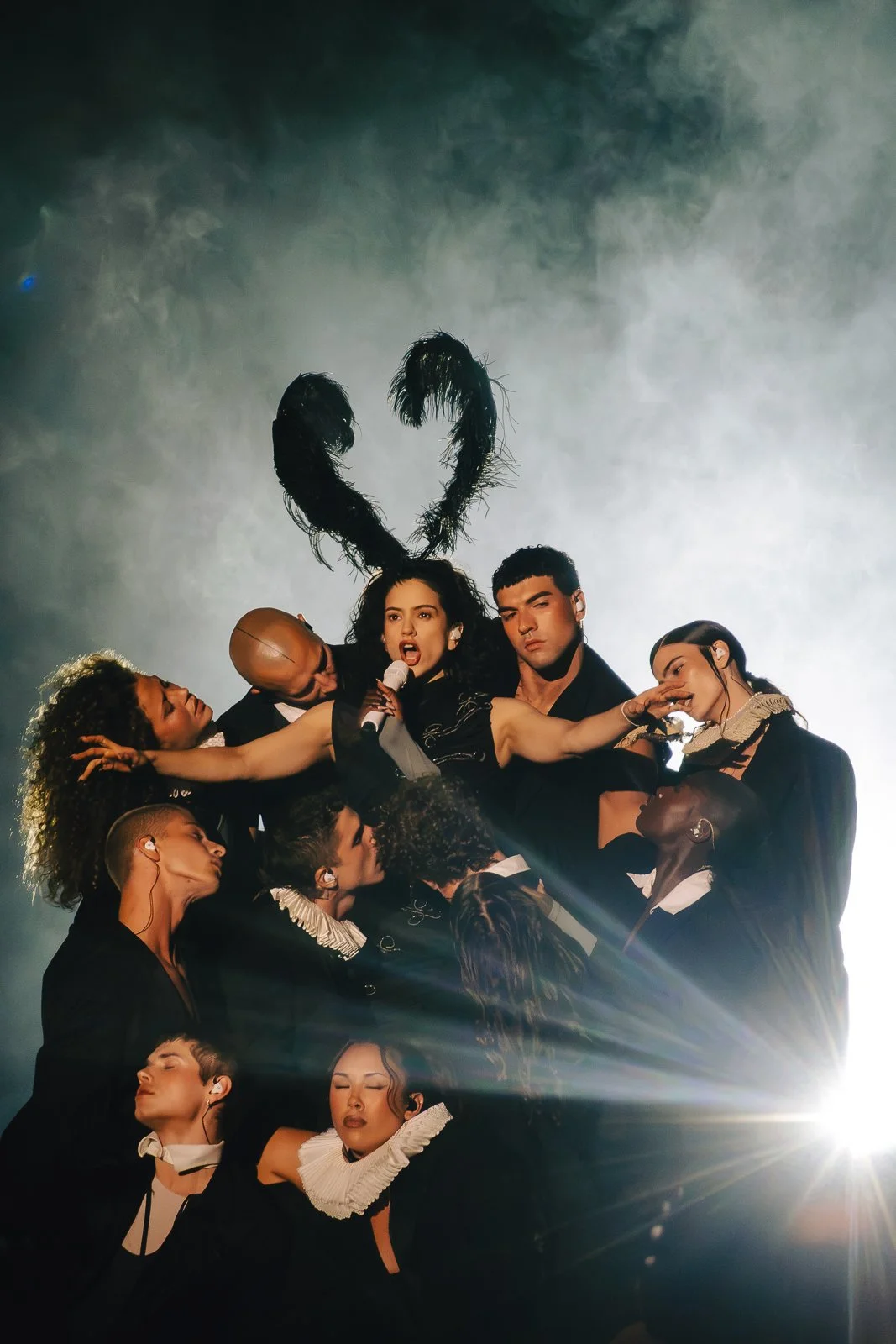
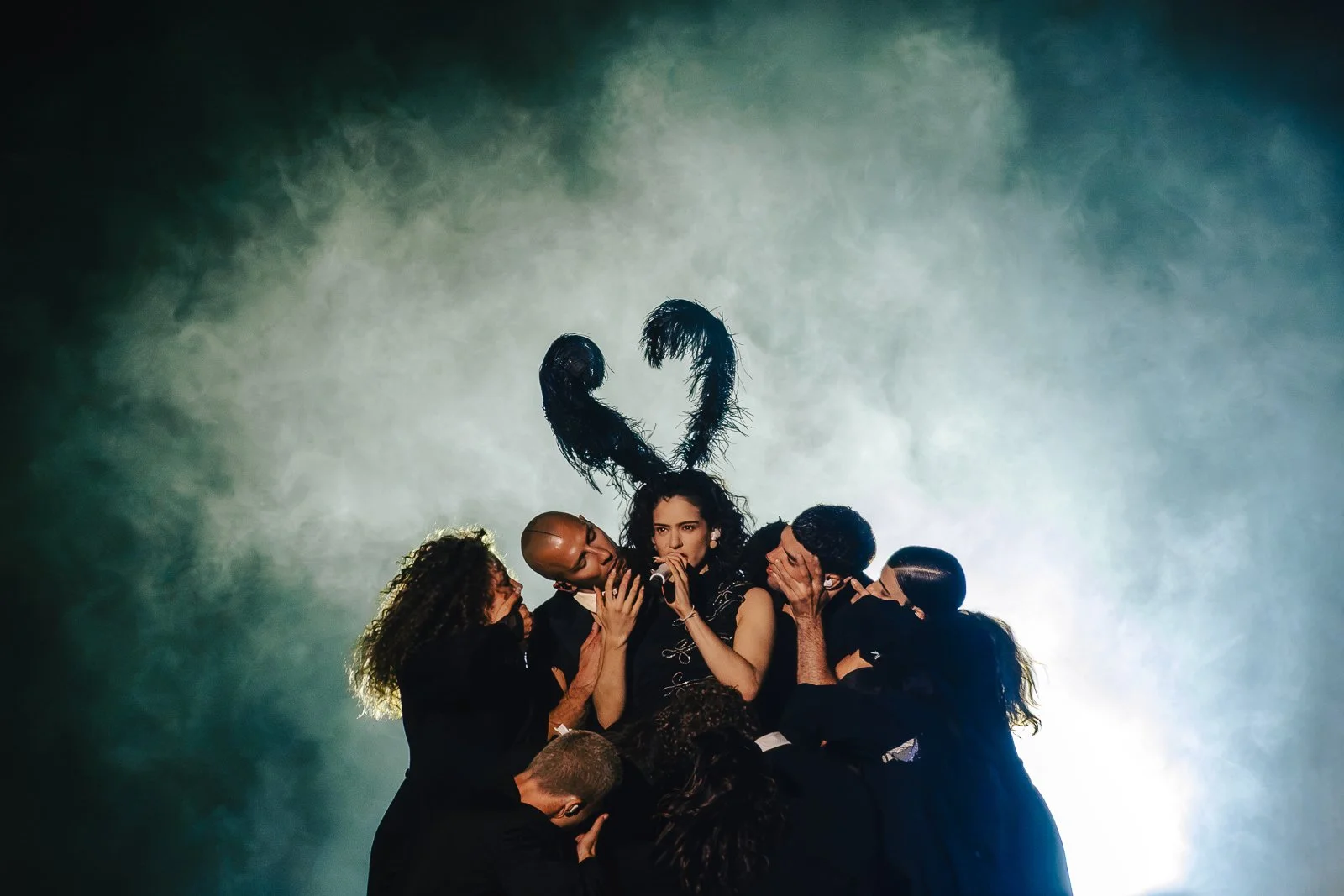
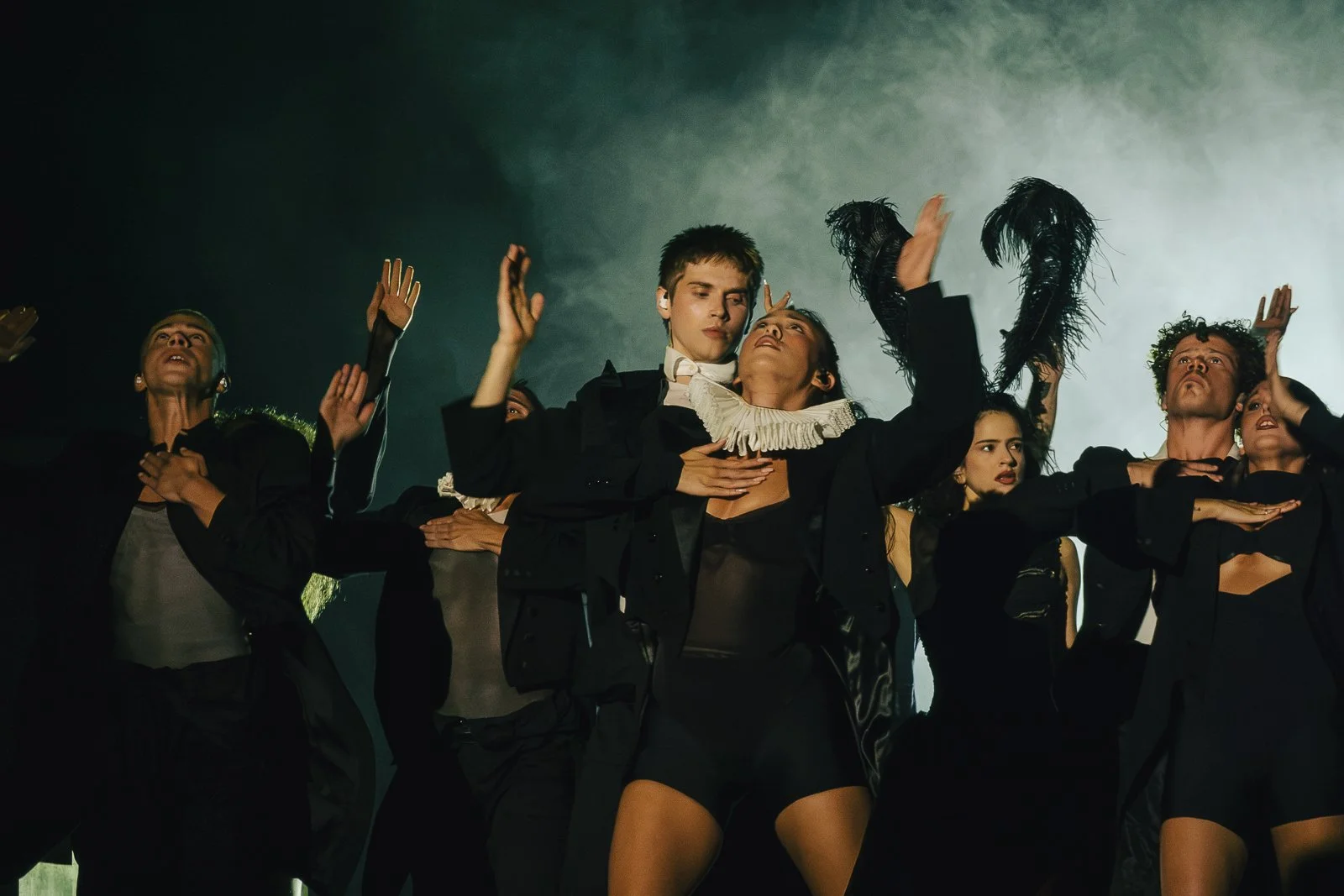
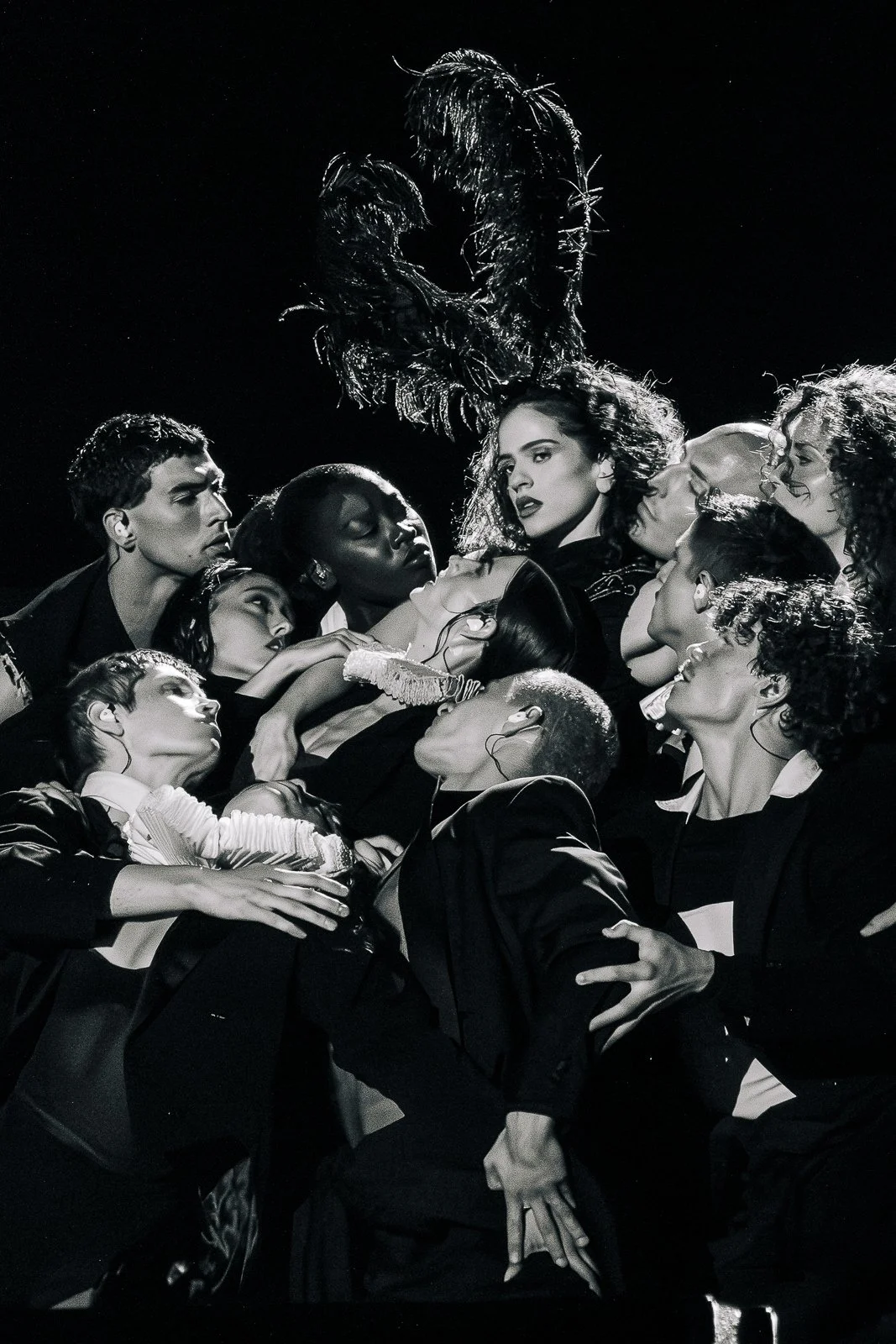
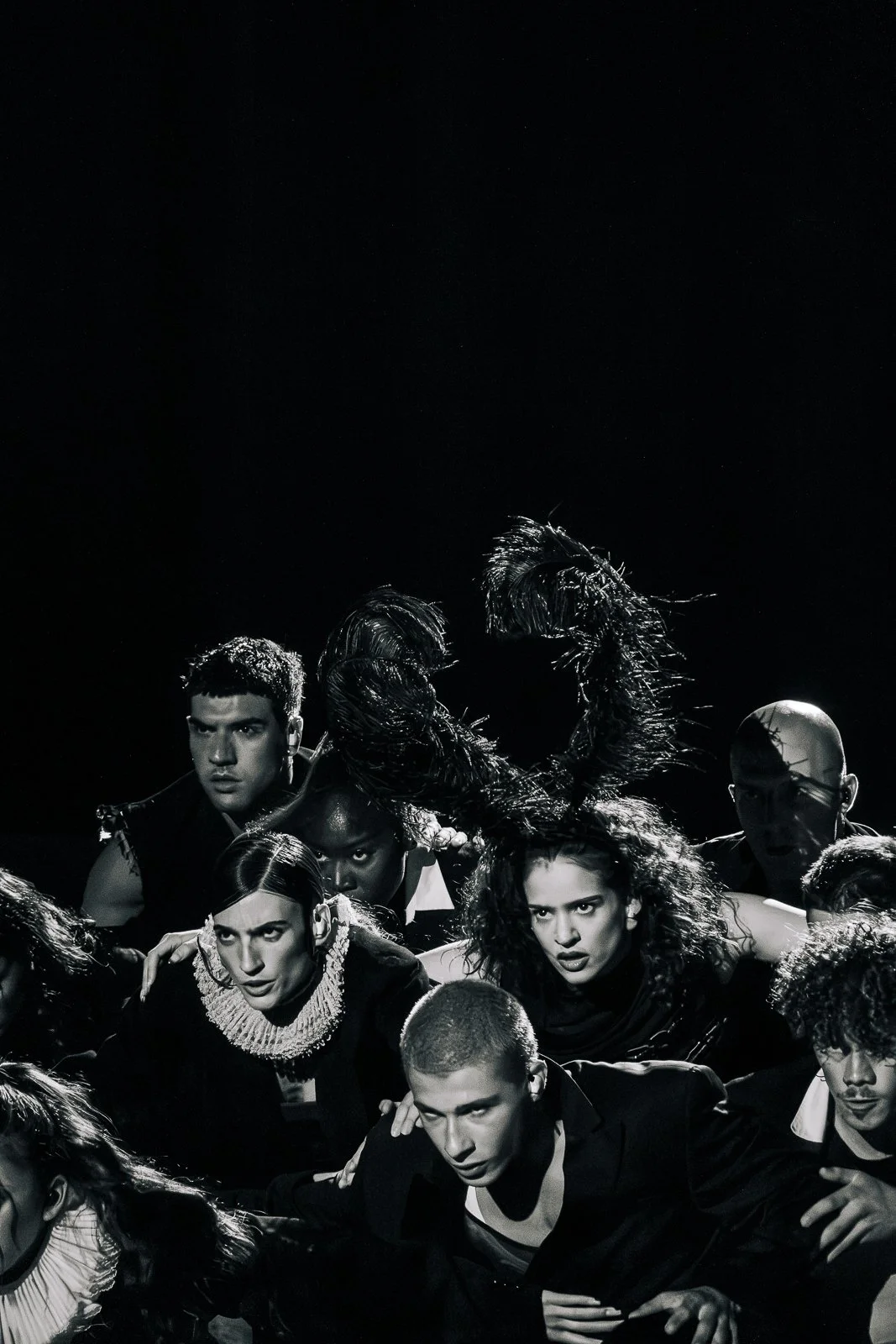
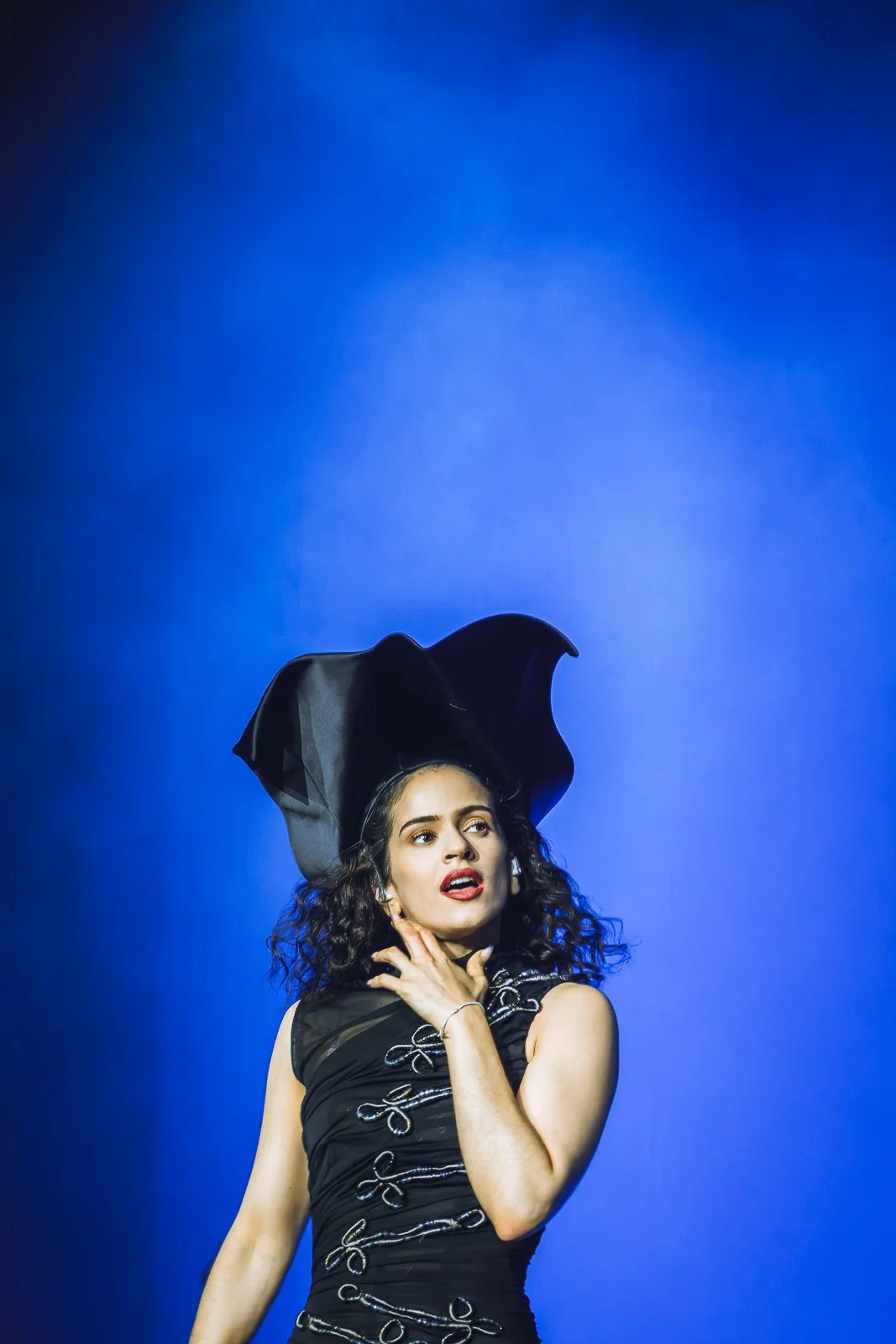
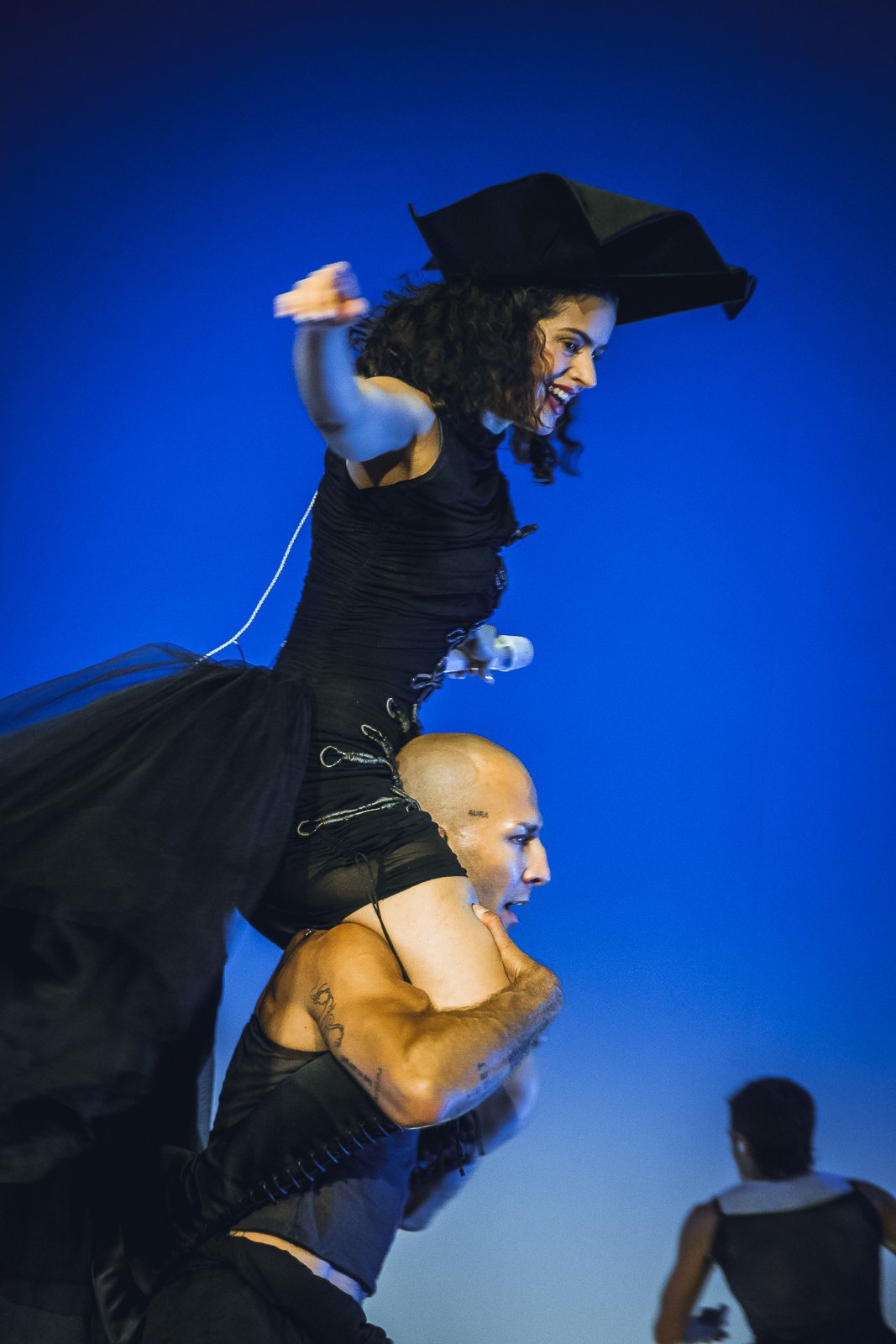
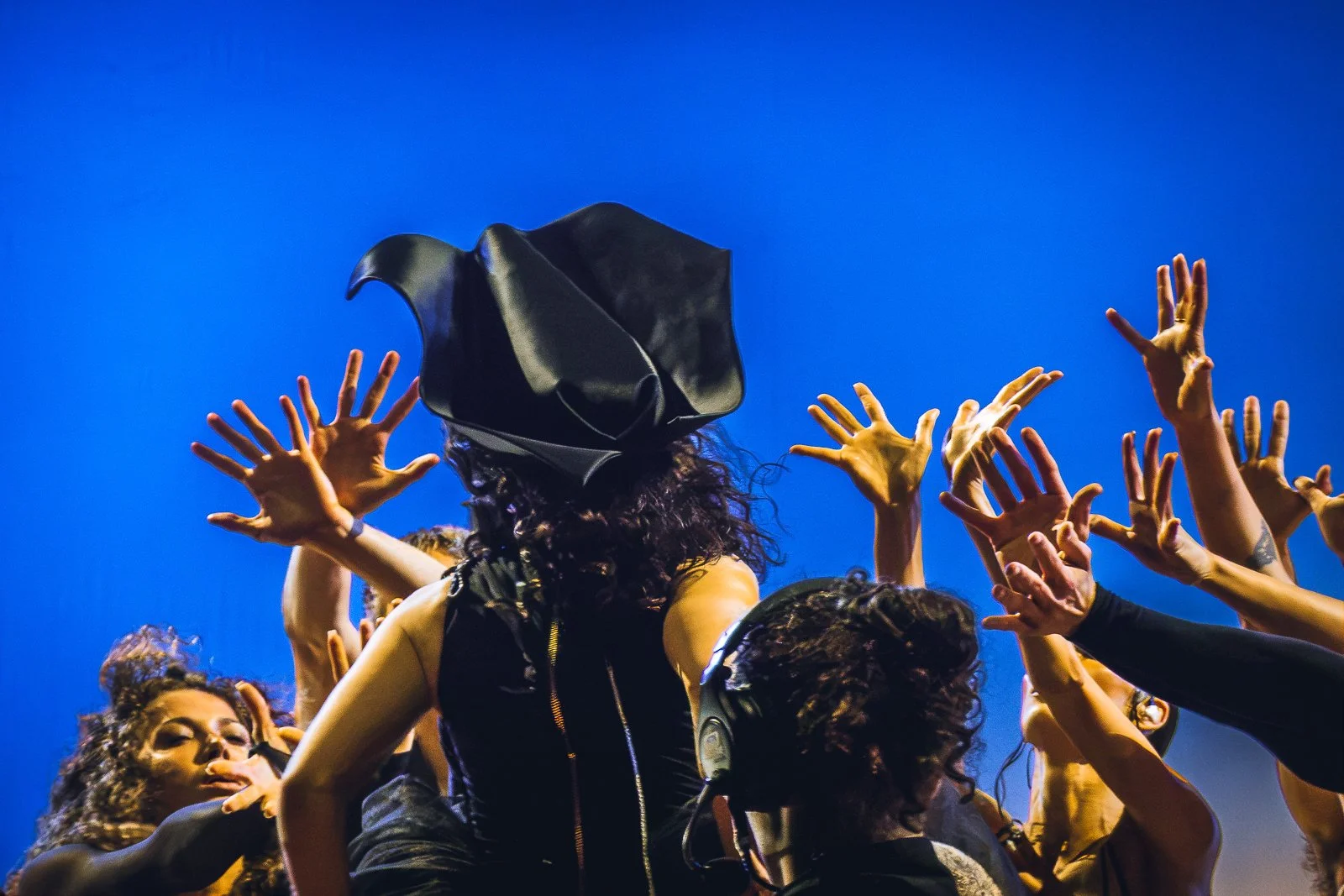
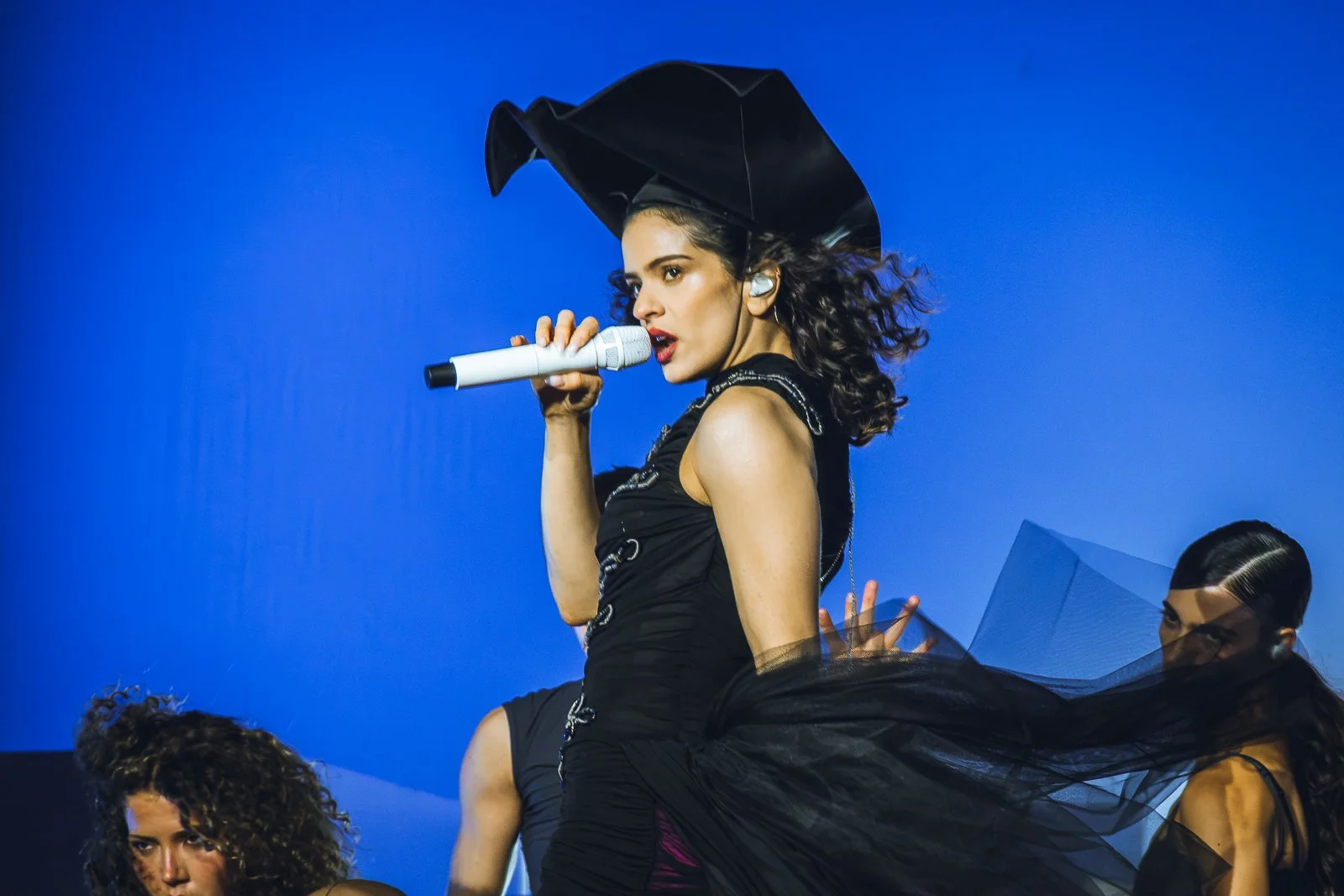
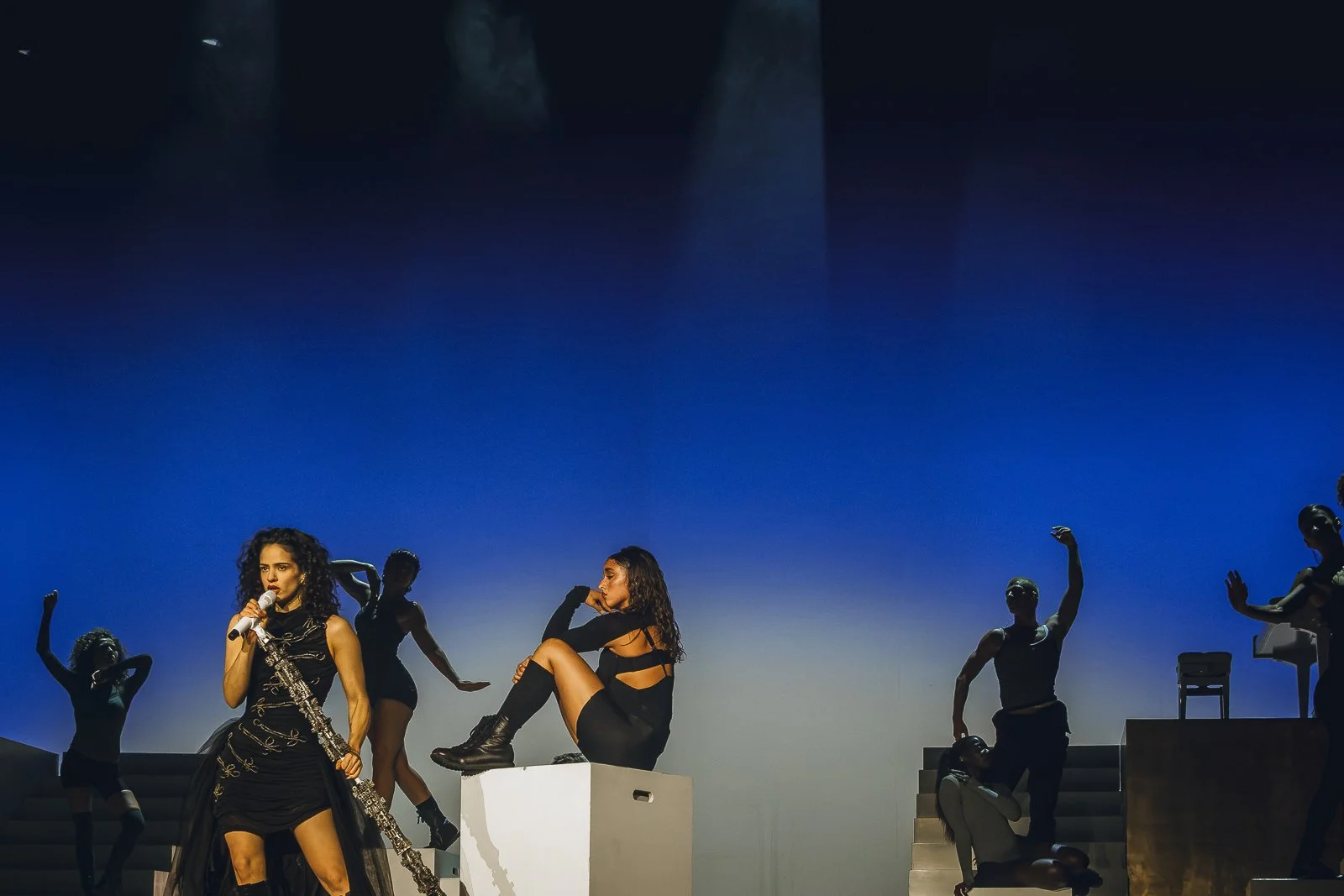
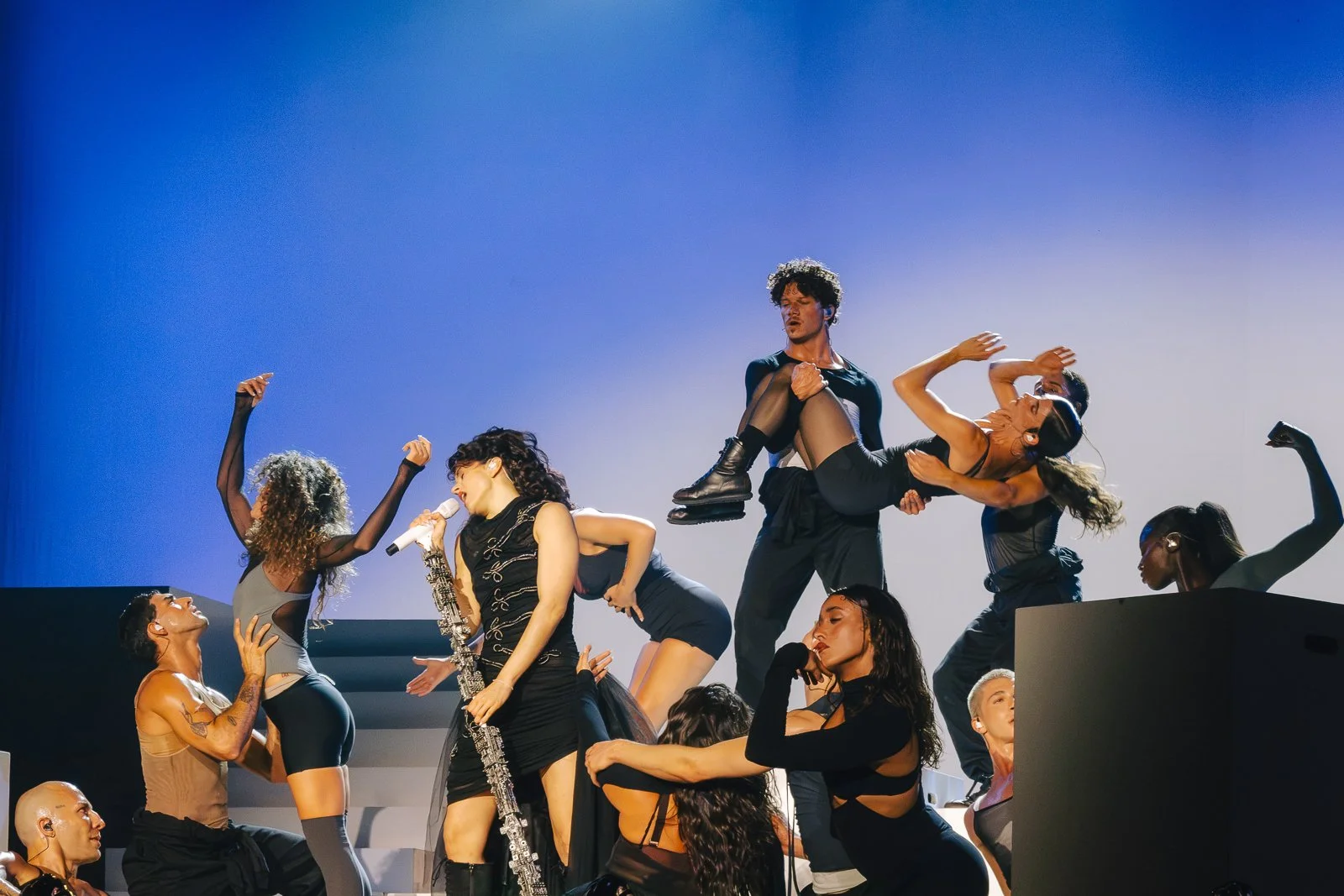
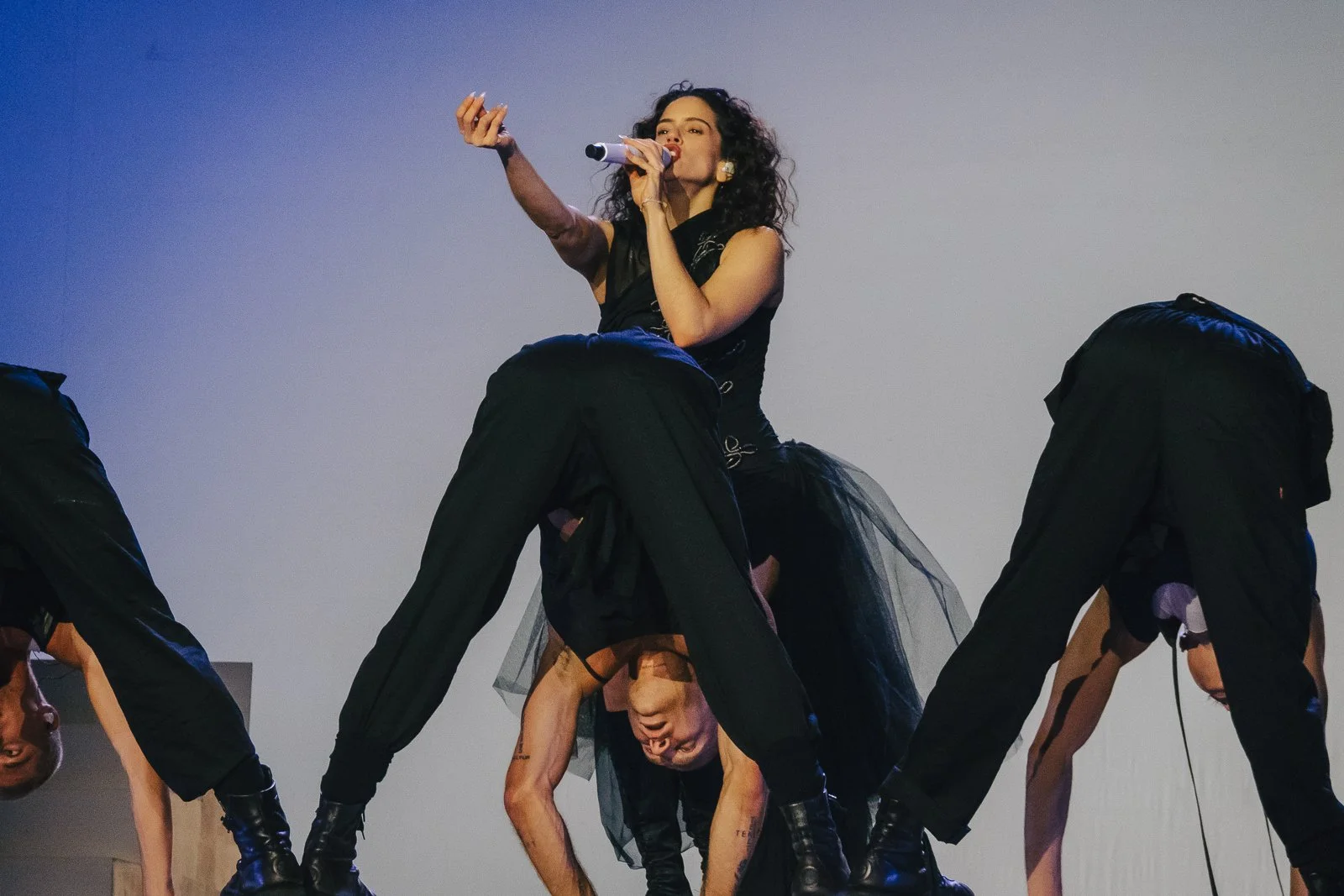
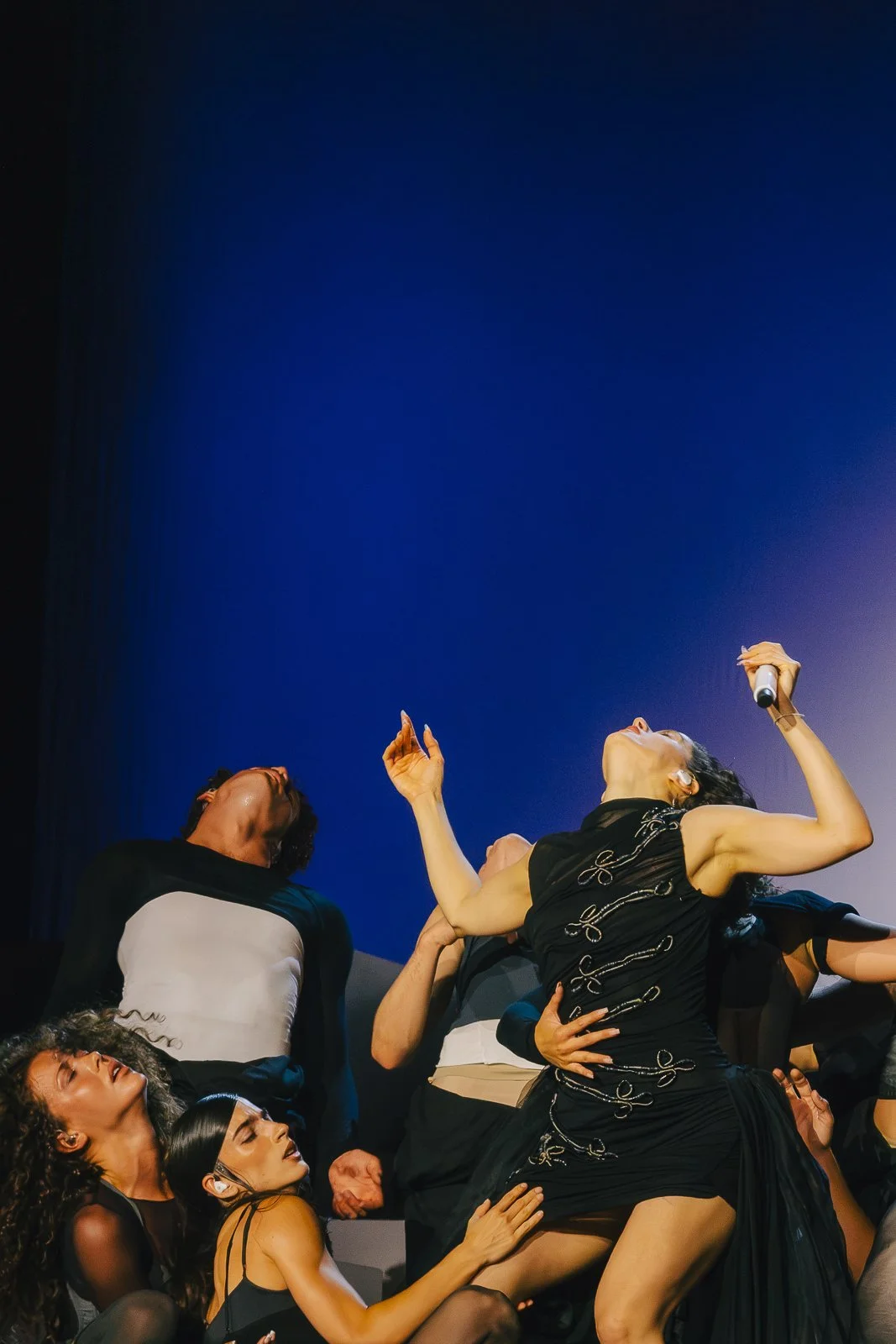
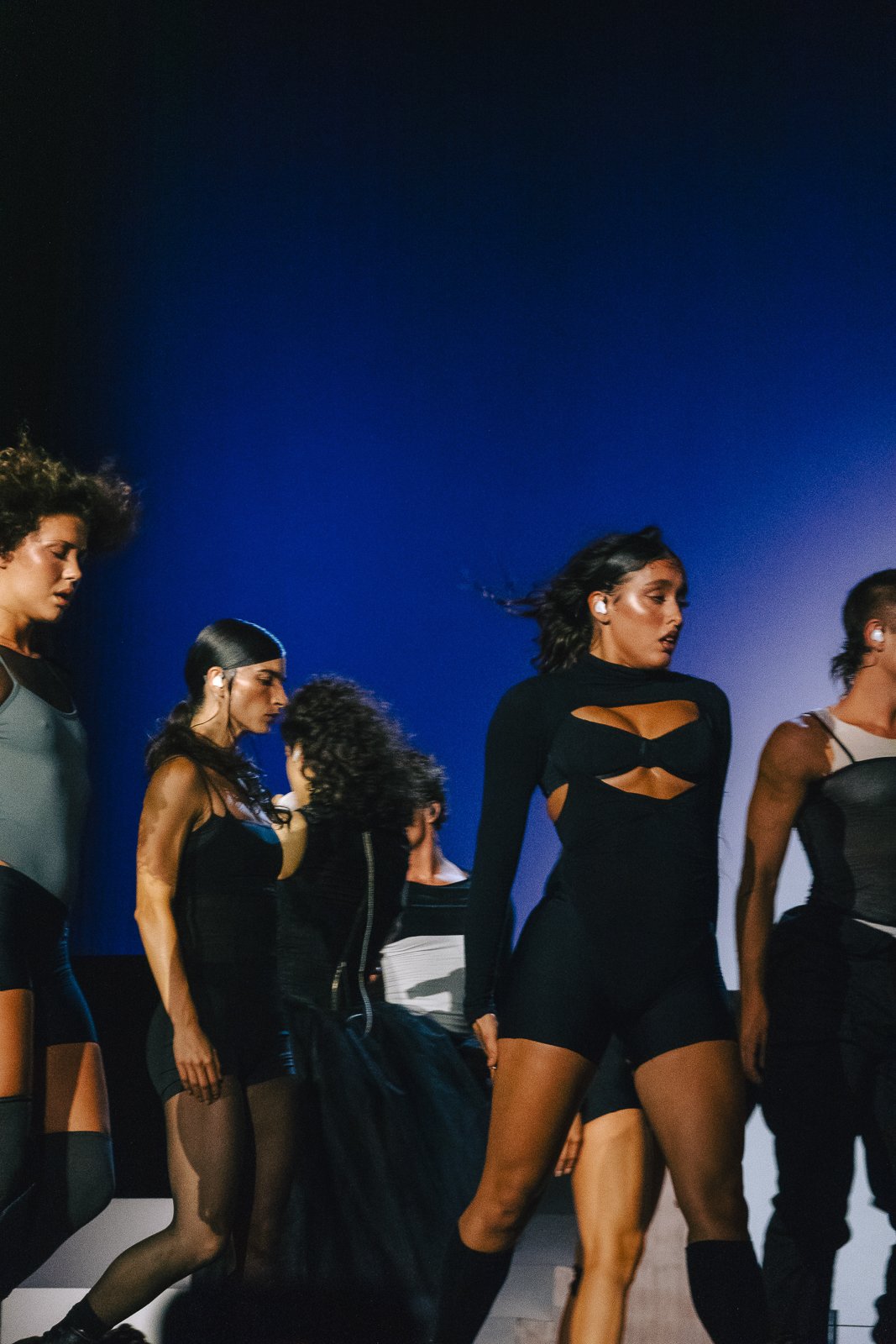
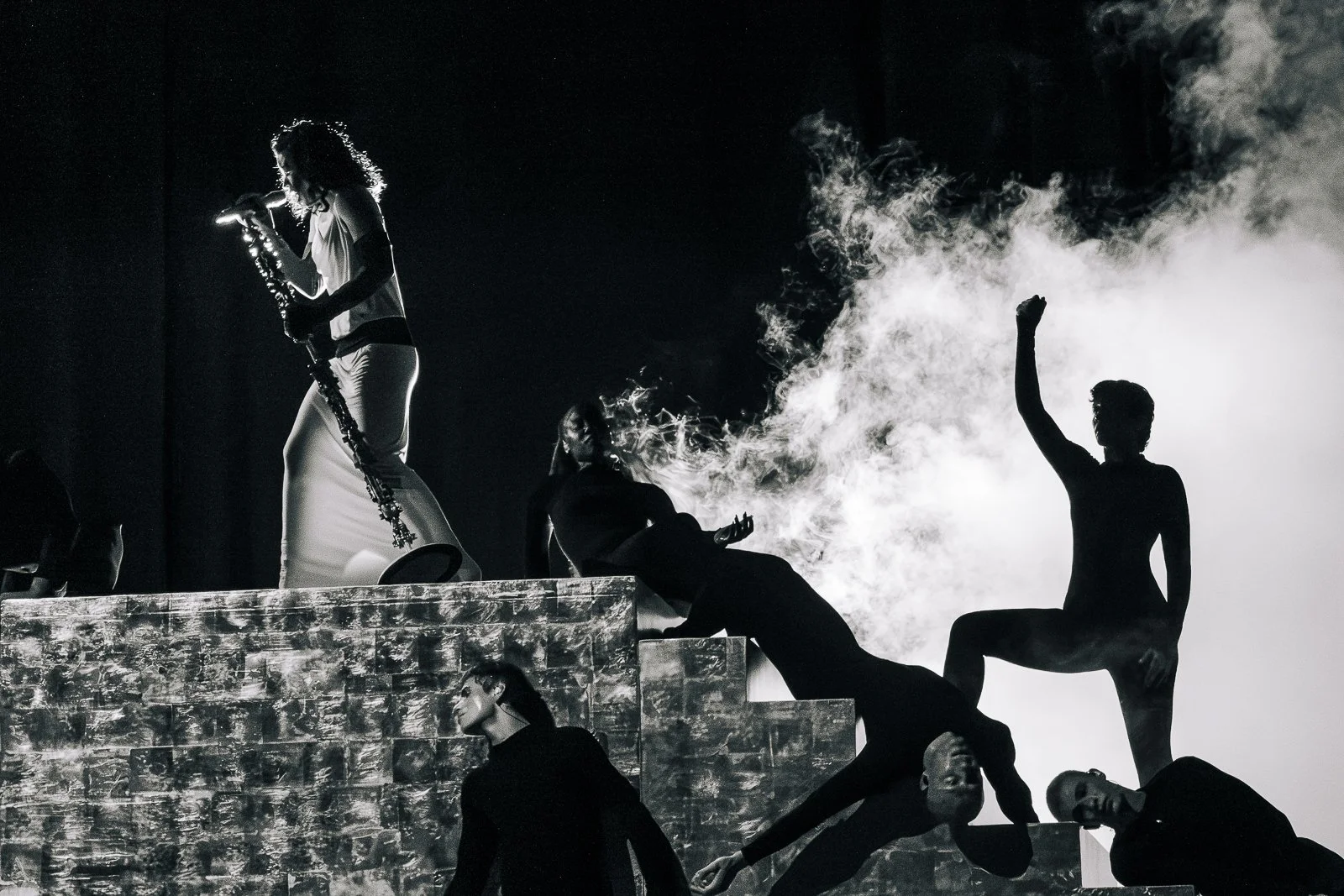
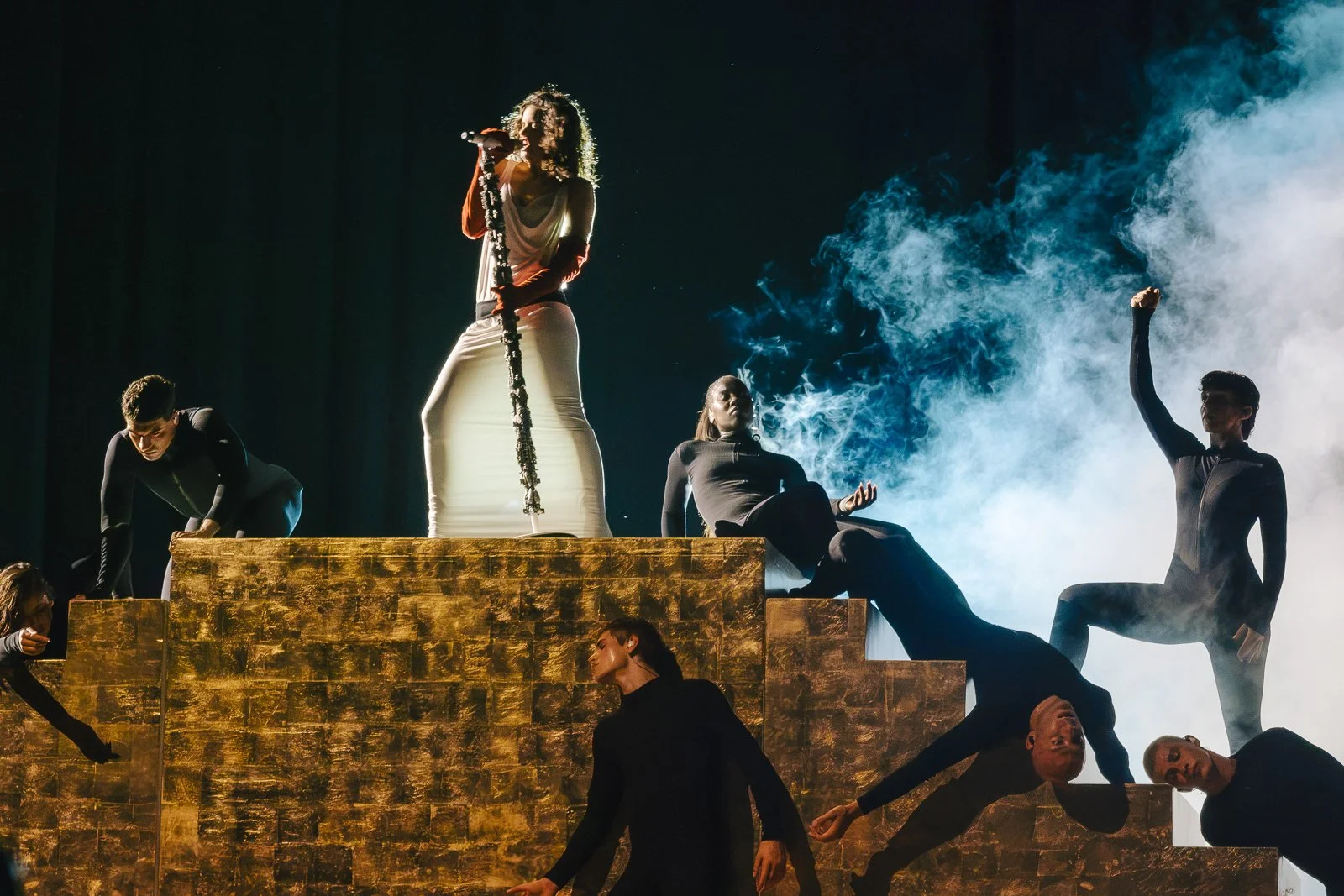
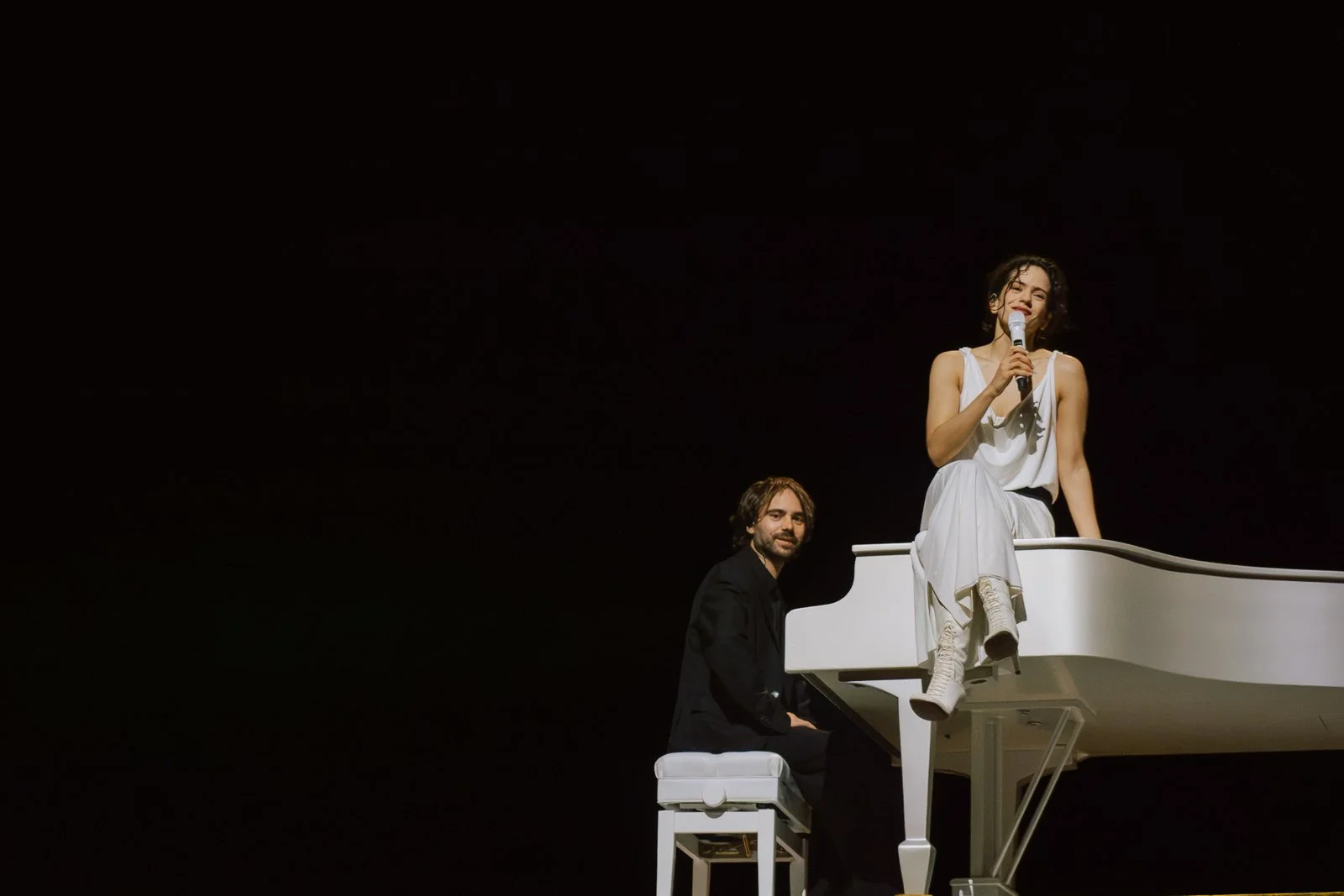
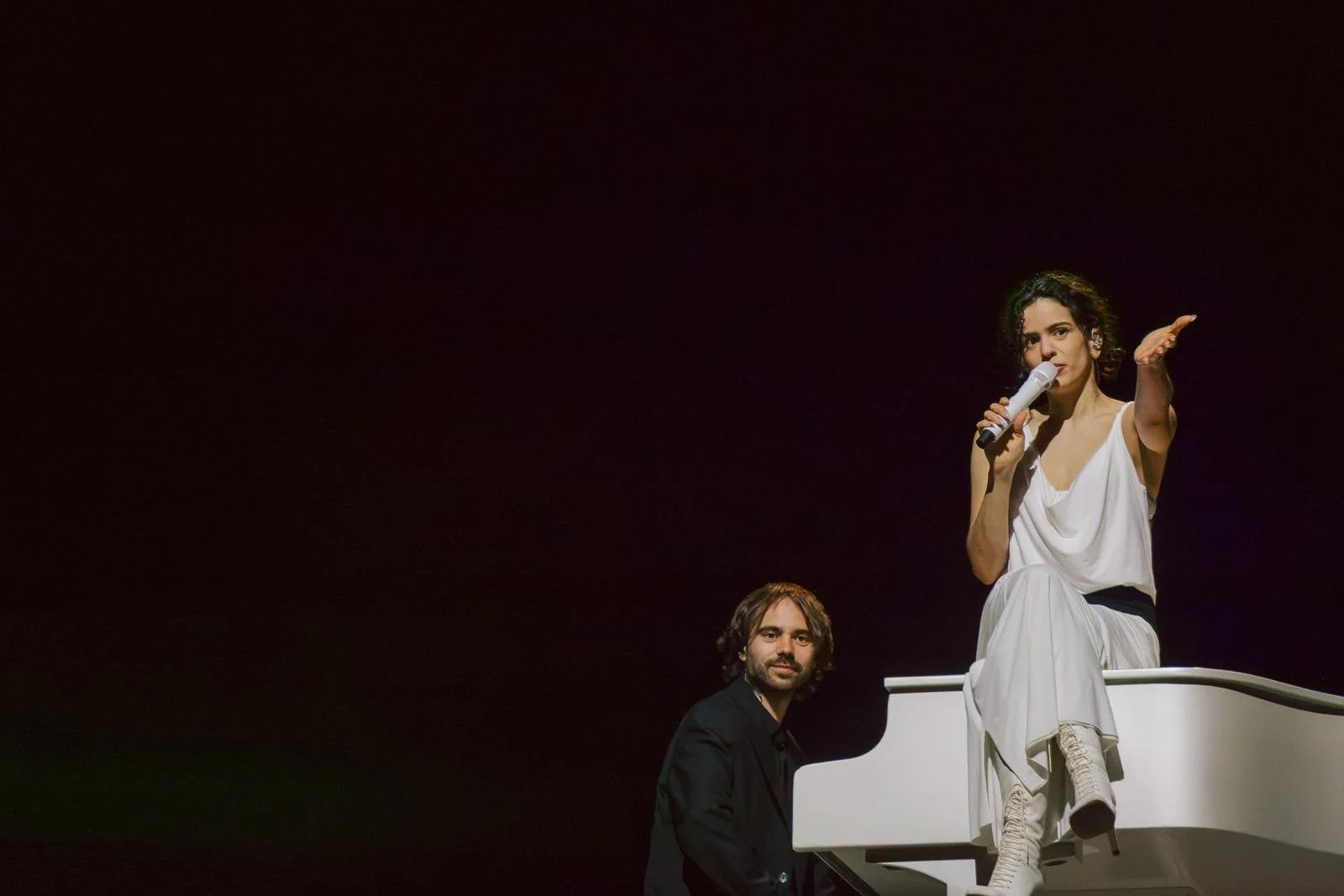
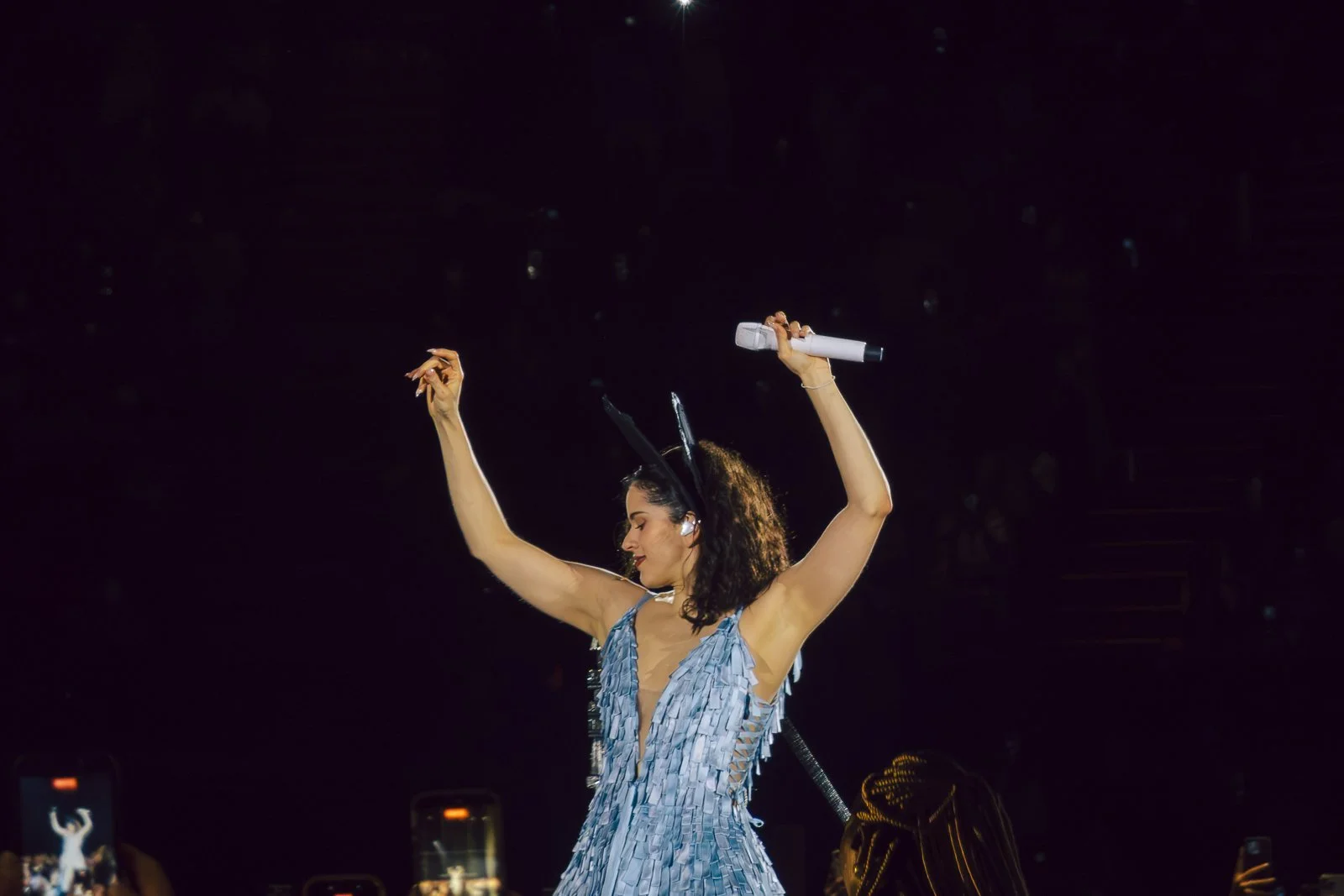
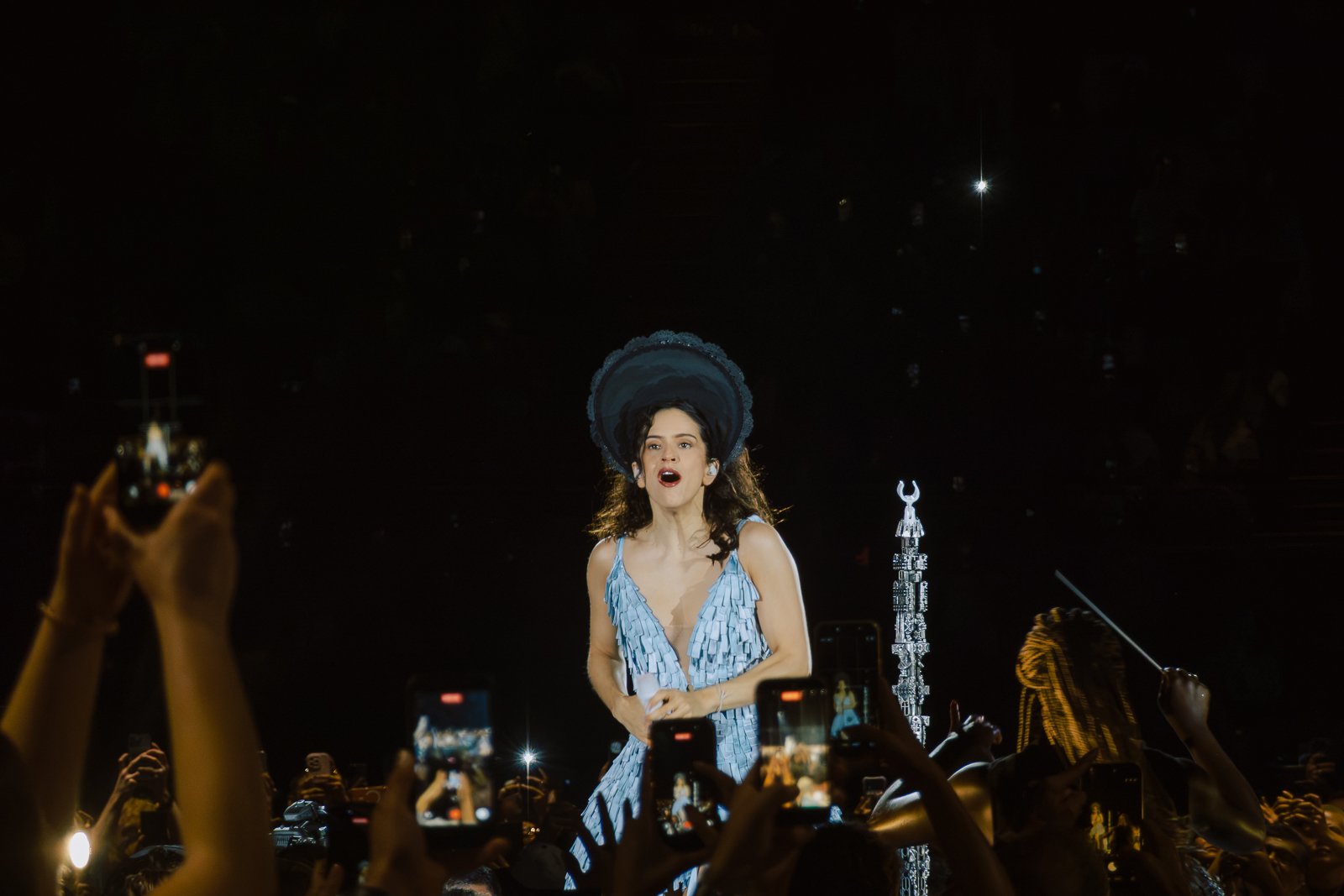
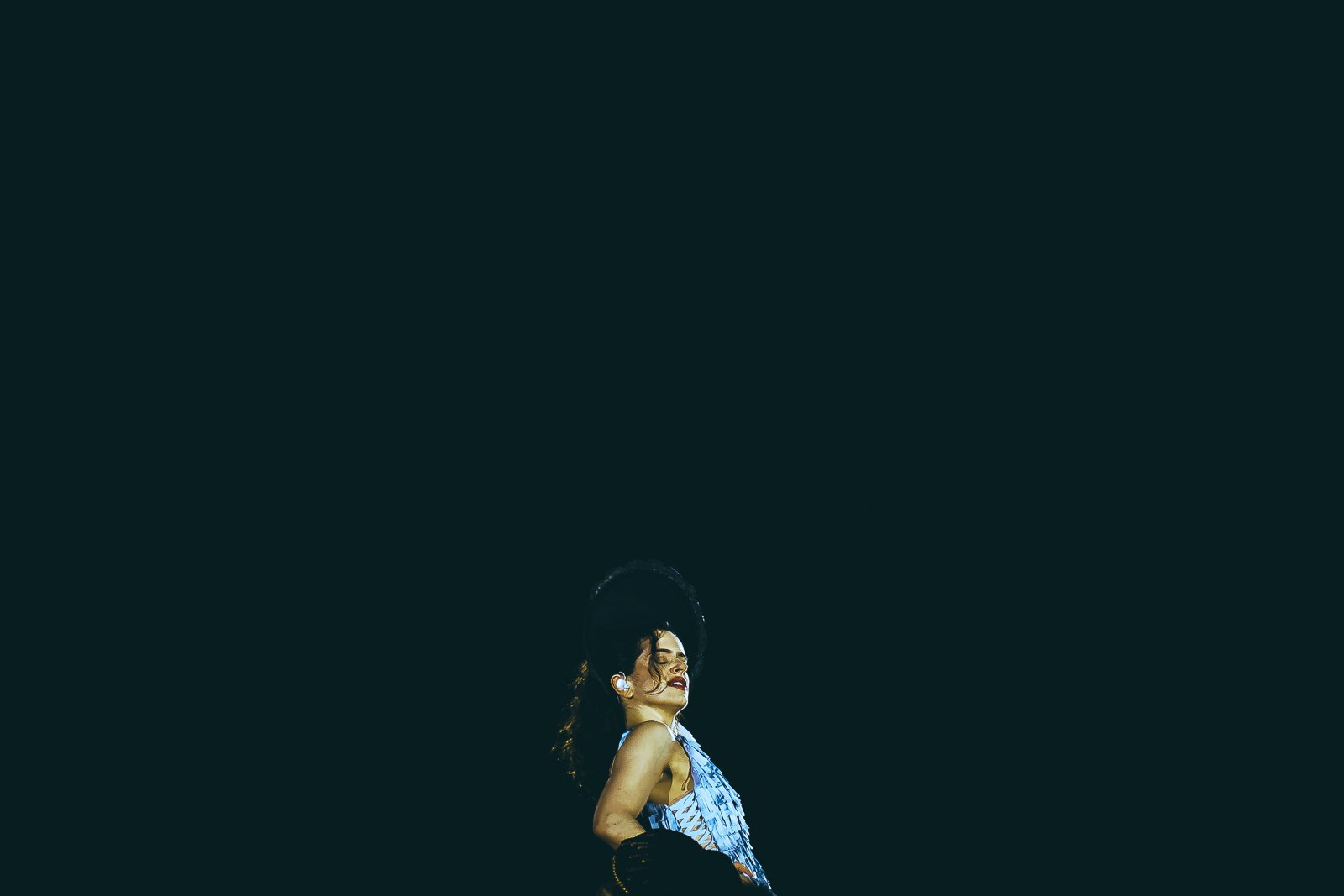
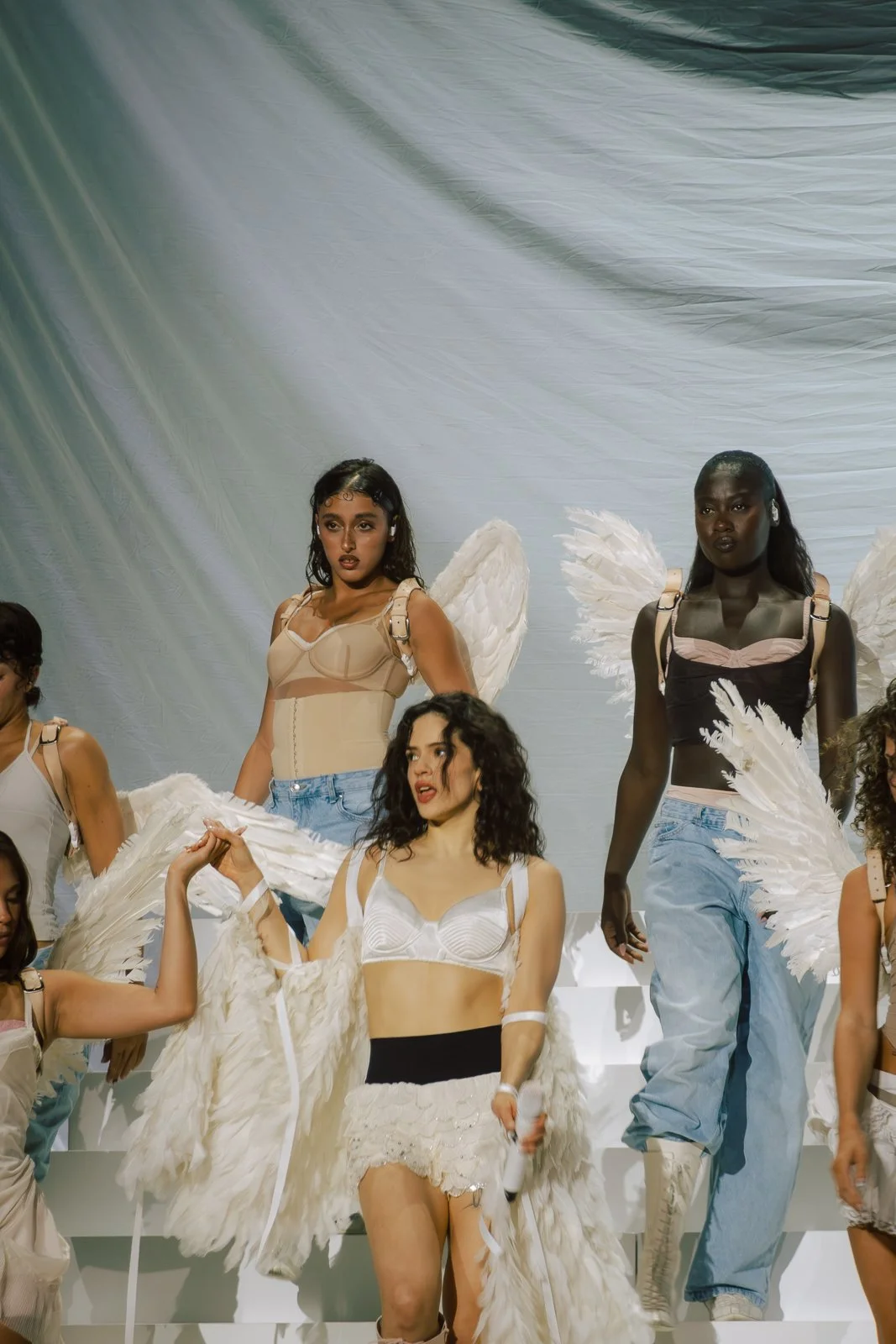
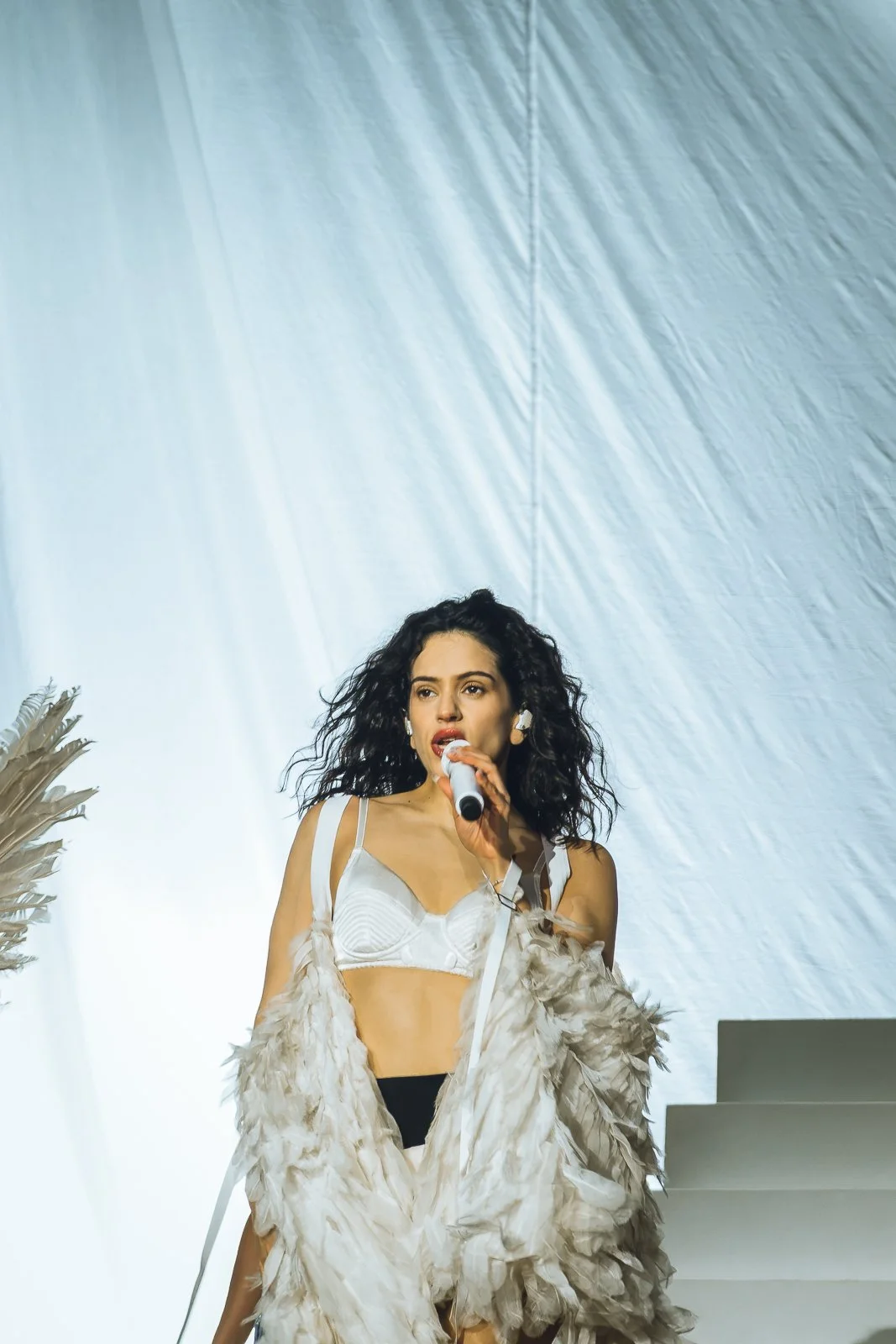
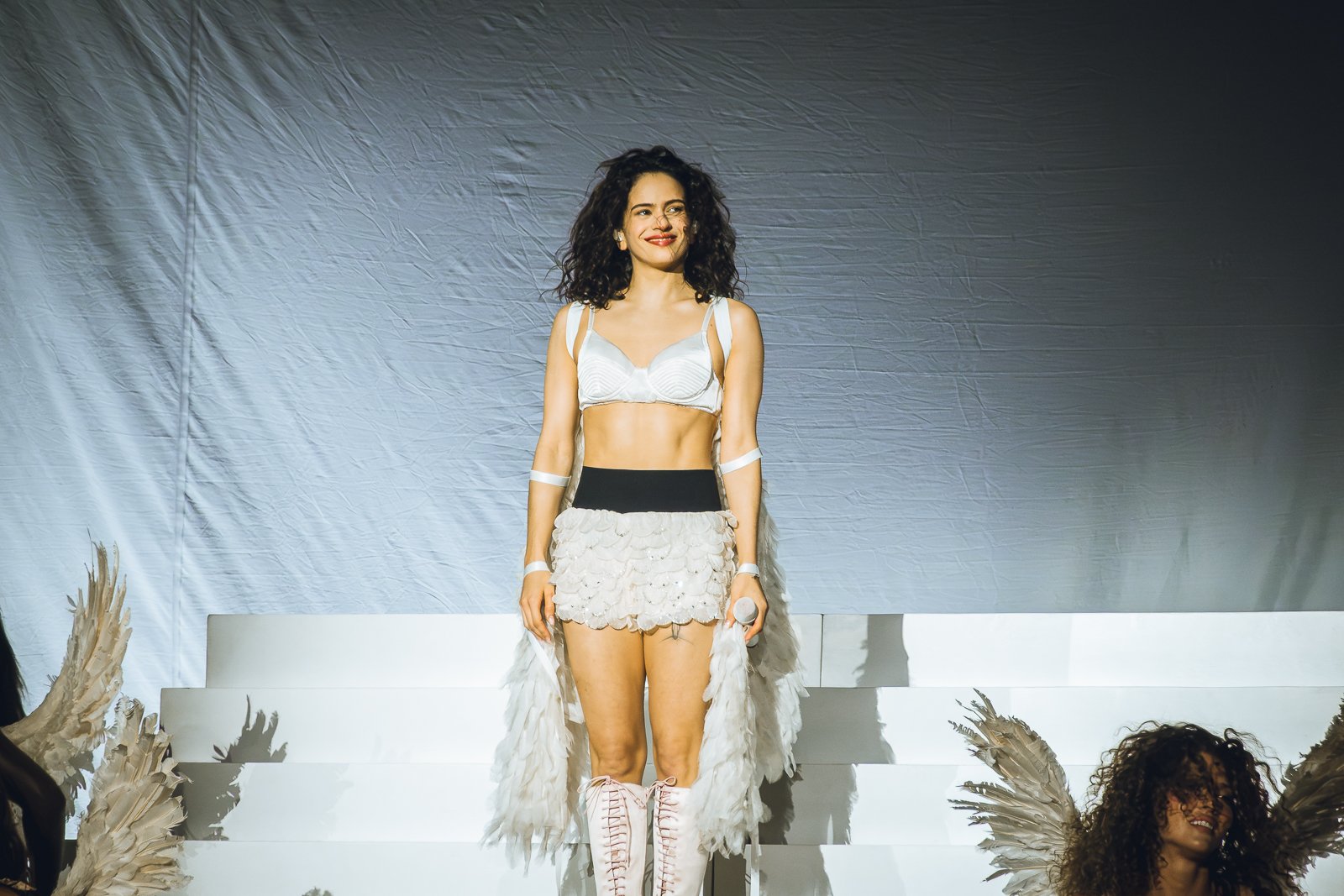
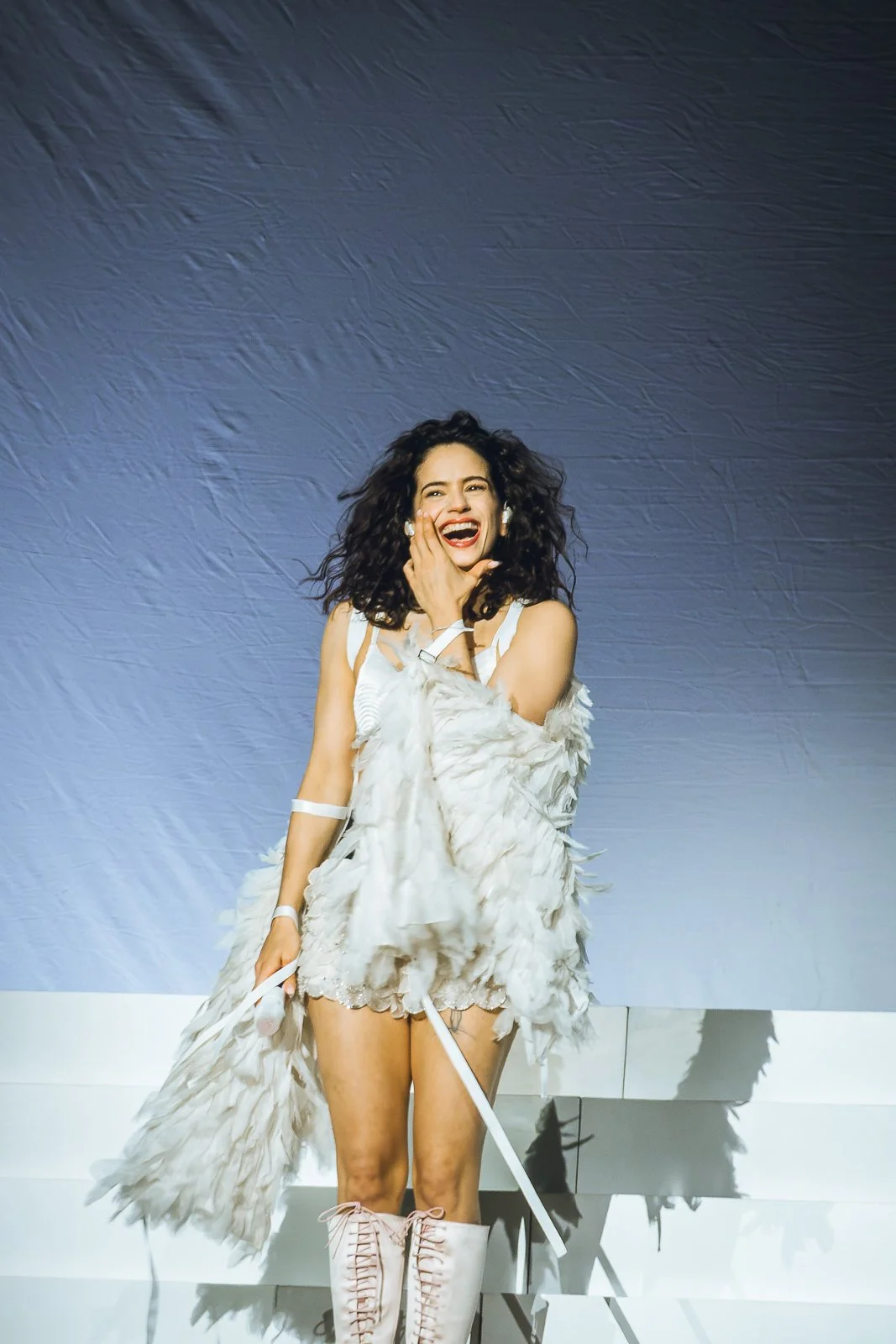
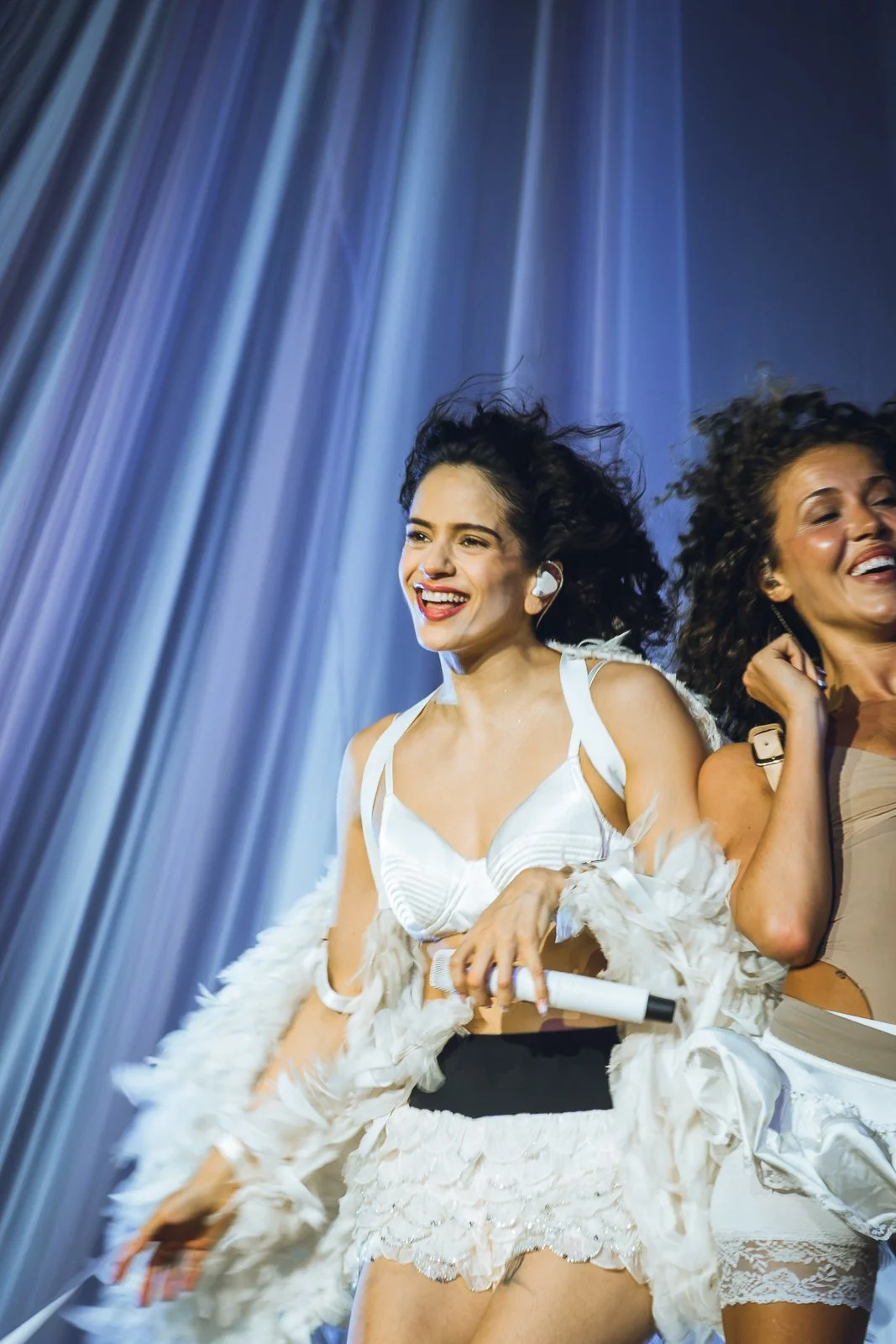
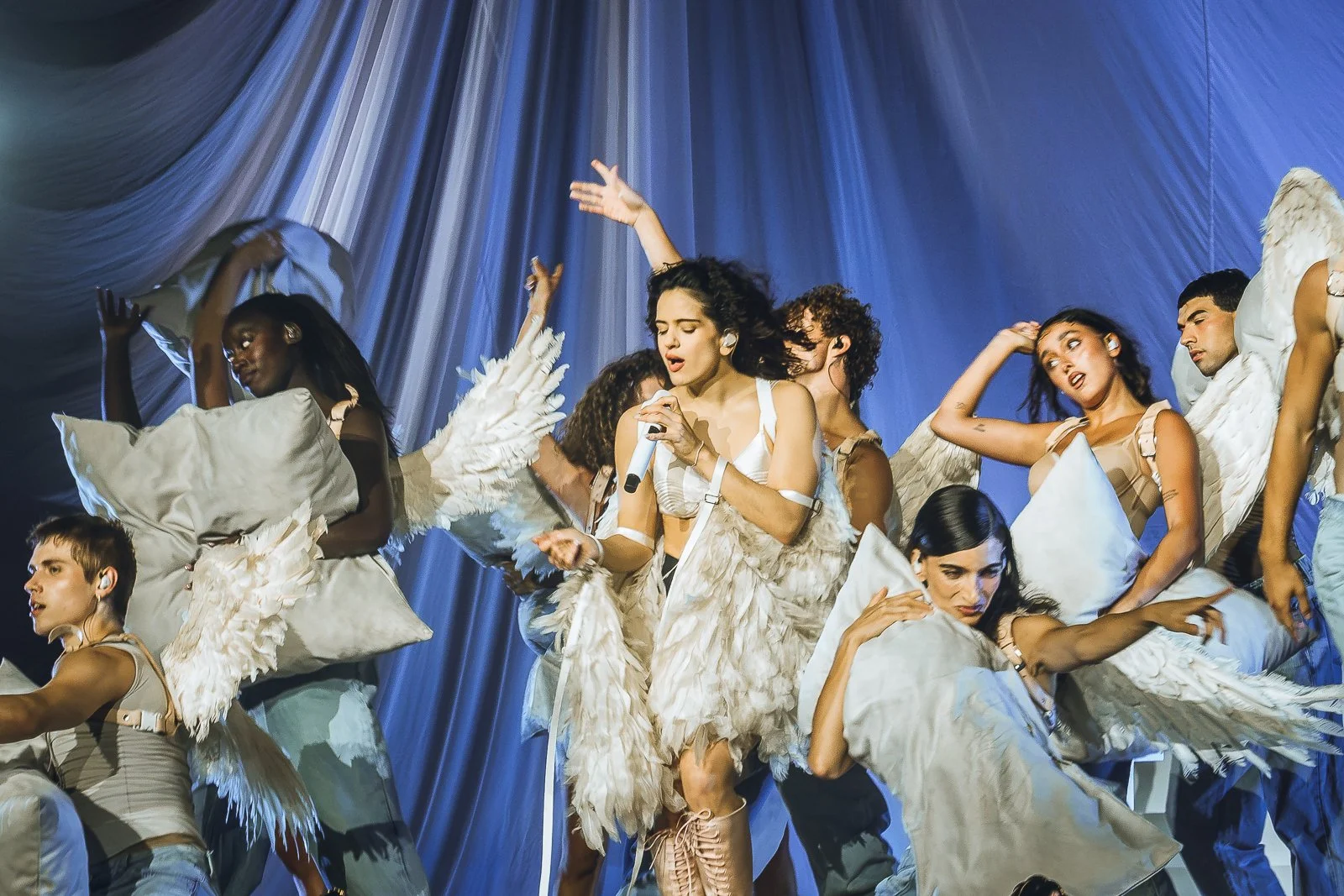
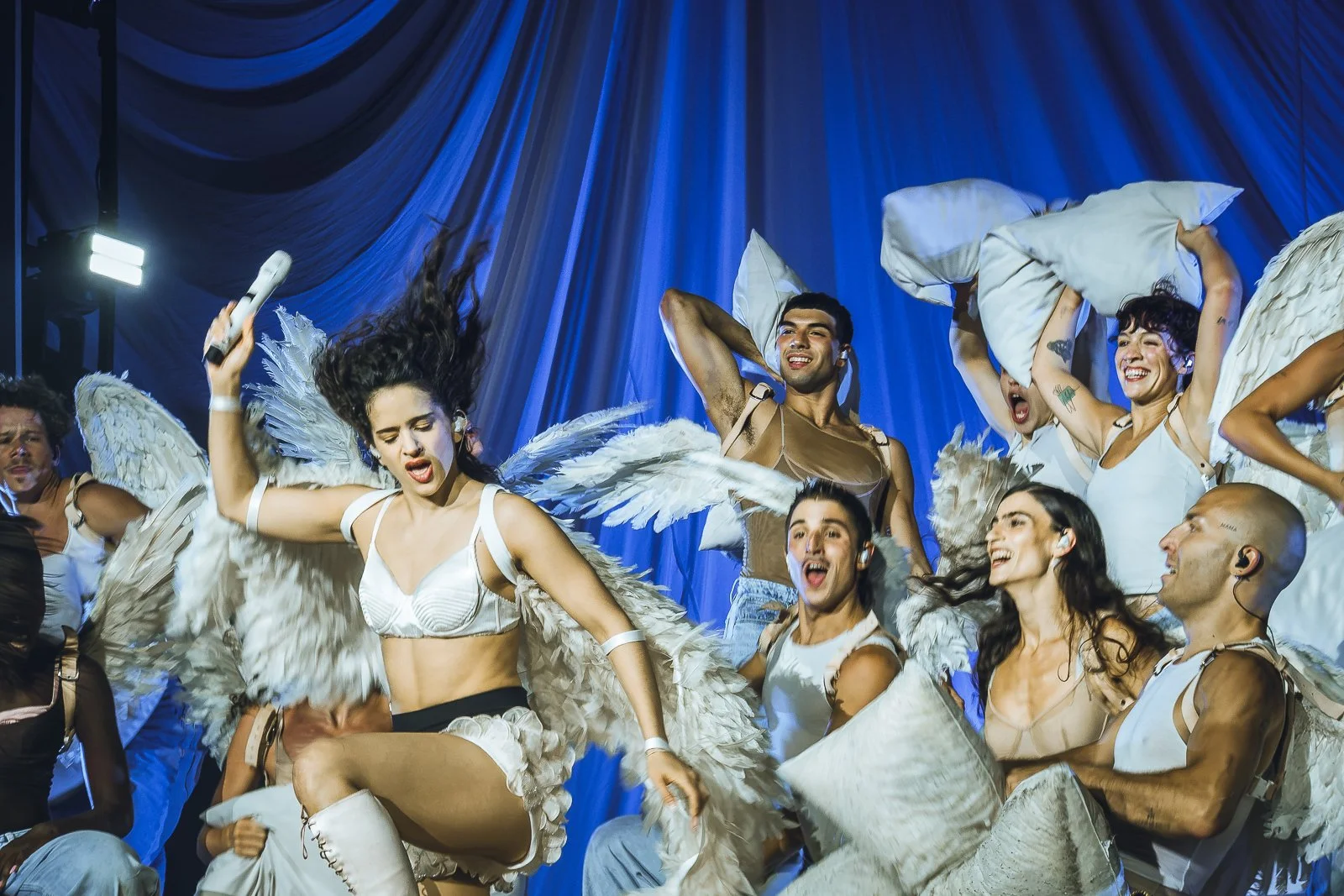
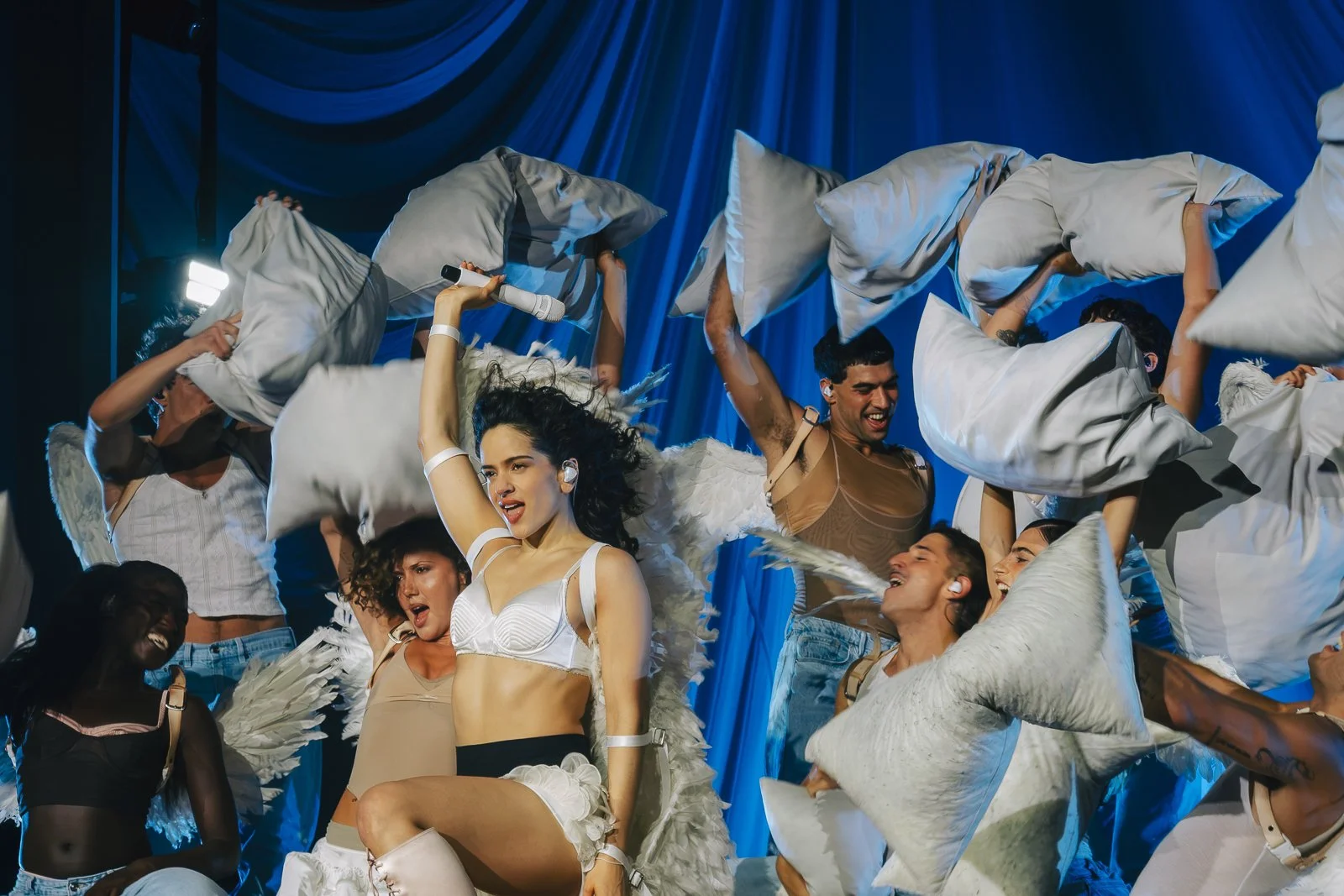
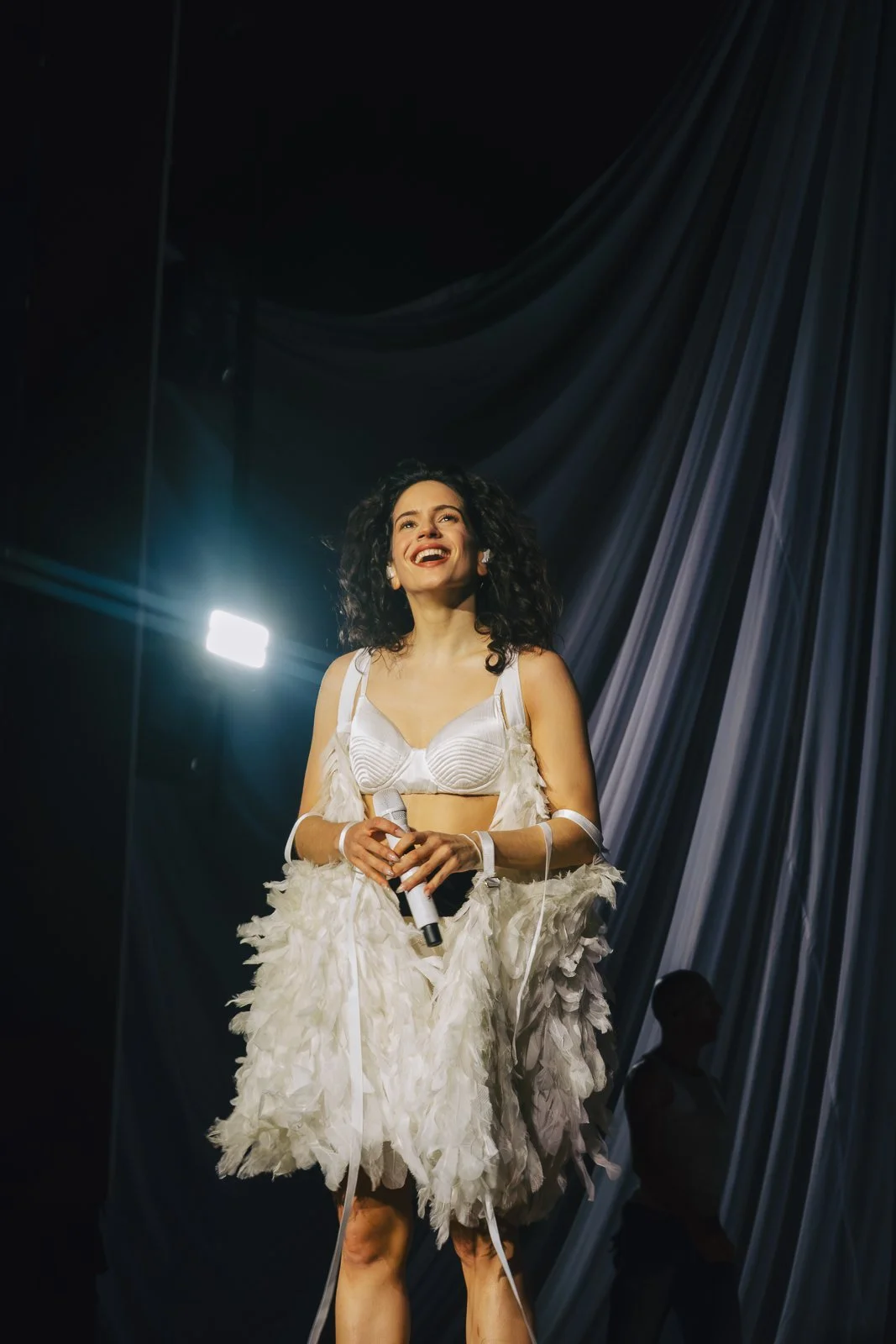
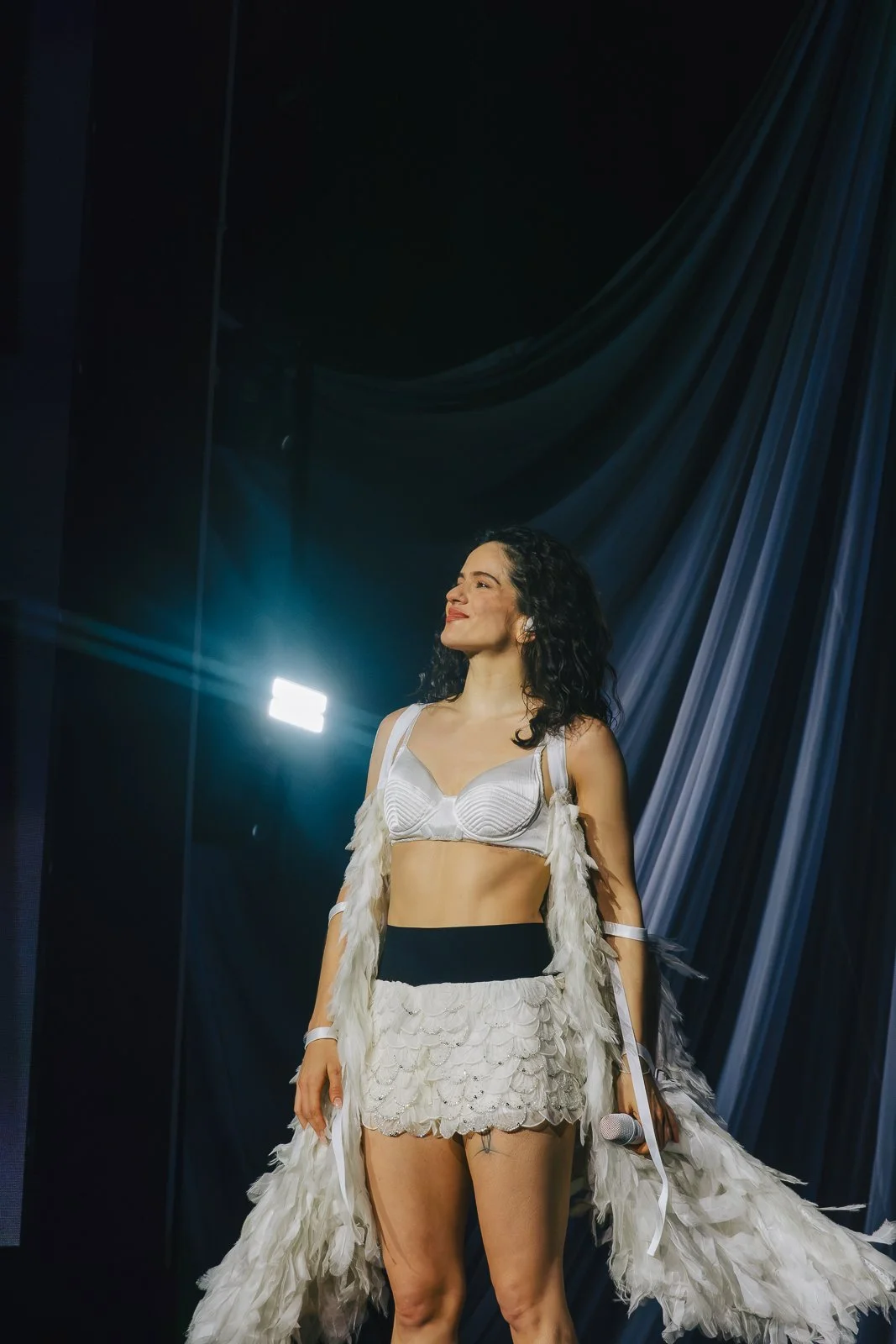
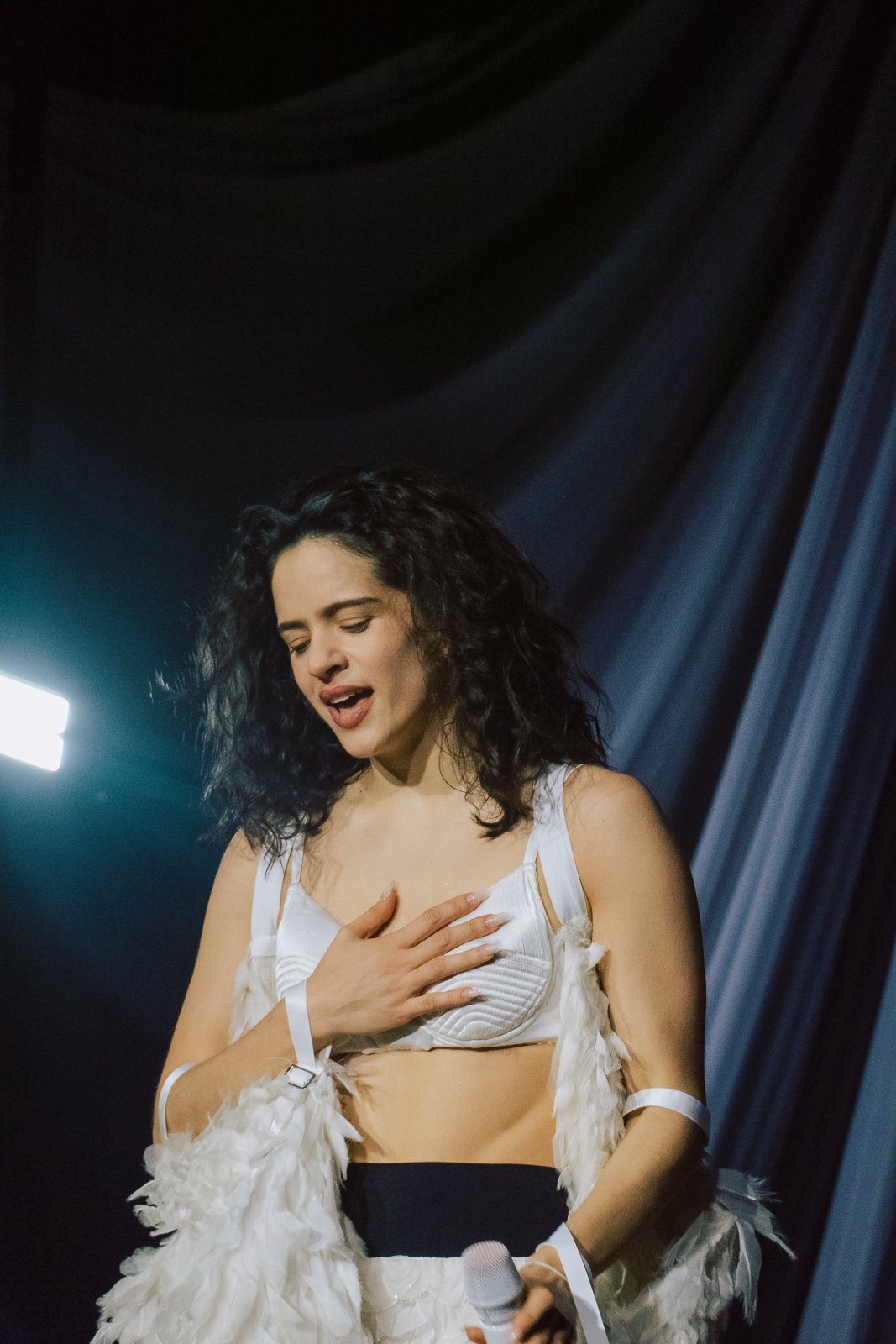
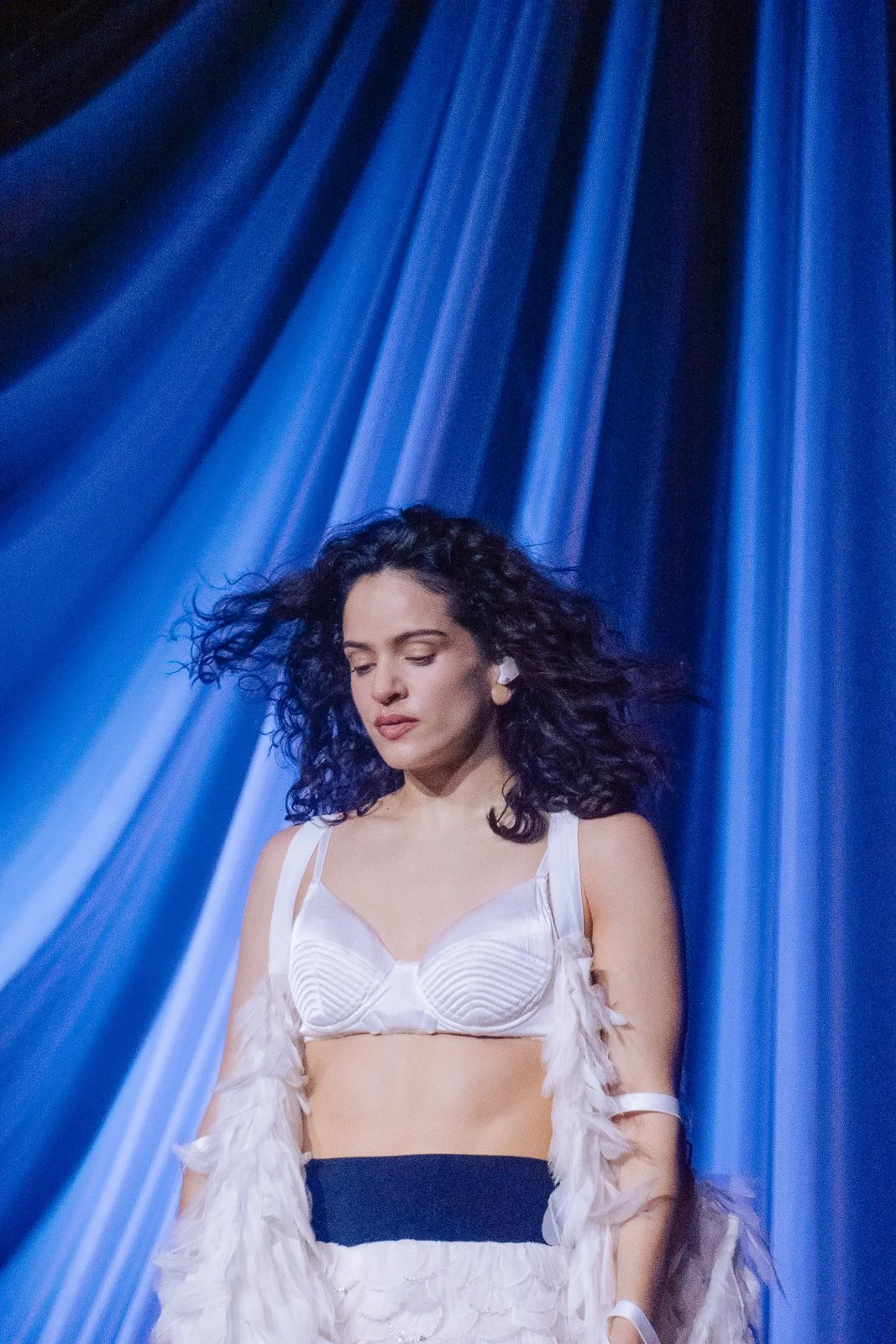
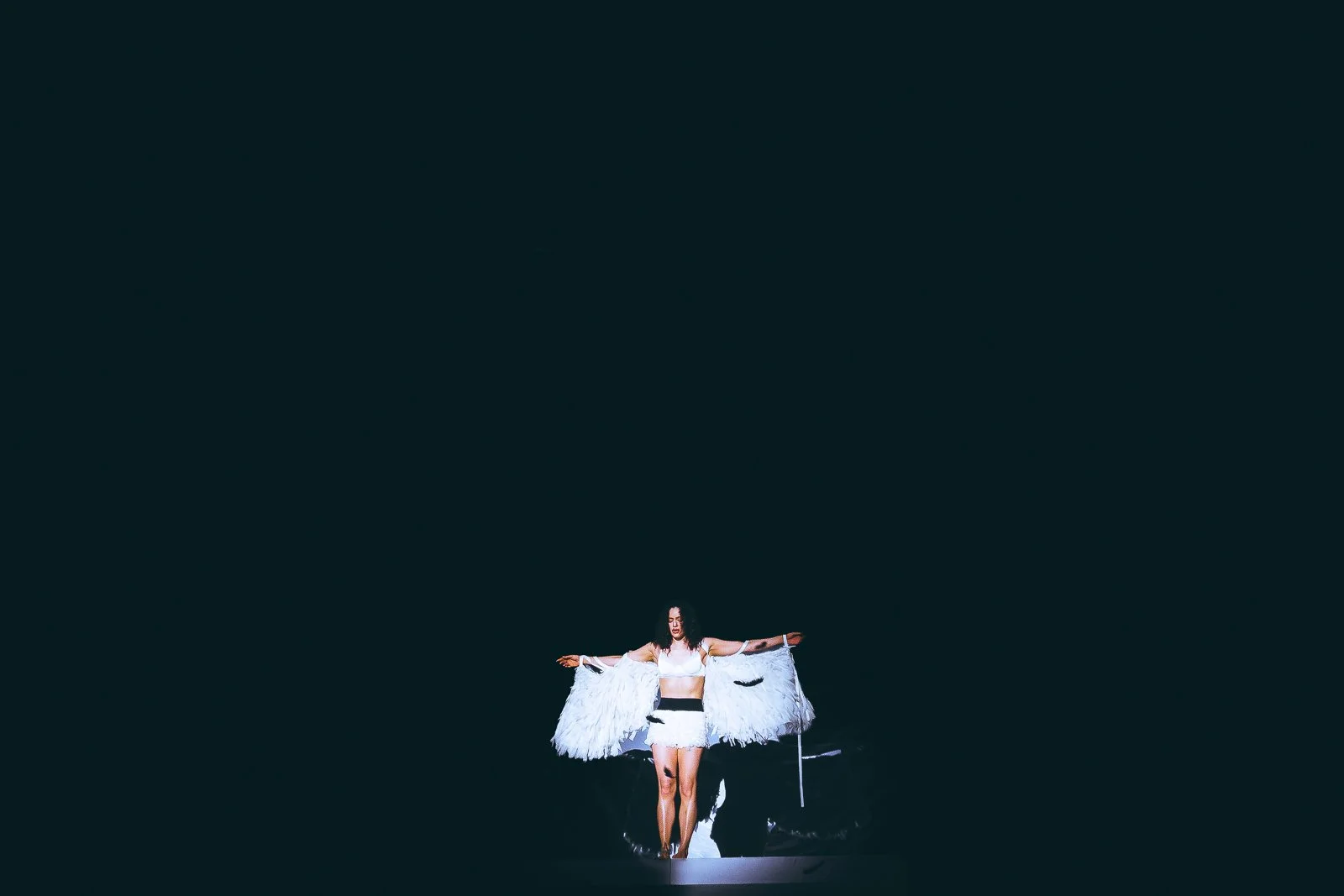
She staged the show to hold all of it at once. Two stages — a main one behind a giant white canvas, and a second built as a Latin cross in the middle of the crowd, housing an orchestra — all of it living under Rosalía's modern-day botafumeiro. It's maximalist to the edge of vertigo. It feels like a museum retrospective curated by someone with too many disciplines, with each song a fresh canvas, and each canvas a different woman. She enters as a ballerina — not costumed as one but up on pointe, balanced on her toes beneath a swollen amber moon. At one point, she’s swallowed whole by a billowing tide of translucent fabric until she's just a ghost of herself. That body gives way to the opera singer, who dedicates "Mio Cristo Piange Diamanti" to her vocal coach and delivers an Italian votive that blankets the Forum in a hush. Then the climactic descent — "Berghain," where she reappears horned and monstrous under blue light, a living Goya Aquelarre, while her dancers collared in Renaissance ruffs reach for her in one writhing mass.
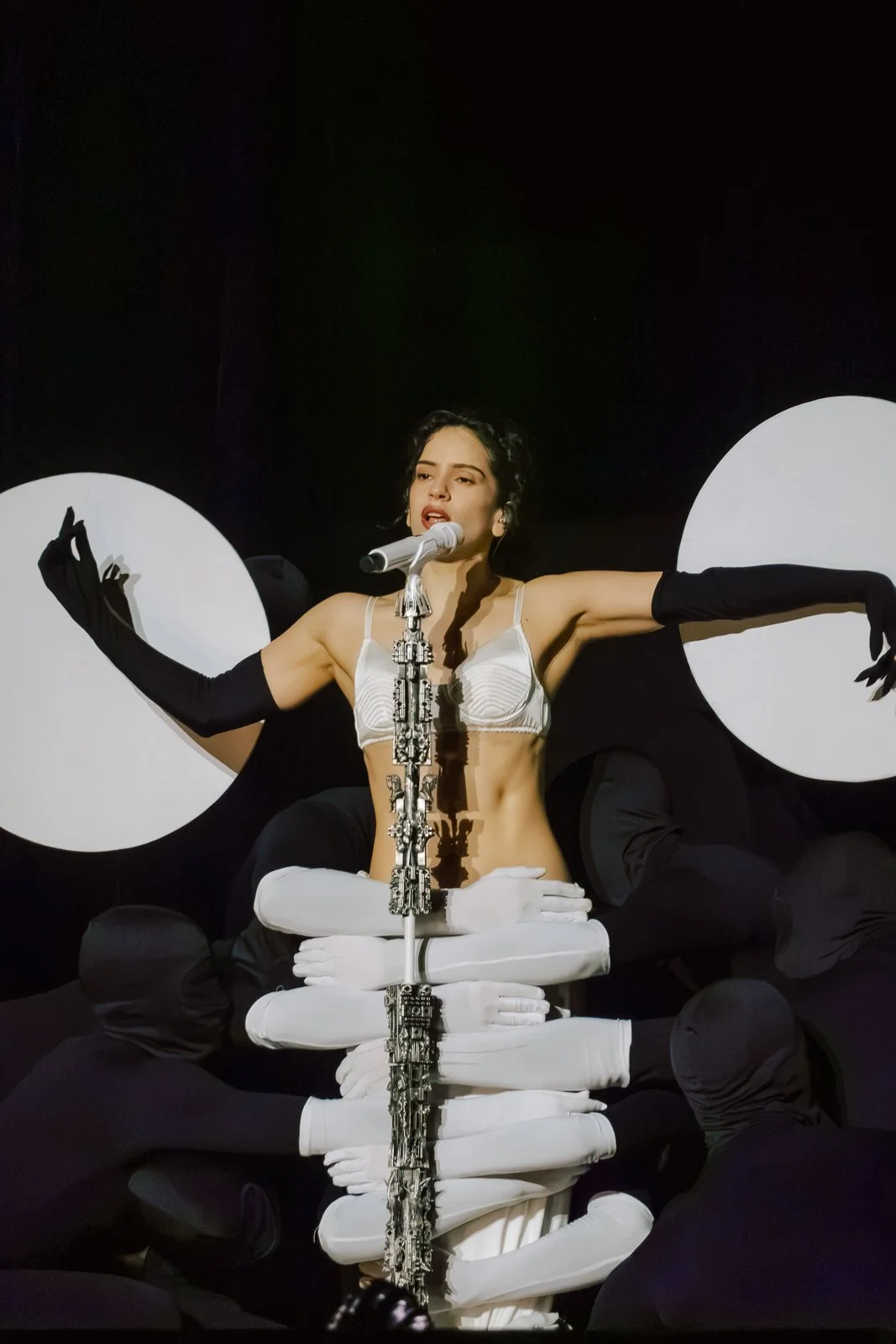
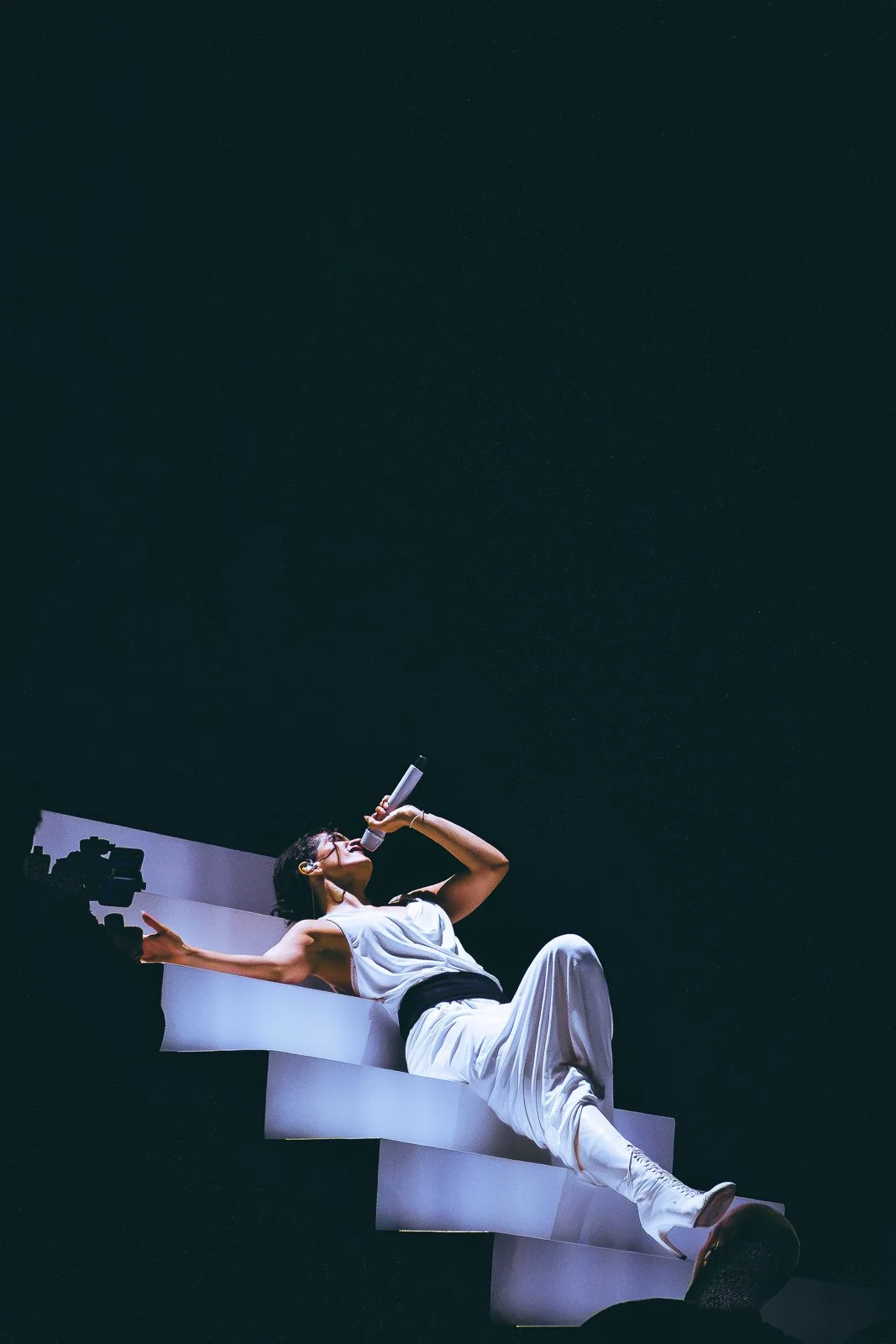
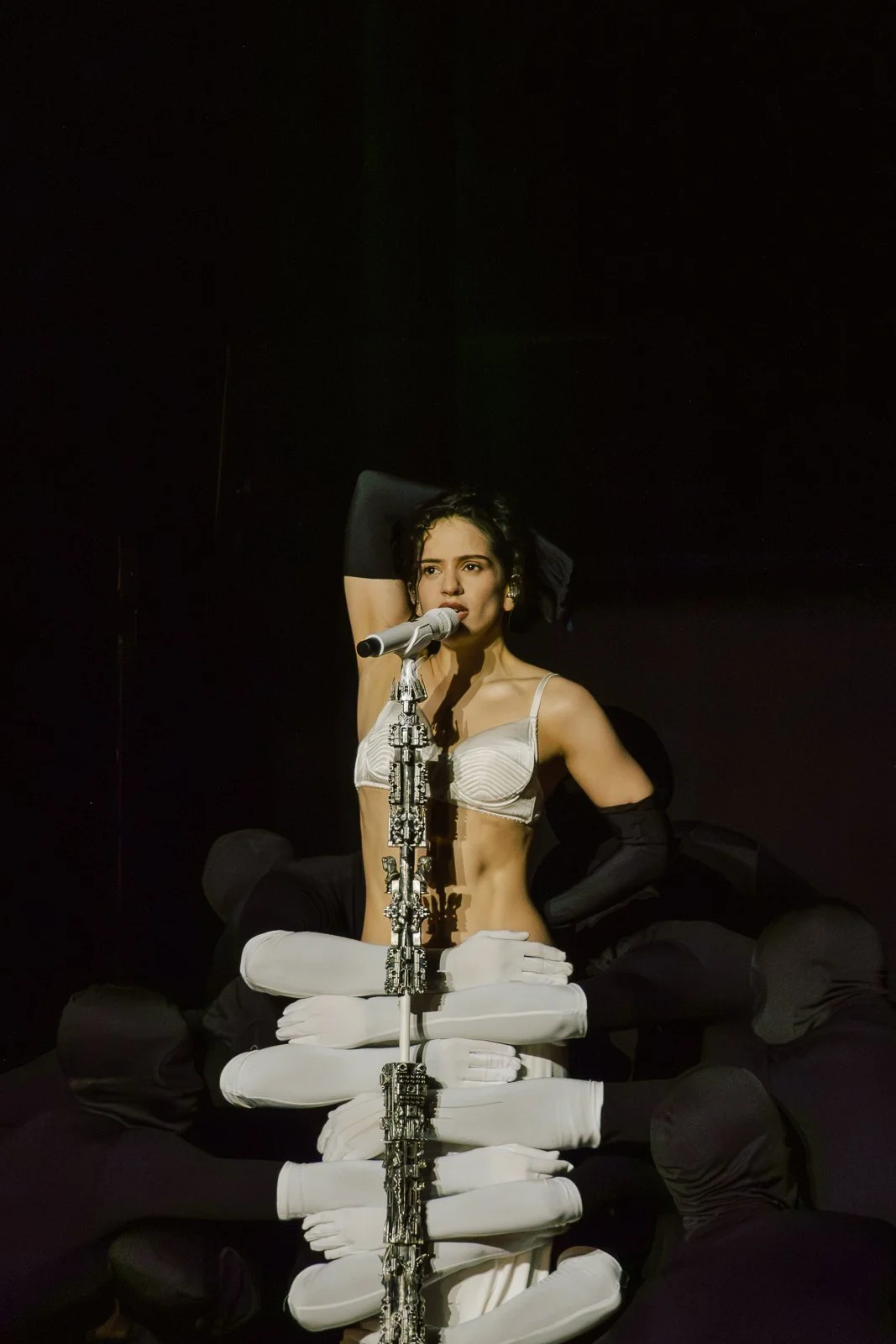
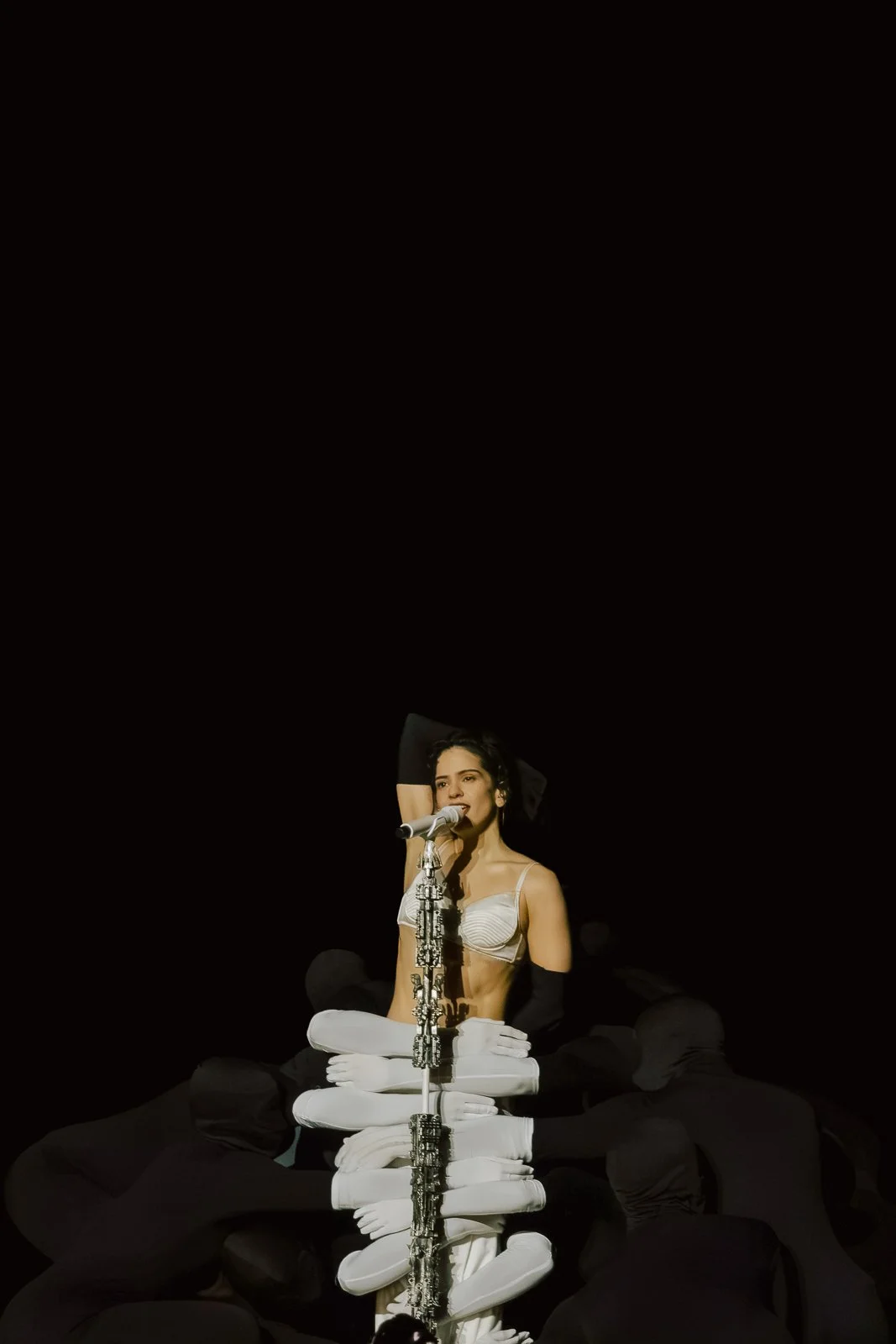
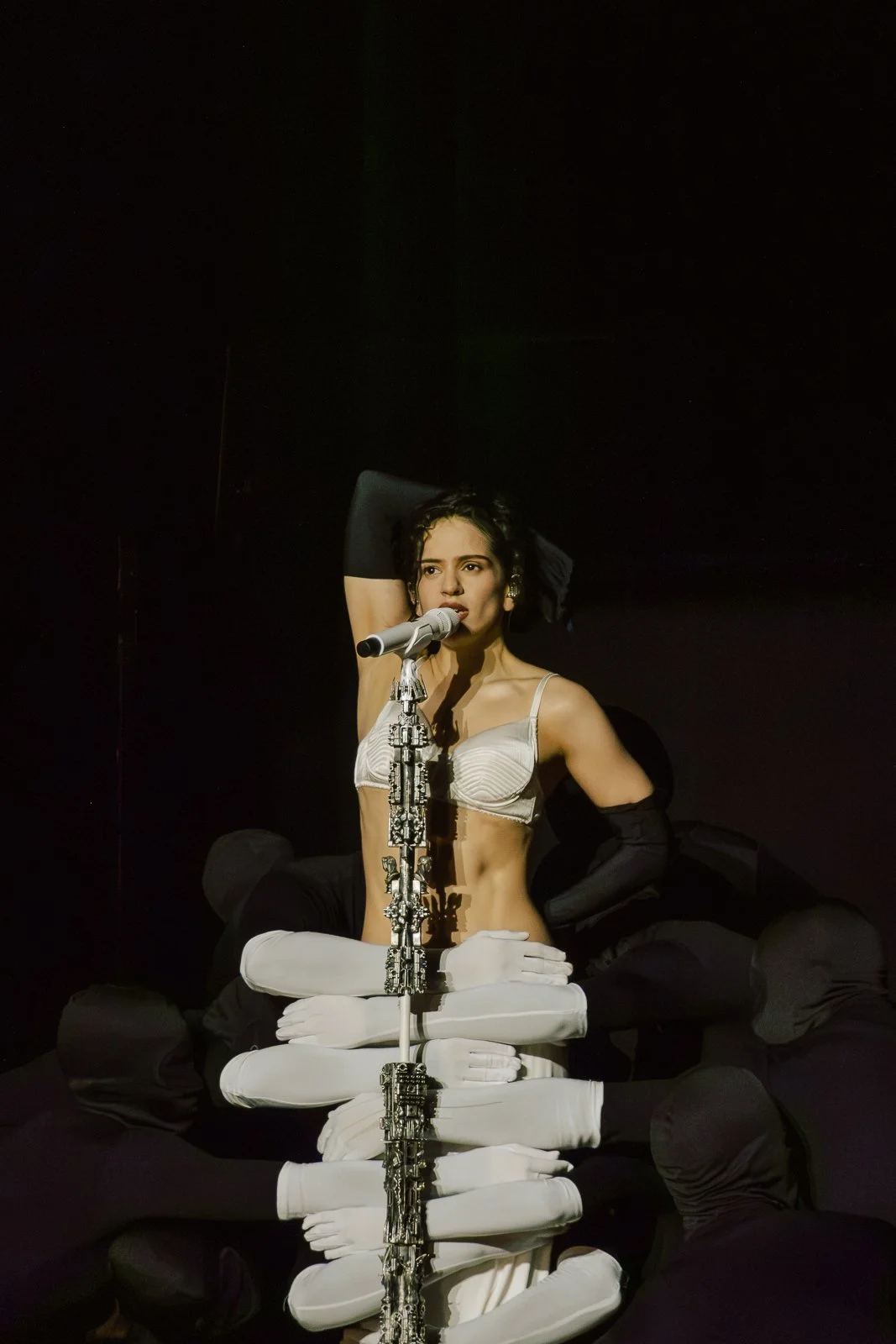
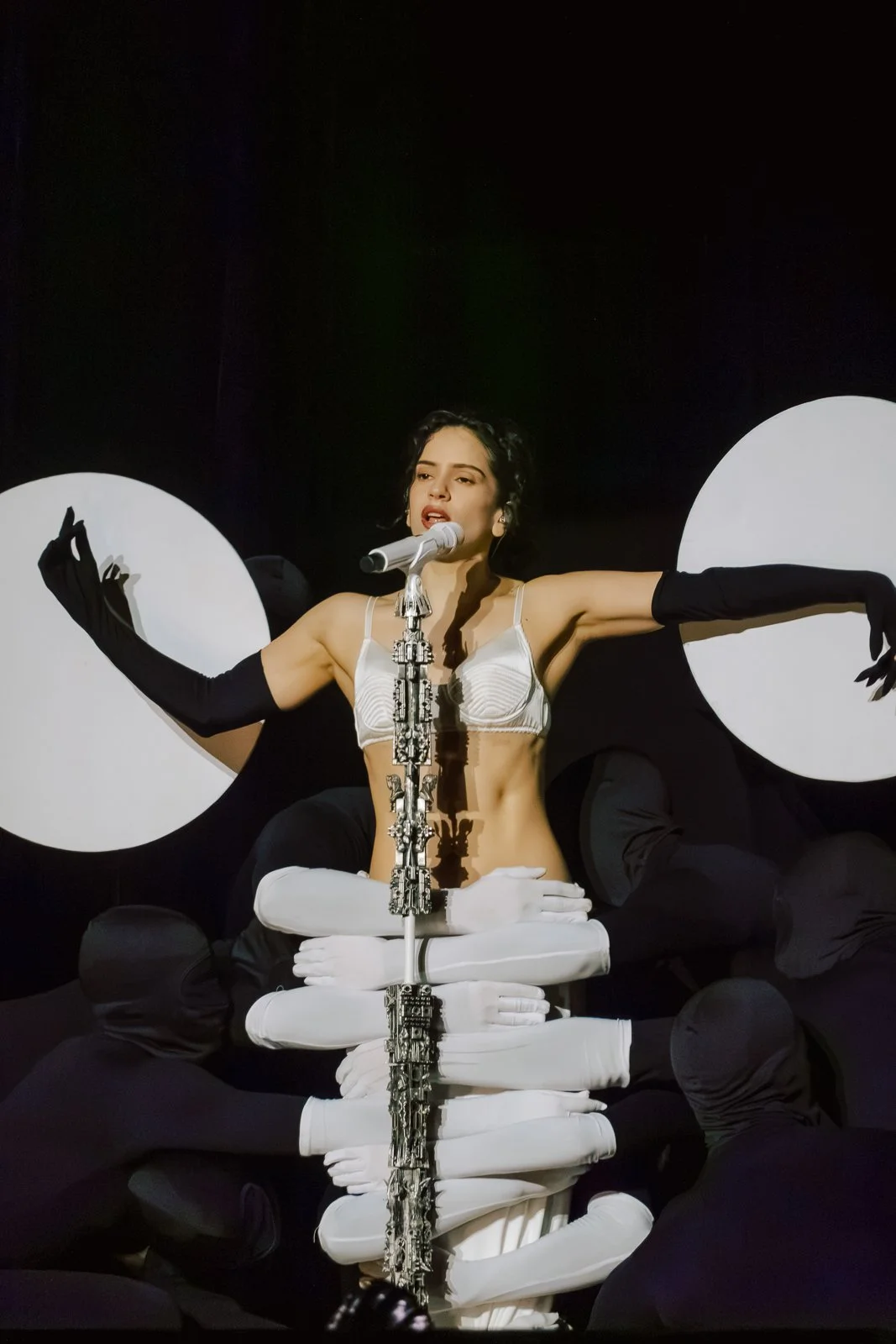
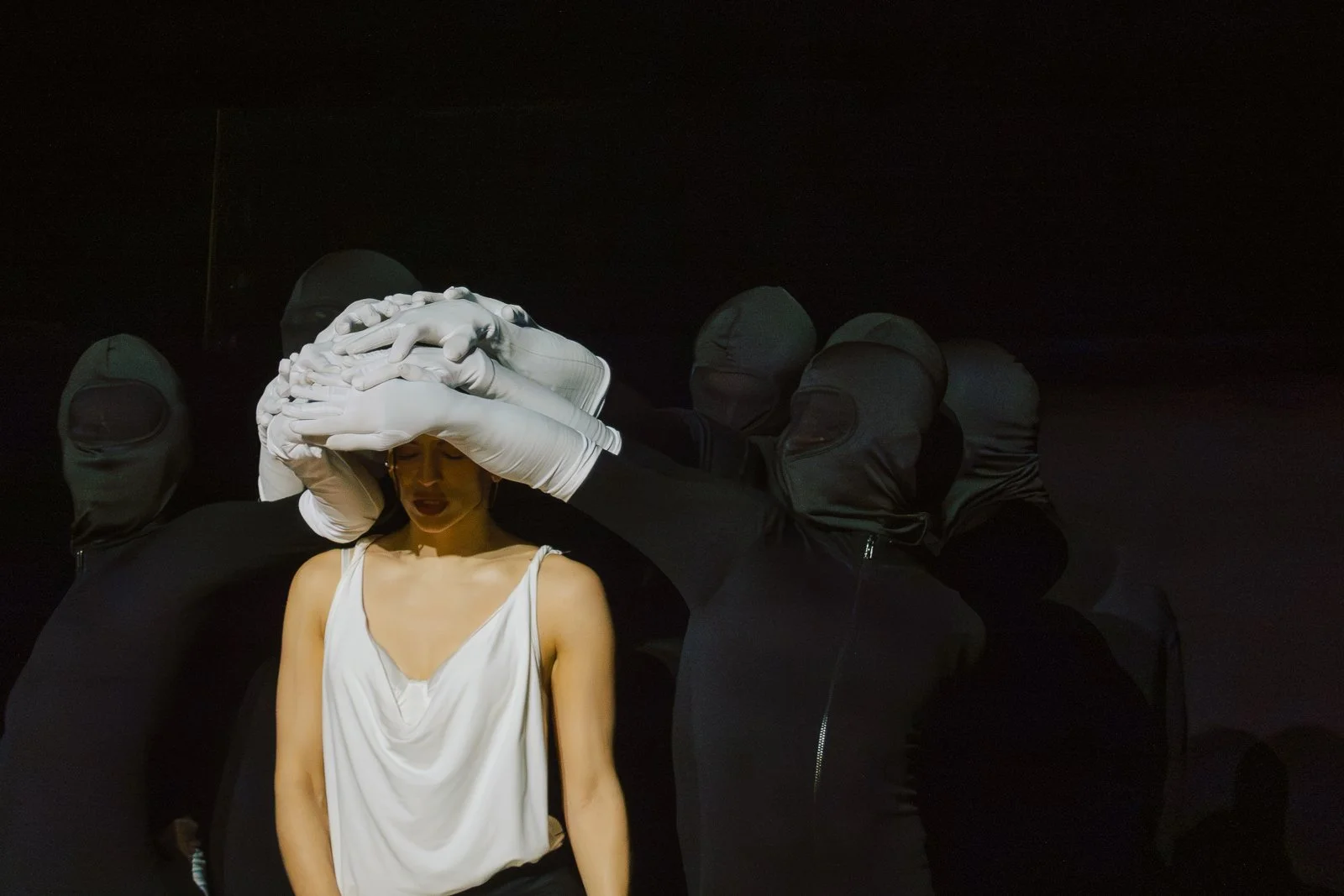
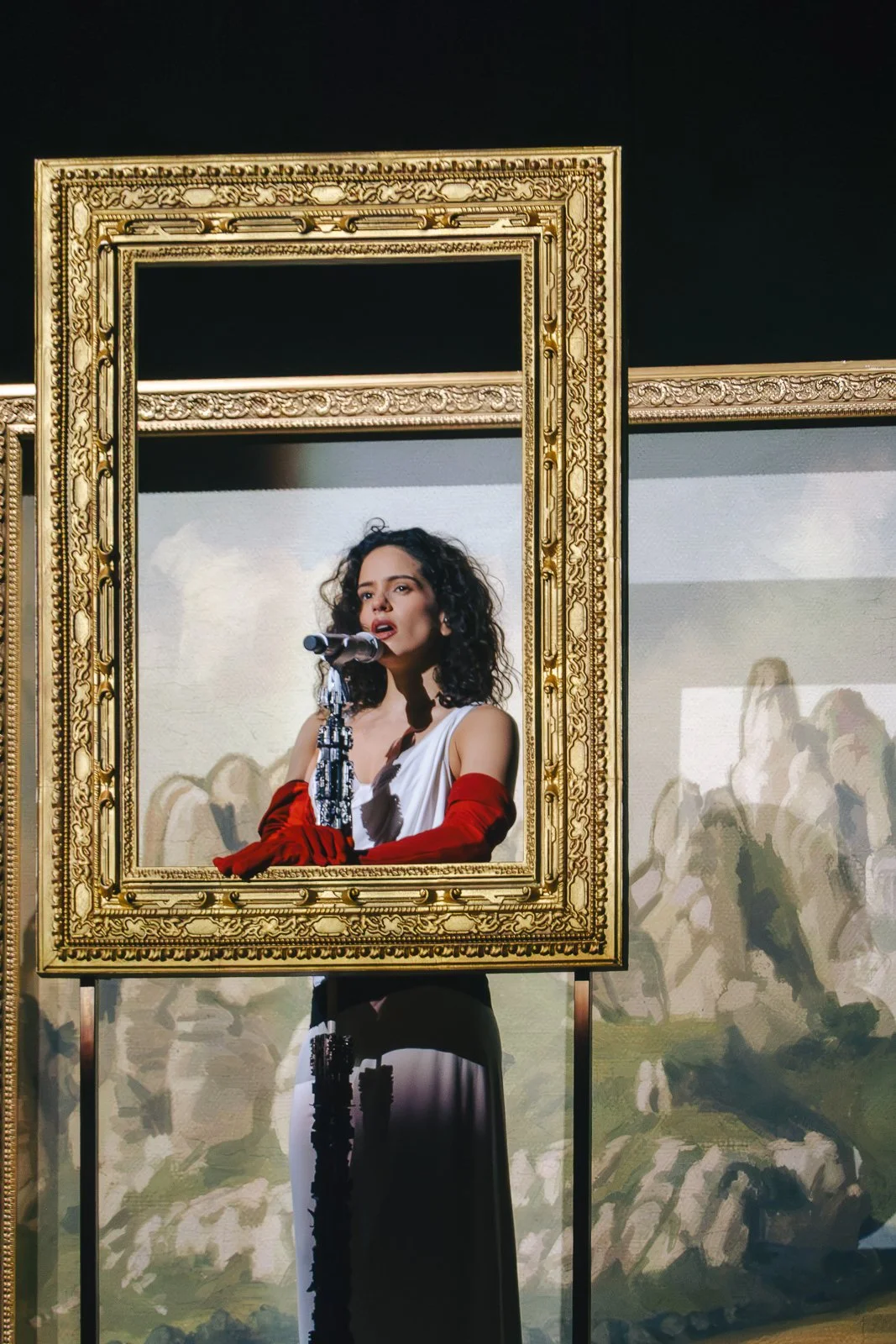
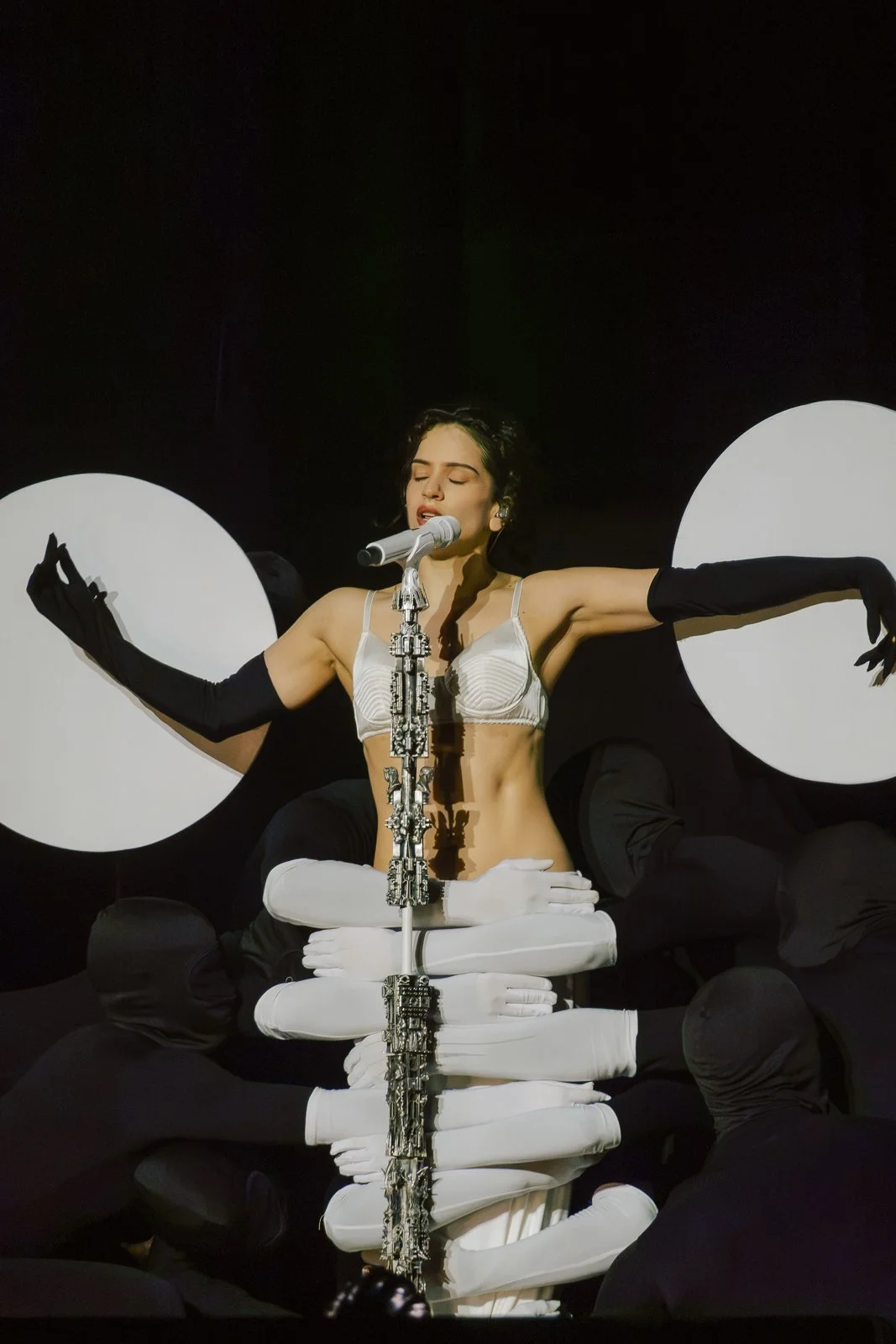
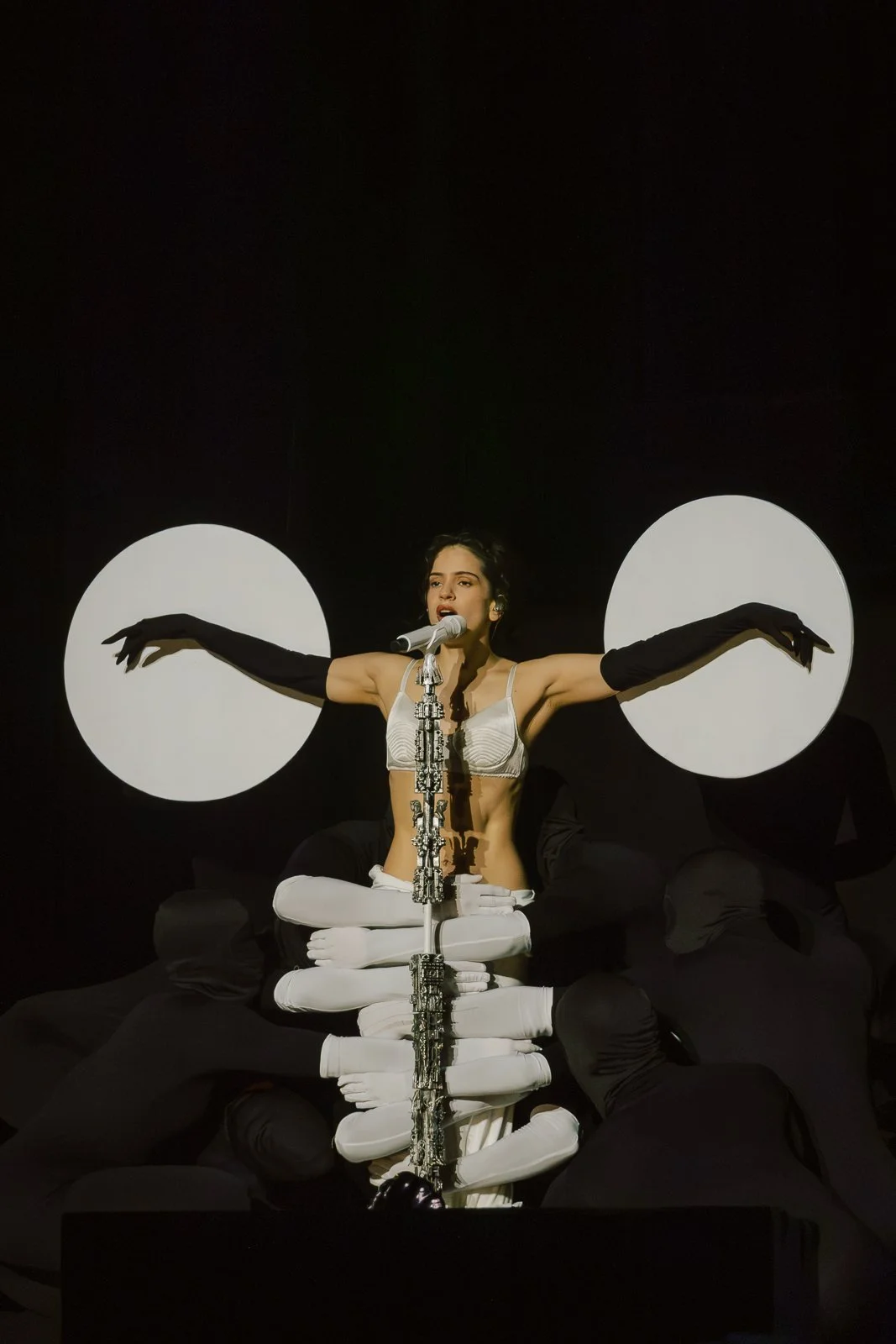
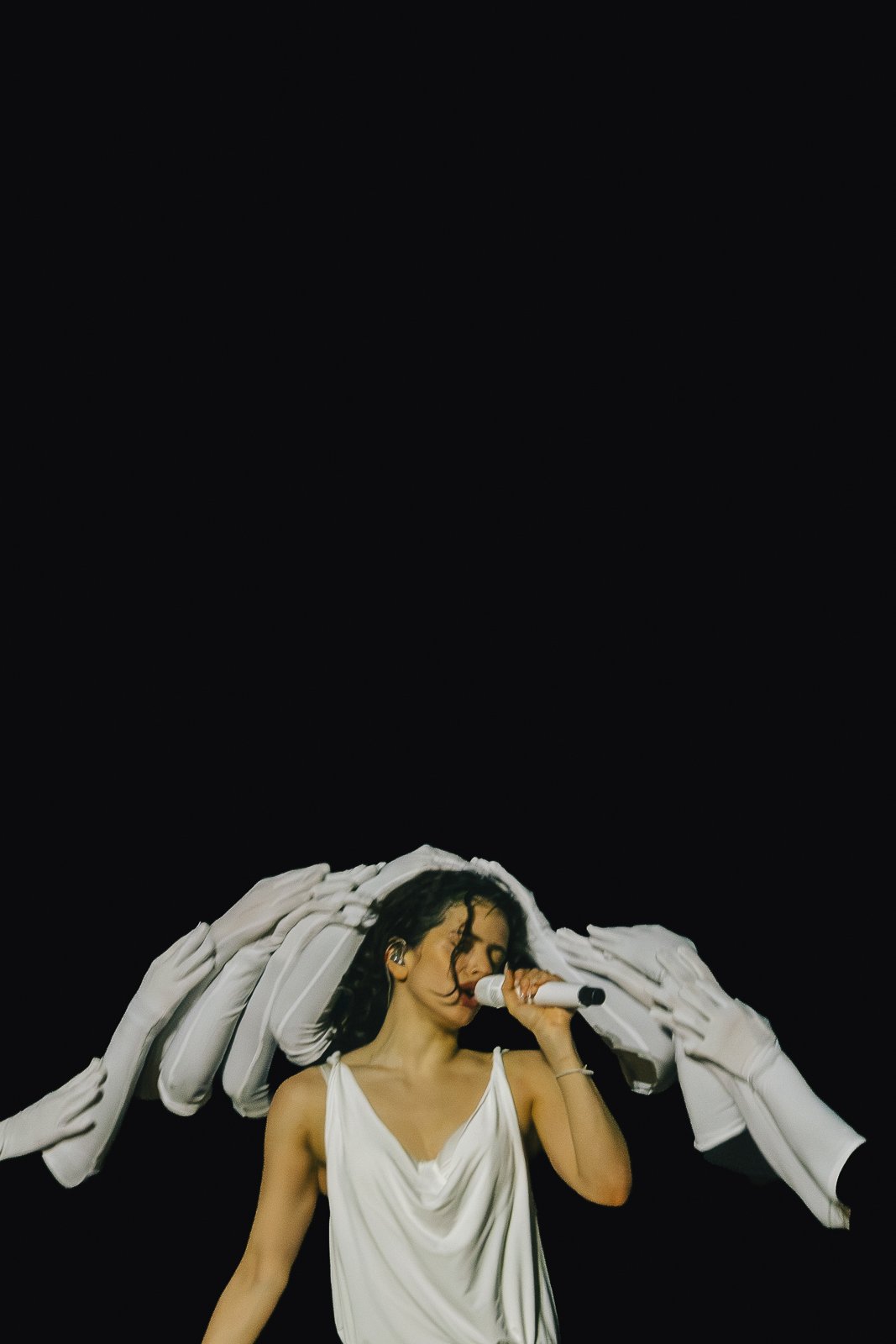
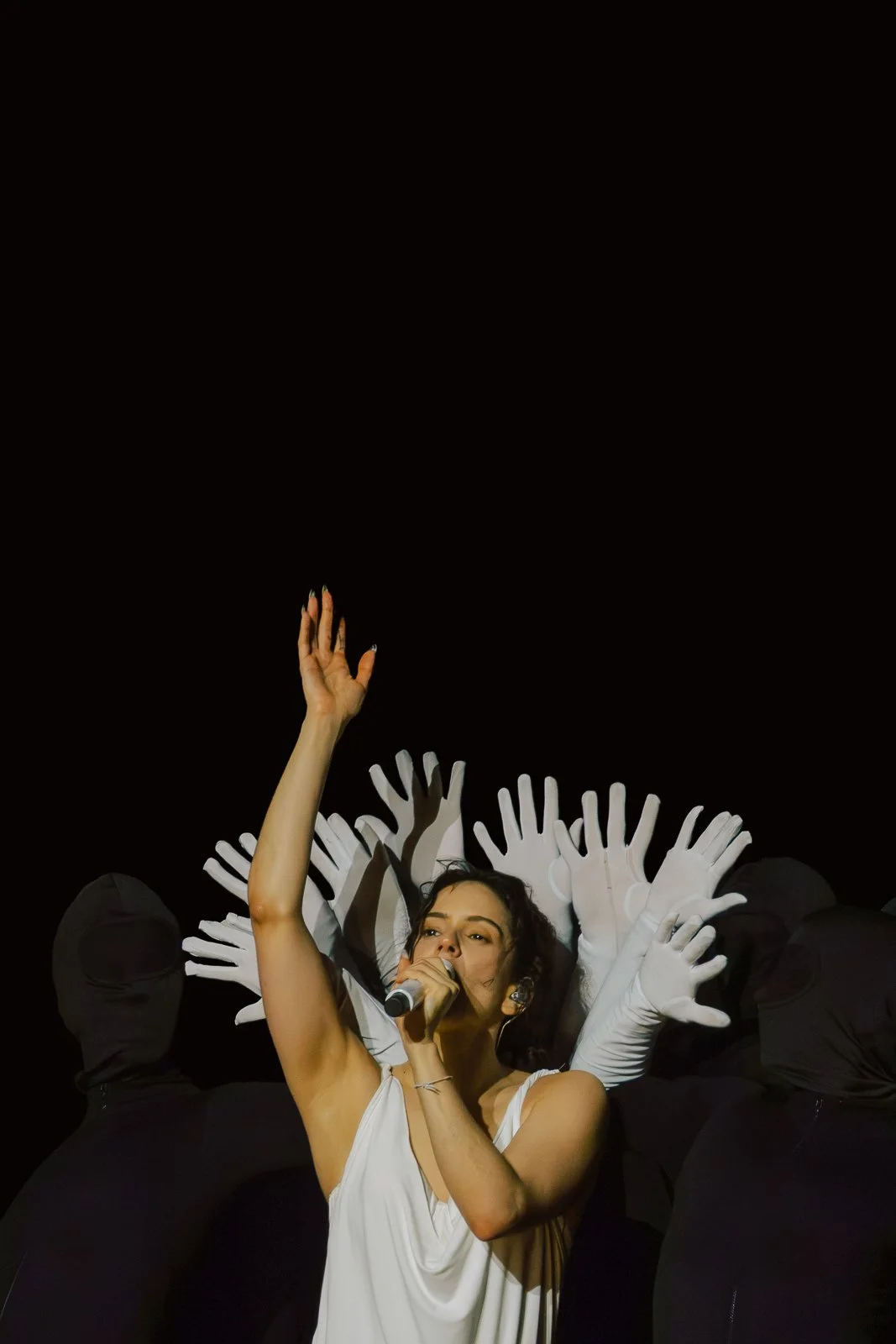
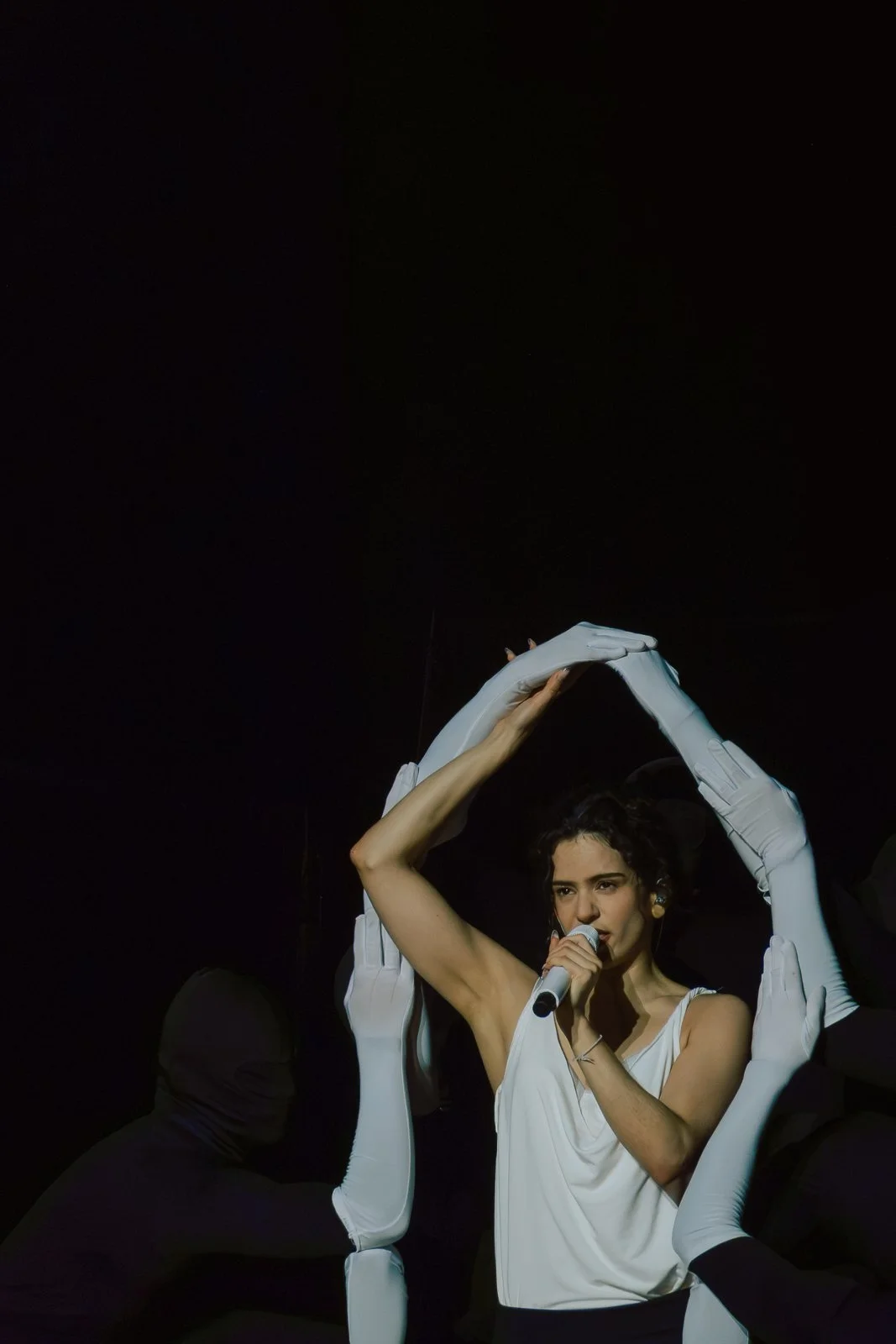
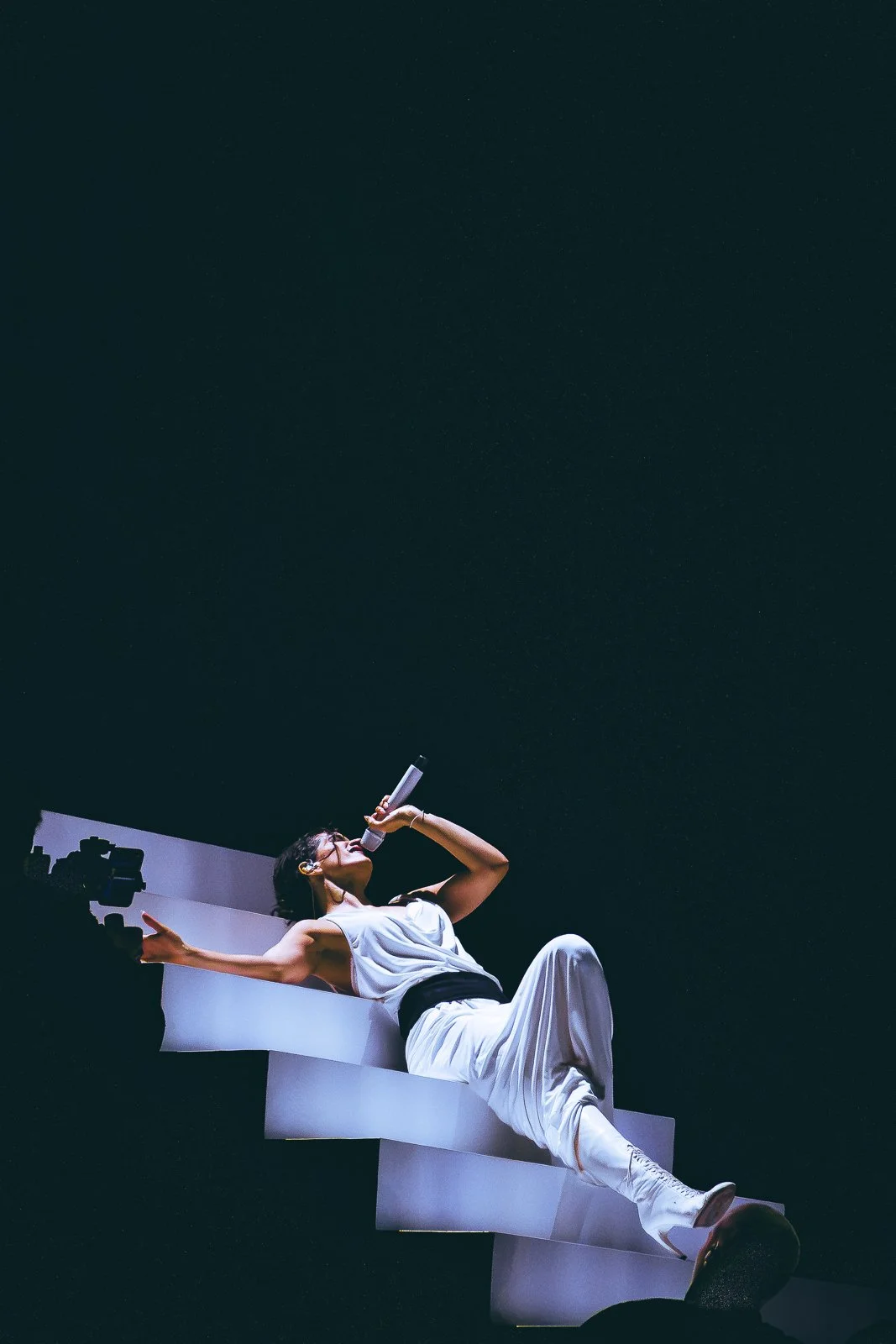
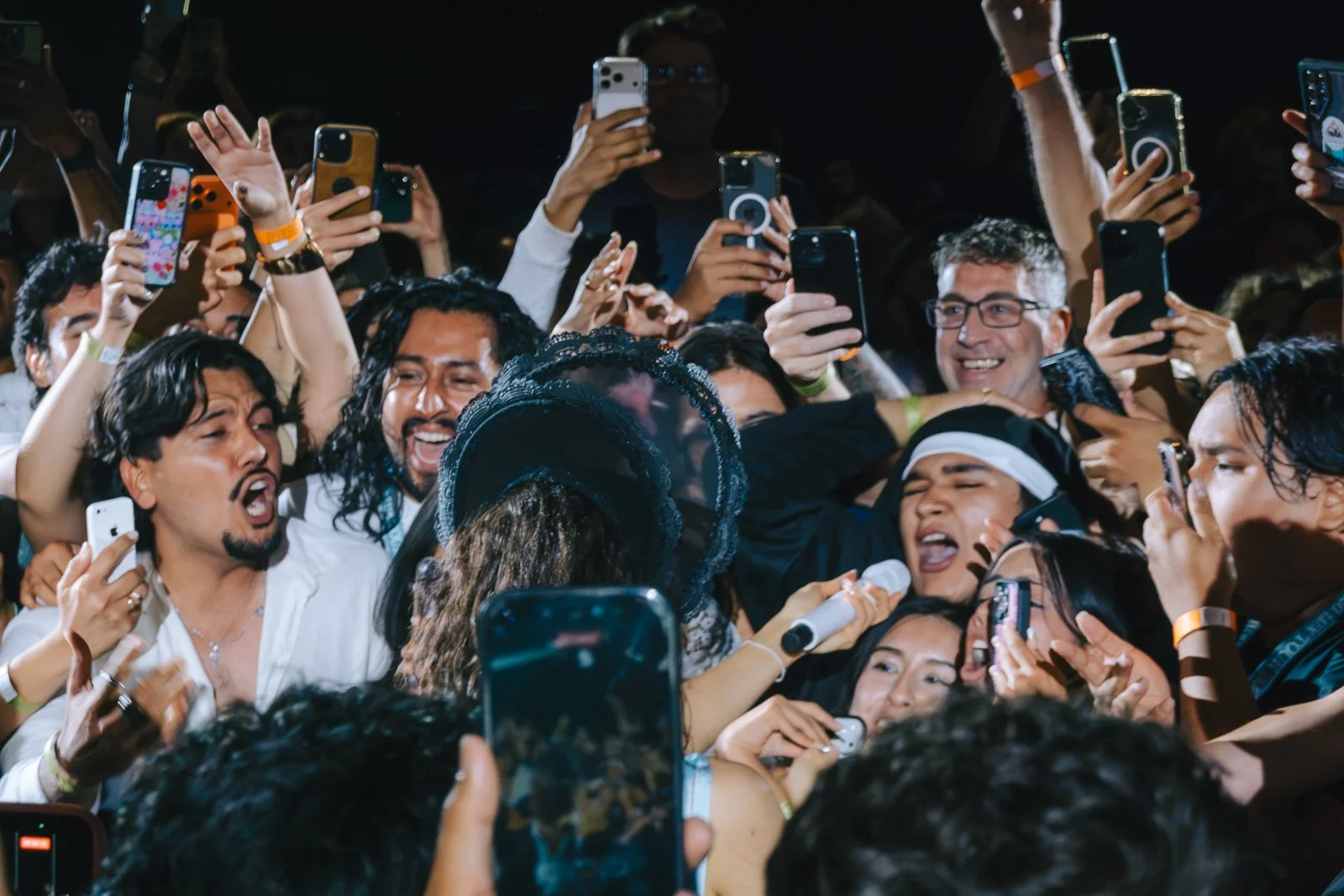
She freezes next into a painting — the mic stand built as a totem of white-gloved hands, a ring of faceless dancers sealed in black. During the Act III cover, Frankie Valli's "Can't Take My Eyes Off You," she steps inside a gilded Baroque frame and hangs there as a living Mona Lisa, a group of hand-picked fans gathered below to gaze up in adoration — every one of them filming her on an iPhone, puncturing the Renaissance illusion, as if they needed the footage to prove to themselves later that it hadn't all been a dream. At the end of "Focu 'Ranni" she climbs a staircase, opens her arms, and falls backward off the top of it.
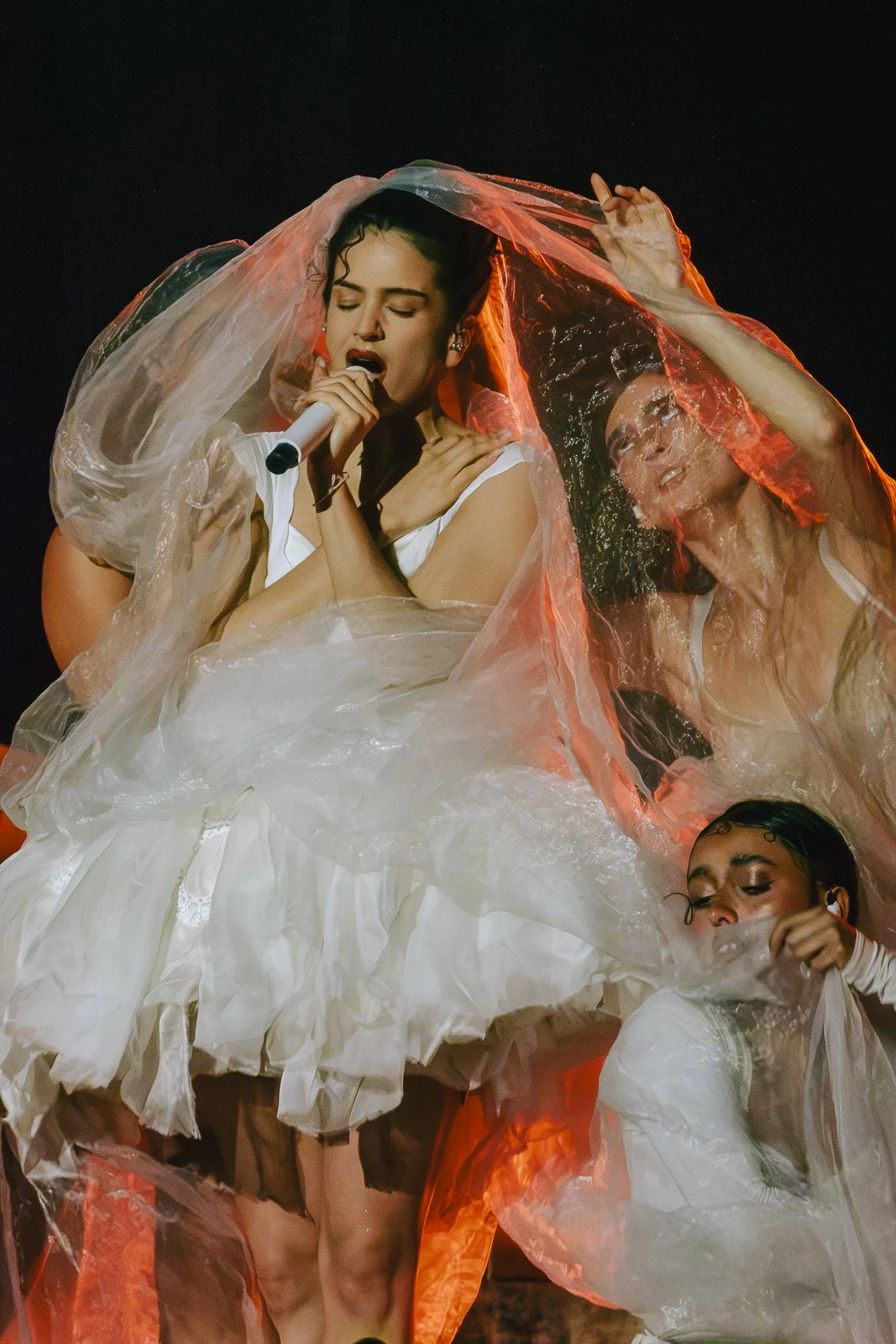
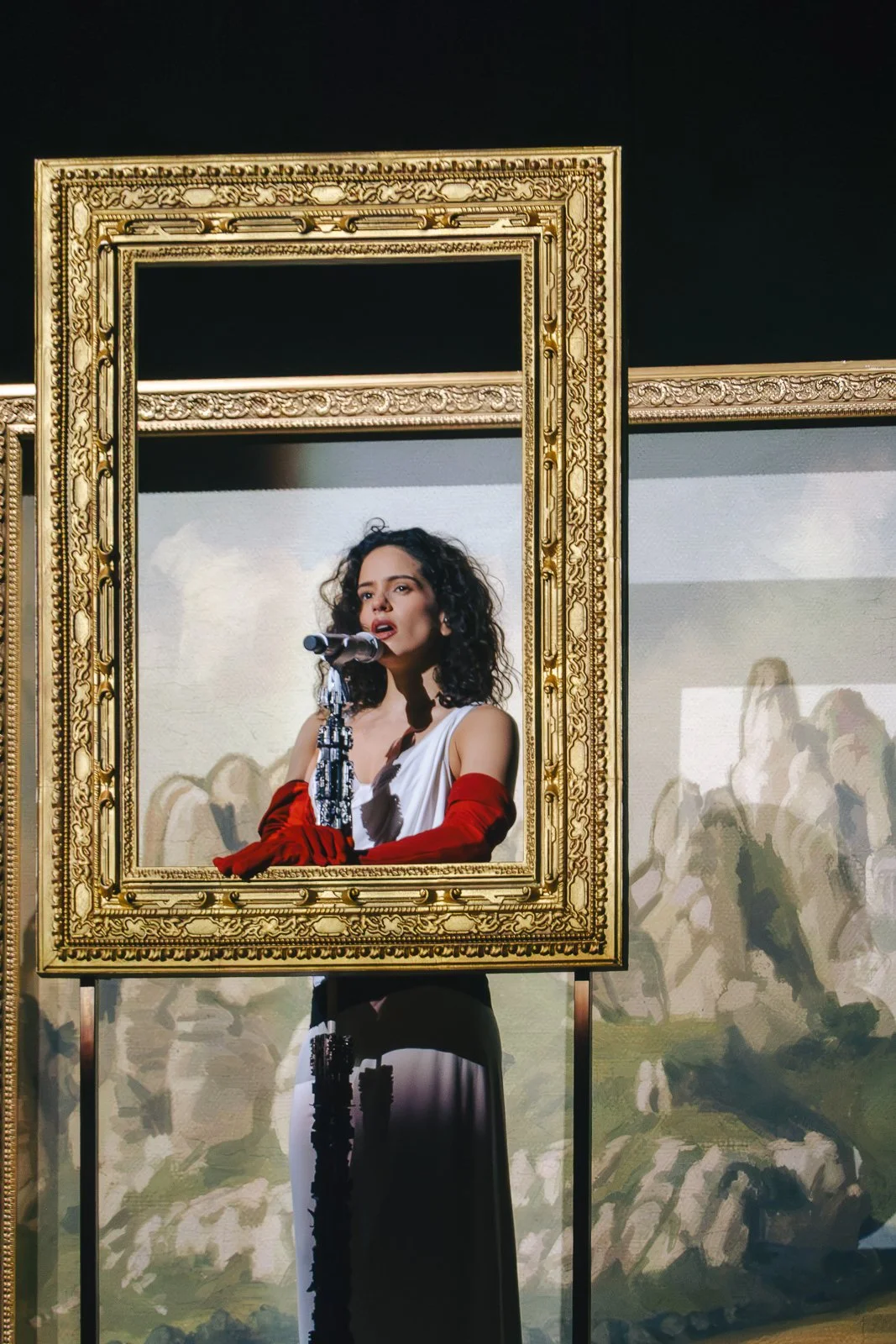
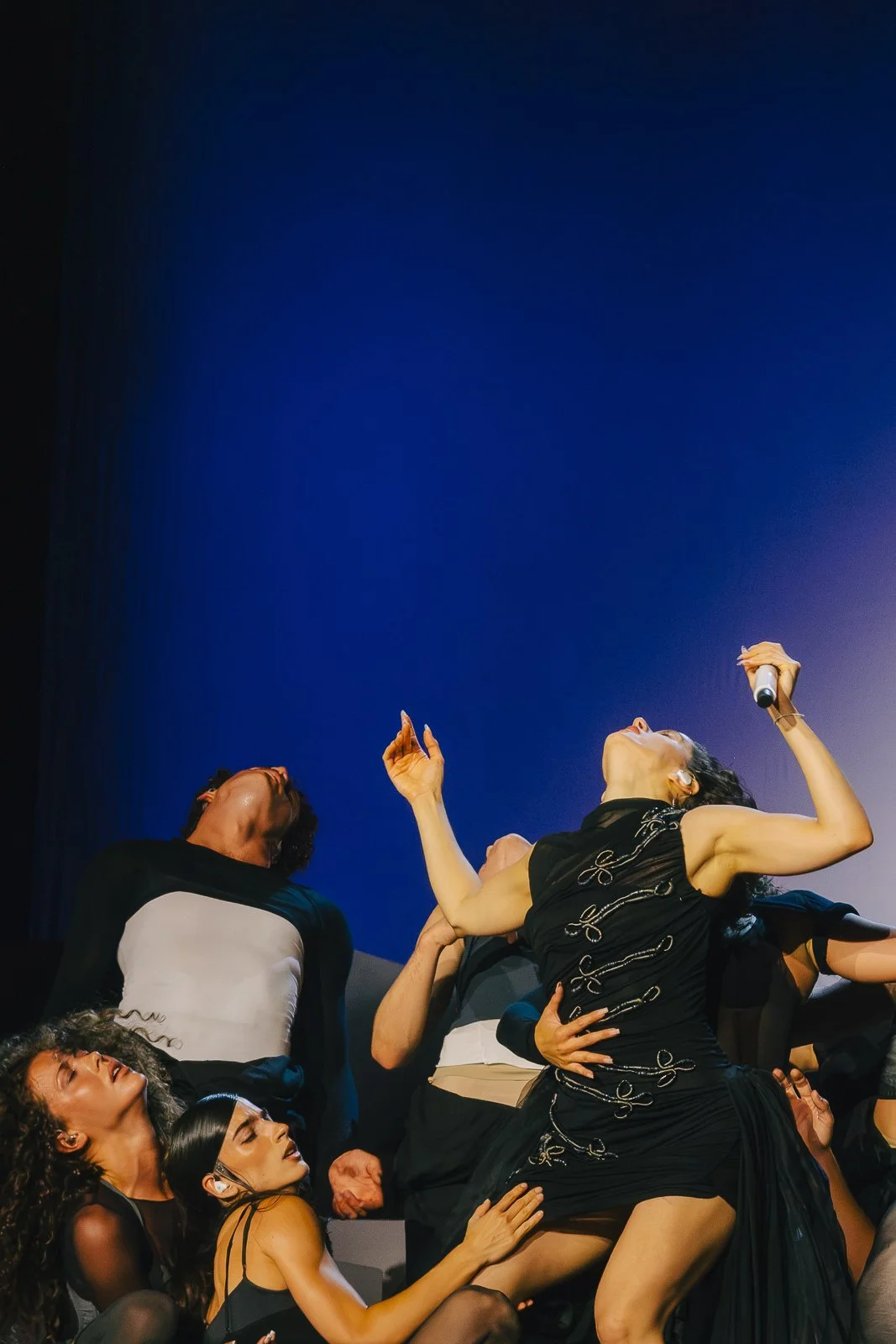
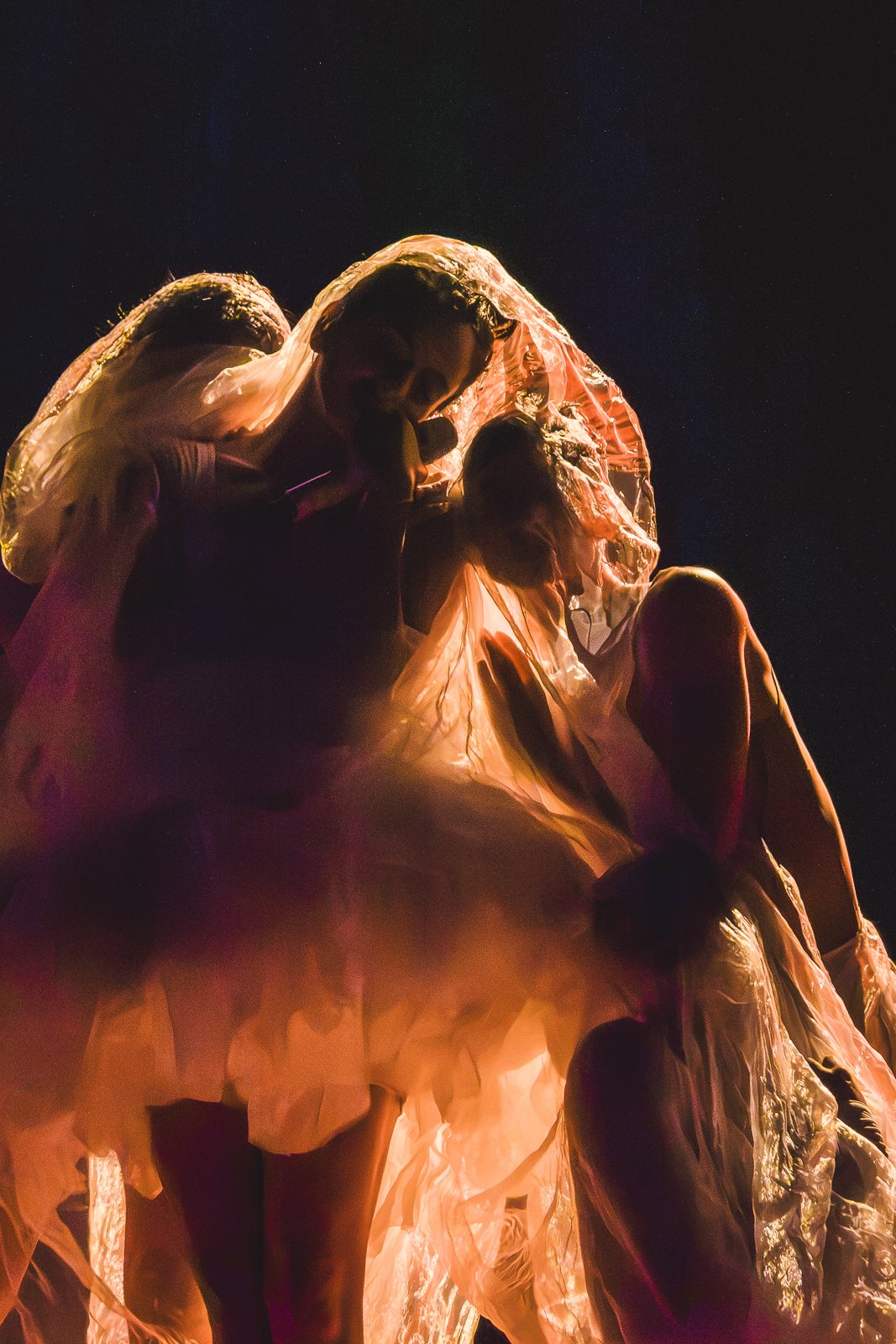
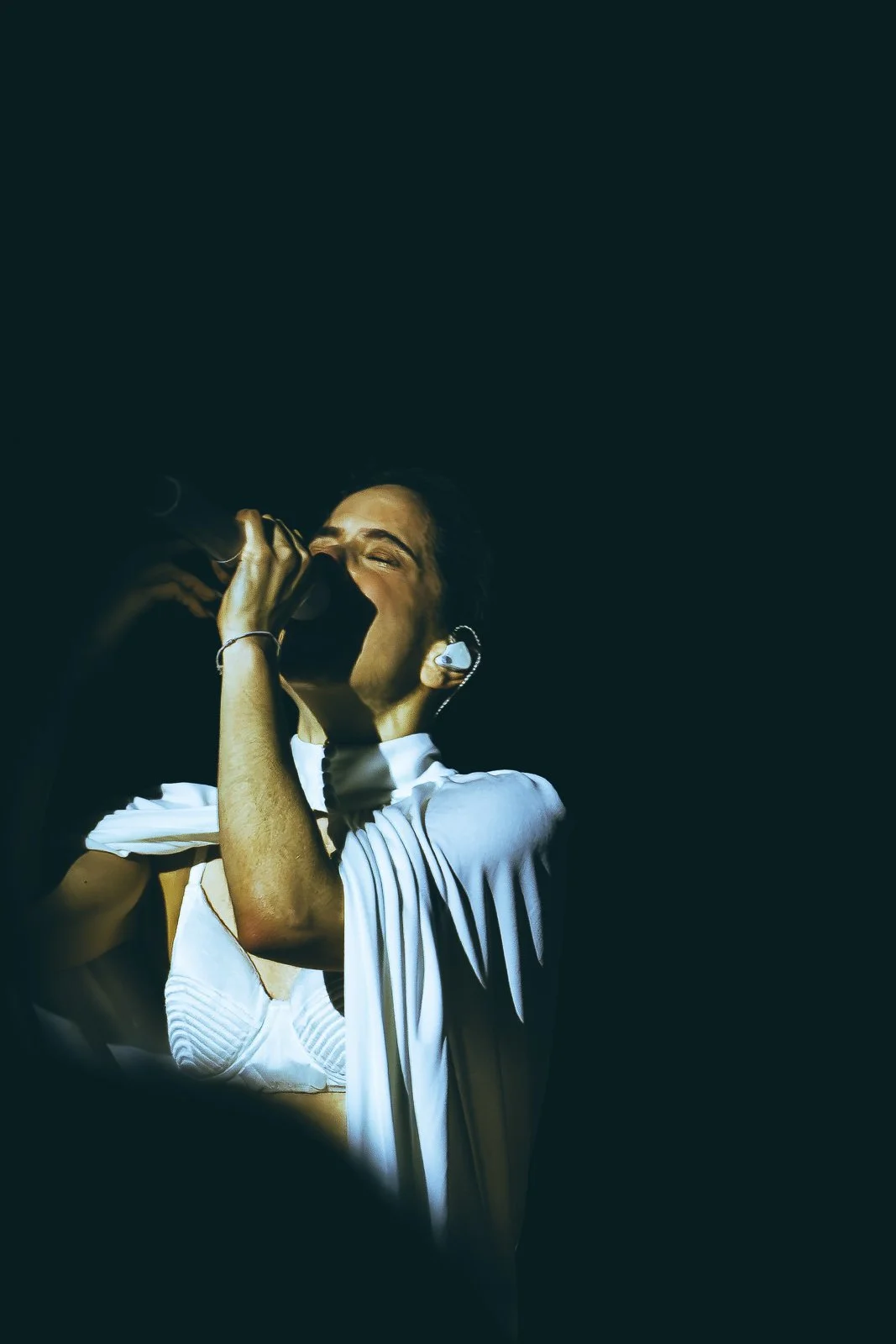
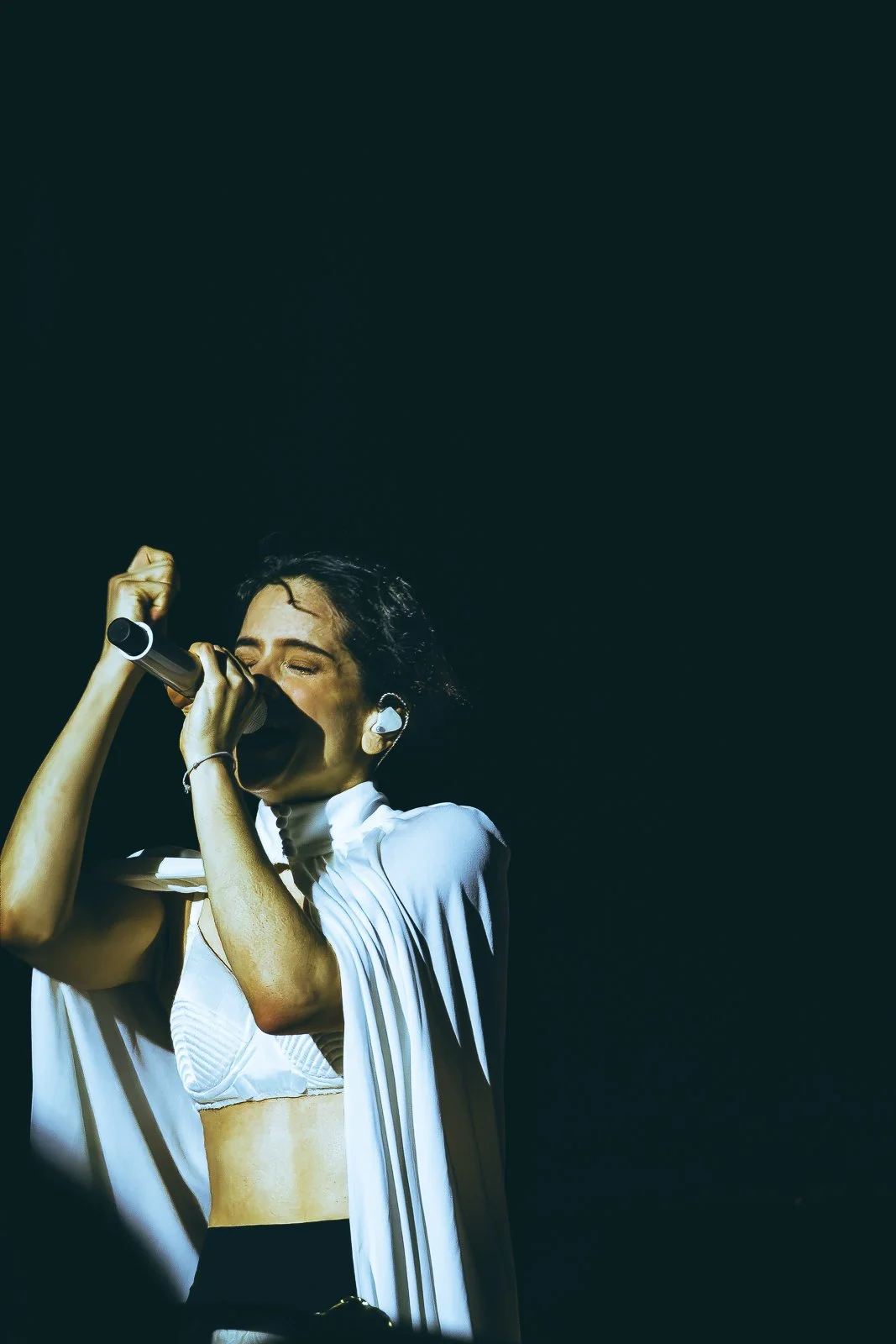
But what's disarming isn't the grandeur — it's how human she stays inside it. Whole stretches of the night feel like the Prado's darkest Goyas shocked into motion — Saturn with the blood still wet on his mouth, a firing squad at point-blank range — and then she'll break the spell and just talk to the crowd. She is, as No Doubt once said, just a girl. She kikis. She shoots the shit. She spends a real chunk of the night just trying to know her whole audience through a handful of exchanges. The rarest trick in the show isn't the operatic maturity or the pointe work she trained months for; it's the way she can address seventeen thousand people and make each one believe she's speaking to them, and only them.
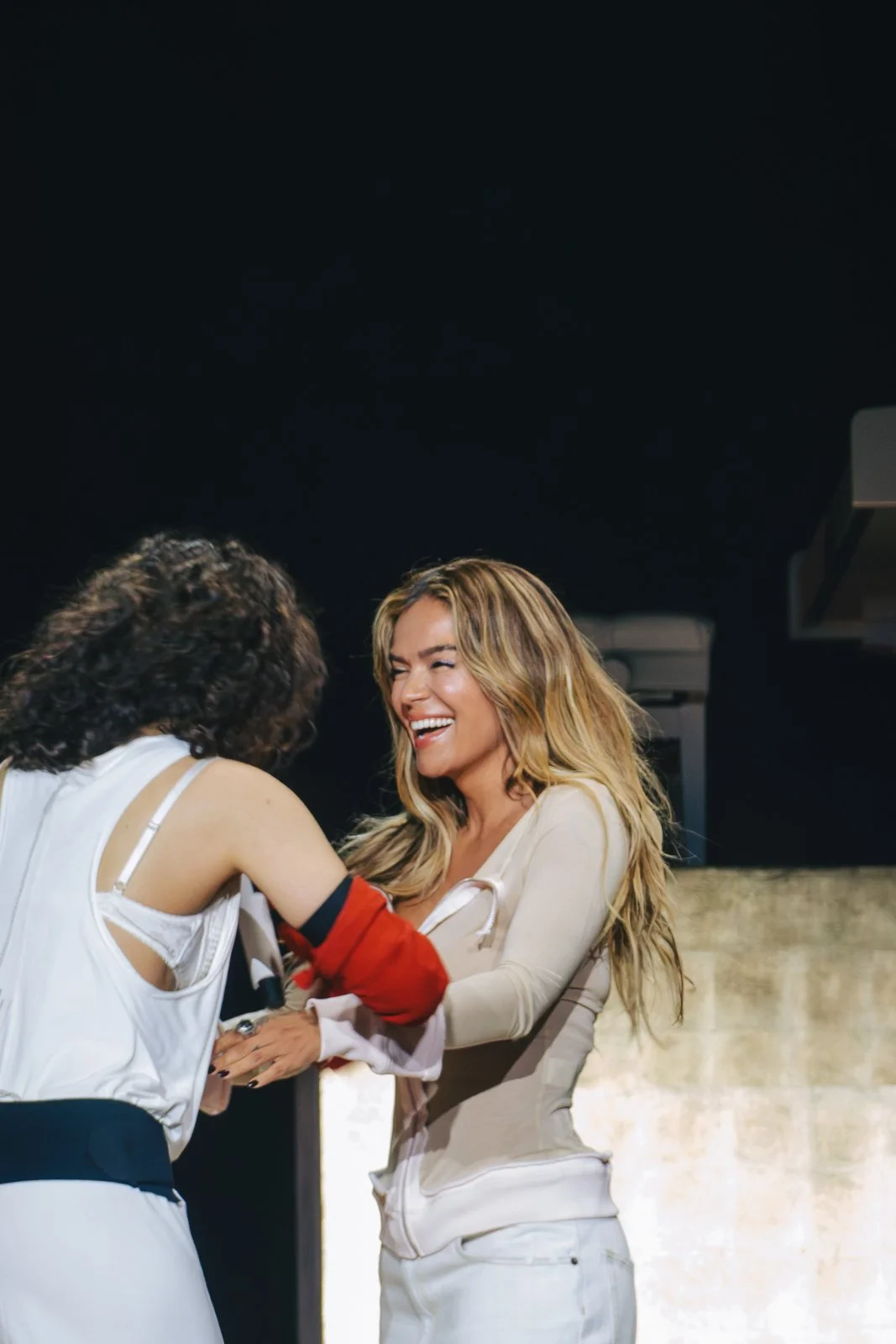
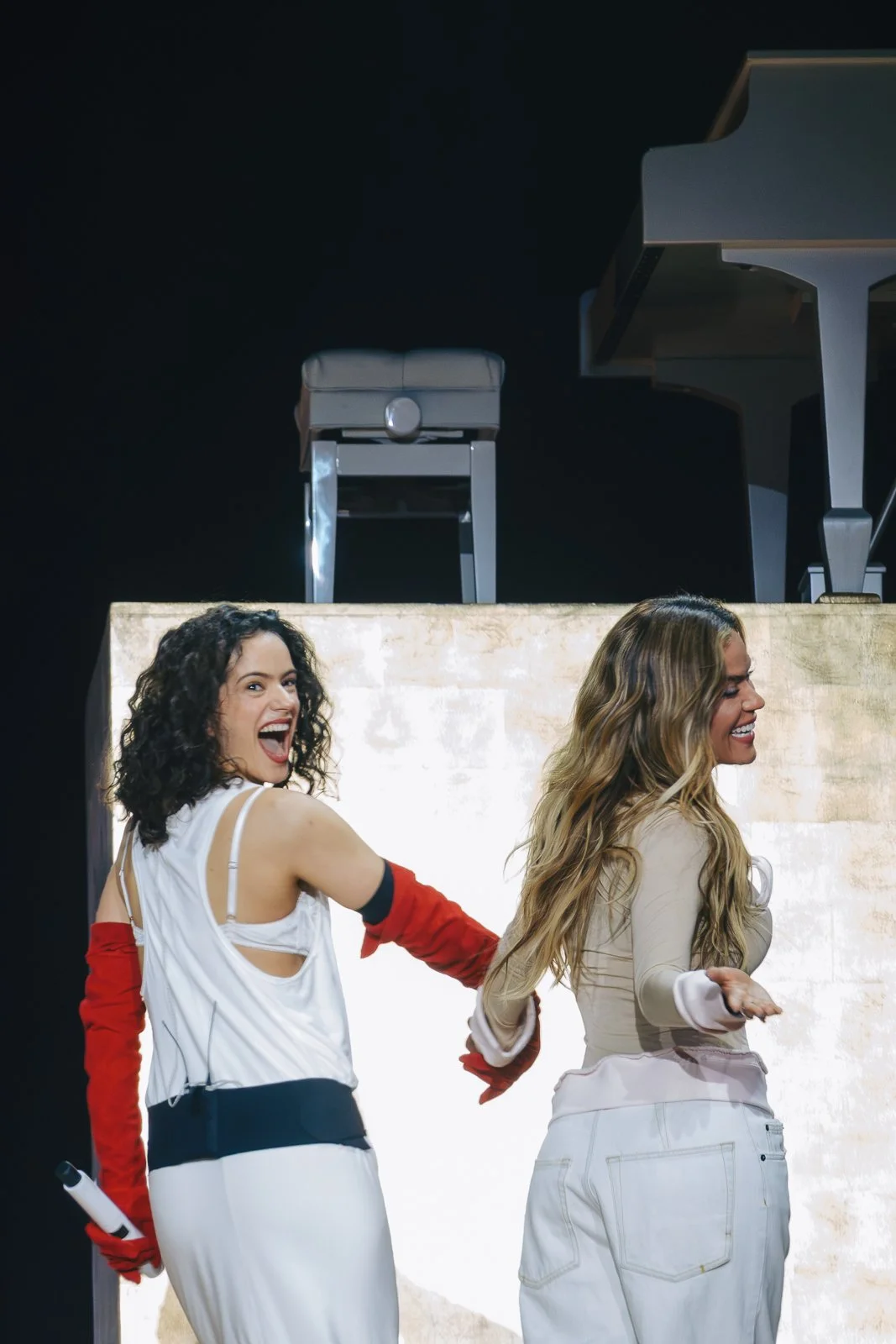
Most reflective of that skill is the segment that reliably goes viral, city after city — the gothic confessional booth, which seats a different celebrity in each one. Before "La Perla," the guest plays penitent and confesses a story about some fuckboy/girl (i.e., a perla) and Rosalía dedicates the diss track to the offender. The booth has hosted folks like Cara Delevingne and SNL's Marcello Hernández, but most significantly, Maggie Rogers — who “won” the internet with a tale about making out with a New York Times reporter only to learn he was taken.
So Los Angeles walked in with expectations, and Los Angeles was not shortchanged — the penitent was (no big deal; definitely not a flex) Karol G, ten weeks off making Coachella history, who described an ex who left her stranded at the airport, a no-show for the birthday trip he'd promised. The Forum lost whatever composure it had left — the guy next to me FaceTimed a friend and ran a whole-ass conversation at full volume, dodging dirty looks the entire time. "IS THAT KAROL G?" "YES GIRL." "NOOO." "GIRL YESSSS."
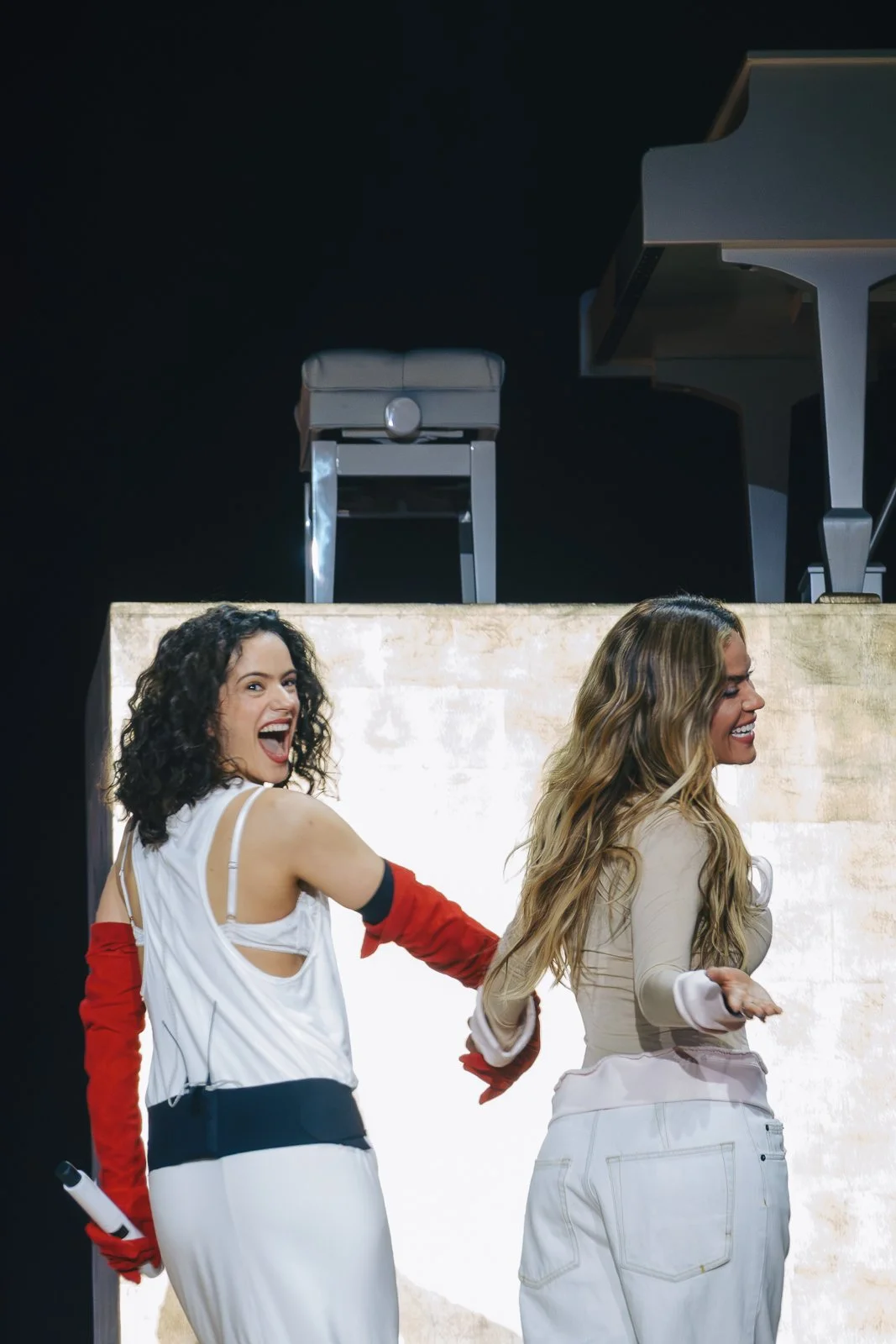
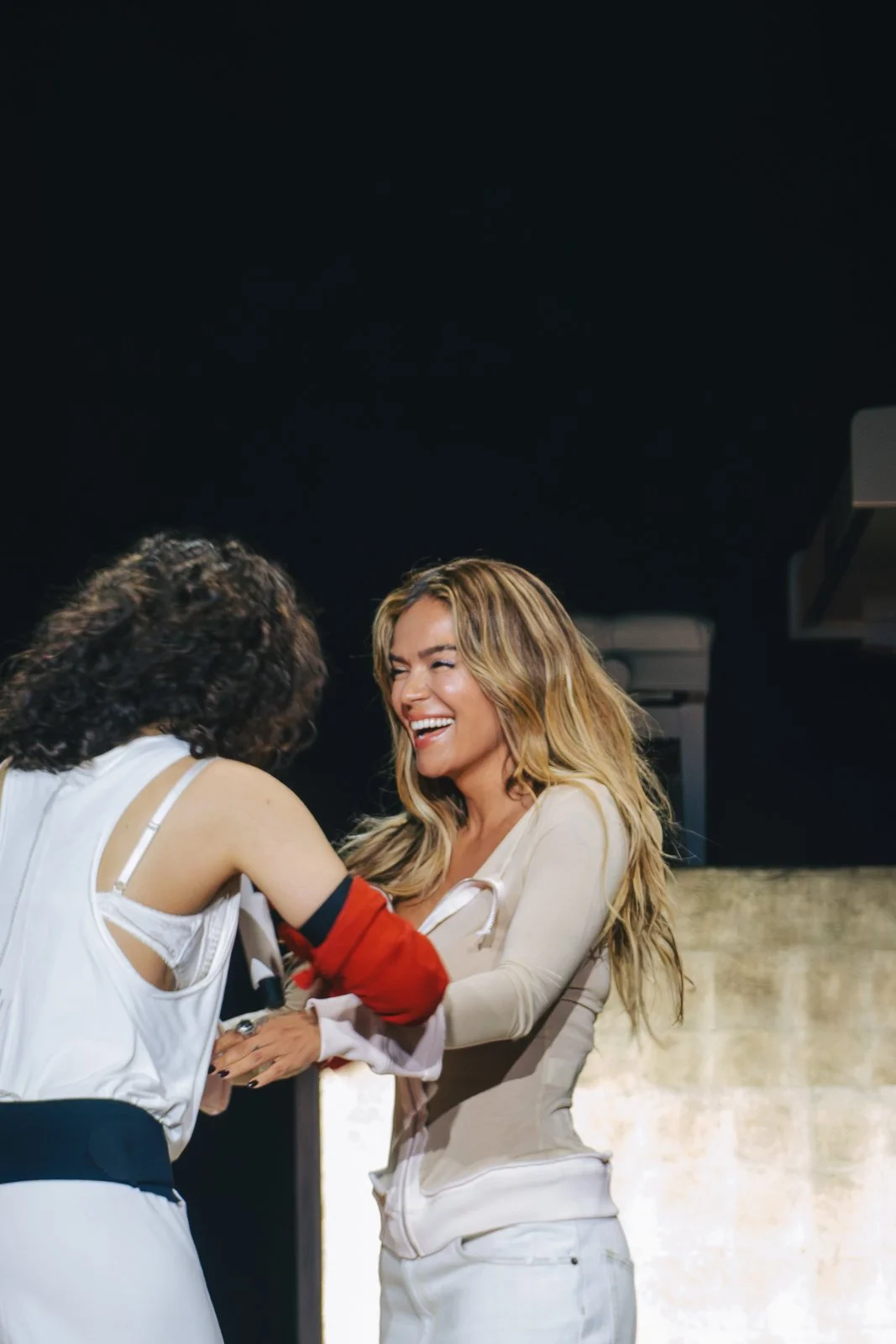
The whole exchange with Karol G played out in Spanish, and all of it reached me through a language I follow maybe fifteen percent of. I grew up a Chinese kid in Monterey Park, ten minutes and one freeway from East LA, close enough to absorb exactly that much Spanish and not a syllable more. The singing asked even less of me. LUX is in thirteen languages on purpose, a bet on the oldest idea in flamenco — the one Lorca chased in his lecture on duende — that the truest thing in a voice travels below language, in a register the body reads before the mind can translate. I caught fifteen percent of the words all night, and something close to all of the ache.
That reach — a voice crossing a language line as if it weren't there — is what this city was built to reward. Los Angeles is hard to love on purpose, all gatekeeping and traffic and the way you can live here for years and still feel like a tourist five neighborhoods over, but it has never had patience for purity. Rosalía says she doesn't ask whether music is correct, only whether it's exciting, and LA has run on that principle for a century.
Take El Cid, the historic flamenco room on Sunset — flamenco some nights for a crowd whose claim to it is cultural, not ancestral, and on others a storied dance floor where the outer edges of LA's subcultures come to find themselves. Either way, the room belongs now to all of Los Angeles. Mexican families who were Californian back when California was Mexico, the gay couples who danced this stretch of Sunset before the city would let them, Midwest transplants in Dries Van Noten they can't afford from Mohawk General Store down the street, and, some nights, me and the fifteen percent I’ve come to understand. Nobody's checking papers at the door. Rosalía mentioned, somewhere in the night, that LUX was born in Los Angeles. In most cities, that’s a fabrication meant to solicit a cheap pop. But here, in LA, we know it to be true.
Four albums in, she has never once settled into a single act — she drafts the London Symphony Orchestra to go hunting for God, builds a tour like a five-act opera — and at thirty-three she isn't climbing toward a peak so much as becoming one, the fixed point the rest of the field gets measured against, with more of it still running out ahead of her in the dark. What will allow her to cover that distance isn't the ambition; plenty of stars are ambitious. It's that with all that firepower at her command, on this night she aimed it away from herself.
LUX means light, and the light that mattered wasn't onstage. In a time where the federal government militarized Los Angeles with Marines to enforce its illegal immigration raids, and deployed agents to monitor what they deemed a grievous national security threat (a Puerto Rican singing in Spanish at a football game) that light was seventeen thousand people, overwhelmingly Latino, loudly and defiantly themselves. They walked in carrying the burden of the last two years — a time when it feels safer to ossify yourself, to let your own stillness make you undiscoverable — and set it down for a couple of hours. Under a swinging silver censer. Inside a sanctuary a Catalan flamenco singer had built for them out of an orchestra, a cross-shaped stage, and every self she'd ever failed to reconcile.
The botafumeiro in the Cathedral of Santiago de Compostela was revered for its power to make pilgrims briefly forget the road behind them and look up. As if the only relief in this world ever comes from a sign above. A thousand years later, in Inglewood, a copy of it did the same job.
PHOTOS
Words and photos by Eric Han (IG: @kengjuan // https://www.kengjuan.net/)